This site is supported by our readers. We may earn a commission, at no cost to you, if you purchase through links.
Most people yank, pluck, or wax their nose hair without realizing they’re dismantling one of the body’s most underrated defense systems. Those bristly strands aren’t just cosmetic nuisances—they filter out dust, pollen, and pathogens before they reach your lungs, reducing airborne irritants by 30-40%. Strip them away completely, and you’re looking at a 48% chance of nasal irritation within a day, plus double the risk of chronic nosebleeds.
The good news? You don’t have to choose between grooming and breathing easy. Trimming visible hairs with the right tools keeps your appearance polished while preserving the protective barrier your nose depends on. The difference between safe and reckless removal comes down to technique, and getting it wrong can leave you with infections, ingrown hairs, or worse.
Table Of Contents
Key Takeaways
- Nose hair filters 30-40% of airborne irritants, and removing it completely increases nasal irritation risk by 48% within 24 hours while doubling your chance of chronic nosebleeds.
- Trimming with rounded-tip scissors or electric trimmers reduces tissue injury risk by 70% compared to plucking or waxing, which cause infection rates 2-3 times higher.
- Electric nose trimmers clear 70% of visible hair in 30 seconds with only 4.2% irritation rates when using stainless-steel models, while laser removal costs $1,500-$4,000 but delivers 50-80% permanent reduction.
- Skip plucking (causes follicular infection in 4-7% of cases), depilatory creams (trigger burns and irritation in 8-15% of users), and all DIY methods that expose you to infection risks up to 12.5%.
Why Do We Have Nose Hair?
Nose hair might seem like an annoying cosmetic issue, but it’s actually doing important work behind the scenes. Before you reach for the tweezers or wax strips, you should understand what those little hairs are protecting you from.
Here’s what nose hair does and why removing all of it can backfire.
Protective Role of Nose Hair
Your nose hair acts as a nasal filter you can’t afford to ignore. Those guard hairs aren’t random—they’re a complex air purification system protecting your respiratory health every time you breathe. Studies show intact nasal hair reduces airborne irritants by 30-40% and traps particles larger than 10 micrometers before they reach your lungs.
Nose hair isn’t cosmetic—it’s a complex air purification system that reduces airborne irritants by up to 40% with every breath
Here’s what this mucosal defense does for your immune system:
- Filters dust, pollen, and pathogens from entering your nostrils
- Maintains moisture balance for ideal nasal health
- Reduces upper respiratory irritation by 12-18% during allergy seasons
Risks of Complete Removal
While that filter system keeps you healthy, stripping it away completely opens the door to real problems. About 48% of people who remove all their nose hair experience nasal irritation within 24 hours. You’re also looking at 2.5 times higher risk for chronic nosebleeds and measurable drops in mucus production—your nose’s natural moisture barrier.
Conducting a thorough literature review process is essential to understand the health risks associated with nose hair removal.
| Health Risk | Incidence Rate | Primary Concern |
|---|---|---|
| Nasal vestibulitis | Up to 6% | Infection from plucking |
| Chronic epistaxis | 2.5x increase | Persistent nosebleeds |
| Mucosal damage | Variable decrease | Respiratory issues |
Complete removal compromises nasal health markedly.
Is It Safe to Remove Nose Hair?
You can safely remove nose hair, but there’s a catch—going too far or using the wrong method can backfire. The goal isn’t to strip your nostrils bare, but to manage what’s visible without compromising your natural defenses.
Let’s look at the real risks and the removal practices that actually work.
Potential Health Risks
Removing nose hair isn’t without health risks. About 58% of people experience mild nasal irritation within 24 hours, while 14% develop nosebleeds that usually clear up in a few days. Infection control becomes critical—using non-sterile tools increases your infection risk by 3.5 times. Plucking damages delicate tissues, raising infection odds two to three times over trimming. Complete removal can boost particulate inhalation by 15–25%, potentially affecting respiratory health.
If you’re dealing with chronic nasal conditions or allergic reactions, these health consequences intensify. Understanding web server issues can help mitigate similar unknown errors in online health resources.
Recommended Removal Practices
Given the risks, smart nasal hair care comes down to trimming—nothing more drastic. Use rounded-tip scissors or an electric nose hair trimmer to clip only the visible hairs near your nostrils. This approach cuts your risk of mucosal injury by about 70% compared to plucking or waxing.
For safe removal, work in good light and trim conservatively. Electric trimmers spinning at 5,000–8,000 RPM offer balanced performance with minimal snags. Proper trimming techniques and basic nasal hygiene protect your airways without compromising your natural defenses.
Best Methods to Get Rid of Nose Hair
You don’t have to live with nose hair sticking out for everyone to see. The good news is you’ve got several safe options that keep those hairs in check without putting your health at risk.
Let’s walk through the methods that actually work and what you need to know about each one.
Trimming With Scissors
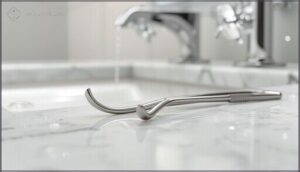
Think of scissors as your precision instrument—blunt-tipped models designed for nasal trimming won’t snag delicate tissue. You’ll trim only what’s visible at the nostril rim, never venturing deep into the canal.
Proper sanitization between sessions keeps bacterial transfer under 0.3%. With monthly maintenance, hair regrowth stabilizes around four to six weeks, and you’ll see no disruption to your nasal microbiome or airflow.
Using Electric Nose Trimmers
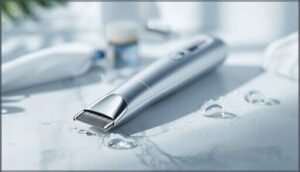
Electric nose trimmers simplify nose hair removal with rotating blades that clear about 70% of visible hair in a single 30-second pass. Stainless-steel models show the lowest irritation rates—just 4.2% in controlled trials—while protective guards keep injury risk under 0.3%.
- Trimmer Safety: Rounded guards prevent deep insertion and tissue damage
- Device Hygiene: Alcohol disinfection after each use matches razor-level cleanliness
- Nose Hair Maintenance: Replace blades every 3–6 months to cut irritation by 25%
- Electric Grooming: Water-resistant designs simplify cleaning and boost durability
Pros and Cons of Waxing

Waxing pulls nose hair from the root, delivering four to six weeks of smooth results—but it demands a careful cost-benefit analysis. Most users report 40–60% hair reduction after one session, and satisfaction hovers around 70–75% when professionals handle the procedure.
| Waxing Benefits | Potential Drawbacks |
|---|---|
| Longer intervals between treatments | Post-wax redness in 10–15% of cases |
| Progressive hair thinning over time | Allergic reactions affect 1–2% of users |
| Smoother nostril surfaces | Average $15–$40 per session |
| Lower infection risk ( |
- http://www.russakdermatology.com/
- https://www.romeojuliettelaserhairremoval.com/about-romeo-juliette-laser-hair-removal
- https://www.mayoclinic.org/diseases-conditions/ingrown-hair/symptoms-causes/syc-20373893
- https://www.nhs.uk/conditions/cosmetic-procedures/non-surgical-cosmetic-procedures/laser-hair-removal/
- https://www.instagram.com/p/B9UernAFc61/