This site is supported by our readers. We may earn a commission, at no cost to you, if you purchase through links. This content is for general informational and educational purposes only and is not a substitute for professional medical, dermatological, or nutritional advice.

Check your jaw in the mirror every morning and it feels like watching grass grow, one patch thick, another bare. That’s not bad luck. Your chin and mustache follicles wake up first, while your cheeks hit snooze for another few years.
Most guys compare themselves to their older brother or that one kid in gym class with a full beard at 16, and it wrecks their confidence for nothing. Genetics set the timeline, not willpower.
This simple beard grooming guide for teens breaks down what’s normal, what to expect, and how to work with what you’ve got right now, patchy spots and all.
Table Of Contents
- Key Takeaways
- Set Realistic Teen Beard Expectations
- Choose a Teen-Friendly Beard Style
- Follow a Simple Beard Care Routine
- Trim and Shape Your Beard Safely
- Fix Common Teen Beard Problems
- Frequently Asked Questions (FAQs)
- Should a 15 year old shave his beard?
- How to remove facial hair for a 14 year old?
- Is it normal for a 14-year-old to grow a beard?
- What are the steps to grooming a beard for a beginner?
- What is the 3 month beard rule?
- Should a 14 year old trim his beard?
- How often should teens wash their beards?
- What age is too young for beard oil?
- Should teens shave against the grain completely?
- Can acne medications affect teen beard growth?
- Conclusion
Key Takeaways
- Your genetics set the timeline for beard growth, so patchy chins and bare cheeks in your teens are normal, not a sign anything’s wrong.
- Pick a style that matches what’s actually growing right now, like light stubble or a soul patch, instead of chasing a full beard before your cheeks catch up.
- Stick to a simple routine: wash 2-3 times a week, apply beard oil after showering, comb daily, and exfoliate weekly to keep skin and hair healthy.
- Trim safely by starting with a longer guard, working with the grain, and defining your neckline with the two-finger rule for a clean, confident look.
Set Realistic Teen Beard Expectations

Growing a beard as a teen comes with questions, and that’s normal. Your genetics, patience, and patchy spots all play a part in the process. Here’s what you need to know before you pick up a trimmer.
Before reaching for products that promise overnight results, it helps to understand how genetics and hormones shape beard growth in teens so you know what to realistically expect.
Genetics and Your Growth Timeline
Blame your parents for that patchy jawline. Your genetic follicle count is set at birth, and DHT sensitivity genes decide how thick each hair grows.
- Follicle count: fixed at birth
- DHT genes: control thickness
- Ethnic patterns: vary by ancestry
- Puberty timing: shifts start age
- Peak density: ages 30-35
Full beards often wait until your 20s. Patience wins here. If growth still seems uneven, it may help to understand genetic influences on beard growth, since inherited genes largely determine facial hair density and pattern.
Normal Patchiness and Uneven Coverage
That patchy jawline isn’t broken, it’s just on its own clock. Chin and mustache follicles wake up first, cheeks lag weeks behind, so gaps are normal, not permanent.
Hormone swings during puberty add to the unevenness too. Some follicles grow while neighbors rest. Give it 4-6 weeks minimum before judging your coverage. Staggered growth evens out with time and patience.
Typical Teenage Beard Growth Speed
Once those follicles wake up, growth moves fast. Expect 0.3 to 0.5mm daily, roughly a third to half an inch monthly.
Genetics and hormones set your personal pace, so don’t compare your timeline to your buddy’s. Some follicles kick in sooner, others lag. That’s individual variation at work, not a growth problem you need to fix.
When Fuller Growth Usually Develops
Speed is one thing. Full coverage is another story entirely.
Most guys hit fuller growth between 18 and 22, with real thickening by 25. Genetic Growth Timeline and Hormonal Development Phase both play a role here.
- Upper lip fills in first, around 16-17
- Cheeks lag behind, often until 22-25
- Peak density ages land around 25-30
Confidence While Your Beard Develops
Your beard doesn’t define you yet, and that’s okay. Embrace patchiness as part of the process, not a flaw to fix.
Your beard doesn’t define you yet—embrace the patchiness instead of treating it like a flaw to fix
Grooming builds confidence even before full coverage arrives. Keep your routine tight, your edges clean, and celebrate small progress week to week.
A realistic growth mindset beats comparing yourself to older guys. Patience with growth pays off every time.
Choose a Teen-Friendly Beard Style

Not every beard style works for every stage of growth. Pick one that fits what you’ve got right now, not what you wish you had. Here’s how to find the style that actually works for you.
Once you’ve settled on a style, keep it looking sharp by working in a few drops with the oil-comb method for even, professional-looking coverage.
Match Styles to Growth Coverage
Growth zones matter more than age. Upper lip and chin fill in first, cheeks and neck lag behind.
Match your style to what’s actually growing. Light stubble hides patchy teen growth best. Skip full coverage until cheeks catch up, that’s a look for later years.
Keep sparse patches trimmed short instead of long. Short and even beats long and uneven every time.
Consider Your Face Shape
Mirrors don’t lie, so use one. Check your face shape before picking a style.
Square jaw? Keep beards short, angles already work for you. Round face? Add jawline structure with cheek growth. Widest at your forehead? Balance it with fuller chin coverage. Face longer than wide? Skip lengthy chin beards, they stretch things further.
Check School Grooming Rules
Handbooks matter more than mirrors here. Read yours before you commit to a look.
Rule exceptions vary by district:
- Half-inch limit on beards, goatees, mustaches
- One-inch waiver available with formal approval
- Clean-shaven mandates for uniformed programs
- Religious or medical exemptions need documentation
Dress code conflicts cause real headaches. Avoid enforcement trouble, ask your dean first.
Try Stubble, Scruff, or Soul Patch
Three styles fit teens best. High school stubble at 1-2mm suits strict dress codes. Natural teen scruff runs 2-5mm, low maintenance, trim weekly.
| Style | Length |
|---|---|
| High school stubble | 1-2mm |
| Natural teen scruff | 2-5mm |
| Soul patch | 8-10mm |
A soul patch or teen goatee adds shape without full commitment. Trim every 2-3 days.
Keep Sparse Areas Looking Neat
Patchy spots don’t need to look messy. Trim stray hairs daily with precision trimmers to keep edges clean.
Brush with boar hair to lift flat sections and add fullness. Apply beard balm for light hold and shine.
Style with filler pens for stubborn gaps. Small habits like these make patchy beard grooming for teens look sharp, not sparse.
Follow a Simple Beard Care Routine
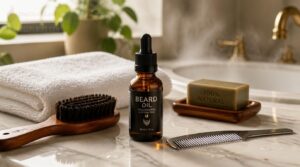
A good beard doesn’t happen by accident, it happens with a routine. Keep things simple and stick to the basics, and your skin and hair will thank you. Here’s what that routine looks like, step by step.
Wash Two or Three Times Weekly
Wash your beard two or three times a week with a mild, sulfate-free cleanser, not daily. Daily washing strips natural oils and dries your skin.
If you’ve recently dyed your beard, this same gentle routine helps the color hold, and you can see how long beard dye typically lasts before a touch-up is due.
Use lukewarm water, not hot, and massage gently to lift dirt without irritation.
This keeps product buildup down while protecting sensitive, acne-prone skin underneath.
Apply Beard Oil After Showering
Right after you towel off, pat your beard damp, not soaking. Apply beard oil to skin first, massaging into cheeks and neck, then pull outward root to tip. Two or three drops does it. Quality oil absorbs in minutes, locking in beard hydration without grease. Steam keeps skin receptive, so timing matters for real beard maintenance.
Comb or Brush Daily
Once that oil sinks in, grab a wide-toothed comb for wet beard days, it detangles gently without ripping hairs out.
Switch to a brush once dry to spread oils and smooth things down. Start at the ends, work upward.
Daily brushing cuts shedding and keeps teen beard care simple, comfortable, and tangle-free.
Exfoliate Once or Twice Weekly
Underneath all that beard hair, your skin still needs attention. Dead skin cells build up and clog follicles, causing bumps and itch.
- Exfoliate weekly, once or twice depending on skin type
- Oily skin can handle more frequent exfoliation
- Use gentle circular motions on damp skin
- Rinse thoroughly, then moisturize right after
- Watch for redness, a sign you’re overdoing it
This protects your skin barrier while keeping beard health on track.
Protect Sensitive, Acne-Prone Skin
If your skin’s prone to breakouts, treat it kindly. Stick with a mild cleanser, sulfate-free, and skip harsh scrubbing.
Add a non-comedogenic moisturizer plus SPF 30. Patch test new products behind your ear first.
| Do | Skip |
|---|---|
| Gentle cleanser | Alkaline soap |
| Non-comedogenic moisturizer | Heavy oils |
| Sunscreen daily | Skipping SPF |
Trim and Shape Your Beard Safely
Trimming turns a rough beard into a sharp one. You don’t need fancy gear or barber school skills to get it right. Follow these five steps and you’ll shape it like you’ve done it for years.
Choose Beginner-Friendly Grooming Tools

Good tools make trimming easier, not harder. Pick a trimmer with rubberized grip and balanced weight to avoid slips and wrist strain.
- Textured, non-slip handle
- Adjustable guard lengths
- Matte finish (less glare)
- Contoured, comfortable grip
- Accessible replacement blades
Add a wide-tooth comb and natural bristle brush for daily upkeep, plus a mild, sulfate-free cleanser.
Start With a Longer Guard
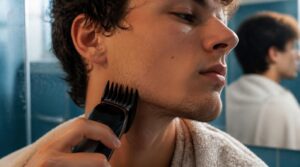
Confidence starts with a safety net, and that net is a longer guard. Clip on a 9mm guard first, then adjust down in small steps. This gradual reduction protects you from cutting too short. Try this simple guide:
| Guard | Length Left | Best For |
|---|---|---|
| 9mm | 10mm | First pass |
| 12mm | 13mm | Fuller look |
| 3 | 10mm | Fine-tuning |
Trim Evenly With Hair Growth

Ever notice one side looks longer after you comb it? That’s hair lift, not uneven growth.
- Comb hair down first, every time
- Trim with the grain, not against it
- Take even passes, both sides equal
Hold skin taut, work slow. Match your comb direction before each check, so length stays honest and your beard maintenance stays consistent.
Define a Natural Neckline
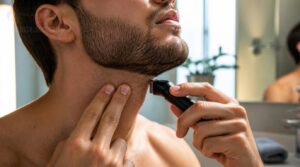
A messy neckline can make your whole beard look sloppy, even with great growth up top.
Find yours using the two-finger rule: two fingers above your Adam’s apple marks the lowest point. Follow a natural U-shaped curve from ear to ear, not a straight line. For short beards, trim with a guardless trimmer along that curve, then check weekly and touch up stray hairs.
Clean Up Cheeks and Edges

Find your cheek line by drawing a straight line from ear to mouth corner. Use your comb’s flat edge as a guide.
Trim with short taps, switch to scissors for stray hairs. Check symmetry from both angles before finishing.
- Clean lines build confidence
- Small mistakes teach patience
- Consistency builds mastery
Touch up edges every 5-7 days to stay sharp.
Fix Common Teen Beard Problems

Every beard hits a few bumps along the way, and that’s normal. Itchy skin, bald patches, and stray ingrown hairs trip up almost every teen grower. Here’s how to handle the most common problems and keep your beard on track.
Soothe Itchiness and Dryness
Itchy skin makes new beards miserable, but it’s fixable. Use jojoba oil or aloe-infused beard oil daily after showering, while skin’s still damp, to seal moisture in.
| Do | Skip |
|---|---|
| Mild cleanser | Hot water |
| Beard oil daily | Rubbing dry |
| Weekly exfoliate | Harsh soap |
| Pat dry | Scratching |
Gentle habits beat scratching every time.
Manage Patchy or Sparse Growth
Patchy spots are normal in beard growth teens deal with, so don’t stress. Genetics call the shots here.
Try sparse area styling: longer guard, comb outward, fade edges with scissors. Beard filler powder covers gaps for photos. Microneedling once every two to three weeks can boost density over months. Add a nutrient support routine, protein, zinc, biotin, for steady beard and skin health.
Prevent Ingrown Hairs
Trimming powders on filler can’t help if bumps show up under your jaw. Ingrown hairs happen when curly stubble curls back into skin, so always shave with the grain, not against it.
Soften skin first with warm water, exfoliate weekly, and keep your razor clean between uses. Moisturize after. Trapped hair? Warm compress it, don’t dig.
Eat Protein and Stay Hydrated
Your body can’t store protein, so eat enough protein daily to keep those follicles working.
Eggs, chicken, fish, and Greek yogurt give amino acids for muscle and hair repair.
Stay hydrated too. Eight glasses daily helps skin and fluid balance, keeping your beard’s foundation healthy while you practice beard patience.
Sleep, Exercise, and Manage Stress
Grow a beard while you sleep? Kind of. A Consistent Sleep Schedule with 8-9 hours fuels follicle recovery. Add a Daily Exercise Routine to boost testosterone and circulation.
Three habits that help most:
- Wind-down without screens an hour before bed
- Move your body daily to buffer stress
- Practice Stress Management Techniques like deep breathing
Patience beats everything here.
Frequently Asked Questions (FAQs)
Should a 15 year old shave his beard?
Like a first coat of paint, your beard needs time before you shape it. Shaving at 15 is a personal call, not a school rule. Factor in skin sensitivity, patchy growth, and how ready you feel.
How to remove facial hair for a 14 year old?
Stick with a quality razor or battery-powered facial shaver made for teens. Prep skin with moisturizer first, shave with the grain, then moisturize again. Skip waxing or creams until you check with a parent or dermatologist.
Is it normal for a 14-year-old to grow a beard?
Think of it as a seedling, not a full oak tree. Yes, it’s normal. Puberty triggers early facial hair, and patchy teenage beard growth at 14 just means your beard growth timeline is only getting started.
What are the steps to grooming a beard for a beginner?
Wash your beard 2 to 3 times weekly, apply beard oil after showering, and comb daily. Exfoliate skin weekly, then trim evenly with growth using a longer guard first for safe, beginner-friendly results.
What is the 3 month beard rule?
A seed doesn’t rush before its roots take hold. The 3 month beard rule works the same way: skip trimming for 90 days, let patchy spots fill in, and trust your growth timeline before shaping anything.
Should a 14 year old trim his beard?
Yes, at 14 you can absolutely trim. Light trimming every few days tidies patchy growth and defines your neckline, way better than letting scruff grow wild. Grab basic scissors or a trimmer and keep edges clean while you wait for fuller coverage.
How often should teens wash their beards?
Two or three washes weekly works for most teens with a mild cleanser. Oily skin or heavy sweat means washing daily. Dry skin or coarse hair stretches that to every other day.
What age is too young for beard oil?
Rumor says oil needs a "grown" beard first. Not true. No age is too young once hair shows, even at 13, for early itch relief, skin sensitivity testing, and basic comfort care.
Should teens shave against the grain completely?
Skip going full against the grain. Map your grain direction first, then shave with it, follow with an across-the-grain pass, use a sharp blade and light pressure, and skip against-the-grain on sensitive necks.
Can acne medications affect teen beard growth?
Think of acne meds as weather, not seasons: they pass through, they don’t reset your clock. Most topical treatments leave beard follicle health alone; oral options like isotretinoin can slow growth briefly, but hormone signaling resets and your beard bounces back.
Conclusion
The less you obsess over your beard, the better it actually grows. That’s the paradox every teen faces in the mirror. Patchy spots aren’t failures, they’re proof your follicles just haven’t caught up yet.
This simple beard grooming guide for teens works because it favors consistency over flawlessness. Wash it, oil it, trim it, then let genetics finish the job. Stay patient. Your fuller beard is already on its way.