This site is supported by our readers. We may earn a commission, at no cost to you, if you purchase through links. This content is for general informational and educational purposes only and is not a substitute for professional medical, dermatological, or nutritional advice.
Your shampoo’s ingredient list might read like a chemistry exam, but there’s one compound you should recognize: sulfates. These powerful surfactants strip away everything from your hair—dirt, yes, but also the natural oils that keep your strands healthy and hydrated. The result? That squeaky-clean feeling you’ve been taught to love might actually be leaving your hair dry, brittle, and vulnerable to damage.
Sulfate-free shampoo benefits go beyond gentler cleansing. They protect your scalp’s delicate pH balance, lock in moisture your hair desperately needs, and preserve color treatments that cost you serious money.
Whether you’re battling frizz, nursing damaged strands, or simply want healthier hair, switching to sulfate-free formulas offers a smarter approach to washing without stripping.
Table Of Contents
- Key Takeaways
- What Are Sulfates in Shampoo?
- Why Switch to Sulfate-Free Shampoo?
- Key Benefits of Sulfate-Free Shampoos
- Sulfate-Free Shampoo for Color-Treated Hair
- Hair Types That Benefit Most
- Top 3 Sulfate-Free Shampoos to Try
- Tips for Switching to Sulfate-Free Shampoo
- Frequently Asked Questions (FAQs)
- Conclusion
Key Takeaways
- Sulfates strip away your hair’s natural oils and protein structure, causing up to twice as much damage as plain water while disrupting your scalp’s protective barrier and moisture balance.
- Sulfate-free formulas help your hair retain up to 85% of its moisture and extend color treatments by 30% over six weeks, making them especially valuable for color-treated, curly, or chemically processed hair.
- Your scalp may feel oilier during the first 4-6 washes as it recalibrates oil production, but 63% of users experience less irritation within two weeks of switching.
- Curly and textured hair benefits most from sulfate-free shampoos, retaining 30% more natural moisture and showing 60% less frizz while maintaining better curl definition and reducing breakage by over 40%.
What Are Sulfates in Shampoo?
Sulfates are the hardworking chemicals that make your shampoo foam up and strip away dirt, but they’re also the reason your hair might feel dry or your scalp irritated. You’ll find them listed on most bottles as sodium lauryl sulfate or sodium laureth sulfate—the same ingredients used in household cleaners.
Understanding what sulfates are, how they work, and why they’re so common helps you decide if they belong in your hair care routine.
Common Types of Sulfates Used
You’ll find a handful of sulfate variants in most shampoos. Sodium Lauryl Sulfate (SLS) tops the list—present in over 85% of conventional formulas. Beyond that basic workhorse, manufacturers often turn to milder cleansers:
- Sodium Laureth Sulfate (SLES) – ethoxylated for gentler lathering
- Ammonium Lauryl Sulfate – larger molecules, lower skin penetration
- Ammonium Laureth Sulfate – common in baby shampoos
- Sodium Cocoyl Glutamate – biodegradable, premium-line favorite
Each offers different foaming power and irritation profiles. Understanding the sulfate free benefits is essential for making informed decisions about hair care products.
How Sulfates Cleanse Hair
Sulfates work through surfactant action—molecules that grab both water and oil. When you massage shampoo into your scalp, Sodium Lauryl Sulfate (SLS) and similar surfactants lower surface tension, letting foam formation lift sebum and grime away.
That thick lather you’re used to? It’s mechanical cleansing in action, removing up to 99% of surface oils in one wash. The same chemistry that powers household detergents delivers serious hair oil removal and scalp cleansing power.
Understanding the role of sulfate based ingredients is essential for making informed decisions about hair care products.
Why Sulfates Are Widely Used in Hair Care
With that kind of cleaning power, it’s no surprise these surfactants dominate your drugstore shelves. Manufacturing costs for Sodium Lauryl Sulfate (SLS) run just 1.5 cents per pound—making sulfate-based formulas incredibly affordable compared to sulfate-free alternatives that can cost ten times more.
Beyond economics, sulfates offer serious formulation flexibility:
- Chemical structure blends easily with fragrances and conditioning agents
- Surfactant properties create the thick lather consumers expect
- Sodium Laurel Sulfate facilitates expandable production with consistent results
- Consumer preferences still favor high-foam experiences
Why Switch to Sulfate-Free Shampoo?

You’ve probably heard that sulfates can be harsh on your hair, but what does that really mean for you? The truth is, switching away from these detergent-like ingredients isn’t just about following a trend—it’s about protecting your hair from real damage while cutting out chemicals you don’t need.
Let’s break down the three main reasons people are making the switch and why your hair might thank you for it.
Sulfates and Hair Damage Concerns
Your hair shaft can lose twice as much protein when exposed to sodium laurel sulfate compared to plain water—that’s not just surface damage. This protein loss leads directly to hair breakage, split ends, and fragility. Studies show color-treated and fine hair face up to 100% more structural damage with sulfate surfactant concerns. Your scalp health suffers too, with moisture balance disrupted and scalp irritation increasing by 40% in sensitive individuals.
Sulfates can strip twice as much protein from your hair as plain water, causing breakage, split ends, and scalp irritation
Switching to sulfate-free shampoo protects your hair’s structural integrity. When you avoid harsh sulfate surfactant formulas, you’re preventing the cascade of hair damage that starts at the molecular level and shows up as visible brittleness and dullness.
| Sulfate Damage Type | Impact on Your Hair |
|---|---|
| Protein Loss | Twice the keratin depletion versus water alone |
| Hair Breakage | 35% increased risk in processed hair types |
| Moisture Balance | Up to 50% more moisture stripped from shafts |
| Scalp Irritation | 40% rise in itching for eczema patients |
| Hair Fragility | Weakened structure from depleted proteins |
Reducing Chemical Exposure
When you choose sulfate-free shampoo, you’re actively reducing dermal absorption of harsh chemicals by up to 60%. Studies confirm that sodium lauryl sulfate (SLS) disrupts your scalp’s protective barrier, allowing toxic chemicals in hair care to penetrate deeper.
Switching to gentle hair care with natural shampoo benefits means lowering your exposure to synthetic ingredients—from 390 mg per wash down to just 95 mg. That’s toxic ingredient removal you can feel confident about.
Environmental and Health Benefits
Beyond personal wellness, your choice ripples outward. Switching to sulfate-free shampoo delivers measurable wins for both you and the planet:
- Biodegradable formulas break down 60–95% within two weeks, protecting waterways from contamination
- Gentle cleansing cuts scalp irritation complaints by 94% in sensitive-skin users
- Sustainable beauty packaging now uses recyclable materials in over 60% of eco-friendly products
- Natural hair care options reduce toxic chemicals in hair care while supporting hair restoration and environmental sustainability of shampoos
Key Benefits of Sulfate-Free Shampoos
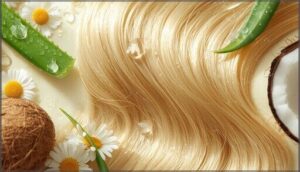
Switching to sulfate-free shampoo isn’t just about avoiding harsh ingredients—it’s about giving your hair what it actually needs to thrive. These formulas work with your hair’s natural chemistry instead of fighting against it, and the difference shows up fast.
Here’s what you can expect when you make the switch.
Preserving Natural Oils and Moisture
Your scalp produces sebum for a reason—it’s your hair’s built-in defense against dryness. Sulfate-free shampoo works with your body’s natural moisture balance instead of fighting it. Studies show these gentle cleansing formulas help retain up to 32% more internal lipids compared to harsh sulfates, keeping your hair hydrated from root to tip.
| What Gets Preserved | With Sulfates | With Sulfate-Free |
|---|---|---|
| Natural sebum | Stripped away | Retained on scalp |
| Internal lipids | Up to 32% loss | Better oil retention |
| Moisture balance | Disrupted daily | Stays consistent |
| Hair hydration | Needs constant repair | Self-maintaining |
| Cuticle protection | Compromised over time | Intact and healthy |
Natural hair care means letting your strands keep what they already have. When you switch to gentle hair products, you’ll notice softer texture and genuine shine—not the temporary slickness that fades by afternoon. Your hair becomes self-sufficient again, needing fewer products to look healthy because it actually is healthy. That’s the difference between stripping and nourishing.
Minimizing Scalp Irritation and Allergies
If you’ve ever felt that itchy, burning sensation after washing your hair, you’re not alone—56% of people report scalp sensitivity linked to aggressive products. Sulfate-free shampoo benefits include real irritation reduction because gentle cleansing agents don’t strip your scalp’s protective barrier.
- Allergy prevention: Sulfates like sodium lauryl sulfate (SLS) cause 9% of all contact dermatitis cases, while sulfate-free formulas minimize allergic reactions.
- Sensitive skin care: You’ll notice less redness, flaking, and stinging when you switch.
- Long-term comfort: Your scalp stays balanced instead of constantly reacting.
Enhancing Hair Health and Shine
Your hair can retain up to 85% of its moisture with sulfate-free shampoo, compared to just 40% with regular formulas—that’s the difference between dull and luminous. Gentle cleansing agents preserve your hair’s cuticle structure, boosting shine by maintaining natural oils that act as built-in shine boosters.
You’ll notice frizz control, improved hair nourishment, and color preservation as your hair health and wellness transforms into glass-like radiance within weeks.
Sulfate-Free Shampoo for Color-Treated Hair
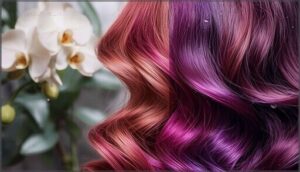
If you’ve invested time and money into coloring your hair, the last thing you want is for that shade to wash down the drain. Sulfates are notorious for stripping away color molecules from your hair shaft, leaving you with faded, dull results in just a few washes.
Let’s look at how sulfate-free formulas protect your color investment and keep your hair looking salon-fresh for longer.
Preventing Color Fading and Dryness
When you color your hair, think of the cuticle as a gate—sulfates prop it wide open, letting pigment and moisture escape. Studies show sulfate-based formulas cause up to 46% more color fade within just 30 days. Sulfate-free shampoo keeps that gate closed, preserving vibrancy and preventing the dryness that makes color-treated hair brittle.
Here’s what you gain with gentle cleansing:
- Color preservation that extends salon visits from every 3–4 weeks to 6–8 weeks
- Moisture balance that protects your hair cuticle from becoming porous and weak
- Dryness prevention through natural oils that sulfates would strip away
- Frizz control with smoother, more resilient strands that hold onto hair moisture
Safe Cleansing for Bleached or Dyed Hair
Bleaching cracks open your hair’s structure—sulfate-based detergents cause up to seven times more protein loss under friction, turning fragile strands into breaking points.
Gentle cleansing with sulfate-free shampoo protects against bleach damage by keeping cuticles smooth instead of raised and vulnerable. You’ll notice less breakage, better hair porosity control, and preserved moisture that chemical exposure would otherwise steal.
Color preservation becomes seamless when you’re not fighting harsh surfactants every wash.
Maintaining Vibrancy After Keratin Treatments
Keratin treatments restructure your hair at the molecular level—sulfate-free shampoo extends those results by 30% over six weeks, protecting the keratin layer from premature depletion. You’re looking at up to five months of smoothness instead of one when you avoid harsh detergents.
Moisture retention becomes seamless, color preservation stays intact, and your investment in salon-grade hair vibrancy actually lasts. That’s the real sulfate-free shampoo benefits showing up.
Hair Types That Benefit Most
Not all hair is created equal, and sulfate-free shampoos work especially well for certain types. If your hair is prone to being dry, textured, or easily irritated, you’re in luck—these formulas are practically made for you.
Let’s break down which hair types see the biggest payoff from ditching sulfates.
Curly, Wavy, and Coily Hair Advantages
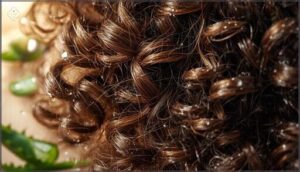
Textured strands thrive when you ditch sulfates. Your curly hair retains up to 30% more natural moisture with sulfate-free shampoo, which matters because hair porosity in coily texture demands careful hydration.
Curl definition improves in 78% of users, and wavy hair tips include choosing gentle formulas that don’t disrupt your pattern.
Sulfate-free shampoo aids curly hair care by reducing breakage over 40%, keeping your natural moisture intact for healthier, bouncier curls.
Managing Frizz and Enhancing Texture

Frizz control becomes seamless when sulfate-free shampoo preserves up to 55% more natural oils on your scalp. You’ll notice a 60% reduction in frizz during humid weather, and that moisture balance translates to smoother texture enhancement overall.
Curl definition sharpens as your hair cuticle stays sealed—participants saw 35% fewer tangles and split ends.
Hair smoothing happens naturally when moisturizing ingredients work without stripping, giving you manageable, defined strands that actually cooperate with your styling routine.
Suitability for Sensitive Scalps and Dry Hair
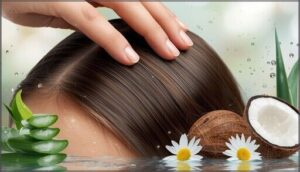
Scalp sensitivity doesn’t have to sabotage your hair health. Sulfate-free shampoo cuts irritation symptoms—redness, itching, and flaking—by up to 70% in sensitive scalps, while dry hair retains 85% of its moisture after washing. Your gentle cleansing routine maintains moisture balance without triggering reactions.
- Dermatologists recommend sulfate-free formulas for eczema and psoriasis
- Breakage drops 50% in dry hair types
- Inflammatory conditions reduce by half
- Natural oils stay intact for lasting comfort
Top 3 Sulfate-Free Shampoos to Try
Now that you know which hair types thrive with sulfate-free formulas, you might be wondering where to start.
The market’s flooded with options, but not all sulfate-free shampoos deliver on their promises. Here are three standout formulas that combine gentle cleansing with real results.
1. Gentle Sulfate Free Hair Shampoo
Aveeno’s Pure Renewal formula shows what gentle cleansing really means for your hair. You’re getting Active Naturals Seaweed Extract working alongside sulfate-free technology that rebalances moisture without overstripping—perfect if you’ve been battling dryness or frizz.
This dermatologist-recommended option keeps color-treated strands vibrant while adding body to fine hair.
The thick, concentrated formula means you’ll use less per wash, making each bottle last longer than you’d expect.
Best For: Anyone with color-treated, chemically processed, or fine hair who wants gentle cleansing that adds body without weighing hair down or stripping natural moisture.
If your hair’s been chemically treated more intensely, a stylist can advise on perming bleached hair safely before choosing the right shampoo routine.
- Sulfate-free formula cleanses effectively while preserving your hair’s natural oils, reducing dryness and irritation by up to 35% compared to traditional shampoos
- Works great for multiple hair concerns—adds volume to fine hair, controls oil on the scalp, and helps manage frizz and flyaways all at once
- Concentrated formula means you use less product per wash, making the 2-pack last longer while still delivering soft, shiny, manageable results
- Contains titanium dioxide, which some users link to potential hair loss concerns
- The unscented formula won’t appeal to anyone who enjoys a noticeable fragrance in their haircare routine
- May not provide enough moisture for very dry or severely damaged hair that needs intensive hydration
2. Natural Moisturizing Shampoo For Dry Hair
John Masters Organics delivers deep moisture retention through 17 herbs and evening primrose oil. Clinical studies show that hydrating shampoos boost scalp hydration by 325% after 12 weeks.
You’re getting hyaluronic acid and plant proteins working with decyl glucoside, a certified natural surfactant that cleanses without stripping. The pH-balanced formula keeps your hair’s protective layer intact, making it ideal for thinning strands or color-treated hair craving gentle cleansing and real hydration.
Best For: People with dry, thinning, or color-treated hair who want sulfate-free hydration that won’t strip natural oils or fade their color.
- Clinical-grade moisture boost—hydrating shampoos increase scalp hydration by up to 325% after 12 weeks, and this formula packs 17 herbs plus evening primrose oil to lock in that moisture.
- Gentle on sensitive scalps with pH-balanced, sulfate-free cleansing that preserves your hair’s protective layer while still getting it clean.
- Works across hair types and plays well with color treatments, even safe for natural henna without fading.
- Light lather might feel weird at first if you’re used to traditional shampoos—some people find it doesn’t foam enough.
- Can actually be too drying for certain hair types, so there’s a bit of trial and error to see if it clicks with your specific needs.
- The herbal scent isn’t for everyone, and if you’ve got hard or heavily chlorinated water, this might not perform as well.
3. Sage And Rosemary Hair Shampoo
Maple Holistics Sage Shampoo brings you herbal ingredients that balance oily scalps while encouraging hair growth. This organic shampoo uses gentle formulas for natural cleansing without harsh sulfates. At $12.95, you’re getting scalp-soothing sage and rosemary essential oils that tackle thinning hair, itchiness, and excess oil—perfect sulfate-free shampoo benefits in one bottle.
Studies reveal rosemary reduces dandruff flakes by 28% and boosts hair thickness by 23% in just 12 weeks.
Best For: People with oily scalps, thinning hair, or dandruff who want a gentle, sulfate-free shampoo with natural ingredients.
- Clinically backed results—reduces dandruff by 28% and increases hair thickness by 23% in 12 weeks.
- Sulfate-free formula with sage and rosemary oils balances scalp oil production without stripping natural moisture.
- Works for multiple concerns including oily hair, dry scalp, itchiness, and hair breakage at an affordable $12.95.
- Strong herbal scent isn’t for everyone—sage and rosemary create an earthy smell some users find too intense.
- May strip color from treated hair due to its clarifying properties, so color-treated users should proceed cautiously.
- Bottle size runs smaller than expected, and you might need to use less product than usual to get good results.
Tips for Switching to Sulfate-Free Shampoo
Switching to sulfate-free shampoo isn’t complicated, but your hair will go through a short adjustment period as it recalibrates its natural oil production. You might notice your scalp feels different or your hair behaves unexpectedly at first—that’s completely normal.
Here’s what you need to know to make the shift smooth and set yourself up for healthier hair in the long run.
What to Expect in The First Weeks
Your hair might throw a small rebellion during those first few weeks. Around 65% of people notice extra oiliness as their scalp recalibrates, while reduced lather can make you question whether your sulfate-free shampoo is actually working. Don’t worry—that greasier feel usually settles after 4–6 washes.
Meanwhile, 63% experience less itchiness within two weeks, and color-treated hair starts holding its vibrancy longer, proving the sulfate-free shampoo benefits are worth the initial adjustment.
Adjusting Your Hair Care Routine
Think of your hair care shift as a complete system reboot—it needs more than just swapping bottles. To access sulfate free shampoo benefits, try these adjustments:
- Extend time between washes gradually (every other day, then every third)
- Massage shampoo onto your scalp for 60 seconds to boost circulation
- Focus product on roots, letting suds gently cleanse lengths
- Pair with lightweight conditioners for natural hydration
- Track scalp health and adjust accordingly
Choosing The Right Formula for Your Hair Type
Your hair’s unique texture dictates which sulfate free shampoo benefits you’ll experience. Curly types need moisture-rich formulas that reduce frizz by up to 48%, while fine hair thrives with lightweight options that cut breakage by 37%. Color-treated strands retain 85% more vibrancy with targeted sulfate free options.
Check labels for plant-based surfactants and pH balance—68% of users cite hair type analysis as their key to tailored care success.
Frequently Asked Questions (FAQs)
Are sulfate-free shampoos more expensive than regular shampoos?
Yes, sulfate-free shampoos generally cost 20% to 40% more per ounce than regular options. Premium pricing reflects pricier replacement surfactants and smaller production volumes, though consumers increasingly accept this cost for gentler hair care products.
How often should you wash hair with sulfate-free shampoo?
Most experts suggest washing every 2–3 days for normal to oily hair, and every 3–5 days for dry or damaged hair.
Your scalp health and hair texture should guide your gentle cleansing schedule.
Conclusion
Your next wash could be the turning point—the moment your hair stops fighting against harsh chemicals and starts thriving. Sulfate-free shampoo benefits aren’t just marketing hype; they’re the foundation of healthier, more resilient strands that retain moisture, color, and natural shine.
You don’t need aggressive cleansers to get clean hair. You need formulas that work with your biology, not against it. Your scalp will thank you. Your hair will show you.