This site is supported by our readers. We may earn a commission, at no cost to you, if you purchase through links. This content is for general informational and educational purposes only and is not a substitute for professional medical, dermatological, or nutritional advice.

Electric shavers promise convenience and speed, but they can leave your skin red, irritated, and burning if you’re not careful. The culprit isn’t always the shaver itself—it’s usually how you’re using it. Most people skip essential preparation steps or unknowingly apply too much pressure, creating friction that damages the skin’s protective barrier.
The good news is that razor burn doesn’t have to be part of your grooming routine. With the right preparation, technique adjustments, and post-shave care, you can enjoy a smooth, comfortable shave without the painful aftermath.
Table Of Contents
Key Takeaways
- Razor burn from electric shavers stems primarily from friction and pressure, not the device itself—prep your skin with lukewarm water and use light, controlled strokes that follow your hair’s natural growth direction to protect your skin barrier.
- Foil shavers typically cause less irritation than rotary models for sensitive skin, but any electric shaver requires regular maintenance—replace blades and foils every 12-18 months and clean after each use to prevent dullness that creates tugging and heat buildup.
- Wet shaving with water-compatible gels dramatically reduces friction compared to dry shaving, while alcohol-free moisturizers applied within two minutes post-shave help your skin recover faster and minimize inflammation.
- Limiting yourself to single passes over each area prevents the cumulative trauma that triggers redness and micro-abrasions—resist the urge to go over the same spot repeatedly, even if the first pass isn’t perfect.
What Causes Razor Burn With Electric Shavers?
You might assume an electric shaver guarantees a smooth, irritation-free experience, but that’s not always the case. Several factors can turn a quick morning routine into a painful reminder that your skin needs better care.
Let’s break down the most common culprits behind razor burn so you can tackle them head-on.
Skin Sensitivity and Shaver Friction
Friction is the hidden culprit behind most razor burn. When your shaver’s blades meet sensitive skin, higher contact areas create shear forces that lead to micro-abrasions. Here’s how friction management protects your skin barrier:
- Foil shavers usually apply less lateral friction than rotary designs for sensitive skin
- Proper shaver lubrication reduces the coefficient of friction during electric shaving
- Light pressure and shorter strokes minimize mechanical skin irritation
- Pre-shave moisturizers strengthen your skin barrier and improve natural lubrication
- Regular shaver maintenance keeps blades smooth, preventing unnecessary tugging
Understanding these friction factors gives you real control over razor burn prevention.
Dry Shaving Vs. Wet Shaving
Your shaving method directly impacts razor burn risk. Dry shaving generates more friction heat, which can trigger irritation in sensitive skin.
Wet shaving with shaving creams provides lubrication that lowers shear force and protects your epidermis from micro-abrasions. Water exposure also improves skin hydration and elasticity temporarily.
For proper friction reduction and razor burn prevention, wet shaving techniques with your electric shaver usually win.
Dull Blades and Worn Foils
Beyond friction, your shaver’s condition matters just as much. Dull blades and worn foils force you to make extra passes, generating heat and tugging hair instead of cutting cleanly. This compromises cutting efficiency and ramps up irritation risk.
For effective razor burn prevention through proper shaver maintenance and care:
- Replace foils every 12-18 months for peak shaver performance
- Change blades when you notice increased pulling or discomfort
- Inspect cutting elements regularly for visible wear or damage
- Follow manufacturer guidelines for blade replacement and foil maintenance
Consistent razor upkeep protects your skin and maintains your electric shaver’s effectiveness. Regular maintenance also involves checking for methodological flaws to guarantee overall quality.
Ingrown Hairs and Shaving Technique
When hair curves back into the skin after shaving, you’re dealing with ingrown hairs—a common culprit behind razor bumps and inflammation. Your shaving technique directly affects this risk. Following the hair growth direction keeps hairs from curling inward, while gentle pressure protects follicles from trauma.
Pre-shave skin exfoliation clears away debris that traps hairs, while post-shave moisturization calms your skin’s inflammatory response—especially important if you have sensitive skin prone to razor burn.
| Prevention Strategy | How It Helps Your Skin |
|---|---|
| Shave with the grain | Reduces hair curl and ingrown hair formation |
| Use light pressure | Minimizes follicle irritation and inflammation |
| Exfoliate before shaving | Removes keratin debris, frees trapped hairs |
| Apply non-comedogenic moisturizer | Maintains barrier function, lowers inflammatory response |
How to Prepare Your Skin Before Shaving
Your skin needs the right setup before you turn on that electric shaver. A few simple steps before you start shaving can make the difference between smooth comfort and that familiar burning sensation.
Here’s how to get your face ready so the shaver glides easily and your skin stays calm.
Cleansing and Exfoliating The Face

You’ll want to cleanse your face with a pH-balanced, fragrance-free cleanser before every shave—this removes oil and debris that increase friction and skin irritation.
Follow with gentle scrubbing or exfoliation once or twice weekly to lift dead cells and minimize pores, preparing your skin for a smoother pass.
Pat dry with a clean towel to maintain facial hydration without rubbing.
Using Pre-Shave Products for Electric Shaving

A thin layer of pre-shave oils or electric shave gels creates a protective film that reduces friction between your skin and the electric shaver, allowing the blades to glide smoothly without tugging. You’ll achieve better results with water-compatible, non-greasy formulas that won’t clog your device.
Three product types worth trying:
- Silicone-based skin conditioners form a durable slip for longer sessions.
- Lightweight barrier creams support hydration while protecting against micro-tears.
- Shaver lubricants designed specifically for foil and rotary systems reduce heat buildup.
Apply evenly, wait one to two minutes for the film to set, then use gentle strokes with your electric shaver for optimal pre-shave care.
Soften Facial Hair With Lukewarm Water

Splashing lukewarm water—around 98°F to 105°F on your face for 30 to 60 seconds before you grab your electric shaver softens facial hair and preps skin by loosening hair follicles and improving pliability.
This simple skin preparation step makes shaving techniques more effective, reduces the tug that triggers razor burn, and keeps your stratum corneum hydrated without the barrier disruption hotter water can cause.
Importance of Skin Hydration

Hydrated skin is your best defense against razor burn. When your stratum corneum holds adequate moisture, it maintains barrier function and resilience against shaving friction.
Dehydrated skin shows higher friction during mechanical passes, which directly increases irritation risk.
That’s why using humectants like glycerin in your skin preparation routine attracts water to outer layers, reduces transepidermal water loss, and protects sensitive skin from post-shave discomfort.
Choosing The Best Electric Shaver for Your Skin
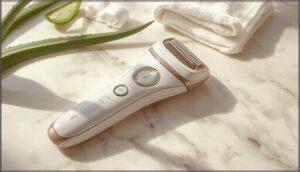
Not all electric shavers are created equal, and picking the wrong one can turn your morning routine into a source of constant irritation. The good news is that certain designs and features work better for sensitive skin, while others practically invite razor burn.
Let’s look at what separates a shaver that protects your skin from one that aggravates it.
Foil Vs. Rotary Shavers for Sensitive Skin
If you’re torn between foil and rotary shavers for sensitive skin, here’s the short version: foil shavers usually win for razor burn prevention. Their flat, oscillating shaver head design creates less skin friction during electric shaving, giving you better skin comfort and control.
Rotary shavers use circular rotary motion that can irritate delicate areas if you press too hard, though they contour nicely on curves. Foil durability matters—replace worn foils promptly to keep shaving ergonomics smooth.
Features That Minimize Irritation
Look for electric shavers with adaptive pressure controls and skin sensors that prevent you from pushing too hard during electric shaving. Hypoallergenic blades paired with protective foil designs dramatically cut skin irritation for sensitive skin types.
Built-in maintenance indicators tell you exactly when components need replacing, so you won’t accidentally trigger razor burn with worn parts. These features work together to boost shaving comfort consistently.
When to Replace Blades and Foils
Even the best electric shavers won’t protect you from razor burn if their cutting components are past their prime. Blade replacement and foil maintenance directly impact shaver performance and cutting efficiency.
You’ll need to swap them out according to these replacement schedules:
- Replace blades and foils after 12–18 months of daily use for most models
- Watch for increased pulling or irritation as signs you can’t ignore
- Check manufacturer guidelines in your manual for specific timing
Worn foils that look bent or torn compromise shaving safety immediately.
Recommended Shavers for Razor Burn Prevention
Once you’ve kept your blades fresh, the next step is picking a shaver built for sensitive skin. Shaver reviews consistently highlight models with sophisticated skin protection features that really work.
Here’s what electric shaver reviews and comparisons show for razor burn prevention:
| Shaver Model | Key Features for Sensitive Skin |
|---|---|
| Philips Norelco 9300 | Multi-directional glide with hypoallergenic foil |
| Braun Series 9 | Optimized pressure system minimizes passes |
| Panasonic Arc5 | High-speed blades reduce friction and rubbing |
| Philips Norelco 7000 | Comfort rings limit irritation on contact |
| Braun Series 3 | Protective skin guard for delicate areas |
These shavers use shaving technology designed specifically to protect your skin while delivering clean results.
Shaving Techniques to Prevent Razor Burn

You’ve got the right shaver and your skin is prepped—now it’s time to talk about how you actually use that shaver. The way you move across your face, how hard you press, and how many times you go over the same spot all make a real difference in whether you walk away smooth or irritated.
Let’s break down the techniques that keep razor burn at bay.
Shave With The Grain and Use Gentle Pressure
When you shave, always follow your hair’s natural direction and ease up on pressure—this simple shift protects your skin from unnecessary trauma.
Here’s how to master gentle strokes:
- Glide the electric shaver along your grain pattern without pushing into your face
- Let the shaver do the work rather than forcing it against your skin
- Use feather-light touches that barely deform the surface
- Check your grip regularly to verify you’re not pressing too hard
This combination of proper technique and pressure control dramatically reduces friction, keeping redness and micro-abrasions at bay while maintaining razor efficiency.
Limit Passes Over The Same Area
Going over the same spot repeatedly is where many people sabotage their electric shaving routine. Each additional pass increases friction and heat, stripping away protective surface cells and triggering inflammation—especially on sensitive skin.
Repeated passes over the same area strip protective skin cells, increase friction, and trigger inflammation—especially on sensitive skin
Your best strategy? Make that first pass count with gentle strokes, then move on. Single pass coverage delivers minimal irritation while giving your skin the recovery time it desperately needs between shaves.
Stretching Skin and Shaving Difficult Areas
Gentle skin stretching along your jawline creates a smoother surface for razor glide, reducing drag across difficult zones. Pull taut with your opposite hand, using light tension rather than aggressive tugging—sensitive skin can’t tolerate overstretching without triggering irritation.
Keep your shaving angles shallow and your movements controlled. This simple adjustment transforms electric shaving on tricky facial contours, especially around your neck and mustache.
Wet Shaving Tips With Electric Shavers
A warm shower before you shave brings wet shave benefits—softened hair means less tugging and friction. Damp skin preparation works better than bone-dry surfaces, so keep things lightly moist.
Apply water-based shave gel applications if your model accommodates them, and use gentle pressure with your electric shave modes. Shaver lubrication reduces heat buildup, transforming your electric shaving tips into real comfort.
Essential Post-Shave and Shaver Care Tips
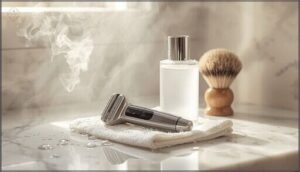
What you do after shaving matters just as much as the shave itself. Your skin needs the right support to recover, and your shaver needs proper care to keep performing without causing irritation.
Here’s how to wrap up your routine and maintain your equipment for consistently comfortable shaves.
Applying Alcohol-Free, Soothing Moisturizers
After you shave, reach for an alcohol-free moisturizer within two minutes—timing matters for skin hydration. Apply a pea-sized amount to slightly damp skin, massaging gently in circles.
Look for soothing ingredients like aloe vera gel, niacinamide, or chamomile that calm razor burn and reduce redness. These gentle formulas support sensitive skin without stinging, making post-shave care genuinely comfortable.
Cleaning and Lubricating The Shaver
A clean shaver doesn’t just last longer—it shields your skin from unnecessary irritation. After each use, brush out trapped hair and debris, then rinse under running water if your model allows it.
- Apply manufacturer-approved lubricant or light 3-in-1 oil to reduce blade friction
- Deep-clean weekly for daily users to maintain motor efficiency
- Replace foils and cutters on schedule to prevent dullness that triggers razor burn
Proper electric shaver maintenance transforms shaving safety from guesswork into routine.
Avoiding Irritating Aftershave Products
Your skin just survived the shave—don’t sabotage it with harsh aftershave. Alcohol-based products sting and strip moisture, triggering redness and dryness.
Choose fragrance-free aftershave balm or soothing gels with natural ingredients like aloe to calm sensitive skin. Patch test new products on your wrist first.
Smart aftershave alternatives for post-shave care make the difference between relief and regret when preventing skin irritation and razor burn.
Regular Maintenance to Prevent Future Razor Burn
Your shaver won’t stay sharp forever, and neglecting it guarantees skin irritation down the road. Think of maintenance schedules like oil changes—they prevent bigger problems.
- Rinse after every shave to stop hair and debris from dulling blades
- Replace foils and blades when manufacturer guidelines say so—worn parts cause razor burn
- Lubricate monthly with approved oils to reduce friction and heat
- Store in a dry spot away from humidity to protect shaving safety and precautions
Consistent shaver cleaning and blade replacement keep electric shavers working smoothly while protecting your skin from unnecessary irritation.
Frequently Asked Questions (FAQs)
Can diet or hydration affect razor burn susceptibility?
Your water bottle matters more than you think. Proper hydration strengthens your skin’s barrier and flexibility, while nutrient-rich foods with omega-3s and antioxidants help calm inflammation and reduce shaving-related irritation.
How long does razor burn typically last?
Most razor burn clears up within 24 to 48 hours as your skin recovers. Mild irritation often fades in half that time, while stubborn redness or swelling might linger for two to three days.
Are there medical conditions that worsen razor burn?
Yes—certain conditions make your skin more vulnerable. Rosacea symptoms, eczema effects, and skin infections increase irritation, while diabetes risks slower healing.
Hyperpigmentation issues may worsen with repeated trauma from ingrown hairs and pseudofolliculitis barbae.
Should I shave daily or skip days?
There’s no one-size-fits-all answer—it depends on your skin’s recovery time and hair growth rate.
Try daily shaving for a week, then skip days to see which schedule minimizes irritation patterns.
Can electric shavers cause permanent skin damage?
Good news: electric shavers don’t cause permanent skin damage when you use them correctly. Most irritation, like razor burn or shaving rash, clears up in hours or days without lasting scarring.
Conclusion
Picture your face free from angry red patches and that familiar sting—it’s completely achievable. Learning how to prevent razor burn when using electric shavers boils down to three essentials: proper preparation, controlled technique, and consistent maintenance.
Your skin adapts when you treat it gently, and your shaver performs better when you keep it sharp and clean. Stick with these practices, and irritation becomes the exception rather than your daily reality.