This site is supported by our readers. We may earn a commission, at no cost to you, if you purchase through links.
You’ve tried rotating shampoos, followed the twice-weekly wash schedule, and switched to sulfate-free formulas—yet those white flakes still settle on your shoulders like unwelcome confetti. Persistent dandruff isn’t just stubborn; it’s often a sign that the Malassezia fungus on your scalp has found the perfect environment to thrive, metabolizing your natural oils into irritating compounds that trigger inflammation and accelerated skin turnover.
The good news? Medical science has identified seven persistent dandruff treatment options that target the root cause, not just the symptoms, combining antifungal actives like ketoconazole and selenium sulfide with keratolytic ingredients that actually break the cycle of flaking and itching.
Table Of Contents
Key Takeaways
- Persistent dandruff stems from Malassezia yeast feeding on scalp oils and producing irritating fatty acids that trigger inflammation and accelerated skin cell turnover, not just poor hygiene or product choices.
- Medicated shampoos containing ketoconazole (1-2%), selenium sulfide, or pyrithione zinc target fungal overgrowth at the source and typically show visible flake reduction within two to four weeks when used consistently twice weekly.
- Combining antifungal treatments with keratolytic ingredients like salicylic acid (3%) breaks down stubborn buildup while moisturizing conditioners with ceramides and niacinamide prevent the stripping effect that worsens the flaking cycle.
- Natural remedies like tea tree oil offer mild antimicrobial benefits but consistently underperform prescription-strength treatments in head-to-head clinical trials, making medicated options the reliable first line of defense for stubborn cases.
Causes and Risk Factors for Persistent Dandruff
Before you can tackle persistent dandruff, you need to understand what’s actually causing those flakes to stick around despite your best efforts.
The truth is, dandruff isn’t just one simple problem—it’s usually a combination of factors working together to irritate your scalp and trigger that frustrating cycle of flaking.
Let’s break down the main culprits so you can identify what’s happening on your scalp and take back control. Understanding the root causes is the first step toward finding the right treatment for your specific scalp condition.
Fungal Overgrowth (Malassezia)
At the heart of persistent dandruff lies Malassezia, a lipophilic yeast that thrives on your scalp’s natural oils. This fungus metabolizes sebum into irritating free fatty acids, sparking inflammation and those telltale flakes. Understanding this scalp ecosystem is key to choosing effective antifungal therapies.
Persistent dandruff often starts with Malassezia yeast feeding on scalp oils and triggering inflammation through irritating fatty acids
- Malassezia globosa and restricta are the primary culprits in most cases
- Higher yeast density correlates directly with increased flaking and itchiness
- Antifungal treatments like ketoconazole and selenium sulfide target Malassezia specifically, reducing fungal load and calming your scalp
Researchers use scientific study methods to better understand the causes of dandruff.
Seborrheic Dermatitis and Other Skin Conditions
When Malassezia triggers seborrheic dermatitis, you’re dealing with more than simple flakes—this inflammatory skin condition creates redness, itching, and oily yellowish scales across your scalp, face, or trunk. Psoriasis and scalp eczema can mimic these symptoms, complicating diagnosis. If you have HIV or Parkinson’s, expect more severe dermatitis types and persistent fungal infections requiring aggressive redness relief strategies for ideal scalp health and care. For fast relief from intense itching and flaking, explore proven strategies to stop dandruff itching quickly while addressing the underlying yeast overgrowth.
| Condition | Key Features | Treatment Approach |
|---|---|---|
| Seborrheic Dermatitis | Oily yellow flakes, redness, Malassezia overgrowth | Antifungal shampoos, topical corticosteroids |
| Scalp Psoriasis | Silver-white scales, well-defined plaques | Coal tar, salicylic acid, biologics |
| Scalp Eczema | Dry, itchy patches, skin inflammation | Gentle cleansers, barrier repair moisturizers |
| Contact Dermatitis | Reaction to products, localized irritation | Eliminate allergens, soothing treatments |
| Fungal Infections | Beyond Malassezia, deeper dermatological issues | Prescription antifungals, specialist consultation |
Oily Scalp and Product Buildup
Your scalp’s oil production doesn’t just make hair look greasy—it feeds the Malassezia yeast behind seborrheic dermatitis and traps styling-product residue, creating a sticky film that blocks medicated shampoos from reaching your skin. That’s why buildup prevention and scalp exfoliation matter as much as flake control.
Four ways oily skin care impacts dandruff:
- Excess sebum nourishes fungi, worsening persistent flakes
- Product residue alters scalp pH, reducing treatment efficacy
- Heavy leave-ins form barriers that shield microbes from actives
- Regular scalp hydration with lightweight formulas cuts buildup risk
Genetic and Lifestyle Influences
Your genes don’t sentence you to lifelong flaking, but genetic predisposition does stack the deck—family history of seborrheic dermatitis doubles your risk, while lifestyle factors like stress, high-sugar diets, and harsh hair products flip epigenetic switches that heighten inflammation. A targeted treatment plan combining ketoconazole shampoo with stress management and dietary tweaks can help override those genetic triggers.
Hormonal influence during puberty often triggers onset, and environmental triggers—humidity, seasonal shifts—interact with your inherited scalp-care vulnerabilities to determine flare-up frequency and severity.
Top 7 Products for Persistent Dandruff
Now that you understand what’s fueling those flakes, it’s time to fight back with products that actually target the problem at its source.
The seven treatments below range from heavy-hitting medicated shampoos with antifungal actives to gentle conditioners and leave-in serums that support long-term scalp health. For Black men dealing with beard dandruff specifically, targeted antifungal treatments and moisturizing routines can address both flaking and the unique texture of coarser facial hair.
Each one brings something different to the table, so you can build a routine that works for your specific type of dandruff. If you’re also exploring hair growth treatments for other areas, it’s worth checking whether Rogaine works for beards alongside your scalp care routine.
1. Nizoral Anti Dandruff Shampoo Treatment
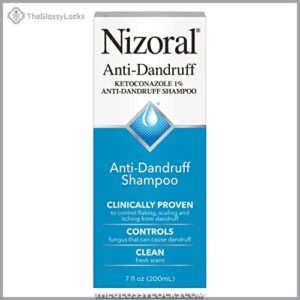
If you want the benchmark for medicated shampoos, Nizoral delivers 1% ketoconazole—an azole antifungal that interrupts the enzyme pathways Malassezia needs to thrive. Randomized trials show it outperforms placebo and many zinc pyrithione formulas, especially for stubborn flaking tied to fungal infections.
You’ll lather, let it sit three to five minutes, then rinse; twice weekly keeps most scalp irritation in check. Some users even notice improved hair regrowth once inflammation calms. It’s your front-line defense when over-the-counter dandruff treatment options fall short.
| Best For | Anyone dealing with persistent dandruff or seborrheic dermatitis who hasn’t found relief with regular shampoos—especially if flaking is linked to fungal overgrowth. |
|---|---|
| Active Ingredient | 1% Ketoconazole |
| Form | Liquid |
| Hair Type | All |
| Treatment Focus | Flaking, scaling, itching |
| Age Range | Adult, Youth |
| Color-Treated Safe | Yes |
| Additional Features |
|
- Contains 1% ketoconazole, clinically proven to beat placebo and many zinc pyrithione formulas at controlling flaking and itching.
- You only need to use it twice a week, so a bottle lasts longer and you can alternate with your regular shampoo to avoid dryness.
- Safe for color-treated or chemically processed hair, and some users report less hair shedding once scalp inflammation settles down.
- Can dry out your hair and scalp if you use it more often than recommended, so sticking to the twice-weekly schedule matters.
- Takes a few weeks of consistent use before you see real improvement—it’s not an instant fix.
- The lather-and-wait routine (three to five minutes) adds time to your shower, which can feel inconvenient on busy mornings.
2. Dercos Anti Dandruff Shampoo Treatment
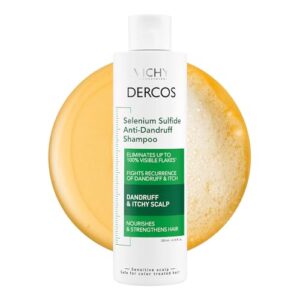
For persistent flakes that resist weaker formulas, Vichy Dercos brings 0.6% micronized selenium sulfide—a potent antifungal that blocks Malassezia cell division at the source. Clinical trials position it as comparable to 2% ketoconazole, which means you’re getting prescription-level fungal treatment without a doctor’s visit.
Niacinamide and glycerin offset the drying risk selenium sulfide sometimes carries, so your scalp health improves without sacrificing moisture.
Use it two to three times weekly, leave on for three minutes, then rinse. Most see flaking drop within two weeks—medicated shampoos work when you stick with them.
| Best For | People with stubborn, recurring dandruff that hasn’t responded to regular shampoos and need a medicated treatment that works as effectively as prescription options. |
|---|---|
| Active Ingredient | 0.6% Selenium Sulfide |
| Form | Liquid |
| Hair Type | All |
| Treatment Focus | Flakes, itching, scaling |
| Age Range | Adult |
| Color-Treated Safe | Yes |
| Additional Features |
|
- Clinical-strength selenium sulfide tackles the root cause by blocking the fungus responsible for dandruff, with results often visible within two weeks
- Includes niacinamide and glycerin to keep hair moisturized and shiny instead of stripping it dry like some medicated formulas do
- Safe for color-treated and sensitive scalps, so you don’t have to choose between treating dandruff and protecting your hair
- Can have a noticeable sulfur smell that some people find unpleasant during use
- May slightly fade color-treated hair over time despite being labeled safe for it
- Requires consistent two-to-three-times-weekly use and a few minutes of contact time to actually work, so it’s not a quick rinse-and-go option
3. CeraVe Anti Dandruff Conditioner
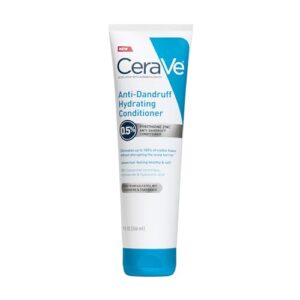
Most medicated shampoos strip moisture—that’s where CeraVe’s conditioner changes the game. It pairs 0.5% pyrithione zinc for anti-dandruff action with three ceramides, hyaluronic acid, and niacinamide to restore your skin barrier while tackling flakes.
You’re getting itch relief and scalp hydration in one step, with no sulfates or fragrance to trigger contact dermatitis. Apply after shampooing, leave for two minutes, rinse.
Gentle formulas like this support hair nourishment without compromising dandruff prevention—CeraVe benefits show up around week four with consistent scalp care.
| Best For | Anyone dealing with persistent flakes and scalp irritation who needs a hydrating conditioner that treats dandruff without drying out their hair or scalp. |
|---|---|
| Active Ingredient | 0.5% Pyrithione Zinc |
| Form | Liquid |
| Hair Type | All |
| Treatment Focus | Flakes, itchy scalp |
| Age Range | All |
| Color-Treated Safe | Yes |
| Additional Features |
|
- Combines anti-dandruff treatment with serious moisture—ceramides and hyaluronic acid rebuild your scalp barrier while zinc tackles flakes
- Clean formula that’s sulfate-free, fragrance-free, and gentle enough for sensitive scalps and color-treated hair
- Works as part of your regular routine without the harsh side effects typical of medicated treatments
- Takes about 4 weeks of consistent use before you’ll see noticeable results—this isn’t an overnight fix
- Some users report the bottle can be fragile and prone to breaking during shipping or handling
- Results depend on keeping up with regular applications, so skipping days may set back your progress
4. Jupiter Restoring Scalp Serum
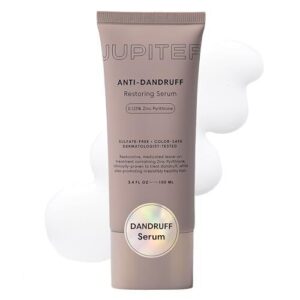
Between washes, your scalp still needs active defense against flakes—that’s where Jupiter Restoring Scalp Serum delivers. This lightweight leave-on treatment uses 0.125% zinc pyrithione for dandruff relief, plus aloe vera, niacinamide, and panthenol to support scalp restoration and calm seborrheic dermatitis irritation.
You’ll apply directly to trouble spots—crown, hairline, behind ears—massaging gently to boost absorption. Serum benefits include reduced itch and flaking without weighing hair down, and the vegan, sulfate-free formula aids scalp health while promoting hair growth. Results show around week two with consistent scalp care.
| Best For | People dealing with persistent dandruff, dry or oily scalps, and irritation who want a leave-on treatment they can use between washes without the heaviness of traditional products. |
|---|---|
| Active Ingredient | Zinc Pyrithione |
| Form | Liquid |
| Hair Type | All hair types |
| Treatment Focus | Dandruff, dryness, irritation |
| Age Range | Adult |
| Color-Treated Safe | Yes |
| Additional Features |
|
- Clinically proven zinc pyrithione targets flakes and itch while niacinamide and aloe vera soothe irritation and support your scalp’s natural barrier
- Lightweight formula won’t weigh hair down or leave residue, so you can apply it directly to problem areas and go about your day
- Vegan, sulfate-free, and color-safe—works for most hair types and fits into routines with other treatments like medicated shampoos
- Results vary widely, with some users seeing relief taper off after a few weeks or finding it doesn’t work for severe dandruff
- The 4.6-ounce bottle runs small if you’re using it daily or long-term, which adds up cost-wise
- May cause mild stinging or irritation in sensitive individuals, and it’s not a standalone fix for stubborn cases like seborrheic dermatitis or psoriasis
5. Neutrogena Salicylic Acid Dandruff Shampoo
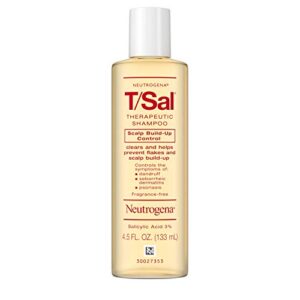
Thick, stubborn buildup demands a keratolytic punch—Neutrogena T/Sal Therapeutic Dandruff Shampoo delivers exactly that with maximum-strength 3% salicylic acid.
This fragrance-free formula breaks down crusty scales, relieves itching and irritation, and treats dandruff, scalp psoriasis, and seborrheic dermatitis at the source. You’ll lather on wet hair, let it work for a minute, then rinse thoroughly.
Pair with a rich conditioner to offset potential dryness—salicylic acid excels at exfoliation but can strip moisture. Consistent use over several weeks yields the best dandruff relief and long-term scalp health.
| Best For | People dealing with thick, crusty scalp buildup, persistent dandruff, or seborrheic dermatitis who need a strong keratolytic treatment. |
|---|---|
| Active Ingredient | 3% Salicylic Acid |
| Form | Liquid |
| Hair Type | Straight |
| Treatment Focus | Flakes, scalp build-up |
| Age Range | Adult |
| Color-Treated Safe | Not specified |
| Additional Features |
|
- Maximum-strength 3% salicylic acid effectively breaks down stubborn flakes and scalp buildup
- Fragrance-free and free of added color and preservatives, making it suitable for sensitive scalps
- Treats multiple scalp conditions including dandruff, scalp psoriasis, and seborrheic dermatitis
- Can cause dryness to hair and scalp, requiring use of a separate conditioner
- Small 4.5-ounce bottle size may require frequent repurchasing
- Results take several weeks of consistent use rather than providing instant relief
6. Dove Derma Care Shampoo
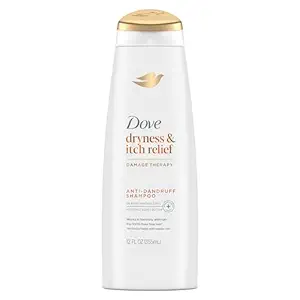
For daily control without harshness, Dove Derma Care Shampoo offers pyrithione zinc—the same active ingredient many dermatologists recommend—wrapped in a pH-balanced, moisturizing formula enriched with coconut oil and shea butter. You’ll get flake control and scalp relief in one gentle step, making it ideal if you need consistent dandruff treatment without stripping your hair of moisture.
The vegan formulation works across most hair types, though you may need to adjust frequency based on your scalp’s oiliness and response to these shampoo ingredients.
| Best For | People who want gentle, daily dandruff control with added moisture—especially if you have a dry or itchy scalp and prefer a formula that won’t strip your hair. |
|---|---|
| Active Ingredient | Pyrithione Zinc |
| Form | Liquid |
| Hair Type | Dry, Itchy |
| Treatment Focus | Dandruff, dry scalp |
| Age Range | Adult |
| Color-Treated Safe | Not specified |
| Additional Features |
|
- Pyrithione zinc tackles flakes while coconut oil and shea butter keep hair hydrated
- PH-balanced and vegan formula is mild enough for everyday use
- Widely available at an affordable price point in most major retailers
- Added fragrance may irritate sensitive scalps
- Some users report their hair feels greasy or not fully clean after washing
- Results can vary by hair type—may not work as well for everyone
7. Nioxin Scalp Recovery Conditioner
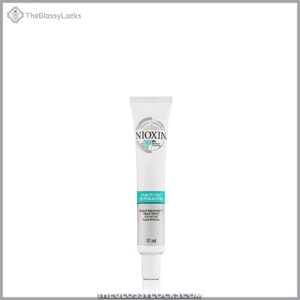
Many anti-dandruff treatments can leave your scalp feeling stripped or irritated, but Nioxin Scalp Recovery Conditioner takes a different approach. This lightweight formula provides scalp soothing and flake removal without the heavy residue that can worsen buildup.
It’s designed to work alongside medicated shampoos in your dandruff treatment regimen, offering gentle exfoliation through ingredients like pyrithione zinc and green tea extracts.
You’ll notice scalp revitalizing benefits that support overall hair care, and some users even report improved conditions for hair regrowth when used consistently as part of the Nioxin system.
| Best For | People dealing with persistent dandruff who want a gentle conditioner that soothes their scalp and reduces flaking without heavy buildup or stripping moisture. |
|---|---|
| Active Ingredient | Pyrithione Zinc |
| Form | Liquid |
| Hair Type | All |
| Treatment Focus | Flakes, dead skin |
| Age Range | Adult |
| Color-Treated Safe | Not specified |
| Additional Features |
|
- Lightweight formula designed to reduce visible flaking and scalp itchiness while keeping hair manageable
- Works well as part of a complete dandruff treatment system when paired with medicated shampoos
- Contains pyrithione zinc and green tea extracts that help refresh and cleanse the scalp
- Results can vary depending on what’s causing your dandruff, and some users report it doesn’t work for them
- May be too harsh for very sensitive scalps, potentially leading to irritation or hair fall
- Can leave residue in your hair if you don’t rinse it thoroughly enough
Medicated Shampoos and Prescription Treatments

When over-the-counter options aren’t cutting it, you need treatments that hit harder at the root cause—fungal overgrowth, inflammation, and that relentless flaking. Medicated shampoos pack active ingredients at concentrations proven to disrupt the cycle, while prescription treatments step in when your scalp refuses to cooperate.
Here’s what actually works when dandruff won’t quit.
Ketoconazole, Selenium Sulfide, and Pyrithione Zinc
Regarding antifungal therapy for persistent dandruff, three powerhouse fungal inhibitors dominate the field: ketoconazole, selenium sulfide, and pyrithione zinc. Each targets Malassezia yeast through distinct mechanisms, so if one doesn’t deliver scalp health improvements within 2–4 weeks, switching to another zinc treatment or antidandruff agent often breaks the cycle—just watch for medication interactions if you’re using prescription formulas.
- Ketoconazole (1–2%): Blocks fungal enzymes, usually used 2–3 times weekly
- Selenium sulfide: Suppresses yeast production, ideal for 1–2 weekly applications
- Pyrithione zinc: Gentle antibacterial and antifungal action for frequent long-term use
Coal Tar and Salicylic Acid Formulas
When those antifungal shampoos don’t cut it, coal tar and salicylic acid step in with different firepower. Coal tar slows down the rapid skin-cell turnover that feeds flaking (coal tar benefits include calming inflammation), while salicylic acid exfoliates stubborn buildup.
Formula efficacy varies from 0.5–3% salicylic acid or 0.5–5% coal tar, so check regulatory guidelines and watch for treatment safety concerns like sun sensitivity.
Topical Corticosteroids and Calcineurin Inhibitors
When stubborn scalp inflammation doesn’t back down, prescription corticosteroid therapy or calcineurin inhibitors come into play. These heavy hitters quiet your immune response at the source, tackling seborrheic dermatitis that laughs at ketoconazole.
- Topical corticosteroids like fluocinolone reduce inflammation fast but need monitoring for skin thinning
- Calcineurin inhibitors suppress T-cell activation without steroid-related side effects
- Dermatological research shows they’re game-changers for persistent dandruff resistant to standard treatments
When to Consult a Dermatologist
If your flakes persist beyond four weeks despite treatment, it’s time for a dermatologist referral. Professional scalp examination catches underlying skin inflammation, seborrheic dermatitis complications, or treatment resistance that DIY can’t crack.
You need expert dandruff diagnosis when itching intensifies, sores appear, or hair loss joins the party—dermatology consults access prescription-strength dandruff treatment options that restore scalp health.
Natural Remedies and Alternative Approaches

If medicated shampoos aren’t your thing, or if you simply want to try a gentler approach first, natural remedies have their place in the conversation. Tea tree oil, home remedies, and herbal extracts get a lot of buzz, but it’s important to separate what actually works from what’s just wishful thinking.
Let’s look at what the evidence says, where natural options can help, and when you’re better off sticking with proven medical treatments.
Tea Tree Oil and Herbal Extracts
You’ve probably heard that tea tree oil and other herbal remedies can tackle dandruff—and there’s some solid science backing that up. Tea tree oil has antimicrobial activity against Malassezia yeast, the fungus behind many seborrheic dermatitis cases, making it one of the more credible natural antifungals for scalp health.
Here’s what you should know about essential oils and herbal remedies for dandruff treatment options:
- Tea tree oil shampoos deliver the antimicrobial punch you need, but concentration matters—look for formulations designed specifically for scalp use to balance efficacy with tolerability.
- Herbal extracts like neem, rosemary, and peppermint offer anti-inflammatory properties that can support overall scalp health and provide aromatherapy benefits, though clinical evidence varies.
- Patch testing is non-negotiable—tea tree oil can trigger contact dermatitis or allergic reactions in some people, especially at higher concentrations.
- Commercial formulations trump DIY—professionally formulated scalp soothers combine tea tree oil with complementary ingredients that improve delivery, reduce irritation, and boost hair care results.
Home Remedies for Scalp Health
You’re looking for home remedies for dandruff that don’t require a prescription, and several natural remedies have a decent track record. Coconut oil can help moisturize your scalp while delivering mild antimicrobial effects, aloe vera soothes inflammation, and diluted apple cider vinegar may rebalance scalp pH—though evidence remains limited.
Scalp massage improves circulation, supporting your overall scalp care routines and barrier repair when performed gently.
Potential Risks and Allergic Reactions
Even natural remedies can backfire. Allergic contact dermatitis strikes 2–5% of users of antifungal shampoos like ketoconazole, while salicylic acid triggers skin irritation—burning, stinging, itch relief setbacks—in up to 10% of folks with ingredient sensitivity.
Seborrheic dermatitis worsens when your scalp reacts to coconut surfactants or fragrances, creating a vicious cycle of topical reactions.
Treatment side effects happen, so patch-test everything in dermatology-approved fashion before slathering it on.
Efficacy Compared to Medical Treatments
Medical alternatives outperform natural remedies when you need real treatment outcomes. Ketoconazole shampoos crush fungal resistance and reduce scalp health issues more effectively than tea tree oil in head-to-head trials, while selenium sulfide and pyrithione zinc medicated shampoos deliver measurable therapeutic efficacy that herbal extracts rarely match.
Dandruff treatment options backed by randomized studies simply work faster and more reliably.
Daily Scalp Care for Dandruff Management
Managing dandruff isn’t just about choosing the right shampoo—it’s about building a consistent routine that keeps your scalp balanced and prevents flares before they start.
Your daily habits, from how you wash to what you apply afterward, play a massive role in keeping those flakes under control.
Here’s what you need to focus on to take charge of your scalp health and stop dandruff from hijacking your confidence.
Gentle Shampooing and Scalp Exfoliation
You need a shampoo that cleans without stripping your scalp—think sulfate-free formulas with pyrithione zinc or selenium sulfide that tackle dandruff at the root. Pair that with smart exfoliation to lift stubborn flakes without aggravating inflammation.
- Wash every 1–3 days with lukewarm water to avoid drying out your scalp
- Use light scalp massage during cleansing to boost circulation without irritation
- Exfoliate 1–2 times weekly with salicylic acid or a soft brush
- Rinse thoroughly to prevent product buildup that fuels flaking
Conditioner and Leave-in Treatments

After you shampoo, lock in relief with a conditioner that keeps working. Anti-dandruff actives like pyrithione zinc or selenium sulfide in lightweight conditioners deliver ongoing antifungal benefits without weighing down your hair. Leave-in serums with humectants boost scalp hydration and calm itchiness between washes—apply them daily or every other day for consistent comfort.
| Product Type | Key Active Ingredients | Primary Benefits |
|---|---|---|
| Anti-dandruff conditioner | Pyrithione zinc, selenium sulfide | Reduces flaking, ongoing antifungal activity |
| Leave-in serum | Humectants, soothing agents | Improves scalp hydration, reduces itchiness |
| Lightweight formula | Non-greasy emollients | Minimizes residue, prevents buildup |
| Medicated leave-in | Ketoconazole, salicylic acid | Targets yeast overgrowth, exfoliates scalp |
| Hydrating treatment | Ceramides, niacinamide | Restores barrier, calms inflammation |
Lifestyle Tips for Flare-Up Prevention

Beyond topical treatments, your daily habits shape how often flakes return. Stress management through relaxation techniques—mindfulness or regular exercise—helps calm immune flare-ups.
Sleep patterns matter too; aim for 7–9 hours nightly to support skin repair.
Diet and dandruff are linked: cut processed foods, boost omega-3s, and stay hydrated.
Frequently Asked Questions (FAQs)
Can dandruff spread to other body parts?
Yes, dandruff can spread beyond your scalp. Seborrheic dermatitis, driven by Malassezia yeast overgrowth, often appears on your eyebrows, face, and chest—especially if you have oily skin or a compromised skin barrier.
Does diet affect dandruff severity or frequency?
Think of your plate as a potential ally in scalp health—omega-3s and key micronutrients may dial down inflammation, while saturated fats and refined carbs could fan the flames, though responses vary widely.
Is dandruff contagious between people sharing brushes?
Good news: dandruff won’t jump from one scalp to another through brush sharing. The Malassezia yeast and skin factors behind those flakes aren’t contagious, though proper scalp hygiene still matters.
How long until treatments show visible results?
Most ketoconazole or selenium sulfide formulas deliver visible flake reduction within two to four weeks.
Some anti-dandruff treatment options show symptom relief in just seven to fourteen days with consistent use.
Can hard water worsen persistent dandruff symptoms?
Mineral deposits from hard water disrupt your scalp barrier function and create an alkaline environment that favors Malassezia overgrowth, amplifying itch relief needs and making dandruff prevention strategies less effective without targeted mineral buildup removal.
Understanding the effects of hard water damage is vital for effective dandruff treatment.
Conclusion
Flake it ’til you make it—but with the right persistent dandruff treatment options, you won’t have to fake clarity anymore. Whether you’re rotating ketoconazole shampoos twice weekly, applying salicylic acid for stubborn buildup, or finally booking that dermatologist appointment for prescription-strength corticosteroids, you’re now equipped to dismantle the Malassezia-driven cycle at its source.
Your scalp deserves more than temporary cosmetic fixes; it deserves targeted intervention that restores balance, eliminates inflammation, and keeps those flakes from ever staging a comeback.