This site is supported by our readers. We may earn a commission, at no cost to you, if you purchase through links. This content is for general informational and educational purposes only and is not a substitute for professional medical, dermatological, or nutritional advice.
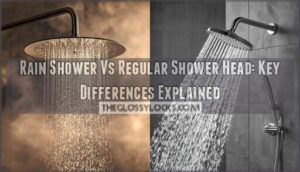
Your morning shower shouldn’t feel like you’re choosing between a gentle summer drizzle and a power washer aimed at your face, but that’s exactly the difference between rain shower and regular shower head options.
Rain shower heads mimic natural rainfall with wide, flat faces that release soft droplets over a broad area, usually 8 to 12 inches across. Regular shower heads pack multiple spray patterns into compact designs, letting you switch from massage jets to concentrated streams with a quick twist.
The real kicker isn’t just the spray style—it’s everything that comes with it: installation complexity, water pressure demands, bathroom space requirements, and whether you’ll need to crack open your ceiling or simply swap what’s already mounted on your wall.
Table Of Contents
Key Takeaways
- Rain shower heads deliver spa-like coverage with soft, wide spray patterns across 8-12 inches but demand 40-60 PSI, ceiling-mounted installation that can cost $200-$800 in labor, and monthly descaling in hard water areas
- Regular shower heads pack 3-6 adjustable spray settings into compact 2-4 inch designs that install in under 30 minutes with basic tools, cost $20-$180, and deliver targeted high-pressure streams for faster rinsing
- Water efficiency separates the two dramatically—rain heads consume 2.0-2.5 GPM across hundreds of nozzles while WaterSense-certified regular models hit 1.5-2.0 GPM, slashing your utility bills without sacrificing spray intensity
- Your bathroom’s existing plumbing, ceiling clearance, and water pressure determine feasibility more than aesthetics—rain installations require structural work and adequate PSI that most compact spaces and standard residential systems can’t deliver without expensive upgrades
Key Differences in Shower Head Design
When you’re standing in the shower aisle staring at dozens of options, the first thing you’ll notice is how different rain heads and regular heads actually look. The design isn’t just about aesthetics—it dictates everything from water coverage to installation demands.
Let’s break down the structural differences that separate these two types and what they mean for your morning routine.
Rain Shower Head Structure

A rain shower head design breaks the mold with its large, flat face plate packed with tiny nozzles that deliver wide, soft coverage. Most are ceiling mounted to mimic natural rainfall, though wall-mounted versions angle the spray toward you.
If you’re dealing with weak flow, you can boost your shower water pressure naturally before upgrading to a higher-gpm rain head.
Inside, internal channeling routes water through one or two inlets, spreading flow evenly across the face. Shower head materials like stainless steel, brass, or chrome-finished plastic resist corrosion, while pressure-balancing valves keep your water flow systems steady when someone flushes the toilet.
If your pressure feels weak, specialized shower heads for low water pressure use air injection or smaller nozzles to amplify the force without changing your home’s plumbing.
The design process can benefit from methodological rigor to guarantee peak performance.
Regular Shower Head Features
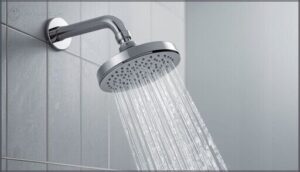
Regular shower heads flip the script with a compact design built for control. Most feature a fixed spray pattern pumping water through multiple small holes at 1.8 to 2.5 gallons per minute, meeting local flow rates without sacrificing punch.
Turn a dial or lever, and you’ll access spray patterns like:
- Full coverage for everyday cleaning
- Massage jets targeting sore muscles
- Pause mode cutting flow mid-shower
- Combination settings blending multiple options
Chrome or brushed nickel finishes over plastic balance durability with your budget, while silicone nozzles make scrubbing off mineral gunk dead simple. Understanding language patterns can help describe these features more effectively.
Water Dispersion Patterns
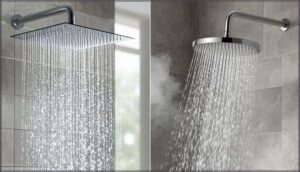
Once you’ve picked your fixture, what hits your skin matters just as much as the hardware itself. Dispersion techniques determine whether you get soaking uniform coverage or targeted spray patterns.
| Feature | Rain Showers | Regular Heads |
|---|---|---|
| Droplet Size | Large, soft droplets from low-velocity outlets | Smaller, numerous droplets or focused streams |
| Coverage Area | Near-complete body coverage at standard distances | Variable coverage based on spray angle |
| Pressure Feel | Even, gentle distribution across skin | Higher local impact with adjustable flow rates |
Rain shower head types spread water like actual rainfall—broad, enveloping, quiet. Regular shower head types concentrate streams, ramping up water pressure in smaller zones for that wake-up blast.
If mobility matters, look for shower heads designed for seniors with extended hoses and adjustable mounts that make seated bathing easier.
Installation Requirements and Challenges
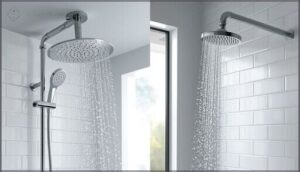
Installing a rain shower head isn’t as simple as swapping out your old fixture and calling it a day. Your existing plumbing, water pressure, and mounting location can all throw curveballs that turn a quick upgrade into a full-blown renovation.
If space is tight, check out these shower heads designed for small bathrooms to find compact options that won’t overwhelm your setup.
Here’s what you need to know about the real installation challenges for both rain and regular shower heads.
Plumbing Considerations for Rain Showers
Your existing plumbing might not be ready for the demands of rain showers. These fixtures require shower valves that handle wider flow rates, and you’ll need to verify that your supply lines deliver balanced water pressure across the entire spray face.
Pipe upgrades may be necessary to meet plumbing codes, especially for ceiling-mounted installations where rough-in height and vertical drop create additional challenges for proper shower installation.
Ease of Installing Regular Shower Heads
Unlike rain fixtures that demand a complete plumbing overhaul, regular shower head installation gives you control in under 30 minutes. Hardware compatibility is simple—most models use standard 1/2 inch NPT threading, turning fixture replacement into a straightforward DIY win.
Tool Requirements for Quick Installation:
- Adjustable wrench for loosening connections
- Plumber’s tape to seal threads and prevent leaks
- Screwdriver for removing older shower head types
- Universal adapters if thread sizes don’t match
This plumbing simplification means you won’t need ceiling bracing, extended shower arms, or pressure-balancing work that rain installations demand.
Ceiling Vs. Wall Mounting
Mounting options split into two camps: ceiling installations that demand overhead rough-in work, structural waterproofing, and adequate ceiling clearance versus wall brackets that simplify retrofit projects.
Shower height flexibility comes standard with wallmount shower heads using adjustable arms, while rain shower head positioning locks you into fixed coverage.
Installation costs climb steeply when ceiling access isn’t already available, making wall mounted shower head types the budget-friendly rebel choice.
Water Pressure and Shower Experience
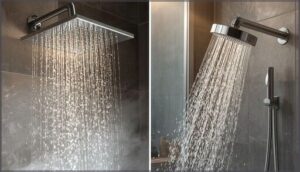
Water pressure makes or breaks your morning routine, and rain versus regular shower heads deliver completely different sensations. Rain heads usually run at lower pressure, spreading water gently across a wide area, while regular heads concentrate flow for that invigorating, high-intensity blast.
Here’s what you need to know about pressure levels, adjustability, and the overall feel of each style.
Pressure Levels of Rain Shower Heads
Rain shower heads need 40 to 60 PSI to deliver that gentle rainfall sensation you’re after. Below 40 PSI, you’ll get a disappointing dribble instead of full coverage—hundreds of nozzles competing for limited water flow.
Most operate at 2.0 to 2.5 gallons per minute, and some models now include pressure compensation technology to maintain steady performance when your home’s water pressure fluctuates.
Adjustable Intensity in Regular Heads
You can dial in your perfect shower experience with regular heads. Most models give you 3 to 6 spray settings, from needle-jet massage to wide mist, all within federal flow rate limits of 2.5 gallons per minute.
Rotating the collar redirects water through different nozzle groups, letting you crank up spray force control for sore muscles or dial it down during a gentle rinse.
Overall Comfort and Sensation
When you’re chasing a soothing experience, the rain shower head delivers that luxurious spalike experience with gentle, wide coverage—perfect if you’ve got skin sensitivity or want pure relaxation modes. Regular heads amp up water pressure for a vigorous, targeted shower experience enhancement. Your ideal shower ambiance depends on whether you crave tranquil immersion or invigorating control over shower experience and comfort.
- Rain heads spread soft streams across your entire body, mimicking natural rainfall
- Regular models concentrate flow into focused jets that rinse faster and feel more forceful
- Combining both types lets you switch between serene soaking and practical, high-intensity cleaning
Space and Bathroom Compatibility

Your bathroom’s layout matters more than you might think when choosing between rain and regular shower heads. Rain heads demand considerably more overhead clearance and installation space, while regular heads adapt to almost any setup without a complete meltdown of your existing configuration.
Here’s how size, small-bathroom fit, and design integration determine which option won’t force you into a renovation you didn’t plan for.
Size and Coverage Area
When you’re comparing shower head types, diameter matters. Rain shower heads usually span 8 to 12 inches, while regular models clock in at 2 to 4 inches.
That difference in shower head size directly affects your coverage area and water distribution. Rain heads deliver broad, diffuse spray patterns that mimic natural rainfall, whereas regular nozzle design focuses streams for targeted coverage, giving you more control over your shower experience.
Suitability for Small Bathrooms
Your compact shower solutions hinge on ceiling clearance and footprint. Standard codes mandate 30-by-30-inch minimums, but overhead rain shower head placement needs 84 to 96 inches above the floor. That’s tight in low-ceiling bathrooms.
Wall-mounted regular shower heads slip into existing rough-ins without ceiling work, making them your go-to for small bathroom fixtures and bathroom space optimization where every inch counts and minimalist designs keep sight lines open.
Design Integration With Bathroom Décor
Beyond square footage, visual harmony between shower head types and features matters when you’re tearing out dated bathroom fixtures. Ceiling heights influence whether overhead rain heads suit your bathroom design, while fixture coordination demands matching chrome, brushed nickel, or matte black finishes to faucets and towel bars.
Tile patterns and bathroom lighting also shift which luxury bathroom fixtures feel cohesive:
- Sleek rain heads complement modern, large-format tiles
- Traditional regular heads pair with subway or mosaic patterns
- Bold finishes anchor neutral palettes
Water Efficiency and Conservation

Your choice between a rain shower head and a regular model directly impacts your water bill and environmental footprint. Rain shower heads usually consume markedly more water per minute due to their wider coverage area, while regular shower heads offer tighter flow control and better conservation.
Here’s how each stacks up on efficiency, and what you can do to reduce waste without sacrificing your shower experience.
Water Usage of Rain Shower Heads
Rain shower heads usually deliver 2.0 to 2.5 gallons per minute (GPM), notably higher water consumption than you might expect. Without flow restrictors, some models push flow rates beyond 2.5 GPM at standard residential pressure (around 60 PSI).
That wider spray face and multiple nozzles demand more volume to maintain even water dispersion, directly impacting your water efficiency and monthly utility bills.
Efficiency of Regular Shower Heads
Regular shower heads break free from excessive water consumption by capping flow rates at 2.0 GPM in most U.S. models, with some efficiency champions hitting 1.8 GPM. That flow-rate difference slashes your water bill and energy costs for heating, since you’re moving less hot water through the system.
Flow restrictors maintain spray intensity without cranking up volume, delivering conservation without compromise during typical shower duration.
Eco-Friendly Options and Flow Restrictors
You’ll find WaterSense-certified models that slash water flow to 1.5–2.0 gallons per minute without sacrificing spray quality, thanks to flow regulation through aerator inserts mixing air with water. These eco certifications verify real shower efficiency gains—third-party testing confirms performance under varying pressure.
Green technology like micro-nozzles and replaceable cartridges extends lifespan while boosting water conservation, making filtered shower head options a smart long-term investment.
Cost Comparison and Value

Your budget matters, and rain showers can stretch it harder than you’d expect. Beyond the sticker price, you’re looking at installation fees, ongoing maintenance, and how long your investment actually lasts.
Here’s what the numbers reveal when you compare rain shower heads to regular models across upfront costs, hidden expenses, and long-term value.
Price Range of Rain Vs. Regular Heads
Your wallet will feel the difference before your skin does. Rain shower heads generally cost $60 to $500, with premium ceiling-mount systems exceeding $1,000, while regular shower heads run $20 to $180 for most models. Budget considerations and price variations depend on finish, diameter, and features. Market trends show rain heads costing 2 to 4 times more than basic regular options, affecting purchase decisions around shower head comparison and water conservation technology.
| Feature | Rain Shower Head | Regular Shower Head |
|---|---|---|
| Basic Models | $60–$150 | $20–$60 |
| Mid-Range | $100–$250 | $40–$100 |
| Premium | $200–$500+ | $80–$180 |
| Designer/Multi-Head | $500–$1,000+ | $150–$250 |
| Cost Factor Impact | Diameter, ceiling mounts, thermostatic valves | Spray settings, materials, coatings |
Installation and Maintenance Expenses
Beyond the sticker price, labor costs and plumbing upgrades can quickly reshape your budget. Swapping a basic wall-mount regular shower head typically runs between $80 and $220, while installing a ceiling-mount rain shower system demands significantly more, ranging from $200 to $800 in labor, plus fixture expenses that can reach up to $1,500. Plumbing system changes, such as routing pipes through ceilings, can push shower installation costs even higher, toward $1,600. Maintenance schedules also add to the long-term expenses, with periodic descaling required, and repair costs can climb when accessing overhead connections necessitates cutting drywall. This makes shower head comparison a long game in home improvement and repair.
| Expense Category | Rain Shower Head | Regular Shower Head |
|---|---|---|
| Typical Installation Labor | $200–$800 (ceiling), $100–$300 (wall) | $80–$220 (simple swap) |
| Plumbing Modifications | Up to $1,600 for new ceiling runs | Minimal if using existing outlet |
| Maintenance Access | Ladder, panel removal for ceiling units | Easy wall access for cleaning |
Long-Term Durability and Investment
Your shower head choice isn’t just about today’s price tag—it’s about the decade ahead. Brass and stainless steel rain heads often outlast plastic alternatives by five to ten years, reaching 10 to 15 years with proper maintenance schedules, while budget models crack under thermal stress. Hard water accelerates replacement cycles, making water efficiency and durability tests critical before committing.
| Factor | Rain Shower Head | Regular Shower Head |
|---|---|---|
| Material Costs | $50–$500 (steel/brass premium) | $20–$150 (wide plastic range) |
| Lifespan Comparisons | 10–15 years (metal), 6–8 (plastic) | 6–8 years standard, 10+ premium |
| Investment Returns | Lower cost-per-year if metal; higher water use | Faster ROI; WaterSense models cut bills |
| Maintenance Schedules | Descale monthly in hard water areas | Clean every 1–2 months as needed |
| Shower Head Technology | Larger surface invites mineral buildup | Focused nozzles, easier upkeep |
Maintenance and Longevity
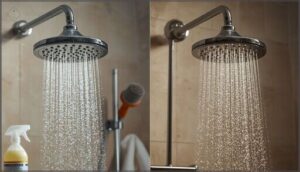
You can’t just install your dream shower head and forget about it—both rain and regular models demand regular upkeep to keep water flowing smoothly and avoid an early replacement. Hard water, mineral deposits, and everyday grime will slowly choke performance if you ignore them, and the type of head you choose directly impacts how often you’ll be scrubbing and descaling.
Here’s what you need to know about keeping either option running strong for years.
Cleaning and Preventing Mineral Buildup
Hard water’s your real enemy here—mineral buildup clogs those nozzles, choking water flow until you’re left with a sad drizzle. Rain shower heads with flat spray plates catch limescale faster than regular models, demanding descaling methods like white vinegar soaks every 1–2 months.
Hard water clogs nozzles with mineral buildup, and rain shower heads need descaling every 1–2 months to prevent flow from dying
Want limescale prevention without the elbow grease? Install a shower filter or water softening system upfront, and you’ll slash cleaning hassle while boosting water efficiency across any shower head technology.
Material Durability and Lifespan
Your choice of material testing and corrosion resistance determines whether you’re replacing your shower head in five years or fifteen. Stainless steel and solid brass models crush plastic alternatives in lifespan factors, especially when you consider finish durability under daily moisture assault.
Here’s what controls how long your shower heads actually last:
- Stainless steel (304/316) resists pitting — chrome-plated brass follows close behind, while cheap ABS plastic cracks within 5–8 years under temperature swings
- PVD finishes endure 1,000+ hours of salt spray — standard chrome flakes off after just 24–96 hours, exposing metal to accelerated corrosion
- Brass components face dezincification in aggressive water — sulfate and chloride leach zinc at 13–46 micrometers yearly, weakening structural integrity
- Hard water narrows internal passages faster than rust — mineral scaling forces replacement even when your shower technology and innovation remains structurally sound
- Premium rain shower head materials reach 10–15 years — plastic regular shower head models usually tap out around year eight despite maintenance strategies
Metal bathroom fixtures and accessories deliver freedom from constant replacements.
Maintenance Frequency and Tips
Knowing how often to actually clean makes the difference between ideal flow and a complete meltdown. Regular shower heads need descaling once per month in average water, but hard water demands every 1–2 weeks for rain models because calcium clogs those wide spray faces fast.
Weekly wipe-downs and inline shower filter systems slash your maintenance burden—thermostatic valves and nozzle maintenance stay cleaner when minerals never reach them.
Frequently Asked Questions (FAQs)
Can rain shower heads be combined with handheld sprayers?
Yes, you can pair a rain shower head with a handheld sprayer using multi-function valves or diverters. Many manufacturers offer dual shower setup kits ensuring shower head compatibility, proper water flow control, and smooth shower system integration.
Are there hybrid models combining both shower styles?
You’ll find combo units pairing a rain shower head with a regular or handheld fixture in one system.
Dual heads let you run both simultaneously or switch between them, delivering spa-like coverage plus targeted streams.
Can you retrofit existing showers for rain heads?
You can retrofit most showers for rain heads using conversion kits, though ceiling-mounted installation demands plumbing modifications, valve upgrades, and potentially cutting into ceilings—driving retrofit costs higher than standard shower upgrades.
Conclusion
Picking between plumbing patterns ultimately boils down to bathroom reality, not bathroom fantasy. The difference between rain shower and regular shower head options isn’t about right or wrong—it’s about pressure capacity, ceiling access, square footage, and whether you’ll sacrifice spray versatility for spa ambiance.
Measure your rough-in dimensions, test your GPM output, and choose based on what your plumbing can actually deliver. Your shower experience depends on honest assessment, not aspirational Pinterest boards.