This site is supported by our readers. We may earn a commission, at no cost to you, if you purchase through links. This content is for general informational and educational purposes only and is not a substitute for professional medical, dermatological, or nutritional advice.
Your bathroom shelf probably holds dozens of moisturizers, yet your skin still feels like it’s working against you. The problem isn’t that you’re not trying hard enough—it’s that most people choose face moisturizers based on marketing claims rather than their skin’s actual needs, which explains why even expensive products can leave your complexion tight, greasy, or irritated.
Understanding how to choose face moisturizer for your skin type requires more than reading labels; it demands a clear assessment of your skin’s moisture levels, pore size, and sensitivity patterns, followed by matching those characteristics to specific ingredient profiles.
Once you grasp the relationship between your skin type and moisturizer formulation, you’ll stop wasting money on products that promise everything but deliver disappointment.
Table Of Contents
Key Takeaways
- Most people choose moisturizers based on marketing claims rather than their skin’s actual needs—assessing your moisture levels, pore size, and sensitivity patterns first ensures you select products with ingredient profiles that actually work for your specific skin type.
- Effective moisturizers combine three mechanisms: humectants like hyaluronic acid pull water into your skin, occlusives like petrolatum lock moisture in by reducing evaporation, and emollients like ceramides fill gaps between skin cells while repairing your protective barrier.
- Texture matters as much as ingredients—gel formulas work best for oily skin because they absorb quickly without clogging pores, while dry or mature skin requires richer creams with ceramides that restore barrier function and reduce water loss by 30% within four weeks.
- If your skin shows persistent issues like unresolved dryness, eczema, or allergic reactions after 4-6 weeks of appropriate product use, a dermatologist can identify underlying problems and create customized solutions that off-the-shelf products can’t address.
Determine Your Skin Type
Before you can choose the right moisturizer, you need to understand what your skin is actually telling you. Your skin type determines which ingredients and formulations will work best, and which ones might cause problems like breakouts or irritation.
A daily facial skin care routine tailored to your specific type helps you avoid products that clash with your skin’s natural balance.
Here’s how to identify the five main skin types and recognize the signs your skin is showing you.
To get the most accurate reading, you can also try a simple at-home test to determine your skin type and confirm what your skin really needs.
Normal Skin Characteristics
Normal skin strikes an enviable balance—your moisture levels stay steady, your pores appear small to moderate, and your complexion maintains a natural glow without excess oil or dryness.
Many people with normal skin still benefit from understanding how their skin type compares to others to maintain that healthy balance long-term.
You’ll notice consistent skin elasticity, minimal sensitivity to most moisturizer ingredients, and even tone throughout the day.
If you’re dealing with dryness that disrupts this balance, a non-greasy moisturizer for dry skin can restore hydration without clogging pores or causing breakouts.
This skin type tolerates a wide range of facial moisturizers, making your skincare routine straightforward and flexible.
Signs of Dry Skin
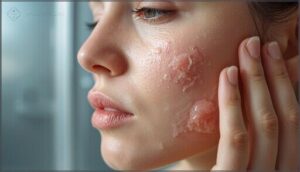
If your skin feels tight and stretched after cleansing, lasting minutes to hours, you’re likely dealing with dry skin. You’ll notice visible flaking or rough texture, especially across your cheeks and forehead, alongside mild redness or itchiness in low-humidity environments.
These dry patches signal your moisture levels have dropped, compromising your skin’s natural barrier and creating persistent irritation that demands targeted hydrating care.
Identifying Oily Skin
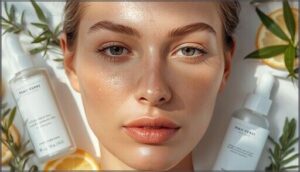
On the opposite end, oily skin shows visible shine—especially across your forehead, nose, and chin—within an hour of cleansing. You’ll notice larger pores on your nose and cheeks, plus that greasy feel returning quickly, even after washing.
Thankfully, managing daily skin hydration for healthy skin can help balance oil production without stripping your skin’s natural moisture barrier.
These oily skin causes stem from excess sebum production, often triggering acne-prone concerns like blackheads that demand oil balance tips and targeted moisturizer choices for effective pore minimization and skin shine reduction.
Combination Skin Traits
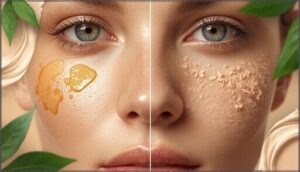
Combination skin throws a curveball—your T-zone (forehead, nose, chin) pumps out shine and clogs pores, while your cheeks feel tight and flaky. This skin balance challenge demands skin mapping: track oiliness and dryness across regions for several days.
Seasonal moisture shifts complicate choosing the right moisturizer, since winter dries cheeks further and humidity amplifies T-zone care needs, requiring combination products that address both zones without aggravating either.
Sensitive Skin Indicators
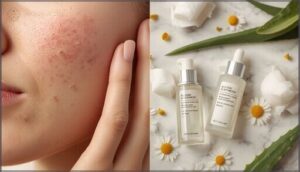
Redness, burning sensations, and itchy skin after applying facial moisturizer signal sensitive skin concerns tied to barrier disruption, often from fragrance or harsh preservatives.
Pruritus causes include transepidermal water loss exceeding 15% above baseline, triggering persistent discomfort without visible rash.
You’ll need fragrance-free, gentle sensitive skin care formulas that rebuild your skin’s protective layer rather than aggravate existing skin type vulnerabilities.
Understand Moisturizer Types

Not all moisturizers work the same way on your skin, and understanding the three main types can help you choose a formula that actually produces effects. Each category—humectants, occlusives, and emollients—targets hydration through a different mechanism, and many effective moisturizers combine all three.
Let’s break down how each type works and what it means for your skin.
Humectants and Their Benefits
Think of humectants as moisture magnets that pull water directly into your skin’s outer layer. Ingredients like hyaluronic acid and glycerin deliver immediate hydration benefits, drawing moisture from the air or deeper skin layers to plump the surface.
Humectants like hyaluronic acid act as moisture magnets, pulling water into your skin’s outer layer to deliver immediate hydration
These moisturizing ingredients work in any facial moisturizer to boost skin hydration and support moisture retention, making them essential for keeping your complexion comfortable and hydrated.
Occlusives for Moisture Retention
Your skin loses water constantly through evaporation, which is where occlusives step in. These barrier-forming ingredients, like petrolatum, mineral oil, and dimethicone, sit on your skin’s surface and lock moisture in by reducing transepidermal water loss.
When your moisturizer includes occlusives, you’re getting:
- Enhanced water retention that keeps hydration from escaping throughout the day
- Barrier repair support by minimizing environmental moisture loss
- Moisture locking that works best after hyaluronic acid draws water in
They’re particularly effective for dry or sensitive skin types needing extra protection.
Emollients for Smoother Skin
Emollients like triglycerides, fatty alcohols, and ceramides fill microscopic gaps between your skin cells, smoothing rough texture while supporting your skin barrier. These lipid-based ingredients don’t just sit on top—they restore your skin’s natural moisture lock by improving lipid balance within 24 hours.
| Emollient Type | Key Benefit |
|---|---|
| Triglycerides | Enhanced spreadability, lightweight hydration |
| Fatty Alcohols | Improved tactile softness, texture refinement |
| Ceramides | Barrier repair, long-term moisture retention |
| Silicones (Dimethicone) | Slip enhancement, reduced friction |
| Lipid Blends | Balanced hydration with smoothing effects |
When paired with hyaluronic acid and occlusives in your facial moisturizer, emollients create balanced formulations suited to your specific skin type.
Match Moisturizer Texture to Skin Type
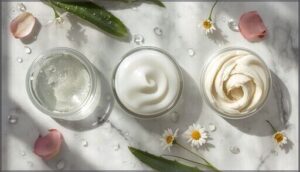
Once you know your skin type, the texture of your moisturizer matters just as much as the ingredients inside. A gel that works wonders for oily skin can leave dry skin feeling tight, while a rich cream might clog pores on someone with excess oil production.
Here’s how to match the right formula to your specific needs.
Gel Formulas for Oily Skin
If you’re dealing with oily skin, gel moisturizers work wonders—they’re lightweight gel-creams that deliver hydrating gels without the greasy aftermath. These formulas rely on water-based moisturizing ingredients like hyaluronic acid to control oil while providing hydration.
Look for non-comedogenic or noncomedogenic labels to guarantee you won’t clog pores. The gel benefits include quick absorption and a matte finish, giving you oil control that lasts.
Creams for Dry or Mature Skin
When your skin feels tight or shows visible lines, you need a facial moisturizer that goes deeper. Moisturizing cream formulas with hyaluronic acid can hold up to 1000 times their weight in water, delivering hydrating creams that penetrate multiple layers.
For dry skin remedies and mature skin care, look for ceramides—they restore your skin barrier repair function, reducing water loss by 30% within four weeks while improving elasticity.
Lotions for Normal and Combination Skin
If you have normal skin or combination skin, lotions offer the skin balance you’re looking for. Their lighter texture absorbs quickly without leaving residue, delivering facial hydration that won’t clog pores.
Lotion benefits include normalizing oilier zones while keeping drier areas comfortable. Choose non-comedogenic, gentle formulas to maintain healthy moisture levels across your entire face.
Key Ingredients to Look For

Choosing the right moisturizer starts with understanding the active ingredients that target your specific skin needs, from hydration to barrier protection. Certain compounds, like humectants and ceramides, work at the cellular level to restore moisture and strengthen your skin’s natural defenses.
Here are four essential ingredients to look for when selecting a facial moisturizer that will deliver measurable results.
Hyaluronic Acid for Hydration
You’ll find hyaluronic acid in many facial moisturizers because this humectant holds up to 1,000 times its weight in water, delivering superb hydration levels and skin plumping. When choosing products, look for formulas that combine multiple molecular weights for ideal moisture retention and acid stability:
- Low molecular weight penetrates deeper layers
- High molecular weight creates surface hydration
- Mixed formulations outperform single-weight versions
Apply on damp skin for best results.
Ceramides for Barrier Repair
While hyaluronic acid pulls water in, ceramides lock it there by repairing your skin’s protective barrier. These skin lipids make up 40 to 50 percent of healthy epidermal structure, and topical ceramide benefits appear within two to four weeks.
Look for formulas with ceramide blends—brands like CeraVe combine multiple ceramide types with cholesterol and fatty acids for enhanced barrier support and moisture retention across every skin type.
Niacinamide for Calming and Repair
After strengthening your barrier with ceramides, you’ll want niacinamide benefits for deeper repair. This ingredient reduces facial redness and inflammation control within four to twelve weeks while supporting your skin barrier through boosted ceramide production.
Whether you have sensitive skin or reactive concerns, look for facial moisturizer formulas with 5 to 10 percent niacinamide in your skin care routine for visible calming and repair mechanisms.
Non-Comedogenic and Fragrance-Free Options
When you’re prone to breakouts or reactions, fragrance-free and non-comedogenic benefits matter most. Products with comedogenic ratings of 0 or 1 won’t clog your pores, while fragrance-free gentle formulations minimize fragrance sensitivity in reactive skin types.
These facial moisturizer choices protect sensitive skin care routines by avoiding common irritants, making them essential for acne-prone individuals and anyone managing delicate skin type concerns.
Choosing Moisturizer for Common Concerns
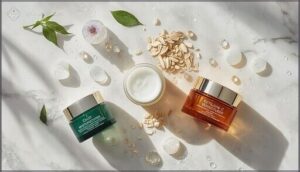
Beyond basic skin types, many people face specific concerns that require targeted moisturizer ingredients and formulations. Acne breakouts, skin sensitivity, and visible signs of aging each demand different approaches to hydration and barrier support.
The following sections outline evidence-based strategies for choosing moisturizers that address these common skin challenges effectively.
Acne-Prone and Oily Skin Needs
If you’re dealing with breakouts or shine, your moisturizer shouldn’t add fuel to the fire. Oily skin and acne-prone complexions need hydration that won’t clog pores or worsen inflammation, which means choosing formulas designed for oil control and skin purification.
- Non-comedogenic moisturizers prevent pore blockage and reduce acne breakouts by avoiding ingredients that trap sebum.
- Gel and oil-free formulas deliver hydration without adding surface grease, supporting sebum regulation.
- Lightweight, water-based moisturizers with humectants maintain moisture without that heavy, greasy feel.
- Fragrance-free products minimize irritation and avoid triggering acne-related inflammation.
- Ceramides and niacinamide repair your skin’s barrier, calm redness, and help regulate oil production naturally.
These targeted ingredients work together for acne treatment and pore minimization, giving your skin what it needs without overwhelming it. You’ll maintain hydration while keeping breakouts under control, which is exactly what oily skin care and anti-aging skin care routines require.
Sensitive Skin Formulations
Reactive skin demands formulations stripped of common irritants, which is why fragrance-free and hypoallergenic products reduce your risk of redness, burning, or stinging. Look for gentle preservatives like phenoxyethanol, minimal ingredient lists, and emollients that soothe without triggering contact dermatitis.
Dermatologist-tested moisturizers show lower irritation rates, but irritation testing through a 24–48 hour patch test remains essential before committing to any new product.
Anti-Aging and Mature Skin Ingredients
Aging skin loses collagen and moisture over time, which is why your moisturizer should contain retinol benefits like tretinoin or retinaldehyde to promote wrinkle reduction and skin elasticity.
Combine anti-aging serums with peptides such as Matrixyl for facial firming, hyaluronic acid for hydration, and antioxidants like vitamin C to support your anti-aging skin care routine.
Enhance your regimen with barrier-strengthening ceramides and niacinamide for complete anti-aging moisturizer protection.
How to Test and Apply Moisturizer
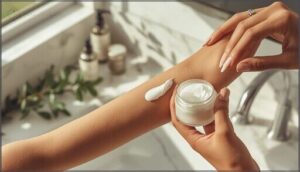
Finding the right moisturizer is only half the battle—you also need to apply it correctly to see real results. Before you slather on a new product, it’s smart to test it first to avoid unwanted reactions.
Here’s how to safely introduce a moisturizer to your routine and make the most of every application.
Application Tips for Maximum Effectiveness
Your skin care routine works best when you apply moisturizer to damp skin after cleansing, which helps lock in hydration through moisture layering.
Start with proper skin prep—wash with lukewarm water, pat dry gently, then apply your moisturizing cream within 60 seconds.
Use upward circular motions during application, incorporating gentle facial massage to boost absorption and maximize your facial moisturizer benefits for your specific skin type.
Daytime Vs. Nighttime Moisturizers
Your moisturizing cream should work differently at dawn and dusk. Daytime protection means pairing lightweight, antioxidant-rich formulas with broad-spectrum SPF to shield against UV exposure and environmental stressors.
Night repair involves richer textures with ceramides and higher concentrations of active ingredients that support skin renewal and moisture balance as your body naturally restores barrier function during sleep, maximizing facial moisturizer benefits for your skin type.
When to Seek Dermatologist Advice

Sometimes a moisturizer just won’t cut it, and that’s when professional guidance becomes essential. If you’ve tried different products without improvement, or if your skin reacts unpredictably, a dermatologist can identify underlying issues you might miss on your own.
Knowing when to schedule that appointment can save you time, money, and unnecessary frustration with trial-and-error approaches.
Persistent Skin Issues
Persistence should prompt professional evaluation. If you’ve tried appropriate formulations for dry skin, sensitive skin, or acne-prone skin without dryness relief, eczema management, or hyperpigmentation treatment after 4–6 weeks, a dermatologist can assess your skin barrier, recommend inflammation control strategies, and customize a moisturizer routine that targets your specific skin type and underlying concerns effectively.
Allergies or Reactions to Products
Sometimes a moisturizer just doesn’t agree with you. Redness, burning, itching, or stinging within 24–72 hours signals product sensitivity or allergic reactions, not just dry skin acting up. Dermatologist advice matters here—patch testing on your inner forearm before full-face use can prevent skin irritation from turning into contact dermatitis.
If sensitive skin reacts despite careful selection:
- Stop using the product immediately to prevent worsening inflammation
- Document which ingredients triggered the response for future reference
- Schedule a dermatologist visit for proper allergen identification and alternative recommendations
Custom Recommendations for Complex Skin Types
Complex skin types—like combination skin with reactive patches or dry zones that flare unpredictably—demand tailored care beyond off-the-shelf options.
A dermatologist performs skin analysis to decode your unique needs, recommending custom solutions with complex formulas balancing humectants, occlusives, and barrier-repair ingredients.
For reactive skin juggling multiple concerns, professional guidance transforms guesswork into targeted, effective skin care.
Frequently Asked Questions (FAQs)
Can I use body moisturizer on my face?
It’s like putting winter boots on your hands—body moisturizer risks clogging pores and irritating facial skin due to heavier textures, comedogenic oils, and potential fragrance.
Choose face-specific moisturizing lotion for safer facial skin care.
How often should I change my moisturizer?
You should reassess your moisturizer every 4–8 weeks to monitor skin tolerance and hydration levels.
Switch formulas after seasonal skin changes, or replace products showing degraded texture, scent, or moisturizer expiration dates.
Do I need separate eye cream or moisturizer?
Your delicate eye area has skin nearly ten times thinner than your cheeks, which means it often benefits from a dedicated, fragrance-free eye cream.
Especially if your regular moisturizer causes puffiness or irritation around the orbital bone.
Can moisturizer replace sunscreen for sun protection?
No, your moisturizer can’t replace sunscreen for sun protection. SPF levels in moisturizers are usually insufficient, inconsistent, and don’t offer the broad-spectrum UV protection needed to prevent sun damage and skin cancer.
Should I moisturize if my skin feels oily?
Does shine mean you’re hydrated? Not always—oily skin can still become dehydrated, so you’ll benefit from water-based or gel moisturizers with humectants like hyaluronic acid to balance oil control without clogging pores.
Conclusion
Your bathroom shelf might finally stop resembling a skincare graveyard once you realize that choosing the right product doesn’t require more options—it requires fewer, better-informed decisions.
When you know how to choose face moisturizer for your skin type based on actual characteristics rather than marketing promises, you eliminate the trial-and-error cycle that drains both your wallet and patience.
Your skin responds best to precision, not guesswork, and that precision starts with honest assessment followed by targeted selection.