This site is supported by our readers. We may earn a commission, at no cost to you, if you purchase through links. This content is for general informational and educational purposes only and is not a substitute for professional medical, dermatological, or nutritional advice.
Your scalp maintains a delicate chemical environment that’s slightly more acidic than you might expect—hovering between 4.5 and 5.5 on the pH scale. When that balance shifts even half a point upward, it creates the perfect breeding ground for Malassezia, the yeast responsible for those frustrating white flakes.
This scalp pH and dandruff connection explains why two people using the same shampoo can have completely different results, and why your dandruff might worsen after certain treatments or lifestyle changes.
The protective acid mantle covering your scalp acts like a bouncer at an exclusive club, keeping troublesome microbes in check while preserving moisture and barrier function.
Understanding how everyday products, environmental stressors, and even your diet influence this pH balance gives you practical tools to address dandruff at its chemical root rather than just masking symptoms.
Table Of Contents
Key Takeaways
- Your scalp maintains a slightly acidic pH between 4.5 and 5.5, and when this balance shifts even half a point upward, it creates ideal conditions for Malassezia yeast overgrowth, which directly triggers dandruff formation.
- pH imbalances disrupt your scalp’s protective acid mantle and compromise the skin barrier, leading to increased water loss, heightened sensitivity, and changes in sebum production that fuel both flaking and irritation.
- Everyday factors like sulfate-containing shampoos, hard water minerals, stress-driven cortisol spikes, and diets high in refined carbohydrates can all push your scalp pH out of its protective range and worsen dandruff symptoms.
- Restoring balance requires using pH-balanced shampoos formulated between 4.5 and 5.5, incorporating natural antifungal ingredients like tea tree oil or diluted apple cider vinegar, and maintaining consistent scalp care habits that support rather than strip your skin’s natural defenses.
What is Scalp PH?
Your scalp’s pH isn’t something you can see, but it plays a critical role in keeping your skin and hair healthy. When this delicate balance shifts, it can trigger a cascade of problems, including persistent dandruff, irritation, and changes in how your scalp feels day to day.
Testing your scalp with pH strips designed for scalp use can help you identify imbalances before symptoms become severe.
Let’s break down what pH actually means, what range your scalp should maintain, and why this balance matters so much for preventing flakes and discomfort.
Getting familiar with proper pH balance levels can help you choose products that actually protect your scalp instead of throwing it off balance.
Definition of PH Scale
The pH scale is a simple measurement tool that tells you how acidic or alkaline any substance is, ranging from 0 (extremely acidic) to 14 (highly alkaline), with 7 sitting right in the middle as neutral. This pH measurement reflects the concentration of hydrogen ions in a solution.
To understand how it works:
- Acidic substances contain more hydrogen ions and measure below 7
- Alkaline substances have fewer hydrogen ions and measure above 7
- Neutral substances like pure water sit at exactly 7
- Litmus testing provides a quick way to determine acidity or alkalinity
Your scalp’s pH level directly influences its health and function.
Ideal Scalp PH Range
Your scalp’s ideal pH balance sits between 4.5 and 5.5, creating a slightly acidic environment that’s essential for scalp health. This natural acidity—usually around 5.0 in most commercial formulations—protects your skin barrier and keeps your scalp pH level stable.
Understanding how acidic vs. alkaline conditions affect scalp health helps you choose products that maintain this protective balance.
When your scalp pH balance stays within this range, it fosters ideal hair growth and maintains the protective acid mantle your scalp needs.
Role of PH in Scalp Health
Maintaining your scalp pH balance between 4.5 and 5.5 isn’t just about comfort—it’s about function. This acidity bolsters barrier function by preserving the lipid matrix that locks in moisture and keeps irritants out.
Your scalp microbiome thrives in this environment, limiting overgrowth of organisms linked to flaking.
Plus, pH-dependent enzymes regulate lipid regulation and sebum composition, directly influencing hair growth and overall scalp health.
How Scalp PH Affects Dandruff

When your scalp’s pH shifts out of its ideal acidic range, it creates conditions that directly contribute to dandruff formation. The disruption affects multiple protective mechanisms, from how your skin defends itself to how microorganisms behave on your scalp.
Understanding these three key connections helps explain why pH balance matters so much for keeping dandruff under control.
Microbial Growth and PH
Your scalp’s pH levels directly influence microbe balance, and when that balance shifts, dandruff often follows. At the ideal acidic range of 4.5–5.5, commensal microbes thrive while keeping problem organisms in check.
If your scalp feels off-balance, you can restore a healthy acidic environment naturally without harsh treatments.
When pH rises toward neutral, Malassezia yeast and bacteria like Staphylococcus proliferate, disrupting your scalp ecology and triggering the flaking you’re trying to avoid.
Disrupted Skin Barrier
When pH levels drift from their ideal range, your scalp’s protective barrier breaks down through compromised tight junctions and depleted skin lipids. This disruption triggers excessive water loss and lets irritants penetrate deeper, activating immune cells that spark an inflammation response.
You’ll notice increased sensitivity and persistent dandruff as your compromised barrier fails to regulate moisture and defend against external stressors, making barrier repair essential for lasting scalp health.
Sebum Production Changes
Hormonal fluctuations, particularly during puberty, drive sebum production through androgen activity, and your scalp pH balance plays a key role in regulating this oil output.
When pH levels shift alkaline, your sebaceous glands may overproduce scalp lipids, creating an environment where dandruff-causing microbes thrive.
Proper scalp care maintains moisture balance, keeping sebum regulation steady and flaking under control.
Causes of Scalp PH Imbalance
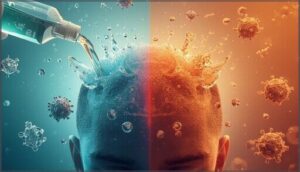
Your scalp’s pH doesn’t shift on its own—specific triggers push it out of balance, and many of them are part of your daily routine. From the shampoo you use to the stress you carry, these factors work against your scalp’s natural acidity in ways you mightn’t expect.
Understanding what disrupts your pH gives you the power to protect it.
Hair Products and Chemical Treatments
Your hair care routine can quietly shift your scalp’s chemistry without you noticing. Shampoos containing sulfates, for instance, tend to raise pH levels temporarily, weakening your skin barrier and triggering flaking.
Chemical treatments like bleaching or perms push pH even higher, causing irritation in sensitive individuals.
That’s why choosing pH-balanced products matters—they protect your scalp’s natural acidity, reducing hair damage and keeping dandruff at bay.
Environmental and Lifestyle Factors
Everyday habits shape your scalp’s pH level more than you might expect. Urban air pollution introduces oxidative stress, while hard water leaves mineral residue that disrupts scalp pH balance.
Consider these environmental and lifestyle factors:
- Climate impact: Humidity and heat increase sweating, shifting local acidity.
- Water quality: Chlorine and minerals alter surface chemistry.
- Stress effects: Chronic tension weakens your skin barrier.
- Exercise routines: Sweat composition affects electrolyte balance.
- Sleep patterns: Poor rest triggers inflammatory responses.
Managing these elements aids scalp care and dandruff control.
Dietary and Hormonal Influences
What you eat and how your hormones fluctuate can quietly reshape your scalp’s chemistry. Nutrient deficiencies in zinc or biotin compromise skin barrier integrity, while diets high in refined carbs trigger inflammatory responses that disrupt scalp pH balance.
Androgenic hormone fluctuations alter sebum composition, and stress-driven cortisol spikes weaken your scalp health.
These dietary triggers and hormonal shifts affect microbiome balance, often worsening dandruff through diet and lifestyle impact.
Signs of PH Imbalance Linked to Dandruff
When your scalp’s pH shifts out of its ideal acidic range, your body sends clear signals that something’s off. These warning signs often show up before dandruff becomes a persistent problem, giving you a window to intervene.
Recognizing these symptoms early—flaking, changes in oil production, and visible irritation—helps you tackle the underlying issue rather than just masking the effects.
Flaking and Itchiness
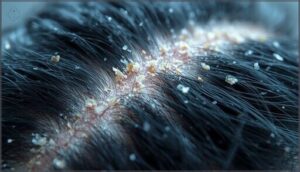
When your scalp pH balance tips out of its sweet spot, flaking and itchiness often arrive as the first warning signs. You’ll notice white, oily, or dry scales detaching in small patches, while up to 30–50% of people with dandruff experience persistent itching.
This discomfort stems from Malassezia yeast overgrowth and inflammatory signaling, making scalp irritation hard to ignore and itch relief essential for your comfort.
Oiliness or Dryness
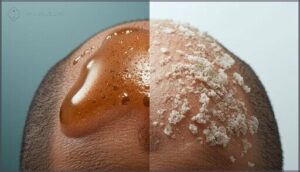
Beyond flaking and itching, you’ll often see shifts in moisture levels—either a shiny, greasy buildup from excess scalp sebum or dry flakes that signal compromised barrier function.
When pH regulation falters, your oil balance swings: larger sebaceous glands pump out more sebum, or harsh cleansers strip protective lipids, leaving your scalp health visibly out of sync and dandruff more likely.
Redness and Irritation
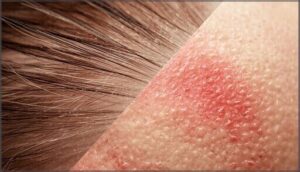
That same pH disruption also sparks visible inflammation—red patches, tender spots, and persistent irritation that warn you your scalp’s protective acid mantle has broken down. Inflammation causes heightened skin sensitivity and triggers irritation symptoms, like burning or stinging.
If your scalp pH balance shifts, redness becomes a clear sign of scalp inflammation, often appearing alongside itchy scalp and recurring dandruff despite careful scalp care.
Restoring Scalp PH for Dandruff Control

Once you understand what’s throwing your scalp’s pH out of balance, you can take targeted steps to bring it back to its ideal acidic range and reduce dandruff. Restoring pH balance doesn’t require expensive treatments or complicated routines.
Focus on three key strategies: choosing the right cleansing products, incorporating natural pH-balancing ingredients, and establishing a consistent care routine that nourishes your scalp’s protective barrier.
Using PH-Balanced Shampoos
When you choose pH balanced formulas designed to maintain your scalp’s natural acidity between 4.5 and 5.5, you’re supporting the barrier function that keeps irritation at bay.
These shampoos offer gentle cleansing without stripping protective lipids, which means less transepidermal water loss and fewer dandruff flare-ups.
Look for products labeled specifically for scalp pH balance to verify their claims support actual scalp soothing benefits.
Natural Remedies and Ingredients
You can complement pH-balanced shampoos with targeted natural ingredients that address dandruff treatment and prevention. Tea tree oil at 5% concentration reduces Malassezia yeast, while ketoconazole shampoo at 1–2% offers clinical-grade antifungal action for scalp health and pH balance.
Salicylic acid helps lift scales, piroctone olamine combats inflammation, and diluted apple cider vinegar may gently lower pH—though natural hair care requires careful dosing to avoid irritation.
Regular Scalp Care Routine
Consistency matters more than you might expect regarding scalp pH balance and dandruff control. Use a pH-balanced shampoo five to seven times per week, rinse with lukewarm water to preserve natural oils, and alternate gentle cleansing formulas to avoid over-stripping.
Apply conditioner only to your hair shaft, monitor your scalp’s response, and adjust your scalp care routine if irritation develops.
Preventive Tips for Healthy Scalp PH
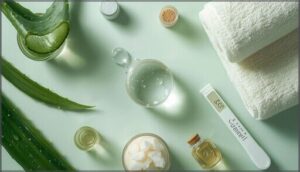
Preventing scalp pH imbalances is easier than correcting them, and it starts with making smart choices in your daily routine. The key is to protect your scalp’s natural acidity through consistent, mindful habits that support its protective barrier.
Let’s look at three essential strategies that’ll help you maintain a healthy scalp pH and keep dandruff at bay.
Product Selection Guidelines
Look for shampoos with a pH between 4.5 and 5.5—your scalp thrives in this slightly acidic environment. pH-balanced products protect your skin barrier and help control dandruff at its source.
Sulfate-free options reduce irritation, while gentle formulations with natural ingredients like aloe or calendula soothe inflammation without disrupting your scalp pH.
Check labels for fragrance-free choices, as added scents can trigger sensitivity.
Diet and Hydration Practices
Your diet directly influences scalp health and dandruff control. Supporting nutrient balance and hydration tips from the inside out helps maintain ideal pH levels and reduces flaking.
- Increase water intake to at least eight glasses daily, supporting your scalp’s moisture barrier and reducing dryness-related irritation.
- Add omega-3-rich foods like salmon and walnuts to strengthen your skin barrier and improve scalp hydration.
- Moderate high-glycemic foods such as refined sugars and white bread, which can trigger systemic inflammation affecting your scalp pH.
- Consider mineral supplements like zinc and biotin if you’re deficient, as these support keratinocyte function and healthy hair care routines.
Stress Management for Scalp Health
Chronic stress doesn’t just weigh on your mind—it disrupts your hormonal balance, triggering cortisol spikes that alter sebum production and shift your scalp’s pH into dandruff-prone territory.
Chronic stress disrupts hormonal balance, spiking cortisol levels that alter sebum production and push your scalp’s pH toward dandruff territory
Combat this cycle with mindful relaxation techniques like meditation and deep breathing, which regulate stress hormones and support emotional balance. Regular scalp massage improves circulation while promoting overall wellness—a proven strategy for stress management and hair health.
| Technique | Frequency | Scalp Benefit |
|---|---|---|
| Daily meditation | 10-15 minutes | Reduces cortisol, stabilizes pH |
| Scalp massage | 3-4 times weekly | Enhances circulation, relieves tension |
| Deep breathing | 5 minutes, 2x daily | Lowers stress hormones, decreases irritation |
| Yoga practice | 30 minutes, 3x weekly | Promotes emotional balance, reduces flaking |
| Adequate sleep | 7-9 hours nightly | Restores barrier function, controls dandruff |
Frequently Asked Questions (FAQs)
Can hard water permanently damage scalp pH?
Hard water leaves mineral residue that temporarily shifts scalp pH, but your scalp resilience usually restores balance.
Chelating agents in pH-balanced products help neutralize mineral effects, preventing water quality impact from disrupting long-term scalp health.
How often should I test my scalp pH?
You don’t need daily pH monitoring for scalp health.
Test weekly during active dandruff treatment or product changes, then monthly for maintenance.
Home testing with pH strips helps track balance and guides adjustments.
Do seasonal changes affect scalp pH levels?
Yes, seasonal fluctuations can influence scalp pH through humidity effects and temperature influence. Climate impact alters sebum production and moisture balance, creating pH variability that may affect scalp health, making pH-balanced products essential year-round.
Are pH testing strips accurate for home use?
pH strips offer reasonable accuracy for home testing, usually within ±5 units, but variables like residue, timing, and lighting affect readings.
For precise scalp pH monitoring, digital meter alternatives provide more reliable results.
Can overwashing cause chronic pH imbalance?
Picture your scalp’s acid mantle like a delicate shield—overwashing with harsh products can weaken it temporarily, triggering pH fluctuations and dandruff triggers.
However, healthy scalp resilience usually rebounds with pH-balanced products and adjusted washing frequency.
Conclusion
Maintaining your scalp’s natural chemistry isn’t about flawlessness—it’s about consistent, informed choices. The scalp pH and dandruff connection reveals that lasting relief comes from respecting your skin’s protective barriers rather than stripping them away with harsh treatments.
When you select pH-balanced products, nourish your body properly, and monitor how your scalp reacts to daily habits, you’re addressing the underlying cause rather than chasing temporary fixes. Your scalp’s chemistry becomes your strongest ally against persistent flaking.