This site is supported by our readers. We may earn a commission, at no cost to you, if you purchase through links.

Your electric shaver promises convenience, but you’re stuck with stubble by lunchtime—or worse, a face full of irritation that ruins your morning. The culprit might not be your razor at all. It’s how you’re using it.
Wet shaving with electric shavers softens hair and cuts closer, keeping skin smooth for seven hours instead of five. Dry shaving strips away prep time but compromises your skin’s protective barrier, creating those microtears you didn’t know existed.
Your skin type, schedule, and tolerance for razor burn determine which method actually works—not marketing claims or what worked for someone else. The right approach transforms your shave from a daily frustration into a routine that protects your skin while delivering the results you want.
Table Of Contents
- Key Takeaways
- Wet Shaving With Electric Shavers
- Dry Shaving With Electric Shavers
- Pros and Cons of Wet Shaving
- Pros and Cons of Dry Shaving
- Shave Closeness and Skin Sensitivity
- Safety and Hygiene Considerations
- Convenience, Cost, and Environmental Impact
- Choosing The Best Method for You
- Frequently Asked Questions (FAQs)
- Conclusion
Key Takeaways
- Wet shaving with electric shavers keeps skin smooth for seven hours versus five with dry shaving because water and lather soften hair for closer cuts, but it demands 10-15 minutes per session and requires waterproof equipment.
- Dry shaving strips your routine down to 3-7 minutes with zero prep or cleanup, making it ideal for sensitive skin that reacts badly to creams, though you’ll sacrifice closeness and risk more friction-related irritation.
- Your skin type determines which method actually protects you—normal to slightly dry skin thrives with wet shaving’s hydration barrier, while oily or combination skin handles dry shaving’s speed without the mess.
- Electric shavers eliminate the 2 billion disposable razors Americans trash yearly and cost $210-450 over three years compared to $300+ for cartridge systems, with dry methods cutting recurring expenses by skipping creams and gels entirely.
Wet Shaving With Electric Shavers
Wet shaving with an electric razor breaks the old rules—you’re not locked into dry skin and bare blades anymore. Modern electric shavers let you use water, foam, or gel for a smoother glide and less irritation.
If you’re just getting started, check out this beginner’s guide to electric shavers to find the right model for your skin and routine.
Here’s what you need to know about how wet electric shaving actually works and what tools make it happen.
If you’re dealing with sensitivity, choosing electric shavers designed for sensitive skin can make wet shaving much more comfortable and effective.
What is Wet Shaving?

Wet shaving means you’re using water and lather—shaving cream, gel, or foam—along with your razor or electric shaver. It’s different from dry shaving because you hydrate your skin and soften facial hair before the blade makes contact.
Many shavers find that proper wet shaving preparation methods make a noticeable difference in comfort and results.
Many modern electric shavers are waterproof, letting you wet shave in the shower or at the sink for smoother glides and less skin irritation.
How Wet Electric Shaving Works

Once you’ve added water to the mix, your electric shaver’s foil technology or rotating heads slice through softened hair more easily. The motor drives blades behind protective foils, cutting strands as they pass through tiny perforations. Water opens your pores and reduces friction, giving you wet shave benefits like less tugging and skin irritation. Here’s how electric shaving with moisture works:
- Electric Shaver Design: Waterproof models withstand moisture without short-circuiting, letting you shave anywhere.
- Hair Softening: Water hydrates stubble, making it easier to cut cleanly at the root.
- Foil Technology: Multi-foil systems or rotating cutters reduce pulling and improve glide during wet shaving.
- Lubrication: Shaving cream or gel minimizes friction between your skin and the shaver head.
- Shaver Maintenance: Rinse your device after each use to prevent buildup and keep performance sharp.
Common Wet Shaving Tools and Products

Your electric shaver isn’t the only tool you’ll need. You’ll want shaving brushes made from badger or synthetic fibers to build thick lather, plus shaving creams that hydrate and protect your skin. Pre-shave oils soften stubble before you start, while aftershave balms soothe irritation when you’re done.
Here’s a quick breakdown:
| Tool | Purpose | Key Feature |
|---|---|---|
| Shaving Brushes | Generate lather | Badger or synthetic fibers retain water |
| Shaving Creams | Lubricate skin | Reduce friction and razor burn |
| Pre-Shave Oils | Soften hair | Add extra glide layer |
Double-edge razor blades cost less than cartridges long-term, and alcohol-free aftershave balms won’t sting sensitive skin. Stack these products right, and your wet shaving routine delivers smoother results with less irritation.
Dry Shaving With Electric Shavers

Dry shaving with electric razors is the no-fuss approach that lets you shave anywhere, anytime—no water, no cream, no sink required. This method works directly on dry skin and appeals to people who want speed and convenience without the setup.
Here’s what you need to know about how it works, what makes it different, and which type of electric shaver fits your routine best.
Learning how to get a close shave with an electric shaver can help you achieve smoother results while minimizing skin irritation.
What is Dry Shaving?
Think of dry shaving as your no-frills power move—you skip water, cream, and all the prep. With an electric shaver gliding over clean, completely dry skin, you cut hair fast without lather or foam slowing you down.
It’s modern, portable, and built for speed, letting you take control of your grooming routine anywhere, anytime, with zero hassle.
How Dry Electric Shaving Works
Your electric shaver uses a guarded cutting system—hair pokes through tiny slots in a foil or rotary guard, then fast-moving blades scissor it off while your skin stays protected.
When you press the shaver head against your face, your skin bulges slightly into those openings, exposing more of each hair shaft for a closer dry shave without direct blade contact.
This design helps you achieve a smooth result while reducing irritation compared to traditional straight razors, especially if you’re prone to sensitivity.
Types of Electric Shavers for Dry Use
You’ll find three main dry shave options, each engineered for different needs. Foil shavers use oscillating blades beneath perforated metal—ideal for short stubble and daily routines. Rotary shavers employ spinning circular heads that hug your jawline and handle thicker beards. Linear motor models deliver up to 12,000 cuts per minute for speed.
Travel and precision shavers round out your electric razor toolkit.
Pros and Cons of Wet Shaving

Wet shaving has its devoted fans for good reason, but it’s not without tradeoffs. Understanding what works in your favor and what might trip you up helps you make a smarter choice for your skin.
Let’s break down the real advantages, the limitations you’ll face, and which skin types benefit most from this method.
Benefits of Wet Shaving
Wet shaving with your electric shaver delivers exceptional closeness because water and lather soften facial hair and lift it for a smoother pass.
You’ll also enjoy better skin hydration—warm water opens pores while quality products create a protective barrier that cuts down on razor burn.
With proper shaving technique and razor maintenance, you’re setting yourself up for healthier, more comfortable skin care results.
Drawbacks and Limitations
Even with proper prep, wet shaving brings real downsides you need to know. Clinical studies show it can spike skin irritation, especially if you rush or skimp on quality products. Key concerns include:
- Skin Irritation and razor burn from friction when lather breaks down
- Ingrown hairs that trap beneath the surface and trigger folliculitis risk
- Electric shaver maintenance demands—regular cleaning prevents bacterial buildup
- Sensitive skin reactions that worsen without strict shaving safety precautions
Ideal Skin Types for Wet Shaving
Your skin type decides whether wet shaving becomes your best ally or your worst enemy. Normal to slightly dry skin thrives with proper lubrication—warm water and quality cream create the barrier that prevents irritation. Mildly sensitive skin also benefits when you prep correctly, though very reactive faces often need gentler electric alternatives. Oily and combination skin types handle wet shaving well with non-comedogenic products.
Pros and Cons of Dry Shaving
Dry shaving with an electric razor offers distinct advantages that make it a top choice for many men. However, it’s not without its trade-offs.
Here’s what you need to know about the benefits and who should seriously consider making the switch.
Benefits of Dry Shaving
Dry shaving with an electric shaver delivers real freedom for anyone tired of being chained to the sink. You’ll get your mornings back—most dry shaves take only 5 to 10 minutes versus 15 or more for wet routines.
Key advantages include:
- Time efficiency: No prep, no hot water wait, no cleanup
- Skin comfort: Guarded foils cut irritation and nicks drastically
- Cost effectiveness: Lower per-shave expense over time
Portability benefits mean you can touch up anywhere, anytime.
Who Should Consider Dry Shaving?
You’re the ideal candidate for dry shaving if mornings feel like a race against the clock—electric shavers cut grooming time to under three minutes.
This method suits people with sensitive skin who react badly to foams or gels, those prone to ingrown hairs from blade shaving, frequent travelers needing portability, and anyone who values speed over ultra-close results.
Your skin type and shaving frequency matter most.
Shave Closeness and Skin Sensitivity
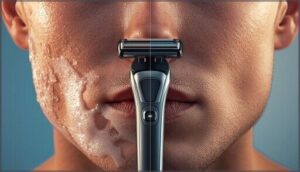
You want results that matter—closeness without the collateral damage. Your skin’s tolerance and how tight you need that shave will dictate which method takes the lead.
Here’s what actually happens when electric razors meet your face, whether wet or dry.
Comparing Shave Results
Shave quality differs noticeably between wet and dry electric shaving methods. Wet shaving with an electric shaver delivers a closer cut—your skin stays smooth for around seven hours compared to roughly five with dry shaving.
Water and gel soften your hair texture, letting the cutters reach closer to the follicle. You’ll notice less five o’clock shadow when you choose wet over dry shaving techniques.
Impact on Sensitive and Acne-Prone Skin
Your choice between wet and dry electric shaver methods matters when you’re managing sensitive skin or acne. Wet shaving with lubrication reduces friction and lowers razor burn risk, while dry passes strip natural oils and trigger inflammation.
If you’re acne-prone, that inflammation can worsen breakouts. Studies show blade users report redness and irritation nearly 30 percent more often than electric shaver users.
Managing Irritation and Razor Burn
When razor burn strikes, you’ve got proven moves to take control. Up to half of new wet shavers face irritation early on, but sharp technique fixes that fast.
- Apply a cool compress for 1-2 minutes post-shave to cut redness by 15-20 percent
- Use fragrance-free moisturizers to boost skin barrier recovery within 24 hours
- Shave with the grain first using sharp blades to slash micro-abrasions by 30 percent
Safety and Hygiene Considerations

You want a clean shave without the baggage of cuts, bumps, or infections. Both wet and dry electric shaving come with their own safety profiles, and knowing the risks puts you in control.
Let’s break down what you need to watch for and how to keep your routine hygienic.
Risk of Cuts and Ingrown Hairs
Your skin takes a beating every time you shave—that’s just reality. Dry electric shaving degrades your skin’s protective barrier and creates microtears that invite cuts and folliculitis. Wet shaving with lubrication reduces friction and lowers your risk of nicks.
If you’re battling ingrown hairs, electric shavers beat blade razors hands down, especially if you’ve got curly or coarse facial hair.
Cleaning and Maintaining Electric Shavers
Beyond the shave itself, electric razor care determines whether your device becomes a bacteria playground or a performance workhorse. Rinse your electric shaver after every use and deep-clean weekly with soap or cleaning solutions.
Blade lubrication reduces friction and heat, extending foil life. Follow manufacturer maintenance schedules—replace shaving heads every 12 to 18 months.
Dry thoroughly and store outside humid bathrooms to prevent corrosion.
Preventing Skin Infections
Negligence with blade hygiene turns your razor into a bacterial hotspot. Clean and dry your razor head after each shave to block microbial growth and prevent skin infections.
Use fresh shaving cream, cleanse skin with a mild antiseptic pre-shave, and apply a non-comedogenic moisturizer afterward. These antiseptic measures protect sensitive skin from razor burn, infection control failures, and ingrown hairs.
Convenience, Cost, and Environmental Impact

Your choice between wet and dry electric shaving extends beyond just skin results. The method you pick affects your daily routine, your wallet, and even your environmental footprint.
Let’s break down how these practical factors stack up so you can make a decision that fits your lifestyle.
Shaving Routine and Time Investment
Your daily scheduling takes a hit when you factor in the full shaving routine. Wet electric shaving methods demand 10 to 15 minutes per session, including skin preparation and cleanup. Dry shaving slashes that to 3 to 7 minutes. Here’s the weekly reality:
- Wet routines eat roughly 60 minutes across four shaves
- Dry shaves take 20 to 30 minutes weekly
- Routine efficiency doubles when you skip the lather
Choose based on your grooming routine priorities and shaving time tolerance. Note that compared to wet methods due to the lack of lubrication.
Cost Comparison Over Time
Your wallet feels the difference between wet and dry electric shaving over time. Initial costs for mid-range electric shavers run $80 to $150, with dry-only models starting around $40.
Recurring expenses tell the real story: wet shaving adds roughly $30 yearly for cream plus $28 for cleaning cartridges, while dry shaving skips the cream entirely. Over three years, bare-bones dry setups cost about $210 versus $190 for wet methods without cleaning stations.
| Cost Category | Wet Electric Shaving | Dry Electric Shaving |
|---|---|---|
| Initial Costs | $80–$300 (with station) | $40–$150 |
| Recurring Expenses | ~$120/year (cream, cartridges, balm) | ~$30/year (minimal products) |
| Replacement Parts | $74 every 12–18 months | $74 every 12–18 months |
| 3-Year Total | $190–$450 | $210–$345 |
| Cost Efficiency | Moderate (consumables add up) | Higher (fewer recurring costs) |
Long-term savings favor dry shaving for shaver maintenance simplicity. Electric razors beat cartridge systems—those run $300+ over three years in blade replacements alone. Your shaving cost drops when you minimize consumables and stick with foil or rotary head replacements every year or so.
For an even deeper dive into how traditional methods compare, see this breakdown of the cost advantage of wet-shaving.
Sustainability and Waste Factors
Your shaving choice shapes the planet’s future more than you’d think. Electric shavers slash waste by cutting out the 2 billion disposable razors Americans toss yearly, while dry methods skip water heating that pumps out 13.5 pounds of carbon dioxide annually per wet shaver.
Electric shavers cut planetary waste dramatically—eliminating billions of disposable razors and skipping the carbon cost of heating water for wet shaves
- Eco friendly shaving with electric shavers eliminates cartridge turnover for years
- Waste reduction hits hard when you ditch aerosol cans and plastic packaging
- Green packaging innovations now use 40 percent less plastic in newer models
- Sustainable materials like sea minerals replace fossil-based components in grooming routine tools
- Environmental impact drops when shaving convenience meets responsible design in electric shavers
Dry shaving wins for shaving safety and resource efficiency combined.
Choosing The Best Method for You

Your shaving method isn’t one-size-fits-all—it needs to match your skin, your schedule, and where you’re shaving. The right choice depends on factors like sensitivity, lifestyle demands, and whether you’re tackling your face, head, or body.
Here’s how to pick the method that actually works for you.
Factors to Consider (Skin Type, Lifestyle)
Your skin type drives everything. Sensitive skin or acne-prone complexions often fare better with wet electric methods that cushion against friction. Oily skin may handle dry shaving’s speed without irritation, while dry skin craves lubricants to prevent micro-tears. Lifestyle demands matter too—frequent travel favors portability, and athletic routines need post-shave care. Hair texture and shaving frequency shape which electric shaver and skin care routine keep your face healthy.
| Factor | Wet Shaving | Dry Shaving |
|---|---|---|
| Sensitive Skin | Lower irritation risk | Higher friction risk |
| Oily Skin | Requires more cleanup | Faster, less mess |
| Dry Skin | Hydrates and soothes | Needs extra moisturizer |
| Travel/Time | Needs water access | Portable, quick |
Recommendations by Shaving Area (Face, Head, Body)
Different body zones demand different electric shaver strategies. For facial hair removal, wet shaving cuts irritation scores on sensitive skin by softening stubble and reducing friction—major manufacturers confirm fewer razor bumps.
Head shaving tips emphasize wet methods for smooth bald finishes over curves, while body grooming on legs favors wet electric devices with hypoallergenic foils.
Groin and underarm areas need wet lubrication plus guarded trimmers to prevent ingrown hairs.
Expert Tips for Optimal Results
Master your technique by matching shave preparation to your electric shaver choice. Wet shaving demands skin hydration with warm water before you begin, while dry shaving requires completely dry surfaces plus alcohol-based pre-shave lotion.
Light pressure beats hard scrubbing for sensitive skin protection.
Post-shave care with fragrance-free balm cuts irritation by 40 percent.
Razor maintenance every 12 to 18 months restores peak performance.
Frequently Asked Questions (FAQs)
Can you switch between wet and dry shaving methods?
You control your grooming destiny—switching between wet and dry electric shaving is completely safe.
Your skin adapts within days, letting you toggle methods based on schedule, sensitivity, or convenience without consequence.
How often should you replace electric shaver heads?
Most manufacturers recommend replacing electric shaver heads every 12 to 18 months with daily use. Heavy shaving or coarse hair shortens that window, while occasional users can stretch head durability longer without sacrificing performance.
Are there specific pre-shave routines for different methods?
Yes. Wet electric shaving demands hydrated skin and lather for glide, while dry shaving requires completely dry skin plus pre-shave lotions that absorb moisture and lift hairs for peak cutting performance.
Can electric shavers be used with traditional shaving cream?
Before switchboards and rotary phones, barbers lathered faces by hand—today’s waterproof electric shavers bring that ritual forward.
You can use shaving cream with wet-and-dry models for better skin comfort, but dry-only devices risk damage from moisture exposure.
Conclusion
The razor-sharp truth? Wet shaving vs dry shaving with electric shavers isn’t about picking a winner—it’s about picking what works for your skin’s reality.
Wet cuts closer and soothes sensitivity, but demands time and waterproof gear. Dry delivers speed without prep, trading closeness for convenience.
Your skin type, schedule, and tolerance for irritation decide the match. Stop fighting your face with the wrong method. Choose the approach that protects your skin while actually fitting your life.
- https://www.usa.philips.com/c-f/XC000004492/how-do-i-get-the-best-results-with-my-philips-shaver
- https://www.nakedarmor.com/blogs/grown-man-shave-society-articles/dry-shaving-vs-wet-shaving-pros-cons-tips
- https://bakblade.com/blogs/manscaping/how-often-should-you-shave-your-face-a-guide-for-men
- https://www.artofmanliness.com/style/shaving/art-of-manliness-sacrilege-my-year-long-experiment-with-using-an-electric-razor/
- https://shavercheck.com/electric-shaving-costs/