This site is supported by our readers. We may earn a commission, at no cost to you, if you purchase through links. This content is for general informational and educational purposes only and is not a substitute for professional medical, dermatological, or nutritional advice.
You’re dropping twenty-five to fifty bucks every few weeks at the barbershop—money that vanishes faster than your fresh fade. Meanwhile, your clippers sit in a drawer collecting dust because you’re convinced one wrong move will leave you looking like you lost a fight with a lawnmower.
Here’s the truth: learning how to cut your own hair with clippers isn’t rocket science, and it sure beats scheduling your life around someone else’s chair. You’ll need decent equipment, a mirror setup that doesn’t lie to you, and the guts to make that first pass.
The techniques are straightforward—guard selection, angle control, and smooth consistent strokes—but the real skill comes from repetition and fixing your mistakes instead of panicking over them.
Table Of Contents
Key Takeaways
- You’ll save $25-50 per session and gain complete schedule freedom once you master basic clipper techniques like guard selection, proper angles, and smooth consistent strokes through deliberate practice.
- Start with damp hair at 60-70% moisture, section it properly, and use a main mirror with a 45-degree angled backup mirror under bright lighting to catch mistakes before they become disasters.
- Fix uneven cuts immediately by running the same guard over darker patches with slow overlapping strokes, and blend harsh lines by opening your clipper lever slightly while using light flick-out motions.
- Maintain your clippers after every cut by brushing off loose hair, applying two drops of oil across the blade teeth, and replacing blades every 1-2 years to prevent pulling and snagging.
Can You Cut Your Own Hair With Clippers?

Yes, you can absolutely cut your own hair with clippers—and you’ll save serious cash doing it. It takes patience and the right tools, but once you get the hang of it, you won’t need to schedule around a barber’s availability.
If you’re also maintaining facial hair, check out these beard grooming and hygiene practices to keep everything looking sharp between cuts.
Let’s break down whether this is the right move for you and what to expect.
Benefits of DIY Clipper Haircuts
Freedom—that’s what DIY haircutting delivers. Grab your clippers and access serious perks:
Once you’ve got the basics down, you can move on to techniques like shaving the sides of your head for a sharper, more defined look.
- Cost savings stack up fast when you skip the salon, pocketing 25 to 50 bucks per session.
- Time flexibility means you cut when it suits you, no appointments needed.
- Privacy benefits and style control let you experiment without judgment.
Cutting your own hair builds skill and confidence.
You’ll find practical tips and techniques for getting started with clippers at home that make the learning curve much easier.
Common Challenges and How to Overcome Them
Cutting your own hair with clippers brings real obstacles. Wet hands slip on grips, creating uneven lines—dry them first. Dull blade sharpness pulls hair instead of cutting it clean, so oil regularly for proper clipper maintenance. Overhead lighting hides mistakes; use multiple mirrors at different cutting angles.
Regular cleaning and oiling your hair clippers prevents buildup that dulls blades and causes painful snagging during cuts.
Hair texture changes how clippers glide—coarse hair needs slower passes. Safety precautions matter: keep guards secure to avoid nicks.
Who Should Try Cutting Their Own Hair
Once you’ve tackled the basic obstacles, ask yourself if you’re the right fit for DIY Haircare. Short to medium hair is your sweet spot for clean results with Hair Clippers. Budget Constraints favor home cuts—one quality kit pays for itself fast. Lifestyle Factors matter too: busy schedules, hot climates, and low-maintenance routines all benefit from regular self-trims.
- Teenagers with fast-growing hair maintain uniform length between salon visits using basic guard setups
- Budget-conscious guys eliminate tipping and service charges while experimenting with different Haircutting Techniques
- Professionals wanting consistent Mens Grooming can schedule quick touch-ups without appointments
- Beginners gain confidence through practice, adjusting Personal Preferences as Skill Levels improve
Essential Tools and Preparation Steps
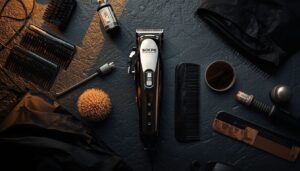
You can’t wing this with any old clippers and hope for the best. The right tools make the difference between a sharp fade and a patchy disaster, and prep work saves you from rookie mistakes.
Let’s break down exactly what you need and how to set yourself up for a clean cut.
Choosing The Right Clippers and Attachments
Your clippers are your foundation—pick wrong and you’ll wrestle every cut. Motor power between 5500 and 6500 RPM keeps thick hair from bogging down mid-fade. Stainless steel blades resist rust and stay sharp for months with regular oiling.
Guard size options from 1/8 inch to 1 inch give you fade control. Ergonomic grips reduce wrist fatigue during longer sessions.
Prepping Your Hair for Cutting
Wash and towel-dry your hair to 60-70 percent moisture—damp enough to cut cleanly, dry enough to see true length. Run a wide-tooth comb through every section to eliminate tangles that snag clipper blades.
Choose hair clippers designed for fades with sharp, well-maintained blades to ensure smooth transitions between guard lengths without pulling or snagging wet hair.
Apply a lightweight conditioner if you’re fighting frizz, then rinse it thoroughly. Brush your scalp with soft bristles to lift hairs and prep the surface for an even fade.
Setting Up Your Workspace and Mirrors
Before you fire up the Wahl Elite Pro Clipper, arrange your barbering station for precision. Lock in these fundamentals:
- Mount your main mirror at eye level with a threeway mirror angled 45 degrees to catch every fade line
- Blast bright, diffused lighting from two angles to kill shadows
- Set your workspace ergonomics with an adjustable chair and clippers within arm’s reach
- Cover surfaces with towels as safety precautions against slipping tools
Step-by-Step Guide to Cutting Your Own Hair

You’ve got your clippers ready and your workspace set up. Now it’s time to actually cut your hair without turning yourself into a walking DIY disaster.
Here’s how to tackle each part of the process with confidence and precision.
Sectioning and Detangling Your Hair
Before you even touch the clippers, you need to set the stage. Run a comb through your hair to remove tangles—starting at the ends and working up prevents breakage.
Divide your head into four horizontal sections using clips, keeping each part taut. This hair sectioning strategy gives you control and prevents those annoying uneven spots that scream “I messed up.
Selecting The Proper Guard Length
Think of guard length like shifting gears—choosing the right one determines your whole ride.
Here’s how to nail it:
- Guard Length Basics: Numbers 1–8 correspond to 3–25 mm; lower equals tighter.
- Hair Type Considerations: Curly hair shrinks when cut—go longer than you think.
- Fade Cut foundations: Start with a 2 guard on sides for classic tapers.
- Guard Size Selection: Match your desired style and maintenance tolerance.
Clipper Techniques for Sides, Back, and Top
Your sides and back demand a steady hand. Hold the clipper at 90 degrees to your scalp for straight cuts—tilting 5–15 degrees at the back softens harsh edges.
Move upward in consistent strokes using that rocking motion for blending.
For the top, lift sections between your fingers and work outward from the crown. Check in natural light.
Tips for Blending and Fading
Blending tips separate a clean fade from a choppy mess. Your lever is the secret weapon—open it to soften lines, close it to erase dark bands near the bottom.
- Start guidelines one to one-and-a-half inches above your ear, curving around your head’s natural shape.
- Keep each new band about half an inch tall so the fade stretches smooth instead of stacking.
- Work small sections using the clipper corner to target stubborn spots without cutting new lines.
- Flick outward at each stroke’s end to lift hair gradually and fade out guidelines.
For extra detail on technique and essential tools, check guides on achieving a fade haircut. Drop your guideline lower at the back for a rounded fade that follows your occipital bone. Match heights on both sides using your mirror—uneven guidelines wreck symmetry fast.
Rotate between a number three closed, number two open, then number two closed for smooth transitions. Hair texture matters: straight hair shows every mistake, curly hair forgives more but needs careful detailing around the neckline.
Brush down between passes to expose remaining lines. That’s how barbering skills develop—repetition with intention, not luck.
Barbering skills come from repetition with intention—brush between passes to catch mistakes and refine your technique
Fixing Mistakes and Achieving a Polished Look

Mistakes happen. Even barbers mess up occasionally, and you’re learning as you go.
The good news is that most clipper errors can be fixed on the spot if you know what you’re doing.
How to Correct Uneven Cuts
Precision matters when cutting your own hair, so spotting uneven fade mistakes early saves hassle. Check under bright light—darker patches mean longer hair.
Run your clippers over those patchy areas with the same guard, using slow overlapping strokes. For hairline correction, start on the lower side and match it up.
Serious bald spots? Sometimes buzzing everything shorter hides the damage best. Selecting the right clipper guard size and technique can make a significant difference in achieving even results.
Blending and Smoothing Out Lines
Lines happen. Most self-cuts leave some shadow between guard lengths, but fixing them is easier than you think.
Open your Wahl Elite Pro Clipper lever slightly and run light flick-out strokes through the band—your wrist curves away as you reach the line. Clipper over comb lifts hair at an angle, letting you shave bulk without changing guards.
Fade cut excellence comes from controlled passes, not pressing hard.
When to Seek Professional Help
Sometimes you need backup. Cutting your own hair with clippers builds skill, but know when to call in a barber.
Get professional corrections if you see:
- Severe mistakes like scalp-exposing patches or mismatched lengths
- Hair type limits—curly patterns and fades need trained hands
- Scalp concerns including bumps, bleeding, or irritation
- Emotional factors when results hurt your confidence before big events
That’s grooming advice worth following.
Aftercare and Maintenance Tips
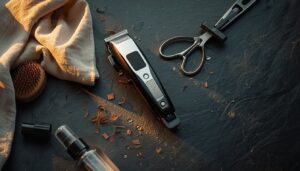
You just gave yourself a solid haircut. Now it’s time to clean up the mess, keep your clippers running like new, and figure out when you’ll need to touch things up again.
Here’s how to wrap this whole thing up right.
Cleaning Up and Styling Post-Cut
Your post-cut routine starts the second you set those hair clippers down. Brush loose hairs off your neck with a clean towel, then hop straight into the shower and shampoo once—lukewarm water rinses clippings fast without drying your scalp. Pat dry instead of rubbing to dodge irritation.
| Task | Quick Method |
|---|---|
| Remove loose hair | Brush neck, rinse 60 seconds while massaging |
| Clean bathroom area | Sweep first, vacuum edges and drain |
| Soothe scalp irritation | Apply alcohol-free moisturizer or aloe spray |
Now you’re ready for hair styling tips that actually work. Matte clays add texture and medium hold to short cuts without that greasy helmet look—warm a pea-sized amount between your palms first. Lightweight styling creams tame frizz and cowlicks while keeping movement. For hair texture management on non-wash days, hit your roots with dry shampoo to absorb oil and add lift.
Blow-dry on low heat while brushing upward at the roots—it sets your shape and balances those tight sides. Work product into almost-dry hair for maximum control during your grooming routine. A small comb and dab of wax along your front hairline sharpens edges and defines your outline. Check side and back angles in a second mirror before you roll out.
Maintaining Clippers for Longevity
After every grooming routine, brush loose hair off your Wahl Elite Pro Clipper blades with the included brush, then apply two drops of clipper oil across the teeth—this simple motor maintenance cuts friction and keeps those self-sharpening edges cutting fast.
Proper clipper cleaning and oil replacement every three sessions stretch blade sharpening intervals to twelve months.
Store hair clippers in their case between cuts. Done.
Scheduling Regular Touch-Ups at Home
Most tight clipper cuts stay sharp for seven to ten days before your neckline and sideburns blur. Set a recurring Sunday-night reminder on your phone—pair touch-ups with your weekly grooming routine so cutting your own hair becomes automatic.
Track each home salon session in a simple calendar, note your guard lengths, and adjust your touch-up frequency as hair growth patterns shift through seasons.
Frequently Asked Questions (FAQs)
Is it better to cut hair dry or wet?
Most guys think wet hair cuts easier. Wrong. Dry cutting shows your real texture and length—no shrinkage surprises. Wet cuts stretch hair, making you trim too short once it dries.
Once you see your true texture dry, pick layers that fit your curl pattern, and this guide to types of layers for curly hair shows what suits waves, curls, or coils.
How often should I replace clipper blades?
For home haircutting, replace clipper blades every one to two years with regular cleaning and oiling.
Busy barbers swap them every three to six months—sooner if they pull, snag, or leave choppy patches.
Can clippers work on thick curly hair?
Yes, clippers handle thick curly hair well when they pack enough motor power and sharp blades. Choose longer guard size options to preserve curl definition techniques while working through dense coils without snagging or pulling strands.
Whats the best way to trim sideburns?
Start with a longer guard to establish sideburn length at your earlobe, then blend downward using smaller guards.
Check both sides for symmetry, following your natural hairline to frame your facial structure perfectly.
Should I cut hair wet or dry?
Dry cutting tips reveal true texture and fall, while wet cuts offer cleaner edges.
For clippers, blade maintenance matters—damp hair clogs fast.
Cutting your own hair? Start dry, then perfect.
How do I clean clippers between uses?
After every haircut, brush loose hair from your clipper blades, wipe them with disinfectant, then apply a drop of oil.
This routine keeps your Wahl Elite Pro sharp and prevents rust.
Conclusion
Your first self-haircut is like jumping off the high dive—terrifying until you surface grinning. You’ve got the tools, the technique, and the mirror setup. Now you just need reps.
Learning how to cut your own hair with clippers means accepting wonky lines at first, then watching them disappear as your hands get smarter. Three cuts from now, you’ll wonder why you ever paid someone else. The chair’s yours—own it.