This site is supported by our readers. We may earn a commission, at no cost to you, if you purchase through links. This content is for general informational and educational purposes only and is not a substitute for professional medical, dermatological, or nutritional advice.
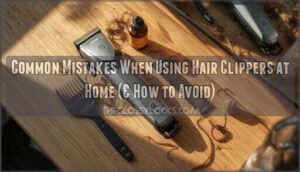
You’ve committed to cutting your own hair at home, clippers in hand, ready to save time and money. Then reality hits: uneven patches on the sides, a bald spot you didn’t plan for, or worse—clippers that jam mid-cut because you skipped a key maintenance step.
These scenarios aren’t rare. Most home clipper disasters stem from a handful of preventable errors that professionals avoid instinctively but beginners overlook entirely. The difference between a clean, professional-looking cut and a regrettable hack job often comes down to understanding what not to do.
Master these common pitfalls—from preparation mistakes to technique errors and maintenance oversights—and you’ll transform your home haircuts from anxious experiments into confident, repeatable results.
Table Of Contents
Key Takeaways
- Most home clipper disasters stem from preventable preparation errors like skipping hair washing and detangling, using wet or tangled hair, and choosing the wrong guard size—all of which lead to uneven cuts, clogged blades, and patchy results before you even start clipping.
- Technique mistakes like cutting at inconsistent angles, failing to overlap passes by half the blade width, and neglecting proper blending between guard lengths create visible stripes, bald spots, and harsh lines that instantly reveal an amateur cut.
- Regular maintenance—cleaning blades after every use, oiling them to prevent friction and rust, checking blade alignment, and replacing worn parts—directly determines whether your clippers deliver smooth, professional results or pull hair and overheat.
- Safety oversights like using clippers with wet hands or on damp hair create serious electrical shock hazards and equipment damage, while proper storage in dry locations with organized guards protects your investment and extends clipper lifespan significantly.
Common Mistakes When Using Hair Clippers at Home
You’re keen to save time and money by cutting hair at home, but a few simple missteps can turn a quick trim into a hair disaster. Even experienced DIY groomers fall into common traps that lead to uneven cuts, skin irritation, or damaged clippers.
Choosing the wrong equipment or rushing through the process are two major beard shaping mistakes to avoid that can ruin your results.
Let’s walk through the most frequent mistakes people make before they even turn on their clippers, so you can avoid them from your very first cut.
One of the biggest prep mistakes is not understanding where your neckline should actually be, which can throw off your entire cut before you even start.
Skipping Hair Preparation Steps
Preparation is the bedrock of every great home haircut, yet it’s the step most people rush past. Skip proper hair washing, detangling, and scalp preparation, and your pre-cut routine falls apart before you even power on the clippers.
Many first-timers don’t realize that understanding the full benefits of cutting hair at home with clippers starts with mastering these foundational prep steps before ever touching a blade to hair.
Here’s what solid haircare and hair preparation look like:
- Wash thoroughly to strip oils and product buildup that clog blades
- Dry completely so wet strands don’t stretch and mislead your cutting techniques
- Detangle fully with a wide-tooth comb to eliminate snags across all hair types
- Check clipper maintenance by brushing off old debris before you start
For even better results, pay attention to blade cleaning and oiling practices, which can extend the life and performance of your clippers.
Using The Wrong Guard Size
Guard size errors wreck more home cuts than dull blades ever will. Grabbing a 3 instead of a 5 strips an extra quarter-inch and turns your trim into a near-buzz cut.
Confusing guard numbers—where 0 means skin-close and 8 leaves an inch—reverses your entire plan. Always double-check your clipper attachments before the first pass, because blade selection and guard settings lock in your final hair length.
For more details on what different numbers mean and how to choose correctly, check this thorough guide on hair trimmer guard sizes.
Cutting Hair When Wet or Tangled
Wet hair cutting sabotages every pass you make. Moisture swells each strand, so your clippers tug instead of slice cleanly, leaving choppy patches and frayed ends. Tangled hair tips the blade sideways, skipping whole sections and clogging teeth with clumps.
Wet hair swells and clogs clippers, causing uneven cuts and frayed ends instead of clean passes
Damp hair styling also risks rust on non‑waterproof models and raises electrical hazards near sinks.
Professional hair clippers for fades with fully waterproof housings let you work safely in any environment without corrosion concerns.
Proper hair preparation methods—wash, detangle, then dry completely—protect both your haircare and styling results and your clipper blade care routine.
Ignoring Proper Sectioning Techniques
Sectioning errors wreck clipper control before you even begin. Without clear zones, you’ll chase the same area twice while missing patches near the crown, creating uneven length distribution that shows every hair texture differently.
Inconsistent cutting angles break your sectional blending, leaving hard lines where smooth fades should be.
Clips and partings guide your haircutting techniques, turning guesswork into precision—so map your head like a pro barber would.
Rushing The Clipping Process
Speed cuts sabotage haircut accuracy—rushed cutting techniques create patchy spots, missed edges, and visible lines because your clipper speed control vanishes under time pressure. Safety precautions slip when you’re hurrying, raising nick risks around ears and necklines.
Avoiding common mistakes means slowing down: steady passes prevent technique errors, give you better clipper selection moments between guards, and let proper hair cutting techniques deliver the clean, even finish you’re after.
Incorrect Clipper Techniques to Avoid
Even with the right clippers and clean hair, your technique makes all the difference between a smooth, professional-looking cut and a patchy mess. The way you move the clippers, hold them, and blend between sections determines whether you’ll walk away confident or scrambling for a hat.
If you’re new to clippers, learning the right grip and motion techniques will help you avoid common mistakes and get salon-quality results at home.
Let’s break down the most common technique mistakes so you can avoid them from your very first pass.
Cutting Against The Grain Improperly
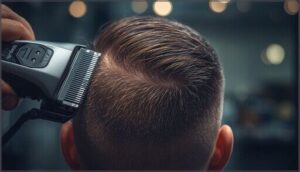
Cutting against the grain can deliver a close, sharp finish—but only when you respect hair texture and clipper angles. Many home users push hard against growth direction without adjusting their guard size or cutting angle, creating patchy spots and scalp irritation.
- Feel hair growth with your fingertips before each stroke to confirm grain direction
- Step up one guard size when switching from with-the-grain to against-the-grain passes
- Maintain consistent cutting techniques by keeping your blade angle steady across all zones
- Practice regular blade maintenance to prevent pulling that worsens when clipping against natural growth
Failing to Overlap Passes
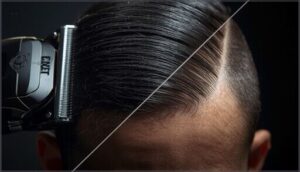
Each pass should overlap the previous stroke by roughly half the clipper blade’s width—missing this foundational step is a recipe for racing stripes and patchy shadows. When you skip overlapping, you leave bands of untouched hair between passes, forcing you into time-consuming corrections that heat up both the blade and your scalp.
| What Happens Without Overlap | How Proper Overlap Fixes It |
|---|---|
| Clear ledges and uneven length lines around the head | Smooth transitions and continuous fading between guard lengths |
| Dark spots and patchy areas where denser hair sits between passes | Even coverage that eliminates shadows and missed clusters |
| Extra corrective strokes that cause redness and clipper rash | Fewer total passes, less friction, and greater comfort on sensitive skin |
Practice your haircutting technique by moving upward in steady, slightly overlapping strokes—this builds the gradient foundation every fade depends on and prevents the hair blending disasters that turn a quick trim into an all-afternoon project.
Holding Clippers at Inconsistent Angles
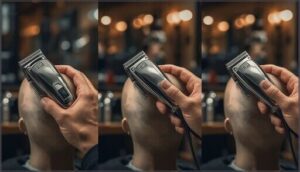
Tilting your clippers even ten degrees inward or outward transforms the same guard into three different cutting lengths, leaving patchy stripes across your home haircuts. Mastering clipper angle control and blade positioning prevents those frustrating shadows and bald spots that force you to trim everything shorter than planned.
Technique errors beginners make with angle adjustment methods:
- Rolling the wrist mid-stroke, which carves crescent-shaped dips through the section
- Pressing too hard against curved areas, forcing only one blade corner to contact the scalp
- Reaching awkward placements that tilt the tool instead of repositioning your body
- Switching randomly between flat, inward, and outward angles around different zones
Keep the full blade surface flush to the scalp on every pass—your arm position, grip relaxation, and mirror checks determine whether you achieve smooth barbering techniques or create hair length variance that screams amateur.
Neglecting Blending and Fading Methods

Skipping blending techniques leaves harsh lines between guard lengths that announce your home haircut to everyone you meet. Effective fade transitions require overlapping guards by half steps, flicking motions at boundaries, and checking from multiple angles under bright light—not a single straight pass.
Master these barbering techniques by working upward in 2mm increments, adjusting clipper angles for hair texture, and pausing between cutting layers to verify symmetry.
Maintenance Mistakes That Affect Performance
You can have perfect technique and the right tools, but if you’re not maintaining your clippers properly, you’re setting yourself up for disappointing results.
Most home users overlook basic maintenance steps that directly impact how well their clippers perform, from the smoothness of each pass to the longevity of the blades.
Let’s walk through the most common maintenance mistakes and how to avoid them so your clippers stay sharp and reliable.
Not Cleaning Blades After Use
Hair debris left between blade teeth is the silent killer of your clipper’s performance and blade sharpness. When you skip blade sanitation after each cut, trapped hair and skin particles create friction that dulls edges, breeds bacteria, and invites rust.
This hair clipper maintenance step takes thirty seconds but saves you from blade maintenance headaches later. Clean hair clippers mean clean cuts every time.
Skipping Regular Blade Oiling
Once your blades are clean, you need to apply clipper oil to keep them running smoothly. Skipping regular blade oiling creates friction that makes your hair clippers heat up, pull hair, and wear out faster.
A few drops of oil after each use prevents rust, maintains blade sharpness, and extends the life of your clippers considerably through proper hair clipper maintenance.
Ignoring Blade Alignment Issues
Even freshly oiled blades won’t perform well if they’re crooked or misaligned. When your moving blade sits too far forward or leans to one side, you’ll face safety risks like nicks and uneven results that ruin your cutting techniques.
Check blade alignment before each use by confirming the teeth form a straight line and sit slightly behind the stationary blade, keeping your clipper maintenance routine complete.
Failing to Replace Worn Parts
You can’t keep pushing worn parts past their prime and expect professional results. When blade edges chip, drive gears grind, or springs lose tension, your hair clippers won’t deliver clean cuts no matter how much you oil them.
Inspect blades monthly for nicks and dullness, check guard attachments for cracks, and replace any compromised parts immediately—proper tool upkeep prevents frustrating haircuts and protects your investment.
Safety and Handling Errors at Home
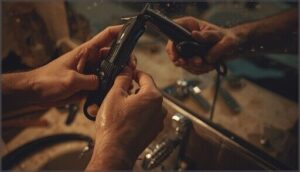
Safety might seem like common sense, but small oversights can turn your grooming session into a frustrating or even dangerous experience. When you’re focused on getting the right fade or blend, it’s easy to forget the basics that keep you and your clippers in good shape.
Let’s walk through the most common safety and handling errors that trip up home barbers, so you can avoid them from the start.
Using Clippers With Wet Hands or Hair
You mightn’t think twice about running clippers after washing your hair, but mixing water with electricity is a recipe for electrical shock and ruined equipment. Wet hair cutting with standard home clippers creates serious risks that most beginners overlook.
Why Water and Clippers Don’t Mix:
- Electrical shock hazard – Moisture on your hands or the clipper body creates paths for current to reach you, especially without GFCI-protected outlets.
- Motor strain and damage – Water makes hair clump, forcing the motor to work harder and overheat, shortening its lifespan.
- Blade corrosion – Water left on blades speeds rust formation along cutting teeth, causing snagging and dulling edges faster.
- Poor cutting quality – Wet strands lie flat and clump between guard teeth, creating uneven patches that require multiple passes.
- Voided warranties – Most manufacturers explicitly prohibit wet use in their manuals, so water damage isn’t covered.
Always dry your hands completely before picking up corded clippers. If you’ve just washed your hair, towel-dry thoroughly, then blow-dry until fully dry—slightly damp isn’t enough. This simple step protects both you and your equipment.
For regular clipper maintenance after any moisture exposure, unplug immediately, wipe down the casing and cord, and let everything air out before storing. Clean and oil blades right after each use to prevent hidden moisture from causing corrosion.
If you genuinely need to trim damp hair, invest in clippers with a waterproof rating (look for IPX markings). These models seal moisture away from electrical components and handle wet conditions safely. They’re designed for shower use and won’t fail when standard clippers would.
Think of it this way: you wouldn’t use your phone charger with soaking hands, so give your clippers the same respect. Dry preparation takes two extra minutes but prevents equipment failure, skin irritation from repeated passes, and the real danger of shock.
Make drying part of your routine. Set up your cutting area away from sinks and tubs where splashes happen. Keep a dedicated towel nearby to dry hands between sections if you’re working in a humid bathroom. Personal grooming tips from professionals always emphasize this: water damage is the number-one preventable cause of home clipper failure. Protecting your investment means keeping moisture away from motors, blades, and electrical connections every single time you cut.
Leaving Clippers Unattended or Unsecured
After you finish your haircut, don’t leave clippers on the counter where children or pets can reach them—unattended devices risk accidental starts and electrical hazards.
Clipper storage matters: always unplug corded models, secure the cord, and place them in a locked drawer or high cabinet.
Using hair clippers at home means following safety precautions every time, protecting both your family and your equipment through secure handling and child protection practices.
Improper Storage Leading to Damage
Instead of tossing your hair clippers into a damp drawer, invest in proper storage solutions to protect your grooming tools from rust and damage. Moisture control and blade protection extend the life of your hair trimmer and maintain peak performance.
Follow these clipper maintenance steps for effective barbering and hair care:
- Store in a dry, cool location away from bathroom humidity and heat sources
- Use protective cases to shield blades from dust, debris, and accidental impacts
- Keep guards organized in dedicated trays to prevent warping and guarantee consistent cutting lengths
Overlooking Electrical Cord or Battery Care
When power management falls by the wayside, you’re inviting serious electrical hazards into your grooming routine. Frayed cords on wired clippers expose live wires that can shock or short-circuit, while overcharging cordless clippers degrades battery health and creates fire risks.
Check your charger safety regularly—inspect for cord damage, avoid wet-hand handling of battery-powered clippers and electric shavers, and never leave hair clippers charging unattended overnight.
Top Hair Clippers and Accessories for Home Use
Having the right tools makes all the difference between a frustrating home haircut and a clean, professional-looking result. You don’t need a full barber shop setup, but investing in quality clippers and a few essential accessories will set you up for success.
Here are four reliable options that deliver consistent performance for home use.
1. Wahl Elite Pro Hair Clipper Kit
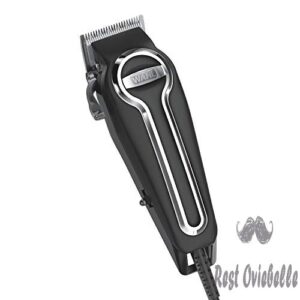
When you want reliable clipper maintenance without constant blade sharpening worries, the Wahl Elite Pro delivers professional power at home. This haircutting kit features self-sharpening blades that slice through any hair texture 40 percent faster than standard models, while the corded motor efficiency provides 15 percent more power than basic clippers.
You’ll get 10 Secure-Fit guards with stainless clips for precise guard size selection, plus clipper accessories including shears, cape, and a complete hair trimming guide—all backed by Wahl’s lifetime motor warranty.
| Best For | Home users who want salon-quality haircuts without the salon price tag, especially if you’re cutting thick or coarse hair regularly. |
|---|---|
| Brand | Wahl |
| Weight | 2.5 Pounds |
| Material | Stainless Steel Blades |
| Color | Black |
| Use Case | Home use |
| Accessories Included | Premium kit with cape, guards, case |
| Additional Features |
|
- Self-sharpening blades cut 40% faster than standard clippers and handle any hair type without losing their edge
- Powerful motor delivers professional-grade performance with 15% more cutting power than basic models
- Complete kit includes everything you need—10 secure-fit guards, scissors, cape, oil, and storage case with lifetime warranty
- Only works with USA electrical outlets, so it’s not travel-friendly for international trips
- Weighs 2.5 pounds, which can feel heavy during longer cutting sessions
- Requires oiling after each use to keep the blades running smoothly
2. Wahl Cordless Hair Clipper
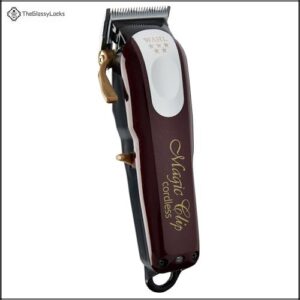
When battery life becomes your top priority during home hair cutting sessions, the Wahl Cordless Hair Clipper delivers up to 2 hours runtime on a single charge—enough for several complete cuts. You’ll appreciate the Lithium Ion technology that holds its charge for 9 to 12 months between uses, plus a 15-minute quick charge providing 5 minutes of emergency trimming power.
The self-sharpening steel blades require minimal blade sharpening maintenance, while the adjustable taper lever lets you fine-tune cutting lengths from 0.6 to 3.4 millimeters for smooth blends.
| Best For | Home users and professional barbers who need reliable cordless performance with extended runtime for multiple cuts without frequent recharging. |
|---|---|
| Brand | Wahl Professional |
| Weight | 16 ounces |
| Material | Stagger-Tooth Blade |
| Color | Burgundy |
| Use Case | Professional & Home |
| Accessories Included | 8 guides, brush, oil, transformer |
| Additional Features |
|
- Exceptional battery life with 100 minutes per charge and impressive 9-12 month charge retention between uses
- Patented Stagger-Tooth blade design creates smooth fades and seamless blends with minimal effort
- Lightweight 10-ounce build reduces hand fatigue during longer cutting sessions
- Adjustable taper lever lacks precise repeatability, making it harder to achieve consistent results
- No charging dock included despite the premium price point
- Some reliability issues reported with charging functionality and overall performance
3. Wahl Professional Cordless Hair Clipper
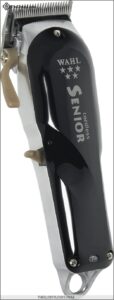
When professional-grade tools meet home convenience, the Wahl Professional Cordless Hair Clipper becomes your go-to for perfect fades and tapers. You’ll experience 90 to 100 minutes of battery performance from its lithium ion system, while the 2161 stagger tooth blade with Crunch Blade technology delivers audible feedback so you know each pass is complete.
The adjustable taper lever shifts cutting lengths from 0.5 to 1.2 millimeters without swapping guards, and eight premium clipper accessories cover all essential guard sizes.
Regular blade maintenance with the included oil keeps your cordless clipper running smoothly.
| Best For | Professional barbers, stylists, and home users who want salon-quality fades, tapers, and blends with the freedom of cordless operation. |
|---|---|
| Brand | Wahl Professional |
| Weight | 13 ounces |
| Material | Metal Housing |
| Color | Red |
| Use Case | Professional & Personal |
| Accessories Included | Adjustable blades, charging accessories |
| Additional Features |
|
- Powerful rotary motor handles thick hair easily with 80 minutes of battery life per charge
- Adjustable taper lever (0.5-1.2mm) and zero-overlap blade capabilities give you precise control for detailed work
- Durable metal housing built to last through heavy professional or personal use
- Higher price point compared to standard consumer clippers
- No battery level indicator makes it hard to know when you need to recharge
- Battery may not last through multiple full haircuts in busy salon settings
4. Equinox Professional Hair Cutting Scissors

Sharp scissors complete your home haircut toolkit when clippers alone won’t shape those fine details around ears and necklines. The Equinox Professional Hair Cutting Scissors feature Japanese stainless steel blades at 6.5 inches overall length, with hand-sharpened edges that slice cleanly through thick sections during DIY haircuts.
You’ll appreciate the ergonomic design with curved finger rests that reduce strain during trimming sessions, while the adjustable tension screw lets you customize blade control.
Regular scissor maintenance and proper blade sharpening keep these home haircut essentials performing through years of use.
| Best For | Home stylists and DIY haircut enthusiasts who need professional-grade scissors for detailed trimming and shaping work. |
|---|---|
| Brand | Equinox International |
| Weight | 3.5 ounces |
| Material | Japanese Stainless Steel |
| Color | Silver |
| Use Case | Professional & Home |
| Accessories Included | Protective case, lubricating oil |
| Additional Features |
|
- Japanese stainless steel blades with hand-sharpened edges deliver clean, precise cuts through hair
- Ergonomic design with curved finger rests and adjustable tension screw reduces hand fatigue during longer sessions
- 6.5-inch length strikes a good balance for versatile cutting work on men, women, and children
- Sensitive to moisture and can rust if not stored properly in dry conditions
- Some users report the blades don’t stay sharp as long as expected with regular use
- Works best on smaller sections and may struggle with very thick or coarse hair
Frequently Asked Questions (FAQs)
How often should I replace my clipper blades?
You’ll replace clipper blades every six to twelve months for typical home use, though coarse hair and heavy usage patterns demand swaps closer to every three to four months.
Proper blade maintenance through regular cleaning and oiling extends their lifespan considerably.
Can I use the same clippers for beards?
You can use the same clippers for beard trimming and hair cutting, but only if you clean and disinfect the blades thoroughly between uses to prevent cross contamination and maintain proper hygiene practices.
What causes clippers to overheat during use?
Clippers overheat when blade friction, lack of lubrication, and hair buildup create excess heat.
Motor overload from dense hair, over-tight blades, or extended use without breaks forces thermal protection systems to kick in and prevent damage.
Should I cut my own hair or someone elses first?
Think of learning to swim: you wouldn’t jump into the deep end to save someone else before floating yourself.
Cut your own hair first—you’ll build clipper confidence, master home haircuts through low-risk practice methods, and understand safety first principles before attempting DIY haircuts on others.
How do I fix an uneven haircut mistake?
Start by examining the uneven areas in bright lighting, then use guards to level length, blend harsh lines with flicking motions, or apply styling products to disguise minor mistakes temporarily.
Conclusion
An ounce of prevention is worth a pound of cure—and nowhere is that truer than with home hair clippers. By sidestepping these common mistakes when using hair clippers at home, you’re not just avoiding disasters; you’re building real skill with every cut.
Proper preparation, deliberate technique, consistent maintenance, and mindful safety habits separate frustrating experiments from satisfying results. Your clippers are precision tools—treat them that way, and they’ll reward you with confidence-building cuts every single time.