This site is supported by our readers. We may earn a commission, at no cost to you, if you purchase through links. This content is for general informational and educational purposes only and is not a substitute for professional medical, dermatological, or nutritional advice.

Your hair doesn’t come with an instruction manual, but somewhere between the daily blow-dry devotees and the once-a-week minimalists, there’s a frequency that actually works for your specific strands.
Most stylists see the damage patterns long before clients do—that telltale brittleness, the split ends creeping upward, the texture that’s lost its bounce—because heat styling walks a fine line between polished and punished.
The truth is, how often you should blow dry your hair isn’t a one-size-fits-all answer; it hinges on your hair’s unique architecture, its porosity, the damage it’s already carrying, and how you wield that dryer. Understanding these variables lets you break free from damaging routines while still achieving the styles you want, without sacrificing your hair’s integrity in the process.
Table Of Contents
- Key Takeaways
- How Often Should You Blow Dry Your Hair?
- How Hair Type Affects Blow Drying Frequency
- Best Practices for Safe Blow Drying
- Essential Heat Protection Tips
- Warning Signs and How to Prevent Damage
- Frequently Asked Questions (FAQs)
- How often is it healthy to blow dry hair?
- What is the healthiest way to blow dry your hair?
- Is a 12 week blowdry bad for your hair?
- Can blow drying cause permanent hair loss?
- Is air drying always better than blow drying?
- Should you blow dry your scalp completely?
- Does blow dryer wattage affect hair health?
- Can you blow dry wet hair extensions?
- Conclusion
Key Takeaways
- Your ideal blow-drying frequency depends on your hair’s unique architecture, porosity, and existing damage—most experts recommend limiting heat styling to two or three sessions per week to prevent moisture loss and brittleness while maintaining your desired style.
- Fine hair can’t handle more than every two to three days without inviting heat buildup and breakage, while thick hair tolerates every two to four days, and color-treated or damaged strands need to cap sessions at twice weekly to protect already compromised cuticles.
- Heat protectants aren’t optional—they create a thermal shield that distributes high temperatures evenly and prevents cuticle lifting, so apply them to damp hair within three minutes after towel drying and wait two minutes before starting any heat styling.
- Your hair signals overuse through split ends creeping up within four to six weeks, persistent frizz that won’t quit, breakage at the midlengths, and faster color fading—all warning signs that you need to dial back your blow-drying frequency immediately.
How Often Should You Blow Dry Your Hair?
There’s no one-size-fits-all answer to how often you should blow dry your hair, because the right frequency depends on factors ranging from your hair’s natural texture to how much damage it can actually handle before things go south.
When you do blow dry, make sure to follow proper technique by working from roots to ends along your natural hair growth pattern to minimize damage.
Most experts recommend limiting heat styling to just a few sessions per week so you don’t strip away moisture and leave your strands looking dull and brittle, but your personal sweet spot might be different. Let’s break down the general guidelines, what influences your ideal routine, and the warning signs that you’re overdoing it.
General Recommendations for Frequency
Ideally, you should blow dry your hair every other day to strike a balance between style and health, thereby reducing heat exposure while keeping your look fresh.
On non-drying days, air drying or towel blot drying can reduce moisture loss by up to 20 percent, so your hair gets a break. Frequency guidelines depend on hair texture, but limiting heat exposure to two or three sessions per week minimizes damage while giving you control over your routine.
Factors That Influence Blow Drying Frequency
Your hair type, hair porosity, and hair density set the baseline for how much thermal stress your strands can handle, but environmental factors like humidity and your chosen drying techniques play equal roles in determining safe blowdrying frequency.
Heat protectant application, prior hair damage, and the equipment you use all shift that sweet spot, so you’ll need to factor in your entire hair care ecosystem when mapping out your routine.
Signs You’re Blow Drying Too Often
Your strands will tell you when you’ve crossed the line—watch for split ends creeping up within four to six weeks, rough texture that wasn’t there before, or frizz that won’t quit no matter what product you throw at it.
Your hair signals overuse through split ends, rough texture, and persistent frizz—signs you’ve crossed the line
Breakage at the midlengths, scalp irritation between sessions, and color fading faster than usual all signal that your blow drying frequency needs dialing back.
How Hair Type Affects Blow Drying Frequency

Your hair type isn’t just about texture or appearance—it directly determines how often you can blow dry without crossing the line into damage territory. What works for someone with thick, resilient strands won’t necessarily work for you if your hair is fine, curly, or chemically treated.
Understanding your specific needs gives you the freedom to style confidently without the guesswork. Here’s how different hair types handle heat and what frequency keeps each one healthy.
Start by knowing what to look for when buying a hair dryer so you can match the right heat settings and technology to your hair’s unique needs.
Fine and Thin Hair
Your fine hair dries fast and weighs down easily, so you can’t afford to blow dry it more than every two to three days without inviting heat buildup and breakage.
Air dry first until you’re about 70 to 80 percent there, then finish with a round brush at low heat to create volume—lightweight products and heat protectant keep your scalp healthy between sessions.
For best results, pay close attention to proper blow drying techniques to minimize damage and maintain hair health.
Thick and Coarse Hair
You can blow dry thick hair every two to four days because its dense structure tolerates higher heat and longer sessions without the same fragility risks.
Use a paddle brush with medium-to-high heat for sleek results, but pair each styling session with a deep conditioning treatment to counteract dryness—heavy heat protectants lock in moisture while you work, supporting both frizz control and damage prevention.
Curly and Wavy Hair
When you’re managing curl patterns, limit blow dry sessions to two or three times weekly with a diffuser attachment—this approach preserves your curl patterns and prevents frizz while maintaining moisture balance techniques that keep texture bouncy.
Air-dry until you’re eighty percent done, then finish with medium heat and a heat protectant to lock in definition without torching those delicate spirals.
Color-Treated or Damaged Hair
When you’ve invested in color preservation or you’re nursing damaged strands back to health, cap blow drying at twice weekly—your cuticles are already compromised, so heat protection and damage prevention become non-negotiable for chemical protection and breakage prevention.
- Apply UV-safe heat protectants before every session for color preservation and hair restoration
- Drop to low heat settings to support damage repair without further weakening bonds
- Schedule deep conditioning between blowouts to accelerate hair health and maintenance
- Take air-dry breaks to extend your color’s lifespan while giving strands recovery time
Best Practices for Safe Blow Drying
You don’t have to sacrifice your styling freedom just because blow drying carries some risk—you simply need to master the techniques that protect your hair while giving you the results you want. The right approach starts before you even turn on the dryer and continues through every step of the process, so understanding these foundational practices will help you maintain control over your hair’s health without backing down from heat styling.
Let’s break down the essential techniques that separate damaging blow drying from the kind that keeps your hair strong and vibrant.
Pre-Drying Techniques and Towel Use

Your hair’s destiny starts the moment you step out of the shower, so before you even think about turning on that dryer, you need to master the art of towel work. Hair blotting with the right towel material—ideally a microfiber towel—can slash your drying time by 10 to 20 percent while cutting friction damage by nearly half, and that’s not hype, it’s physics.
| Towel Type | Absorbency Level | Frizz Reduction |
|---|---|---|
| Microfiber | 50% more than cotton | High – traps loose hairs |
| Cotton Terry | Moderate | Low – increases friction |
| Bamboo Fiber | High | Moderate – lower roughness |
| Cotton T-Shirt | Moderate | High – smooth surface |
| Standard Bath Towel | Low | Very Low – rough fibers snag |
Gentle handling means pressing and lifting sections instead of rubbing them raw, thereby preserving cuticle integrity and preventing kinks that heat will only intensify. Use a light squeeze from ends to roots, let your hair rest in the towel for 5 to 10 minutes, and keep that fabric off your scalp to avoid oil transfer and irritation. Microfiber benefits extend beyond absorbency—these towels actually cradle each strand in a softer nap, making drying preparation the unsung hero of hair damage prevention and smarter hair care tips overall.
Sectioning and Detangling Hair
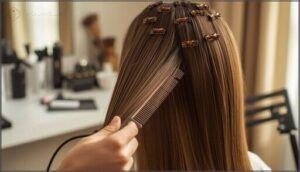
Think of sectioning and detangling as the foundation of every great blowout—you can’t nail hair styling without it.
Divide your hair into four to six horizontal panels using non-metal clips so heat exposure stays even across every texture, then work a wide-tooth comb from ends to roots in one- to two-inch ribbons to protect cuticles while preventing hair damage prevention nightmares before they start.
Choosing The Right Dryer Settings

Your dryer’s settings can either protect or punish your strands, so start low and work up only when absolutely necessary. Most heat settings range from 140 to 185 degrees Fahrenheit, but pairing lower heat with stronger airflow control speeds drying without scorching cuticles—then lock in shine with the cool shot benefits that seal each section and defend your hair health against heat styling damage.
Your dryer’s ability to balance these elements is crucial for maintaining healthy hair.
Using Attachments for Different Hair Types
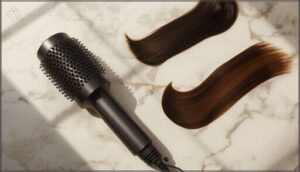
Attachment types do more than focus airflow—they reshape how heat styling tools interact with your hair texture.
A diffuser benefits curly patterns by distributing warmth evenly, preventing frizz while defining coils, whereas narrow concentrators add lift at fine-hair roots without flattening. Match your styling techniques to your hair type, and these hair care tools transform blow dry settings from risky to strategic.
For a thorough overview of the best hair dryer attachments suited to each hair type, expert recommendations can help you choose the right tool.
Essential Heat Protection Tips

If you’re going to use heat on your hair, you need to protect it first—there’s no way around it.
Heat protectants create a barrier between your strands and the dryer, so you can style without sacrificing your hair’s health and strength. Let’s break down what you need to know about choosing and using these products the right way.
Importance of Heat Protectant Products
Without question, heat protectant products are your most powerful tool for damage prevention during blow dry sessions. These styling products create a thermal shield that distributes high temperatures more evenly across each strand, thereby preventing moisture loss and cuticle lifting that rob your hair of shine.
Heat protection isn’t optional—it’s the difference between healthy hair care and irreversible heat styling damage.
How to Apply Heat Protectants Properly
Now that you’ve got your heat protectant, here’s how to actually make it work. Apply product to damp hair within three minutes after towel drying, which locks in moisture before blow dry sessions begin.
Use a wide-tooth comb to distribute serum from mid-lengths to ends, avoiding your scalp entirely, then wait two minutes for the protectant ingredients to absorb before heat styling starts.
Recommended Products for Different Hair Types
Your hair type determines which heat protectant actually delivers blow dry hair protection without sabotage. Fine hair thrives with water-based formulas that won’t flatten roots, while thick strands need rich oils like argan applied mid-lengths down, thereby sealing moisture during styling.
- Fine hair: Lightweight, silicone-free serums prevent buildup while shielding from damage
- Curly hair: Curl enhancers with diffuser-friendly ingredients maintain pattern integrity
- Color-treated hair: Bond-reinforcing products minimize fading and strengthen weakened cuticles
Warning Signs and How to Prevent Damage

Your hair will tell you when you’ve pushed it too far with heat damage, but you need to know what signals to watch for before the damage becomes irreversible. Learning to recognize these warning signs early gives you the power to take control and adjust your routine, thereby protecting your hair’s health and vitality.
We’ll walk through the key symptoms of heat damage, show you how to recalibrate your blow drying habits, and explore alternative styling methods that won’t leave your hair suffering.
Recognizing Heat Damage Symptoms
You’ll know you’ve crossed the line when frizz won’t quit even after styling, split ends multiply like weeds, and your hair snaps instead of stretches.
Heat damage from blow drying shows up as dull shine, rough texture, and faster color fading, while heat stress can trigger scalp irritation or breakage clusters along the midshaft, so watch for these red flags before they become permanent.
Adjusting Your Routine for Healthier Hair
Cut back to two or three blow dry sessions per week so your cuticles can recover and your hair health improves naturally, and when you do style, toggle between cool and warm settings to minimize heat damage while preserving shine.
Spacing out sessions lets natural oils rebalance moisture, promoting hair growth and long-term damage prevention, thereby transforming your hair care routine into a path toward healthier, stronger strands that bounce back faster.
Alternatives to Frequent Blow Drying
Sometimes you can skip the blow dry entirely and let your hair air dry to its natural texture, cutting heat exposure while preserving moisture and bounce.
Microfiber towels speed things up by absorbing water faster, and gentle handling with heat-free styling methods like twist-clips or plopping reduces frizz without sacrificing your look—so you maintain hair health and maintenance effortlessly.
Frequently Asked Questions (FAQs)
How often is it healthy to blow dry hair?
Twice weekly sessions strike the sweet spot for scalp health and damage recovery—letting your locks retain moisture between heat styling rounds while maintaining cuticle integrity, thereby minimizing the brittleness that blow dryers can cause.
What is the healthiest way to blow dry your hair?
The healthiest blow dry technique combines heat protectant application, low-to-medium heat settings, continuous dryer movement at six inches distance, and pre-sectioning damp hair—thereby preventing heat damage while preserving hair health through strategic styling tools and damage prevention methods.
Is a 12 week blowdry bad for your hair?
Think of a 12-week blowdry as your hair’s vacation from frizz—when done right with heat protectants and proper heat styling techniques, it won’t cause hair damage, though monitoring hair health and following heat exposure limits prevents long-term consequences.
Can blow drying cause permanent hair loss?
Blow drying won’t cause permanent hair loss from your follicles, but excessive heat can weaken your hair shaft and trigger breakage that mimics thinning, so protecting against heat damage and scalp irritation is essential.
Is air drying always better than blow drying?
Not necessarily—air dry benefits like minimal heat damage don’t always outweigh blow dry advantages such as faster styling and frizz control, so your hair type and moisture balance determine which drying techniques truly serve your hair health best.
Should you blow dry your scalp completely?
Oddly, your scalp tolerates more heat than expected, but complete dryness matters for moisture control and scalp health—so yes, dry it fully using moderate heat settings to prevent scalp irritation while maintaining your hair care routine.
Does blow dryer wattage affect hair health?
Wattage affects hair health mainly through drying speed rather than direct damage—higher settings reduce heat exposure time, but only if you pair them with proper heat distribution, smart dryer settings, and consistent heat protectants for ideal hair porosity protection.
Can you blow dry wet hair extensions?
Yes, you can blow dry wet hair extensions, but you’ll want to use cool to medium heat and keep the dryer at least six inches away to prevent bond damage and preserve their lifespan.
Conclusion
Your hair’s resilience and your lifestyle don’t always align perfectly, but that’s exactly where smart heat styling lives—in the gap between what you want and what your strands can handle.
How often should you blow dry your hair? It depends entirely on reading your hair’s signals, respecting its limits, and building a routine that protects while it perfects. Master that balance, and you’ll never sacrifice health for the sake of style again.