This site is supported by our readers. We may earn a commission, at no cost to you, if you purchase through links. This content is for general informational and educational purposes only and is not a substitute for professional medical, dermatological, or nutritional advice.
You turn off the shower, step out to grab your towel, and there it is—that steady drip, drip, drip that won’t quit. A few drops right after shutting off the water are normal, just leftover water working its way out of the pipes.
But when your shower head keeps dripping minutes or even hours later, you’re dealing with a leak that’s wasting water and driving up your utility bill. The culprit is usually something simple: a worn-out washer, a faulty valve cartridge, or mineral buildup from hard water preventing a complete seal.
Most of these fixes take less than an hour and don’t require calling a plumber, which means you can stop that annoying drip and save money on your water bill this weekend.
Table Of Contents
- Key Takeaways
- Why Does My Shower Head Drip After Turning Off?
- How Residual Water Causes Dripping
- Common Mechanical Issues Behind Dripping
- Impact of Mineral Buildup on Shower Head Leaks
- How Water Pressure Influences Shower Head Dripping
- Steps to Troubleshoot a Dripping Shower Head
- DIY Fixes for a Leaky Shower Head
- Preventive Maintenance for Shower Heads
- When to Call a Professional Plumber
- Frequently Asked Questions (FAQs)
- Is it normal for a shower head to drip after use?
- Why does my rain shower head drip hours after I turn it off?
- Why does my shower faucet drip when it’s off?
- Do different shower head types drip differently?
- How long should residual water drip normally?
- Can temperature changes cause shower heads to drip?
- Will a dripping shower head increase water bills?
- Conclusion
Key Takeaways
- A few drops right after shutting off the water are normal drainage, but if your shower head keeps dripping minutes or hours later, you’re dealing with a leak caused by worn washers, faulty valve cartridges, or mineral buildup preventing a complete seal.
- Most dripping shower heads can be fixed in under an hour without a plumber by tightening connections, replacing worn washers and O-rings, cleaning mineral deposits with vinegar, or swapping out a faulty cartridge.
- High water pressure above 60-70 psi forces water through tiny gaps in seals and speeds up wear on internal parts, so checking and adjusting your home’s pressure with a regulator prevents future leaks.
- Regular maintenance like descaling every 1-3 months, inspecting seals twice a year, and upgrading old fixtures to ceramic disc cartridges stops drips before they start and cuts water waste that adds roughly $9 monthly to your bill.
Why Does My Shower Head Drip After Turning Off?
A dripping shower head after you turn off the water is more than just annoying—it can waste gallons over time and signal a problem that’ll only get worse. The issue usually comes down to one of a few common culprits, from leftover water finding its way out to worn parts that can’t seal properly anymore.
If the drip happens alongside weak flow, you might be dealing with low water pressure in your shower caused by a valve issue rather than just a leaky seal.
Let’s look at what’s likely causing your shower to drip and why it happens.
Gravity and Residual Water Drainage
After you turn the shower off, gravity pulls leftover water out of the pipe above the valve. That residual water drains through the shower head for a few seconds, creating a normal drip.
If your pipe slopes correctly and the valve seals tight, the dripping shower head stops quickly. But if water pressure pushes past a worn seal or mineral buildup blocks full shutoff, the leak continues.
Faulty Shower Valve or Cartridge
When your valve cartridge wears out, it fails to shut off water supply completely. That’s the heart of shower repair.
You’ll notice leaks around the handle or inconsistent temperature as internal seals degrade. Mineral buildup also prevents proper seating.
Valve maintenance means inspecting for crust and stiffness. Faulty shower valve components require cartridge replacement using the correct model.
Leak detection starts with checking around the escutchon for moisture after faucet fixing attempts. Proper attention to common shower valve issues can help homeowners address leaks and maintain ideal water pressure.
Worn-Out Washers or O-Rings
Rubber seals and O-rings lose their shape over time, letting water sneak past even when the valve shuts off. You’ll spot seal degradation through constant drips long after you turn the handle.
Here’s what wears out O-rings and washers:
- Heat exposure hardens rubber and cracks the seating surface
- Mineral-rich water corrodes soft materials like Buna N
- Constant compression flattens the round profile
Washer replacement fixes most leaky shower heads. Check for missing chunks or visible flattening—that’s your cue for maintenance. Using the right tools and materials for tap repair can make the process smoother and more effective.
Mineral Buildup From Hard Water
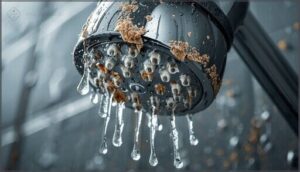
Hard water leaves calcium and magnesium deposits inside your shower head and valve, creating scale buildup that blocks proper sealing. You’ll notice chalky white limescale on spray holes and internal parts.
These mineral deposits narrow passages and trap debris, causing irregular drips even when everything’s shut tight. Water softening systems prevent future accumulation, while descaling methods like vinegar soaks restore flow and stop mineral-related leaks.
High Water Pressure Effects
When water pressure exceeds seventy psi, you’re asking for trouble. High water pressure forces water through tiny gaps in seals and valves, making your leaky shower head drip faster.
The excess stress speeds up pipe stress and triggers water hammer when you shut off flow. Pressure regulators help control these flow rates, protecting washers and seats from premature wear caused by ongoing valve issues.
Corrosion or Damaged Pipes
Old pipes don’t just sit there quietly—they break down from the inside out. Corroded metal creates openings that turn your leaky shower head into a steady drip, even when everything looks fine on the surface.
- Corrosion types like pitting create deep holes in copper or galvanized steel while you sleep.
- Pipe materials such as iron rust faster in acidic water chemistry.
- Mineral deposits hide thinning walls until pinhole leaks appear.
- Pipe replacement beats endless repairs when corrosion spreads.
Loose Connections
Over time, vibration and daily use loosen threaded fittings where your shower head meets the arm or where the arm screws into the wall.
Those loose connections let water seep between the metal surfaces, creating a drip long after shut-off. Tighten the joint clockwise with a wrench—just snug, not cranked—and wrap fresh pipe tape around the threads for a watertight seal.
How Residual Water Causes Dripping
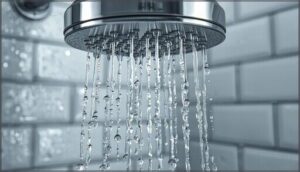
After you turn off the shower, it’s normal to hear a few drips as leftover water works its way out of the shower head and pipe. This happens because water gets trapped inside, and gravity pulls it down through the nozzles.
Here’s what you need to know about whether those drips are routine drainage or a sign of something that needs fixing.
Normal Drainage After Use
You turn off the valve and hear those familiar drips—completely normal. Residual water trapped in the shower head and pipes drains under gravity flow after post shutdown.
As pressure drops, water settlement begins, releasing a few drops per minute. This drainage pattern usually tapers off within minutes, clearing standing water back to the supply line or drain.
Difference Between Normal Drips and Leaks
Knowing whether you’re dealing with dripping or leaks makes all the difference. Drips taper off after you shut the valve—just a few slow drops clearing out residual water.
Leaks keep flowing steadily, sometimes worsening over time regardless of the handle position. Drips mean minor wear; leaks signal faulty seals that risk water damage and mold if left unaddressed.
Common Mechanical Issues Behind Dripping
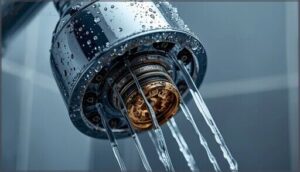
If your shower keeps dripping long after you’ve turned it off, you’re likely dealing with a mechanical problem inside the fixture.
Most of the time, the issue comes down to a few worn-out or faulty parts that prevent the valve from sealing properly. Here’s what usually causes the problem.
Worn-Out Washers and Seals
Washers and seals are like the unsung heroes of your plumbing—until they wear out. Over time, rubber and silicone washers lose elasticity, crack, or harden, letting water slip past even when your valve’s shut tight.
This leak often starts as a slow drip but worsens as the seal degrades. Regular inspection and seal replacement every year or two, especially in hard water homes, prevents most dripping shower head problems before they escalate.
Faulty Cartridges or Valves
Your shower valve and cartridge control water flow, and when they fail, drips don’t stop. Worn cartridges show increased friction when turning the handle, along with temperature swings or flow hiccups. Debris scores the cartridge seats, preventing a complete seal. Valve inspection and cartridge replacement usually solve persistent leaks—most last 5 to 15 years depending on water quality.
Here’s what to watch for during faucet repair:
- Internal seals lose contact from uneven wear, allowing slow drips after shutoff
- Temperature or flow fluctuations signal a faulty cartridge wearing down
- Mineral buildup scores seats, reducing the valve’s ability to seal completely
- Replacement intervals range from 5 to 15 years based on usage
- After valve replacement, dripping should stop within seconds of shutoff
Damaged Shower Head Components
Beyond valve failure, your shower head itself can break down and drip. Cracked housings, split diverter valves, and broken flow restrictors create gaps that leak when pressure drops.
Oring damage around the swivel ball lets water seep through, while mineral deposits can lock internal parts open. If tightening loose connections and descaling don’t stop the drip, shower head replacement usually fixes it.
Impact of Mineral Buildup on Shower Head Leaks
Hard water is one of the most common culprits behind persistent shower head drips. Mineral deposits build up over time and create problems that won’t go away on their own.
Here’s what you need to know about spotting and dealing with this issue, and understanding the root cause.
Signs of Limescale and Hard Water Deposits
White chalky deposits on your faucets and shower screens are the telltale signs of hard water problems. You’ll spot limescale buildup that starts white but can turn yellow or brown if your water contains iron.
Here’s what to watch for:
- Crusty mineral deposits on shower heads and glass surfaces
- Cloudy film on dishes and glassware after washing
- Blocked aerators and reduced water flow over time
These calcium deposits grow thicker as water evaporates, leaving minerals behind.
How Mineral Deposits Affect Water Flow
Those crusty deposits don’t just sit there looking ugly—they actively choke your water flow. As calcium and magnesium form rigid scale inside your shower head and pipes, they narrow the passages and create rough surfaces that trap more sediment.
You’ll notice weaker spray patterns and uneven pressure. The mineral accumulation forces water through smaller openings, increasing flow resistance and causing that annoying dripping after shutoff.
Removing and Preventing Mineral Buildup
Tackling stubborn buildup takes the right approach. Soak your detachable shower head overnight in a 1-to-1 mix of white vinegar and water—the acetic acid dissolves calcium deposits effectively.
For fixed heads, fill a plastic bag with vinegar and secure it around the fixture. Scrub gently with a small brush afterward, then rinse thoroughly.
Installing a whole-house water softener stops future limescale before it forms.
How Water Pressure Influences Shower Head Dripping
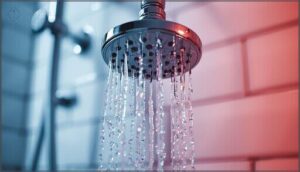
Water pressure isn’t something most people think about until it becomes a pressure problem. When your home’s pressure runs too high, it forces water through tiny gaps in seals and valves that would otherwise hold tight.
Here’s how water pressure affects your shower head and what you can do about it.
Effects of High Water Pressure
High water pressure can force water through tiny gaps in your valve or seals, turning a tight seal into a persistent leak. It also causes water hammer—sudden shocks that rattle pipes and loosen connections over time.
Pipe stress builds as pressure pushes against walls and joints, speeding up fixture wear and raising leak risks. That’s why pressure regulation matters more than you’d think.
Checking and Adjusting Home Water Pressure
To check your water pressure issues, attach a pressure gauge to an outside faucet near the water meter and run the tap for 15 seconds. You’re looking for 50 to 60 psi—the sweet spot for preventing high water pressure problems.
Adjustment techniques for pressure regulation:
- Locate your pressure regulator near the meter
- Loosen the adjustment cap with a wrench
- Turn the screw clockwise to increase, counterclockwise to decrease
- Make small 5 psi changes at a time
- Recheck with the gauge after each turn
Regular regulator maintenance keeps flow control stable and stops drips before they start.
Steps to Troubleshoot a Dripping Shower Head
Before you grab your toolbox, you need to figure out what’s actually causing the drip. A few simple checks can save you time and point you toward the right fix.
Start by watching how and when your shower head drips, then take a closer look at the hardware itself.
Observing Drip Patterns and Frequency
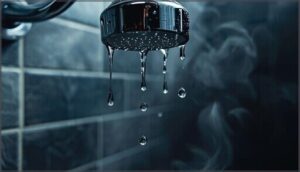
Watching how your shower head drips after shut off tells you a lot about what’s wrong. Note the timing: does it start immediately or after a delay? Count the drip cadence changes, because a consistent drip signals a worn seal while random drips suggest residual water drainage. This basic leak detection helps you separate normal behavior from persistent leaks.
| Pattern Type | What It Means | Action Needed |
|---|---|---|
| Few seconds of drips | Normal residual water | No repair required |
| Steady one per second | Worn washer or seal | Replace component soon |
| Irregular post-shutoff delay | Loose connection or air trap | Tighten fittings first |
Inspecting Connections and Components
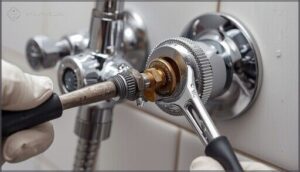
Once you’ve watched the drip pattern, it’s time to get hands-on with connection checks and valve inspection. Shut off your water supply, then carefully examine each part for component wear and thread damage.
- Check all connections with a wrench for tightness without stripping threads
- Inspect the shower arm inlet for cracks or cross-threading
- Examine valve stem and cartridge o-rings for deformation
- Look for mineral buildup around threads that blocks proper sealing
- Verify washers sit flush and aren’t loose in their housing
Tightening loose connections often stops leaky faucets before you need major plumbing repair.
DIY Fixes for a Leaky Shower Head
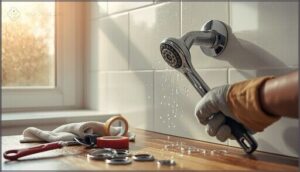
Most shower head drips can be fixed at home repairs without calling a plumber. You’ll need a few basic tools and about 30 minutes to work through the repairs.
Here are the most effective fixes you can do yourself.
Tightening and Securing Connections
Sometimes a dripping shower head just needs a firm handshake with its pipe. Start by hand-tightening connections, then use a wrench to reach manufacturer torque settings—usually 15 to 20 foot-pounds. Wrap plumber’s tape clockwise on threads before reattaching. After tightening, run water at low flow and recheck within 24 hours to confirm the seal holds.
| Connection Type | Best Practice |
|---|---|
| Shower head to arm | Hand-tighten, then finish with wrench to spec |
| Wall flange mount | Snug fit prevents movement and leaks |
| Thread interfaces | Clean old tape debris before applying new seal |
| Metal-to-metal joints | Match brass or stainless for corrosion resistance |
Replacing Washers, O-Rings, and Cartridges
If tightening doesn’t stop the drip, worn-out washers or O-rings are usually the culprit.
Start faucet disassembly by shutting off your main water supply. Remove the handle and escutcheon to reach the cartridge.
Pull out the old cartridge, then replace damaged washers and O-rings with parts matching your model’s specs. Apply light seal lubrication before reassembling—this prevents pinching and extends seal life.
Cleaning and Descaling The Shower Head
Mineral deposits also restrict flow and cause persistent drips. Detach your shower head and soak it in a vinegar and water solution for about 30 minutes—this descaling method dissolves limescale without harsh cleaning products.
Use a soft brush to scrub stubborn mineral removal spots, then rinse thoroughly. Regular shower head maintenance every few months keeps scale prevention simple and stops buildup before it becomes a problem.
Using Plumber’s Tape for Better Sealing
After cleaning, you’ll want to stop leaks at the connection itself. PTFE tape, also called plumber’s tape, wraps around threaded pipe fittings to create watertight connections. This simple thread sealing tool prevents dripping shower issues by filling gaps between metal threads on your shower head and shower valve.
Here’s how to apply it correctly for leak prevention:
- Start wrapping from the threaded end, keeping the tape flat and smooth
- Wrap clockwise in the tightening direction to avoid unraveling
- Use 2 to 4 wraps for standard shower head connections
- Overlap each layer by half the tape width for full coverage
- Press the end onto threads before screwing on the fixture
Preventive Maintenance for Shower Heads
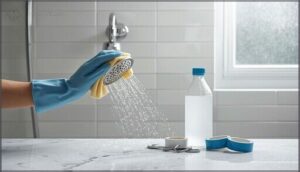
You’ve fixed the drip, but the real win is keeping it from coming back.
A few simple habits can save you from future headaches and keep your shower head working like it should. Here’s what you need to stay on top of.
Regular Cleaning and Descaling
You can stop mineral buildup before it blocks nozzles and kills water pressure. Descaling every 1 to 3 months keeps flow strong. Soak your shower head in vinegar and water for 30 minutes to dissolve limescale, then scrub individual nozzles with an old toothbrush. Rinse thoroughly to flush loosened deposits from internal channels.
| Descaling Methods | How Often |
|---|---|
| Vinegar soak (30 min) | Monthly for hard water |
| Citric acid solution | Every 2-3 months |
| Commercial descaler | As needed for stubborn deposits |
| Hot water rinse | After every cleaning |
| Dry completely | After each shower use |
Periodic Inspection of Washers and Seals
Every few months, pull apart your shower head connections and check washers and seals for cracks or hardening. A worn-out washer won’t seal the valve seat properly, turning a tight connection into a dripping shower head.
Inspect seal material for:
- Brittleness around edges and seating surfaces
- Flat spots or deformation that prevent proper sealing
- Nicks or cuts in O-rings that cause leak detection headaches
Replace worn parts immediately using correct replacement parts, and schedule regular washer inspection to catch failures before water damage starts. Mark your calendar for maintenance scheduling every six months.
Monitoring Water Pressure
A simple water gauge installed at your main supply line gives you real-time pressure readings and catches problems early. Most homes run best at 40 to 60 psi—anything higher and you risk seal damage that leads to drips.
| Pressure Range | Fixture Impact |
|---|---|
| Below 40 psi | Weak flow, poor rinsing |
| 40–60 psi | Ideal performance zone |
| 60–80 psi | Accelerated seal wear |
| Above 80 psi | High leak risk, damage |
| Fluctuating | Stress on washers, drips |
Check pressure monthly using calibrated gauges or install pressure sensors for continuous monitoring. If readings climb above 60, adjust your pressure regulator to protect fixtures and prevent the impact of water pressure on fixtures from causing leaks. High water pressure forces water through tiny gaps in seals, so pressure regulation and leak detection go hand in hand with flow rates that stay consistent.
Upgrading Old Fixtures
Older fixtures wear out faster and let mineral deposits build up in ways that modern designs prevent. Upgrading to ceramic disc cartridges or brass valve cores gives you fixture replacement that cuts drip time and boosts water efficiency through leak prevention your old shower head can’t match.
- Ceramic disc cartridges in modern shower valves last 5 to 10 years and seal better than worn stem-type designs
- Water-efficient models reduce hot water use by up to 30 percent while maintaining strong flow
- Integrated shutoff valves simplify fixture maintenance and plumbing repair without shutting off your whole house
- Anti-scale features and self-cleaning nozzles minimize mineral deposits that cause leaks
- Pressure-balance valve upgrades prevent sudden temperature swings and protect seals from damage
When to Call a Professional Plumber
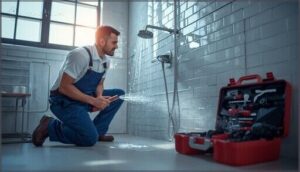
Sometimes a dripping shower head won’t respond to the standard fixes you can handle yourself. When you’ve already replaced washers, cleaned mineral deposits, and checked connections but the drip persists, it’s time to bring in a plumber.
Here are the clear signs that your shower issue needs professional attention.
Persistent Drips After DIY Repairs
Sometimes you replace parts, tighten connections, and clean everything perfectly—yet the dripping shower head refuses to quit. When post repair issues persist despite your best efforts, it signals deeper problems in the plumbing system diagnostics that DIY methods can’t reach.
Repeated repair failures with identical leakage patterns mean hidden fixture leaks or valve damage require professional shower head maintenance and repair to stop drip persistence and prevent water leaks completely.
Signs of Water Damage or Mold
When you spot water stains on bathroom walls or ceilings, you’re looking at evidence of hidden leaks that extend far beyond a dripping shower head.
Moisture detection becomes critical when musty odors, soft flooring, or visible mold clusters appear—these structural damage indicators demand immediate attention from a plumber to prevent costly repairs and protect your home’s integrity through proper mold prevention and water leak solutions.
Complex Valve or Pipe Issues
When valve corrosion pits the seating surface or pipe erosion creates hidden openings, you’ll need professional leak detection to trace the problem.
A faulty shower valve with corroded valve seat won’t seal properly no matter how many cartridges you replace. Mismatched pipe materials, compromised water pressure from pipe damage, and worn internal components all require specialized tools and expertise beyond typical DIY fixes.
Cost Considerations and Long-Term Solutions
Professional diagnosis and valve replacement run $100 to $300, but catching leaks early prevents bigger bills down the road. A dripping shower head wastes around 3 gallons daily, adding roughly $9 monthly to your water bill.
A dripping shower head wastes three gallons daily and costs you nine dollars monthly, but early repairs prevent bigger bills
Budget planning for annual plumbing maintenance and proactive leak prevention through regular inspections deliver better cost analysis than emergency repairs. Water conservation starts with timely DIY plumbing fixes before damage escalates.
Frequently Asked Questions (FAQs)
Is it normal for a shower head to drip after use?
Yes, a brief drip is normal. Residual water trapped in the shower head and pipes drains naturally after shutoff.
If dripping continues beyond a few minutes, you likely have a leak.
Why does my rain shower head drip hours after I turn it off?
Rain shower heads hold more water than standard models due to their larger surface area and design.
Hours-long dripping usually signals a faulty shower valve or cartridge that isn’t fully closing off the water supply.
Why does my shower faucet drip when it’s off?
A dripping shower when you turn the handle to off position usually means the shower valve isn’t sealing completely—often from a worn cartridge, damaged washers, or mineral buildup blocking a tight shut.
Do different shower head types drip differently?
Different shower head types drip at different rates.
Fixed heads drain fast, while rain heads hold more water and drip longer.
Handheld models with hoses trap water in curves, causing extended dripping after shutoff.
How long should residual water drip normally?
Think of it like squeezing a sponge—residual water drips for about 5 to 10 minutes after shut off.
Beyond that threshold, you’re likely dealing with a leak requiring attention, not normal drainage patterns.
Can temperature changes cause shower heads to drip?
Yes, temperature fluctuations cause thermal expansion and water contraction in pipes, loosening valve seals and connections.
Hot water also triggers mineral precipitation around washers, creating thermal stress that forces small drips after shutdown.
Will a dripping shower head increase water bills?
Absolutely. Even a minor leak can waste hundreds of gallons yearly, driving up your water bills.
Water waste from drips impacts usage patterns and costs, making leak detection and quick fixes essential for utility bill reduction and water conservation.
Conclusion
Before the telegraph brought instant messaging, people fixed problems themselves because help wasn’t coming fast. That same self-reliance applies when figuring out why does my shower head drip after turning off.
Most fixes—replacing washers, cleaning mineral buildup, tightening connections—take less than an hour and cost under twenty dollars. You’ve got the knowledge now. Grab your wrench, shut off the water, and stop that drip before it drains your wallet.