This site is supported by our readers. We may earn a commission, at no cost to you, if you purchase through links. This content is for general informational and educational purposes only and is not a substitute for professional medical, dermatological, or nutritional advice.
Most guys walk into the barbershop knowing their vibe but not their face shape—and that gap costs them. The diamond face shape is one of the rarest structures out there, built around wide, dramatic cheekbones that taper into a sharp jawline and a narrow forehead.
That bone structure is striking, but without the right cut, those angles can work against you instead of for you. Diamond face shape fade styles are built to flip that script—softening the midface, adding width where it’s missing, and turning what feels like a styling puzzle into your biggest flex.
Table Of Contents
- Key Takeaways
- What is a Diamond Face Shape?
- Why Fades Suit Diamond Face Shapes
- Best Fade Styles for Diamond Faces
- Styling Tips for Diamond Face Fades
- Celebrity-Inspired Diamond Face Fade Looks
- Frequently Asked Questions (FAQs)
- What is the best fade for a diamond face?
- What is the best haircut for diamond face shape?
- What to avoid with a diamond face shape?
- Is high taper fade good for diamond face?
- Can thick hair affect how fades look?
- What products hold a fade style longer?
- Do fades work on curly or coily hair?
- How often should a fade be touched up?
- Can a fade suit all ages and lifestyles?
- Conclusion
Key Takeaways
- A diamond face shape’s wide cheekbones and narrow forehead demand fade styles that add softness and width at the temples, not harsh lines that amplify your angles.
- Mid and low taper fades are your best weapons — they balance the midface, anchor a slim jawline, and keep your bold bone structure working for you instead of against you.
- Styling isn’t over when you leave the chair — root-lifting products, matte clay, and face-framing layers are what keep your fade flattering between cuts.
- Touch up every 2–3 weeks, communicate your face shape clearly to your barber, and bring reference photos — consistency is what turns a good cut into a signature look.
What is a Diamond Face Shape?
You can’t pick the right fade until you know what you’re working with. A diamond face shape isn’t just another category—it’s a sharp, angular structure with its own rules and challenges.
Its narrow forehead and jaw paired with wide cheekbones mean every cut decision matters—so starting with beard shaping techniques for diamond face shapes can help you balance those angles before you even touch the fade.
Let’s break down the key features, how to spot them in the mirror, and what makes this face shape tricky to style.
Key Facial Features and Structure
Your diamond face shape puts cheekbones front and center—they’re the widest part of your face, sitting high and proud.
Your forehead and jawline taper in, creating angular proportions that give you serious definition. That narrow chin points down, forming sharp jawline contours that stand out in any light. The contrast between wide midface and slim upper-third makes your facial bone structure uniquely bold.
Learn more about how physiognomy characteristics of diamond face relate to personality and success.
How to Identify Your Face Shape
Knowing your facial structure starts with simple proportion checks and face mapping at home. Grab a mirror and compare your face length to width—diamond shaped faces show cheekbone dominance.
Use measurement tips like soft tape across your forehead, cheeks, and jaw to run a quick face shape analysis. Visual analysis beats guessing every time.
If your cheeks measure widest and your chin tapers, symmetry tests confirm you’ve got those signature diamond proportions.
For more detailed guidance on accurate face shape identification steps, refer to expert recommendations.
Common Styling Challenges
Once you know you’ve got those dramatic cheekbones, the real work starts. Your biggest styling challenge is fighting overemphasized width at mid-face—tight high fades and center parts make cheekbones look even broader.
You’ll also battle the angular silhouette that harsh edges create. Forehead framing and volume techniques become essential for cheekbone balance, while softening styles keep your diamond face shape from reading too sharp.
Why Fades Suit Diamond Face Shapes
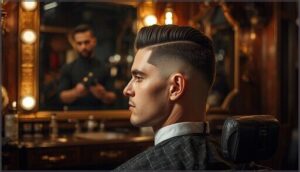
Fades work for diamond faces because they let you sculpt the sides to balance your widest point—those killer cheekbones. The right fade adds width where you need it and softness where your face naturally sharpens.
But not every fade works, so here’s what you need to know about making this cut work for your angles.
Your face shape is the real starting point—check out this guide on high fade cuts for every face shape to find what actually flatters your angles.
Balancing Cheekbones and Jawline
Here’s the thing: your widest point sits right at those cheekbones, which can overpower a slim jawline if you’re not careful. A smart fade keeps fullness at the sides, toning down that angular cheekbone pop while anchoring your jaw.
A smart fade anchors your jawline by keeping fullness at the sides, softening bold cheekbones without losing definition
Mid and low fades create facial symmetry by bridging the gap between broad cheeks and a narrow chin—total breakthrough for diamond face shapes.
Creating Visual Width and Softness
Softness isn’t an accident—it’s strategic. When you keep 0.5 to 1 inch of hair above the ears, you add horizontal weight that makes your face shape look wider at the temples. Here’s how fades bring visual balance:
- Guards 2–4 on the sides reduce harsh contrast and soften cheekbone enhancement
- Textured top layers introduce gentle curves that counter angular features
- Rounded styling—think messy quiffs—adds soft layers instead of sharp spikes
- Side-swept curtain bangs widen a narrow forehead and frame your face beautifully
Key advantage for diamond face shapes.
Avoiding Common Fade Mistakes
Most barbers see the same fade height errors on diamond face shapes—high skin fades that strip temple weight and turn cheekbone emphasis into angular enhancement gone wrong. Over-styling issues like centre parts or blunt fringes clash with your structure. A tight fade paired with flat volume creates a helmet look.
Ask for guards 2–4, soft blending, and textured tops—your diamond face shape deserves haircut balance, not hairstyle inspiration that fights your angles.
Best Fade Styles for Diamond Faces
Not all fade styles are built the same when you’re working with a diamond face shape. The right fade style can balance your wide cheekbones and narrow jawline, while the wrong one makes everything look too sharp or pinched.
Here are the four fade cuts that actually work for your angles.
Mid Fade for Balanced Proportions

A mid fade is your power move for balancing a diamond face shape—it splits the head’s height right at the temples, keeping visual weight proportional from forehead to jaw.
Here’s why it works:
- Fade placement starts above the ears, avoiding a pinched look
- Proportion balance counters wide cheekbones without sharpening angles
- Hair texture on top adds dimension where you need it
Face symmetry? Locked in.
Low Taper Fade to Soften Angles
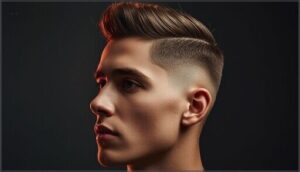
You want to knock the harshness off those angles? A low taper fade starts near the top of your ear and keeps enough length on the sides to wrap your cheekbones in shadow instead of spotlighting them. Taper placement around your temples rounds out your upper face shape, while hair texture on top pulls eyes up and away from the widest part.
This fade keeps your look sharp but never severe—a key transformation for diamond faces.
| Element | Why It Works for Diamond Face Shape |
|---|---|
| Taper Placement | Starts low, preserves side volume to balance wide cheekbones |
| Facial Contours | Soft edges around ears smooth sharp bone structure |
| Styling Products | Matte clay or sea salt spray adds separation without shine |
| Maintenance Tips | Refresh every 2–3 weeks; grows out smoothly between cuts |
| Haircut Strategy | Keeps 2–4 inches on top for height, softens the narrow chin |
Drop Fade for Natural Contours
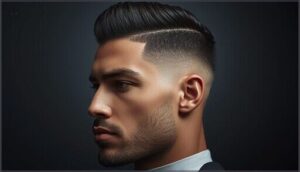
The drop fade is a transformative style for your diamond face shape. Unlike straight fade styles, its curved lines follow your skull’s natural contours — dipping behind the ear, tracing your occipital bone.
That arc softens your cheekbones without stripping the sides bare. Pair it with natural texture or soft layers on top, and your haircut works with your face shape, not against it.
Temple Fade for Subtle Framing
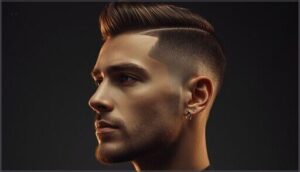
The temple fade is a precision power move for your diamond face shape — clean, controlled, and quietly effective. Instead of exposing the whole side, it carves a defining temple outline that pulls focus straight to your eyes, not your cheekbones.
- Cheekbone softening happens naturally since fuller sides stay intact
- Eye-level focus draws attention upward, balancing your angles
- Pairs with any hairstyle, from textured crops to loose curls
This haircut just works.
Styling Tips for Diamond Face Fades
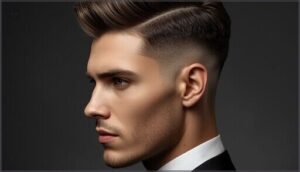
Getting the right fade is only half the battle — how you style it every day is where the real magic happens.
For a diamond face shape, a few targeted moves can make your cut work even harder for you. Here’s what you need to know.
Adding Volume to The Top
Volume is your secret weapon here. For a diamond face shape, root lifting is non-negotiable — it balances those wide cheekbones fast.
Work a volumizing spray or texture powder into damp roots before blow-drying upward toward the crown.
Textured layers and a textured wolf cut naturally encourage hair thickening at the top. These styling products and haircut choices keep your hairstyle proportionate and clean.
Face-Framing Layers and Bangs
Layers and bangs are where the real magic happens for your face shape. Smart layer placement starting around the chin softens that jawline without hiding your cheekbones.
Try these bang styles that actually work:
- Curtain bangs add width at narrow temples
- Wispy bangs keep the look light, never heavy
- Side-swept fringe creates a flattering diagonal line
- Face-framing layers below cheekbones balance hair texture
Maintenance and Upkeep Advice
Your cut only looks good if you maintain it. Book barber visits every 2–3 weeks — diamond faces show imbalance fast.
Daily styling with a matte clay keeps the top controlled. Night protection matters too; sleep on satin and brush before bed.
Smart scalp care, the right hair products, and consistent men’s grooming keep your fade working hard for you.
Celebrity-Inspired Diamond Face Fade Looks
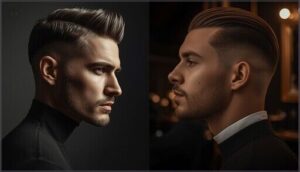
Celebrity cuts aren’t just for the red carpet — they’re a real blueprint you can bring straight to your barber’s chair. If you’ve got a diamond face shape, a few A-listers have already done the homework for you. Here’s what’s worth stealing.
Iconic Haircuts to Try
Celebrity inspirations don’t lie — diamond shaped faces thrive with the right fade techniques behind them. Halle Berry’s classic fringe highlights those cheekbones like a power move. Eiza González’s side-swept bob uses face framing to soften angles.
These celebrity hairstyles all share one thing: smart haircuts that respect hair texture, lean on the right styling products, and work with the face shape — never against it.
How to Personalize Celebrity Styles
Copying a look straight off the screen rarely works — celebrity style adaptation is about owning the blueprint, not the exact build.
Your barber adjusts tailored fade heights to flatter diamond-shaped faces, keeping sides fuller where your jaw tapers. Hair texture considerations matter too — curly, coarse, or fine hair all change the finish.
Small lifestyle adjustments and color enhancement techniques make celebrity hairstyles actually yours.
Consulting With a Professional Stylist
A skilled stylist doesn’t just grab clippers — they start with real face shape analysis, studying your facial structure from every angle. Tell them you’ve got a diamond face, bring reference photos, and be specific about fade height.
That stylist communication is the key factor. Good client consultation means your haircut planning actually works, turning hairstyle trends and haircut ideas into styling guidance built for you.
Frequently Asked Questions (FAQs)
What is the best fade for a diamond face?
A mid fade is your best move for a diamond face. It balances those wide cheekbones, adds height on top, and keeps your angular features looking sharp without going overboard.
What is the best haircut for diamond face shape?
For diamond-shaped faces, layered cuts with face-framing pieces are your power move.
Chin-length styles, balanced with the right hair texture and styling products, work best to soften those cheekbones.
What to avoid with a diamond face shape?
For diamond shaped faces, steer clear of harsh fades, blunt cuts, heavy bangs, and flat styles. These angular lines expose your widest points and throw off your natural balance completely.
Is high taper fade good for diamond face?
A high taper fade can work on a diamond face, but only if it’s soft—not skin-tight. Too aggressive, and it amplifies those angular features instead of balancing them.
Can thick hair affect how fades look?
Thick hair absolutely affects how fades look. More bulk means stronger contrast, bolder lines, and faster regrowth. You’ll need tighter maintenance every two to three weeks to keep that fade sharp and clean.
What products hold a fade style longer?
Cheap products ruin a great fade fast. For lasting hold, matte clay hold and strong hold pomades are your best weapons. Styling powders add grip without weight—pure grooming gold.
Do fades work on curly or coily hair?
Yes, fades absolutely work on curly and coily hair. The fade keeps sides clean while curl definition pops on top. Moisture essentials and the right styling products are non-negotiable for this haircut.
How often should a fade be touched up?
Most fades need a touch up every two to three weeks.
If you’re rocking one of the bolder styles making a comeback this decade, check out this guide to different mullet variations and how to style them before your next trim.
Your touch up frequency depends on hair growth rates — faster growers may need clean edge trimming closer to every two weeks.
Can a fade suit all ages and lifestyles?
Absolutely every age rocks a fade. From preschool to boardroom, fade styles flex with your lifestyle, cultural significance, and personal expression — making them the definitive move in mens grooming and beauty.
Conclusion
Like a sculptor who knows exactly where to chisel, the right diamond face shape fade styles don’t just cut hair—they carve out your whole look. Your cheekbones are already doing the heavy lifting. Now your fade works with them, not against them.
Find your cut, commit to the upkeep, and walk into every room knowing your structure is an asset. That chair isn’t just where haircuts happen. It’s where confidence gets built.