This site is supported by our readers. We may earn a commission, at no cost to you, if you purchase through links. This content is for general informational and educational purposes only and is not a substitute for professional medical, dermatological, or nutritional advice.
Most guys walk around with a beard that’s either too scraggly to look intentional or so aggressively short it undermines the whole purpose of growing one in the first place. The problem isn’t discipline or genetics—it’s picking the wrong length from the jump.
What length should I trim my beard? The answer depends on your face shape, hair texture, and whether you’re headed to a boardroom or a bar, but the sweet spot usually lives somewhere between stubble and mountain man. Round faces need vertical stretch, rectangular ones benefit from width, and square jaws require strategic softening—all achievable once you stop guessing and start trimming with a plan.
Getting this right means the difference between looking polished and looking like you just stopped caring halfway through.
Table Of Contents
- Key Takeaways
- Factors That Influence Beard Trimming Length
- Popular Beard Lengths and Their Benefits
- Choosing The Right Beard Length for You
- Step-by-Step Beard Preparation Guide
- Essential Tools for Accurate Beard Trimming
- How to Trim for Different Beard Lengths
- Face Shape and Ideal Beard Lengths
- Common Mistakes When Trimming Beard Length
- Top 5 Products for Perfect Beard Trimming
- Beard Maintenance After Trimming
- Frequently Asked Questions (FAQs)
- Conclusion
Key Takeaways
- Your ideal beard length isn’t about following trends—it’s about matching your face shape, hair texture, and lifestyle, with most guys finding their sweet spot somewhere between 4mm stubble and 25mm medium length that actually complements their natural structure.
- Round faces need vertical stretch through longer chin length and tight sides, rectangular faces benefit from fuller sides with shorter chins, and square jaws require strategic softening—all achievable once you stop guessing and start trimming with a deliberate plan based on your bone structure.
- The difference between looking sharp and looking like you quit halfway comes down to proper prep (washing, detangling, drying completely), using quality tools (adjustable trimmers with 19-40 settings, boar bristle brushes, sharp scissors), and avoiding rookie mistakes like trimming wet hair, placing your neckline wrong, or over-carving your cheek lines.
- Post-trim maintenance separates amateurs from pros—daily oil application (3-12 drops depending on length), regular brushing to train growth and distribute oils, washing 2-3 times weekly with sulfate-free products, and exfoliating to prevent ingrown hairs keeps your beard looking intentional instead of neglected.
Factors That Influence Beard Trimming Length
Look, there’s no one-size-fits-all answer to the perfect beard length—what works on your buddy might look completely off on you, and that’s totally normal. Your ideal trim length depends on a few key factors that you’ll want to nail down before you even pick up the clippers.
If you’re working in a more formal setting, check out these popular beard styles for corporate professionals to see what length balances sharp and approachable.
Let’s break down what actually matters when you’re deciding how short (or long) to go.
Face Shape Considerations
Your face shape dictates everything regarding nailing the right beard length and style. Think of your facial hair as architecture—you’re building structure where you need it, trimming away where you don’t.
Here’s how different shapes demand different strategies:
- Round faces: Add length at the chin, keep cheeks tight for vertical stretch and better facial symmetry
- Rectangular faces: Fuller sides with shorter chin length stop you from looking even longer—essential for beard proportions
- Triangular faces: Medium length at the jaw balances a narrow chin, creating solid chin definition
- Square jaws: Shorter sides with slightly longer chin avoid excessive width while maintaining jawline balance
- Oval faces: You lucky bastard—almost any beard trimming approach works, though don’t go wild with extremes
The goal? Push your natural shape toward that balanced oval outline through smart cheekbone control and strategic beard styling. For a thorough breakdown of how to match your beard style to your features, check out these.
Hair Growth Patterns
Beyond face shape, your follicle health and genetic factors determine what you can actually grow. Beard density varies wildly—some guys get thick coverage by twenty, others deal with patchy spots forever. Hair texture matters too; coarse, curly strands bulk up faster than fine hair.
If your beard grows in thin on the cheeks, pairing it with a high fade haircut can sharpen the contrast and make your coverage look intentional.
Growth cycles run on their own schedule, so certain zones mature while others lag behind. Map your beard growth patterns first—trim with the grain, never against it, or you’ll invite irritation and ingrown nightmares along your neckline.
For a deeper breakdown on the science behind beard hair growth patterns, check out expert resources.
Personal Style and Lifestyle
Your beard isn’t just facial hair—it’s a declaration of who you are and how you move through the world. Fashion influences shift constantly (2026 favors fuller, textured styles with precision fades), but lifestyle choices matter more.
Corporate gigs demand tidy 0.5-inch beards, while creative fields let you rock medium lengths. Dating? Heavy stubble wins. Gym rats? Keep it under 12mm. Match beard length to your actual life, not Instagram fantasies.
Match your beard length to your actual life—not Instagram fantasies—because corporate gigs demand tidy stubble while creative fields let you rock medium lengths
Maintenance Preferences
Let’s get real—how much time you’ll actually spend on your beard matters more than style guides admit. If you hate fussing around every morning, stubble or short lengths (1-4mm) need quick trims twice weekly with minimal product.
Long beards demand daily brushing, oil application, and 4-6 week professional shaping sessions. Your trimming routine should match your tolerance for grooming rituals, not fight it.
Popular Beard Lengths and Their Benefits
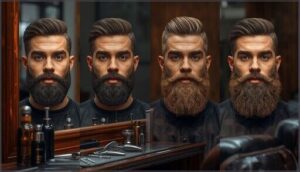
Look, there’s no one-size-fits-all answer here—beard length is about finding what works for your face, your lifestyle, and how much time you’re willing to spend maintaining it.
Think of beard lengths like gears on a bike: each one gives you a different look and requires different effort to keep running smoothly.
Let’s break down the four main categories so you can figure out where you want to land.
Stubble (0.5mm–4mm)
You know that shadow your uncle rocks after skipping a few mornings? That’s stubble—your first step into intentional facial hair. Here’s why this beard length owns the trimming routine game:
- Light stubble (0.5mm–1mm) softens a baby face without dramatically changing your look, giving you just enough edge.
- Medium stubble (1mm–3mm) sharpens your jawline and chin, making your features pop in person and photos.
- Heavy stubble (3mm–5mm) hits that trendy “3-day beard” vibe everyone’s chasing—masculine, low-maintenance, office-friendly.
- Minimal fuss means quick passes with your beard trimmer using a fixed guard, no detailed shaping needed.
The stubble beard keeps skin health front and center since you’re trimming close but dodging daily razor burn. For best beard texture and comfort, aim for 2mm to 5mm—it feels less prickly than super-short growth and still reads as deliberate stubble care, not neglect.
Short Beard (4mm–12mm)
Sitting right in that sweet spot between stubble and full statement, the short beard (4mm–12mm) delivers masculine polish without feeling bushy. This beard length hides patchy growth while keeping your natural face shape visible—around 10mm is the sweet spot most barbers recommend. Plus, fixed-guard passes make beard maintenance fast, and that professional look works everywhere from boardrooms to date nights.
| Beard Length | Best For | Maintenance |
|---|---|---|
| 4mm | Entry-level volume | Weekly trims |
| 6mm | Concealing patches | Twice weekly |
| 8mm | Defined jawlines | Every 3 days |
| 10mm | Sweet spot style | Every 3 days |
| 12mm | Maximum short length | Daily brushing |
Short beard styling lets you control facial hair with minimal fuss—your beard trimmer becomes your best friend, and basic beard care (washing, light oiling) keeps everything comfortable and sharp-looking year-round.
Medium Beard (12mm–25mm)
Roughly 12mm to 25mm packs real presence—this medium length reshapes your lower face with enough bulk to sculpt a stronger jawline or balance your forehead. Medium beard styling opens up creative options like squared bottoms or tapered sides that complement your haircut, while consistent facial hair care (washing, conditioning, beard oil) keeps everything soft and itch-free.
- Your beard trimmer becomes a precision tool for dialing in your ideal medium length
- Regular trimming tips keep the shape sharp without losing that masculine volume
- Choosing the right beard length here means owning a look that’s unmistakably you
Long Beard (25mm+)
Over 25mm delivers a commanding statement—your long beard becomes part of your identity and offers real wind protection plus natural insulation in cold months.
Long maintenance demands daily brushing, regular beard health checks, and consistent trimming techniques to prevent tangles, but the payoff is creative beard styling through tapered sides, braids, or shaped ends that make your facial hair unmistakably bold.
Choosing The Right Beard Length for You

Here’s the truth—picking the right beard length isn’t about following some one-size-fits-all rule from a magazine. It’s about understanding your unique face shape, your natural features, and yeah, even what you can get away with at work or family gatherings.
Let’s break down exactly how to match your beard length to your life, so you’re not just copying someone else’s style but creating one that actually works for you.
Assessing Your Face Shape
Before you pick up that trimmer, you need to figure out what you’re working with—and that starts with an honest look at your face proportions. Grab a straight-on selfie in natural light, pull your hair back, and trace your outline to see if you’re oval, square, round, or something in between.
Measure your jawline width, forehead span, and cheekbone analysis points to match your skull structure to a specific face shape. This assessment drives every beard trimming technique and beard style decision moving forward, because the right beard length chart depends entirely on your facial symmetry and how your facial hair frames what nature gave you.
Matching Beard Length to Features
Once you’ve mapped your face shape, it’s time to weaponize beard length against your less-than-favorite features. A medium beard around 12 to 25 mm carves serious jawline definition if you keep sides tighter than the chin—instant facial balance even on softer bone structure.
Patchy cheeks? Stay under 10 mm so thin spots don’t scream for attention. Use your beard trimmer like a sculptor, not a lawn mower, and match beard length to what your face structure actually needs, not what some beard length chart says looks “cool.
Considering Professional and Social Settings
Your perfect beard length gets blown up the second you need to walk into an office or first date. Corporate jobs lean toward short beards and light stubble—quarter to half an inch stays sharp without breaking dress codes, especially in customer-facing roles.
Creative industries let you push medium or longer beards if your grooming looks intentional, while dating dynamics reward well-kept stubble for approachability.
Step-by-Step Beard Preparation Guide

You wouldn’t start building a house without laying the foundation first, and the same goes for trimming your beard—skipping prep is basically asking for patchy, uneven results (trust me, I’ve seen it happen).
Before you even think about firing up that trimmer, there’s a proper sequence to follow that’ll make the whole process smoother and give you way better control. Let’s break down the four essential steps you need to knock out before making a single cut.
Washing and Conditioning
Your beard is only as good as your last wash—that’s the baseline. Wash two to three times per week with a dedicated beard wash containing gentle surfactants, not harsh SLS that strips natural oils. Follow with a leave-in conditioner to keep hair soft and manageable.
Water quality matters too; hard water leaves mineral buildup, so warm filtered water works best before trimming.
Detangling and Brushing
After your beard is clean and conditioned, grab a wide-tooth comb or boar bristle beard brush—your first real weapon against chaos. Start from the bottom up to avoid tightening knots, working in small sections with short, slow strokes. This detangling technique prevents damage while distributing sebum from your skin down each hair shaft. Proper beard grooming now saves you from breakage and ingrown hairs later.
- Use a wide-tooth comb for medium to long beards to reduce snagging and breakage
- Detangle from the bottom up—clears ends first before moving toward your chin
- Natural boar bristle brushes glide through coarse hair while minimizing pulling
- Brush once or twice daily; too much friction leads to split ends
- Clean your combs and brushes regularly to prevent oil buildup from dulling your beard
Moisturizing With Oil or Balm
Once your beard is detangled, lock in that moisture with a few drops of beard oil or a dime-sized dab of balm. Oil hydrates skin and softens hair fast, while balm adds light hold for unruly patches. Work it from roots to tips—timing matters, so apply when your beard is slightly damp for better absorption and healthier facial hair care.
| Product Type | Best For |
|---|---|
| Beard Oil | Skin hydration, short-to-medium beards, itch relief |
| Beard Balm | Hair softening, hold, medium-to-long beards |
| Oil + Balm | Maximum moisture plus all-day control |
| Application Timing | Right after washing, when beard is slightly damp |
Ensuring Beard is Dry Before Trimming
The moment of truth: wait until your hair is bone-dry before firing up that beard trimmer. Moisture stretches each strand by 1 to 3 millimeters, throwing off length accuracy and creating symmetry issues once everything shrinks back.
Pat with a towel, then air-dry or use a cool blow-dryer—your trimmer settings and tool performance depend on it, plus dry hair health beats forcing wet clippers through tangled chaos.
Essential Tools for Accurate Beard Trimming
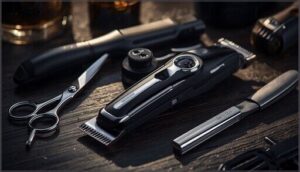
You can’t master your beard length if you’re working with garbage tools—it’s like trying to cut a steak with a butter knife. The right gear makes the difference between a sharp, clean look and a patchy disaster that’ll have you reaching for a hat.
Here’s what you actually need in your arsenal to nail your trim every single time.
Adjustable Beard Trimmers
You need a trimmer that keeps up with your vision—one with enough length settings (19 to 40 options) to dial in everything from shadow stubble at 0.5mm to a solid medium beard at 20mm.
Look for motor power that won’t bog down mid-trim, waterproof features for easy cleanup, and ergonomic control so you can adjust blade guards on the fly without fumbling through your kit.
Precision Combs and Brushes
A dual-action comb with wide and fine tooth spacing lets you detangle thick growth first, then switch sides to carve sharp cheek lines—wood or anti-static comb materials keep flyaways in check so your trimming routine stays on track.
Pair it with a boar bristle beard brush to spread oil evenly and train hairs for easier shaping guides and cleaner pre-trim control.
Scissors for Detailing
When your trimmer can’t reach the corners of your mouth or those stray hairs above your lip, quality scissors become your precision weapon. Look for Japanese or German stainless steel blades around 4 to 5.5 inches total—they resist rust and hold an edge through dozens of detail sessions.
Micro-serrated edges grip coarse beard hair without slipping, while offset finger loops reduce hand fatigue during careful cheek-line and neckline shaping work.
Razors for Neckline and Cheek Cleanup
A sharp razor transforms a sloppy beard into a masterpiece, but the wrong blade geometry can ruin your neck and cheek line in an instant. Cartridge razors with pivoting heads effortlessly follow the curves of your jaw, minimizing nicks, while double-edge safety razors offer blade visibility for precision straight lines.
- Razor aggressiveness matters: milder blade gaps prevent skin irritation on sensitive neck zones
- Single-edge designs simplify neckline shaping with one consistent cutting angle
- Frequent blade changes reduce tugging and infection risk during cheek-line cleanup
How to Trim for Different Beard Lengths
Each beard length demands its own trimming strategy—what works for stubble will absolutely wreck a long beard, and vice versa. The techniques, guard settings, and attention to detail shift dramatically as you move from barely-there scruff to full-blown lumberjack territory.
Here’s how to nail the trim for whatever length you’re rocking.
Achieving The Perfect Stubble

Think of stubble as the sweet spot between effort and impact—a controlled shadow that sculpts your jaw without the maintenance commitment.
For that killer stubble beard, let your growth hit 3-4mm, then use trimmer guards to dial it back evenly. Trim with the grain, keep your cheek and necklines tight, and remember: heavier stubble (around 5mm) suits rectangular faces while lighter lengths flatter triangular ones—face stubble match matters more than you’d think.
Maintaining a Short Beard

Once you’re past stubble beard territory, a short beard (4mm–12mm) demands a tighter maintenance routine.
Run your beard trimmer with a 10mm or 12mm guard every week, hit the neckline definition with a razor twice weekly to keep it crisp, and apply short beard products like light oil daily.
Master your trimmer settings, trim with the grain first, and those beard trimming techniques keep your short beard maintenance routine foolproof.
Shaping a Medium Beard
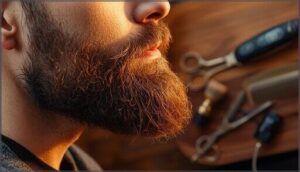
A medium beard (12mm–25mm) gives you serious sculpting freedom—start with a longer guard like 16mm on the bulk, then drop one size down toward the neckline for a smooth fade. Define your cheekline crisp but natural, keep chin-jaw balance by leaving the front slightly longer than the sides, and use these beard trimming techniques to nail your medium beard style guide every time:
- Set your neckline shape in a U about 1–1.5 inches above the Adam’s apple
- Blend guards stepwise (3→2) to avoid harsh edges
- Skim flared side hairs with your trimming tools for a tighter profile
Managing a Long Beard
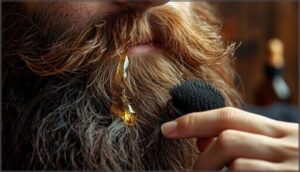
Once you’re rocking three-plus inches—real Long Beard territory—your Trimming Routine flips: wash two to three times weekly, master Detangling Methods by brushing from tips up with a boar bristle, apply Daily Oil Application (six drops minimum), and trim lightly every three to five days to keep your Beard Shaping tight and prevent Split End Prevention nightmares while keeping Long Beard Hygiene and Beard Styling and Maintenance dialed in.
Face Shape and Ideal Beard Lengths
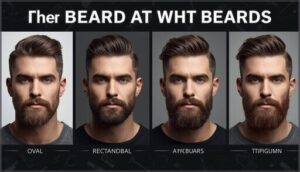
Here’s the thing about beard length—what works on your buddy might look totally off on you, and it all comes down to your face shape. The right length can sharpen your jawline, balance out your features, and make you look like you’ve got your grooming game on lock.
Let’s break down which lengths work best for oval, rectangular, round, and triangular faces so you can skip the trial-and-error phase.
Oval Face Recommendations
You’ve got the golden ticket if your face is oval—balanced proportions mean almost any beard length from light stubble to a full lumberjack mane works in your favor.
Short beards (5–12 mm) keep things clean and defined, while medium lengths (10–20 mm) add presence without overwhelming your features. Just keep edges softened instead of razor-sharp, and you’re set.
Rectangular Face Styles
Rectangular faces thrive on side fullness over chin length—aim for about 5–15 mm on the cheeks and less underneath to counteract that naturally long jaw.
A boxed beard with rounded corners softens harsh lines beautifully, while even stubble balance (0.5–5 mm) works if you keep the neckline tight.
Skip long, pointed beard styles that stretch your face further—width is your secret weapon here.
Round Face Tips
Round faces demand vertical illusion—go medium (10–20 mm) with chin length and taper the sides tighter to carve that V-shape you’re after. Ultra-short stubble follows your natural curve and works against you, while crisp edges and a slightly pointed bottom pull focus downward.
Long beard styles work if the beard shape concentrates growth on the chin—this facial hair styling guide is all about angles over softness.
Triangular Face Advice
Triangular faces—wider jaw, narrow forehead—look sharp when you keep the beard shape between 5–20 mm, building fullness on the cheeks without piling extra length at the chin.
Face shape guidance says light stubble (0.5–5 mm) with fuller sideburns helps facial hair balance, while rounded bottom edges and modest chin length (8–15 mm on sides) soften that jawline enhancement and prevent your jaw from stealing the show.
Common Mistakes When Trimming Beard Length
Look, I’ve seen countless guys walk out of the chair looking like they tried to trim their beard with a lawn mower—and trust me, most of these disasters could’ve been avoided. The difference between a sharp, well-maintained beard and a patchy mess often comes down to a handful of rookie mistakes that even experienced guys make.
Let’s break down the most common blunders so you can sidestep them and keep your beard looking tight.
Trimming Too Short or Unevenly
One slip of the beard trimmer and you’ve just erased three weeks of patience—that’s the reality of trimming too short or unevenly. These Beard Trimming Mistakes happen fast, but smart Regrowth Strategies and Symmetry Correction techniques can save your look.
Master your Trimming Techniques, invest in quality Beard Trimming Tools, and trim dry—your Beard Styling Guide to avoiding regret starts here.
- Wet trimming causes deceptive length—hair shrinks when dry
- Dull blades create jagged, uneven edges
- Inconsistent guard changes leave visible steps
- Chasing flawlessness amplifies asymmetry
- Poor lighting hides imbalance until it’s too late
Incorrect Neckline Placement
Your neckline sets the stage for jawline definition—get it wrong, and even a champion beard looks glued-on or sloppy. Trim too high, and you’ll highlight a double chin; drop it too low, and bulk swallows your jaw. Use the crease where the neck meets the jaw as your guide, trim in smooth U-shaped symmetry with quality beard-trimming tools, and shave with the grain to dodge skin irritation.
| Neckline Errors | Visual Impact |
|---|---|
| Too High | Creates a double-chin illusion, exposes the hollow under the jaw, harsh arc across the throat |
| Too Low | Adds bulk, shortens neck appearance, blends into chest hair |
| Uneven | Crooked beard line, broken shadow, asymmetry visible front-on |
Over-trimming Cheek Lines
Many guys carve their cheek line too low—chasing beard symmetry—and end up with a strap instead of fullness. That mistake triggers skin irritation from frequent shaving, highlights ingrown hairs, and makes your beard grooming and maintenance harder.
Use your natural facial hair growth as the map: trim stray hairs above the bulk, not into it, and your trimming routine stays sharp without the regret.
Using Poor-quality Tools
Your beard grooming and trimming depend on more than technique—dull blades snag hairs instead of cutting clean, cheap guards flex and create uneven patches, and poor trimmers stall mid-pass.
These tools trigger skin irritation, ingrown hairs, and hygiene risks you can’t scrub away.
Check beard trimmer reviews before buying, invest in a solid beard trimmer and razor, and your trimming routine won’t betray you.
Top 5 Products for Perfect Beard Trimming
Look, you can have the best technique in the world, but if you’re working with garbage tools and products, your beard’s going to look like you trimmed it in the dark.
I’ve spent years testing everything from gas station specials to premium kits, and these five products consistently deliver professional results without the barber shop price tag.
Here’s what actually works when you’re serious about keeping that beard dialed in.
1. Every Man Jack Beard Wash
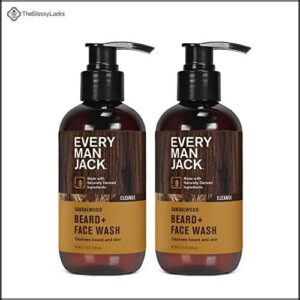
Clean beards grow better—trust me on this. Every Man Jack Beard Wash uses coconut-derived surfactants and aloe vera to lift dirt and oil without stripping your beard dry.
You’ll find it in multiple scents (Sandalwood, Aged Bourbon, Sea Salt) or go unscented if you’re particular about your cologne. The 6.7 oz bottle fits right in your shower caddy, and the formula keeps beard hair soft while calming the skin underneath.
It’s paraben-free, cruelty-free, and made in the USA with recyclable packaging.
| Best For | Guys who want a gentle, naturally-derived beard wash that cleans without drying out their beard or irritating the skin underneath. |
|---|---|
| Brand | Every Man Jack |
| Primary Use | Beard Cleansing |
| Material Type | Paraben-free gel |
| Size/Weight | 6.7 oz (1 lb) |
| Suitable For | All beard types |
| Special Features | Coconut-derived |
| Additional Features |
|
- Coconut and aloe vera formula keeps beard soft and skin calm without harsh chemicals
- Multiple scent options (Sandalwood, Aged Bourbon, Sea Salt) or unscented for flexibility
- Paraben-free and cruelty-free with recyclable packaging
- Bottles may arrive smaller than expected based on product images
- Doesn’t create a thick, foamy lather like some users prefer
- Packaging can get damaged during shipping
2. Every Man Jack Beard Face Wash
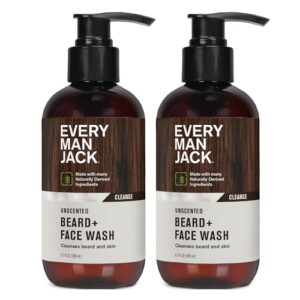
If you need a two-in-one solution, their Beard Face Wash combines cleansing power with light hydration for both facial hair and the skin below. You get coconut-derived surfactants that foam up nicely, plus aloe and glycerin to prevent that tight, stripped feeling after rinsing.
It’s available in Cedarwood, Sandalwood, or unscented—your call. The 6.7 oz pump bottle dispenses just enough for daily use, and it’s gentle enough for sensitive skin. It sets your beard up perfectly before you apply oils or balms.
| Best For | Guys with sensitive skin who want a simple, fragrance-free wash that handles both beard and face without irritation. |
|---|---|
| Brand | Every Man Jack |
| Primary Use | Beard Cleansing |
| Material Type | Paraben-free gel |
| Size/Weight | 6.7 oz |
| Suitable For | Sensitive skin |
| Special Features | Fragrance-free |
| Additional Features |
|
- Works as a two-in-one for beard and face, so you don’t need separate products
- Gentle formula with naturally derived ingredients like coconut cleansers and aloe vera
- Dermatologist-tested and free of harsh stuff like parabens, phthalates, and dyes
- Doesn’t lather up as much as some guys expect from a wash
- The pump can arrive damaged since the packaging isn’t super sturdy
- Bottles run smaller than they look in photos, so you might go through it faster than expected
3. Cremo Boar Bristle Beard Brush
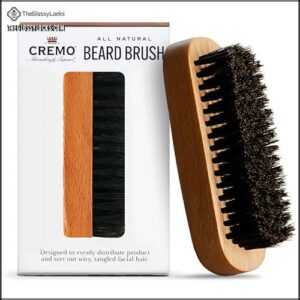
Once your beard is clean, you need a solid brush to tame those wiry hairs and spread your product evenly. The Cremo Boar Bristle Beard Brush features 100 percent natural boar bristles that grab coarse facial hair better than plastic bristles, plus they absorb and redistribute oil for uniform coverage.
At about 4.7 inches long and under 0.2 pounds, it fits nicely in your palm—or your travel kit—so you can groom at home or on the road without lugging around oversized gear.
| Best For | Guys with coarse or unruly beards who want a portable brush that helps distribute oils and styling products while keeping their facial hair looking neat. |
|---|---|
| Brand | Cremo |
| Primary Use | Beard Grooming |
| Material Type | Natural wood |
| Size/Weight | 2.89 oz |
| Suitable For | All beard sizes |
| Special Features | Boar bristle |
| Additional Features |
|
- Natural boar bristles grip wiry beard hair better than synthetic options and help spread oils evenly
- Compact size makes it easy to toss in a bag for grooming on the go
- Massages the skin underneath your beard, which can reduce flaking and help nourish hair follicles
- Can feel rough or stiff on sensitive skin, especially during the first few uses
- Not much info available about how well it holds up over time
- Stiffness might not work for everyone—some guys might find it too firm or not firm enough
4. Cremo Premium Beard Comb
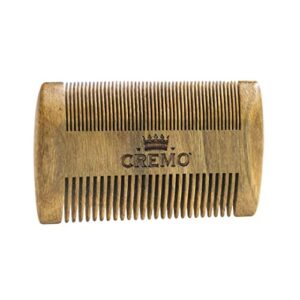
After brushing, you’ll want a comb to work through finer tangles and distribute balm into every strand—that’s where the Cremo Premium Beard Comb earns its keep.
This dual-sided tool is carved from natural Verawood, so one edge manages coarse or curly growth while the finer teeth tackle straight hair and shorter styles. The anti-static wood glides smoothly without snagging, and it carries a subtle woodsy scent that won’t clash with your cologne or beard oil.
| Best For | Bearded guys who want a natural, anti-static comb that handles everything from thick curls to fine straight hair without pulling or breaking strands. |
|---|---|
| Brand | Cremo |
| Primary Use | Beard Grooming |
| Material Type | Natural wood |
| Size/Weight | 1.76 oz |
| Suitable For | All beard types |
| Special Features | Dual-tooth design |
| Additional Features |
|
- Dual-tooth design works for all beard types, so you don’t need multiple combs
- Made from natural Verawood that reduces static and won’t snag or damage hair
- Comes in a nice gift box and has a light woodsy scent that’s pleasant but not overpowering
- Price point feels high for what’s essentially a wooden comb
- Some users report quality control problems like oily residue or greasy coating on arrival
- Packaging can be excessive and wasteful for an eco-conscious buyer
5. Braun All in One Trimmer Kit
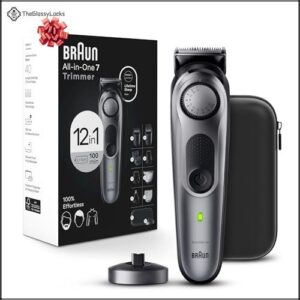
Once you’ve combed everything into place, the Braun All in One Trimmer Kit (Series 7 or 9) puts 40 length settings at your fingertips—each click adjusts in 0.5 mm steps, so you can dial in stubble at 2.5 mm or walk a medium beard up to 20 mm without sudden jumps.
ProBlade tech slices through dense growth without tugging, AutoSense reads your beard density and bumps power when it hits thick patches, and the lithium-ion battery delivers 100+ minutes cordless so you’re never mid-trim when it dies.
| Best For | Men who want precision and versatility in one kit—whether you’re maintaining a stubble look, sculpting longer beards, or grooming body hair without switching devices. |
|---|---|
| Brand | Braun |
| Primary Use | Beard Trimming |
| Material Type | Metal/Plastic |
| Size/Weight | 573 grams |
| Suitable For | All hair types |
| Special Features | 40 length settings |
| Additional Features |
|
- 40 fine-tuned length settings (0.5 mm steps) let you nail your exact style without guessing or awkward in-between lengths
- ProBlade and AutoSense tech handle thick, coarse hair smoothly and adjust power automatically so you’re not fighting snags or slowdowns
- 100-minute cordless runtime means you can groom several times before needing a charge, plus the 12-in-1 attachments cover face, head, and body
- Travel case design frustrates some users—it’s tough to fit all attachments back in and close it properly
- Guards can pop off or cut unevenly during use if not locked in carefully, especially on tricky angles
- You might not use every attachment, which adds bulk and clutter if you only need basic beard trimming
Beard Maintenance After Trimming
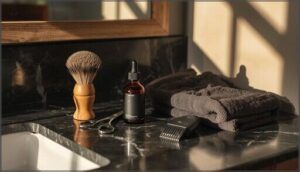
Alright, you’ve put in the work and trimmed your beard to flawlessness—but here’s the thing: the real game starts after you put the trimmer down. Your beard isn’t going to maintain itself (trust me, I’ve seen what happens when guys think they’re done after one trim), and skipping the aftercare is like building a house without a foundation.
Let’s talk about the daily habits that’ll keep your beard looking sharp, feeling soft, and growing strong.
Daily Beard Oil Application
Your beard oil routine is the single easiest weapon in your beard care and maintenance arsenal—apply 3 to 5 drops for stubble, 4 to 8 for short-to-medium growth, and 8 to 12 for longer styles.
Work it into your skin first, not just the hair, because oil application tips always start with skin moisturizing. That’s where beard hydration methods actually matter for men’s grooming—healthy roots, killer beard.
Regular Brushing Routines
Once-or-twice-a-day brushing techniques keep your beard growth looking sharp without overdoing it—morning sessions set the shape, evening passes remove the day’s grime.
Use a boar bristle brush for longer styles or a quality beard comb on shorter growth, always working downward to train hairs and spread natural oils.
Clean your brush weekly for effective beard care and grooming.
Washing and Conditioning Tips
After you trim, lukewarm water and a sulfate-free beard wash two to three times a week keep facial hair clean without stripping natural oils—daily washers with heavy sweat need gentler cleansers. Follow with leave-in conditioners for softer beard growth and healthier skin care.
Hard water minerals mess with your grooming tips, so consider a shower filter; your mens grooming routine (and beard oils) work better when mineral buildup isn’t sabotaging hair conditioning.
Preventing Skin Irritation and Ingrown Hairs
Razor bumps ruin even the best beard growth—so exfoliate one to three times weekly with a gentle scrub to clear follicles, then trim at 1–3 millimeters with your beard trimmer in the direction of hair growth.
Irritation prevention means applying alcohol-free moisturizer post-trim; these skin care tips and ingrown hair remedies (plus clean blades) are non-negotiable grooming tips for mens grooming success.
Frequently Asked Questions (FAQs)
What is a Grade 2 beard length?
You’ll usually hear “Grade 2” when someone’s talking about a trimmer guard that leaves roughly 6 mm of facial hair—that’s about 1/4 inch, sitting right at the edge between heavy stubble and a proper short beard.
What is the awkward beard length?
The awkward beard length hits when facial hair grows past stubble—roughly 4mm to 1 inch—creating a patchy, scruffy look before your beard fills in properly, usually during weeks two through eight of beard growth.
How often should I trim my beard?
Think of your beard grooming schedules like lawn care—neglect it, and you’ll get wilderness.
Most facial hair needs attention every 1 to 4 weeks, depending on beard length and your trimming routine preferences.
Can I trim a wet beard safely?
You can trim a wet beard safely if your trimmer is waterproof, but expect length surprises—wet hair hangs longer, then shrinks when dry, so err cautious with your guard settings.
What causes patchy beard growth areas?
Patchy beard growth areas often come from genetic factors that control follicle density, hormone balance issues affecting testosterone, skin conditions like alopecia barbae, nutrient deficiencies, or simply age effects—your facial hair development continues evolving into your thirties.
Should I trim beard and mustache differently?
Yes—your mustache often needs a shorter trim than your beard to keep hairs off your lip and maintain facial hair balance. This mustache styling approach lets you eat, drink, and speak comfortably while your beard keeps its length.
How do I fix an uneven trim?
If you’ve accidentally hacked your beard lopsided, even the length on both sides with small passes using a longer guard first. Check symmetry under bright light, then clean up lines with a razor.
Conclusion
Ironically, most guys overthink what length should I trim my beard when the answer’s been staring back at them in the mirror the whole time—your face already knows what works, you just weren’t paying attention.
Stop chasing trends that don’t fit your structure, ditch the guesswork, and start trimming with actual intention.
Your beard isn’t supposed to look like everyone else’s. It’s supposed to look like yours, only sharper, cleaner, and completely under your control.