This site is supported by our readers. We may earn a commission, at no cost to you, if you purchase through links. This content is for general informational and educational purposes only and is not a substitute for professional medical, dermatological, or nutritional advice.

The difference between a decent beard and a distinguished one comes down to three millimeters of precision along your jawline and cheeks. Sharp beard lines frame your face the same way a quality haircut does, transforming facial hair from scruffy afterthought into deliberate style choice.
Walk into any boardroom or first date with fuzzy, wandering edges and you’re signaling that details don’t matter to you—fair or not, that’s the read.
The catch is that most men approach their neckline with a disposable razor and a prayer, carving too high one week and compensating too low the next. Mastering this skill requires the right tools, exact reference points on your face, and a systematic approach that removes guesswork from the process.
Table Of Contents
Key Takeaways
- Sharp beard lines require precise tools (adjustable trimmers, precision razors, magnifying mirrors with proper lighting) and a systematic approach using exact facial landmarks rather than guesswork to achieve professional-level definition.
- Your neckline sits one to two finger widths above the Adam’s apple in a U-shape, while your cheek line connects from the sideburn to mustache corner—marking these boundaries with a white pencil before trimming prevents the common mistake of carving too high or too low.
- Maintenance every 2-3 days keeps edges crisp since beard growth adds 0.3-0.5 millimeters daily, and adapting line placement to your face shape (vertical emphasis for round faces, horizontal for long faces) transforms basic grooming into strategic style.
- Pre-shave prep (warm towel, oil, clear gel) and proper razor technique (short strokes with stretched skin, finishing with against-the-grain passes) separate clean lines from razor burn and patchy regrowth.
Essential Tools for Sharp Beard Lines
Sharp beard lines don’t happen by accident. You need the right equipment in your hands before you even think about trimming.
A solid trimmer, sharp scissors, and a few products for maintaining a stylish beard will set you up for clean, consistent results every time.
Sharp beard lines demand the right equipment in your hands before you even think about trimming
Here’s what belongs in your grooming kit to create those clean, precise edges that separate a sharp beard from a sloppy one.
Beard Trimmers and Adjustable Guards
Choose a beard trimmer with adjustable guards that range from 0.5 mm up to 15 mm or higher, giving you precision trimming control from stubble to fuller lengths.
Look for adjustable comb systems with dial or thumb-wheel mechanisms that let you shift guard length settings in half-millimeter steps.
Cordless trimmer options with lithium-ion batteries offer freedom around your beard line, while different trimmer blade types, like T-blade or curved-edge designs, help you carve sharper edges along the neck and cheeks.
For guidance on finding the right guard size for your grooming goals, refer to this helpful overview of common beard guard lengths.
Precision Razors and Shaping Tools
Once your beard trimmer establishes length, a precision razor creates the razor edge that separates groomed from unkempt. Double edge safety razors and shavettes give you maximum control when defining your beard line, while modern cartridge designs often include a single precision blade for detailing work. Pair any blade type with clear plastic shaping guides for consistent borders:
- Double edge safety razors expose one blade edge for visible, accurate cuts
- Shavette razors hold half a blade in an open frame for barber-level control
- Straight razors deliver one of the closest, sharpest shaves when handled correctly
- Cartridge precision trimmers on the back clean stray hairs along cheeks and neck
- Clear shaping tools let you trace your natural line before each stroke
Stretch your skin slightly with your free hand while working the blade along each line in short, controlled strokes—long passes sacrifice accuracy. Anti-slip rubber grips on newer shaping tools prevent sliding on damp skin, and white barber pencils let you mark your border before committing to the shave.
For an in-depth overview of the best razors to set a sharp beard line, explore the variety of straight, safety, and cartridge options professionals rely on. Detail razors reward patience, because every careful stroke builds the sharp definition that turns a basic beard into a statement of control and mastery.
Mirrors and Lighting for Accuracy
Even the sharpest blade can’t compensate for poor visibility. Wall-mounted swing arm mirrors with 5x to 7x magnification options pull close when you need to catch every stray hair, then push back for overall symmetry checks.
Mount your mirror at eye level and add task lighting around 4,000K to 4,800K on both sides for shadow reduction across your jawline—overhead fixtures alone hide patches along your neckline.
Prepping Products: Oils, Gels, and Towels
Sharp edges require slick surfaces. Pre-shave oils soften coarse hair and create a thin layer that lets your razor glide without tugging, while clear shaving gel keeps every line visible instead of buried under foam. Hot towels open pores and relax the skin for three minutes before you edge, and aftershave balms calm redness without leaving greasy film over fresh lines.
The warm towel benefits before shaving extend beyond comfort, softening facial hair by nearly a third while prepping skin for cleaner cuts.
- Apply pre shave oil first for lubrication that prevents razor drag along tight curves
- Use transparent beard gels so you can see exactly where each stroke lands
- Finish with alcohol-free moisturizer to hydrate skin and reduce post-shave irritation
How to Define a Sharp Beard Neckline
The neckline makes or breaks your beard’s appearance, and most guys set it too high or too low.
Getting this right transforms a patchy mess into a defined, intentional look that frames your jaw perfectly.
Here’s how to locate, mark, and execute a clean neckline that stays sharp.
Locating Your Natural Neckline
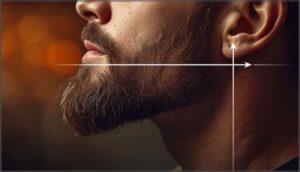
Your natural neckline sits one to two finger widths above the Adam’s apple, which gives your beard depth without sliding into neckbeard territory. Place your index and middle finger horizontally on top of the Adam’s apple to mark that lowest point.
This jaw alignment keeps the beard line beneath your jawline while maintaining facial structure, so trimming below this reference prevents the chinstrap look and protects your natural proportions.
Marking and Visualizing The Line
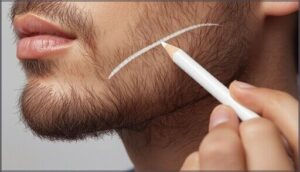
Grab a white eyeliner pencil or barber’s pencil and draw a gentle U-shaped line from one ear, dipping beneath your jaw, and rising back to the other. This visual anchor locks in facial symmetry before you start trimming or precision edging.
Check both sides against fixed landmarks like your earlobe or mouth corner, ensuring your beard line sits evenly and your jawline stays balanced.
Trimming and Shaving Techniques
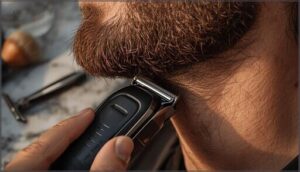
Start with a with-the-grain pass along your marked neckline using clippers or a trimmer to remove bulk without irritating the skin.
Next, apply shaving gel and stretch the skin taut with your free hand, then define the beard edge with short, controlled razor strokes.
For sharpest definition, finish with a light against-the-grain pass using proper razor techniques and careful trimming tools.
Common Neckline Mistakes to Avoid
Most neckline errors stem from guessing instead of measuring. Avoid these four traps:
- Shaving along the jawline — this creates a chinstrap effect and visually shrinks your beard
- Dropping the line too low — you’ll end up with a neck beard that kills jaw definition
- Chasing perfect beard symmetry — natural asymmetry exists, so blend down rather than trimming higher each time
- Dry shaving — skipping gel causes skin irritation, razor burn, and ingrown hairs
Creating a Clean and Defined Cheek Line

Your cheek line separates a clean, intentional beard from an overgrown mess. Most men struggle with this because they don’t know where the natural boundary sits or how to mark it accurately before making cuts.
Follow these steps to define a sharp cheek line that frames your face and looks professionally groomed.
Finding Your Natural Cheek Line
Your natural cheek line lives where your sideburn thickens into dense beard growth, creating a visible boundary between full hair and sparse patches. Imagine a line connecting that sideburn point to where your cheek hair meets the mustache corner.
This natural boundary follows your facial structure and hair growth pattern, giving you the highest usable cheek line without carving into patchy areas or exposing bare skin unnecessarily.
Using Pencils or Tools to Guide The Line
Mapping your cheek line before you trim locks in edge control and prevents the common mistake of chasing asymmetry higher with each pass. A white cosmetic pencil sketches a bright guide that stands out against dark beard hair, letting you compare height and angle on both sides before any blade touches skin.
- Press a plastic template firmly against your cheek to trace a consistent diagonal from sideburn to mustache corner
- Line up a credit card or comb spine from ear to mouth corner as a quick straight-edge reference
- Draw your planned cheek line in short pencil strokes, then step back to check beard symmetry from multiple angles
- Use the same facial landmarks—bottom of sideburn, corner of mouth—on both sides to mirror tool placement and achieve line precision
Trimming Above The Cheek Line
Once your guide line is drawn, run your trimmer with no guard directly along the pencil mark, erasing stray Cheek Hair Growth above it in short, controlled strokes. Stretch the skin upward with your free hand to flatten the surface and improve Beard Edge Maintenance precision.
Trimming Techniques work best when you follow the Facial Hair Texture, moving blade against growth direction to catch wiry outliers cleanly.
Achieving Symmetry and Balance
After trimming above the cheek line, Symmetry Techniques become your next focus. Stand straight in front of a well-lit mirror and use your jawline as a natural guide for Balanced Trimming.
Match each Beard Line to fixed landmarks—corners of the mouth, ear tops—so both sides mirror one another. Face Shape Analysis helps, but most faces aren’t perfectly even. Aim for lines that look balanced from arm’s length, not microscopically identical.
Step-by-Step Beard Line Shaping Routine

Shaping your beard line correctly comes down to following a structured routine, not guessing your way through it. Before you pick up a trimmer, you need to prep your skin and hair properly, then work through the shaping process with intention.
Here’s the exact routine that separates a clean, professional look from a sloppy one.
Preparing The Skin and Beard
Clean, prepped skin transforms every shave from guesswork into precision. Your Facial Cleansing and Pre Shave Prep ritual sets the stage for Razor Techniques that carve impeccable Beard Lines. Follow this Grooming sequence before any Trimming or Shaving:
- Wash your face and beard with gentle cleanser to remove oil, dirt, and bacteria that dull blades and clog pores.
- Apply warm towel for two minutes, softening coarse hairs through Beard Softening for cleaner cuts.
- Exfoliate gently with scrub to lift flat hairs and prevent ingrown edges along your Beard Line.
- Massage pre shave oil into beard, creating a protective glide layer for Beard Care and reduced friction.
Detailed Shaping Process for Beginners
Once your face is prepped, begin by evening out your beard’s bulk with a guard so you work with the final length.
Set the neckline next—place two fingers above your Adam’s apple, visualize that U shape connecting both ears, then use your Trimmer inverted to punch in the Beard Line Shaping Guide.
Move to the Cheek Line: picture a straight path from sideburn to mustache corner, mark it mentally, and trim above that Facial Landmarks boundary with short strokes.
Check Symmetry by comparing jaw angles in the mirror—tiny corrections prevent major Trimming Errors.
Tips for Advanced Precision and Detailing
Once you’ve conquered the basics, sharpen your edges through deliberate Micro Trimming and Skin Stretching methods that separate polished work from rushed results. Use Visual Guides like a comb pressed along your jaw to lock in symmetry, then apply Layering Techniques to fade the border subtly. Fine Tuning each pass with your Precision Razor transforms your Beard Line Shaping Guide into a repeatable system.
- Tap the trimmer corner to chip away single hairs without altering overall shape
- Stretch skin upward along the cheek line so hairs stand and the blade cuts closer
- Mark key facial landmarks—mouth corner, ear top, Adam’s apple—for consistent repetition
- Trim small sections, step back between passes, and check angles in multiple mirrors
Aftercare for Skin and Beard Health
Sharp lines mean nothing if your skin rebels afterward. Rinse your face and neck with cool water to calm razor heat, then apply an alcohol-free aftershave or light moisturizer for Post Shave Care.
Follow with a few drops of Beard Oil to lock in Skin Hydration and support Beard Conditioning.
Regular Facial Exfoliation around your neckline blocks ingrown hairs and keeps edges crisp.
Maintaining Sharp Beard Lines Long-Term
Shaping sharp beard lines is only half the battle. The real challenge lies in keeping those lines crisp and clean day after day, week after week.
You’ll need a consistent maintenance routine, the right products, and an understanding of how your face shape influences the lines you maintain.
How Often to Trim and Shape
Most men need edge maintenance every 2 to 3 days because beard growth adds 0.3 to 0.5 millimeters daily. For ultra sharp lines, daily trimming keeps stubble from softening your edges.
Adjust your shaping frequency based on beard length and lifestyle—short beards blur faster, while longer styles stretch trim schedules to weekly sessions.
Track how quickly your lines fade, then build your personal beard maintenance routine.
Beard Care Products for Lasting Definition
Your beard care routine needs products that keep those lines razor sharp between trims. Beard balm with high wax content locks edges in place all day, while clear shave gel lets you see exactly where you’re cutting.
Apply beard oil before trimming to soften stubborn hairs, then finish with aftershave lotion to calm the skin and prevent bumps along your freshly defined borders.
Adapting Beard Lines to Face Shape
Your face shape determines where you cut those beard lines, period. Round faces need vertical lines along the jaw and a fuller chin for jawline enhancement, while square faces require softer, rounded corners to prevent a blocky look. Long faces benefit from horizontal emphasis—keep the bottom flat and sides full for facial balance. Diamond faces demand tight cheek lines with fuller chin coverage for proper beard symmetry and cheekbone accentuation.
Troubleshooting Common Beard Line Issues
Uneven lines usually mean you’re eyeballing instead of marking guides before you reach for that razor or shaping tool. Razor burn comes from dull blades and shaving against the grain—swap blades often and follow these beard trimming techniques for cleaner regrowth.
High necklines expose too much throat and create a chinstrap effect, while patchy growth at edges signals skin irritation or poor follicle health.
Frequently Asked Questions (FAQs)
Can beard lines work with patchy beard growth?
Yes, strategic placement transforms patchy growth into deliberate style. A precision cutting beard lineup hides patchiness by framing fuller zones with sharp edges, using trimmer techniques and facial hair grooming to manage density intentionally through patchy beard styles.
How to fix an uneven or crooked beard line?
Start with a longer guard and blend the higher side down carefully, checking the mirror after each pass. Use the two-finger rule to reset your neckline if it’s too high.
Should beard lines change as the beard grows longer?
Absolutely. As your beard transitions from stubble to full growth, your neckline should drop lower and soften, while your cheek line stays higher.
Short beards demand crisp, visible edges; longer beards need structural support underneath.
What causes razor bumps along the beard line?
Razor bumps form when freshly cut hairs curl back into the skin instead of growing straight out, triggering inflammation in the hair follicles and creating raised, tender spots along your beard line.
How to blend beard lines for a natural look?
Like watercolor bleeding into canvas, beard line blending uses progressively shorter guards to fade your neckline and cheek line.
Step down guard sizes gradually, trim upward with flicking motions, and control the blend zone for soft edge creation.
Conclusion
There’s a theory that sharp beard lines are genetic gifts, reserved for men who simply “have the right face for it.” That’s nonsense. Every face shape benefits from defined edges—you just needed the reference points, the correct angles, and the discipline to execute consistently.
The difference between looking polished and looking careless lives in those three millimeters. You now control that margin. Use it deliberately, trim it regularly, and wear it with intention.