This site is supported by our readers. We may earn a commission, at no cost to you, if you purchase through links. This content is for general informational and educational purposes only and is not a substitute for professional medical, dermatological, or nutritional advice.
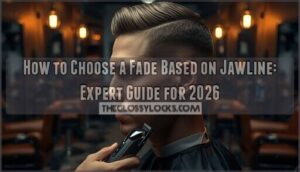
Your barber can transform your look with one strategic decision: choosing a fade that works with your jawline instead of against it. Most guys walk into the shop asking for what’s trending without realizing their bone structure demands something different.
A high fade might sharpen one face while making another look disproportionate. The key isn’t following what everyone else is getting—it’s understanding how fade placement interacts with your jaw’s natural angles and curves.
When you match the right fade height to your specific jawline type, you don’t just get a clean haircut. You get a sculpted look that enhances your facial structure and makes everything click into place.
Table Of Contents
- Key Takeaways
- Why Jawline Shape Influences Your Fade
- Identifying Your Jawline Type
- Best Fade Styles for Square Jawlines
- Top Fades for Round and Oval Jawlines
- Fades to Complement Heart and Diamond Jawlines
- Key Tips for Choosing Your Ideal Fade
- Frequently Asked Questions (FAQs)
- What fade to get based on face shape?
- How to decide which fade to pick?
- Which haircut suits on a jawline face?
- Is a V-line jaw attractive?
- Can jawline shape change over time with age?
- Do beards affect which fade suits your jawline?
- How does hair color influence fade visibility?
- Should neck length factor into fade selection?
- Can glasses frames alter jawline fade recommendations?
- Conclusion
Key Takeaways
- Your jawline shape determines which fade height creates facial balance—square jaws work with low or mid fades, round faces need high fades for definition, oval jawlines handle any fade style, and heart-shaped faces require low or drop fades to add width at the chin.
- High fades pull visual weight upward and sharpen jawlines by stretching the face vertically, while low fades anchor attention near the jaw to add width and softness, making fade placement a strategic tool for enhancing your bone structure.
- Hair texture and density directly impact which fade works best—fine hair needs lower fades to maintain side coverage, thick hair handles high fades that reduce bulk, and curly textures forgive blending imperfections while requiring extra length to account for shrinkage.
- Matching your fade to your lifestyle matters as much as matching it to your jawline—high fades demand barber visits every 2–3 weeks to stay sharp, while lower fades grow out more gracefully and require minimal daily styling effort.
Why Jawline Shape Influences Your Fade
Your jawline isn’t just about aesthetics—it’s the foundation that determines whether your fade will complement or fight against your natural features.
If you’re leaning toward a low fade, understanding the exact clipper lengths and measurements can help you communicate your vision clearly to your barber.
The shape and angle of your jaw directly affect how your haircut balances your face, creating either harmony or unwanted emphasis in all the wrong places. Understanding this connection gives you the control to choose a fade that works with your bone structure, not against it.
Your jaw’s shape determines whether your fade creates harmony or fights your natural bone structure
How Jawline Impacts Facial Balance
Your jawline forms the foundation of facial harmony—it sets the stage for how balanced your entire face looks. When your lower face proportions are off, even a killer fade won’t save you. Here’s why jawline contour matters:
- Facial symmetry depends on even jawline definition from both sides
- Chin projection affects how strong or weak your facial structure appears
- Lower face proportions determine if you look bottom-heavy or balanced
- Jawline enhancement through the right fade restores facial beauty naturally
A well-shaped haircut works best when you understand the importance of jaw and chin in overall facial aesthetics.
The Relationship Between Jawline and Haircut Proportions
Think of your face like a canvas—each fade you pick shifts visual weight in a different direction.
High fades pull eyes upward, stretching your face vertically and sharpening jawline definition. Low fades anchor attention near your jaw, adding width and softness. Mid fades strike that sweet spot for proportional styling, keeping facial symmetry intact.
Hair contouring through fade placement gives you real jaw enhancement without changing bone structure. For tips on matching fades to different face shapes and features, expert guides offer personalized advice.
Identifying Your Jawline Type
Before you pick your fade, you need to know what you’re working with. Your jawline has a shape, and identifying it correctly is the first step to choosing a fade that actually complements your face.
Let’s break down the key jawline types so you can pinpoint yours with confidence.
Square Jawline Characteristics
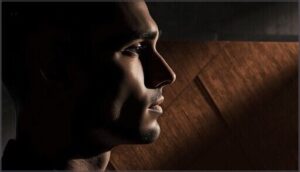
Strong angles define your square jawline—check for that sharp corner where your jaw meets your ear. Your lower face width matches your forehead, creating a balanced square face shape most barbers recognize instantly.
You’ll notice minimal taper from cheekbones down, giving your facial structure commanding presence. This angular style signals you need a fade that works with your strong features, not against them.
Round Jawline Features
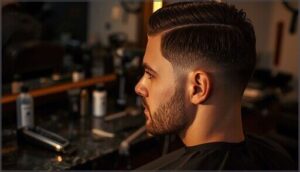
Where square jaws hit hard edges, yours flows with gentle curves from ear to chin. Your face length and width run pretty close, creating that compact round face shape most barbers spot right away.
If you’re working with this shape, check out beard styles designed for summer wear that complement rounder features without adding bulk.
Check for these soft jawline cuts markers:
- Full cheeks blend smoothly into your jawline without sharp angles
- Your chin stays short and rounded rather than flat or pointed
- Facial symmetry shows equal width throughout, demanding fades that add vertical stretch for men’s grooming balance
Oval Jawline Markers
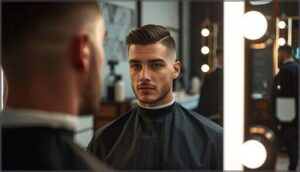
Your balanced features give you the most adaptable canvas for any fade. The oval face shape brings facial symmetry that barbers love—your jawline proportions taper gently below wider cheekbones while staying rounded at the corners.
Face length outpaces width noticeably, meaning hairline styles from low to mid fade all work without throwing off your natural balance. Most cuts simply click with oval faces.
Heart and Diamond Jawlines
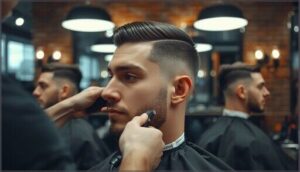
Recognizing your narrower chin against wider cheekbones separates heart-shaped face and diamond face jawline contours from other profiles. Your facial symmetry leans delicate, with that pointed or angled lower third demanding special attention from your barber when planning fade and hair texture strategies.
- Heart shaping shows a wide forehead tapering to a narrow, sometimes pointed chin
- Diamond cuts reveal prominent cheekbones as the widest feature with a slim jaw
- Both jawline contours need fades that add visual width below without sharpening angles
- Your face shape guides which fade heights maintain balance across all three facial zones
- A skilled barber reads these markers to avoid overemphasizing your naturally narrow lower face
Best Fade Styles for Square Jawlines
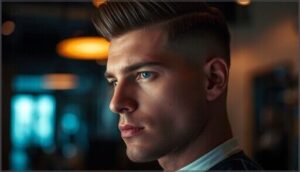
A square jawline doesn’t need to be hidden—it’s a statement you can work with. The right fade style will complement those sharp angles instead of fighting them, giving you a balanced look that feels intentional.
Here’s how to match your fade to your naturally strong structure.
Low and Mid Fades for Angular Features
If you’ve got sharp angles along your jaw, low and mid fades are your go-to fade techniques for nailing facial balance. A low fade keeps enough hair on the sides to soften harsh edges without hiding your structure, while a mid fade cranks up definition by tightening around the temples.
Both work beautifully on angular jawlines, letting you control how bold or subtle you want that jawline enhancement to look.
Enhancing Structure With Taper Fades
When you want your face shape to command the room, taper fade techniques deliver precision without stripping away your natural edge. Here’s how taper fades enhance facial proportions and boost jawline enhancement:
- Creates clean outlines that make your jaw read sharper from every angle
- Barber adjusts the drop point to align with your jaw hinge
- Keeps controlled fullness above the ear to support structure
- Smooths side profile transitions for that lifted look
- Lets hair texture considerations guide personalized fade styles
This mens grooming approach keeps you in control.
Styling Tips for Strong Jawlines
Your strong jaw deserves smart styling that highlights facial symmetry instead of hiding it. Keep textured crops on top—they soften jawline contours while adding movement.
Use matte styling products to maintain definition without shine that competes with your bone structure. If you rock beard styling, blend it into your fade for flawless haircut styles.
Work with your barber to adjust hair texture and proportions until everything clicks.
Top Fades for Round and Oval Jawlines
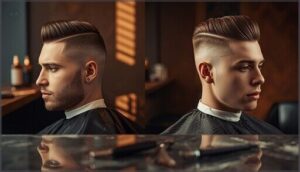
Round and oval jawlines need different approaches to create balance and definition. High fades and skin fades work best for round faces because they add length and sharpen your profile.
If you’ve got an oval jawline, you’re in luck—you can pull off almost any fade style with the right adjustments.
High Fades to Add Definition
A high fade starts near your temples and cuts bulk away from the sides, so your facial contours and jawline enhancement show up sharper.
Round face shapes benefit most—taking the sides tight and leaving height on top pulls your face longer and slims the cheeks.
Your barber can pair definition styles with textured volume or a slick top, and regular fade maintenance keeps those clean lines locked in.
Drop and Skin Fades for Slimming Effect
Drop fades curve around your ear and taper toward the neck, giving round and oval jawlines a slimmer, longer profile.
Skin fades strip bulk right down to the scalp, sharpening jawline contours and creating serious vertical length when you keep hair texture and height on top.
Both fade placement options pull eyes upward, carving out face shape definition without looking overdone or artificial.
Versatility of Mid Fades on Oval Faces
Mid fades keep oval proportions naturally balanced by starting between your temples and ears—no extreme height shifts. You can pull off quiffs, textured crops, or slick backs because the fade frames without competing. Your barber can adjust fade maintenance around hair texture, whether you’re working with straight, wavy, or curly strands. That face symmetry gives you styling options most other face shapes can’t handle.
- Switch between casual tousled looks and polished styles without changing your cut
- Pair mid fades with stubble or short beards for clean jaw transitions
- Keep crew cuts low-maintenance while preserving oval face balance
- Add volume through pompadours without throwing off your natural proportions
Fades to Complement Heart and Diamond Jawlines
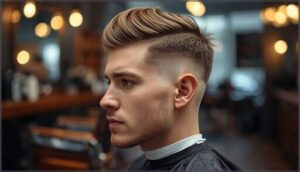
Heart and diamond jawlines have unique challenges—they’re narrow at the chin and wider at the temples or cheekbones, which can throw off your facial balance if you’re not careful with your fade.
The right fade won’t just complement these angles; it’ll add softness where you need it and keep the focus where it belongs. Here’s how to choose a fade that works with your natural structure instead of fighting against it.
Balancing Width With Low and Drop Fades
Your narrow chin needs strategic width balance, and that’s where low and drop fades deliver. A low fade keeps more coverage around your jaw, drawing focus to your lower face proportions instead of emphasizing your forehead.
Drop fades preserve length below your ears, creating fuller sides that visually broaden your jawline. Both styles give you fade line control that balances your face shape without stripping essential hair texture impact.
Creating Softness With Tapered Edges
Tapered edges soften your sharp chin points without killing your bone structure. A taper fade gradually blends hair at your temples and neckline, creating smooth transitions that calm harsh angles.
Edge blending methods keep subtle length around your jaw, so your hairline curves naturally instead of drawing hard lines. This facial contouring approach gives you soft jawline techniques that work—you’ll look defined, not sharp.
Avoiding Styles That Overemphasize Angles
High fades strip side volume and make your cheekbones and chin angles look harsher than they already are. You’re working against facial geometry when you expose too much scalp near angular points.
Skip these angular hairstyles that ruin balanced looks:
- Skin-tight sides that create hard contrast at your widest cheekbone zone
- Boxed temple lines echoing your jaw corners with sharp right angles
- Flat, straight top styles mirroring your face shape instead of softening jawlines
- Heavy top volume stacking width exactly where your forehead’s already broad
- Crisp cheek outlines overdefining edges on diamond faces
This fade hairstyles face shape guide keeps your haircut proportions working for you, not against you.
Key Tips for Choosing Your Ideal Fade
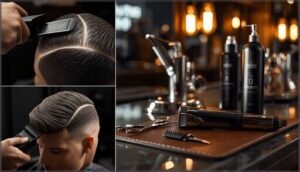
You’ve learned how to match your fade to your jawline, but there’s more to the equation. Your hair texture, daily routine, and how much effort you’re willing to put in all play a role in finding the right cut.
Here are three essential factors that’ll help you lock in the perfect fade for your lifestyle.
Considering Hair Texture and Density
Your hair texture and density steer your fade choice more than most guys realize. Fine hair benefits from low or mid fades that keep side coverage, while thick dense hair manages high fades that reduce bulk and sharpen your jawline.
Straight strands expose every clipper step, so your barber needs smaller guards and careful blending. Curly textures forgive minor flaws and often shrink higher when dry, meaning you’ll want slightly more length left on the sides.
Lifestyle and Maintenance Needs
Pick a fade that respects your real life, not just your reflection. Busy schedules demand low-maintenance cuts that grow out gracefully, while active lifestyles pair perfectly with skin fades that handle sweat and minimize daily styling time.
- Visit frequency: High fades need barber touch-ups every 2–3 weeks to stay crisp
- Daily styling: Most fades require only 3–7 minutes with light product and a quick comb-through
- Home upkeep: Detail trimmers help you clean necklines between appointments without full reshapes
Consulting a Skilled Barber for Customization
Your barber isn’t just cutting hair—they’re reading your face shape and jawline like a blueprint. A skilled consultation starts with face shape analysis and client communication about your goals, then moves into fade customization that fits your angles.
Barber assessment includes beard integration, neckline choices, and ongoing adjustments over visits. Tailored barber services beat generic trends every time, so trust barber advice when choosing the right fade.
Frequently Asked Questions (FAQs)
What fade to get based on face shape?
Your face shape analysis starts with your jawline. Square jaws handle bold high fades, round faces need height with mid or high fades, oval suits any fade, and heart shapes balance best with low fades.
How to decide which fade to pick?
Start by identifying your jawline shape, then match it with the fade height that creates balance.
Consider your hair texture, lifestyle needs, and styling preferences to narrow down whether a low fade, mid fade, or high fade suits you best.
Which haircut suits on a jawline face?
Your fade should match your jawline’s shape and angles. Strong jaws pair well with low or mid fades, while softer jawlines look sharper with high fades or skin fades that add definition.
Is a V-line jaw attractive?
Absolutely—in East Asian beauty standards, the V-line jaw reigns dominant. Cultural attractiveness shifts globally, though.
Western beauty standards often celebrate angular, defined jawlines over softer tapers, proving facial harmony depends on context and personal preference.
Can jawline shape change over time with age?
Yes, your jawline changes with age. Bone resorption weakens the mandible after 30, while collagen loss and facial sagging blur definition. Fat shifts and the aging process gradually soften even strong angles over time.
Do beards affect which fade suits your jawline?
Your facial hair dramatically changes which fade techniques work best. A full, structured style adds bulk to soften angles, while stubble lets high fade styles sharpen definition—making beard maintenance and fade styles inseparable for true jawline enhancement.
How does hair color influence fade visibility?
As the saying goes, “contrast is king”—darker hair color creates sharper fade visibility because it shows every length change. Lighter shades like blonde soften edges through subtle tonal blending, while color shifting treatments alter shade matching entirely.
Should neck length factor into fade selection?
Neck Length Impact matters when picking Fade Height Options. Long necks look balanced with low MidFade styles, while short necks need High Fade placement to lengthen your profile and improve Facial Proportions between Face Shape and Jawline.
Can glasses frames alter jawline fade recommendations?
Frames define facial proportions like a second structure—angular styles sharpen, rounded soften.
Eyewear considerations guide hairline harmony: thick frames clash with high fades, while slim designs let mid-fades balance jawline and face shape naturally.
Conclusion
Here’s the hilarious truth: most guys spend more time researching their next phone upgrade than figuring out which fade actually flatters their face. You’ve now got the blueprint to choose a fade based on jawline—so you’re already well ahead.
Stop copying celebrities with different bone structures and start working with what you’ve got. Your barber will thank you, your mirror will reflect it, and you’ll finally own a haircut that makes sense.