This site is supported by our readers. We may earn a commission, at no cost to you, if you purchase through links. This content is for general informational and educational purposes only and is not a substitute for professional medical, dermatological, or nutritional advice.
Most guys don’t realize they’ve been trimming when they should be shaping—or shaping when a simple trim would do the job. You grab your clippers, run them through your beard, and wonder why the result looks uneven or undefined.
The difference between trimming and shaping a beard isn’t just semantics. Trimming controls length and keeps growth under control between sessions. Shaping carves out your neckline, cheek edges, and overall structure—the architecture that makes your beard look intentional instead of accidental.
One maintains what you’ve built; the other builds what you maintain. Master both, and you’ll never second-guess your reflection again.
Table Of Contents
- Key Takeaways
- What is Beard Trimming?
- What is Beard Shaping?
- Key Differences Between Trimming and Shaping
- Essential Tools for Trimming and Shaping
- Choosing The Right Method for Your Beard
- Tips for Effective Beard Grooming
- Frequently Asked Questions (FAQs)
- What is the difference between beard shaping and beard trim?
- When to trim and shape a beard?
- Can I trim and shape my beard at home?
- How do barbers charge for trimming versus shaping?
- What products help maintain beard shape between appointments?
- Does beard oil affect trimming or shaping results?
- Should I trim wet or dry beard hair?
- Conclusion
Key Takeaways
- Trimming controls length and maintains your existing beard style with regular touch-ups every one to three weeks, while shaping carves out your neckline, cheek edges, and jawline to create intentional structure and definition.
- Most men trim too often when they should be shaping, or shape when a simple trim would preserve their look—mastering both techniques means knowing that one maintains what you’ve built and the other builds what you maintain.
- Your face shape drives every shaping decision, and matching your beard’s architecture to your natural structure creates balance that makes your beard look purposeful instead of accidental.
- Always trim on completely dry hair since wet strands stretch and clump, causing you to cut more than intended, and use guards conservatively because you can always go shorter but can’t add length back.
What is Beard Trimming?
Trimming your beard isn’t just about chopping off length—it’s about keeping your facial hair under control and looking sharp.
If you’re aiming for length, these beard trimming tips for long beards will help you maintain shape without losing hard-earned growth.
When you trim regularly, you’re managing growth, preventing wildness, and maintaining the style you’ve worked to build.
Let’s break down what trimming actually does, why it matters for your beard’s health, and how often you should be doing it.
Definition and Purpose of Trimming
Beard trimming is controlled cutting that reduces facial hair length and bulk without removing your entire beard. Think of it as a haircut for your face. You’re managing beard length and volume to keep your chosen style intact rather than starting over.
Trimming uses adjustable guards and trimming tools to even out growth, clean up stray hairs, and maintain your beard care routine between full restyle sessions.
To further improve your results, it’s important to select the right beard trimming tools and techniques for your specific beard type.
Key Benefits for Beard Maintenance
Regular beard maintenance protects hair strength by cutting split ends before they climb up the shaft. You’ll notice better beard hygiene when shorter length lets cleanser reach the skin, reducing itch and flaking.
Trimming also sharpens facial definition by keeping necklines and cheek edges clean. These grooming tips deliver skin protection and make daily beard care faster—no more wrestling tangles or fighting unruly sections. Using the right approach can help prevent beard hair split ends and support a healthier, fuller beard.
Frequency and Best Practices
Most short beards need attention every 7 to 14 days to keep edges sharp and prevent scruffiness.
Medium styles hold their shape for 2 to 3 weeks, while longer beards can go a month between sessions.
Daily care—washing, oiling, and brushing—keeps hair manageable between trimming schedules.
Clean your tools after each use and oil blades weekly so every trim stays smooth and skin-friendly.
What is Beard Shaping?

Shaping your beard isn’t just about cutting hair—it’s about building structure and definition that works with your face. While trimming keeps things tidy, shaping carves out clean lines along your neckline, cheeks, and jawline to create a look that’s sharp and intentional.
Here’s what you need to know about shaping to get the most out of your beard.
Definition and Purpose of Shaping
Think of beard shaping as facial hair architecture—you’re sculpting intentional lines that frame your face instead of letting growth run wild. This is where beard contouring meets edge definition.
The right tools—like beard oil formulated for coarse hair—keep those sculpted edges sharp while taming wiry texture.
You’re setting boundaries along your cheeks, neck, and jawline to improve facial symmetry and style. Shaping transforms raw growth into a polished statement that highlights your best features and projects confidence.
Creating Beard Outlines and Symmetry
Precision starts with facial mapping—you measure, mark, and match both sides so your beard doesn’t throw off your whole look. A neckline shaping guide puts the bottom edge about two finger widths above your Adam’s apple, while cheek line guides run from your sideburn to the corner of your mustache.
- Use mirrors from multiple angles to catch uneven lines before they’re obvious
- Work one side completely, then mirror those exact movements on the other
- Mark your neckline with a trimmer guide before shaving to lock in placement
- Stretch the skin slightly with your free hand for sharper, cleaner edges
Shaping for Different Face Shapes
Your face shape drives every shaping decision—round faces need chin length to stretch vertical lines, while square jaws soften with rounded edges. Oval shapes handle most beard styles, but heart-shaped faces require fuller jawline enhancement to balance narrow chins.
Beard symmetry and cheek line definition lock in facial balance when you match beard trimming angles to your natural structure.
| Face Shape | Beard Styling Goal | Facial Hair Styling Technique |
|---|---|---|
| Round | Add vertical length | Keep cheeks short, fuller chin |
| Square | Soften angles | Rounded lower edges, moderate length |
| Oval | Preserve balance | Even density, medium fullness |
| Heart/Triangle | Build jawline | Fuller rounded bottoms, avoid points |
Key Differences Between Trimming and Shaping
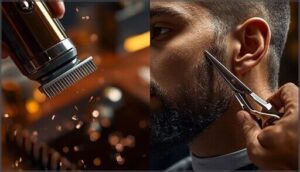
You’ve got a handle on what trimming and shaping each do on their own, but knowing when to use one over the other is where real control comes in.
The lines between them might seem blurry at first, but they’re actually pretty distinct once you break down the purpose, the tools, and how often you’re reaching for each one.
Here’s what separates maintenance from craftsmanship.
Maintenance Vs. Styling
Maintenance keeps your beard looking sharp day to day, while styling transforms it for impact. Trimming manages beard length and daily upkeep with quick touch-ups every week or two. Shaping redesigns your look through edge detailing, creating visual impact for big moments.
Here’s what separates routine beard maintenance tips from intentional beard styling:
- Beard trimming preserves your existing style with minimal fuss
- Beard care and maintenance fits busy schedules and everyday life
- Beard shaping creates dramatic changes for special occasions
- Style flexibility lets you experiment without starting over
- Edge detailing defines jawlines and frames your face intentionally
Tools and Techniques Used
When you trim, electric trimmers with trimming guards do the heavy lifting—start at 6 or 9 millimeters and work down for safe length control.
Shaping demands razor techniques and shaping tools like outliners for crisp edges along your cheeks and neck. Beard combs paired with scissors let you dust stray hairs without losing bulk.
These grooming techniques give you mastery over trimming vs shaving decisions every time.
Frequency and Timing of Each
Here’s where timing strategies shift everything: beard trimming hits your calendar every one to three weeks, depending on beard growth and how polished you want to stay.
Shaping intervals stretch longer—every two to four weeks—since those crisp lines hold better than length. Your maintenance rhythms become second nature once you balance trimming schedules with shaping sessions, mastering both beard trimming and shaving and trimming techniques.
Essential Tools for Trimming and Shaping
Getting your beard right comes down to having the right gear in your hands. You don’t need a whole barber shop worth of equipment, but you do need tools that actually work for both trimming length and shaping clean lines.
Let’s break down what belongs in your grooming kit and how to keep it performing at its best.
Electric Trimmers and Adjustable Guards
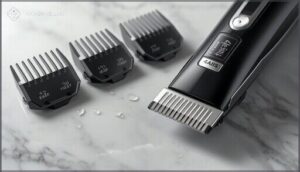
Electric trimmers give you precision trimming that hand tools can’t match when you’re managing beard length. Look for adjustable guards with 30 to 58 settings—they let you dial in exactly 0.2 mm increments for stubble or longer growth.
Titanium or ceramic blade materials stay sharper through thick hair, while motor power determines whether your trimmer pulls or glides. Guard maintenance matters: rinse after each use and oil metal blades monthly to keep your trimmed beard consistent.
Razors, Scissors, and Shaping Tools
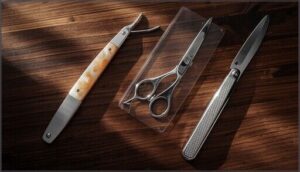
Precision shaping demands sharper tools than trimmers alone can deliver. You’ll need a straight razor for clean beard lines along your jawline and cheeks—Parker and Dovo models cut closest. Safety razors like the Gillette Fat Handled Tech offer easier learning curves with adjustable blade angles.
Keep 5.25-inch beard scissors with Japanese steel blades handy for detailing strays, and grab ClearShaper templates with anti-slip grips for symmetrical outlines every time.
- Straight razors create the sharpest beard outlines but require practice
- Safety razors deliver precise lines with shorter learning curves
- Beard scissors target split ends without risking major damage
- Shaping templates guide consistent jawline and cheek lines
Cleaning and Maintaining Grooming Tools
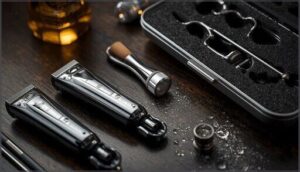
Your tools won’t stay sharp without upkeep. Brush loose hairs from your beard trimmers after every grooming session, then spray blade disinfection alcohol and let it sit one minute.
Drop clipper oil along the teeth to prevent snagging, and store electric shavers in a dry case for rust prevention. Safe storage keeps edges intact between trimming sessions.
Choosing The Right Method for Your Beard
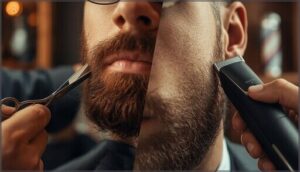
Your beard is as unique as your face, and the method you choose should match your goals, not someone else’s routine.
Whether you’re chasing a sharp look or just keeping things clean and manageable, the right approach depends on what you’re working with and what you want. Let’s break down how to decide what works best for you.
Assessing Beard Goals and Styles
Your beard tells the world who you’re before you say a word. Start by deciding whether you want a rugged, minimal, or polished vibe. Then match your beard length and style options to your facial structure and growth patterns.
Consider these key factors:
- Preferred beard trim length range
- Desired fullness or neatness level
- How your facial hair styles suit your face shape
- Natural growth patterns and density
- Personal preference for maintenance time
Beard trimming and shaping depend on clarity about your look.
Considering Skin Sensitivity and Hair Type
Your skin type and hair texture drive every grooming decision. Sensitive beards react fast to hot water and multiple blade passes, triggering redness and ingrown hairs within minutes.
Coarse or curly facial hair care demands sharper tools and fewer strokes to protect beard health. If your skin flares easily, trimming beats close shaving techniques—it leaves protective stubble and keeps irritation under control.
Lifestyle and Maintenance Preferences
Busy days reshape your entire beard maintenance approach. Most guys prefer a quick morning routine over endless styling, and your schedule dictates whether you grab clippers at home or book a barber.
Consider these daily routine factors:
- Time management: Simple trimming takes five minutes; detailed shaping demands twenty to thirty.
- Travel grooming: Compact trimmers beat bulky kits when you’re moving fast.
- Beard budgeting: Home trimming vs shaving cuts costs compared to frequent professional visits.
Your product preferences and lifestyle rhythm determine which men’s grooming path keeps beard care practical, not punishing.
Tips for Effective Beard Grooming
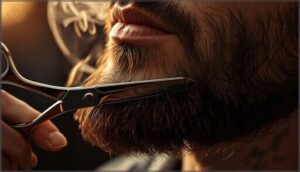
You’ve got the knowledge and tools—now it’s time to put them to work. Grooming a beard the right way isn’t complicated, but it does require a solid approach and consistency.
Here’s what you need to focus on to keep your beard looking sharp and healthy.
Step-by-Step Trimming and Shaping Guide
Start with clean beard preparation: wash, dry, and comb before you touch the trimmer. Set your guard length conservatively—you can always go shorter.
Define your neckline first, then move to cheek lines for facial symmetry. Use shaping tools to create crisp edges and clean transitions.
Trim with the grain, step back often, and finish with detail work around your mustache. That’s how beard trimming and shaving techniques come together.
Preventing Skin Irritation and Ingrown Hairs
Comfort comes from smart prep and clean tools. Wash your face with warm water before trimming vs shaving to soften hairs and reduce razor burn.
Exfoliate weekly to clear follicles and boost ingrown prevention. Always trim with the grain using sharp blades—dull ones tug and cause irritation reduction nightmares.
Finish with beard oil for skin health and beard hygiene that keeps follicles calm.
Maintaining a Balanced and Polished Look
Your beard symmetry depends on even length across the entire face—trim the chin regularly so it doesn’t overpower the sides.
Polished edges and facial harmony come from daily brushing, light balm, and clean necklines that follow your jaw.
Match your beard trim to your haircut for balanced style.
These beard grooming tips and beard trimming and shaving techniques keep your beard shape looking sharp without extra effort.
Frequently Asked Questions (FAQs)
What is the difference between beard shaping and beard trim?
Trimming controls length and keeps your beard neat, while shaping carves the outline—cheek lines, neckline, and jawline—to match your facial geometry and the style you’re building.
When to trim and shape a beard?
You should trim regularly to control beard growth and remove split ends.
Shape when your neckline or cheek lines lose definition, or before events requiring symmetry and polished facial geometry.
Can I trim and shape my beard at home?
Yes, you can handle both at home with the right tools and technique. Start with clean, dry hair, use guards for trimming bulk, then switch to naked blades or razors for shaping necklines and cheek lines.
How do barbers charge for trimming versus shaping?
Most shops list beard trim as a quick add-on—around $15 to $25—while shaping runs higher, $20 to $40, since it demands precision line-ups, razor work, and extra time for symmetry.
What products help maintain beard shape between appointments?
Between barbershop visits, use beard balm or strong wax for hold, beard oil for moisture, and styling cream for light control.
Additionally, utilize grooming tools like combs to refresh your beard shape and maintain clean lines.
Does beard oil affect trimming or shaping results?
Applying beard oil before your trim softens coarse hairs so blades glide easier, but too much weighs them down and distorts length.
Use it after shaping to condition skin without blurring crisp edges.
Should I trim wet or dry beard hair?
Here’s the straight story: always trim your beard when it’s completely dry. Wet hair stretches and clumps, so you’ll cut off more length than you planned—then watch it shrink as it dries.
Conclusion
Studies show that 68% of men who understand the difference between trimming and shaping a beard report higher satisfaction with their grooming routine. That’s not coincidence—it’s clarity.
Trimming keeps your beard in check; shaping gives it definition. One controls length, the other controls structure.
You don’t need to choose between them. Use both with intention, and your beard stops being something you manage and becomes something you own. That’s the shift that matters.