This site is supported by our readers. We may earn a commission, at no cost to you, if you purchase through links. This content is for general informational and educational purposes only and is not a substitute for professional medical, dermatological, or nutritional advice.
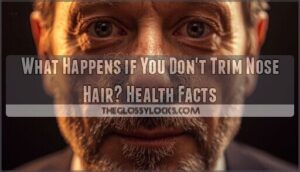
Most people treat nose hair the way they treat a slow drain—ignore it until it becomes impossible to overlook. But those coarse little hairs aren’t a design flaw; they’re your respiratory system‘s first line of defense, catching particles, filtering allergens, and keeping your nasal passages from drying out.
The trouble is, there’s a real tension between leaving them completely untrimmed and over-grooming them into oblivion. What happens if you don’t trim nose hair regularly isn’t a simple answer—it touches on comfort, breathing, infection risk, and yes, how you look in natural light.
Table Of Contents
- Key Takeaways
- Why Do We Have Nose Hair?
- What Happens if You Don’t Trim Nose Hair?
- Does Untrimmed Nose Hair Affect Breathing?
- Can Long Nose Hair Cause Health Problems?
- Is Not Trimming Nose Hair Safer?
- Are There Downsides to Not Trimming?
- How Does Nose Hair Affect Allergies?
- What Are Safe Nose Hair Grooming Options?
- When Should You Consider Trimming Nose Hair?
- Frequently Asked Questions (FAQs)
- How often should you trim nose hair?
- Does nose hair grow back thicker after trimming?
- Can nose hair cause sneezing?
- Can nose hair grow back thicker after trimming?
- Does nose hair change with age or hormones?
- Are some people naturally prone to more nose hair?
- Can nose hair affect sleep or snoring patterns?
- Conclusion
Key Takeaways
- Your nose hairs aren’t just there for show — they trap pollen and dust, and bacteria before any of it reaches your lungs, so leaving them completely alone actually helps your respiratory system do its job.
- Letting nose hair grow too long can cause real daily discomfort, since the hairs brush against your sensitive nasal lining with every breath and trigger persistent itching and irritation.
- Plucking is the one method you should avoid, because it tears the follicle open and creates a small wound in a bacteria-rich area, raising your risk of infection.
- The smart middle ground is trimming only what’s visible at the nostril edge every one to two weeks, which keeps things tidy without stripping away the natural filtration your nose depends on.
Why Do We Have Nose Hair?
Nose hair might seem like a nuisance, but it’s actually doing a lot of quiet, important work inside your nasal passages.
Those tiny hairs are your body’s first line of defense against dust, allergens, and bacteria — and removing them carelessly can put your respiratory health at risk.
Your body didn’t grow it by accident — there are real biological reasons it’s there. Here’s what nose hair is actually doing for you.
Natural Filtering Function
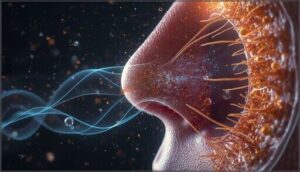
Your nose hair is your respiratory system’s first gatekeeper. These tiny vibrissae trap particles larger than 10 micrometers — think pollen, dust, and debris — before they reach your lungs.
Working alongside sticky mucus, they form a nasal barrier that powers mucociliary defense, filtering airflow dynamics at the source. That’s particle filtration doing quiet, unglamorous work to protect your immune system and overall respiratory health every single breath.
Even with this defense, it’s important to understand the limits of nasal hair filtration capabilities against air pollution.
Moisture Retention in Nasal Passages
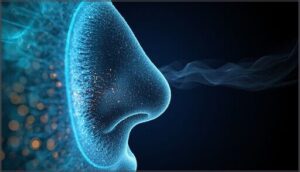
Beyond filtering, your nose hairs also help with nasal humidification. They slow incoming airflow, giving mucosa hydration more time to work — basically letting the moist nasal lining add water to each breath.
This moisture balance helps turbinate function and keeps your airway comfortable. Without that system, dry air reaches deeper, stressing your respiratory health from the very first inhale.
For more on how the nose protects your lungs, see the details about its crucial air conditioning role.
Role in Respiratory Health

Your nose hair does more than humidify air — it’s quietly supporting your entire respiratory system with every breath. Those vibrissae intercept dust, pollen, and bacteria before they reach your lungs, giving your immune system a real break.
That’s nasal balance working in your favor. Better air quality at the source means breathing ease throughout, and that’s a genuine health benefit you shouldn’t take for granted.
What Happens if You Don’t Trim Nose Hair?
Skipping the trimmer might seem harmless, but your nose hair doesn’t just sit there doing nothing. What grows unchecked can affect how you look, how comfortable you feel, and even how well your nose does its job.
Here’s what you actually need to know.
Visible Appearance and Grooming Concerns
Visible nose hair can quietly undermine even your best first impression. Grooming expectations in social and professional settings are real — and nose hair visibility is part of that picture. From dating to client meetings, personal grooming signals effort and self-awareness.
- Long facial hair near the nostrils draws immediate attention
- Social impressions shift when aesthetic standards feel unmet
- Personal hygiene perceptions form fast, often unfairly
- A nose hair trimmer keeps things naturally tidy
Impact on Nasal Comfort and Itching
Long, untrimmed nose hair doesn’t just look unkempt — it can genuinely irritate you. As hairs grow past the nostril edge, they brush the sensitive nasal lining with every breath, triggering constant itching. Nasal anatomy makes this worse: the trigeminal nerve packs that area with nerve endings, so even slight contact feels amplified.
| Cause of Nasal Irritation | Effect on Comfort |
|---|---|
| Hair brushing inner lining | Persistent tickling or itching |
| Dry air reducing moisture | Increased hair-on-skin friction |
| Allergens trapped on hair shafts | Localized itch and nose-rubbing |
| Hairs curling back toward mucosa | Repeated irritation in one spot |
| Dense hair clusters creating friction | Constant nasal awareness.” |
Smart nose hair maintenance brings real itch relief, improving your respiratory comfort without sacrificing nasal health and hygiene.
Keeping nasal passages clear also pairs well with tackling dryness elsewhere—if your scalp’s feeling the effects too, these scalp hydration tips for itch relief can help.
Health Implications of Untrimmed Hair
Untrimmed nose hair actually delivers surprising Nasal Health Benefits you mightn’t expect. It acts as a front-line filter, giving your Immune System Support by catching bacteria, pollen, and pollutants before they reach your lungs — a quiet but real form of Respiratory Protection.
That’s why removing it aggressively carries genuine Health Risks of Nose Hair Trimming, including infection and reduced Air Quality Impact management.
Does Untrimmed Nose Hair Affect Breathing?

If you’ve ever wondered whether a little extra nose hair could actually affect how well you breathe, you’re not alone. The answer is more nuanced than a simple yes or no, and it comes down to how your nasal passages actually work.
Here’s what you need to know about untrimmed nose hair and its real impact on airflow and sinus function.
Airflow and Nasal Obstruction
Think of your nasal hair as a gatekeeper — when it grows too long, it starts working against your breathing mechanics. Dense nasal hair increases airflow resistance, creating turbulence effects that make breathing feel slightly labored.
Here’s what’s actually happening inside your nose:
- Nasal resistance rises as hairs crowd the nasal valve, narrowing your breathing system’s entry point.
- Airflow patterns shift from smooth to turbulent, requiring more effort to move the same air volume.
- Obstruction symptoms appear — that familiar “tightness” or stuffed feeling, even without congestion.
Trimming often brings immediate relief.
Impact on Sinus and Respiratory Function
Your nose hair does far more than filter dust — it’s a key player in sinus protection and overall respiratory health.
| Function | What It Does |
|---|---|
| Nasal Filtering | Traps pollen and bacteria before they reach sinus openings |
| Mucus Regulation | Keeps moisture stable, supporting airway defense |
| Respiratory Infection Prevention | Reduces pathogen load reaching lower airways |
| Nose Hair and Immune System | Lowers how often sinus tissue must react to irritants |
When this system works well, your respiratory system stays calmer and sinus care and maintenance becomes less of a burden.
Can Long Nose Hair Cause Health Problems?
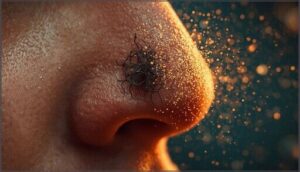
Long nose hair isn’t just a grooming concern — it can actually affect how your nose functions day to day.
The real question is whether leaving it untrimmed crosses the line from harmless to genuinely problematic. Here’s what you should know about the health issues that can come with it.
Allergen and Particle Trapping
Your nasal hair works like a built-in air purification system. As a nasal filter, it catches allergens—pollen, pet dander, dust—before they reach your lungs.
This allergen capture happens because mucus coats each hair, binding particles on contact. That front-line respiratory defense protects your immune system from constant overload.
Intact nasal hair means better particle removal and a calmer respiratory system overall.
Risk of Sinus Infections
Long nose hair isn’t a sinus infection risk by itself, but here’s what matters for your nasal health: intact hairs reduce the airborne pathogens reaching your sinus openings.
When that front-line filtration thins out, your mucociliary system tackles a heavier microbial load, raising sinusitis risk.
Keeping reasonable hair length aids infection prevention and overall respiratory health against allergies, respiratory infections, and lingering infection risk.
Irritation and Discomfort
Beyond infection risk, there’s a daily comfort angle worth knowing. Untrimmed nose hair brushes against your mucosal lining with every breath, triggering nasal irritation, itchy sensations, and even a heightened sneezing reflex — all genuine hygiene and health risks.
In dry indoor air, hairs stiffen and poke harder. That constant social annoyance of rubbing your nose, plus dryness issues and crusting, adds up fast.
Is Not Trimming Nose Hair Safer?
It might sound counterintuitive, but skipping the nose trimmer could actually be doing your nose a favor.
The inside of your nose is more vulnerable than most people realize, and how you groom it matters more than you’d think.
Here’s what the science says about why leaving things alone might be the safer call.
Reduced Risk of Infection
Skipping the trimmer entirely, at least occasionally, can actually work in your favor for infection prevention. When you leave your nose hair alone, you avoid the tiny skin breaks that invite bacteria in.
Follicle care matters here — intact follicles mean fewer entry points for germs. That’s a real trimming safety win your nasal health quietly benefits from every day.
Protection Against Invasive Bacteria
Your nose hair does more than you think. It’s your body’s first nasal barrier, catching bacteria before they travel deeper.
Mucus protection adds another layer — it contains lysozyme and lactoferrin that actively kill invaders. Cilia function sweeps remaining threats away.
Together, they support immune response and respiratory health, keeping Staphylococcus aureus and other threats from gaining a foothold through bacterial filtration and consistent nasal hygiene.
Follicle Integrity and Skin Health
Your follicles stay healthier when you leave them alone. Plucking creates micro-tears that invite follicle infection and folliculitis — a painful, pus-filled reaction most patients regret immediately.
Follicle damage also disrupts hair regrowth patterns, weakening your nasal barrier over time.
Nose hair trimming benefits your skin by keeping it intact, reducing skin irritation without the health risks of nose hair trimming through aggressive removal.
Are There Downsides to Not Trimming?
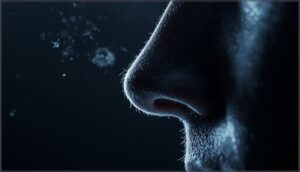
Skipping the trimmer isn’t all upside, though. Leaving nose hair unchecked comes with its own set of trade-offs worth knowing about.
Here’s what you might run into on the other side of that decision.
Social and Aesthetic Considerations
Visible nose hair quietly shapes how others read your grooming habits and facial attractiveness before you’ve said a word.
Here’s what untrimmed hair can mean socially:
- It shifts focus away from your best features, affecting overall aesthetic standards.
- It signals inattention to personal style in professional settings.
- It creates subtle social awkwardness others rarely voice aloud.
- It influences grooming and aesthetics judgments about your reliability.
- It can quietly undermine an otherwise polished appearance.
Personal Hygiene Perceptions
People quietly judge grooming habits based on small details, and nose hair is one of them. Social norms around cleanliness expectations mean others often link visible nasal hair with overall inattention to personal grooming and hygiene — fairly or not.
| Hygiene Belief | Reality |
|---|---|
| Untrimmed = unclean | It’s natural, not dirty |
| More removal = healthier | Trimming only visible hair is safer |
Increased Itching or Irritation
Long nose hair creates real nasal irritation beyond just looks. Mechanical friction from hairs brushing the lining with every breath is one of the top itch triggers you’ll notice daily. Dry air effects make this worse, stiffening hairs overnight. Follicle inflammation can follow repeated tugging.
- Dryness sharpens friction-related discomfort
- Trapped allergens intensify itching
- Repeated rubbing worsens health risks
Good nasal hygiene practices help manage this.
How Does Nose Hair Affect Allergies?

Your nose hair does more than just sit there looking unruly — it’s quietly working as your body’s first line of defense against airborne allergens. How well it does that job can actually influence how your allergies behave day to day.
Here’s what you should know about the connection between nose hair and allergy symptoms.
Filtering Allergens and Pollen
Think of your nose as a living nasal filter, one that’s been quietly working overtime your whole life.
Those vibrissae — the coarser hairs just inside your nostrils — act as a remarkably effective allergen trap, capturing pollen, dust, and dander before they reach deeper airways.
Mucus coats each hair, boosting pollen capture and making your nose a surprisingly powerful natural air purification system.
Impact on Allergy Symptoms
When allergens slip past your nasal defenses, your immune system responds with a surge of histamine release, triggering sneezing, nasal irritation, and that familiar sinus pressure that drags down your whole day.
Denser nose hair improves allergen trapping, directly supporting respiratory health by reducing how much pollen reaches your nasal lining — a small but meaningful edge in allergy prevention and nasal health.
What Are Safe Nose Hair Grooming Options?
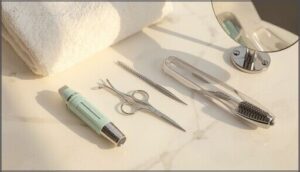
In the context of grooming nose hair, how you do it matters just as much as whether you do it at all. The wrong method can turn a simple hygiene habit into a real health risk, especially given how close the nasal area sits to sensitive structures.
Here are the safest options worth knowing about.
Trimming Vs. Plucking Risks
Plucking might seem quick, but it’s one of the riskier grooming choices you can make. When you pluck, you tear the follicle and break the nasal lining — creating an open wound in a bacteria-rich space. That’s how nose hair infections start.
Plucking nose hair tears the follicle open, turning a quick grooming habit into an infection waiting to happen
Trimming benefits you by cutting the shaft only, leaving follicle integrity intact and grooming safety firmly in your hands.
Recommended Tools and Techniques
So what tools actually keep you safe? Electric nose hair trimmers are your best bet — their recessed rotary blades cut visible hair without touching sensitive skin. Manual scissors with rounded tips offer a gentler alternative for precise trimming techniques.
Both electric clippers and manual scissors respect follicle integrity, giving you reliable grooming safety without the risks plucking leaves behind.
Best Practices for Nose Hair Care
Good grooming tools only do their job when you use them right. For safe nose hair trimming, always blow your nose first, wash your hands, and work in good lighting.
Trim only what’s visible at the nostril edge — never go deeper. Clean your trimmer after every use. This nose hair maintenance and care routine protects your hair follicle, nasal health, and respiratory health all at once.
When Should You Consider Trimming Nose Hair?
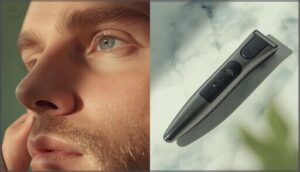
Knowing when to trim is just as important as knowing how. Your nose hair doesn’t need constant attention, but there are clear signs it’s time to act.
Here’s what to watch for and how often you should actually be reaching for that trimmer.
Signs Nose Hair Needs Maintenance
Your nose hair is practically waving for attention when strands are visible at normal speaking distance — that’s the clearest sign nasal hygiene and grooming habits need a refresh.
Notice persistent itching, crusting near the nostril edge, or a faint airflow whistle? Nose hair length has likely crossed the comfort threshold. Trust those cues; they matter for both appearance and respiratory health.
How Often to Trim for Health and Appearance
Once you’ve noticed those telltale signs, a simple rhythm works well: trim every one to two weeks, adjusting for your nose hair growth rate. Faster growth? Every five to seven days keeps aesthetic concerns in check.
For respiratory health and nose hair protection, never overtrim — leaving enough hair preserves its filtering function. Grooming techniques matter less than consistency.
Frequently Asked Questions (FAQs)
How often should you trim nose hair?
Practically speaking, most people find a grooming schedule of every one to two weeks keeps nasal health intact while managing visible growth, though your personal hair growth rate ultimately decides the right trimming frequency.
Does nose hair grow back thicker after trimming?
No, trimming nose hair doesn’t make it grow back thicker. That’s a common myth.
Your follicle controls thickness, not the scissors. Trimmed ends just feel coarser because they’re blunt, not because the hair changed.
Can nose hair cause sneezing?
Yes, nose hair can cause sneezing. When hairs brush the nasal lining, they trigger sensitive nerves, prompting a sneeze reflex.
Nasal irritation from hair follicles, allergens, or plucking can all spark sneezing episodes.
Can nose hair grow back thicker after trimming?
No, nose hairs don’t grow back thicker after trimming — that’s one of the most persistent trimming myths.
Cutting the shaft leaves the follicle untouched, so hair regrowth patterns and texture stay exactly the same.
Does nose hair change with age or hormones?
Absolutely — hormone effects and age-related changes both shape how your nasal follicles behave over time.
Rising androgen influence, especially testosterone, drives thicker hair growth, making nose hairs noticeably coarser after your 40s.
Are some people naturally prone to more nose hair?
Some people are simply born with it. Genetic predisposition, hormonal influence, and ethnic variations all shape follicle density and hair thickness — meaning your vibrissae may grow far more prominently than your neighbor’s.
Can nose hair affect sleep or snoring patterns?
It can, actually. Dense nasal hair increases airflow resistance, which may nudge you toward mouth breathing at night — quietly worsening snoring patterns and sleep quality without you ever realizing the connection.
Conclusion
Like Goldilocks, searching for what’s just right, you’re not looking for extremes—you’re looking for balance. What happens if you don’t trim nose hair isn’t a horror story; it’s actually a nudge to respect what your body built.
Those hairs are working quietly every day, filtering the air you breathe. Trim only what’s visible, leave the rest alone, and your nose will keep doing its job exactly as nature intended.