This site is supported by our readers. We may earn a commission, at no cost to you, if you purchase through links. This content is for general informational and educational purposes only and is not a substitute for professional medical, dermatological, or nutritional advice.
Most guys grab whatever’s on the shelf and wonder why their hair never looks quite like the hair type they had in mind. The product in your hand matters more than the technique.
Hair gel and pomade might seem interchangeable, but they work completely differently—and using the wrong one for your hair type is the reason styles fall flat, feel crunchy, or disappear by noon.
Gel locks everything in place and stays there. Pomade keeps things movable so you can adjust throughout the day. Understanding the difference between hair gel and pomade puts you in control of your look every time.
Table Of Contents
Key Takeaways
- Gel vs pomade: Gel locks your style rigid and washes out easily, while pomade keeps things flexible so you can restyle on the go — pick based on whether you want set-it-and-forget-it or control throughout the day.
- Your hair type calls the shot: fine hair needs a light water-based pomade or alcohol-free gel, while thick or curly hair handles stronger pomade without the stiff, helmet-head feel.
- Oil-based pomade builds up over time and needs a clarifying shampoo to clear out, but alcohol-heavy gels can dry your scalp and cause flaking with regular use.
- Neither product directly hurts hair growth, but buildup and scalp irritation from the wrong formula can weaken roots and cause breakage over time.
Hair Gel Vs Pomade: Key Differences
Gel and pomade might seem interchangeable at first glance, but they’re actually pretty different in how they work and what they do for your hair.
Your hair type plays a big role in which one actually works for you, and this pomade vs. gel breakdown explains exactly why that matters.
Picking the wrong one can mean a bad hair day — or worse, damage over time. Here’s what sets them apart.
Definition and Main Purpose

Two hair products, one clear winner for your needs — once you know what each actually does.
Hair gel locks your style in place. It hardens around strands and keeps everything fixed.
Pomade works differently — it shapes your hair while keeping it soft and movable.
| Feature | Gel | Pomade |
|---|---|---|
| Main Purpose | Lock and hold | Shape and flex |
| Hold Types | Rigid, firm | Flexible, buildable |
| Finish Options | High-shine, wet | Matte to glossy |
| Styling Goals | Set-and-forget looks | Restyle-friendly looks |
| Product Origins | Synthetic polymers | Wax, oils, or water base |
Your styling goals decide everything.
For more details about their moisturizing properties and texture, be sure to read further.
Texture and Consistency

Feel tells you a lot before you even touch your hair.
Hair gel spreads like a smooth jelly — light, slick, easy to work through. Pomade feels creamier, waxier, more grip right from the start. That difference in product feel shapes everything about styling ease and hair coating.
For a deeper understanding of what creates these textures, you can explore the chemical makeup and reactions involved in hair gel.
| Feature | Hair Gel | Pomade |
|---|---|---|
| Initial Texture | Smooth jelly | Creamy or waxy |
| Hair Coating | Light, even layer | Dense, grippy coat |
| Finish Types | Glossy, wet-look | Matte to shiny |
| Styling Ease | Spreads fast | Stays workable longer |
| Hair Texture Impact | Stiff when dry | Soft, touchable |
Hold Strength and Flexibility

Hold is where gel and pomade really split apart.
Gel locks hair in place — rigid, set, done. Pomade stays pliable, so you can restyle mid-day without reapplying. Hair length matters too: extra strong gel suits short styles, while pomade accommodates longer hair without that helmet look.
| Factor | Hair Gel | Hair Pomade |
|---|---|---|
| Hold Type | Rigid, fixed | Pliable, flexible |
| Hair Length Impact | Best for short hair | Works on longer hair |
| Environmental Hold | Wind-resistant but humidity-sensitive | Oil-based holds through sweat |
Washability and Residue

Getting rid of your styling product matters just as much as the hold itself. Gel wins on washability — it’s water-based, so one shampoo usually removes gel residue clean. Oil-based pomade? That’s a different story.
Oil-based pomades often need a clarifying shampoo or two, so if you’re switching products often, check out this pomade guide for fades to find formulas that actually play nice with your wash routine.
| Factor | Hair Gel | Pomade |
|---|---|---|
| Washability | Easy, one wash | Oil-based needs multiple washes |
| Residue Control | Minimal buildup | Can layer into waxy film |
| Hair Cleansing Needs | Regular shampoo works | May need clarifying shampoo |
| Pomade Buildup Risk | Low | Higher with oil-based formulas |
| Best Hair Care Routine | Daily wash friendly | Weekly deep cleanse recommended |
Pomade: Features and Benefits
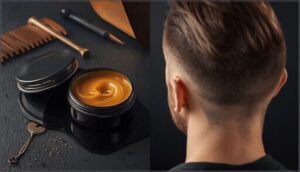
Pomade is one of those styling products that does more than just hold your hair in place. It works with your hair instead of against it, and the right type can make a real difference in how your style looks and feels.
Here’s what you need to know about pomade before picking one up.
Types of Pomade (Water Vs Oil-Based)
Pomade splits into two main camps: water-based and oil-based. Water-based pomade uses polymers and light oils, making it water-soluble and easy to wash out. Oil-based formulas rely on petrolatum and waxes — harder to remove but incredibly pliable.
Your hair texture and lifestyle decide which wins. Both pomade variants deliver flexible hold that most gels simply can’t match.
Finish and Shine Levels
Variety is where pomade really pulls ahead. You get matte finish options that keep things low-key and natural, all the way up to high-shine surfaces that make slick-backs look razor-sharp.
Gloss levels can hit mirror-like territory — measured well above 70 GU for high-shine formulas. That kind of finish and shine control lets you dial in the exact look you want, every time.
Suitability for Hair Types
Your hair type drives everything here. Thick or coarse strands? Pomade’s weight and hold keep bulk in check without that stiff, helmet feel.
Curly hair gets real curl definition and frizz control without drying out. Even scalp sensitivity is less of an issue — water-based pomade rinses clean.
Fine hair with low porosity? Go light, and apply sparingly.
Restyling and Flexibility
Restyle ease is where pomade pulls ahead — no water, no drama. Your hold stays workable all day, so fixing a windswept fringe takes seconds, not a sink visit.
- Morning commute messes up your part? Smooth it back with your fingers.
- Plans change after work? Reshape your slick-back on the go.
- Daily refresh means less product, less buildup, more control.
Hair Gel: Features and Benefits
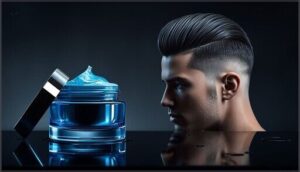
Hair gel plays by its own own rules — and once you understand them, it’s easier to work with. It’s a product that thrives on hold and structure, and keeping your style exactly where you put it.
Here’s what you need to know about how it works.
Before you add it to your routine, check out this guide on cactus oil for hair to see what results to expect.
It’s simply salt, and this guide to sodium chloride in shampoo breaks down why it’s added and how it affects your hair.
Types of Hair Gel (Alcohol-Free Vs Regular)
Not all hair gel is the same. Regular formulas rely on alcohol content — specifically SD Alcohol or denatured alcohol — to dry fast and lock styles in place.
Alcohol-free taming gel skips that and uses gentler film-forming ingredients instead, making it one of the kinder hair care products for dry or sensitive scalps. Knowing these gel variants helps you match the right styling options to your hair types.
Hold and Longevity
Gel doesn’t mess around in terms of hold strength. Once it dries, your style stays locked from morning to night — no negotiations. That’s the real appeal of hair gel in the pomade vs gel debate: product durability without constant touch-ups.
Daily maintenance stays simple, too. One fresh application takes care of style longevity all day, making gel one of the most reliable hair styling products for set-it-and-forget-it results.
Effects on Hair Texture and Thickness
Beyond hold, what gel actually does to your hair texture matters just as much. Strong-hold formulas group strands into defined sections, boosting visual density and strand thickness — especially in short styles.
But on fine or high-porosity hair, that hard cast can backfire, making the scalp more visible. Product buildup over time also flattens texture, leaving hair looking thinner than your hair type actually is.
How Pomade and Gel Affect Hair Health
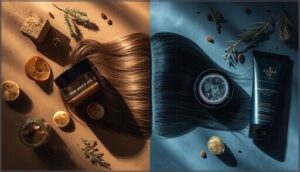
The product you reach for every morning does more than just hold your hair in place — it’s also affecting your hair’s health over time.
Pomade and gel interact with your strands and scalp in pretty different ways, and knowing the difference can save you a lot of bad hair days. Here’s what you need to know about how each one holds up in terms of your hair’s wellbeing.
Moisture and Hydration
Hydration is where these two products really split. Moisture balance is promoted by pomade, especially water-based pomade, by locking in water retention with occlusive waxes and humectants.
Humidity control matters too — pomade holds up better in shifting climates. Hair porosity affects how well products penetrate, so knowing your hair texture helps.
Gel, by contrast, does little for hair health or hydration levels.
Potential for Dryness or Flaking
That moisture difference shows up in another way: flaking. Alcohol-heavy gels are a top flaking cause — they strip your scalp’s natural oils, leaving dry hair prone to brittle, crumbly residue.
Product buildup makes it worse, especially when you skip wash days. Pomade rarely causes the same scalp irritation. For flake reduction and basic dryness prevention, it’s the safer pick for daily hair care and maintenance.
Scalp and Hair Health Considerations
Flaking is just the start. Over time, product buildup can quietly sabotage your follicle health — clogged pores, trapped bacteria, and weakened roots become real concerns for scalp irritation and hair breakage.
Smart hair care tips to protect your hair and scalp health:
- Keep products away from the scalp
- Clarify weekly to clear buildup
- Choose fragrance-free if you have skin sensitivity
- Take product-free days to let follicles breathe
Choosing The Right Product for Your Hair
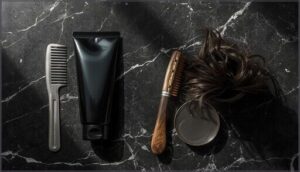
Picking the right product comes down to a few key things. Your hair type, the look you’re going for, and how your skin reacts to certain ingredients all play a role.
Here’s what to think about before you choose.
Matching Product to Hair Type
Your hair type is the starting point for every smart product choice. Fine hair needs a lightweight pomade or soft gel — just a pea-sized amount keeps volume alive. Thick or curly hair calls for stronger hold pomade to nail curl definition without crunch.
| Hair Type | Best Match |
|---|---|
| Fine/Thin | Light water-based pomade or alcohol-free gel |
| Thick/Coarse | Strong hold pomade or firm gel |
| Curly/Coily | Flexible water-based pomade |
| Oily | Hair gel |
Desired Style and Finish
The style you want calls the shots here. Pomade covers everything from matte finishes to high-shine classic looks, while hair gel locks in sharp, structured shapes.
Match your finish to your goal:
- Slick backs or spikes → hair gel
- Pompadours or quiffs → pomade
- Messy, casual texture → matte pomade
- Wet, high-shine look → gel
- Soft curl definition → flexible pomade
Sensitivities and Skin Concerns
Your skin doesn’t lie. If you’ve ever dealt with a sensitive scalp, redness, or breakouts near your hairline, your styling product might be the culprit.
| Concern | Better Choice |
|---|---|
| Skin Irritation / Allergic Reactions | Fragrance-free, alcohol-free gel |
| Dermatological Issues / Scalp Conditions | Water-based pomade |
| Acne-prone skin / Product Allergens | Non-comedogenic, lightweight gel |
Grooming and hygiene matter — your hair health depends on what touches your skin daily.
Styling Techniques for Gel and Pomade
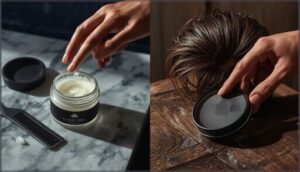
Knowing which product to use is only half the battle — how you apply it matters just as much.
The right technique can mean the difference between a style that lasts all day and one that falls flat by noon.
Here’s what you need to know to get the most out of both gel and pomade.
Application Tips for Pomade
Getting pomade right starts with clean, slightly damp hair — that’s your foundation for smooth distribution. Warm a pea-sized amount between your palms until it melts, then work it from roots to ends using your fingers like a comb.
Build pomade in layers for more control. Finish with a comb for sharper definition or tousle for a textured look.
Application Tips for Gel
Damp hair is your best canvas for gel application. Warm a dime-sized amount between your palms, then rake it through using your fingers — this distributes the product evenly and enhances hair texture naturally.
For hold enhancement, try product layering: start with a leave-in, then seal it with gel. These styling techniques give you definition without the dreaded crunch.
Tools and Methods for Best Results
The right tools can make or break your look. Whether you’re working with pomade or hair gel, these finishing touches take your hair styling from decent to dialed in.
- Hair Combing — A fine-tooth comb creates sharp parts and clean lines.
- Styling Brushes — Boar-nylon blends smooth frizz after applying styling products.
- Blow Drying — Rough dry first so hold products aren’t diluted.
- Product Layering — Gel for hold, light pomade on top for shine.
Pros and Cons: Gel Vs Pomade

Both gel and pomade have their strengths, but neither one is perfect for every situation. Knowing where each product shines — and where it falls short — makes the choice a lot easier.
Here’s a straightforward breakdown to help you figure out which one fits your routine.
Whether you prefer stainless steel for durability or copper for its natural antimicrobial edge, this guide to choosing the right tongue scraper for fresher breath breaks down the options so you can pick what actually works for you.
Advantages and Disadvantages of Each
Every hold comparison comes down to trade-offs. Hair gel locks styles hard — great for max hold, but it can cause hair damage and dryness over time. Pomade wins on style versatility and cost effectiveness, though oil-based formulas risk product buildup.
| Factor | Hair Gel | Pomade |
|---|---|---|
| Hold | Strong, rigid | Flexible, medium |
| Hair Damage Risk | Higher | Lower |
| Product Buildup | Minimal | Possible (oil-based) |
Best Use Cases for Each Product
Trade-offs tell half the story — knowing when to use each product seals the deal. Hair gel dominates set-and-forget styling: outdoor events, gym sessions, sharp office looks. Pomade owns styling flexibility and product versatility for daily maintenance and restyling on the go.
Gel locks your style and forgets it; pomade shapes it and lets you live in it
| Use Case | Hair Gel | Pomade |
|---|---|---|
| Formal events | Strong hold, locked finish | High-shine, polished finish options |
| Casual daily wear | Light gel for fine hair | Flexible hold, soft hair texture |
| Athletic/active days | Washes out fast | Water-based rinses easily |
| Thick or coarse hair | Can feel stiff | Smooths bulk naturally |
| Restyling mid-day | Not ideal | Built for it |
Longevity and Maintenance
Knowing your wash frequency matters as much as knowing your hold. Hair gel demands daily maintenance — it dries hard, locks your style for 8–12 hours, then needs to go.
Pomade plays the long game. Oil-based formulas stay workable for days, but hair buildup is real without a clarifying shampoo.
| Factor | Hair Gel | Pomade |
|---|---|---|
| Style Durability | 8–12 hours, stiff | All-day, flexible |
| Wash Frequency | Daily or every 1–2 days | Every few days |
| Hair Buildup Risk | Low | Moderate to high |
Frequently Asked Questions (FAQs)
What are the downsides of pomade?
Pomade has real downsides. It can cause pomade acne, scalp irritation, and product buildup that’s tough to wash out.
Oil-based formulas leave greasy residue and may cause hair damage with long-term use.
Can pomade be used as gel?
Yes, pomade can work as a gel alternative. It holds your style, just with a softer, flexible finish instead of a stiff crunch — giving you Styling Flexibility and restylable control throughout the day.
Can you mix pomade and gel together?
Mixing pomade and gel together actually works well. You get the firm hold of hair gel with the flexible finish of pomade — a hybrid style that’s controlled but never crunchy.
How do weather conditions affect each product?
Weather hits both products differently. Hair gel loses hold in humidity, while pomade — especially oil-based — resists rain and sweat better.
Cold stiffens both, but wind resistance and climate adaptation favor waxy pomades overall.
Which product works best for colored hair?
For colored hair, a nourishing pomade wins. It shields dye, promotes color longevity, and skips the drying alcohols in gel that break down pigment fast — protecting your shade and overall hair health.
Are there natural or organic alternatives available?
Plenty of natural options exist. You’ll find hair gel made with aloe vera or flaxseed, and organic pomade built on shea butter and beeswax — all skipping harsh synthetics while keeping your hair health intact.
How do gel and pomade affect hair growth?
Neither pomade nor hair gel directly affects hair growth at the follicle level.
What they can do is cause product buildup, scalp irritation, or hair breakage — all of which compromise hair health over time.
Conclusion
Your hair is the first thing people notice—and the last thing you want working against you. The difference between hair gel and pomade comes down to control: one locks your style like concrete, the other keeps it alive and adjustable.
Neither is wrong. Both serve a purpose. Match the product to your hair type, your lifestyle, and the finish you’re after. Once you do, getting your hair right stops being guesswork and starts being routine.