This site is supported by our readers. We may earn a commission, at no cost to you, if you purchase through links. This content is for general informational and educational purposes only and is not a substitute for professional medical, dermatological, or nutritional advice.
Your beard is made of protein — about 95% keratin, to be exact — and your body builds every strand from the amino acids you eat. That single biological fact changes how you think about patchy growth, slow progress, or a beard that refuses to fill in.
Most men troubleshoot beard development from the outside, reaching for oils and balms, while the real leverage sits in what’s on their plate. Protein intake for beard development isn’t a fringe nutrition topic; it’s the biochemical foundation your follicles depend on every day. Get the inputs right, and the output generally follows.
Table Of Contents
- Key Takeaways
- How Protein Builds Beard Hair
- Daily Protein Needs for Beard Growth
- Best Protein Sources for Facial Hair
- Amino Acids Essential for Beard Health
- Protein and Other Key Beard Nutrients
- Does More Protein Mean More Beard Growth?
- Protein Timing and Beard Development
- Nutrition Strategies for Fuller Beards
- Lifestyle Habits That Support Protein’s Effects
- When to Consider Protein Supplements
- Frequently Asked Questions (FAQs)
- Does protein increase beard growth?
- What is the 3 month beard rule?
- What to eat to boost beard growth?
- How to boost up beard growth?
- Can genetics override the benefits of optimal nutrition?
- Does alcohol consumption negatively affect beard growth?
- How does age affect beard thickness and density?
- Can certain medications interfere with protein absorption?
- Conclusion
Key Takeaways
- Your beard is roughly 95% keratin, meaning the protein and amino acids you eat — especially cysteine, methionine, and arginine — are the direct building blocks your follicles use to grow every strand.
- Hitting 0.8 to 1.6 grams of protein per kilogram of body weight daily, spread across three to four meals, keeps amino acid delivery steady enough to sustain active hair growth without gaps.
- Protein can’t carry the whole load alone — biotin, zinc, iron, and vitamin D each play specific roles in keratin synthesis and follicle cycling, so a gap in any one of them quietly stalls your progress.
- Genetics and androgen receptor sensitivity set a hard ceiling on beard density, so once your nutrition is dialed in, lifestyle factors like sleep quality, stress management, and hydration become the real levers for growth.
How Protein Builds Beard Hair
Your beard doesn’t grow on willpower alone — it’s built from the protein you eat, converted into the structural material that makes each hair possible.
Stock your plate with the right stuff — these foods that boost beard growth give your body the raw material it needs to actually build something.
Understanding that process starts with the biology happening right under your skin. Here’s what’s actually driving growth at the follicle level.
Keratin and Hair Structure
Every beard hair you grow is basically a keratin fiber — dead, cornified cells packed with structural protein and shaped inside your hair follicles through a process called keratinization.
That shaft has three distinct layers: cuticle, cortex, and medulla. The cortex drives beard thickness, while disulfide and hydrogen bonds in the keratin network determine hair texture and resilience.
Follicle health starts here. For more details, explore the three-layer hair shaft structure.
Amino Acids for Hair Synthesis
Keratin doesn’t build itself — it depends on a steady supply of amino acids delivered through follicle nutrition.
Cysteine and methionine bring sulfur to the table, forming the disulfide bonds that give beard hairs their rigidity. Arginine promotes blood flow to follicles, while tyrosine drives pigment production.
These amino acid benefits work together to fuel keratin production and support real hair protein structure. For even better beard health, the synergy of biotin and amino acids can boost keratin formation and growth.
Protein Deficiency Effects on Beards
When protein deficiency triggers beard shedding, pushes follicles into early rest, and weakens keratin structure — leaving hairs brittle and prone to breakage.
Beard thinning follows, not from fewer follicles, but from thinner, shorter strands. Nutrient deficits quietly stall beard growth before you even notice something’s wrong.
Daily Protein Needs for Beard Growth
Knowing that protein builds beard hair is one thing — knowing how much you actually need is where it gets practical.
Your daily requirements aren’t one-size-fits-all; they shift based on your body, your age, and how active you’re. Here’s what to keep in mind when dialing in your protein intake for stronger, fuller growth.
Recommended Protein Intake
Most healthy adults need between 0.8 and 1.6 grams of protein dosage per kilogram of body weight daily — and beard nutrition sits right inside that window.
Protein and hair are deeply linked through amino balance, so dietary planning matters. Hitting this protein dosage through protein rich foods keeps follicles fueled, making nutrition and beard growth less guesswork and more science.
Calculating Your Requirements
Three numbers are all you need to nail your protein targets. Start with your weight in kilograms, then pick a daily intake factor — 0.8 g/kg for basics, up to 1.6 g/kg if you’re active.
- Multiply weight (kg) × factor = daily grams
- Split across meals for macronutrient balance
- Adjust calorie calculations if cutting or bulking
That math drives real nutrition and beard growth results.
Adjusting Intake by Age and Activity
Your protein needs shift as your body does — and ignoring that costs you beard growth. Age-based nutrition and activity levels both reshape the math.
| Life Stage / Activity | Daily Protein Target |
|---|---|
| Teen (puberty, active) | 0.8–1.2 g/kg |
| Young adult, sedentary | 0.8 g/kg |
| Active adult (lifting) | 1.2–1.6 g/kg |
| Men 40+ or seniors | 1.0–1.2 g/kg |
Dialing in nutrient balance across these ranges keeps amino acids flowing to follicles consistently.
Best Protein Sources for Facial Hair
Not all protein sources are created equal in terms of feeding your follicles. What you eat directly shapes the quality of keratin your body can produce, so the source matters just as much as the amount.
Animal proteins like eggs, meat, and dairy deliver the complete amino acid profile your follicles need, as outlined in this full beard growth nutrition guide.
Here’s a breakdown of the best options to keep your beard growing strong.
Animal-Based Proteins
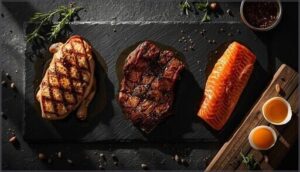
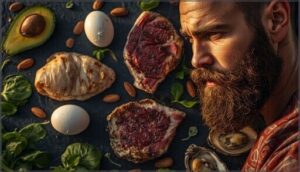
In the context of beard growth, animal-based proteins are hard to beat. Chicken breast delivers 31 grams per 100g, while lean beef adds heme iron that fuels follicle oxygen delivery.
Fish benefits include omega-3s for healthier skin underneath. Egg quality covers all essential amino acids. Strong protein digestion means more amino acids actually reaching your follicles, directly supporting keratin synthesis and real beard health.
Plant-Based Protein Options
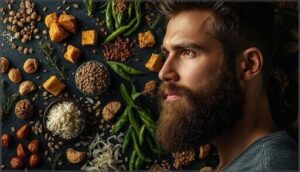
You don’t need meat to fuel serious beard growth. Vegan protein sources like tempeh (27g per 150g serving) and edamame (23g per cup) deliver substantial amino acids that keratin synthesis demands.
Soy benefits include complete amino acid profiles — all nine essentials covered. Smart legume options like lentils paired with rice close any gaps, giving your nutrition the balance beard follicles need.
Protein Quality and Bioavailability

Not all protein is created equal — and that matters for beard growth. Egg protein hits roughly 98% digestibility, while wheat protein sits closer to 91%.
That gap affects how much keratin your follicles actually receive. Amino acid balance matters too: proteins low in methionine or cysteine limit keratin synthesis directly.
Optimizing bioavailability factors through smart nutrition beats chasing quantity alone — and dietary supplements can fill gaps when whole food sources fall short.
Amino Acids Essential for Beard Health

Not all amino acids pull equal weight in terms of beard growth. Some play such a direct role in keratin production that getting enough of them can make a real difference in how your beard looks and feels.
Here are the key players worth knowing about.
Role of Cysteine and Methionine
Two amino acids — cysteine and methionine — are the backbone of keratin strength in your beard. Both supply the sulfur your follicles need to build tough, resilient hair shafts.
Here’s why amino acid balance matters:
- Cysteine forms disulfide bonds that give beard texture its stiffness
- Methionine converts into cysteine when dietary intake runs low
- Sulfur intake directly promotes hair follicle health and growth
- Together, they reinforce keratin against breakage and environmental stress
- Adequate nutrition from eggs, meat, and legumes covers both needs
Branched-Chain Amino Acids (BCAAs)
Beyond sulfur-based amino acids, BCAAs — leucine, isoleucine, and valine — drive protein synthesis at the cellular level. Leucine, specifically, activates mTOR signaling, flipping the switch on keratin production.
That’s what makes BCAA benefits matter for beard growth: better amino acid metabolism means stronger follicle output. Combined with biotin, proper nutrition, and key vitamins, BCAAs support the muscle recovery and protein turnover your body needs.
Amino Acid Supplements
Whole food protein is always the foundation, but amino acid supplements can fill real gaps when your diet falls short. Free-form blends — usually 3 to 15 grams daily — skip digestion and deliver building blocks straight to follicles for keratin production.
Key amino acid benefits to know:
- Cysteine and methionine reinforce disulfide bonds for stronger beard fibers.
- Arginine widens blood vessels, improving nutrient delivery to facial follicles.
- Lysine enhances iron and zinc absorption — critical hair growth boosters.
- Supplement timing matters: split doses reduce competition between amino acids for absorption.
Nutrient interactions mean pairing supplements with biotin and zinc sharpens results for beard growth.
Protein and Other Key Beard Nutrients
Protein does the heavy lifting for beard growth, but it doesn’t work alone.
A handful of other nutrients play a direct role in how well your follicles function and how strong your hair actually grows.
Here’s what you need alongside protein to keep everything running the way it should.
Synergy With Biotin, Zinc, and Iron
Nutrient interactions are what separate a scraggly patch from real beard density. Protein alone won’t cut it — biotin helps your body convert amino acids into keratin fibers, zinc promotes follicle health and cell repair, and iron powers the mitochondrial energy that drives active beard growth.
Together, this mineral balance creates the hair fortification your beard needs to grow thicker and shed less.
Vitamin D and Hair Follicle Support
Protein and biotin lay the groundwork, but Vitamin D Benefits are what keep your hair follicles actually cycling. Your facial Hair Follicles contain vitamin D receptors that regulate when hairs grow, rest, and shed — and when those receptors go quiet from deficiency, Beard Growth stalls fast.
Support Hair Follicle Health with these Beard Growth Tips:
- Get regular sun exposure to naturally boost vitamin D synthesis
- Eat oily fish and fortified milks for steady dietary Nutrition
- Test blood levels if Facial Hair Care efforts aren’t paying off
Nutrient Deficiencies Impact
A single gap in your nutrition can quietly unravel months of beard progress. An Iron Deficit starves your Hair Follicles of oxygen, slowing Beard Growth and increasing shedding.
A Zinc Shortage shortens the active growth phase. A Biotin Lack leaves hairs brittle and dull. An Omega Deficiency dries out beard skin, causing breakage at the root.
Any Nutrient Imbalance compounds the others — Protein alone can’t compensate.
Does More Protein Mean More Beard Growth?
More protein sounds like an obvious fix, but your body doesn’t work that way. Beard growth has a biological ceiling, and what you eat can only do so much before other factors take over.
Here’s what actually happens when you push protein too hard — and how to find the balance that works.
Biological Growth Limits
There’s a ceiling to how far protein can take your beard, and it’s not set by your diet. Genetic limits, hormones, and beard growth patterns, and cellular constraints all determine how much facial hair growth is actually possible.
Once you’ve cleared your nutrient thresholds, growth plateaus because hair growth factors like androgen receptor sensitivity and follicle count — not protein — become the real bottleneck.
Risks of Excessive Protein Intake
Chasing more beard growth by piling on protein can quietly work against you. Beyond a certain threshold, excess protein strains your kidneys, raises dehydration risk, and even accelerates bone loss — real costs with zero hair growth upside.
Excess protein strains your kidneys and bones — with zero benefit to your beard
Three risks worth knowing:
- Kidney damage from chronic hyperfiltration
- Uric acid stones triggered by elevated urea excretion
- Digestive issues when fiber drops out of your nutrition picture
Balancing Protein With Other Nutrients
Think of your beard nutrition as a team sport — protein is your star player, but it can’t win alone. Macronutrient balance matters: roughly 20 percent protein, 20–30 percent healthy fats, and 45–60 percent carbohydrates fuels both energy and keratin synthesis.
Dietary synergy between vitamins for hair, minerals, and protein is what actually drives beard health. Nutrient interactions, not protein volume, complete the beard growth picture.
Protein Timing and Beard Development

What you eat matters, but when you eat it can shift the results. Protein timing plays a real role in how well your follicles access the nutrients they need to build strong beard hair.
Here’s what to know about structuring your intake for better growth.
Meal Frequency for Hair Growth
Your beard doesn’t care about one massive protein dump — it needs a steady supply. Spreading protein across three to four meals keeps amino acid delivery consistent throughout the day, supporting active hair growth phases without gaps.
That meal spacing matters more than people realize. Aim for 20 to 30 grams per meal to fuel continuous keratin synthesis and keep follicles locked into their growth cycle.
Pre- and Post-Workout Protein
Training hard creates a window where your amino acid intake directly shapes both muscle recovery and beard growth. Aim for 20 to 25 grams of protein about 30 to 90 minutes before your exercise routine, and another similar dose within two hours after.
This workout nutrition strategy keeps keratin synthesis running without interruption, so your protein timing actually works in your beard’s favor.
Protein Absorption Rates
Not all protein hits your follicles at the same speed. Whey delivers amino acid uptake fast — roughly 8 to 10 grams per hour — while casein’s slower gastric emptying stretches nutrient bioavailability over several hours.
That difference matters for keratin production. Spreading protein across meals optimizes absorption efficiency throughout the day, giving your beard growth nutrition a steady, uninterrupted supply of building blocks.
Nutrition Strategies for Fuller Beards

Knowing what to eat is one thing — actually building it into your day is where most people fall short.
The good news is that fueling beard growth doesn’t require a complicated overhaul of your diet.
Here’s where to start.
Building a Beard-Boosting Meal Plan
A strong meal plan doesn’t need to be complicated — it just needs to be intentional. Nail these five healthy habits for beard growth nutrition:
- Hit 1.2–1.6g protein per kilogram of body weight daily
- Spread protein sources across 3–5 meals
- Batch-cook proteins weekly for easy dietary adjustments
- Rotate animal and plant proteins for nutrient balance
- Track one week to spot diet and hair care gaps
Combining Protein With Healthy Fats
Once your meal plan is locked in, pairing protein with healthy fats takes your nutrition for beard growth to another level. Fat solubility matters here — vitamins A and D only absorb properly when fat is present.
Omega benefits from salmon or walnuts also improve hormone balance and skin health, creating the right environment for consistent hair growth.
| Protein Source | Healthy Fat Pairing |
|---|---|
| Eggs | Avocado |
| Salmon | Olive oil drizzle |
| Chicken breast | Mixed nuts |
Sample Daily Menu for Beard Growth
Putting this into practice looks something like: scrambled eggs with spinach at breakfast (around 25g protein), a grilled chicken salad at lunch (30g), baked salmon with quinoa at dinner (30g), and two snacks — Greek yogurt and a boiled egg — adding 15g more. That’s roughly 100g daily.
Beard nutrition doesn’t have to be complicated — just consistent, balanced, and nutrient dense.
Lifestyle Habits That Support Protein’s Effects

Protein does the heavy lifting, but your daily habits either back it up or get in the way.
What you do outside the kitchen matters more than most people realize for beard growth.
A few key lifestyle shifts can make everything else work harder for you.
Sleep and Hormone Balance
Sleep isn’t passive recovery — it’s when your body does the real work. Deep sleep triggers growth hormone pulses that drive protein synthesis in beard follicles, while consistent sleep patterns keep testosterone levels elevated and melatonin effects aligned with your natural hormone cycles.
Cutting sleep short blunts that morning testosterone surge. Protect your hormonal balance, and you protect your beard growth.
Stress Management for Hair Growth
Chronic stress is a silent saboteur — elevated cortisol pushes hair follicles out of their active growth phase, weakening beard growth before you even notice. Mindful Relaxation isn’t optional; it’s nutritional leverage.
Keep your hair cycle intact with these habits:
- Practice 10–15 minutes of daily meditation to lower cortisol balance by up to 25%
- Add moderate exercise to regulate stress hormones without overtraining
- Try scalp massage to boost follicle circulation and ease tension
- Protect hormonal balance to keep hair follicles and nutrition working together
Hydration and Nutrient Delivery
Without enough water intake, even the most nutrient-dense foods can’t fully reach your beard follicles. Blood circulation depends on hydration to transport protein, amino acids, and minerals to the root where growth actually happens.
Poor electrolyte balance slows nutrient transport and weakens follicle metabolism. Keep skin hydration strong, drink consistently throughout the day, and you’ll give every protein molecule a real shot at driving beard growth.
When to Consider Protein Supplements

Whole foods should always come first, but sometimes your diet just doesn’t cover everything your beard needs. That’s when a well-chosen supplement can quietly fill the gap.
Here’s how to figure out if you need one, which type makes sense, and how to use it without overdoing it.
Who Might Need Supplements
Not everyone needs a protein supplement — but some men face real beard growth barriers that whole foods alone won’t fix. Protein deficiency, dietary restrictions, and nutrient gaps can quietly stall your progress.
Here’s who should seriously consider nutritional supplements as part of their beard health diet:
- Active men training intensely, who need up to 1.7g of protein per kilogram daily
- Plant-based eaters struggling to hit consistent protein targets without careful meal planning
- Older men with reduced appetite who can’t meet higher nutrition advice thresholds through meals alone
Types of Protein Supplements
Not all protein supplements are built the same. Whey protein delivers fast-absorbing amino acids that fuel keratin synthesis quickly, while casein benefits you overnight with its slow-release profile.
Plant options like pea or hemp suit dairy-free nutrition needs. Collagen supplements support skin and follicle health around your beard. Protein blends combine sources for broader amino acid coverage — smart beard care means choosing what fits your body.
Safe Supplementation Practices
Safe supplementation for beard growth isn’t complicated — but it does reward the careful. Keep your total daily protein between 0.8 and 1.6 grams per kilogram of body weight, treating powders as a nutrition complement, not a shortcut.
- Choose products with NSF Certified for Sport or Informed Sport certification for verified dosage control and supplement quality
- Start with a half-serving to monitor digestion before committing fully
- Track kidney and liver health if you supplement long-term
Frequently Asked Questions (FAQs)
Does protein increase beard growth?
Yes — but only up to a point. Adequate protein fuels hair follicle function and promotes natural growth patterns, yet beard genetics set the ceiling.
Nutrient balance matters more than loading up on extra grams.
What is the 3 month beard rule?
The 3 month beard rule means letting your facial hair grow untouched for 90 days.
It gives every beard growth stage a fair chance to reveal your true hair growth potential before committing to any beard style options.
What to eat to boost beard growth?
Your beard growth starts with smart food choices. Focus on nutrient dense foods like eggs, salmon, beans, and lean meats.
A balanced diet rich in zinc rich foods and healthy fats drives real results.
How to boost up beard growth?
Like tending a healthy garden, growing a healthy beard comes down to consistency.
Prioritize sleep, manage stress, stay hydrated, and pair smart nutrition advice with regular exercise to support stronger facial hair growth patterns naturally.
Can genetics override the benefits of optimal nutrition?
Genetics sets hard limits on beard density, and no amount of ideal nutrition can override those boundaries.
Your hormone influence and follicle sensitivity define genetic potential, while nutrition and lifestyle factors simply help you reach it.
Does alcohol consumption negatively affect beard growth?
Yes, alcohol consumption negatively affects beard growth. It lowers testosterone levels, depletes zinc and biotin, dehydrates follicles, and disrupts sleep — all of which slow hair growth and weaken beard health over time.
How does age affect beard thickness and density?
Age-related hormone shifts reshape beard patterns over time.
Testosterone peaks drive density in your twenties and thirties, while gradual hormonal decline after 35 affects facial hair development, slowing growth cycles and reducing overall thickness.
Can certain medications interfere with protein absorption?
Some medications genuinely interfere with protein absorption. Proton pump inhibitors reduce stomach acid, slowing protein breakdown, while metformin inhibits key digestive enzymes — both quietly undermining your beard health diet and overall dietary requirements for hair growth.
Conclusion
Every follicle in your beard is a biochemical factory running twenty-four hours a day, and it won’t build a single strand without adequate raw material.
Optimizing protein intake for beard development isn’t a minor dietary tweak — it’s the structural decision that determines what your face can actually produce. Hit your daily targets, prioritize complete amino acid sources, and pair protein with supporting nutrients. Your biology does the rest.