This site is supported by our readers. We may earn a commission, at no cost to you, if you purchase through links. This content is for general informational and educational purposes only and is not a substitute for professional medical, dermatological, or nutritional advice.
Your skin loses nearly a liter of water every day—most of it slipping silently through the outermost layer before you ever feel thirsty or tight. That’s not a hydration problem; it’s a barrier problem.
The skin barrier, a precisely organized matrix of protein-filled cells and lipid lamellae, governs how much moisture stays in and how many irritants get through. When it functions well, your skin manages the environment without drama. When it doesn’t, no amount of water intake compensates for what’s escaping at the surface.
Understanding how moisturizers work on the skin barrier—mechanically, chemically, and structurally—changes how you choose and use them.
Table Of Contents
- Key Takeaways
- Skin Barrier Structure and Its Role
- How Moisturizers Interact With The Skin Barrier
- Types of Moisturizer Ingredients and Their Effects
- Benefits of Moisturizers for Skin Barrier Health
- Top 5 Moisturizers for Barrier Support
- Tips for Choosing and Using Moisturizers
- Frequently Asked Questions (FAQs)
- Do moisturizers fix skin barriers?
- What is the 3 minute moisturizer rule?
- What is the fastest way to repair a skin barrier?
- Can diet affect skin barrier health and function?
- How does aging weaken the skin barrier over time?
- Does stress impact skin barrier integrity or repair?
- Can climate and weather conditions damage the skin barrier?
- How long does it take to restore a damaged barrier?
- Conclusion
Key Takeaways
- Your skin barrier loses nearly a liter of water daily through transepidermal water loss, and no amount of drinking water fixes that — only barrier-targeted ingredients can.
- Moisturizers work through three distinct mechanisms: occlusives seal the surface, humectants draw water in, and emollients fill structural gaps between cells.
- Ceramides, cholesterol, and fatty acids in physiologic ratios are the most effective ingredients for actively rebuilding a damaged barrier, with meaningful results typically appearing within two to four weeks.
- Matching your moisturizer to your skin type and applying it within three minutes of cleansing dramatically improves how well your barrier retains moisture throughout the day.
Skin Barrier Structure and Its Role
Your skin barrier is more complex than most people realize — it’s not just one layer doing all the work. Understanding how it’s built helps explain why certain products actually make a difference.
Each of those three distinct skin layers plays a specific role, and knowing what they do changes how you approach your whole skincare routine.
Here’s a closer look at what your skin barrier is made of and what it does.
Layers of The Skin Barrier
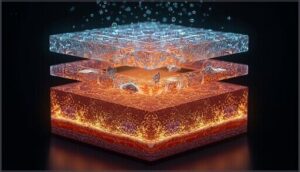
Think of your skin barrier as a well-organized security system, one that doesn’t just have a single lock on the door but four distinct, interdependent layers working together to keep threats out and moisture in.
Each layer of the stratum corneum contributes uniquely to epidermal structure and function:
- Physical — mechanical defense against environmental stressors
- Chemical — maintains skin pH and lipid balance
- Microbiologic — fosters healthy microbial diversity
- Immunologic — guards against allergens and immune triggers
Barrier disruption at any layer compromises the whole system.
Key Components (Corneocytes, Lipids, Ceramides)
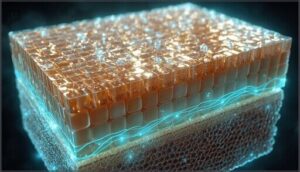
Those four layers don’t hold themselves together by willpower — the real work happens at the structural level. Corneocytes, lipids, and ceramides form the actual building blocks of everything your barrier does.
Corneocytes are the tough, protein-filled cells holding the line, while lipids — especially ceramides — act as the mortar between them. Without that lipid balance, your skin barrier can’t retain moisture or block irritants effectively.
Functions in Protection and Hydration
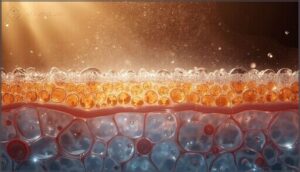
Once that structural foundation is in place, your skin barrier gets to work doing two jobs at once — keeping threats out and locking moisture in. Think of it as a two-way checkpoint. Barrier disruption throws off both functions simultaneously, which is why moisturization matters so much. A healthy lipid balance aids:
- Water retention by limiting transepidermal water loss
- Protective mechanisms against irritants, allergens, and pathogens
- Skin hydration through balanced moisture distribution
- Barrier repair when daily stressors cause microdamage
How Moisturizers Interact With The Skin Barrier
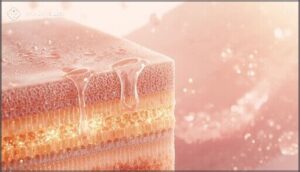
Moisturizers don’t just sit on top of your skin — they actually interact with your barrier in distinct, targeted ways. Understanding these mechanisms helps you make smarter choices about what you put on your face every day.
Here’s a closer look at how that interaction works.
Mechanisms of Moisturizer Action
Think of your moisturizer less as a simple lotion and more as a precision repair crew. Each ingredient is assigned a specific job, working in concert to rebuild what your skin’s barrier has lost.
Occlusives seal the surface to limit moisture escape, humectants draw water upward to restore hydration levels, and emollients fill structural gaps through lipid replacement.
Together, they drive meaningful barrier restoration from the outside in.
Impact on Transepidermal Water Loss (TEWL)
When your skin barrier is compromised, water silently escapes—a process called transepidermal water loss (TEWL). Moisturizers directly address this by improving moisture retention and enabling barrier repair before dryness spirals into barrier disruption.
Here’s how they support skin hydration and TEWL reduction:
Your choice of formula matters just as much as ingredients — explore moisturizers matched to your skin type to lock in hydration more effectively.
- Petrolatum reduces transepidermal water loss by up to 99% through occlusive film formation.
- Glycerin increases hydration by 16% while reducing TEWL by 12%.
- Hyaluronic acid binds water within the epidermis, sustaining skin hydration under low-humidity conditions.
- Emollients fill intercellular gaps, reinforcing water loss prevention at the structural level.
- AQP3-activating compounds like glyceryl glucoside regulate intracellular water transport, offering sustained TEWL reduction.
Healthy skin relies on maintaining a well-functioning skin barrier and water loss balance, as disruptions can result in dryness and increased sensitivity.
Strengthening Barrier Function
Resilience isn’t just a personality trait—it’s something your skin can actually build, and the right moisturizer makes all the difference. Consistent moisturization actively drives barrier repair by replenishing skin lipids, restoring ceramide boost pathways, and rebalancing moisture balance at the stratum corneum level.
Consistent moisturization builds real skin resilience by replenishing lipids and restoring balance at the barrier level
Think of it as hydration therapy your skin didn’t know it needed—quietly reversing barrier disruption and reinforcing long-term skin health and maintenance.
Types of Moisturizer Ingredients and Their Effects
Not all moisturizer ingredients work the same way — and knowing the difference can change how you approach your routine. Your skin barrier responds differently depending on what you put on it, so the ingredients really do matter.
Here’s a breakdown of the main types and what each one actually does for your skin.
Occlusives and Their Barrier Benefits
If your skin barrier were a fortress, occlusives would be the thick stone walls standing between you and everything the outside world throws at it. These occlusive agents sit directly on the lipid layer, creating a physical seal that locks in moisture and slows transepidermal water loss.
When barrier disruption occurs, that moisture lock becomes essential — giving your skin barrier the breathing room it needs for barrier repair and a natural ceramide boost.
Humectants for Hydration Support
While occlusives guard the surface, humectants work a bit like a sponge — drawing water up from deeper skin layers and pulling moisture from the air around you to keep your stratum corneum properly hydrated.
Here are five humectants worth knowing:
- Hyaluronic acid — boosts moisture retention dramatically
- Glycerin — stabilizes skin pH while hydrating
- Urea — aids barrier repair in dry skin
- Panthenol — reinforces hydration levels overnight
- Aloe vera — one of nature’s gentlest humectant types
Emollients and Skin Smoothing
Think of emollients as the finishing touch your skin barrier didn’t know it was missing. They slip into the microscopic gaps between corneocytes, smoothing the surface while quietly reinforcing the structure beneath.
By restoring lipid balance and supporting moisture retention, emollients make your moisturizers genuinely work harder. Ingredients like squalane and shea butter deliver real barrier repair, leaving skin hydrating efficiently and feeling noticeably smoother.
Acidic Ingredients for Barrier Balance
Your skin’s acid mantle thrives at a pH of 4.5–5.5, and the right acidic ingredients keep it exactly there. When moisturizers match this range, they actively support:
- Ceramide Support — stimulating ceramide production to seal the barrier
- Skin Hydration — lactic acid attracts water while smoothing texture
- Barrier Repair — azelaic acid calms inflammation without disrupting pH levels
Acidic balance isn’t optional — it’s foundational.
For more on how lactic acid promotes skin barrier repair benefits, explore these expert insights.
Benefits of Moisturizers for Skin Barrier Health
Moisturizers do more than just soften your skin — they actively work to keep your barrier strong and functional. When used consistently, they can make a real difference in how well your skin holds up against daily stress.
Here’s a closer look at the key benefits your skin barrier gets from regular moisturization.
Preventing Barrier Disruption
Your skin barrier is constantly under siege — from hot showers and harsh cleansers to the hand sanitizer you’ve used a dozen times today — and keeping it intact is far easier than rebuilding it once the damage is done.
Regular moisturizers support barrier protection by reinforcing lipid restoration, maintaining skin pH balance, and improving moisture retention, which greatly lowers the risk of an impaired skin barrier or conditions like atopic dermatitis developing over time.
Repairing Damaged Skin Barriers
Once damage sets in, barrier restoration takes more than just stopping the offending product. Lipid replenishment through moisturizers containing ceramides, cholesterol, and fatty acids in physiologic ratios actively rebuilds what was lost.
Supporting your skin microbiome during this process matters too — balanced microbial activity encourages ceramide synthesis from within.
With consistent moisturizer selection, repairing and protecting the skin barrier generally shows meaningful progress within two to four weeks.
Reducing Allergen and Irritant Penetration
A repaired barrier doesn’t just feel better — it actively keeps troublemakers like allergens and irritants from sneaking past the surface. Strengthening your skin barrier structure and function through moisturizers directly reduces penetration, calming skin sensitivity before it spirals.
- Barrier Protection seals microscopic gaps that irritants exploit
- Allergen Prevention limits immune triggers crossing impaired skin barrier
- Irritant Defense lowers inflammatory responses from daily exposures
- Penetration Reduction decreases transepidermal water loss while blocking inward threat
Top 5 Moisturizers for Barrier Support
Not all moisturizers are created equal in terms of actually supporting your skin barrier. Some are backed by solid science, others just feel nice but don’t do much.
Here are five options worth knowing about.
1. Prequel Multi Quench Hydration Serum
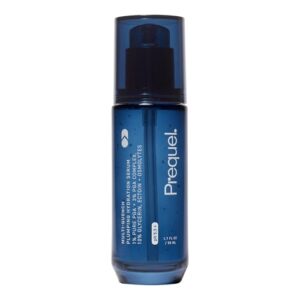
If you want a serum that works on multiple levels, the Prequel Multi Quench Hydration Serum delivers exactly that. Its dual-weight polyglutamic acid targets both the surface and deeper stratum corneum layers, while 10% glycerin pulls water into the epidermis for up to 48 hours of sustained hydration.
Ectoin further bolsters barrier resilience against environmental stressors. Fragrance-free, non-comedogenic, and suitable for sensitive or eczema-prone skin, it fits seamlessly into your routine before moisturizer and sunscreen.
| Best For | Anyone with dry, sensitive, or combination skin who wants serious hydration without fragrance or fuss. |
|---|---|
| Hydration | 48-hour hydration with PGA |
| Skin Barrier | Supports elasticity and plumpness |
| Fragrance-Free | Yes |
| Skin Type | All skin types |
| Fine Lines | Optically improves fine lines |
| Non-Comedogenic | Fragrance-free gentle formula |
| Additional Features |
|
- Pulls moisture deep into skin and keeps it there for up to 48 hours
- Works for all skin types, including sensitive and eczema-prone
- Layers easily under moisturizer, sunscreen, or makeup
- The 1.7oz bottle feels small for the price
- No scent, which won’t appeal to everyone
- Long-term results on skin texture aren’t well documented
2. Skinfix Triple Lipid Face Moisturizer Cream
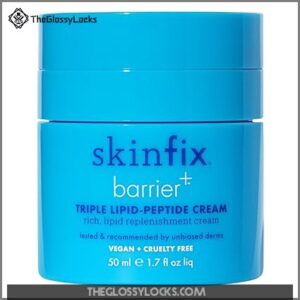
Rebuilding your barrier doesn’t have to feel complicated. The Skinfix Triple Lipid Face Moisturizer Cream brings together a 3% triple lipid complex — ceramides, cholesterol-like sterols, and fatty acids — that directly replenishes the lipid matrix your skin needs to stay intact.
An 8% humectant blend with glycerin, hyaluronic acid, and red algae draws water in and holds it there. Clinically, users saw a 67% improvement in hydration after four weeks.
Fragrance-free, non-comedogenic, and priced at $54, it’s a solid investment for dry or sensitive skin.
| Best For | Anyone with dry, sensitive, or acne-prone skin who wants a no-fuss moisturizer that actually rebuilds the skin barrier over time. |
|---|---|
| Hydration | Instant and lasting hydration |
| Skin Barrier | Triple-lipid barrier restoration |
| Fragrance-Free | Yes |
| Skin Type | Dry and sensitive skin |
| Fine Lines | Peptide solution for wrinkles |
| Non-Comedogenic | Yes |
| Additional Features |
|
- Packs a solid trio of ceramides, fatty acids, and sterols to restore your skin’s natural lipid barrier
- The 8% humectant blend pulls in moisture and keeps it there — backed by a 67% hydration improvement in clinical testing
- Fragrance-free and non-comedogenic, so it plays nice with retinoids and exfoliating acids
- At $54 for 1.7 oz, it’s a bit of a splurge compared to drugstore alternatives
- Contains phenethyl alcohol, which can irritate those with sensitivities despite the fragrance-free label
- Some users reported breakouts with daily use, so it may not work for every skin type
3. CeraVe Facial Moisturizing Lotion
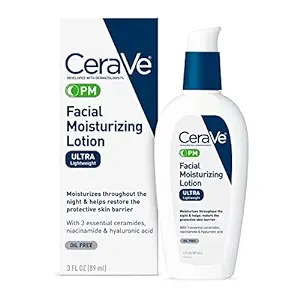
Budget-friendly doesn’t mean cutting corners on barrier science. CeraVe Facial Moisturizing Lotion packs three essential ceramides — 1, 3, and 6-II — alongside hyaluronic acid and niacinamide into an ultra-lightweight, oil-free formula that targets both the lipid structure and water content of your stratum corneum simultaneously. At $14.92, it’s clinically grounded and dermatologist-developed.
The PM version uses MVE Technology to release hydrating ingredients gradually through the night, so your barrier keeps working even while you sleep.
| Best For | Anyone who wants solid, science-backed hydration on a budget — especially those with normal to combination or sensitive skin who prefer a lightweight, no-fuss daily moisturizer. |
|---|---|
| Hydration | 24-hour hydration with MVE Technology |
| Skin Barrier | 3 ceramides restore barrier |
| Fragrance-Free | Yes |
| Skin Type | All skin types |
| Fine Lines | Improves skin texture and tone |
| Non-Comedogenic | Yes |
| Additional Features |
|
- Three ceramides plus hyaluronic acid and niacinamide work together to strengthen your skin barrier and keep it hydrated for a full 24 hours.
- Super lightweight and oil-free, so it won’t feel heavy or greasy on your face.
- Fragrance-free and dermatologist-developed — great for sensitive skin and a steal at under $15.
- The pump can be hit or miss — some users have had issues with it breaking or dispensing unevenly.
- If your skin runs very dry, this might not give you enough moisture on its own.
- A small number of users with acne-prone skin have reported breakouts, so patch test first if that’s a concern for you.
4. CeraVe Skin Renewing Night Cream
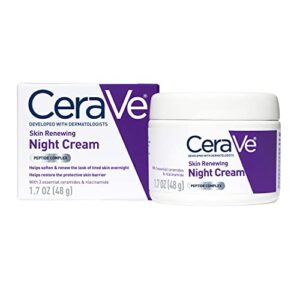
Night is when your skin does its heaviest repair work — and CeraVe Skin Renewing Night Cream is formulated to support exactly that.
Its three ceramides (NP, AP, EOP) replenish the lipid matrix your barrier depends on, while MVE Technology releases them gradually so hydration doesn’t peak and drop.
Biomimetic peptides target fine lines, hyaluronic acid draws moisture into the stratum corneum, and niacinamide reduces transepidermal water loss.
Fragrance-free and non-comedogenic, it’s a clinically grounded option that works quietly while you sleep.
| Best For | Anyone with dry, sensitive, or aging skin who wants a simple, no-fuss night cream that actually works while they sleep. |
|---|---|
| Hydration | Deep hydration overnight |
| Skin Barrier | 3 ceramides restore barrier |
| Fragrance-Free | Yes |
| Skin Type | Dry, sensitive, oily, acne-prone |
| Fine Lines | Reduces fine lines and wrinkles |
| Non-Comedogenic | Yes |
| Additional Features |
|
- Packed with ceramides, hyaluronic acid, and peptides — a solid lineup for overnight repair and hydration
- Fragrance-free and non-comedogenic, so it plays nice with sensitive and acne-prone skin
- Affordable compared to high-end creams that do the same thing
- No inner seal, which is a bit surprising for a skincare product
- The 1.7 oz jar feels small if you’re using it every night
- You need to pair it with sunscreen and use it consistently to really see results
5. Solawave Red Light Therapy Wand
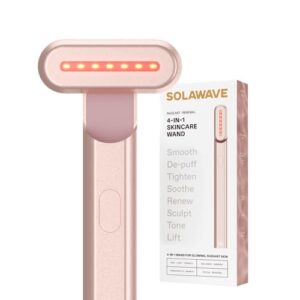
Moisturizing alone doesn’t always complete the picture — and that’s where the Solawave Red Light Therapy Wand earns its place. Its 630nm red light works at a cellular level to support collagen production, while galvanic current enhances serum absorption during treatment.
Therapeutic warmth reduces puffiness, and the massage function improves circulation.
Used after your activating serum and before a barrier-sealing moisturizer, it complements barrier repair rather than replacing it — making your full routine work harder with each session.
| Best For | Anyone who wants to level up their anti-aging routine with tech that actually does more than sit on a shelf. |
|---|---|
| Hydration | Indirect via collagen stimulation |
| Skin Barrier | Improves firmness and texture |
| Fragrance-Free | Not specified |
| Skin Type | All skin types |
| Fine Lines | Smooths fine lines and wrinkles |
| Non-Comedogenic | Not specified |
| Additional Features |
|
- Combines four treatments in one—red light, galvanic current, warmth, and massage—so you’re not buying separate devices
- The 180° rotating head makes it easy to follow the curves of your face and neck without awkward angles
- Cordless and travel-friendly, so your skincare routine doesn’t have to stay home
- It’s a pricier investment, and results take consistent use before you’ll really notice a difference
- The small head means more passes to cover your whole face, which adds time to your routine
- Needs regular cleaning since product buildup happens fast
Tips for Choosing and Using Moisturizers
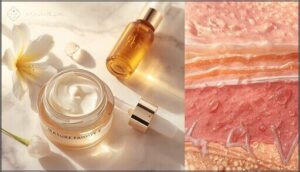
Picking the right moisturizer isn’t just about grabbing whatever’s on sale—it’s about understanding what your skin actually needs. A few key factors can make the difference between a product that truly nourishes your barrier and one that falls flat.
Here’s what to keep in mind before you buy and how to get the most out of what you’re already using.
Matching Moisturizers to Skin Type
Not all moisturizers are created equal — and using the wrong one for your skin type can do more harm than good. Oily skin types benefit from lightweight, gel-based moisturizers that hydrate without clogging pores, while dry or compromised skin barriers need richer creams with occlusive ingredients.
If you have ingredient sensitivity, always check formulations carefully. Matching product texture to your skin’s actual needs is where effective skin care starts.
Importance of PH and Ceramides
Your skin’s barrier is quietly running a chemistry lab 24/7 — and pH balance along with ceramides are the two variables that keep every experiment from going wrong.
Your acid mantle thrives around pH 4.5–5.5, supporting lipid restoration and enzyme activity.
Ceramides reinforce the skin barrier by sealing gaps between cells, directly driving moisturizer efficacy and skin barrier repair.
Routine Habits for Optimal Barrier Care
Once you’ve got the right ingredients working in your favor, the next piece of the puzzle is building daily habits that don’t quietly undo all that chemistry.
Gentle cleansing preserves your skin barrier function — hot water and harsh surfactants strip the lipids you’re working to restore.
Apply moisturizers while skin is still damp, keep your routine simple, and consistency becomes your strongest tool for lasting barrier repair and skin health.
Frequently Asked Questions (FAQs)
Do moisturizers fix skin barriers?
Yes — and no. Moisturizers don’t “fix” an impaired skin barrier overnight, but through barrier repair mechanisms, they restore lipid balance, support skin hydration, and steadily improve skin barrier restoration with consistent use.
What is the 3 minute moisturizer rule?
The 3-minute moisturizer rule means applying your moisturizer within three minutes of cleansing. That small window locks in residual moisture, aids skin barrier repair, and greatly reduces transepidermal water loss before it escapes.
What is the fastest way to repair a skin barrier?
The fastest barrier repair methods combine ceramide therapy benefits with skin lipid restoration. Use a rich moisturizer, avoid hot water, and skip harsh cleansers.
Consistent hydration accelerates epidermal repair within days.
Can diet affect skin barrier health and function?
Absolutely — what you eat shows up on your skin. Omega benefits from fatty fish support lipid synthesis, and antioxidant role nutrients help preserve skin barrier function from within.
Gut health shapes inflammation, further influencing skin condition.
How does aging weaken the skin barrier over time?
As you age, collagen loss and slower cellular turnover weaken the stratum corneum, accelerating barrier decline.
Aging skin cells retain less moisture, reducing skin elasticity and leaving an impaired skin barrier increasingly vulnerable to damage.
Does stress impact skin barrier integrity or repair?
Yes, stress directly compromises skin barrier integrity. Elevated cortisol triggers hormonal imbalance, neurogenic factors, and skin inflammation, accelerating barrier dysfunction.
Chronic stress impairs your skin barrier’s repair mechanisms, leaving it vulnerable to irritants and moisture loss.
Can climate and weather conditions damage the skin barrier?
Weather really does take its toll — climate change and weather extremes drive barrier disruption, heighten skin sensitivity, and accelerate dry skin by stripping lipids and amplifying environmental stress on your skin barrier.
How long does it take to restore a damaged barrier?
Barrier repair time depends on damage severity. Minor disruptions may resolve within a few days with consistent moisturizers, while an impaired skin barrier can take two to four weeks for meaningful skin regeneration and restoration.
Conclusion
The theory that drinking more water fixes dry skin doesn’t hold up under scrutiny—your barrier determines what stays, not your intake. Understanding how moisturizers work on skin barrier function reframes your entire routine: you’re not just adding moisture, you’re reinforcing architecture.
Occlusives seal, humectants attract, ceramides rebuild. When you choose products that address the actual mechanism of loss, your skin stops compensating and starts functioning. That’s not skincare—that’s structural maintenance.