This site is supported by our readers. We may earn a commission, at no cost to you, if you purchase through links.
Most people grab whatever’s cheapest at the drugstore, use it once, and wonder why their nose feels like it lost a fight.
A bad trimmer pulls.
A good one disappears.
That gap in experience comes down to a handful of features most buyers never think to check before purchasing.
Blade material, motor torque, safety guards, head design—these aren’t marketing fluff.
They’re what separate a 30-second painless trim from one you dread.
Knowing what to look for in a nose ear trimmer means you buy once, trim comfortably, and stop thinking about it entirely.
Table Of Contents
- Key Takeaways
- Key Features to Seek in Trimmers
- Rotary Vs Linear Vs Manual Trimming Heads
- Motor Power and Performance for Coarse Hair
- Blade Material, Sharpness, and Self-sharpening
- Safety Guards, Rounded Tips, and Skin Protection
- Waterproof Design and Wet/dry Usability
- Ease of Cleaning and Hygiene-friendly Design
- Battery Type, Runtime, and Charging Options
- Ergonomic Grip, Balance, and Noise Level
- Extra Features Like LED Lights and Vacuum Systems
- Choosing The Right Trimmer for You
- Assessing Your Nose and Ear Hair Thickness
- Matching Trimmer Head Style to Grooming Needs
- Sensitive Skin Considerations and Hypoallergenic Materials
- Electric Vs Manual Options for Control and Comfort
- Travel-friendly Size, Caps, and Protective Cases
- Balancing Budget, Durability, and Warranty Coverage
- Multi-use Options for Brows and Detail Trimming
- Top 5 Nose and Ear Trimmers
- Maintenance, Safety, and Effective Use
- Proper Trimming Technique for Nose and Ears
- Shallow Insertion Depth and Slow Circular Motions
- Cleaning Blades and Guards After Every Use
- Drying and Storing The Trimmer to Prevent Damage
- Replacing Blades or Devices When Performance Drops
- Avoiding Sharing Trimmers to Reduce Infection Risk
- When to Trim and How Often for Best Results
- Frequently Asked Questions (FAQs)
- What should I look for in a nose trimmer?
- What is a good nose and ear trimmer?
- Why does nose hair get longer as you age?
- Can nose trimmers cause nosebleeds if misused?
- Are nose trimmers safe for children to use?
- What age should you start trimming nose hair?
- Can trimming nose hair affect breathing or allergies?
- Do nose trimmers work well on very fine hair?
- Conclusion
Key Takeaways
- Blade material and motor speed matter more than price — stainless steel or ceramic blades paired with a high-torque motor (6,000+ RPM) are that prevent pulling and skin irritation.
- Safety guards with rounded tips and a shallow 5mm insertion depth are the two features that keep trims painless and nosebleed-free.
- Waterproof design (IPX7) and a removable, rinseable head aren’t bonuses — they’re the baseline for keeping your trimmer hygienic and long-lasting.
- Match the trimmer head to your hair type: rotary heads handle coarse, thick growth best, while linear blades give you more precision in tight spots.
Key Features to Seek in Trimmers
Finding the right nose and ear trimmer comes down to knowing which features matter most for safe, easy grooming.
A quick look at top-rated nose and ear trimmers reviewed by real consumers can help you cut through the options and pick one that’s actually worth it.
You want a tool that fits your needs and keeps things comfortable.
Here’s what you should look for before making your pick.
Checking your skin type first makes the search easier, and this guide to the best toners for men breaks down which ingredients actually suit each one.
Rotary Vs Linear Vs Manual Trimming Heads
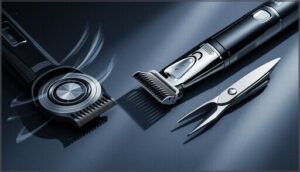
The trimmer head you choose shapes everything. Rotary trimmers spin fast for quick cutting speed and cover broad nasal areas easily. Linear trimmers move back and forth, reaching up to 12 mm insertion depth for precision on stubborn hairs. Manual trimmers offer complete battery independence but demand steady hands.
- Rotary heads capture hair direction control in multiple angles
- Linear blades excel in tight corners
- Manual scissors suit visible stray hairs
- Rotary styles fit ear hair best
- Dual-head designs combine both for versatility
For those valuing precision control advantage, manual trimmers are ideal.
Motor Power and Performance for Coarse Hair
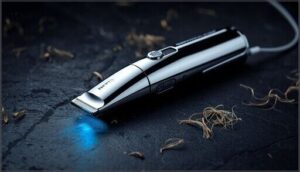
Motor choice matters just as much as head type. If you’re dealing with thick coarse hair, you need a high‑torque motor with strong stall resistance — something like the Panasonic ER‑GN300K hitting 7,000 RPM or ConairMan’s steady 6,500 RPM under load. Electric trimmers with variable speed and vibration damping handle dense growth without pulling.
| Trimmer | Motor Performance |
|---|---|
| Panasonic ER‑GN300K | 7,000 RPM, high torque |
| ConairMan | 6,500 RPM, steady load |
| Ace Trimmer | 8,500 RPM high speed |
| MrBoldPro | 35,000 RPM, thick hair |
| Pete & Pedro | 6,000 RPM under load |
Rechargeable trimmers with battery power keep torque consistent throughout the trim. The MrBoldPro trimmer features a 360° OmniCut blade system for efficient grooming.
Blade Material, Sharpness, and Self-sharpening
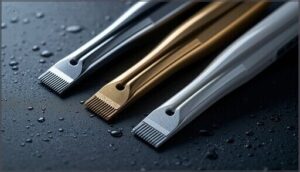
Once you’ve got the right motor, blade material is what keeps every cut clean. Stainless Steel Blades handle daily use well — rust‑resistant and easy to rinse. Titanium Coating pushes sharpness retention further, lasting up to six months without dulling. Ceramic Blades run cooler and cut 50% sharper on thicker ear hair.
- Stainless steel resists moisture and cleans under running water easily
- Titanium‑coated dual‑edge blades are 2–3× harder than plain steel
- Ceramic options reduce friction and skin irritation noticeably
- A self‑sharpening mechanism maintains day‑one sharpness for years
- Hypoallergenic blades protect sensitive nasal skin from irritation
Safety Guards, Rounded Tips, and Skin Protection
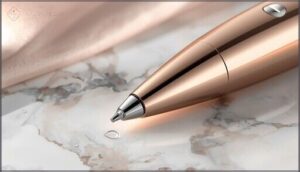
Sharp blades only matter if they don’t nick you in the process. That’s where safety guards earn their keep.
Nose ear trimmers with recessed blade shields keep the cutting edge away from skin entirely — only hair gets through the guard opening size slots. Rounded tip rounding design glides without scratching.
Add hypoallergenic blades and irritation reduction features, and painless trimming becomes the norm, not the exception.
Waterproof Design and Wet/dry Usability

Shower grooming saves real time — and a waterproof trimmer makes it possible. Look for IPX7-rated models with rubber seal technology; they manage full submersion up to a meter deep. Wet mode blade performance stays sharp on damp skin, while sealed battery design prevents short‑circuits during rinsing.
- IPX5 manages water jets; IPX7 allows full submersion
- Rubber seals protect internal electronics from humidity
- Wet trimming softens coarse nose and ear hair first
- Rechargeable trimmers with sealed USB ports resist water damage
Ease of Cleaning and Hygiene-friendly Design

Cleaning your trimmer isn’t optional — it’s the whole game. Removable heads make faucet rinse cleanup quick and painless.
Models with antibacterial coating cut bacterial buildup where it counts most. A vacuum collection system catches clippings before they scatter.
Waterproof design means you can rinse the whole unit without worry. Hygienic storage keeps it protected between uses.
Battery Type, Runtime, and Charging Options
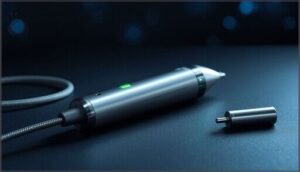
Power matters more than you’d think. Most rechargeable trimmers run 40–60 minutes per charge — plenty for weeks of quick sessions.
If you want to see how battery life stacks up across top picks, this beard trimmer consumer reports comparison breaks down real-world runtime alongside build quality and value.
Look for USB‑C charging, solid lithium‑ion capacity, and battery life indicators so you’re never caught mid‑trim.
- USB‑C port for fast charge time anywhere
- Lithium‑ion capacity for consistent motor speed
- Battery life indicators before power drops
- AA/AAA compatibility as a backup option
- Compact rechargeable trimmer for travel
Ergonomic Grip, Balance, and Noise Level

A trimmer that slips in your hand is a trimmer that nicks. That’s why textured grip and balanced weight matter as much as the blades.
Models like the Panasonic ER-GN70 sit naturally in your palm, making painless trimming easier to pull off.
A slip-resistant handle and quiet operation — think 50dB or less — keep the whole experience calm and controlled.
Extra Features Like LED Lights and Vacuum Systems
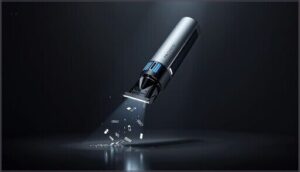
Some trimmers go beyond the basics — and it’s worth it. Built-in LED lights deliver real illumination accuracy, targeting hidden hairs deep in your nose or ears.
The MicroTouch MAX does this well.
Vacuum systems like the one in the Panasonic ER‑GN70 make mess‑free grooming smooth by capturing clippings instantly.
A battery indicator keeps you from getting caught mid‑trim with a dead device.
Choosing The Right Trimmer for You
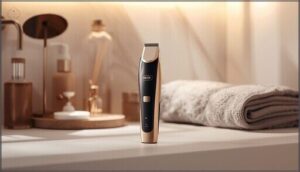
Not every trimmer works for every person — hair thickness, skin type, and daily routine all play a role.
The right pick comes down to few key factors that are easy to overlook.
Here’s what to think about before you buy.
Assessing Your Nose and Ear Hair Thickness
Not all nose and ear hair is the same — and the difference matters.
Do a quick Finger Roll Test: roll a strand between your fingers. No texture means fine hair; a rough, wiry feel signals Thick Coarse Hair needing Stainless Steel Blades and a High-Torque Motor.
Try a Visual Contrast Test against white paper, a Magnifying Mirror Check, or a Paper Thickness Comparison.
Dense tufts? That’s a Density Cluster Evaluation telling you to go heavy-duty.
Matching Trimmer Head Style to Grooming Needs
Once you know hair type, matching the head style gets easier.
Rotary trimmers handle curved nasal passages well — insert about 5 mm and let the blade do the work.
Linear heads go deeper, up to 12 mm, making them better for flat hair growth patterns and tight ear canal shapes.
Dual edge blades split the difference when you need both precision and speed.
Sensitive Skin Considerations and Hypoallergenic Materials
If you’ve ever felt itchy or sore after nose and ear hair trimming, you’re not alone.
Sensitive skin needs special care. Look for:
- Medical-grade Stainless or Ceramic Blade Cooling for less irritation
- Nickel-Free Alloys to avoid allergic reactions
- Low Vibration Motors for comfort
- Anti-Pull Guard Design and Hypoallergenic Blades for safer, smoother trims
Electric Vs Manual Options for Control and Comfort
If your skin needs a gentle touch, you’ll notice the difference between electric and manual trimmers right away.
Electric models offer rapid, painless trimming and steady weight distribution, but their vibration feedback can tickle.
Manual trimmers give you precision handling and tip flexibility, reducing user fatigue.
Here’s a quick breakdown:
| Electric Trimmers | Manual Trimmers |
|---|---|
| Rechargeable, fast | Pinpoint control |
| Vibration feedback | Zero vibration |
| Painless trimming | Flexible tips |
Travel-friendly Size, Caps, and Protective Cases
If you want control on the go, compact designs make a difference. Portable trimmers like the ConairMan 360 fit easily in a pocket, and waterproof design means you can rinse them anywhere.
Protective caps snap tight for safe storage, while hard travel cases shield battery-powered trimmers from drops. These storage solutions keep your ear and nose hair trimmer ready wherever you roam.
Balancing Budget, Durability, and Warranty Coverage
If you’re weighing options, a quick Cost‑Benefit Analysis helps.
Entry-level Nose Ear Trimmers cost less but may lack Material Longevity and Battery Life Value.
Mid-range Rechargeable Trimmers offer better durability and longer warranties—Philips Norelco’s 2-year Warranty Length Impact stands out.
Price‑Tier Comparison in Grooming Tool Reviews shows premium Best Trimmers save money and time, especially for frequent use.
Multi-use Options for Brows and Detail Trimming
Since you’re aiming for versatility, look for Ear and Nose Hair Trimmers with Snap‑on Heads and Adjustable Brow Combs.
An LED Detail Light makes facial hair grooming precise, even in low light.
Ergonomic Detail grips boost control for brow shaping.
Grooming Scissors are great for fine work, while a Vacuum Collection System keeps your personal grooming tools and accessories tidy.
Top 5 Nose and Ear Trimmers
If you want a trimmer that manages nose and ear hair safely, you have solid options to choose from. Each one brings something different to the table, whether it’s precision, comfort, or convenience.
Here are five picks worth your attention.
1. Philips Norelco Nose Trimmer 3000
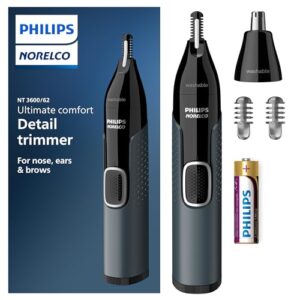
Looking for a trimmer that manages nose, ear, and brow hair without fuss?
The Philips Norelco Nose Trimmer 3000 stands out for its Protective Guard System and dual-sided steel blades, so you get efficient cutting and skin safety. It’s water-resistant for easy cleaning and runs on a single AA battery—no charger needed.
The slim, lightweight design fits comfortably in your hand and travels well.
You’ll appreciate its precision, hygiene‑friendly build, and two‑year warranty if reliability matters to you.
| Best For | People who want a quick, easy, and comfortable way to trim nose, ear, and eyebrow hair at home or on the go. |
|---|---|
| Blade Material | Dual-sided steel |
| Power Source | AA battery |
| Weight | 6.37 oz |
| Trim Areas | Nose, ear, brow |
| Easy Cleaning | Water-resistant |
| Portability | Travel-friendly |
| Additional Features |
|
- Protective Guard System helps prevent nicks and irritation
- Water-resistant and easy to clean
- Lightweight and portable, great for travel
- May need to adjust angles for effective trimming
- Some users find it loud
- Comb attachment may not cut hair evenly
2. AsonTao Round Tip Grooming Scissors
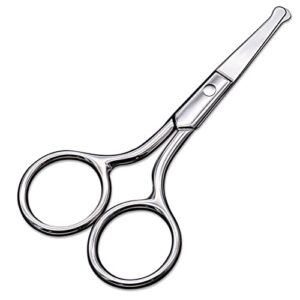
If you’re after total control and safety, AsonTao Round Tip Grooming Scissors are your best bet. The round tips protect delicate skin inside your nose and ears, so you won’t poke or scratch. Surgical grade stainless steel means they’re durable and rust‑resistant.
At just 3.7 inches long and 0.32 ounces, these scissors fit easily in your travel kit. They’re precise enough for mustache edges, brows, and stray facial hairs, but some users find them less sharp than expected—something to keep in mind.
| Best For | Anyone who wants safe, precise grooming for sensitive areas like nose, ears, and brows—especially travelers or people who want a compact everyday trimmer. |
|---|---|
| Blade Material | Surgical grade stainless steel |
| Power Source | Manual (no battery) |
| Weight | 0.32 oz |
| Trim Areas | Nose, ear, brow, lashes |
| Easy Cleaning | Rinse under water |
| Portability | Lightweight, portable |
| Additional Features |
|
- Round tips make trimming near delicate skin way safer—no poking or scratching
- Surgical grade stainless steel keeps them durable and rust-resistant
- Super lightweight and compact, so they slip right into any travel bag
- Some users find the blades less sharp than expected, so they take a bit more effort to cut
- Pretty small, which can feel awkward if you have larger hands
- Quality can be hit or miss—a few buyers felt they weren’t as sturdy as hoped
3. Micro Touch MAX Hair Trimmer Built In Light

The Micro Touch MAX is one of those trimmers that earns its place on the bathroom shelf. It runs on a single AAA battery and uses oscillating German stainless steel blades — so trimming stays smooth, not snagging.
The built-in LED lights up your nostrils and ear canal directly, making stray hairs easy to spot.
At 1.6 ounces, it’s light enough for daily touch-ups without fatigue.
Works dry, needs no gel, and fits in any travel bag.
| Best For | Anyone who wants a quick, painless way to keep facial, nose, and ear hair in check without a fuss. |
|---|---|
| Blade Material | German stainless steel |
| Power Source | 1 battery required |
| Weight | 1.6 oz |
| Trim Areas | Nose, ear, face |
| Easy Cleaning | Detachable head |
| Portability | Compact design |
| Additional Features |
|
- German stainless steel blades trim smoothly with no snagging or skin irritation
- Built-in LED light helps you spot and tackle hard-to-see hairs with ease
- Lightweight and compact at just 1.6 ounces — perfect for travel or daily use
- Battery life can be hit or miss, with some users reporting failure around the 6-month mark
- Overall durability is a concern — a few users say it stops working after a couple of months
- Blades are very sharp, so you need to handle it carefully to avoid nicks
4. Wahl Lithium Pen Trimmer Nose Ear Eyebrow
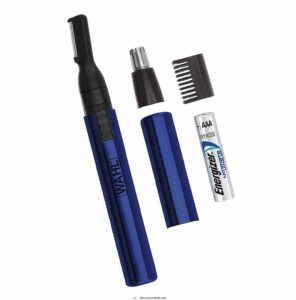
Wahl Lithium Pen Trimmer is built like a precision tool, not an afterthought. Its pen-shaped anodized aluminum body weighs just 2.4 ounces and slides into any travel bag without a second thought.
You get interchangeable heads — a rotary for nose and ears, plus a detail blade for brows and sideburns. The adjustable eyebrow comb locks at 2mm or 4mm for consistent results.
One AAA lithium battery powers months of sessions without fuss.
| Best For | Anyone who wants a compact, all-in-one trimmer for quick touch-ups on nose, ears, brows, and sideburns — especially guys who travel light or just need something reliable for the bathroom counter. |
|---|---|
| Blade Material | Stainless steel |
| Power Source | 1 AAA battery |
| Weight | 2.4 oz |
| Trim Areas | Nose, ear, brow, sideburn |
| Easy Cleaning | Detachable heads |
| Portability | Portable pen-style |
| Additional Features |
|
- Slim aluminum pen design makes it easy to handle and toss in a bag
- Two interchangeable heads cover most facial grooming needs in one tool
- Runs on a single AAA battery with solid staying power
- Durability is hit or miss — some users see it break down after a year or two
- The rotary nose/ear attachment doesn’t always cut as close as you’d want
- The straight-edge blade can get pretty loud during use
5. ConairMan 360 Nose Ear Trimmer
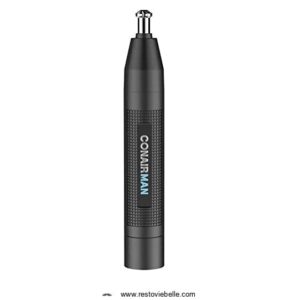
If the Wahl feels like a precision pen, the ConairMan 360 feels like a workhorse. Its patent‑pending 360‑degree diamond‑shaped 3‑blade rotary system cuts through all hair types without pulling or snagging.
The mushroom‑shaped head reaches curved areas inside the nose and ears with ease. One AA lithium battery powers multiple sessions, and the washable head rinses clean in seconds. At under 4 ounces with a travel pouch included, it’s a solid daily driver.
| Best For | Guys who want a reliable, no-fuss trimmer that handles any hair type without pulling or snagging. |
|---|---|
| Blade Material | 3-bevel blade system |
| Power Source | 1 AA lithium battery |
| Weight | 3.88 oz |
| Trim Areas | Nose, ear |
| Easy Cleaning | Washable attachment |
| Portability | Includes storage pouch |
| Additional Features |
|
- The 360-degree diamond blade system cuts clean through thick or coarse hair with ease
- Lightweight and compact with a travel pouch — easy to toss in a bag and go
- Washable head makes cleanup quick and simple
- The plastic build feels a bit cheap, especially the top cap
- It can get noisy, which isn’t great when you’re trimming right next to your ear
- The battery door can be fragile, so you’ll want to handle it with some care
Maintenance, Safety, and Effective Use
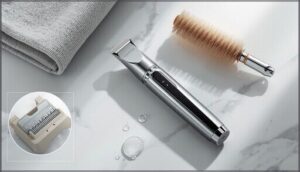
Getting the most from your trimmer comes down to more than just using it — it’s about using it right.
A few simple habits can keep it working well and protect your skin at the same time.
Here’s what you need to know.
Proper Trimming Technique for Nose and Ears
Good technique starts before the trimmer even turns on.
Pre‑trim preparation matters — blow your nose, wipe your ears with a warm cloth, and trim after a shower when hair is softer.
Lighting setup and head positioning are half the battle: tilt your head back, use a bright mirror, and activate the trimmer outside the nostril first.
Aftercare practices seal the deal.
Shallow Insertion Depth and Slow Circular Motions
Once you’re in position, don’t push the trimmer deep. Most ear and nose hair trimmers only need about 5 mm of insertion — that’s it. Depth guard design stops you from going further and protects the mucosal lining. Use a slow circular motion, benefiting by rotating gently around the nostril edge.
- Keep insertion shallow — 5 mm max for rotary heads
- Rotate slowly — circular motion catches hairs from every angle
- Control your angle — insertion angle control prevents sideways pressure on the nasal wall
Cleaning Blades and Guards After Every Use
After each trim, a quick clean keeps bacteria from building up on the blades.
For rinseable heads, detachable blade removal is simple — twist or press, then run warm water through.
Use brush cleaning techniques to sweep hair from guard teeth.
A wipe with 70% isopropyl alcohol provides alcohol disinfection on non-washable parts.
Finish with one drop of oil for post‑cleaning lubrication.
Drying and Storing The Trimmer to Prevent Damage
Storing your trimmer correctly is just as important as cleaning it. Trapped moisture ruins blades fast.
- Air‑Dry Technique – Let the head air-dry fully before reassembly
- Moisture‑Free Storage – Keep it in a cool, dry drawer, not near the sink
- Protective Cap Use – Always replace the blade cap to prevent dulling
- Battery Preservation – Store battery-powered trimmers partially charged, never fully drained
- Anti‑Rust Maintenance – Add one drop of blade oil after drying
Replacing Blades or Devices When Performance Drops
When your trimmer starts pulling instead of cutting, that’s one of the clearest blade wear indicators you’ll get. Don’t ignore it.
Most replacement frequency guidelines suggest swapping blades every three to six months. Battery-powered trimmers like the Manscaped Weed Whacker follow a hygiene swap protocol every three months. Devices with sealed stainless steel blades — like the Micro Touch MAX — just need full retirement.
Avoiding Sharing Trimmers to Reduce Infection Risk
Sharing a nose hair trimmer or ear hair trimmer is genuinely risky — not just a little gross. MRSA shows up on 31% of used trimmers cleaned only weekly. Personal ownership eliminates that entirely.
Sharing a nose hair trimmer isn’t just gross — MRSA appears on 31% of weekly-cleaned trimmers
- Label each trimmer clearly — hygiene labeling prevents mix-ups
- Keep grooming tools and accessories in dedicated cases
- Use disposable heads for extra protection
- Establish family protocols so everyone has their own device
- Personal grooming tips start with never sharing
When to Trim and How Often for Best Results
How often you use your nose hair trimmer really depends on you — your age, hair thickness, and even the season all play a role.
| Factor | Nose Hair Trimmer | Ear Hair Trimmer |
|---|---|---|
| Under 40 | Every 10–14 days | Every 14 days |
| Over 40 | Every 7 days | Every 7–10 days |
| Summer heat | Every 5–7 days | Every 7 days |
These Growth Rate Indicators, Hair Thickness Triggers, and Seasonal Schedule Adjustments make grooming routine timing simple and consistent.
Frequently Asked Questions (FAQs)
What should I look for in a nose trimmer?
Good trimmers cut clean, feel safe, and last long. Look for rounded blade tips, a waterproof body, solid battery life, and a trusted brand reputation backed by strong user reviews.
What is a good nose and ear trimmer?
A solid nose ear trimmer balances sharp dual edge blades, a reliable motor RPM range, and waterproof design. Look for a blade guard gap under 1 mm for safe, comfortable results.
Why does nose hair get longer as you age?
Testosterone builds up over decades, turning once‑invisible nasal hairs coarse and long through hormone sensitivity, SHBG decline, follicle remodeling, and growth phase extension —
your natural protective filtration just becoming harder to ignore.
Can nose trimmers cause nosebleeds if misused?
Yes — misusing a nose trimmer absolutely can cause nosebleeds.
Excessive force, poor insertion depth, dull blade sharpness, and dry nasal tissue is the usual culprit.
Improper technique turns a simple trim into a painful problem.
Are nose trimmers safe for children to use?
Kids using a nose ear trimmer unsupervised? Not ideal. Most manuals recommend adult supervision for children over 8, keeping insertion depth under 6mm and blades clean after every use.
What age should you start trimming nose hair?
Most guys don’t need to worry about nose hair removal until their early 20s. Hormonal influence during puberty starts the process, but visible growth — and real trim frequency needs — usually kicks in around age 22 to
Can trimming nose hair affect breathing or allergies?
Trimming does affect both. It lowers airflow resistance and eases breathing slightly. But removing too much raises your allergy risk — nose hairs are your first line of defense against allergens.
Do nose trimmers work well on very fine hair?
Fine hair? No problem. Rotary precision catches thin strands from every angle, while sharp blades slice cleanly without pulling. Slow circular motions and wet trimming improve results noticeably.
Conclusion
Imagine: a 30-second routine, no wincing, no pulling—just clean results and a trimmer you never think twice about.
That’s exactly what happens when you know what to look for in a nose ear trimmer before you buy. The right blade material, motor, and safety guards make all the difference.
Choose once with intention, maintain it well, and this tiny tool becomes the most reliable part of your grooming routine.
- https://www.gosupps.com/1-piece-of-stainless-steel-nose-hair-trimmer-replacement-blades-dirt-resist-one-blade-replacement-blade-for-men-and-women-one-blade-internal-rotating-blades-nose-trimmer-essays-for-precise-trimming.html
- https://www.menshealth.com/grooming/g32085361/best-nose-hair-trimmer/
- https://www.accio.com/plp/waterproof-nose-trimmer