This site is supported by our readers. We may earn a commission, at no cost to you, if you purchase through links. This content is for general informational and educational purposes only and is not a substitute for professional medical, dermatological, or nutritional advice.
Most shaving irritation isn’t caused by bad products—it’s caused by bad angles. Tilt your razor too flat and it glides right over hair. Push it too steep and you’re dragging metal across skin instead of cutting. For people with sensitive skin, that margin for error is razor‑thin.
The good news: angle is a skill you can learn. Once you understand what’s happening at the skin’s surface—how blade geometry interacts with hair shafts and your skin’s barrier—shaving stops feeling like damage control. The right razor angle for sensitive skin sits around 30 degrees, and getting there consistently changes everything.
Table Of Contents
- Key Takeaways
- What is The Correct Razor Angle for Sensitive Skin?
- How Razor Head Design Influences Optimal Angle
- How to Find Your Starting Blade Angle
- How to Practice and Perfect Your Blade Angle
- Best Shaving Techniques for Sensitive Skin
- Shaving Preparation and Aftercare for Sensitive Skin
- Top 9 Razors for Sensitive Skin
- 1. Gillette Venus Extra Smooth Razor
- 2. Schick Hydro Silk TrimStyle 2in1 Bikini Razor
- 3. Schick Hydro Silk Touch Up Dermaplaning Razor
- 4. Braun Series 7 Electric Shaver
- BIC Soleil 5 Sensitive Women’s Razors
- 5. Gillette Venus Extra Smooth Travel Razor Kit
- 6. Tweezerman Facial Razor Set
- 7. Philips SatinShave Essential Women Wet Dry Shaver
- 8. Billie Women Razor Kit
- What to Look for When Buying a Razor
- Frequently Asked Questions (FAQs)
- What is the best razor for sensitive skin?
- What is a sensitive skin razor?
- Are razor blades bad for sensitive skin?
- What are the best safety razor blades for sensitive skin?
- Can razor angle vary by facial region?
- Does stubble length affect the ideal blade angle?
- How does skin stretching improve angle consistency?
- Does razor angle differ for legs versus the face?
- Conclusion
Key Takeaways
- Holding your razor at roughly 30 degrees is the single most effective way to cut hair cleanly without dragging the blade across your skin and triggering irritation.
- Razor head design matters — safety razors require deliberate wrist control to maintain that angle, while adjustable razors let you fine‑tune blade exposure for different areas of the face.
- Preparation and aftercare do as much heavy lifting as technique: softening hair with warm water, using a fragrance‑free lubricating cream, and applying a cooling balm post‑shave, all reduce your skin’s inflammatory response.
- For sensitive skin, fewer blades, a heavier handle, and nickel‑free materials reduce cumulative friction and minimize the risk of razor burn with every pass.
What is The Correct Razor Angle for Sensitive Skin?
Getting the razor angle right can make all the difference when you have sensitive skin.
Holding it at 30 degrees works wonders — find out why in this guide to achieving a smooth shave with sensitive skin.
It’s not just about closeness—it’s about comfort and avoiding irritation.
Let’s look at why blade angle matters and what you should know before you start shaving.
Why Blade Angle Matters for a Close Shave

Think of blade geometry like a key — the wrong angle, and nothing works. Proper razor blade angle determines how cleanly hair is sliced rather than tugged. Getting your razor blade angle right improves cut efficiency and prevents micro‑nicks. For sensitive skin, angle consistency matters most:
- Shallow angles glide but miss hair
- Steep angles scrape instead of cut
- ~30° aligns blade geometry with hair shafts
- Consistent shaving technique prevents razor burn
Maintaining the optimum 30-degree angle(https://hendrix-classics-co.myshopify.com/blogs/articles/best-razor-blade-angle-for-optimum-efficiency) is key for efficient shaving.
How Angle Affects Skin Comfort and Irritation
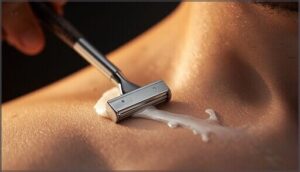
Angle isn’t just technique — it’s what stands between comfort and a burning, red face. When your razor blade angle gets too steep, friction heat generation spikes and the blade scrapes rather than slices. Too shallow, and you’re making extra passes, stacking micro-abrasion risk with every stroke.
Razor angle is the fine line between a smooth shave and a burning, red face
| Angle | Sensation | Skin Impact |
|---|---|---|
| Too steep (45°+) | Scratchy, dragging | Razor burn, redness |
| Too shallow (under 20°) | Skipping, missing hair | Extra passes, barrier stress |
| Balanced (~30°) | Smooth gliding | Minimal irritation |
Proper razor blade angle, combined with angle pressure balance and blade exposure control, gives your skin sensory feedback you can actually feel — that quiet, smooth glide telling you your shaving technique is working, not working against you. For the best results, aim for the optimal 30 degree angle to minimize irritation.
The 30-Degree Rule for Sensitive Skin
So what’s the magic number?
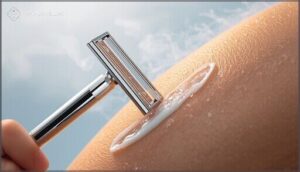
For sensitive skin, a proper razor blade angle of about 30 degrees is your sweet spot.
It’s shallow enough to avoid scraping, yet precise enough to cut cleanly without repeated passes.
- Angle consistency reduces cumulative micro-damage across each stroke
- Pressure management keeps friction low and skin feedback clear
- Blade sharpness at this angle prevents tugging on reactive skin
- Temperature control post-shave soothes any residual inflammation
How Razor Head Design Influences Optimal Angle

Not all razor heads work the same way, and that changes how you find the right angle for sensitive skin. The shape and design of your razor can make a big difference in comfort and control.
Let’s look at how different razor types and features affect your technique.
Why Safety Razors Require a Specific Angle
Unlike cartridge razors, safety razors don’t pivot — so your wrist alignment and hand position control everything.
The cap positioning and blade guard interaction create a shave plane that only works efficiently near 30 degrees. Stray too far from that, and angle consistency breaks down fast.
For sensitive skin, that inconsistency means friction, razor burn, and unnecessary irritation on skin that’s already reactive.
Adjustable Razors and Fine-Tuning Blade Exposure
Adjustable razors give you real control over blade exposure — a significant improvement for sensitive skin. By turning a simple dial, you shift the blade gap and change how aggressively the edge contacts your skin. Here’s how to use that to your advantage:
- Start at setting 1–2 for micro-setting calibration on the neck and jawline
- Use exposure dial mechanics to raise aggressiveness only on coarser areas like the cheeks
- Blade gap optimization means narrower gaps reduce skin bulging into the cutting zone
- Maintain pressure-exposure balance — let the razor’s weight do the work
Straight Razors Vs. Safety Razors Angle Comparison
Both razor types target the same blade angle sweet spot — roughly 27–30 degrees — but getting there feels very different.
With a straight razor, guard visibility is zero, so angle control depends entirely on handle feedback and visual cues. Safety razors engineer that angle mechanically, which shortens the learning curve considerably. For sensitive skin, that built-in angle consistency means less guesswork and fewer irritation flare-ups.
How Blade Brand and Thickness Change The Angle
Even small differences in razor blades can shift your blade angle more than you’d expect. A blade’s bevel angle, thickness flex, and coating friction all change how the edge sits in the head.
Brands with wider bevel angles around 22–24 degrees feel slightly steeper on sensitive skin. Well-coated blades reduce friction, widening your comfort window for razor blade angle control without constant micro-adjusting.
How to Find Your Starting Blade Angle

Finding your starting blade angle doesn’t have to be guesswork.
There’s a simple, step-by-step approach that takes the uncertainty out of it, especially if you have sensitive skin that reacts quickly to even minor mistakes. Here’s how to work through it.
Beginning With The Handle Perpendicular to Skin
Ever wonder how Cap Placement shapes Shave Quality and Comfort? Starting with the handle perpendicular to your skin sets up Initial Contact, ensuring the razor head lies flat.
This position boosts Grip Stability, keeps the blade safely above your skin, and gives you clear Angle Feedback. It’s a simple Shaving Technique for Sensitive Skin that provides precise Razor Blade Angle Control right from the start.
This technique is especially worth mastering if you struggle with irritation—here’s a deeper look at proven ways to prevent and heal shaving bumps for smoother, calmer skin every time.
Gradually Lowering Until Blade Contacts Hair
Once the handle is vertical, lower it slowly in a smooth arc — this is the Float Stroke Technique, where the blade rides above skin before cutting. You’ll know contact is right when Angle Feedback Sounds shift from scraping to a soft snip.
For sensitive skin, let Pressure Timing and Contour Adaptation guide each pass, never forcing the blade down.
Using The Cap and Guard as Visual Guides
Your cap and guard are built‑in angle teachers. When both touch your skin lightly, the Cap Shadow Cue — that thin line visible in Mirror Light Reflection — confirms your Blade Angle is within the safe zone. Think of the Cap-Guard Ratio as your Angle Tolerance Visual: equal contact means balanced pressure, which is one of the simplest Skin Care Tips for Sensitive Skin.
- Watch the Guard Contact Line in bright light to spot unwanted tilting
- Equal cap and guard contact signals ideal Angle Control
- Polished caps reflect light clearly, helping with Razor Selection adjustments
- Matte guards require more focus on handle distance as your visual cue
What Riding The Cap Means and When to Use It
Riding the cap means tilting the razor so its top cap rests flat against your skin — this creates a shallow angle that limits blade exposure naturally. For sensitive skin, that cap pressure reduction is exactly what minimizes irritation along the jawline contour.
It’s your go-to for second pass refinement or when using adjustable razor settings dialed to mild levels.
What Riding The Guard Means and When to Use It
If you need a quick, efficient first pass on thicker stubble, using a steep blade angle with firm safety bar contact—known as guard riding—can help.
For sensitive skin, keep your touch feather-light and limit passes.
This approach works best with safety razors designed for skin guards, offering close results without overworking your skin.
How to Practice and Perfect Your Blade Angle
Getting the angle right takes a little practice, but it gets easier once you know what to focus on.
The good news is that few simple habits can speed up the learning curve considerably. Here’s what actually helps when you’re working toward a consistent, comfortable shave.
Using a Mirror to Monitor Technique in Real Time
A mirror does more than show your face — it’s your real-time feedback tool. Proper mirror positioning at eye level, combined with lighting optimization around the sink, reveals visual angle cues like lather tracks and skin tone monitoring for early redness.
Watch your hand grip alignment and razor angle each stroke.
Catching weeps early prevents razor burn from worsening on sensitive skin.
Slowing Down to Build Muscle Memory
Once your mirror shows you the right angle, the next step is slowing down. A controlled stroke pace lets your hand actually feel what correct contact is like.
Through micro repetition — short, deliberate passes — your brain builds a reliable sensory feedback loop. Gradual angle adjustment becomes easier when each stroke is unhurried. That’s how shaving techniques for sensitive skin become second nature.
Knowing When Your Angle is Dialed in Correctly
Your blade angle is dialed in when your skin tells you — not just your eyes. Four clear signals confirm it:
- Smooth feedback: the razor glides quietly, like oiled sandpaper, with no scraping or chattering
- Skin sensation cues: mild warmth after each pass, not stinging or tightness
- Visual closeness check: clean, even tracks with no missed stripes
- Post-shave irritation signals: minimal redness that fades fast
Consistent angle control across your whole face means weepers, bumps, and flare-ups simply stop recurring.
Best Shaving Techniques for Sensitive Skin

Getting the angle right is only part of the equation — how you actually move the razor matters just as much.
Sensitive skin responds strongly to technique, and small adjustments can make a real difference in how your skin feels afterward.
Here are the core habits worth building into every shave.
Shaving With The Grain to Minimize Irritation
Grain mapping is the foundation of any good shaving technique for sensitive skin.
Rub your fingertips across stubble — the smoothest direction is with the grain.
If your skin still feels tight or irritated afterward, soothing options like unscented shaving cream alternatives for sensitive skin can help calm things down without added fragrance.
Shaving that way cuts irritation risk substantially, reduces razor burn, and helps ingrown hair prevention.
Neck grain often differs side to side, so map it separately.
One careful with-grain pass protects skin sensitivity without sacrificing closeness.
Using Light Pressure and Short Strokes
Letting razor’s own weight do the work is one of the simplest shaving techniques you can adopt for sensitive skin. Grip relaxation matters more than most people realize. Think of it like holding a ripe peach — firm enough to control, soft enough not to bruise.
Combine that with short strokes for better skin feedback and lather management:
- Keep each stroke under 3 centimeters for consistent blade angle
- Rinse the razor often to reduce drag and maintain light strokes
- Let pressure control stay at the razor’s natural weight — no extra force
This protects your skin barrier while still giving you a clean, close result.
Avoiding Repeated Passes Over The Same Area
Each extra pass over the same patch is like sandpapering wood twice — it removes more than you intended. For sensitive skin, a solid pass limiting strategy makes the real difference.
| Technique | What It Does | Why It Matters |
|---|---|---|
| Zone Mapping | Divides face into defined sections | Prevents unconscious retracing |
| Directional Planning | Sequences strokes by grain direction | Reduces counter‑grain passes |
| Lubricant Reapplication | Re‑lathers before any second pass | Lowers friction and micro‑tears |
| Problem Spot Skipping | Avoids repeatedly reddened areas | Prevents razor burn and ingrown hairs |
| Pass Limiting Strategy | Caps passes at one or two per zone | Protects the skin barrier |
How Shaving Speed Affects Skin Micro-Damage
Speed is a hidden culprit in skin irritation. Rushing your razor increases shear force on the skin surface, raises micro-cut density, and depletes your lubricant layer faster than slow, controlled strokes.
That triggers a stronger inflammatory response — more redness, stinging, and razor burn.
Slowing down also improves neuromuscular control, helping you maintain consistent angle and light pressure throughout each stroke.
Shaving Preparation and Aftercare for Sensitive Skin

Getting your skin ready before shaving and caring for it afterward can make a big difference if you’re prone to irritation.
Small changes in your routine help protect sensitive skin from razor burn and redness.
Here’s what you’ll want to focus on for a safer, more comfortable shave.
Softening Hair Before You Shave
Think of your hair as a door that’s easier to open when the hinges are warm and loose.
A warm water soak for two to three minutes softens hair shafts by swelling keratin, cutting tensile strength dramatically. Add pre-shave oil for extra lubrication, try steam exposure to open follicles, and finish with gentle exfoliation to clear dead cells before your razor meets skin.
Choosing The Right Shaving Cream or Gel
Once your hair is soft, what you put between blade and skin matters just as much as your razor angle. Choose products built for sensitive skin:
- Fragrance-Free Formulas and alcohol-free gels prevent dryness and reduce post-shave redness
- High-lubrication creams with glycerin help your blade glide without added pressure
- Soothing natural ingredients like aloe vera, allantoin, or chamomile calm reactive skin
A pH-balanced shave gel around 5–5.5 keeps your skin barrier intact throughout every pass.
Cooling and Moisturizing The Skin Post-Shave
Once your shaving cream does its job, what you do next seals the deal.
A quick cold rinse closes pores fast and locks in moisture. Then choose your aftercare:
| Product | Key Benefit | Best For |
|---|---|---|
| Aloe Vera Gel | Cools and repairs micro-cuts | Razor burn relief |
| Witch Hazel | Tightens pores, reduces redness | Sensitive, oily skin |
| Aftershave Balms | 24‑hour moisture lock | Dry, reactive skin |
Menthol cooling balms soothe nerve endings without alcohol’s sting.
Top 9 Razors for Sensitive Skin
Finding a razor that works with sensitive skin rather than against it makes a real difference. The right pick depends on your shaving habits, skin type, and where you plan to use it.
Here are nine options worth considering.
1. Gillette Venus Extra Smooth Razor
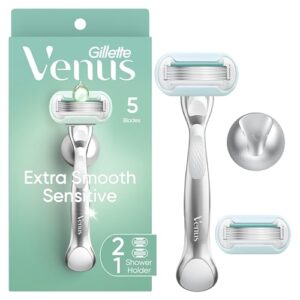
If you have sensitive skin, the Gillette Venus Extra Smooth Razor is worth a serious look. Its five-blade cartridge is engineered so each blade trims hair progressively shorter, which reduces tugging — a common trigger for irritation.
The lubricating strip releases aloe-based conditioning agents right ahead of the blades, cushioning each stroke.
The handle is weighted to encourage light pressure, which is exactly what reactive skin needs.
It’s a reliable everyday option for legs, underarms, and the bikini area.
| Best For | Anyone with sensitive skin who wants a close, smooth shave on legs, underarms, or the bikini area without the irritation. |
|---|---|
| Blade Count | 5 blades |
| Skin Type | Sensitive skin |
| Wet Use | Yes |
| Portability | Shower holder |
| Lubrication | Aloe strip |
| Reusability | Reusable handle |
| Additional Features |
|
- Five blades work together to cut hair gradually, so there’s way less tugging and redness
- The aloe lubrication strip keeps each stroke feeling smooth and gentle
- The weighted metal handle gives you solid control without pressing too hard
- The handle can feel a bit heavy, especially for longer shaving sessions
- Replacement blades add up cost-wise over time
- The shower holder’s adhesive might not survive steam and humidity for long
2. Schick Hydro Silk TrimStyle 2in1 Bikini Razor
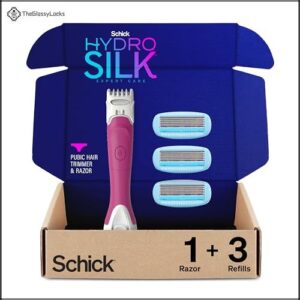
If you need a single tool that manages both shaving and trimming, the Schick Hydro Silk TrimStyle covers both without switching products. One end holds five Curve Sensing blades designed to follow body contours closely — reducing the pressure that often triggers bikini-area irritation.
Flip it over, and you get a waterproof trimmer with four adjustable length settings. The blades are coated with a hypoallergenic serum containing shea butter and aloe, which helps keep skin hydrated for up to two hours post-shave.
| Best For | Anyone who wants a simple, all-in-one tool for shaving and trimming the bikini area — especially those with sensitive skin. |
|---|---|
| Blade Count | 5 blades |
| Skin Type | Sensitive skin |
| Wet Use | Yes |
| Portability | Standard size |
| Lubrication | Hydra-Boost serum |
| Reusability | Reusable handle |
| Additional Features |
|
- Two tools in one — razor on one end, trimmer on the other, so there’s no need to juggle multiple products
- Waterproof design means you can use it right in the shower without any hassle
- Hydra-Boost serum with shea butter keeps skin moisturized for up to two hours after shaving
- Durability can be hit or miss — some users found it stopped working well after about a year
- Refill blades tend to be pricey, though off-brand options exist
- Using it dry or without shaving cream can cause irritation, so it’s not great for a quick, on-the-go shave
3. Schick Hydro Silk Touch Up Dermaplaning Razor
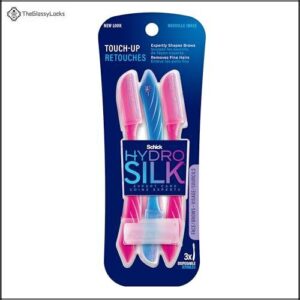
Facial dermaplaning isn’t just a spa trend — it’s a practical option if you’re dealing with fine peach fuzz or uneven skin texture.
The Schick Hydro Silk Touch Up does both: it removes vellus hair and gently exfoliates dead skin cells in one pass.
Its weighted handle and silicone grip make every stroke feel steady and precise, a detail worth comparing against other top-rated facial exfoliation tools before you commit to one.
Fine micro-guards protect delicate skin from nicks, and the precision cap lets you shape brows without guesswork.
Hold it at roughly 45 degrees, keep strokes short and downward, and your skin stays smooth without the irritation.
| Best For | Anyone who wants to quickly tackle peach fuzz and smooth out skin texture at home — especially great for women managing PCOS or hirsutism. |
|---|---|
| Blade Count | 1 blade |
| Skin Type | All skin types |
| Wet Use | Yes |
| Portability | Travel-sized |
| Lubrication | None |
| Reusability | Disposable |
| Additional Features |
|
- Removes fine hairs and exfoliates in one quick pass
- Precision cover makes eyebrow shaping easy and accurate
- Compact and travel-friendly for touch-ups anywhere
- Blade dulls fast, so you’ll be swapping razors pretty often
- The lightweight handle can feel a bit flimsy
- Not ideal for sensitive skin types — patch test first
4. Braun Series 7 Electric Shaver
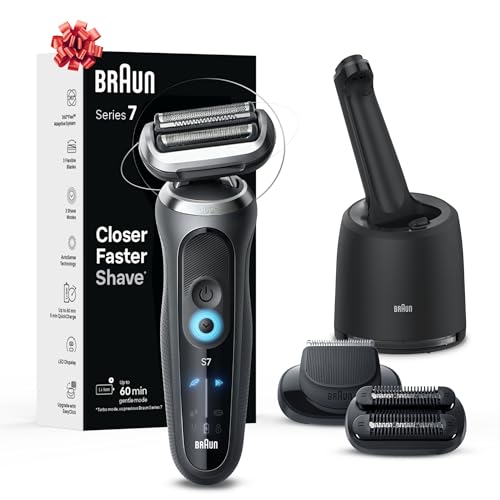
The Braun Series 7 (Model 72‑G7850cc) is worth a close look if manual razors keep leaving your skin red and irritated.
Its AutoSense technology reads your beard density 600 times per minute, adjusting motor power so there’s no pulling or excess pressure.
The 360° flex head follows your jaw and chin without losing contact, and Gentle mode extends battery life to 60 minutes.
Three shaving modes let you dial in exactly what your skin can handle.
| Best For | Men with sensitive skin who want a close, comfortable shave without the irritation that comes with manual razors. |
|---|---|
| Blade Count | 3 blades |
| Skin Type | Sensitive skin |
| Wet Use | Yes |
| Portability | Full size |
| Lubrication | None |
| Reusability | Reusable electric |
| Additional Features |
|
- The 360° flex head and three flexible blades hug your face well, so you get a close shave with less passes.
- Three shave modes (Turbo, Gentle, Standard) give you real control depending on how your skin is feeling that day.
- 60-minute battery life plus wet/dry use makes it easy to work into any routine, shower or sink.
- It’s pricey compared to most electric shavers, so the upfront cost might give you pause.
- The charging stand is a bit finicky and doesn’t always hold the shaver as securely as you’d expect.
- The user manual isn’t great, and some guys find it struggles a little around the neck area.
BIC Soleil 5 Sensitive Women’s Razors
The BIC Soleil 5 Sensitive Women’s Razor manages personal grooming on reactive skin surprisingly well. Four features make it a smart razor selection guide pick:
- Blade Flexibility Technology — five independent blades follow every curve
- Pivoting Head Mechanics — auto-adjusts razor angle without extra effort
- Comfort Shield Design — guards against nicks before blades contact skin
- Moisture Strip Benefits — aloe‑enriched strip reduces friction continuously
The ergonomic grip features keep control steady, even wet.
5. Gillette Venus Extra Smooth Travel Razor Kit
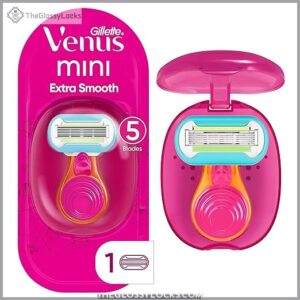
Travel doesn’t have to mean compromising your skin.
The Gillette Venus Extra Smooth Travel Razor Kit packs five diamond-coated blades into a compact, protective case without sacrificing performance.
Its pivoting head adjusts to curves around ankles and knees, reducing awkward angles that cause tugging.
The avocado oil–enriched Lubrastrip delivers noticeably smoother glide compared to standard options — especially helpful on sensitive areas.
At just 1.45 ounces, the mini handle fits easily in your bag and offers enough control for a clean, low-irritation shave anywhere.
| Best For | Travelers and minimalists who want a quality shave without lugging around a full-size razor. |
|---|---|
| Blade Count | 5 blades |
| Skin Type | Sensitive skin |
| Wet Use | Yes |
| Portability | Travel cap included |
| Lubrication | Moisture strips |
| Reusability | Disposable |
| Additional Features |
|
- Five blades with an avocado oil lubrastrip give you a smooth, close shave with less irritation
- The pivoting head handles tricky spots like ankles and knees without much effort
- At 1.45 ounces with a travel case included, it barely takes up space in your bag
- The mini handle can feel a little hard to grip, especially with wet hands
- The travel case is snug — don’t expect to store extra refills in there
- Refill packs can feel pricey, and it won’t work with Simply Venus or Venus Pubic Hair blades
6. Tweezerman Facial Razor Set
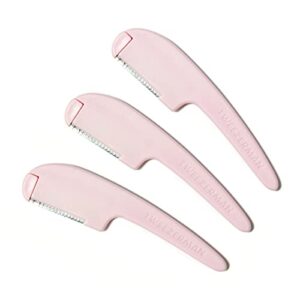
Peach fuzz may seem harmless, but it can trap dead skin cells and make your complexion look dull. The Tweezerman Facial Razor Set addresses both problems at once.
Its high-grade stainless steel blade glides along dry skin to lift fine hair while gently exfoliating the surface.
The fixed head encourages a consistent shallow angle — important for sensitive skin.
Safety caps protect the blade between uses, and the compact size makes weekly touch-ups easy to fit into any routine.
| Best For | Anyone who wants to manage peach fuzz and get a smoother complexion at home without a salon visit. |
|---|---|
| Blade Count | 5 blades |
| Skin Type | Sensitive skin |
| Wet Use | Yes |
| Portability | Travel case |
| Lubrication | Lubrication strip |
| Reusability | Reusable handle |
| Additional Features |
|
- High-grade stainless steel blade handles both hair removal and gentle exfoliation in one pass
- Safety caps keep the blade protected between uses, so it’s easy to toss in a bag or drawer
- Works on the face and body, making it a versatile addition to your skincare routine
- Blades can dull after just a few uses, so you may go through the pack faster than expected
- The handle runs short, which some people find awkward to grip and control
- Requires careful cleaning and handling to avoid buildup or accidental nicks
7. Philips SatinShave Essential Women Wet Dry Shaver
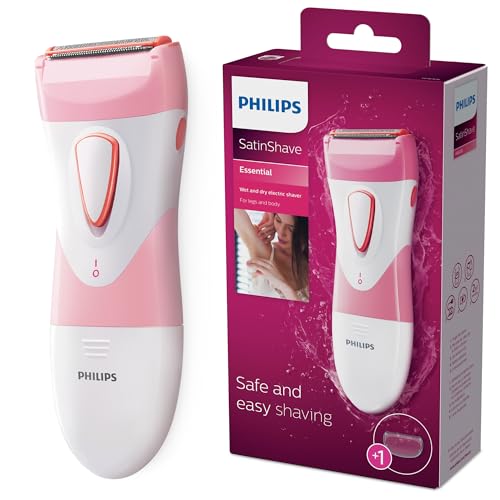
If you have reactive skin and want something gentle enough for the bikini line or underarms, the Philips SatinShave Essential is worth a close look. Its hypoallergenic foil head shields your skin while cutting hair close — no nicks, no razor burn.
The compact shaving head navigates curves like knees and ankles without dragging.
It works wet or dry, so you can use it with shaving gel in the shower or for a quick dry touch‑up anywhere.
Two AA batteries keep it cordless and travel‑ready.
| Best For | Anyone with sensitive skin who wants a gentle, versatile shaver for legs, underarms, and the bikini line — especially great for travel. |
|---|---|
| Blade Count | 1 blade |
| Skin Type | All skin types |
| Wet Use | Yes |
| Portability | Compact |
| Lubrication | None |
| Reusability | Disposable |
| Additional Features |
|
- Hypoallergenic foil is genuinely kind to reactive or sensitive skin
- Works wet or dry, so you can use it in the shower or on the go
- Compact and cordless — easy to toss in a bag for travel
- Won’t get as close as a traditional razor
- Can be pretty loud when running
- Not great for longer or thicker hair — may tug instead of cut
8. Billie Women Razor Kit
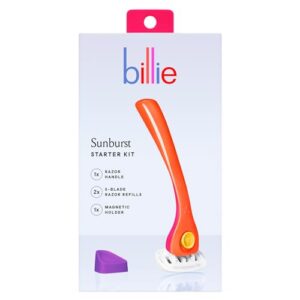
For a sustainable, subscription-style option, the Billie Women Razor Kit is a smart pick for sensitive skin.
Its 5-blade cartridge is wrapped in 360° of aloe-infused shave soap, so the head glides smoothly without dragging. The ergonomic, non-slip handle helps you maintain that ideal 30-degree angle without pressing too hard.
The pivoting head follows curves at knees and ankles naturally.
It’s dermatologist-approved for all skin types, including reactive ones prone to redness and razor burn.
| Best For | Anyone with sensitive skin who wants a smooth, close shave without the irritation — especially if you like keeping things simple in the shower. |
|---|---|
| Blade Count | Foil system |
| Skin Type | Sensitive skin |
| Wet Use | Yes |
| Portability | Travel cap included |
| Lubrication | None |
| Reusability | Reusable electric |
| Additional Features |
|
- The 5-blade head wrapped in aloe shave soap glides really well and cuts down on razor burn
- Non-slip ergonomic handle makes it easy to hold at the right angle, even when wet
- Dermatologist-approved for all skin types, so it works for reactive or easily irritated skin
- The magnetic shower holder has adhesive issues — several users say it doesn’t stick well long-term
- The built-in shave soap isn’t for everyone, especially if you prefer your own shaving cream or gel
- Quality control on the holder feels inconsistent, which is annoying for something you rely on daily
What to Look for When Buying a Razor

Picking the right razor for sensitive skin isn’t just about brand names — the details really do matter.
A few key features can make the difference between a comfortable shave and a week of redness.
Here’s what to look for before you buy.
Blade Count and Its Effect on Sensitive Skin
Blade count irritation is real — and often underestimated. Each blade in a cartridge scrapes across your skin separately, so a five-blade razor delivers five friction points per stroke.
For sensitive skin, that’s the shaving equivalent of sandpaper. Fewer blades mean less cumulative abrasion, lower ingrown hair risk, and reduced razor burn.
Match your blade count to your skin sensitivity first, then consider closeness.
Razor Weight and Pressure Control
Weight is your ally here. A heavier razor — usually 60 to 90 grams — uses razor mass distribution and gravity to glide, so you don’t press down.
Handle balance design and grip ergonomics work together to keep your stroke length short and controlled.
Some sophisticated models even include pressure-sensing technology.
Let the razor do the work; your skin sensitivity will thank you.
Material Compatibility for Reactive Skin
What razor is made of matters just as much as how you hold it.
If you have reactive skin or underlying dermatological conditions, certain metals can trigger allergic reactions on contact.
Nickel‑Free Metals like titanium, copper, and stainless steel are biocompatible and far gentler.
Titanium Coatings, Ceramic Surfaces, Natural grips like bamboo, and Medical Plastics all offer safe, skin‑friendly alternatives worth considering.
Adjustable Aggressiveness and Blade Exposure Options
If sensitive skin is your reality, adjustable razors let you take full control.
Through plate selection and micro-adjustable gap settings, you can shift from gentle negative exposure to more assertive positive exposure mode — without switching razors.
Aggressiveness profiling helps you find your sweet spot.
Start mild, like R1–R2, then nudge upward only if hairs pull.
Your skin will tell you exactly when to stop.
Frequently Asked Questions (FAQs)
What is the best razor for sensitive skin?
Finding the right razor is a cut above the rest when it’s made for your skin.
The Gillette SkinGuard, with its lubrication strips and gentle blade material, is a top pick for sensitive skin.
What is a sensitive skin razor?
A sensitive skin razor combines mild blade geometry, single blade design, hypoallergenic metals, lubrication strips, and balanced weight distribution to minimize irritation — giving your skin a clean, comfortable shave without the redness.
Are razor blades bad for sensitive skin?
Not exactly — but the wrong blade can feel like sandpaper on raw skin.
Dull edges, too many blades, and poor angle all disrupt your skin barrier, triggering razor burn and irritation.
What are the best safety razor blades for sensitive skin?
For sensitive skin, platinum-coated blades like Astra Premium Platinum or Gillette Silver Blue balance sharpness with mildness best.
Both offer smooth gliding, solid blade longevity, and minimal irritation across multiple comfortable shaves.
Can razor angle vary by facial region?
Yes — your face isn’t flat, so one fixed angle won’t work everywhere.
The cheek blade sits near 40°, but the jawline tilt, chin curve, neck flatten, and nose edge each need small adjustments.
Does stubble length affect the ideal blade angle?
Short stubble angle needs less pitch; longer stubble often calls for a slight longer stubble adjustment.
Hair curl influence and skin sensitivity interaction also shift what works, so blade angle isn’t one-size-fits-all.
How does skin stretching improve angle consistency?
Stretching the skin taut gives you consistent blade contact and predictable angle control.
Taut skin leverage reduces snagging, stabilizes curved areas like the jawline, and keeps your grip position and wrist lock steady throughout each stroke.
Does razor angle differ for legs versus the face?
Leg angle range runs wider — up to 45 degrees — because leg skin sits over muscle and tolerates more variation.
Facial curvature impact demands a precise 30 degrees, where bone proximity pressure makes control essential.
Conclusion
The right razor angle for sensitive skin is less like a rule and more like a key—one that unlocks a consistently comfortable shave once you’ve shaped it to fit. You now understand the geometry, the preparation, and the tools that make the difference.
That 30-degree sweet spot isn’t guesswork anymore; it’s a skill you’ve built.
Your skin doesn’t have to pay the price for imprecision. The margin for error just got a lot wider.