This site is supported by our readers. We may earn a commission, at no cost to you, if you purchase through links. This content is for general informational and educational purposes only and is not a substitute for professional medical, dermatological, or nutritional advice.
Pick up almost any aftershave lotion and you’ll find two types of shoppers staring at the label—those who want "natural" and those who don’t care much either, provided it works.
Here’s the twist: that distinction is murkier than most marketing suggests.
Sodium chloride, the molecule in ordinary table salt, appears on ingredient lists under its clinical INCI name, making perfectly harmless compounds sound like lab experiments.
Meanwhile, plant-derived essential oils—the poster children of "natural"—rank among the most common triggers for contact dermatitis after shaving.
Knowing what’s actually inside your aftershave lotion, beyond the label claims, lets you choose a formula your skin will genuinely thank you for.
Table Of Contents
Key Takeaways
- The "natural vs. chemical" divide is mostly marketing noise—every ingredient, whether from a plant or a lab, is a chemical, and source alone tells you nothing about safety or effectiveness.
- Natural ingredients like essential oils are among the most common causes of post-shave skin reactions, so "plant-derived" doesn’t automatically mean gentle or hypoallergenic.
- The best aftershaves blend synthetic and botanical ingredients because no single ingredient type can handle moisture, stability, scent, and shelf life all at once.
- Your skin type is the only label that truly matters—matching ingredients to your actual skin (sensitive, dry, oily, acne-prone) cuts irritation risk far more reliably than chasing clean-sounding front-label claims.
Natural Vs Chemical Aftershave Basics
Before you pick your next aftershave, it helps to know what’s actually in the bottle.
Understanding how aftershave lotion actually works on your skin can change the way you choose—and use—it.
The "natural vs chemical" debate sounds simple, but there’s more to it once you look at real ingredient labels.
Here’s what those terms actually mean and why the line between them is blurrier than most brands let on.
What “natural” Means in Aftershave Lotions
Transparency matters more than you’d think when shopping for aftershave. "Natural" sounds reassuring, but there’s no strict regulatory definition behind it. Generally, it signals plant-derived actives sourced through botanical extraction methods like steam distillation or cold pressing — think aloe, witch hazel, or natural fragrance from essential oils.
| What "Natural" Suggests | What It Doesn’t Guarantee |
|---|---|
| Eco-friendly sourcing | Hypoallergenic formula |
| Ingredient transparency | Zero irritation risk |
Be aware that propylene glycol irritation risk can cause skin irritation.
What “chemical” Usually Means on Product Labels
When a label flags something as a "chemical," it’s usually about perception, not danger. Regulatory naming rules require precise INCI terms — so "sodium chloride" appears instead of "salt." That clinical look triggers chemical perception bias in shoppers. Ingredient function naming exists for safety disclosure standards, not alarm. For example, sodium fluoride prevents cavities is a common toothpaste ingredient.
| Label Term | What It Actually Means | Marketing vs Science |
|---|---|---|
| "Chemical" | Industrially processed ingredient | Marketing shorthand |
| "Synthetic" | Lab-manufactured compound | Science classification |
| "Clean/Low-tox" | Free-from specific chemicals | No regulatory standard |
Why All Aftershave Ingredients Are Technically Chemicals
Here’s the thing — whether it comes from a plant or a lab, every ingredient in your aftershave has a molecular identity.
Aloe vera? A mix of polysaccharides and amino acids. Witch hazel? Tannins and volatile compounds. Even water is a chemical.
Ingredient synthesis doesn’t make something dangerous; it just means something was made with structural consistency and chemical uniformity in mind.
| Ingredient | Source | Chemical Class |
|---|---|---|
| Aloe Vera | Plant-derived | Polysaccharides, amino acids |
| Propylene Glycol | Synthetic | Diol solvent/humectant |
| Witch Hazel Extract | Plant-derived | Tannins, flavonoids |
How Natural and Synthetic Ingredients Differ by Source
Where an ingredient comes from shapes everything — consistency, potency, and environmental footprint.
Plant extraction pulls compounds directly from botanicals, while lab synthesis builds molecules from scratch with precise control.
Fermentation sourcing and biotechnological fermentation blur that line surprisingly, producing natural-origin actives through biological processes.
| Source Type | Example Ingredient | Key Characteristic |
|---|---|---|
| Plant extraction | Aloe vera | Batch variability |
| Lab synthesis | Propylene glycol | Consistent purity |
| Fermentation sourcing | Hyaluronic acid | Biotechnological origin |
Sustainable sourcing and traceability matter more as ingredient sourcing — whether natural fragrance or synthetic fragrance — affects both your skin and the planet.
Why Many Aftershaves Use a Blended Formula
No single ingredient type can do everything well — that’s exactly why most aftershaves blend natural and synthetic components. Synthetics handle stability, shelf-life extension, and consistency; botanicals deliver multi-functional benefits like soothing and scent. This balance enhances cost-effectiveness and allergen control while meeting consumer preference for formulas that feel good and last.
No single ingredient does it all, so the best aftershaves blend synthetics for stability with botanicals for soothing
| Role | Ingredient Type |
|---|---|
| Performance optimization | Synthetic fragrance, emulsifiers |
| Skin comfort | Plant extracts, emollients |
Common Natural Lotion Ingredients
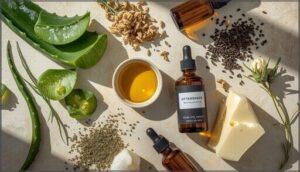
Natural aftershaves tend to lean on a handful of plant-based workhorses that show up again and again — and for good reason.
Each one brings something specific to the table, whether that’s calming irritation, locking in moisture, or adding scent without synthetics.
Think of it like building a routine with purpose — a good hair growth shampoo guide for beginners can help you match the right ingredients to your actual scalp needs.
Here’s a closer look at the ingredients you’ll most commonly find in natural formulas.
Aloe Vera for Post-shave Soothing
Aloe vera is basically nature’s first-aid kit in a gel. Its Lightweight Gel Texture absorbs fast, delivering real Aloe Hydration Boost without grease. That Cooling Skin Relief isn’t just a sensation — compounds like bradykinase actively work toward Anti‑Redness Action and Barrier Recovery Support.
- Provides moisture without occluding pores
- Natural and often hypoallergenic, though skin sensitivity varies
- Rare allergic reaction risk — patch test first
Witch Hazel for Calming and Toning
Witch hazel works through a straightforward astringent mechanism — tannins and flavonoids tighten skin and calm post-shave redness relief almost immediately.
These flavonoid benefits make it one of the most reliable natural ingredients for reducing skin irritation without heavy residue.
Alcohol-free formulas deliver that clean, skin tightening effect while staying hypoallergenic, unlike synthetic ingredients that can over-strip freshly shaved skin.
Jojoba Oil for Lightweight Moisture
Jojoba oil isn’t really an oil — it’s a liquid wax with a sebum-mimicking texture that closely mirrors your skin’s own lipids.
That’s why it absorbs quickly, leaving a non-greasy finish instead of a heavy film.
It’s a reliable lightweight emollient with strong oxidation stability, meaning it won’t go rancid fast.
Its water-holding capacity also helps your skin stay hydrated after shaving.
Shea Butter and Plant Oils for Barrier Support
Shea butter is a skin-barrier powerhouse — and its Triacylglycerol Structure is a big reason why. That fatty acid mix (mostly stearic and oleic) creates an Occlusive Film Formation that slows post-shave water loss noticeably.
The right plant oils round things out:
- Oleic‑Linoleic Balance matters — too much oleic acid alone can disrupt barrier lipids
- Linoleic-rich natural oils like sunflower support Barrier Repair Synergy
- Unsaponifiable Antioxidants in shea protect skin lipids from oxidation
- Cold-pressed natural extracts retain more beneficial minor compounds
- sustainable sourcing of plant oils reduces skin sensitization risks long-term
Essential Oils as Natural Scent Ingredients
Essential oils bring something synthetic fragrances simply can’t fake — real botanical character.
Citrus Brightness from limonene-rich oils, Lavender Calm from linalool, Herbal Complexity, Spicy Warmth, and Woody Depth all come from volatile aromatic compounds that evaporate differently on your skin. That variability is what makes natural fragrances feel alive.
The tradeoff? Fragrance safety matters here — essential oils are among the top triggers for skin sensitization after shaving.
Common Synthetic Lotion Ingredients
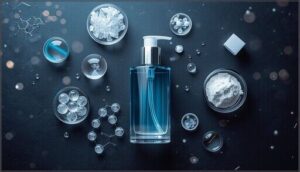
Synthetic ingredients show up in more aftershave formulas than most people realize — and for good reason.
They’re reliable, consistent, and engineered to do specific jobs well.
Here’s what you’ll commonly find on the label.
Propylene Glycol as a Humectant
Propylene glycol is one of those synthetic ingredients that quietly does a lot of heavy lifting.
It binds moisture through hydrogen bonding, which enhances moisture retention and slip enhancement across freshly shaved skin.
Its solvent compatibility keeps fragrance and actives evenly distributed, enhancing shelf-life consistency.
Sensitive skin types should note that irritation management matters here — patch test first, since skin irritation and allergen responses are possible.
Carbomer and Thickeners for Texture
propylene glycol manages moisture, carbomer manages body. This synthetic polymer is the reason your aftershave lotion flows smoothly instead of running like water.
Through pH-dependent gelation and neutralizer selection, formulators dial in exactly the right thickness — viscosity tuning without cloudiness, thanks to clear gel formulation. It also facilitates electrolyte compatibility and stability, making it a cost-effective choice for clean, low-irritation formulas.
Silicones for Slip and Smooth Feel
Once carbomer gives your lotion its body, silicones handle the feel. Dimethicone Glide is that signature silky slip you notice the moment a formula touches your skin.
It’s not heavy — dimethicone creates a breathable Surface Barrier that slows moisture loss without clogging.
Volatile Silicones evaporate quickly, leaving a clean, Powdery Finish.
These synthetic materials are a win for synthetic chemistry: precise, consistent, and comfortable.
Synthetic Fragrance and Parfum Blends
Silicones polish the feel — but scent is where synthetic chemistry really flexes.
On your label, "parfum" or "fragrance" is a single entry that can hide hundreds of individual aroma molecules. Perfumers use deliberate note layering strategies to build dimension:
For a clearer view of what else may be in daily products, review these sunscreen ingredients to avoid alongside fragrance labels.
- Top notes open the scent
- Heart notes define character
- Base notes anchor longevity
- Fixatives boost stability
IFRA compliance standards govern safety limits, while EU allergen disclosure rules now require flagging up to 80 fragrance allergens — like limonene and linalool — above set thresholds. Aroma molecule selection also enhances sustainability of synthetics by replacing rare botanicals with lab‑identical compounds, reducing fragrance ingredient disclosure gaps and meeting tightening regulatory standards for cosmetics.
Preservatives That Improve Shelf Life
Scent fades, but bacteria don’t — that’s why preservatives matter. Phenoxyethanol limits sit at 1% by EU safety standards, keeping water-based formulas stable without overloading skin.
benzoate sorbate pair addresses molds and yeasts in acidic formulas, while paraben blend benefits cover broader microbial threats. Formaldehyde releaser safety and pH-dependent preservation remind you that even "cleaner" synthetic ingredients require careful formulation choices.
Skin Benefits and Drawbacks

Every aftershave ingredient brings something to the table — and a potential trade‑off too. Your skin type, shaving routine, and ingredient sensitivities all shape how a formula actually feels on your face.
Here’s what you need to know about how these ingredients perform in real use.
Moisturizing Benefits of Botanical Ingredients
Botanical ingredients don’t just sit on your skin — they work in layers. Think of it as a three-part system:
- Humectant Synergy – Aloe vera’s polysaccharides bind water directly to the stratum corneum
- Emollient Fusion – Jojoba oil and plant-based ingredients smooth surface texture without greasiness
- Occlusive Layering – Shea butter slows moisture loss after shaving
- Antioxidant Protection – Botanicals and extracts deliver free‑radical defense
- Anti-inflammatory Relief – Essential oils and natural essential oil extraction retain calming compounds
Your skin barrier is most vulnerable right after shaving — these plant-based ingredients address that directly.
Fast-drying Feel of Synthetic-heavy Formulas
Synthetic-heavy formulas dry fast because that’s exactly what they’re built to do. Ethanol evaporation pulls moisture off your skin in seconds, while volatile silicones spread the formula evenly, then disappear. Carbomer gel keeps the texture controlled so it doesn’t run.
Quick-absorbing humectants prevent stickiness, and synthetic fragrance compounds — engineered for scent volatility and synthetic fragrance consistency — leave behind almost no residue. You’re shave-ready faster.
When Natural Oils Feel Too Heavy
Not every natural oil deserves a spot in your post-shave routine. Coconut oil and cocoa butter both carry comedogenic ratings of 4 — high enough to leave freshly shaved skin feeling coated rather than cared for.
Post-shave absorption slows when oils sit on top instead of sinking in. Lighter options with better linoleic balance, like jojoba, work smarter here.
When Alcohol and Synthetics Cause Stinging
That stinging hit after applying aftershave isn’t just in your head — it’s chemistry at work.
Alcohol Evaporation pulls moisture from micro‑cuts, while VR1 Activation tricks heat‑sensing nerves into firing. Meanwhile, Synthetic Fragrance Irritation from oxidized compounds, and Propylene Glycol Sensitivity inflame barrier‑compromised skin. Preservative Barrier Stress compounds everything.
- Alcohol concentrations above 40% intensify post‑shave stinging
- Parfum blends may contain up to 100 irritating synthetic ingredients
- Propylene glycol triggers contact dermatitis in 2–5% of users
- Phthalates hidden in synthetic fragrance ingredients can provoke allergic reactions
How Skin Type Affects Ingredient Tolerance
Your skin type isn’t just a label — it’s your formula blueprint.
| Skin Type | Best Ingredient Strategy |
|---|---|
| Sensitive Skin Barrier | Fragrance-free, hypoallergenic fragrance, alcohol-free |
| Dry Skin Hydration | Barrier Repair Lipids, glycerin, shea |
| Oily Skin Lightness | Witch hazel, water-based, non-greasy |
| Acne-Prone Non-Comedogenic | Simple formula, zero pore-blockers |
| Damaged Barrier | Ceramides, low chemical irritation risk |
Matching ingredients to your skin cuts allergic reaction risk quickly.
Fragrance, Alcohol, and Preservatives

Three ingredients show up in almost every aftershave formula — fragrance, alcohol, and preservatives — and they’re also the ones most likely to cause problems.
Each one plays a real role in how a product smells, feels, and lasts on the shelf.
Here’s what you need to know about each of them.
Natural Fragrance Vs Synthetic Fragrance
Natural fragrance comes from plant extracts, while synthetic fragrance is lab‑made — and both show up in aftershave.
Scent Consistency favors synthetics, since natural options carry Allergen Variability based on crop and season. Synthetic options win on Cost Efficiency too.
Regulatory Limits in the EU require fragrance allergens to be disclosed above set thresholds. Ingredient transparency helps you decide what belongs on your face.
Essential Oil Sensitivity After Shaving
Even natural fragrance ingredients can cause problems after shaving. Barrier Compromise from the blade leaves skin raw and receptive — and essential oils hit differently on that exposed surface.
Oxidized Terpenes like limonene and linalool become stronger allergens once air‑exposed. Phototoxic Citrus oils add sun‑sensitivity risk.
Follow a Patch Test Protocol before committing, since Sensitization Timeline symptoms can appear 12–72 hours later.
Alcohol-based Lotions and Barrier Dryness
Freshly shaved skin is already stripped — adding a high-ethanol splash can push barrier stress further. Ethanol concentration thresholds matter here: above 25%, surface lipids start breaking down, accelerating alcohol-induced tightness and dryness.
Watch for these warning signs:
- Sharp sting at application
- Tightness after 10 minutes
- Redness without cuts present
- Flaking or papery texture
- Increased reactivity with daily use
Humectant buffering — glycerin, aloe — shortens barrier recovery time. Environmental dryness synergy (cold air, indoor heating) worsens the effect. Synthetic ingredients like propylene glycol help; natural ingredients like jojoba oil support without volatile organic compounds that add skin irritation risk.
Why Water-based Aftershaves Need Preservatives
Water is a welcoming environment — for bacteria, yeasts, and molds.
Any water‑based aftershave carries Microbial Growth Risks without broad‑spectrum protection from a proper preservative system.
Packaging Contamination happens every time you dip fingers in.
Challenge Testing Standards verify Shelf‑Life Stability over 28 days.
Whether a formula uses synthetic ingredients or paraben‑free formulations with natural vs synthetic fragrance ingredients, preservation isn’t optional.
Which Ingredients Most Often Trigger Irritation
Fragrance tops the list, and for good reason. Synthetic ingredients hiding under “parfum” often contain phthalates, parabens and fragrance allergens like limonene oxidation byproducts that trigger allergic contact dermatitis on post‑shave skin. Cinnamaldehyde irritation and bitter orange photosensitivity follow closely.
Preservatives aren’t innocent either — methylisothiazolinone sensitivity causes redness, while phenoxyethanol burning surprises people who thought they’d chosen a safer formula.
How to Read Ingredient Labels
Reading an aftershave label doesn’t have to feel like decoding a chemistry exam.
Once you know what to look for, the ingredient list tells you almost everything about what you’re putting on freshly shaved skin.
Here’s how to break it down.
Spotting Plant-derived Soothing Ingredients

Plant-derived soothing ingredients hide in plain sight once you know what to look for. INCI naming patterns are your first clue — Aloe Barbadensis Leaf Juice, Hamamelis Virginiana, Simmondsia Chinensis Seed Oil.
Ingredient order clues matter too: plant-based ingredients listed early signal meaningful concentration thresholds, not token amounts. Watch botanical extract forms and plant part indicators — leaf, seed, flower — to confirm you’re getting genuinely low-irritation, skin-supportive ingredients.
Identifying Parfum, Fragrance, and Dyes

Two terms worth knowing: parfum and "fragrance" — both are catch-all labels covering dozens of undisclosed ingredients. Regulatory naming rules in the EU and US allow this grouped ingredient disclosure, but allergen thresholds do apply.
If fragrance allergens like limonene or linalool exceed legal limits, they must be listed individually. CI 77891 reveals dyes — CI 77891 means titanium dioxide, for example.
Recognizing Humectants, Emollients, and Solvents

label as a map. Glycol Indicators — ingredients ending in "-glycol" — signal humectants pulling moisture in.
Oil‑Butter Signals like jojoba oil or shea butter mark emollients sealing that hydration.
Solvent Evaporation Rate, including ethanol, controls Solvent Evaporation Rate, affecting how fast the product dries.
Getting your Humectant‑Emollient Balance right matters most for post-shave comfort.
Why “natural” Claims Can Be Misleading

Natural sounds reassuring, but it’s mostly marketing hype. There’s no single legal standard in the U.S., so brands stretch the term freely. Hidden synthetics can sit quietly in a "natural" formula, and water inflation can pad percentage claims.
The ingredient list is your real source of truth — not the front label. Ingredient transparency is what cuts through the vague definitions.
Short Ingredient Lists Vs Effective Formulas

A short ingredient list feels trustworthy, but minimalist formulation has real performance trade-offs. Without ingredient synergy — a humectant, emollient, and preservative each pulling their weight — water-based formulas can separate, spoil, or dry unevenly.
Functional balance matters more than count. Label transparency lets you judge whether that concise list actually covers safety and allergen concerns, or just looks clean on the shelf.
Choosing The Best Aftershave Lotion
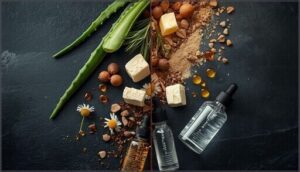
The right aftershave lotion isn’t one-size-fits-all — your skin type matters more than the label’s marketing.
Whether you’re dealing with sensitivity, dryness, or breakouts, certain ingredients will work harder for you than others. Here’s what to look for based on what your skin actually needs.
Best Ingredients for Sensitive Skin
Sensitive skin doesn’t forgive a careless formula. Look for panthenol benefits first — it calms irritation and locks in moisture fast.
Niacinamide barrier support helps when shaving leaves skin reactive, while allantoin soothing and bisabolol calm inflamed areas without fuss.
Glycerin hydration keeps things balanced.
Avoid both natural fragrance and synthetic fragrance to stay low‑irritation and cut your allergy risk at the source.
Best Ingredients for Dry Skin
Dry skin needs more than moisture — it needs a barrier repair act.
Look for humectant synergy between glycerin and hyaluronic acid, plus lightweight occlusives like squalane to seal it in. Hydrating polymers and soothing botanicals such as aloe and ceramides do the heavy lifting.
Keep your ingredient list low-irritation by skipping both natural fragrances and synthetic fragrances entirely.
Best Ingredients for Oily or Acne-prone Skin
Oily and acne-prone skin needs a lighter hand. Look for salicylic acid to clear pores, niacinamide to regulate sebum, and zinc PCA for a matte finish without heaviness. Lightweight humectants like glycerin add hydration without clogging. Non-comedogenic polymers keep texture clean.
Skip natural fragrances and synthetic ingredients that trigger allergies — low-irritation, no-tox formulas work best here.
When to Choose Fragrance-free Formulas
Fragrance allergies don’t announce themselves politely — they show up as redness or burning right after application.
If you’ve noticed irritation triggers after shaving, fragrance‑free is worth considering.
Here’s when to make the switch:
- You have known fragrance allergies or eczema.
- Alcohol sensitivity leaves your skin tight and dry.
- Barrier recovery feels slow after frequent shaving.
- You’re avoiding phthalates for low‑irritation, no‑tox results.
- Preservative avoidance matters due to safety and allergen concerns in fragrances.
Fragrance‑free removes the guesswork entirely.
Patch Testing Before Daily Use
Before committing a new aftershave to your daily routine, patch testing is your smartest move. Apply a pea-sized amount to your inner forearm or behind your ear — locations that mimic post‑shave skin sensitivity.
Leave it on for 24 to 48 hours and monitor irritation indicators like redness, itching, or burning. This simple allergy testing step keeps chemical allergens in fragrance from becoming a bigger problem.
Frequently Asked Questions (FAQs)
Can aftershave lotions expire or go bad?
Yes, they can.
Shelf life depends on ingredient breakdown, not just a date. Lotions with water and oils spoil faster than simple splashes. Watch for off smells, separation, or texture changes.
Do natural ingredients cost more at retail?
Generally, yes. Ingredient sourcing, certification fees, and smaller production scale all push prices up.
Natural aftershaves often carry a 20–50% market premium over synthetic alternatives, though cost-effectiveness depends on formula complexity and packaging choices.
How does climate affect natural ingredient quality?
Climate shapes natural ingredient quality more than most people realize. Heat, rainfall, sunlight, and soil conditions all shift a plant’s chemical profile — sometimes dramatically — from one harvest to the next.
Are organic-certified aftershaves more effective?
Organic certification tracks sourcing and standards, not skin results. A well-formulated conventional balm can outperform a certified organic one. The label signals compliance, not effectiveness.
Can aftershave lotions interact with medications?
Some aftershave lotions can. Alcohol absorption through skin may trigger a disulfiram reaction.
Warfarin salicylate overlap raises blood-thinning concerns. Retinoid dryness worsens with astringents.
Fragrance sensitivity can flare with medicated skin.
Conclusion
The label is just the cover—the real story lives in the ingredient list.
Cutting through the noise of natural vs chemical aftershave lotion ingredients comes down to one thing: how your skin actually responds.
A plant-derived oil can irritate just as easily as a synthetic preservative can protect.
So stop chasing marketing language and start reading what’s actually inside the bottle.
Your skin doesn’t care about the branding.
It only cares about what you put on it.