This site is supported by our readers. We may earn a commission, at no cost to you, if you purchase through links. This content is for general informational and educational purposes only and is not a substitute for professional medical, dermatological, or nutritional advice.

shaving irritation isn’t caused by sensitive skin—it’s caused by direction. The blade traveling against your hair’s natural growth pattern bends each strand backward before cutting it, which forces the tip to retract below the skin surface. That microscopic trauma triggers redness, stinging, and those stubborn raised bumps that linger for days.
Getting the angle you hold the razor, the pressure you apply, how you read your own hair growth pattern. These aren’t minor adjustments—they’re the difference between smooth skin and two days of regret.
Table Of Contents
- Key Takeaways
- What Razor Burn is and Why Direction Matters
- How to Prepare Your Skin Before Shaving
- Shaving Direction, Pressure, and Stroke Technique
- Top 10 Products for a Smoother, Irritation-Free Shave
- 1. Schick Hydro Silk TrimStyle Razor Trimmer
- 2. BIC Soleil Women Disposable Three Blade Razor
- 3. Gillette Venus Intimate Grooming Razor
- 4. Dove Natural Origin Smoothing Body Polish
- 5. Avène Gentle Body Scrub
- 6. Billie Pre Shave Exfoliating Bar
- 7. Gillette Venus Intimate Grooming Gel
- 8. Truly Beauty Coco Cloud Shave Butter
- 9. Barbasol Thick Rich Shaving Cream
- 10. Skintimate Coconut Shave Oil Moisturizer
- How to Soothe and Protect Skin After Shaving
- Rinsing With Cool Water Immediately After Shaving
- Applying Alcohol-Free Aftershave Balms and Moisturizers
- Natural Remedies: Aloe Vera, Witch Hazel, and Cold Compresses
- Replacing Your Blade Every Five to Seven Shaves
- When to Use Hydrocortisone Cream for Persistent Irritation
- Wearing Loose Clothing to Reduce Post-Shave Friction
- Frequently Asked Questions (FAQs)
- Conclusion
Key Takeaways
- Shaving against hair’s natural growth pattern forces each strand to retract below the skin surface, triggering the redness, stinging, and raised bumps you’re trying to avoid.
- A proper pre-shave routine — warm water for one to three minutes, a gentle exfoliant, and a pre-shave oil — does more to prevent irritation than any razor upgrade ever will.
- Blade angle (30–45 degrees), light pressure, and short 2–3 centimeter strokes let the razor’s own weight do the cutting, so your skin doesn’t pay for the extra force.
- Aftercare isn’t optional: cool water rinse, an alcohol-free balm while skin is still damp, and a fresh blade every five to seven shaves are what keep irritation from becoming a recurring problem.
What Razor Burn is and Why Direction Matters

Razor burn isn’t just an annoyance — it’s your skin telling you something went wrong during the shave. Understanding why it happens starts with knowing what’s actually occurring beneath the surface.
Digging into the root causes can make all the difference — razor burn prevention tips for men’s face break down exactly what triggers that inflammation and how to stop it before it starts.
what you need to know before we get into technique.
Key Symptoms: Redness, Stinging, and Bumps
When your skin turns pink and starts to sting after a shave, that’s vascular dilation redness — your blood vessels reacting to irritation. Pressure-related stinging usually follows barrier compromise symptoms, meaning the razor removed too much protective skin layer.
Blade dullness impact makes this worse, since friction-induced bumps form when dragging inflames the hair follicles. These raised, tender spots can look a lot like small pimples.
How Shaving Against The Grain Triggers Irritation
Shaving against the grain forces the blade to cut hair backward — and that small decision creates a chain reaction. Micro nicks heat builds quickly as friction increases, while blade load suction makes each pass feel draggy.
Proper shaving direction and technique matter because:
- Follicle Constriction narrows pore openings, trapping oil and dead cells
- Dead Skin Lift spreads debris across nearby follicles
- Barrier Lipid Stripping weakens your skin’s protective moisture layer
- Repeated passes worsen razor bumps and ingrown hair risk
Razor Burn Vs. Razor Bumps: Key Differences
Both conditions look similar at first glance, but they’re not the same. Razor burn hits fast — broad redness and a stinging, raw sensation often within hours.
Razor bumps develop later, as regrowing hairs curl inward and trigger follicle inflammation. The lesion texture differs too: burn feels uniformly hot, bumps feel raised and spotty.
Proper shaving direction and technique helps prevent both.
Skin Types Most Prone to Shaving Irritation
Not everyone reacts to a razor the same way.
Dry skin loses water faster, so friction hits harder — even a decent blade can leave you red and flaky.
Sensitive skin flares from repeated passes. Acne-prone skin treats every stroke as provocation. Coarse hair demands more passes, compounding irritation.
And for deeper skin tones, that inflammation doesn’t just sting — it lingers as hyperpigmentation.
How to Prepare Your Skin Before Shaving

Most razor burn starts before the blade ever touches your skin. How you prep makes the difference between a smooth result and a red, stinging mess.
Here’s what to do before you reach for the razor.
Using Warm Water to Soften Hair and Open Pores
Warm water is one of the simplest things you can do before picking up a razor — and it genuinely changes how your shave feels. A pre-shave warm rinse for one to three minutes at an ideal warm temperature hits a sweet spot: it softens hair shafts, improves pore opening benefits, and maintains skin hydration balance without stripping your skin dry.
- Keep comfortably warm, not hot — overheating increases post-shave redness
- Aim for one to three minutes of contact for real hair softening duration
- Hydrating skin before a shave helps your blade track with shave direction more smoothly
- Pat lightly after rinsing to stay damp — pooling water actually reduces blade grip
Cleansing and Exfoliating for a Smoother Shave
Before the razor even touches your skin, what’s on the surface matters. A fragrance-free cleanser removes excess oil and leftover product so the blade can glide instead of dragging. Follow that with gentle physical exfoliation — a soft scrub or cleansing brush — to lift dead skin and support blade clog prevention.
| Step | Why It Matters |
|---|---|
| Fragrance-free cleanser | Removes oil without triggering irritation |
| Gentle physical exfoliation | Lifts dead skin for smoother blade contact |
| Mild acid exfoliant (AHA/BHA) | Chemical exfoliants for ingrown hair prevention |
| Exfoliating pads with AHA/BHA for bikini line | Targets coarse, curl-prone hair zones |
| Post-cleanse moisturizer | Restores barrier before pre-shave skin preparation and exfoliation ends |
Don’t over-exfoliate — sensitized skin stings more under a blade.
Applying Pre-Shave Oil or Gel for Barrier Protection
Once your skin is clean and prepped, a pre-shave oil or gel earns its place. Apply 3–4 drops to damp skin, and wait 2–3 minutes — that absorption timing lets humectants like glycerin hydrate the surface fully.
The result is a thin, even film thickness that reduces friction and reinforces your skin barrier protection, making every stroke smoother whether you’re shaving with or against the grain.
Trimming Long Hair Before Reaching for a Razor
Think of trimming as setting the stage — sending a razor through long hair is like asking scissors to cut rope. Tool selection matters here: an electric trimmer with adjustable guard length settings works best, letting you trim to a short, even length before switching to precision blades.
Even length technique prevents patchy spots that force extra passes. Trim right before shaving for best results.
Wet Vs. Dry Shaving: Which is Safer for Your Skin?
Wet shaving wins for most people, and here’s why: warm water softens hair and a quality lubrication film dramatically cuts blade friction against your skin. Less drag means fewer micro-tears—and lower infection risk.
Dry shaving skips that protective step, leaving your skin barrier exposed to direct blade contact.
If irritation is your concern, wet shaving isn’t even a close call.
Shaving Direction, Pressure, and Stroke Technique
Good prep work only gets you halfway there — how you actually move the razor is what separates a clean shave from an irritated one. Direction, pressure, and stroke length each play a specific role in how your skin responds.
Prep gets you to the razor — direction, pressure, and stroke length determine what happens next
Here’s what to know before you make that first pass.
How to Identify Your Hair Growth Direction

Knowing your hair growth direction before picking up a razor is the foundation of a clean, irritation‑free shave.
Use these five methods for accurate Zone Mapping:
- Finger Test – Drag a fingertip slowly across damp skin; roughness means you’re moving against the grain.
- Mirror Inspection – Look for swirl or diagonal patterns under bright, angled lighting.
- Comb Guidance – Glide a fine‑tooth comb both ways; resistance signals the against‑grain direction.
- Skin Stretch Mapping – Gently stretch skin flat to reveal how hairs naturally lie.
- Stubble Check – Two‑day regrowth often shows hair growth direction more clearly than freshly washed skin.
Shaving With The Grain on Your First Pass

Once you’ve mapped your grain, your first pass is simple: move the razor in the same direction your hair grows — no detours.
| First-Pass Principle | Why It Works |
|---|---|
| Shave with the grain | Promotes Hair Cuticle Alignment, reducing friction |
| Light pressure shaving technique | Micro Pressure Control prevents follicle trauma |
| Correct blade angle (30–45°) | Boosts Blade Glide Efficiency across the surface |
| Steam Pre-Soak Benefits first | Softened hair needs less force to cut cleanly |
Razor Grip Stability matters here — a relaxed hold lets the razor’s weight do the work, preventing razor burn and ingrown hairs before they start.
When and How to Safely Shave Against The Grain

Going against the grain is a Final Pass Timing decision — only attempt it after your with-grain pass has cleared most of the hair. Before you do, run a quick Skin Moisture Check: if skin feels tight or dry, reapply warm water.
Do a Blade Sharpness Confirmation, too — dull blades punish against-grain strokes. Keep Limited Grain Passes to one, and always avoid irritated zones.
Holding The Correct Blade Angle to Reduce Friction
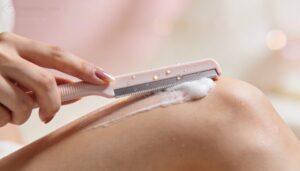
Blade angle matters more than most people realize. Once you’ve handled grain direction, tilt becomes your next lever.
For a cartridge razor, aim for roughly 15–30 degrees between blade and skin — low and flat, not steep. On curved areas like the bikini line, use curved surface alignment by following the contour, so edge contact depth stays consistent and friction stays low.
Using Light Pressure and Short, Controlled Strokes
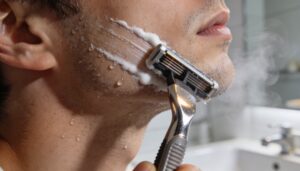
Once angle is dialed in, pressure is where most people slip up. Let the razor’s own weight do the work — that’s blade weight utilization in practice.
Keep strokes short, maybe 2–3 centimeters, and maintain a steady stroke rhythm timing.
Pressing harder won’t improve closeness; it just increases friction and redness. Light pressure, short controlled strokes: that’s proper shaving technique.
Stretching Skin to Help The Blade Track Straighter
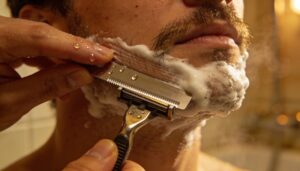
Stretching skin before each stroke is one of those small habits that changes everything. Use your free hand to pull the skin taut right next to the blade — fingertips work better than a full palm grip.
This tension hand placement straightens hair follicles, improving blade alignment benefits and reducing tugging.
Keep the area wet; lather retention strategy matters here, because dry skin undoes proper shaving technique quickly.
Top 10 Products for a Smoother, Irritation-Free Shave
The right technique only takes you so far — your products do a lot of the heavy lifting too. A sharp razor, a hydrating gel, and a good exfoliant can be the difference between smooth skin and a week of redness.
Here are ten that actually earn their place on your shelf.
1. Schick Hydro Silk TrimStyle Razor Trimmer
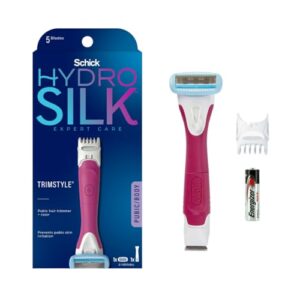
The Schick Hydro Silk TrimStyle is genuinely two tools in one — a five-blade razor on one side and a waterproof electric bikini trimmer on the other. That built-in trimmer flips out from the handle and offers four length settings, so you can customize your trim before switching to the razor for a closer finish.
The curve-sensing blades follow your body’s contours, and the integrated shea butter serum keeps skin hydrated for up to two hours post-shave — a real plus for sensitive areas.
| Best For | Anyone who wants a single shower-friendly tool that handles both trimming and shaving, especially for bikini line and sensitive areas. |
|---|---|
| Skin Suitability | Sensitive skin safe |
| Primary Use | Trim & shave |
| Moisturizing Agent | Shea butter & hyaluronic acid |
| Fragrance | Not specified |
| Eco / Ethics | Not specified |
| Price Range | Mid-range |
| Additional Features |
|
- Two tools in one — flip between the electric trimmer and five-blade razor without switching devices
- Waterproof and shower-safe, so you can use it wherever is most convenient
- Built-in shea butter serum hydrates skin for up to two hours, which really helps cut down on post-shave irritation
- No rechargeable battery — you’ll need to swap in a AAA when it dies
- Can feel a bit bulky compared to a dedicated trimmer, especially during longer sessions
- Replacement cartridges can get pricey and aren’t always easy to find depending on where you shop
2. BIC Soleil Women Disposable Three Blade Razor
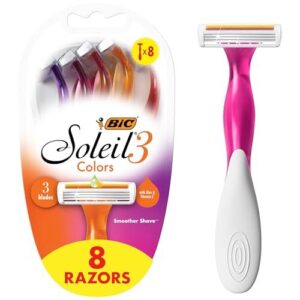
If you want reliability without the commitment, the BIC Soleil Women Disposable Three Blade Razor delivers. At roughly $1.04 per razor, it’s one of the most budget-friendly options out there — and the three-blade head does real work, reducing the number of passes you need on legs and underarms.
The aloe vera and vitamin E moisture strip helps minimize friction on sensitive skin. Just don’t store it in a damp shower corner; moisture accelerates blade corrosion faster than you’d expect.
| Best For | Budget-conscious shavers who want a reliable, no-fuss razor for smooth legs and sensitive skin without spending a lot. |
|---|---|
| Skin Suitability | Sensitive skin safe |
| Primary Use | Body shaving |
| Moisturizing Agent | Aloe vera & vitamin E |
| Fragrance | Not specified |
| Eco / Ethics | Disposable/not sustainable |
| Price Range | Budget ($10.42/10pk) |
| Additional Features |
|
- Three-blade head gives a close shave with fewer passes — legs and underarms done faster
- Aloe vera and vitamin E moisture strip is genuinely gentle on sensitive skin
- Blade cover makes it easy to toss in a bag for travel without any drama
- Blades can dull or rust quickly if left sitting in a wet shower — storage matters
- Fully disposable design isn’t great for the environment if you’re eco-minded
- Ten razors sounds like plenty until you realize heavy users might burn through them faster than expected
3. Gillette Venus Intimate Grooming Razor
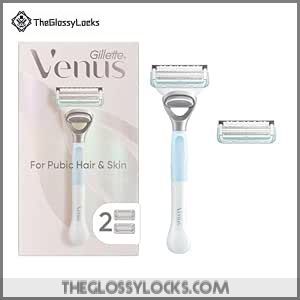
The bikini line is one of the most friction‑prone spots on the body, and most standard razors simply aren’t built for it. The Gillette Venus Intimate Grooming Razor changes that equation.
Its irritation defense bar spaces the blades so they barely graze the skin — less contact, less inflammation.
The small razor head navigates curves and folds with surprising precision, and the rear trimmer manages tighter spots without switching tools.
Dermatologist- and gynecologist-tested, it’s genuinely designed for sensitive skin, not just marketed that way.
| Best For | Anyone with sensitive skin who wants a purpose-built razor for bikini-line grooming without the usual irritation and razor bumps. |
|---|---|
| Skin Suitability | Dermatologist & gynecologist tested |
| Primary Use | Bikini shaving |
| Moisturizing Agent | None specified |
| Fragrance | Not specified |
| Eco / Ethics | Not specified |
| Price Range | Mid-range |
| Additional Features |
|
- The irritation defense bar keeps blades from digging into sensitive skin, so you get a clean shave with way less redness and bumps.
- The small head and built-in trimmer handle tight, curved areas without needing a second tool.
- Dermatologist- and gynecologist-tested — it’s actually designed for this, not just rebranded.
- Refill cartridges cost more than standard Venus blades and can be harder to find.
- The double-blade design clogs and dulls faster on thick or coarse hair, so you’ll replace cartridges more often.
- It won’t give you an ultra-close shave — if you want silky-smooth results, this one might leave you wanting more.
4. Dove Natural Origin Smoothing Body Polish
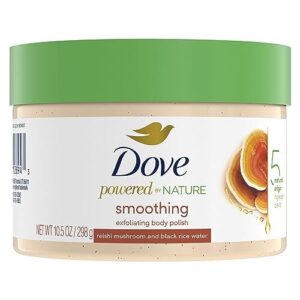
Good exfoliation before shaving isn’t optional — it’s what separates a clean pass from a bumpy, irritated mess. Dove’s Natural Origin Smoothing Body Polish does that job well.
Fine coconut powder lifts dead skin gently, while jojoba oil, moringa oil, and black rice water keep things hydrated rather than stripped.
whipped texture spreads easily and rinses clean. Use it two to three days a week pre-shave, and your razor will glide with noticeably less resistance.
| Best For | Anyone who shaves regularly and wants a gentle, moisturizing scrub that preps skin without irritation — especially if you have dry or sensitive skin. |
|---|---|
| Skin Suitability | Sensitive skin safe |
| Primary Use | Pre-shave exfoliation |
| Moisturizing Agent | Jojoba & moringa oil |
| Fragrance | Mushroom/floral |
| Eco / Ethics | 98% biodegradable, PETA approved |
| Price Range | Mid-range ($13–$14) |
| Additional Features |
|
- Coconut powder exfoliates without being harsh, so skin feels smooth and ready for a clean shave
- Jojoba, moringa, and black rice water pull double duty — you’re exfoliating and moisturizing in one step
- No sulfates or parabens, and it rinses clean without leaving your shower floor slippery
- The mushroom-floral scent is a bit of an acquired taste — not everyone will love it
- At $13–$14, it runs a few dollars higher than most drugstore scrubs
- The thick, creamy texture and fine coconut grit might feel off if you prefer a lighter, smoother formula
5. Avène Gentle Body Scrub
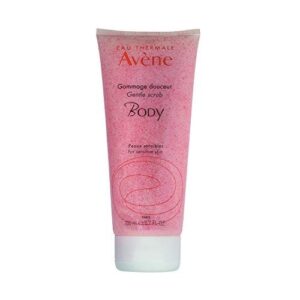
Need a scrub that doesn’t sandpaper your skin? Avène Gentle Body Scrub is a smart pre-shave pick when you’re prone to redness or stinging.
Its biodegradable cellulose and jojoba-wax beads exfoliate lightly, while Avène Thermal Spring Water and plant oils help cushion the skin barrier. The texture glides well on wet skin and rinses without a greasy film.
Use it once or twice weekly on legs, chest, or elbows before shaving, especially if stronger scrubs usually leave you feeling raw.
| Best For | People with sensitive, redness-prone skin who want a gentle body scrub for light exfoliation before shaving without leaving skin feeling stripped. |
|---|---|
| Skin Suitability | Sensitive skin safe |
| Primary Use | Pre-shave exfoliation |
| Moisturizing Agent | Jojoba wax beads |
| Fragrance | Light soft scent |
| Eco / Ethics | Biodegradable formula |
| Price Range | Mid-range |
| Additional Features |
|
- Non-abrasive exfoliation with biodegradable cellulose and jojoba-wax beads, so it feels gentle instead of harsh.
- Soap-free formula with antioxidant ingredients helps support sensitive skin and leaves it soft, not dry or greasy.
- Glides well on wet skin and works nicely once or twice a week on areas like legs, chest, and elbows.
- The scent may be too strong or unpleasant for some people, especially if you are fragrance-sensitive.
- Exfoliation is quite mild, so it may not do enough for very rough, bumpy, or callused skin.
- A few users feel the price is a bit high for the amount of product you get.
6. Billie Pre Shave Exfoliating Bar
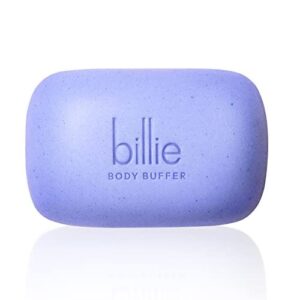
If Avène feels almost whisper-soft, Billie Pre Shave Exfoliating Bar gives you a bit more polish.
Its curved 3.5-ounce bar fits the hand well in the shower, and jojoba beads buff away dead skin so the razor can glide with less drag.
Aloe vera, shea butter, glycerin, and olive oil help offset that scrubby feel.
I like it best on legs and underarms, not the face or bikini line, where moderate exfoliation can be too abrasive for very reactive skin.
| Best For | People who want a moderately exfoliating pre-shave bar for legs, underarms, feet, or upper arms, especially if they want smoother shaving and fewer ingrown hairs without giving up moisture. |
|---|---|
| Skin Suitability | All skin types |
| Primary Use | Pre-shave exfoliation |
| Moisturizing Agent | Aloe vera & shea butter |
| Fragrance | Minimal/light |
| Eco / Ethics | Vegan & cruelty-free |
| Price Range | Budget ($9.65) |
| Additional Features |
|
- Jojoba and castor oil beads help buff away dead skin, bumps, and rough patches so skin feels smoother before shaving.
- Aloe vera, shea butter, and nourishing oils add hydration, which can help reduce post-shave dryness or irritation.
- Works well as a prep step before shave cream, self-tanner, or spray tan, and it is vegan, cruelty-free, sulfate-free, and paraben-free.
- The exfoliation is moderately abrasive, so it is not the best choice for delicate areas like the face or bikini line.
- Some people may find the bar a little scratchy if they prefer a very gentle cleanser or very soft exfoliation.
- The scent is light, and frequent use may wear the bar down faster than lighter, occasional use.
7. Gillette Venus Intimate Grooming Gel

After exfoliating, this is the kind of gel that helps you keep control. Gillette Venus Intimate Grooming Gel is clear so you can see where your razor is going, which matters on delicate curves.
It’s pH-balanced for pubic skin, dermatologist- and gynecologist-tested, and free of parabens, dyes, added fragrance, and silicones. The texture stays put without heavy foam, giving you a protective glide layer that helps cut down redness, razor bumps, and that raw, tight feeling afterward or between shaves.
Pair it with a solid aftercare routine—once your skin has settled, a gentle salicylic acid treatment a few times a week keeps follicles clear, and this guide to shaving cream for ingrown hairs covers how to pick the right formula.
| Best For | People with sensitive pubic skin who want a clear, pH-balanced shaving gel that also works as a gentle daily intimate cleanser. |
|---|---|
| Skin Suitability | Dermatologist & gynecologist tested |
| Primary Use | Shave gel & cleanser |
| Moisturizing Agent | Hydrating gel formula |
| Fragrance | Fragrance-free |
| Eco / Ethics | Not specified |
| Price Range | Mid-range |
| Additional Features |
|
- Clear gel lets you see exactly where you’re shaving, which makes it easier to stay precise on delicate areas.
- PH-balanced, dermatologist- and gynecologist-tested, and free of parabens, dyes, added fragrance, and silicones.
- Creates a protective glide layer that helps reduce razor bumps, redness, and post-shave tightness while rinsing off easily.
- The squeeze bottle can be annoying to use, and some people wish it came with a pump.
- A few users find the texture a little sticky or too soapy for their liking.
- The single 6.4-oz size can feel pricey and may run out fast if you use it often.
8. Truly Beauty Coco Cloud Shave Butter
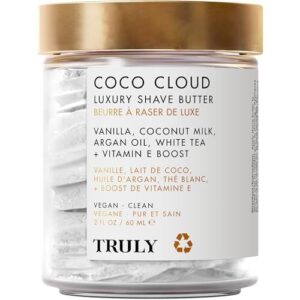
If you want more cushion than a clear gel gives, Truly Beauty Coco Cloud Shave Butter leans richer. Its whipped blend of coconut milk, mango seed butter, and argan oil helps soften hair, reduce drag, and leave skin feeling silky after rinsing.
Many people with sensitive skin like the moisturizing slip and fewer ingrown hairs.
Still, the sweet coconut-vanilla scent is strong, and the butter can thicken quickly, so use it on very damp skin and shave in short sections.
| Best For | People who want a rich, moisturizing shave product for sensitive skin and don’t mind paying more for a soft, silky post-shave feel. |
|---|---|
| Skin Suitability | Sensitive skin safe |
| Primary Use | Shave butter |
| Moisturizing Agent | Mango seed butter & argan oil |
| Fragrance | Coconut & vanilla |
| Eco / Ethics | Vegan & cruelty-free |
| Price Range | Premium ($32.00) |
| Additional Features |
|
- Rich whipped texture helps razors glide more smoothly and leaves skin feeling soft after shaving.
- Conditioning ingredients like coconut milk, mango seed butter, and argan oil may help reduce irritation and ingrown hairs.
- Vegan, cruelty-free formula with a pleasant coconut-vanilla scent for people who enjoy sweeter fragrances.
- The butter can thicken fast on skin, which may create drag and make shaving harder if you don’t work quickly.
- Residue can be harder to rinse off, and loose hair may stick to the skin during cleanup.
- The jar is small for the price, and some users find the scent too strong or overly sweet.
9. Barbasol Thick Rich Shaving Cream
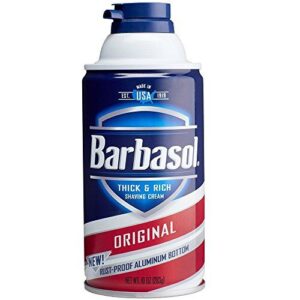
If shave butter feels too rich, Barbasol Thick Rich Shaving Cream is the simpler workhorse. It builds a dense, creamy cushion that helps the blade glide with less drag, which can mean less stinging and redness when your technique is sound.
The tradeoff is the formula is basic: it contains fragrance, sodium lauryl sulfate, triethanolamine, and aerosol propellants, so very reactive skin may prefer something gentler.
Still, for daily shaving, it’s affordable, dependable, and widely trusted for budget-minded routine use.
| Best For | Budget-minded daily shavers who want a simple, dependable foam with a creamy cushion and a familiar classic scent. |
|---|---|
| Skin Suitability | General use |
| Primary Use | Shave cream |
| Moisturizing Agent | None specified |
| Fragrance | Original/mild |
| Eco / Ethics | Aerosol/less eco-friendly |
| Price Range | Budget ($8.99/2pk) |
| Additional Features |
|
- Thick, rich cream creates a dense cushion that helps the razor glide smoothly with less drag.
- Affordable pack of two 10-oz cans offers strong value and each can can last a long time.
- Mild classic scent and straightforward formula make it a reliable everyday option many longtime users trust.
- Basic formula lacks extra moisturizers or skin-care ingredients some users may want.
- Contains fragrance, sodium lauryl sulfate, and aerosol ingredients that may not suit very reactive skin.
- Aerosol packaging is less eco-friendly, and availability can be limited in some regions.
10. Skintimate Coconut Shave Oil Moisturizer
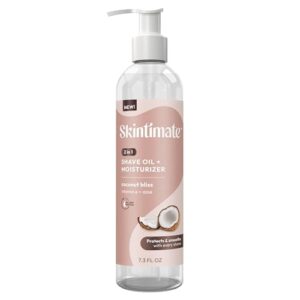
Although thicker creams suit some people better, Skintimate Coconut Shave Oil Moisturizer is a smart pick if you want more slip with less heaviness.
It works as both a pre-shave oil and post-shave moisturizer, with aloe, vitamin E, shea, sweet almond, and jojoba oils in a light, fast-absorbing formula.
You can use it on legs, underarms, and the bikini area.
Just keep in mind that the texture runs thin, and the coconut scent may linger if your skin is very sensitive.
| Best For | People who want a lightweight shave oil that adds extra glide, calms sensitive skin, and can double as a post-shave moisturizer for areas like legs, underarms, and the bikini line. |
|---|---|
| Skin Suitability | Dermatologist tested |
| Primary Use | Pre & post shave oil |
| Moisturizing Agent | Aloe, shea & jojoba oils |
| Fragrance | Coconut & orchid blend |
| Eco / Ethics | No animal testing |
| Price Range | Budget ($8.59) |
| Additional Features |
|
- Dual-use formula works as both a pre-shave oil and a post-shave moisturizer.
- Light, fast-absorbing texture helps deliver a close shave with fewer cuts, bumps, and post-shave irritation.
- Safe for sensitive skin and full-body use, including the bikini area, with aloe, vitamin E, shea, sweet almond, and jojoba oils.
- Thin, runny texture can be harder to spread evenly than a thicker cream or gel.
- Coconut fragrance may linger and feel too strong for very scent-sensitive users.
- Moisturizing and barrier protection may not be enough for people who prefer richer shave creams or need extra hydration.
How to Soothe and Protect Skin After Shaving
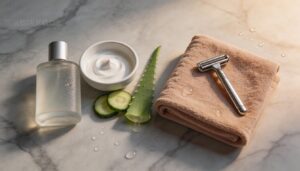
What you do right after shaving matters just as much as the shave itself. A few smart aftercare steps can calm irritation, protect your skin barrier, and help keep bumps from showing up later.
Here’s what to reach for, what to avoid, and when your skin may need a little extra help.
Rinsing With Cool Water Immediately After Shaving
For post‑shave soothing and preventing razor burn, picture:
- Cooling Effects
- Residual Irritant Removal
- Gentle Water Flow
- Pat Dry Technique
- Short Rinse Duration
Then use a brief post‑shave cooling and pore‑closure routine, or a cold compress, to calm heat quickly under running water, and stop before the skin dries.
Applying Alcohol-Free Aftershave Balms and Moisturizers
Because freshly shaved skin loses water fast, apply alcohol‑free balm while it’s still damp, then add aftershave moisturizer only if you need extra Barrier Repair.
Ingredient Benefits, Application Timing, and Layering Technique matter for postshave soothing, postshave moisturization, and Sensitive Skin Formulas, especially when you shave with the grain afterward daily.
The alcohol‑free aftershave balm helps hydrate and repair skin with shea butter and sweet almond oil.
| Product | Focus | Order |
|---|---|---|
| Balm | calm | first |
| Moisturizer | hydrate | second |
Natural Remedies: Aloe Vera, Witch Hazel, and Cold Compresses
Your medicine cabinet already holds three solid remedies.
Pure aloe vera gel delivers real aloe anti-inflammatory action — reducing redness within minutes of application. Witch hazel astringent (alcohol-free formula) tightens pores and suppresses irritation-related flushing by up to 27%. For cold compress relief, press a cool, damp cloth against skin for ten minutes.
Together, these support herbal post-shave soothing and genuine skin barrier repair.
Replacing Your Blade Every Five to Seven Shaves
A dull blade doesn’t announce itself — it just starts dragging. Blade dullness indicators include tugging, extra passes, and pinpoint nicks that weren’t there before.
Most blades hit their limit between five and seven shaves, so shave count tracking keeps you honest. Rinse and dry your blade after each use — simple blade hygiene practices that meaningfully extend blade lifespan without adding complexity to your routine.
When to Use Hydrocortisone Cream for Persistent Irritation
Sometimes the usual aloe and balm routine just isn’t enough. If post‑shave inflammation management is still on your mind days later — redness, itching, swelling — hydrocortisone cream is a reasonable short‑term use option.
Apply a thin layer two to three times daily, directly on intact skin only; avoid broken skin entirely. Stop at seven days, and if irritation returns shortly after, that’s your cue for a Doctor Consultation.
Wearing Loose Clothing to Reduce Post-Shave Friction
Once the hydrocortisone step is behind you, what you wear next matters more than you’d think. Rough fabric textures, tight waistbands, and poor seam placement all act like slow-burn friction against freshly shaved skin.
Choose tagless construction, moisture-wicking materials, and loose-fitting underwear made from cotton or modal. Temperature control helps too — breathable fabrics keep sweat from turning into another irritation trigger.
Frequently Asked Questions (FAQs)
Can diet affect skin sensitivity during shaving?
Yes, diet absolutely affects your skin’s sensitivity.
Low hydration levels, high sugar consumption, inflammatory foods, and allergy triggers can all make skin more reactive — so omega-3 intake and balanced eating genuinely support a calmer shave.
How often should you shave to avoid irritation?
Most people do well shaving every one to three days. Let your stubble reach visible length before reaching for the razor — your skin needs that recovery window.
Are certain fabrics better for post-shave comfort?
Absolutely — fabric matters more than most people realize. Cotton breathability, bamboo softness, merino temperature control, and synthetic moisture wicking all help.
Prioritize smooth fabric construction, loose-fitting underwear, and soft, breathable materials post-shave.
Can hormonal changes affect how skin reacts to shaving?
Hormonal shifts genuinely change how your skin tolerates a razor.
Androgen oiliness, estrogen dryness, progesterone inflammation, and menstrual sensitivity can all alter your skin’s baseline reactivity — making the same blade feel completely different week to week.
Conclusion
Investigating the truth behind razor burn and bumps reveals a simple yet essential fact: shaving direction is key. By understanding your hair’s natural growth pattern and adjusting your technique, you can considerably reduce irritation.
Shaving with the grain and using the right products, like pre-shave oils and soothing balms, can make all the difference.
Mastering shaving direction to prevent irritation is within your control, leading to smoother, healthier-looking skin that feels great.