This site is supported by our readers. We may earn a commission, at no cost to you, if you purchase through links. This content is for general informational and educational purposes only and is not a substitute for professional medical, dermatological, or nutritional advice.

Open that under-sink cabinet and count the half-empty bottles. Ten? Fifteen? Most of them are synthetic fragrance and preservatives doing double duty as a silent chemistry lab under your sink. That clutter isn’t just visual noise, it’s chemical buildup you’re breathing in daily.
Here’s the good news: how to reduce bathroom clutter naturally isn’t about buying more bins. It’s about swapping plastic and guesswork for glass, bamboo, and a few smart rules. Your skin, your soil, and your sanity all benefit.
Ready to reclaim that cabinet space? Let’s get your bathroom running lean, clean, and clutter-free.
Table Of Contents
- Key Takeaways
- How to Reduce Bathroom Clutter Naturally
- Streamline Your Bathroom Essentials
- Dispose of Waste Safely and Responsibly
- Choose Sustainable, Natural Storage Solutions
- Build Lasting Clutter-Free Habits
- Frequently Asked Questions (FAQs)
- How to make a bathroom less cluttered?
- What is the 50% rule in decluttering?
- How do I make my bathroom less cluttered?
- How do I declutter a shared bathroom with roommates?
- What bathroom items should never be stored together?
- How does lighting affect perceived bathroom clutter?
- Are there decluttering strategies for very small bathrooms?
- How long does a full bathroom declutter usually take?
- Whats the best order to declutter a small bathroom?
- How do you declutter a shared or family bathroom?
- Conclusion
Key Takeaways
- Stick to the Rule of Three (one shampoo, one conditioner, one body wash) and follow a one-in-one-out policy to stop duplicate toiletries from piling up.
- Swap plastic bins for natural storage like glass jars, bamboo organizers, and breathable seagrass baskets to cut clutter and moisture buildup.
- Dispose of waste responsibly: use pharmacy takeback programs for old meds, rinse bottles before recycling, and never store hazardous chemicals like bleach and ammonia together.
- Build lasting habits with a daily five-minute reset, weekly tidying rituals, and an annual deep-clean audit to keep clutter from creeping back.
How to Reduce Bathroom Clutter Naturally

Your bathroom didn’t turn into a mildew farm overnight, and it won’t clear out that way either. Going natural just means swapping quick fixes for choices that actually stick. Here’s why the natural route wins, what it gets you, and the usual suspects piling up your counter.
Why Go The Natural Route
Ever wonder why your bathroom cabinet feels like a silent chemistry lab?
Between serums, toners, and a dozen half-used bottles, it’s easy to lose track of what your skin actually needs, which is why building a simple skincare regimen can bring some much-needed order to the chaos.
Going natural cuts your chemical exposure and dodges endocrine disruptors hiding in synthetic fragrances.
It’s not just about you, either. Plant-based products protect soil health and support biodiversity conservation downstream.
Choosing natural means mindful consumption—fewer bottles, fewer toxins, more control over what actually touches your skin.
Eco-Friendly Decluttering Benefits
Going natural was step one. Now let’s talk payoff.
Reusable containers cut single-use plastic by roughly 60 percent a year — real waste reduction, real fast.
- Less landfill waste, more circular economy reuse
- Lower carbon footprints from fewer shipped bottles
- Mindful consumption habits that stick
- Reduced decision fatigue every morning
That’s zero-waste bathroom decluttering in action — practical, plastic-free living, not some passing trend. You can also practice responsible disposal methods to make sure your unwanted items are handled eco-friendly. Donate extras. Keep goods circulating. Sustainable living starts small.
Common Culprits Behind Clutter
Sale bins are sneaky. They breed duplicate toiletries faster than you’d think.
| Culprit | Where It Hides | Fix |
|---|---|---|
| Expired cosmetics | Drawers | Toss & replace |
| Travel sizes | Cabinets | Bag or donate |
| Manuals | Under sink | Shred |
Sentimental items? Keep one. The rest is just bathroom clutter hotspots waiting to happen — grab your decluttering checklist and go.
Jot each swap on a simple list and follow a bathroom cabinet organization schedule so decluttering sticks instead of fading after week one.
Streamline Your Bathroom Essentials

Your bathroom doesn’t need ten shampoos to function. It needs a system, one that keeps only what earns its spot. Here’s how to trim the fat and keep it that way.
Your bathroom doesn’t need ten shampoos, just a system that keeps only what earns its spot
The Rule of Three for Toiletries
Three’s the magic number. Pick one shampoo, one conditioner, one body wash — that’s the Rule of Three, and it kills duplicate toiletries fast.
Same goes for skincare and travel kits: three daily essentials, nothing extra hiding in drawers. This minimalist bathroom trick simplifies your daily routine, tightens inventory management, and stops backup bottles from breeding like rabbits under the sink.
One In, One Out Policy
New bottle in, old one out. That’s the whole deal.
This entry traffic control trick caps your inventory capacity limits and kills clutter management guesswork instantly.
Buy a lotion? Toss the half-used one. It builds intentional buying habits fast, same logic as wardrobe balance strategies or digital clutter management for photos. Simple decluttering habits, zero drama — just steady waste reduction goals, one swap at a time.
Dispose of Waste Safely and Responsibly

Decluttering isn’t just about keeping stuff. It’s about getting rid of it the right way. Here’s exactly how to handle old meds, empty bottles, and the sketchy stuff hiding under your sink.
Safe Medication Disposal Options
That old bottle of painkillers isn’t clutter, it’s a liability. Use a pharmacy takeback program first. No program nearby? Mix pills with dirt or coffee grounds, seal it, trash it. Check the FDA flush list for exceptions.
Scratch off labels for privacy, and stash needles in a proper sharps container. Safety beats convenience, always.
Recycling Bottles The Right Way
Tossing empty bottles in the bin feels responsible. It’s not always enough.
Give bottles a real rinse before recycling—residue contaminates whole batches. Check resin codes: PET is 1, HDPE is 2, sorted separately. Glass gets sorted by color. Cap removal policy? Depends on your locality—check first. Can’t recycle it? Upcycle glass jars for storage instead. Small steps, less single-use plastic.
Handling Hazardous Bathroom Waste
Not every bottle under your sink is harmless. That bleach-and-ammonia combo? A toxic gas risk waiting to happen. Store hazardous cleaners locked and labeled, away from kids and pets.
Broken mercury thermometer? Seal it separately, skip the trash. Biohazard waste needs bagging, gloves, real protocols. When in doubt, route it to hazardous waste facilities—not your regular bin.
Choose Sustainable, Natural Storage Solutions
Trash is handled. Now let’s talk storage that actually earns its spot. Here are four natural options worth making room for.
Bamboo and Glass Organizers
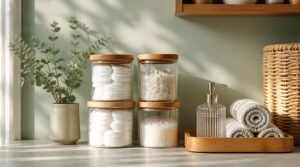
Bamboo and glass just work together. Bamboo brings moisture resistant finishes and serious durability; glass brings clarity, literally.
Look for:
- Borosilicate jars—won’t crack from heat
- Airtight lids to lock out humidity
- Modular glass stacking to save shelf space
Swap plastic bins for reusable glass or bamboo containers. Your minimalist bathroom starts looking intentional, not just empty.
Upcycled Jars for Small Items
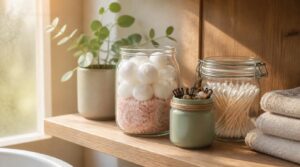
That empty pasta sauce jar? Don’t recycle it yet. Wide mouths make repurposing sauce jars easy for cotton balls or bath salts.
Baby food jars become tiny upcycled jar organizers for bobby pins and earrings. Add chalk paint or twine for aesthetic jar finishes, then label contents with simple letters.
Airtight lids keep humidity out, protecting whatever’s stored inside your sustainable storage solutions.
Breathable Baskets for Towels

Jars handle the small stuff. Towels need airflow, or you’re basically running a mildew farm behind closed doors.
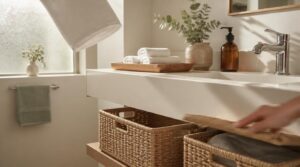
Pick woven seagrass or bamboo fiber — natural, antimicrobial, humidity-resistant. Mesh linen works too, promoting quick drying.
- Perforated sides for constant air exchange
- 12-16 inches long, 8-10 inches deep for full towel sets
- Slatted bottoms so air moves underneath
- Earthy tones that fit with your decor
Moisture control starts with breathable materials, not sealed bins.
Vertical and Under-Sink Storage
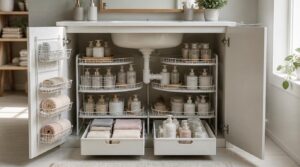
Look up before you buy another bin. Vertical space is free real estate.
Tiered shelves stack multiple levels in one cabinet. Pipe-friendly organizers curve around plumbing without a fight. Add a door rack for sponges, then sliding drawers for deep corners.
Modular storage grows with you. That under-sink bathroom vanity can finally breathe.
Build Lasting Clutter-Free Habits
Decluttering once feels great, but it doesn’t stick without a system. The real win comes from small habits you barely notice you’re doing. Here’s how to keep that clutter-free feeling for good.
Annual Reviews and Maintenance Routines
Once a year, go deep. Full annual reset: empty every cabinet, run your expiration safety checks, and cut what’s expired or doubled up.
Keep an inventory audit log so nothing sneaks back.
- Check storage capacity
- Confirm one-in-one-out compliance
- Log toss vs. keep counts
- Schedule next seasonal review
- Assign a review owner
Prevent policy drift. This annual routine keeps your decluttering habit honest.
Weekly Tidying Rituals
Annual resets are great, but your bathroom needs love more than once a year.
That’s where weekly rituals come in. Try a Sunday Sweep for deeper resets, quick Five-Minute Zones for targeted spots, and End-of-Day Tidies to wipe counters nightly.
| Ritual | Time | Focus |
|---|---|---|
| End-of-Day Tidy | 5 min | Surfaces |
| Sunday Sweep | 20 min | Shelves |
| Zone Focus | 5 min | Rotation |
Track it. Consistency beats intensity.
Seasonal Decluttering Challenges
Ever notice your bathroom gets messier right when the seasons flip? That’s seasonal change clutter creeping in.
Fight back with a quick seasonal challenge:
- Swap sunscreen for heavy moisturizers
- Toss holiday decor overflow
- Time donations to local drive windows
- Ride the motivation spike—don’t wait
Four seasons, four deep cleans. Small effort, big payoff.
Preventing Future Clutter Buildup
Clutter creeps back the second you stop watching it. Lock in a daily reset habit: five minutes, everything home.
- Cap each slot—one product, done.
- Buy only when something’s empty (one in, one out).
- Audit seasonally for expired stragglers.
Label bins, track purchases, rotate stock. That’s your decluttering routine—simple, repeatable, permanent. Small habits beat big cleanouts every time.
Frequently Asked Questions (FAQs)
How to make a bathroom less cluttered?
Cutting back on the excess starts small. Try the rule of three: three items per category, tops. Sort daily essentials from backups, audit duplicates monthly, and let countertop management guide what stays visible versus stored away.
What is the 50% rule in decluttering?
Grab any drawer, pull everything out, then only put back half. That’s the whole trick. It halves decision fatigue, delivers instant visual relief, and keeps only what’s functional — a fast, honest reset for any cluttered space.
How do I make my bathroom less cluttered?
One overflowing drawer, one empty countertop—same bathroom, opposite feel. Start with a minimalist countertop, add drawer dividers and vertical shelving, then run a quick inventory audit. Stick to a declutter schedule and watch chaos shrink fast.
How do I declutter a shared bathroom with roommates?
Give each roommate a labeled zone and personal caddy, plus a shared shopping list to avoid duplicate buying. Post a rotating cleaning calendar for accountability. Weekly resets and clear communication beat passive-aggressive sticky notes every time.
What bathroom items should never be stored together?
Your cabinet’s basically a silent chemistry lab. Bleach and ammonia never mix—toxic fumes follow. Keep meds away from steam, separate clean and dirty towels, and store electronics far from splash zones to dodge corrosion and mold.
How does lighting affect perceived bathroom clutter?
Bright, even lighting kills shadows where clutter hides. Cool white tones (4000K) and backlit mirrors double your space visually.
Glossy surfaces bounce light around, washing out small items — your bathroom suddenly looks bigger, calmer, and way more in control.
Are there decluttering strategies for very small bathrooms?
Small space, big potential. Go vertical space utilization: wall shelves, door-back racks, magnetic strips. Try a multi-functional vanity and slimline cabinetry.
Stick to the single-item rule, run timed sessions, and keep only daily essentials within reach.
How long does a full bathroom declutter usually take?
Most bathroom cleanouts take 1 to 4 hours, depending on size and clutter level. Small spaces wrap up in 30 minutes. Larger, jam-packed cabinets stretch to Break it into quick sessions to dodge decision fatigue and keep momentum steady.
Whats the best order to declutter a small bathroom?
Like your grandma’s rotary phone, one step at a time works best: clear every surface first, sort into keep-donate-discard piles, measure your shelves, then tackle the shower last. Daily essentials come first, decision fatigue stays low.
How do you declutter a shared or family bathroom?
Give everyone their own personal labeling system, set up shared storage zones for towels and cleaners, and rotate cleaning duties weekly. Track restocks on a shared list. Split zones by shelf or drawer to cut mix-ups fast.
Conclusion
One day you’ll open that cabinet and feel nothing but calm. That’s the payoff waiting on the other side.
Learning how to reduce bathroom clutter naturally isn’t a weekend project, it’s a quiet habit built bottle by bottle, jar by jar. Glass replaces plastic. Bamboo replaces junk drawers. Your skin breathes easier, your drains stay clear, and your mornings move faster. Less chemistry lab, more room for you. That’s the real win.