This site is supported by our readers. We may earn a commission, at no cost to you, if you purchase through links. This content is for general informational and educational purposes only and is not a substitute for professional medical, dermatological, or nutritional advice.
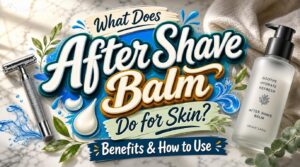
Shaving removes more than stubble. Each pass of the blade lifts away a thin layer of skin cells and strips the natural oils that keep your moisture barrier intact—leaving skin reactive, tight, and sometimes burning before you’ve even rinsed off the foam. That’s not just discomfort; it’s your barrier signaling that it needs help fast.
After shave balm works directly on that problem, delivering hydration, calming inflamed tissue, and sealing micro-abrasions before irritation has a chance to set in.
Understanding what after shave balm does for skin means knowing which ingredients drive those effects—and how to use them correctly so your skin actually recovers, rather than just feeling better for an hour.
Table Of Contents
- Key Takeaways
- What After-Shave Balm Does for Skin
- Key Ingredients That Soothe Skin
- Balm Vs Moisturizer After Shaving
- Best Balm Types by Skin
- How to Apply After-Shave Balm
- Top 4 After-Shave Balms
- Mistakes That Reduce Balm Benefits
- Frequently Asked Questions (FAQs)
- Is there any benefit to an after shave balm?
- Does aftershave help itchiness?
- Can I use after shave balm every day?
- Can after-shave balm replace daily facial moisturizer?
- How long does after-shave balm last on skin?
- Is after-shave balm safe for sensitive neck skin?
- Can women use after-shave balm after shaving?
- Does after-shave balm expire or lose effectiveness over time?
- Conclusion
Key Takeaways
- Shaving strips away not just hair but also your skin’s natural oils and a thin layer of cells, leaving your moisture barrier exposed and in need of immediate repair.
- A good after‑shave balm works through key ingredients like aloe vera, glycerin, chamomile, and vitamin E to calm inflammation, lock in moisture, and help rebuild your skin’s protective barrier.
- Matching the balm formula to your skin type matters — gel balms suit oily skin, cream balms help dry skin, and alcohol‑free options are the safest bet for sensitive or acne‑prone skin.
- Applying balm correctly — on slightly damp, clean skin, using about a quarter-sized amount, and waiting before layering serums or sunscreen — makes a real difference in how well it works.
What After-Shave Balm Does for Skin
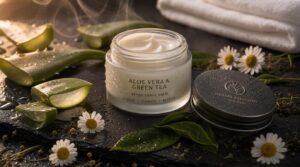
Shaving does more than just remove hair — it also strips away moisture and leaves your skin exposed.
That’s why freshly shaved skin is especially sensitive — a good aftershave application guide can help you protect those newly exposed cells before irritation sets in.
A good after-shave balm steps in to fix that, and it does quite a few things at once.
Here’s what it actually does for your skin.
Replenishes Moisture Lost During Shaving
Every time you shave, you’re stripping away natural oils that keep your skin soft and protected. That’s where aftershave balm earns its place.
Through humectant delivery and occlusive sealing, it locks moisture back in before that tight, dry feeling sets in.
Key hydrating ingredients work together for real postshave hydration:
- Glycerin pulls water toward the surface
- Hyaluronic acid holds hydration deep in skin layers
- Emollients soften and smooth the skin’s texture
- Barrier lipid restoration rebuilds what the razor disrupted
- Moisture locking ingredients slow water evaporation throughout the day
Calms Redness, Burning, and Irritation
Moisture isn’t the only thing shaving takes from your skin. The razor also triggers postshave redness, razor burn, and that uncomfortable sting you feel seconds after the blade passes.
A good balm’s Soothing Botanical Blend — think aloe vera, chamomile, and glycerin — works as natural Inflammation Blockers, calming the skin irritation fast.
That calming sensation isn’t cosmetic; it’s your skin actually settling down.
Including centella asiatica calming can further soothe post‑shave inflammation.
Supports Skin-barrier Repair
Shaving disrupts more than surface hair — it disturbs your skin’s lipid lamellae, those organized layers that keep moisture in and irritants out. A quality balm aids skin barrier repair through ceramide delivery and humectants that provide an NMF boost, restoring your skin’s natural defenses.
Shaving strips more than hair — it disrupts the skin’s moisture barrier, and only the right balm rebuilds it
Look for pH balanced formulations with barrier repair peptides; they make postshave skin barrier support genuinely effective.
Helps Reduce Razor Burn and Ingrown Hairs
well-repaired barrier also helps with two frustrating post-shave problems: razor burn and ingrown hairs.
Good aftershave balm uses friction reduction techniques — its moisturizing formula lets skin settle smoothly after the blade passes.
Cooling ingredient synergy from aloe and chamomile calms inflamed follicles fast. Combined with gentle exfoliation balance, anti-inflammatory ingredients, and smart hydration timing, these barrier strengthening strategies give hair a cleaner path out, reducing ingrown hairs noticeably.
Creates a Light Protective Layer
Think of after-shave balm as a breathable shield.
Through Film Formation Mechanics, lightweight emollients create a Microcut Barrier that coats exposed skin without clogging pores — that’s a noncomedogenic formulation working quietly in your favor.
The Occlusive Humectant Balance draws moisture in while Slip Reduction limits friction.
This Lightweight Layering helps skin barrier restoration after shaving seamlessly.
- Covers micro-cuts before bacteria can settle in
- Slows moisture loss right when skin needs it most
- Reduces that raw, tight feeling after rinsing
- Stays light enough for daytime comfort
- Layers cleanly under sunscreen or serum
Key Ingredients That Soothe Skin
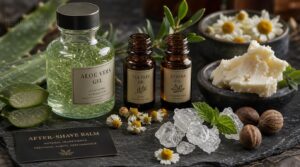
The right ingredients make all the difference between a balm that actually works and one that just sits on your skin. Most quality after-shave balms share a handful of key actives that each does a specific job, from calming inflammation to locking in moisture.
Here’s a closer look at what those ingredients are and why they matter.
Aloe Vera for Cooling and Comfort
Aloe vera is one of the most reliable soothing ingredients you’ll find in quality balms.
Its high water content delivers an instant cooling sensation on contact, while its healing polysaccharides — like acemannan — help postshave skin hydration and gentle barrier formation at the skin surface.
| Aloe Vera Benefit | How It Helps Your Skin |
|---|---|
| Cooling Sensation | Eases heat and burning immediately |
| Soothing Mechanism | Calms redness and post-shave irritation |
| Hydration Science | Retains surface moisture to prevent tightness |
| Healing Polysaccharides | Helps minor skin repair after shaving |
| Barrier Formation | Creates a light protective layer on skin |
That’s why it’s a cornerstone of the best benefits of aftershave balms.
Glycerin for Lasting Hydration
Glycerin works like a humectant reservoir beneath your skin’s surface, pulling water in and holding it there long after you’ve rinsed off. As a core synergistic humectant in aftershave, it helps skin barrier reinforcement by slowing moisture loss throughout the day.
Here’s what glycerin actually does for postshave skin hydration:
- Moisture Retention – Reduces water evaporation from the outer skin layer
- Humidity-Driven Absorption – Draws environmental moisture toward dry, irritated skin
- Barrier Strengthening – Keeps the stratum corneum flexible and comfortable
Chamomile for Reducing Visible Redness
Chamomile does more than smell pleasant — it actively works to calm the redness shaving leaves behind. Its key compounds, bisabolol and azulene, deliver real anti-inflammatory action on irritated skin.
Flavonoid antioxidants help reduce oxidative stress that worsens visible flushing.
If you have sensitive skin, look for standardized chamomile extract types in your aftershave balm. Always do a patch test first.
Vitamin E for Antioxidant Support
Vitamin E is one of those ingredients that quietly does a lot. After shaving, your skin faces oxidative stress — and that’s where free radical scavenging becomes essential. Vitamin E, particularly its tocopherol variants, protects your skin through lipid peroxidation prevention, keeping the barrier intact when it’s most vulnerable. Look for balms that use it alongside synergistic moisturizers for better skin healing after shaving:
- It acts as a skin barrier antioxidant, shielding exposed cells from damage
- Tocopherol variants absorb easily into balm textures, making absorption part of your application technique for aftershave balm
- Paired with humectants, the aftershave benefits of vitamin E go even further
Witch Hazel for Gentle Oil Control
If your skin is prone to becoming oily after shaving, witch hazel extract is worth paying attention to. It works as a mild astringent, supporting sebum regulation and pore tightening without stripping your skin dry. Think of it as finding the middle ground — balanced oil, not zero oil.
| Benefit | How It Works | Best For |
|---|---|---|
| Shine Control | Binds surface oil for a matte finish | Oily skin types |
| Pore Tightening | Temporarily tightens skin’s surface | Large, visible pores |
| Oil Control for Men | Regulates sebum without harsh drying | Daily post-shave use |
Balm Vs Moisturizer After Shaving
After shaving, reaching for the right product makes a real difference in how your skin feels and recovers. Both balm and moisturizer have their place, but they don’t work the same way — and knowing the distinction helps you make a smarter choice.
Here’s how they compare across the details that matter most.
Why Balm is Better for Post-shave Irritation
When skin feels raw right after shaving, a regular moisturizer often can’t keep up. Balm is built differently — its soothing texture and alcohol‑free formula calm post‑shave irritation quickly, while micro‑barrier formation shields exposed skin.
Here’s how balm compares:
| Feature | After-Shave Balm | Regular Moisturizer |
|---|---|---|
| Skin Calming Benefits | High | Moderate |
| Reducing Postshave Redness | Targeted | General |
| Post-Shave pH Balance | Optimized | Not focused |
A fragrance‑free formula with soothing ingredients addresses what moisturizing alone can’t.
When Moisturizer Can Be Enough
Not every shave calls for a balm. If you’re experiencing only mild tightness and redness fades within minutes, a balanced existing moisturizer with glycerin or chamomile can handle lightweight hydration needs well.
| Situation | Moisturizer Enough? | Why |
|---|---|---|
| Mild tightness only | Yes | Barrier intact |
| Quick redness fade | Yes | Low inflammation |
| Persistent stinging | No | Needs targeted relief |
non-irritating formulas for best results.
Which Option Feels Lighter on Skin
Texture perception matters more than most people expect. Gel-based balms win here — their lightweight gel texture absorbs quickly, leaving almost no residue on the surface.
A fast-absorbing, lightweight aftershave balm practically disappears into the skin, while a heavier moisturizer can linger. That cooling sensation also makes balms feel even lighter.
| Factor | After-Shave Balm | Moisturizer |
|---|---|---|
| Texture Perception | Light, gel-like | Creamier, denser |
| Absorption Rate | Fast-absorbing | Moderate |
| Finish Feel | Matte or satin | Slightly dewy |
| Residue Level | Minimal | Noticeable |
| Cooling Sensation | Often present | Rarely included |
How Each Supports Hydration Differently
Both products hydrate, but they work through different mechanisms. A moisturizing balm vs gel comparison really comes down to how each delivers that relief.
Balms lean on humectant binding — glycerin pulling water into your skin — plus barrier lipid boost through ceramides and squalane film support. Moisturizers tend toward emollient release and occlusion thickness, sealing hydration rather than drawing it in.
| Hydration Mechanism | After-Shave Balm | Moisturizer |
|---|---|---|
| Humectants in aftershave | High concentration | Moderate |
| Occlusion Thickness | Light film | Richer seal |
| Barrier Lipid Boost | Targeted repair | General support |
| Emollient Release | Fast, surface-level | Slower, deeper |
When to Use Both Together
Sometimes your skin needs both, and knowing when to layer them makes all the difference. Use your aftershave balm first, let it settle for two to three minutes, then follow with a moisturizer if your skin still feels tight.
| Step | Product |
|---|---|
| 1st layer | Aftershave balm |
| 2nd layer | Moisturizer (if needed) |
| 3rd layer | Sunscreen (SPF) |
| Delay | Retinoid or acne cream |
Best Balm Types by Skin
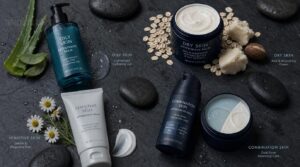
Not every balm works for every face, and that’s where skin type really matters. The wrong formula can leave you greasy, broken out, or still irritated after shaving.
Here’s how to match the right balm to what your skin actually needs.
Gel Balms for Oily Skin
If your skin often gets shiny by midday, a gel aftershave balm might be the smartest call you make after shaving. These lightweight fast-absorbing aftershave balms are built around oil control mechanics — they hydrate without loading your pores.
- Non-Greasy Finish: cooling gel aftershave dries down cleanly, leaving no slick residue
- Pore-Friendly Formulation: noncomedogenic ingredients won’t clog or irritate freshly shaved skin
- Fast Absorption Benefits: the water-forward texture sinks in quickly, ideal before sunscreen
- Daytime Reapplication: lighter than cream balms, easy to reapply without heaviness
Cream Balms for Dry Skin
Dry skin needs more than a quick splash of moisture — it needs ingredients that actually stay. Cream balms deliver exactly that, with rich creamy texture and moisturizing heavyweights like glycerin, shea butter emollient, and occlusive ingredients that lock hydration in.
Add oat extract soothing properties, niacinamide boost for texture, and urea benefits for that tight, flaky feeling, and your skin finally gets real relief.
Alcohol-free Balms for Sensitive Skin
Sensitive skin doesn’t forgive a bad formula. alcohol-free aftershave balm skips the sting entirely, making it a smart call if your face is prone to flare up fast.
dermatologist tested claims on the label — that matters.
best sensitive-skin picks share a few things:
- Soothing ingredients like aloe vera and chamomile
- Moisturizing glycerin for lasting comfort
- Fragrance free formulations to avoid unnecessary irritation
Non-comedogenic Formulas for Acne-prone Skin
Acne-prone skin needs a balm that hydrates without loading your pores. Look for an oil-free base, noncomedogenic aftershave solutions, and real ingredient transparency — not just a label claim.
| Feature | What to Look For | Why It Matters |
|---|---|---|
| Comedogenic Rating | Low or zero-rated ingredients | Reduces pore-clogging risk |
| Silicone Use | Lightweight, non-occlusive types | Smooth finish without blocking pores |
| Mattifying Finish | Oil-absorbing or satin texture | Controls shine, enhances post-shave skin barrier support |
Lightweight fast-absorbing aftershave balms with glycerin and aloe deliver acne prevention without heaviness.
Lightweight Options for Combination Skin
Combination skin plays both sides — oily through the T-zone, drier along the cheeks. Light Gel Formulas handle this well because their Quick Absorption and Low-Residue Finish prevent buildup where you don’t need it. Zonal Hydration lets you apply more where skin feels tight.
These lightweight fast-absorbing aftershave balms rely on hydrating humectants and Silky Slip to moisturize evenly, making noncomedogenic aftershave solutions suitable for all skin types.
How to Apply After-Shave Balm
Applying after-shave balm the right way makes a bigger difference than most people realize. A few simple steps can mean the difference between skin that feels calm and skin that stays irritated all day.
Here’s exactly how to do it.
Rinse With Cool Water After Shaving
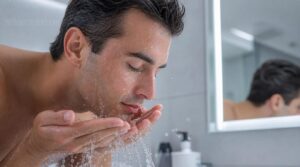
Right after shaving, splash your face with cold water for about 30 seconds. This simple step triggers a vasoconstriction effect that promotes redness diminishment and swelling prevention, giving you that instant post‑shave refresh.
It also manages residue elimination, washing away leftover foam and loosened skin.
Cooler temperatures calm skin irritation fast, so your aftershave balm absorbs better and gets straight to soothing post‑shave irritation.
Pat Skin Dry, Leaving It Slightly Damp
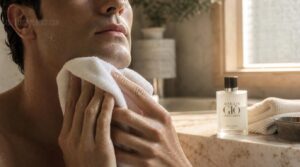
Once you’ve rinsed, grab a clean towel and gently pat — don’t rub — your face dry.
Leaving your skin slightly damp is one of the easiest postshave hydration techniques to get right.
Damp skin benefits include reduced friction during application and even balm spread across the shaved area.
That thin moisture layer also aids moisture retention, so your aftershave balm absorbs where it’s needed most.
Use a Quarter-sized Amount
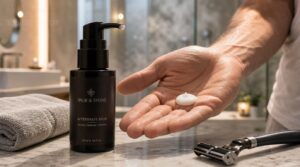
Now that your skin is prepped, portion control matters more than you’d think. Dispense a quarter-sized amount — no more.
That thin layer benefits your skin by spreading evenly across the face and neck without leaving tacky residue. More product doesn’t mean more relief. Even coverage from a small amount is your goal, keeping absorption fast and your postshave routine clean.
Massage Upward on Face and Neck

Warm the balm between your palms first — that small step alone improves absorption. Then massage it into the skin using upward strokes, starting at the neck and sweeping toward the jawline. This tool‑free technique enhances both microcirculation support and gentle lymphatic drainage naturally.
- Use gentle pressure with your finger pads, not fingertips
- Keep strokes slow and consistent for better moisturizing effect
- Focus extra time on the neck, where razor burn lingers most
Wait Before Applying Sunscreen or Serums
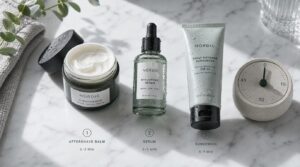
Once your aftershave balm feels fully absorbed — no tackiness, no slip — that’s your signal to move on. For serums, allow 30 seconds to 2 minutes before layering.
Give moisturizer a 5-to-10-minute dry time. Sunscreen goes last, always.
Rushing breaks the layering timing rules and dilutes your postshave skin barrier support. Patience here is what makes moisturizing and protecting skin after shaving actually work.
Top 4 After-Shave Balms
Finding the right after-shave balm doesn’t have to feel overwhelming.
There are a few standout options that consistently deliver on comfort, ingredients, and results.
Here are four worth keeping on your radar.
1. NIVEA MEN Real Madrid Sensitive Post Shave Balm
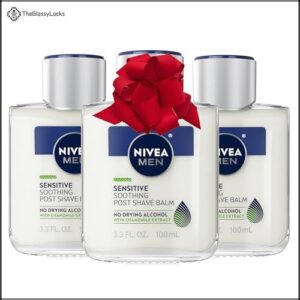
If sensitive skin is your concern, this one deserves a close look. The NIVEA MEN Real Madrid Sensitive Post Shave Balm is alcohol‑free and built around a VitaminPro Complex — Vitamin E, Provitamin B5, and chamomile extract — that works together to calm burning, reduce redness, and restore moisture after every shave.
Glycerin and panthenol keep hydration steady without leaving a greasy finish.
It comes in a 3‑pack at $21.91, making it genuinely practical for daily use.
| Best For | Anyone with sensitive skin who wants a reliable, no-fuss post-shave balm — especially Real Madrid fans looking for a practical gift. |
|---|---|
| Alcohol-Free | Yes |
| Volume | 3.3 fl oz |
| Skin Type | Sensitive |
| Soothes Irritation | Yes |
| Non-Greasy | Yes |
| Moisturizing | Yes |
| Additional Features |
|
- Alcohol-free formula with Vitamin E, Provitamin B5, and chamomile tackles burning, dryness, and irritation without stinging
- Fast-absorbing and non-greasy, so you can put your shirt on right after and not think twice
- The 3-pack at $21.91 is solid value for something you’re reaching for every day
- Contains fragrance, so it’s a skip if your skin reacts badly to scented products
- Only comes in one size — no travel option if you want something gym-bag friendly
- Limited-edition branding means stock can be hit or miss depending on when you’re shopping
2. Jack Black After Shave Cooling Gel
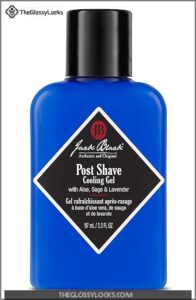
If your skin is sensitive or reacts easily after shaving, the Jack Black Post Shave Cooling Gel is worth considering. It’s alcohol-free and fragrance-free, so it won’t sting or dry out freshly shaved skin.
The formula combines aloe vera, glycerin, allantoin, and chamomile to calm redness and restore moisture quickly.
A little goes a long way — the 3.3 oz bottle lasts longer than you’d expect.
It’s dermatologist-tested, cruelty-free, and made in the USA, priced at around $23.
| Best For | Anyone with sensitive or easily irritated skin who wants a gentle, no-fuss post-shave treatment that calms redness without the sting. |
|---|---|
| Alcohol-Free | Yes |
| Volume | 3.3 fl oz |
| Skin Type | Sensitive |
| Soothes Irritation | Yes |
| Non-Greasy | Yes |
| Moisturizing | Yes |
| Additional Features |
|
- Alcohol-free and packed with skin-soothers like allantoin and glycerin — great for reactive skin
- A little covers a lot, so the bottle lasts way longer than its size suggests
- Dermatologist-tested, cruelty-free, and made in the USA
- At $23, it’s on the pricier side if you’re watching your budget
- Some users notice a faint lavender scent despite the "fragrance-free" label
- Can be tricky to find in stores — stock runs out pretty often
3. Baxter of California Men’s After Shave Balm
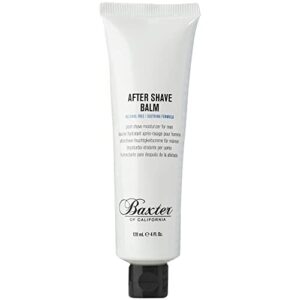
If you want something that works quietly and gets out of the way, Baxter of California’s After Shave Balm is a solid pick.
It’s alcohol-free, paraben-free, and built around glycerin, aloe vera, and allantoin — a trio that hydrates, soothes, and strengthens your skin barrier without feeling heavy.
The lightweight gel-balm absorbs quickly, leaves a matte finish, and won’t sting.
It does come at a higher price point, and very dry skin may need an extra moisturizer afterward.
| Best For | Guys with sensitive skin who want a clean, no-fuss after-shave that calms irritation without any alcohol or heavy residue. |
|---|---|
| Alcohol-Free | Yes |
| Volume | 4 fl oz |
| Skin Type | All types |
| Soothes Irritation | Yes |
| Non-Greasy | Yes |
| Moisturizing | Yes |
| Additional Features |
|
- Alcohol-free formula with aloe vera and allantoin — soothes redness and supports your skin barrier
- Lightweight gel-balm absorbs fast, leaves a matte finish, and won’t sting
- Versatile enough to use on legs, underarms, or even as a makeup primer
- Pricier than most drugstore after-shave balms
- May not be enough moisture on its own if you have very dry skin
- The initial barbershop scent might put some people off, even though it fades quickly
4. The Art of Shaving Lavender Aftershave Balm
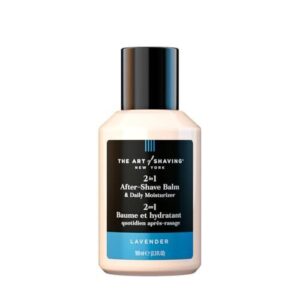
If you prefer something with a touch of luxury, The Art of Shaving Lavender After-Shave Balm is worth considering.
It’s alcohol-free and oil-free, with shea butter, glycerin, and jojoba seed oil working together to moisturize and condition freshly shaved skin.
The lavender essential oil gives it a calming, pleasant scent.
For best results, follow how to use an essential oil diffuser safely and adjust the fragrance intensity.
It absorbs well and claims up to 8 hours of hydration, making it more than a quick fix.
Just note — at $42.50 for 3.3 fl oz, it’s a premium choice.
| Best For | Men with sensitive or dry skin who want a soothing, alcohol-free balm and don’t mind spending a little more for quality ingredients. |
|---|---|
| Alcohol-Free | Yes |
| Volume | 3.3 fl oz |
| Skin Type | Sensitive & Dry |
| Soothes Irritation | Yes |
| Non-Greasy | Yes |
| Moisturizing | Yes |
| Additional Features |
|
- Alcohol- and oil-free formula with shea butter and grape seed extract keeps skin hydrated without that greasy feeling
- Lavender essential oil gives it a calming, natural scent that’s free from harsh added fragrances
- Gentle enough for daily use on sensitive or easily irritated skin, especially in colder months
- At $42.50 for 3.3 fl oz, it’s pricier than most aftershave options on the market
- The balm runs thin, so you’ll likely need around 5 pumps per use — meaning the bottle won’t last as long as you’d hope
- The lavender scent can smell more "chemical" than natural depending on your nose, and the pump dispenser can be awkward to use
Mistakes That Reduce Balm Benefits
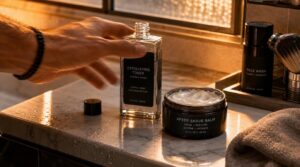
Even a good balm can fall short if you’re not using it the right way. Small habits — like reaching for the wrong formula or skipping a step — quietly chip away at the results you’d otherwise get.
Here are the most common mistakes worth fixing.
Using Too Much Product
More isn’t always better — and that’s especially true here. Using too much balm is one of the most common aftershave application mistakes to avoid.
Excessive residue sits on the surface, leading to clogged pores, barrier overload, and increased irritation on already-reactive skin.
For proper postshave skin care and irritation management, apply a small amount — about a quarter-sized drop — and let it fully absorb.
Choosing Formulas With Harsh Alcohols
Not all alcohols are created equal. Ethanol and isopropyl alcohol have a fast alcohol evaporation rate that strips natural oils, weakens your skin barrier, and rank among the top irritation triggers post-shave.
That tight, stinging feeling? That’s your skin signaling distress.
Alcohol-free formula options rely on non-alcoholic bases with alternative humectants like glycerin instead — far gentler choices for choosing the right aftershave product.
Picking The Wrong Formula for Your Skin Type
Choosing the wrong formula is just as damaging as skipping balm entirely. A texture mismatch — like reaching for a rich cream when your skin runs oily — can trigger excess oil, clogged pores, and breakouts. Dry skin suffers the opposite: lightweight balms disappear fast, leaving dryness and flakiness behind.
- Oily skin worsens with heavy, pore-clogging balms
- Dry skin stays tight when moisture levels are too low
- Sensitive skin flares when irritation triggers like fragrance sneak in
- Acne-prone skin needs non-comedogenic formulas, full stop
Understanding skin types for grooming makes choosing the right aftershave product far simpler.
Skipping Balm After Every Shave
Even getting the formula right won’t help if you skip the balm altogether. Skipping aftershave balm after every shave means longer recovery, higher discomfort, and more frequent bumps — your skin simply doesn’t get the reset it needs.
Without consistent postshave skin care, extended dryness sets in, skin hydration drops, and elevated infection risk through micro-cuts becomes a real concern.
Applying Too Soon Before Skin is Clean Enough
Rushing to apply balm on skin that isn’t fully clean is another easy trap to fall into. Residual product trapping — leftover shaving gel, soap, or surface oil buildup — blocks your balm from reaching irritated skin directly. That causes absorption delay, pilling risk, and uneven comfort.
Rinse with cool water, pat onto damp skin, then apply. Clean skin is the foundation for every application tip for aftershave balm to actually work.
Frequently Asked Questions (FAQs)
Is there any benefit to an after shave balm?
Yes, absolutely.
After-shave balm delivers real post-shave comfort by restoring moisture, calming irritation, and supporting your skin microbiome.
It’s a simple step with meaningful benefits of aftershave balm for long-term skin health.
Does aftershave help itchiness?
Ironically, the itch you feel after shaving is your skin asking for exactly what most people skip.
A fragrance-free formula with aloe vera and glycerin humectant concentration can calm that post-shave irritation fast.
Can I use after shave balm every day?
For most people, daily use is perfectly fine — especially with an alcohol-free aftershave balm. If your skin tolerates it well, there’s no reason to skip it after every shave.
Can after-shave balm replace daily facial moisturizer?
After-shave balm can cover short-term postshave hydration needs, but it’s not a full moisturizer replacement. For long-term skin health, pair an alcohol-free formula with your daily moisturizer.
How long does after-shave balm last on skin?
Most balms absorb within 2 to 5 minutes, with soothing comfort lasting several hours.
Your skin type, formula thickness, and environmental factors all influence how long that moisture retention and protective film longevity last.
Is after-shave balm safe for sensitive neck skin?
Yes, most after-shave balms are safe for sensitive neck skin — especially alcohol-free formulas with aloe vera and chamomile.
Always do a patch test first, and follow dermatologist recommendations to avoid fragrance sensitivity reactions.
Can women use after-shave balm after shaving?
Absolutely — aftershave balm is gender-neutral. Women can apply it after leg shaving, underarm post-shave, or facial hair removal. If it soothes and hydrates, it works, regardless of how it’s branded.
Does after-shave balm expire or lose effectiveness over time?
Like most good things, after-shave balm doesn’t last forever.
Once opened, expect a shelf life of one to two years before spoilage signs — odd smell, color change, or separation — signal it’s time to replace it.
Conclusion
Every shave is a small stress test for your skin—and what you do in the minute after determines whether it recovers well or stays reactive.
What does after shave balm do for skin? It steps in precisely when your barrier is most vulnerable, calming irritation, restoring moisture, and sealing what the blade disrupted.
Choose the right formula for your skin type, apply it consistently, and your skin won’t just feel better today—it’ll hold up longer over time.