This site is supported by our readers. We may earn a commission, at no cost to you, if you purchase through links.

Dry, brittle hair often comes down to one overlooked step: not how often you moisturize, but how you do it.
squeeze product into their palms, run it through their hair, and call it done—then wonder why their strands still feel rough by midday. The truth is application technique makes or breaks your results.
Done right, moisturizing creates a protective barrier that keeps each strand flexible, smooth, and resistant to breakage. This guide walks you through exactly how to apply hair moisturizer so the hydration actually stays where you need it.
Table Of Contents
- Key Takeaways
- Why Hair Moisturizer Matters
- Choose The Right Moisturizer
- Prep Hair Before Moisturizing
- Apply Hair Moisturizer Correctly
- Seal in Moisture Afterward
- Keep Hair Moisturized Longer
- Frequently Asked Questions (FAQs)
- How to put moisturizer in your hair?
- Do you apply moisturizer on wet or dry hair?
- What is the 3 minute moisturizer rule?
- Can moisturizer help with color-treated or bleached hair?
- Does hard water affect how moisturizer works?
- Can you over-moisturize hair, and what happens?
- Should childrens hair be moisturized differently than adults?
- Does diet or hydration impact hair moisture levels?
- Conclusion
Key Takeaways
- Apply moisturizer to damp—not dripping—hair, focusing on mid-lengths and ends, where dryness and breakage start.
- Your technique matters more than your product: warm the formula between your palms, work in sections, and build up in small amounts to avoid grease and buildup.
- Always seal moisture in with a light oil like argan or jojoba after moisturizing, or it’ll evaporate before it can do its job.
- Consistency beats intensity—a simple routine of regular moisturizing, weekly deep conditioning, and monthly clarifying keeps hydration locked in long-term.
Why Hair Moisturizer Matters
Moisturizer isn’t just a nice-to-have — it’s what stands between your hair and a whole lot of damage. Whether your strands feel rough, look dull, or break off more than they should, hydration is usually the missing piece.
If you’re not sure where to start, these hair product reviews for dry hair can help you find the right moisturizer for your specific texture and needs.
Here’s exactly what the right moisturizer does for your hair.
Reduces Dryness and Brittleness
Dry hair isn’t just a texture problem — it’s a structural one. When your strands lack moisture, the cuticle lifts and roughens, making hair stiff and prone to snapping.
While treatments can smooth the surface, understanding what makes hair strands become dead or damaged explains why trimming is still the only true fix.
Regular use of a deep‑conditioning mask benefits can restore moisture to brittle hair.
That’s where hair moisturizers step in, working through:
- Hydration Film that coats each strand and slows moisture loss
- Cuticle Smoothing to restore flexibility and reduce brittleness
- Fiber Lubrication that gives dry hair back its elasticity boost
Helps Prevent Frizz and Breakage
Brittleness and frizz usually go hand in hand. When your cuticle isn’t sealed properly, humidity sneaks in and causes uneven swelling — hello, puffiness.
That’s where cuticle sealing and humidity blocking ingredients in a good hair moisturizer cream do the heavy lifting. Apply a frizz friendly amount using anti friction drying habits, and that lightweight slip helps prevent the mechanical stress behind split ends and breakage.
Improves Softness and Shine
Once frizz is under control, softness and shine follow naturally. Cuticle smoothing from humectant retention ingredients like glycerin and hyaluronic acid keeps strands hydrated and reflective. Emollient gloss from argan or shea butter fills surface gaps, boosting hair shine enhancement without greasiness.
With the right hair moisturizer cream and proper application technique for hair moisturizer cream, moisture lock and lightweight conditioning work together beautifully.
Supports Healthier Styling and Manageability
Soft hair is easier hair. When moisturizer adds slip enhancement to your strands, detangling takes seconds instead of minutes — and styling hair after moisturizing feels easy.
Proper application technique for hair moisturizer cream enhances natural pattern definition and weightless volume without stiffness. It even aids scalp hydration, protective coating along the shaft, and moisture lock that makes protective hairstyles for moisture retention last longer.
Choose The Right Moisturizer
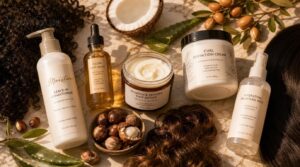
Not all moisturizers are created equal, and grabbing the wrong one can leave your hair worse off than before.
hair type, texture, and condition all play a role in what actually works for you.
Here’s what to look for when choosing the right moisturizer.
Match Formulas to Your Hair Type
Not every moisturizer works for every head of hair — and using the wrong one is like wearing shoes two sizes off. Texture-Based Formulas, Porosity Pairing, Density Adjustments, Curl Pattern Matching, and Scalp Condition Alignment all guide your choice:
- Straight or fine hair — lightweight leave-ins only
- Wavy hair — medium creams that won’t flatten waves
- Curly or coily hair — rich, thick formulas for curl definition
- High porosity hair — sealing emollients; low porosity hair needs lighter, spreadable textures
Look for Water-based Ingredients
Flip that bottle over and check the ingredient list — if water or aqua isn’t first, keep looking. Water-based formulas rely on the water solubility factor to carry humectants like glycerin and hyaluronic acid deep into each strand. Ingredient order clues you into humectant concentration.
If your cuticles are compromised, even the best humectant-rich formula won’t lock in much moisture — here’s how to tackle keratin-damaged hair and restore your cuticle’s sealing ability before layering on conditioner.
Good pH balance keeps the formula stable, while a lightweight gel texture benefits fine hair by absorbing fast without buildup.
Choose Humectants and Emollients
Think of humectants and emollients as a two-person team. Humectants — like glycerin, aloe vera, and hyaluronic acid — pull water into each strand.
Emollients, like shea butter and natural oils for hair, seal that moisture in.
Ingredient compatibility matters: apply your humectant-rich hair moisturizer cream first, then layer an oil sealant over it.
low humidity, lean heavier on emollients to keep strands smooth.
Avoid Heavy Buildup and Harsh Additives
Some ingredients are quietly working against you.
Non‑soluble silicones coat strands with a film that water can’t rinse out. Petrolatum residue repels moisture instead of holding it. Heavy wax layering and thick butter overload leave hair feeling coated but dry inside. Harsh alcohols strip what little moisture remains.
Watch for these offenders:
- Non‑soluble silicones that require clarifying to remove
- Petrolatum and mineral oil that seal moisture out
- Heavy wax layering from edge controls and pomades
- Thick butter overload that blocks absorption
- Harsh alcohols with a drying effect on strands
Choose silicone‑free products and pair them with a sulfate‑free shampoo to keep product buildup removal manageable — avoiding sulfates and harsh chemicals protects your routine long‑term.
Pick Leave-ins, Creams, or Lotions
Not all hair moisturizers feel the same — and that texture difference matters. Lightweight leave-in conditioners mist on easily, making them ideal for fine hair and travel-friendly options in your bag.
Hair creams and hair moisturizer creams are thicker, better for coily or dry ends. Lotions land in between.
Match your weight preference and scalp sensitivity to the right formula, and your moisturizing routine stays balanced.
Prep Hair Before Moisturizing

What you do before applying moisturizer matters just as much as the product itself. Your hair needs the right foundation to actually absorb and hold onto hydration.
Here’s how to set it up properly.
Wash With a Gentle Shampoo
Start your moisturizing hair care routine with a solid foundation: clean strands. A gentle shampoo removes buildup without throwing off your scalp pH balance.
Sulfate-free formulas are your best bet — they cleanse without stripping the natural oils your hair needs. Fragrance-free options work well for sensitive scalps.
Always rinse with lukewarm water, and keep your wash frequency to two or three times a week.
Use Conditioner Before Application
Once your shampoo step is done, reach for your leave-in conditioner or rinse-out formula before anything else. Conditioner creates a barrier formation on each strand, giving your moisturizer something to actually grip.
That slip enhancement makes detangling ease real — fewer snags, less breakage. It also delivers an absorption boost, so your moisturizing hair care routine products penetrate evenly rather than clumping in patches.
Leave Hair Damp, Not Dripping
After your leave-in conditioner rinse, don’t reach for your hair moisturizer cream just yet. You’re in the Absorption Efficiency Window — that sweet spot where hair is damp, not dripping.
Too much water dilutes your product before it can work. This is your Cuticle Sealing Phase.
Damp strands support Even Distribution Mechanics, better moisture retention, and smarter Drying Time Optimization without stressing Hair Elasticity Management.
Gently Towel-dry Without Rubbing
Now that your hair is damp, grab a microfiber towel. Your Microfiber Towel Choice matters more than you’d think — rough terrycloth drags against wet strands and lifts the cuticle.
Instead, use the Blot Press Technique: press and hold, don’t rub. Try the Upward Squeezing Motion from ends to roots, working in the Sectioned Drying Method.
A Loose Turban Wrap finishes it off.
Detangle and Section Hair First
With your hair blotted and damp, don’t skip this step — detangling before moisturizing saves you from breakage later.
- Use a wide-tooth comb, not a fine-tooth brush
- Apply a leave-in conditioner for slip products that glide through knots
- Divide into 4–8 sections using smart clipping strategies
- Follow detangling order: ends first, then roots
- Choose tool selection based on your texture for better hair hydration
Sectioning techniques make your hair moisturizer cream absorb evenly every time.
Apply Hair Moisturizer Correctly
Getting the application right makes all the difference between hair that feels soft and hair that feels weighed down or greasy.
It’s less about how much product you use and more about where and how you put it.
Here’s exactly what to do, step by step.
Start With a Small Amount
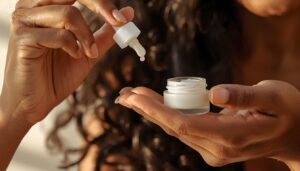
Less is more when applying moisturizer — start with a pea-sized dosing and build from there. For short hair, dime-sized amount is enough. For longer or thicker strands, try one to two small portions.
This incremental application lets your hair absorb what it needs before you add more. Good portion control prevents that greasy, weighed-down feeling before it starts.
Focus on Mid-lengths and Ends

Work the product down from your mid-lengths toward the ends — that’s where end grain direction matters most. Your ends are the oldest, driest part of the strand, so they need split-protection coating first.
Use brushless smoothing with your fingers for lightweight layering that won’t weigh hair down. Rinse-skip timing keeps the moisture locked in, supporting long-term moisture retention right where breakage starts.
Avoid The Scalp Unless Needed

Your scalp already manages its own scalp nourishment through natural sebum — adding moisturizer on top disrupts that scalp oil balance and can feed the fungus behind dandruff.
For scalp sensitivity management and itch flake prevention, keep product off your roots. Root area limitation also means better product buildup control overall.
Only treat a genuinely dry scalp with a targeted dry scalp treatment and apply the absolute minimum.
Spread Evenly With Fingers or Comb
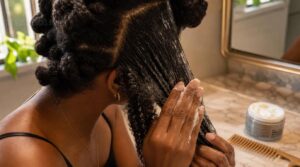
Think of your hands as the first tool. Palm Warming the product between your fingers melts it into the right consistency before it ever touches your hair. From there, Sectioned Application keeps things controlled:
- Rub your hair moisturizer cream between palms until it’s nearly invisible
- Finger Pressure to work through each section gently
- Follow with a wide-tooth comb for thorough Comb Tooth Selection coverage
- Adjust for Viscosity — thicker creams need slower, deliberate passes
Add More Only if Necessary
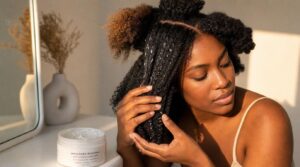
Once you’ve worked the product through, pause. That’s your Absorption Pause Timing — give the moisturizer a moment to settle before you decide if you need more.
Run your fingers through each section; this Finger Feel Feedback tells you everything. A Sectional Dryness Check helps you reapply moisturizer only where hair still feels stiff.
Cross your Grease Threshold Indicator, and you’ve gone too far.
Seal in Moisture Afterward

Moisturizing is only half the job — sealing everything in is what makes it last. Think of it as locking the door after you’ve tidied up inside.
Moisturizing opens the door to hydration, but sealing locks it in
Here’s how to keep that hydration right where it belongs.
Use a Light Hair Oil
Once your moisturizer is in, a light hair oil is your best defense against moisture loss. Oil absorption happens quickly with the right pick — argan, jojoba, or camellia seal the cuticle without weighing strands down.
These lightweight oil benefits make all the difference:
- Lock in hydration without greasiness
- Improve oil absorption for shinier results
- Meet your oil selection criteria by matching natural oils to your hair type
Smooth Product Through The Ends
Once that light oil is in, take a moment — an Absorption Pause — to let everything settle. Then use a Sectioned Glide with your fingers, smoothing your leave-in conditioner or hair serum from mid-length to tip with a Light Touch.
This Patting Transfer technique builds real Cuticle Slip, reducing roughness while supporting split ends prevention without the weight of over-applying.
Try Protective Styles for Retention
After smoothing your ends, lock that work in with protective hairstyles. Braids, twists, and buns are natural low manipulation options — they tuck your ends away from daily friction and clothing.
Keep tension‑safe styling in mind: snug but never tight.
A consistent scalp hygiene routine and moisture refresh inside your style keep hair healthy without disturbing it.
Add nighttime friction protection with a satin bonnet.
Limit Heat Styling After Moisturizing
Heat timing matters more than most people realize. Even after moisturizing, wet or product-saturated hair and hot tools don’t mix well — steam can undo your work quickly. Let your hair reach the right dryness level first, then apply a heat protectant spray before touching any tool.
- low heat styling settings whenever possible
- Apply thermal protection evenly through each section
- Limit passes with your tool for heat damage prevention
- hair cool completely before brushing or touching
Protect Hair at Night
Once you’re done styling, don’t let sleep undo it.
Swap your cotton pillowcase for a silk pillowcase or satin pillowcase — both absorb less moisture than cotton. Pull hair into a low bun or wear a satin or silk bonnet to cut friction overnight.
Detangle before bed, smooth your hair moisturizer cream through the ends, and your nighttime hair care routine becomes your best scalp shield.
Keep Hair Moisturized Longer

Getting moisture into your hair is only half the job — keeping it there where most people slip up. A consistent habits make a bigger difference than any single product ever could.
Here’s what actually helps moisture stick around longer.
Moisturize on a Regular Schedule
Think of moisturizing as a routine, not a reaction. Consistent wash intervals — every two to three days — help maintain hydration before dryness sets in.
Add mid-week reapplication at the ends when hair starts feeling rough.
Make weather-based adjustments too: dry or cold air means more frequent light layering technique.
Track what works using simple schedule tracking tools like a phone reminder.
Deep Condition Weekly
Once a week is your sweet spot for a deep conditioning mask — consistent enough to actually build softness, not just chase dryness.
- Timing Consistency: Pick a wash day and stick to it.
- Heat Activation: Use a warm cap for 15–30 minutes.
- Product Amount: Saturate mid-lengths and ends fully.
- Section Detangling: Comb gently while the mask sits in.
- Post-Treatment Styling: Follow with a light leave-in only if needed.
Use Clarifying Shampoo for Buildup
Even the best moisturizing routine hits a wall when product residue is running the show. A monthly scalp detox with clarifying shampoo clears away product residue, addresses mineral removal from hard water, and delivers a thorough chlorine cleanse after swimming.
For dry hair, keep your clarifying frequency low — once or twice a month — then condition immediately after to restore what it strips.
Trim Split Ends Regularly
Split ends are moisture’s worst enemy — they travel up the shaft fast. Regular hair trimming every six to eight weeks keeps damage from spreading.
Use the dusting technique for sectioned cutting at home: take small sections, smooth them flat, and snip just the frayed tips.
Post-trim care matters too — moisturize immediately after. Regular trims for moisture retention work because healthy ends actually hold hydration longer.
Adjust Routine for Dryness or Damage
Dry or damaged hair doesn’t need more product — it needs a smarter routine. Start with wash frequency adjustment: scale back to every two to three days so natural oils can actually do their job. From there, build around what your hair is telling you.
- Scalp moisture balance: Skip moisturizer at the roots unless your scalp feels tight.
- Moisturizer reapplication timing: Reapply small amounts on damp hair between washes for easier absorption.
- Friction reduction techniques: Swap rough towels for a microfiber cloth or soft t‑shirt to cut breakage.
Run a quick hair porosity assessment — high‑porosity hair loses moisture faster and needs heavier creams plus regular deep conditioning. Low‑porosity hair does better with lightweight leave‑ins and heat to open the cuticle. Pair your adjusting hair care routine for moisture with natural oils, regular trims, and a clarifying step when buildup stalls progress. A moisturizing hair care routine that actually fits your hair makes all the difference.
Frequently Asked Questions (FAQs)
How to put moisturizer in your hair?
Start on damp hair — not dripping, not bone dry. Apply a dime-sized amount of hair moisturizer cream to mid-lengths and ends, working upward.
That’s your Step-by-Step Hair Moisturizing Process in action.
Do you apply moisturizer on wet or dry hair?
Damp hair is your sweet spot. Wet hair boosts absorption efficiency, but dripping strands risk product dilution.
Blot first, then apply — leave-in conditioners and hair moisturizer cream spread best when hair feels damp, not soaked.
What is the 3 minute moisturizer rule?
The three-minute moisturizer rule means applying moisturizer within three minutes after washing.
Since facial skin loses moisture especially fast due to its thinness and dense sebaceous glands, following expert tips for choosing the right moisturizer for dry skin can help lock in hydration before it escapes.
That short window is your sweet spot — hair is still damp, evaporation prevention kicks in, and rapid moisture capture happens before strands dry out.
Can moisturizer help with color-treated or bleached hair?
Yes — bleaching and color treatments open the hair cuticle, leaving strands dry and brittle.
Regular moisturizing with Cuticle Sealing and Bleach Repair formulas restores softness, helps Fade Prevention, and keeps color-treated hair manageable.
Does hard water affect how moisturizer works?
Hard water leaves mineral residue on your strands that blocks moisture retention and causes product absorption issues.
A cold water rinse helps, but a hard water filtration system makes your moisturizing hair care routine work the way it should.
Can you over-moisturize hair, and what happens?
Absolutely — over-moisturizing is real. Too much moisture without protein causes hygral fatigue, limp texture, and a protein imbalance that weakens strands.
Watch for mushy, flat hair: that’s your signal to scale back.
Should childrens hair be moisturized differently than adults?
Different strokes for different folks — and the same goes for hair. Children’s scalps are more delicate, so gentler products, lighter amounts, and simpler routines work best.
Does diet or hydration impact hair moisture levels?
What you eat and drink shows up in your hair. Poor nutrient intake for hair — think low protein, vitamins, or omega-3 fats — leads to dryness and brittleness.
Getting enough protein, iron, and healthy fats can noticeably soften coarse, wiry hair that feels rough and unmanageable, often within just a few weeks of consistent dietary changes.
Stay hydrated, eat hydrating foods, and your strands will thank you.
Conclusion
You don’t need a dozen products to see a real difference—just the right technique applied consistently. Once you understand how to apply hair moisturizer to damp, sectioned hair and seal it in afterward, your strands hold onto hydration far longer than you’d expect.
Small adjustments—like focusing on the ends and skipping the scalp—add up fast.
Stick with it, and soft, flexible hair stops feeling like something you’re chasing and starts feeling like your new normal.
- https://www.healthline.com/health/how-to-use-hair-conditioner
- https://www.aad.org/public/everyday-care/hair-scalp-care/hair/habits-that-damage-hair
- https://pubmed.ncbi.nlm.nih.gov/24332313/
- https://linkinghub.elsevier.com/retrieve/pii/S030881461930860X
- https://necolebitchie.com/what-moisturizers-are-water-based/