This site is supported by our readers. We may earn a commission, at no cost to you, if you purchase through links. This content is for general informational and educational purposes only and is not a substitute for professional medical, dermatological, or nutritional advice.

Most shower caddies end up in the trash within three years. The rust streaks on your tiles, the shelves that slowly tilt until everything crashes mid-shower—it’s a familiar story. Yet millions of people keep buying them because the alternative, a built-in shelf, sounds expensive and complicated.
The gap between those two options is smaller than you think—and sometimes larger, depending on your situation. Whether you’re renting a place you can’t drill into or planning a full bathroom remodel, the right storage choice affects your daily routine, your budget, and even your home’s resale value. The shower caddy vs built-in shelf debate isn’t just about where you put your shampoo.
Table Of Contents
- Key Takeaways
- Shower Caddy Vs Built-in Shelf
- Best Uses for Shower Caddies
- Best Uses for Built-in Shelves
- Installation Time and Difficulty
- Cost and Long-Term Value
- Space, Capacity, and Accessibility
- Durability, Cleaning, and Mold Control
- Top 6 Shower Caddies
- Which Bathroom Storage Wins?
- Frequently Asked Questions (FAQs)
- Conclusion
Key Takeaways
- If you’re renting, a no-drill caddy — suction cup or tension rod — protects your deposit and moves with you, making it the smarter default over any permanent solution.
- Built-in niches cost $150–$800+ upfront but outlast 4–6 caddy replacement cycles over 20 years, making them the better long-term value for homeowners.
- Your shower size, ceiling height, and wall texture all shape which caddy style actually works — corner baskets, over-showerhead hooks, and floor-to-ceiling tension rods each solve a different space problem.
- Built-in storage adds measurable resale value by signaling quality craftsmanship to buyers, while caddies leave no lasting impression on your home’s worth.
Shower Caddy Vs Built-in Shelf

Choosing between a shower caddy and a built-in shelf comes down to your bathroom situation — how long you’re staying, what you’re willing to spend, and how much work you want to do. Both options solve the same problem but in very different ways. Here’s how they compare across the factors that matter most.
If you’re leaning toward a caddy, exploring shower caddy options for walk-in showers can help you narrow down which style actually suits your setup.
Temporary Versus Permanent Storage
When considering shower storage solutions, the choice between a caddy and builtin storage really comes down to one question: how long do you plan to stay?
| Feature | Shower Caddies | Built-in Storage |
|---|---|---|
| Installation | Tool-free, minutes | Professional, days |
| Upfront Cost | $15–$60 | $150–$800+ |
| Lifespan | 3–5 years | 20+ years |
| DIY vs Professional | DIY | Professional |
| Lifestyle Adaptability | High | Low |
Temporary storage solutions also provide on‑site access flexibility, a benefit echoed by shower caddies.
Temporary storage wins on flexibility. Long-term value, though, belongs to built-in options.
Rental Versus Owned Bathrooms
Whether you rent or own changes everything about this decision.
| Factor | Renters | Homeowners |
|---|---|---|
| Best Option | Shower caddy | Built-in shelf |
| Security Deposit | Protected | Not a concern |
| Long-term Value | Portability | Equity investment |
Lease agreement constraints mean most renters can’t drill or alter walls. A caddy moves with you. Homeowners, though, gain lasting value from built-in storage.
Small Showers Versus Remodels
Your shower size shapes this choice more than anything else.
| Factor | Small Shower + Caddy | Full Bathroom Remodel |
|---|---|---|
| Cost | $15–$60 | Hundreds to thousands |
| Disruption | Minutes | Days to weeks |
| Storage Added | Vertical shelves | Recessed shower niches, seating |
| Plumbing Changes | None | Plumbing upgrade potential |
| Resale Value Impact | Minimal | Significant |
Shower footprint constraints make drilling into walls risky. A caddy accommodates tight spaces without demolition.
Quick Comparison Snapshot
Side by side, the contrast is sharp. Shower caddies offer flexibility and a low upfront cost, while built-in shelves deliver long-term stability at a higher price.
| Feature | Shower Caddy | Built-in Shelf |
|---|---|---|
| Installation Time | 5–15 minutes | Days to weeks |
| Upfront Cost | $15–$60 | $150–$800+ |
| Permanence | Temporary | Permanent |
| Surface Mounting | Suction or tension | Wall studs and tile |
| Long-term Value | Replace every 3–5 years | 20+ year lifespan |
Best Option by User Type
Not everyone needs the same fix. Renters do best with suction or tension caddies — no damage, no deposit risk. DIYers renovating can invest in built-in niches for lasting payoff.
| User Type | Best Choice |
|---|---|
| Renters & movers | Shower caddy |
| DIY remodelers | Built-in shelf |
| Families | Adjustable caddy |
Best Uses for Shower Caddies

Shower caddies come in more styles than most people realize, and the right one depends on your setup. Some work best in tight corners, others handle a full family’s worth of products without breaking a sweat. Here are the most practical types worth knowing about.
Suction Cup Corner Baskets
A corner basket might be the simplest fix your shower has ever needed.
Key reasons suction cup models work:
- No drilling required — they mount on any smooth tile or glass surface
- Repositionable anytime — move or remove without wall damage
- Drain holes included on most models to prevent soap scum pooling
- Hold 2–6 bottles depending on size
Over-showerhead Storage
When counter space runs out, going vertical is your best move.
Over-showerhead caddies hook directly onto the pipe, stacking three or more tiers of bottles without touching a single wall. Most models handle bottles up to 2–3 pounds per shelf, so don’t overload them.
Angled drainage slits keep water moving off shelves, and adjustable arms mean one unit fits most showerhead heights.
Tension Rod Caddies
A tension pole caddy turns empty vertical space into a full storage column — no drill, no damage.
- Adjustable height fits ceilings from 25 to 110+ inches
- Open wire shelves drain fast and resist mold
- Spring-loaded compression locks the rod firmly between walls
- Wall parallelism matters — uneven surfaces cause wobble
Higher-end models use thicker stainless steel rods for better load-bearing stability and rust prevention.
For a deeper look at how build quality affects everyday use, this guide to shower caddies for men breaks down which materials and designs actually hold up long-term.
Tool-free Installation Benefits
No drill, no landlord call, no regrets. Tool-free shower caddies use suction cups or tension systems to grip tile, glass, and acrylic without touching a single screw. Most setups take under five minutes.
If you change your mind, just reposition — the wall stays completely intact, which matters a lot when your security deposit is on the line.
Budget-friendly Bathroom Organization
Shower caddies are proof that bathroom storage solutions don’t require a big budget. Tension rod kits start at just $5, and suction corner baskets rarely top $20. That’s real money back in your pocket.
Budget-friendly storage works best when you buy once and buy smart — a $15 stainless basket outlasts three cheap plastic ones.
Best Uses for Built-in Shelves

Built-in shelves are the long game of shower storage — chosen once, installed right, and forgotten about for decades. They work best when you’re remodeling or building from scratch and want storage that feels like part of the shower, not an afterthought. Here are the best ways to put them to use.
Recessed Shower Niches
A recessed shower niche is built directly into the wall cavity, usually 3.5 to 5.5 inches deep, giving you a flush shelf without anything jutting into your space. Because it sits behind the tile plane, a waterproofing membrane must go in first — skip that step and moisture creeps into your framing fast.
Placement matters. Standard mid-wall niches align with natural reach height, while vertical niches handle tall shampoo bottles and razors without widening the opening.
Built-in Corner Shelves
Where a shower niche cuts into one wall, built-in corner shelves anchor at the junction of two, turning dead space into real storage. Triangular or quadrant shapes fit snugly, with 5–8 inch shelf depth keeping items accessible without crowding fixtures. Key advantages include:
- Teak or hardwood options that resist mold naturally
- Concealed mounting brackets for a clean, hardware-free look
- LED accent lighting smooth addition for a premium finish
- 20–40 lb weight capacity per tier when anchored into studs
Sealed tile edges lock out moisture and keep the structure solid for decades.
Integrated Shower Seat Storage
Seats take built-in storage a step further. A bench with under-seat storage keeps towels and toiletries tucked away but within arm’s reach.
Set at 17–20 inches from the floor, it’s ergonomically sound for most adults. Slimline drainage channels keep the seat surface dry, and teak or composite materials hold up against daily moisture without warping.
Seamless Tile Design
The visual payoff of continuous tile design comes down to alignment.
When large-format tiles — think 24×48 inches — run continuously across walls and niches, and grout lines nearly disappear.
Pair that with epoxy grout in a matching tone, kept to 1/8 inch or narrower, and your storage blends right into the wall rather than interrupting it.
Long-term Remodel Planning
If a shower renovation is part of a bigger home plan, built-in shelves earn their place through lifecycle cost analysis — roughly $150–$500 upfront versus years of caddy replacements.
Build in a contingency fund of 10–15% and sequence tile work with plumbing early.
Done right, built-in storage adds long-term durability and measurable home value.
Installation Time and Difficulty
How you install your shower storage makes a huge difference — not just in effort, but in how long it actually lasts. Your choice here depends on whether you’re looking for a quick weekend fix or a permanent solution built into your walls. Here’s a breakdown of what each option requires regarding time and skill.
Five-minute Caddy Setup

Five minutes is genuinely all it takes to go from a cluttered ledge to an organized shower.
Most suction cup and tension rod caddies require zero tools — you just clean the wall surface, press the cup firmly, and you’re done.
That quick prep step matters: dry, smooth surfaces give suction cups a solid grip and keep your caddy from crashing down mid-shower.
No-drill Rental Options

Renters know the stakes: one wrong hole in the wall can cost you your deposit.
That’s why no-drill storage systems — suction cup baskets, tension pole systems, and hanging organizers — are the smart default. They go up without anchors, come down without damage, and leave walls exactly as you found them. Damage-free removal isn’t just convenient; it’s financial protection.
Tension Rod Placement
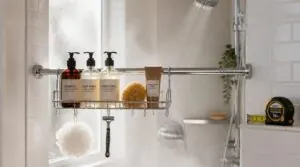
Getting a tension rod caddy right comes down to one thing: precise gap measurement.
Here’s what to nail before you install:
- Measure the gap between walls, then choose a rod set slightly longer.
- Clean contact surfaces — dry ceramic grips better than wet tile.
- Use rubberized end caps for maximum friction and wall protection.
- Recheck tension after 24 hours to catch any early loosening.
Waterproofing Niche Requirements
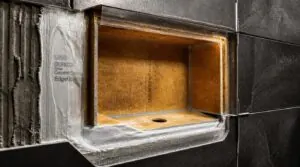
A recessed niche isn’t waterproof by default — the tile is just the face.
Liquid membranes coat irregular shapes seamlessly. Sheet membranes guard edges. Bond breakers at corners absorb movement and prevent cracking.
| Layer | Purpose |
|---|---|
| Primer coat | Improves membrane adhesion |
| Waterproof membrane | Blocks moisture penetration |
| Corner sealant | Prevents edge leaks |
| Sloped niche floor | Directs water to drain |
Dry substrates bond best.
Professional Tile Labor

Hiring a tiling contractor isn’t as simple as picking the cheapest quote. Look for the Certified Tile Installer (CTI) designation — it requires at least two years of lead experience and proves they can handle substrate preparation, waterproofing, adhesive selection, grout finishing, and quality inspections.
A credentialed pro is far less likely to cut corners on your niche.
Cost and Long-Term Value

Price is usually the first thing people look at, but it’s rarely the whole story with shower storage. What you pay upfront and what you spend over the years can look very different depending on which route you choose. Here’s how the costs break down across both options.
Low Upfront Caddy Costs
One of the biggest wins for shower caddies is the entry-level price point. A basic suction-cup model runs as little as $6 to $15. Plastic wire baskets hover around $8 to $20, and budget corner caddies often come in under $20.
- No professional labor needed
- Easy to swap out if it breaks
- Works in dorms, rentals, or first apartments
Premium Caddy Materials
Spending a bit more upfront can save you real money over time.
Stainless steel caddies — particularly those using 304-grade steel — resist rust and hold heavy loads without bending.
Teak and brass options age well too: teak develops a warm hue with occasional oiling, while brass hardware builds a natural patina. Anodized aluminum stays light, strong, and corrosion‑resistant for years.
Recessed Niche Installation Costs
Built-in storage costs more than most people expect going in.
A recessed niche usually adds $150–$500 in materials alone, and that’s before labor. Professional installation adds another $75–$300, plus waterproofing membranes, tile transitions, and sometimes electrical rough-in for lighting.
Key hidden costs to budget for:
- Waterproofing membrane: two coats, adding up to two days of cure time
- Tile transitions: specialty trim adds 5–15% more labor
- Electrical rough-in: GFCI updates can raise labor costs by 15–40%
- Custom niche fabrication: non-standard sizes push costs up 20–35%
- Permits and inspections: possible $50–$200 depending on your jurisdiction
The cost-benefit of built-in vs. add-on storage shifts once you look past the sticker price. A shower renovation with a niche runs higher upfront, but you’re buying permanence.
Replacement Costs Over Time
That upfront cost doesn’t tell the whole story. Caddies need replacing every 3–5 years, and with material prices rising roughly 2–4% annually, each swap costs more than the last.
| Storage Type | 10-Year Replacement Cost |
|---|---|
| Basic caddy | $60–$240 |
| Built-in niche | Near zero |
Twenty-year Storage Value
Think about what you’re really paying for over two decades. Built-in storage costs more upfront, but its 20-year durability lifecycle makes it a genuine asset — not a recurring expense.
Built-in storage costs more upfront, but its 20-year lifespan makes it an asset, not an expense
- Long-term ROI: Niches need almost no maintenance spending
- Home value impact: Built-in shelves signal quality to buyers
- Caddy replacement cycle: Roughly $60–$240 every ten years
Caddies drain your wallet slowly. Built-in solutions don’t.
Space, Capacity, and Accessibility
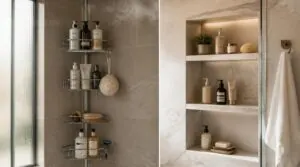
How much your shower can actually hold comes down to more than just shelf count. The right storage solution should work with your space, not fight it. Here’s how caddies and built-in shelves stack up when space and reach really matter.
Corner Space Efficiency
The corner of your shower is some of the most underused real estate in the bathroom. A triangular footprint lets corner caddies and built-in corner shelves claim that awkward dead zone without cutting into your walkway.
Many models add vertical tiers, boosting usable storage by up to 40 percent. Look for sloped, perforated shelves — they drain fast and keep mold from taking hold.
Floor-to-ceiling Storage
When every inch counts, floor-to-ceiling storage turns an ordinary shower wall into a full-height organizational system.
- Adjustable shelves accommodate tall bottles and wide containers
- Vented backs reduce moisture buildup in humid spaces
- Soft-close hardware limits daily wear
- Integrated lighting illuminates top shelves for easier access
Tension rod caddies achieve this vertically without a single drill hole.
Recessed Wall Capacity
A recessed niche does something no caddy can — it disappears into the wall.
Niche depth runs 4 to 8 inches, which is enough for most shampoo bottles and soap containers without eating into your shower footprint. Vertical orientation squeezes in more products within a compact opening, so a narrow wall cavity can still hold a surprising amount.
Family Shower Organization
Families are a different beast altogether. When three kids share one shower, organizing multiple users becomes a daily negotiation.
A floor-to-ceiling tension rod caddy gives each person a dedicated shelf — no more knocked‑over bottles or missing shampoo. Kid-friendly heights matter here, and caddies let you adjust shelf placement as your children grow.
Adjustable Shelf Access
Getting the shelf height right makes a bigger difference than most people expect.
Whether you choose a shower caddy with adjustable clamp shelves or a recessed niche with modular inserts, both let you customize heights to fit tall shampoo bottles or short soap containers.
Most systems adjust in 1-inch increments, and quality anti-slip hardware keeps everything stable between changes.
Durability, Cleaning, and Mold Control
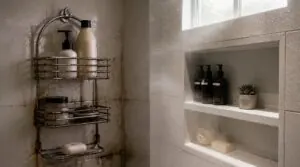
How long your shower storage actually lasts comes down to material and maintenance. Mold, rust, and soap scum are the real tests — and not every caddy or shelf passes. Here’s how the most common options hold up where it counts.
Stainless Steel Rust Resistance
Stainless steel holds up in showers because of one quiet chemical trick: chromium oxide layers form on the surface and self-heal when scratched.
- Grade 316 adds molybdenum for chloride resistance
- Passivation bath treatment removes free iron during manufacturing
- Electropolished finishes cut corrosion initiation sites
- Mild cleaners only preserve the protective film
Wipe it dry after use. That’s your best corrosion mitigation.
Plastic Caddy Lifespan
Plastic caddies won’t rust, but they lose the battle slowly. UV exposure from sunlit bathrooms makes plastic brittle and discolored over time.
Cheap grades crack at load points within a year or two. Mid-range plastic caddies usually last two to five years — longer if you stick to weight limits, use non-abrasive cleaners, and dry them regularly after showers.
Aluminum Corrosion Protection
When aluminum gets wet day after day, it doesn’t just surrender — it fights back. Aluminum’s oxide layer forms naturally on the surface and self-repairs after minor scratches, keeping corrosion at bay.
Caddies with anodized or powder-coated finishes push that protection further, making a quality aluminum shower caddy a genuinely rust-resistant choice for humid bathrooms.
Quick-dry Silicone Features
Quick-dry silicone does a quiet but serious job in shower storage. Its moisture-curing chemistry means humidity in the bathroom actually speeds up the bond — no waiting around. The sealant cures to a rubbery, flexible finish that grips ceramic, glass, and metal without cracking, and its soap scum resistance keeps surfaces cleaner between scrub sessions.
That same flexibility protects suction cup storage from daily bumps and position shifts, extending caddy life noticeably.
Niche Drainage Benefits
Built-in shower niches have a natural edge regarding staying dry. A slight drainage pitch built into the niche floor pushes water toward the drain rather than letting it pool.
Combined with waterproof membrane protection behind the tile, moisture never reaches the wall substrate — which is where long-term mold and damage actually start.
Top 6 Shower Caddies
Not all shower caddies are built the same, and the right one can make a real difference in your daily routine. These six options cover a range of styles, materials, and installation types — so there’s something here whether you’re outfitting a rental or upgrading a permanent bathroom. Here are the top picks worth your attention.
1. OXO Stronghold Suction Corner Basket
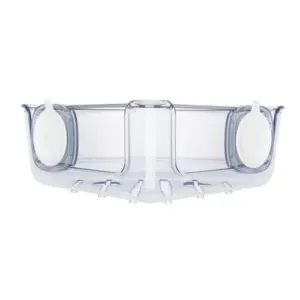
The OXO Stronghold Suction Corner Basket earns its name. Its lever-activated suction cups lock firmly onto smooth, glazed tile, glass, or mirrors — no drilling, no damage. At just 4 inches deep, it tucks neatly into your shower corner without crowding you.
The upside-down bottle holes are a genuine time-saver, letting you get every last drop of shampoo. Transparent construction means you won’t waste time hunting for products. One thing to watch: it won’t grip textured or natural stone surfaces reliably.
| Best For | Anyone who wants a clutter-free shower corner without drilling holes — especially renters, RV dwellers, or small bathroom users with smooth tile walls. |
|---|---|
| Material | Transparent plastic |
| Mount Type | Suction cup |
| Tool-free Install | Yes |
| Drainage Design | Upside-down bottle holes |
| Rust Resistance | Plastic (inherently rust-free) |
| Product Weight | 15.52 oz |
| Additional Features |
|
- Lever-activated suction cups lock on tight and hold heavy bottles securely, even upside down
- Completely tool-free to install, reposition, or remove for cleaning
- Transparent design and corner fit keep your shower organized without eating up space
- Won’t stick reliably to textured, grouted, or natural stone surfaces
- Suction can weaken over time and needs occasional re-wetting and re-locking
- Limited to smooth, non-porous surfaces — not a universal fit for every bathroom
2. AquaTeak Oval Teak Shower Caddy
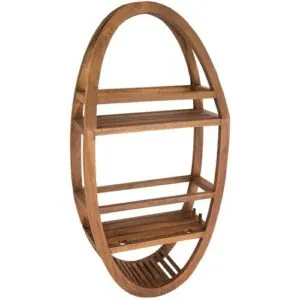
Wood in a shower might raise eyebrows, but sustainably harvested teak earns its place here. The AquaTeak Oval Caddy hangs over your showerhead using a rubber pipe grip — no tools, no drilling. Its three self-draining slatted shelves keep shampoo, razors, and soap organized without trapping moisture.
At 24.75 inches tall, it holds a surprising amount in a compact footprint. Teak’s natural oils resist warping, though periodic teak oil keeps it looking sharp long-term.
| Best For | Anyone who wants a stylish, clutter-free shower without drilling holes or sacrificing counter space — especially those with a taste for natural, spa-inspired bathroom décor. |
|---|---|
| Material | Teak wood |
| Mount Type | Overhead ring grip |
| Tool-free Install | Yes |
| Drainage Design | Open wood slat gaps |
| Rust Resistance | Stainless steel hardware |
| Product Weight | 3.5 lb |
| Additional Features |
|
- Teak’s natural water resistance means water drains freely and mildew has a hard time taking hold
- Hangs over your showerhead in seconds — no tools, no wall damage, no hassle
- Surprisingly roomy for its slim profile, with room for bottles, razors, soap, and washcloths all in one spot
- Needs periodic teak oil treatments to stay looking its best over time
- Won’t work well on very small or very large shower pipes, and the rubber grip may not stretch enough for oversized plumbing
- The top shelf can end up partially blocked if your showerhead sits low, limiting usable storage space
3. Umbra Flex Shower Caddy
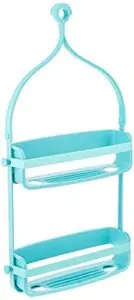
The Umbra Flex takes a different angle — literally. It hangs over your showerhead or curtain rod using built-in hooks, with flexible silicone bands securing bottles of all shapes. Two extra-wide baskets handle big 32 oz containers without complaint. Four side hooks hold razors and loofahs, keeping clutter off the shelves.
The polypropylene build resists rust and moisture, though suction cups can lose grip on tile over time. For a straightforward, affordable hang-and-go caddy, it delivers.
| Best For | Anyone who wants a simple, no-drill caddy that handles oversized bottles and stays rust-free in a busy shower. |
|---|---|
| Material | Polypropylene plastic |
| Mount Type | Hook and suction |
| Tool-free Install | Yes |
| Drainage Design | Perforated shelf holes |
| Rust Resistance | Rust-proof polypropylene |
| Product Weight | 8 lb |
| Additional Features |
|
- Hangs easily over a showerhead or curtain rod — no tools or wall damage required
- Flexible silicone bands hold bottles of all shapes securely, including large 32 oz containers
- Rust-proof polypropylene keeps it looking clean even in damp, high-use showers
- Suction cups tend to lose grip on tile or glass over time, reducing stability
- Shelf spacing may be too narrow for very tall bottles, pushing them to awkward outer positions
- Front silicone straps can be too short to wrap around wider bottles securely
4. OXO Compact Aluminum Shower Caddy
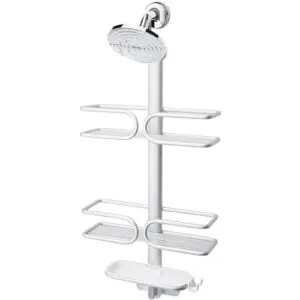
If you’re working with a small shower and don’t want to drill a single hole, this caddy earns its place fast. The anodized aluminum frame resists constant moisture without rusting, and at just 5 lbs, it won’t stress your showerhead pipe.
A non-slip hook drops over the pipe tool‑free in minutes.
Four shelves hold full-sized bottles, a removable soap tray keeps things tidy, and the built-in razor holder means no more balancing acts on a corner ledge.
| Best For | Anyone with a small shower who wants a rust-proof, no-drill storage solution that looks clean and holds up long-term. |
|---|---|
| Material | Anodized aluminum |
| Mount Type | Showerhead hook |
| Tool-free Install | Yes |
| Drainage Design | Wide flat wire basket |
| Rust Resistance | Anodized aluminum frame |
| Product Weight | 5 lb |
| Additional Features |
|
- Anodized aluminum frame won’t rust or corrode, even with daily moisture exposure
- Installs in minutes with no tools, no drilling, and no damage to your tiles
- Comes with practical extras — removable soap tray and built-in razor holder keep everything organized
- Suction cups can lose grip on textured or dirty tile, so surface prep matters
- The fixed hook angle may not clear larger or modern detachable showerheads
- Best suited for one or two users; bigger households may find the capacity limiting
5. OXO Good Grips Aluminum Shower Caddy
Think of it as the OXO Compact’s bigger sibling — same rust-proof anodized aluminum, more breathing room for larger households. The generous shelf spacing accommodates tall conditioner bottles without wedging or stacking, and the rotating suction cup on the soap dish locks onto flat tile cleanly.
A built-in razor holder and removable soap tray round things out. If two people share one shower, this caddy gives you enough organized space without crowding the walls.
| Best For | Couples or two-person households who want a sturdy, rust-free shower caddy that fits tall bottles and keeps everything organized without constant maintenance. |
|---|---|
| Material | Anodized aluminum |
| Mount Type | Showerhead hook |
| Tool-free Install | Yes |
| Drainage Design | Wide flat wire basket |
| Rust Resistance | Anodized aluminum frame |
| Product Weight | 5 lb |
| Additional Features |
|
- Anodized aluminum construction won’t rust or corrode, even after years of daily moisture exposure
- Generous shelf spacing handles tall shampoo and conditioner bottles without wedging or stacking
- Tool-free hook installation makes it renter-friendly and genuinely quick to set up
- Suction cups can lose grip on textured or dirty tile, so surface prep is a must before installing
- The hook may not clear oversized or rain-style showerheads, so check your setup before buying
- Best suited for one to two users — larger families may find the capacity runs out fast
6. Simplehuman Stainless Tension Shower Caddy
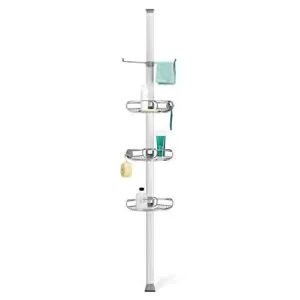
If you’ve maxed out two OXO caddies and still can’t fit everything, the Simplehuman Stainless Tension Caddy takes a different approach entirely — floor to ceiling, three adjustable wire shelves, no suction cups involved.
The reinforced aluminum pole locks between floor and ceiling with a high-compression spring, so nothing wobbles. Shelves slide to fit tall bottles, and cut-out holes let you store dispensers upside-down. It’s built for households that need real vertical storage, not just a corner basket.
| Best For | Large households or anyone who’s run out of wall and floor space and needs serious vertical storage in the shower. |
|---|---|
| Material | Stainless steel/aluminum |
| Mount Type | Tension pole |
| Tool-free Install | Yes |
| Drainage Design | Wire-frame shelf cut-outs |
| Rust Resistance | Corrosion-resistant steel |
| Product Weight | 9.7 lb (4.4 kg) |
| Additional Features |
|
- Three adjustable shelves slide anywhere on the pole, so tall bottles, pump dispensers, and oddly shaped containers all fit without issue
- The upside-down dispensing cut-outs mean you get every last drop out of your shampoo without flipping bottles
- No drilling, no suction cups — the spring-tension pole locks floor to ceiling and stays put
- Assembly instructions for the full 9-ft extension are reportedly confusing, so expect a bit of trial and error
- Only one soap dish slot, which can feel limiting if multiple people share the shower
- At maximum height, the pole can feel less rigid — stability depends on getting the tension just right
Which Bathroom Storage Wins?

There’s no single right answer here — it really comes down to your situation. Your living setup, budget, and how long you plan to stay all point you toward one option or the other. Here’s a breakdown of which storage solution wins for each type of buyer.
Best for Renters
If you’re renting, a no-drill shower caddy is your best friend. Suction cup and tension rod designs install in minutes, leave zero wall damage, and pack up easily when you move. They’re lease-compliant by default — no landlord approval needed. Portable storage wins here, hands down.
Best for Remodels
If you’re remodeling, built-in recessed niches are the clear winner.
They’re carved 3.5–5.5 inches into wall cavities, preserving every inch of floor space.
Plan them early — plumbing alignment and waterproofing must happen before tiling.
Done right, a niche lasts 20+ years and pays for itself many times over.
Best for Tight Showers
When space is already tight, every inch matters. Suction cup corner baskets are your best bet here — they tuck into corners, clear the floor, and install in minutes.
Tension rod caddies work well too, stretching floor-to-ceiling without touching a single tile.
Skip over-showerhead hooks; they obstruct water flow and shrink usable space further.
Best for Luxury Bathrooms
A luxury bathroom deserves storage that works as hard as it looks. Built-in tile niches with integrated LED lighting are the ideal choice here — they keep toiletries at eye level while casting a soft, spa-like glow. Pair them with:
- Brushed brass or nickel hardware for corrosion resistance and visual warmth
- Custom storage zoning for towels, robes, and spa products
- Recessed niche drainage to prevent soap scum buildup
Nothing elevates a wetroom design quite like storage that disappears into the tile itself.
Final Buying Recommendation
The right choice comes down to three things: your timeline, your budget, and how long you plan to stay.
Renters win with a suction-cup or tension-rod caddy — fast, removable, and under $60.
Owners remodeling long-term should invest in a recessed niche or built-in shelf for durability and design that pays off over 20 years.
Frequently Asked Questions (FAQs)
Can shower caddies damage grout or existing tile?
Yes, they can. Suction cups struggle on textured grout, causing instability. Overloaded caddies stress grout joints, and adhesive pads leave residue that stains or weakens tile sealant over time.
Which storage option works best with walk-in showers?
Walk-in showers give you room to think big. Built-in niches integrate cleanly into open layouts, while caddies risk cluttering the sightline. For walkability and safety, recessed storage wins.
Do built-in shelves affect bathroom resale value?
Ironically, a simple shelf can quietly do what a full renovation can’t: shift buyer perception. Built-in shelves signal custom quality, boosting bathroom resale value through harmonious design, durable materials, and storage that buyers already trust.
Are built-in niches safe for steam shower environments?
Built-in niches are safe in steam showers — but only when installed with a continuous waterproof membrane on all inner surfaces. Without proper sealing, steam condenses inside wall cavities, causing hidden structural damage over time.
Conclusion
The wrong storage choice can turn every shower into a small, silent frustration that builds for years. That’s why the shower caddy vs built in shelf bathroom storage decision deserves more than a quick glance at price tags.
Renters need flexibility. Homeowners planning a remodel need permanence.
Your bathroom, your routine, and your budget all vote differently.
Know what you actually need before you buy—and whatever you choose, make sure it earns its place on your wall.