This site is supported by our readers. We may earn a commission, at no cost to you, if you purchase through links. This content is for general informational and educational purposes only and is not a substitute for professional medical, dermatological, or nutritional advice.

Hair thinning affects roughly half of adults by age 50, yet most treatments target symptoms rather than the biological environment that sustains follicle function. Omega-3 fatty acids work differently. They influence the inflammatory signals that regulate your hair growth cycle at the cellular level, competing directly with compounds that keep follicles in a dormant state.
The case for omega-3 for hair growth is more complicated than supplement labels suggest. Clinical results are inconsistent, and how much you benefit depends heavily on your baseline nutrition and the type of hair loss you’re dealing with. Understanding those distinctions makes all the difference.
Table Of Contents
- Key Takeaways
- Does Omega-3 Help Hair Growth?
- How Omega-3 Supports Hair Follicles
- Best Omega-3 Foods for Hair
- Omega-3 Dosage and Results Timeline
- Choosing Omega-3 Supplements Safely
- Frequently Asked Questions (FAQs)
- Does omega-3 help hair growth?
- How much omega-3 should I take for hair growth?
- Which is better for hair, biotin or omega-3?
- What is the best vitamin for hair growth?
- Can omega-3 help with postpartum hair loss?
- Does omega-3 slow or reverse hair graying?
- Can omega-3 be applied topically to the scalp?
- Should men and women take different omega-3 doses?
- Can omega-3 be combined with other hair treatments?
- Conclusion
Key Takeaways
- Omega-3s (EPA and DHA) may support hair follicle health by reducing chronic scalp inflammation, but clinical evidence for measurable hair growth remains inconsistent and modest at best.
- Your baseline nutrition and the underlying cause of your hair loss determine how much you’ll benefit — omega-3s work best when inflammation or a nutritional deficiency is driving the problem, not genetics.
- Most clinical studies use 1–2 grams of combined EPA and DHA daily, and you’ll need to wait at least three to six months before you can meaningfully assess any change in density or shedding.
- When choosing a supplement, always check the actual EPA and DHA content per serving rather than total oil weight, and prioritize third-party tested products to ensure quality and safety.
Does Omega-3 Help Hair Growth?
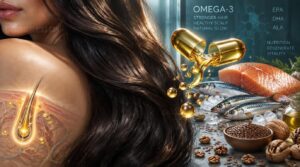
The answer isn’t straightforward, but the research does offer some useful direction. Evidence from clinical trials and biological studies points to measurable effects on follicle activity, though the extent of benefit varies. Here’s what the current science shows, and where its limits lie.
Nutrients like vitamin C, folic acid, and adequate protein play a surprisingly significant role alongside vitamin D and biotin, as explored in this evidence-based guide to nutrition and hair growth for thin hair.
What Clinical Studies Show
Across randomized controlled trials, omega-3 for hair growth hasn’t produced consistent results. Most studies report modest or no measurable gains in hair density, and any improvements in hair thickness or shedding reduction tend to be small.
What you’ll also notice is that results vary depending on the type of hair loss and measurement used, from hair counts to photographic grading.
Evidence and Limitations
The inconsistency comes partly from study design limitations: small sample sizes, short durations, and mixed populations make it hard to draw firm conclusions. Many clinical trials don’t isolate omega-3 from other nutrients either.
That means the evidence for omega-3 benefits for hair growth is suggestive, not definitive. If you’re deficient in EPA or DHA, you may see more noticeable results.
For a deeper look at how omega-3s interact with follicle health and what the clinical studies actually show, fish oil’s evidence-based effects on hair growth are worth exploring before adding supplements to your routine.
How Omega-3 Supports Hair Follicles
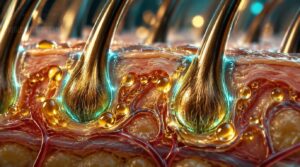
The biology explains why omega-3 benefits for hair make sense at the follicle level.
Your follicles are sensitive to inflammatory signals. EPA and DHA compete with pro-inflammatory compounds in cell membranes, reducing the chronic inflammation that disrupts hair follicle health and stalls the hair growth cycle. They also trigger specialized mediators that resolve inflammation rather than simply block it.
EPA and DHA don’t just reduce inflammation—they resolve it, keeping your follicles in productive cycles
Three mechanisms drive this:
- Membrane composition: Omega-3s alter follicle keratinocyte membranes, changing how cells respond to growth factors.
- Oxidative stress reduction: Calmer inflammatory cascades don’t overwhelm follicle-associated cells with oxidative damage.
- Scalp microbiome support: Lower inflammatory tone creates a healthier niche for microbial communities, improving scalp health.
These pathways may promote hair follicle growth by keeping your follicles in productive cycles.
Best Omega-3 Foods for Hair
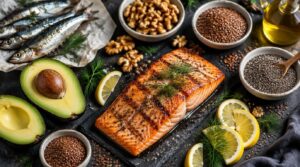
Getting omega-3s from food is the most direct way to support your follicles. Fatty fish, plant-based sources, and supplements each offer different levels of EPA and DHA, and knowing the difference helps you choose what fits your routine. Here’s what the evidence points to for each.
For a deeper look at how these nutrients work together, restoring dry and brittle hair through diet and omega-3s breaks down the practical steps behind rebuilding stronger, more resilient strands.
EPA and DHA-Rich Fish
Salmon offers roughly 2,000mg of EPA and DHA per serving, more than most fish oil supplements usually provide. If whole fish isn’t always on the menu, a quality fish oil supplement with 2000mg EPA and DHA can bridge the gap on busy days.
Oily fish like mackerel, sardines, and herring are your best sources for supporting hair growth. Eating them two to three times weekly may promote hair follicle growth by reducing inflammation that can disrupt normal cycling. Tuna and anchovies are solid options too.
(https://everysimply.com/wild+caught+sardines+canned+fish/search/theglossylocks0s-20/) make it easy to hit that two-to-three-times-weekly goal without the hassle of cooking fresh fish.
Plant-Based Omega-3 Sources
Availability varies across plant-based sources, but the most reliable options include ground flaxseed, chia seeds, hemp seeds, and walnuts. If you follow vegetarian or vegan diets, your omega-3 intake is primarily ALA, not the preformed EPA or DHA found in fish.
Your body converts ALA, but bioconversion efficiency is quite low. Grinding flaxseed and keeping omega-6 intake moderate may help.
Food Versus Supplements
Both sides of the food versus supplements debate have merit, but key differences still matter.
- Fish oil supplements give you standardized EPA and DHA doses
- Dietary intake from fish varies daily and is harder to track
- Plant-based sources supply mostly ALA, which your body converts poorly
If your dietary intake is inconsistent, fish oil supplements offer more reliable omega-3 supplementation.
Omega-3 Dosage and Results Timeline
Most people quit after four weeks, convinced nothing’s working. But your hair growth cycle doesn’t move that fast.
Clinical studies on omega-3 dosage usually use 1–2 grams of EPA and DHA daily, which often differs from the total fish oil amount printed on a supplement label. Always check the actual EPA and DHA content. A high-potency fish oil supplement delivering 1,000mg of combined EPA and DHA per serving makes hitting that clinical threshold considerably easier.
Because hair spends several weeks in the anagen phase before visible length appears, biochemical changes at the scalp happen before you’ll notice them. Most researchers suggest waiting at least three to six months to meaningfully assess density or shedding.
If your hair loss connects to inflammation or a nutritional deficiency, you may see improvement sooner. Otherwise, fish oil supplements alone may not move the needle much.
Choosing Omega-3 Supplements Safely
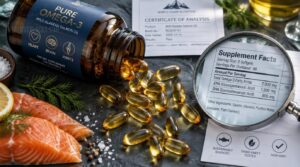
Studies suggest nearly 30% of supplements fail independent quality tests, and that matters when you’re choosing omega-3 for hair support.
Not all labels tell the full story. "Fish oil 1000 mg" doesn’t equal 1000 mg of EPA and DHA. Check the actual EPA and DHA milligrams per serving, not the oil weight.
Here’s what to prioritize:
- Third-party tested products with certificates confirming contaminant limits
- Actual EPA and DHA per serving, not just total oil weight
- Triglyceride-form options, which may absorb better than ethyl ester versions
- Split dosing to reduce fishy burps and nausea
If you have seafood allergies, confirm the source species before buying. If you’re on blood thinners, talk to your healthcare provider, since omega-3s can affect bleeding risk.
Frequently Asked Questions (FAQs)
Does omega-3 help hair growth?
Think of your follicles as tiny engines; omega-3 may help them run cleaner. Fish oil shows some promise for hair health, but clinical evidence for consistent hair growth and improved hair thickness isn’t well established.
How much omega-3 should I take for hair growth?
There’s no established omega-3 dosage specifically for hair growth. Most studied omega-3 supplementation regimens deliver combined EPA and DHA in the hundreds to low thousands of milligrams daily. Check with your doctor before you start.
Which is better for hair, biotin or omega-3?
Neither is clearly better. Biotin helps mainly if you’re deficient. Omega-3 benefits for hair may work by reducing scalp inflammation, but the evidence is limited. Your choice depends on what’s actually limiting your hair growth.
What is the best vitamin for hair growth?
Can one vitamin truly fix your hair? The best vitamin for hair growth depends on your specific deficiency. If you’re low on biotin, iron, or vitamin D, correcting that gap matters most for real results.
Can omega-3 help with postpartum hair loss?
Postpartum hair loss stems from hormone shifts after delivery, and omega-3 fatty acids don’t directly target that. They may still support your hair follicle environment over time, but clinical evidence for postpartum shedding is limited.
Does omega-3 slow or reverse hair graying?
You’ve probably heard that fish oil keeps hair from going gray. The evidence doesn’t support that claim. Omega-3s may reduce oxidative stress in your follicles, but no clinical trials confirm they slow or reverse graying.
However, research does suggest that omega-3s reduce follicular inflammation, which may help protect pigment cells and support overall scalp health.
Can omega-3 be applied topically to the scalp?
You can apply omega-3 topically to your scalp, though scalp absorption varies considerably and depends on the formulation you choose. Oil-based products may support hair follicle nourishment and locally influence follicle cycling through anti-inflammatory changes.
Should men and women take different omega-3 doses?
Think of it like two separate dials set slightly apart. For omega-3 dosage, EPA/DHA targets from fish oil supplements don’t actually change by sex. Women with female pattern hair loss may need more plant-based ALA.
Can omega-3 be combined with other hair treatments?
Omega-3 acts like a quiet foundation beneath other hair loss treatment options. You can safely combine omega3 supplementation with minoxidil or finasteride, since no known drug interactions exist that would affect how either one works.
Conclusion
Someone eating fatty fish three times a week may still see no change if androgenetic alopecia is driving their loss. That distinction matters. Omega-3 for hair growth works best when inflammation or nutritional gaps are part of the problem, not when genetics are the dominant cause.
Get your baseline right first. Confirm your deficiency, choose a clean source, and give it at least six months. Targeted use beats blind supplementation, every time.