
This site is supported by our readers. We may earn a commission, at no cost to you, if you purchase through links. This content is for general informational and educational purposes only and is not a substitute for professional medical, dermatological, or nutritional advice.

Your lather goes cold halfway through the second pass, and suddenly that creamy cloud turns to flat, sad foam. Blame the bowl, not your technique.
Most shavers pick a bowl by looks and discover the truth later. Marble holds heat up to three times longer than ceramic, while thin plastic and stainless steel shed warmth fast. Textured interiors cut lather time roughly in half, and a smooth bowl leaves your brush swirling to no effect.
So what material is best for a shaving bowl? It depends on your budget, your habits and how clumsy you are with wet tile floors. Here’s how the options stack up.
Table Of Contents
- Key Takeaways
- What is The Best Shaving Bowl Material?
- Heat Retention in Bowls, Mugs, and Scuttles
- Interior Texture Helps Build Better Lather
- Bowl Size and Shape Affect Brush Movement
- Material Durability, Cleaning, and Maintenance Requirements
- Shaving Bowl Materials by Budget and Value
- Frequently Asked Questions (FAQs)
- Conclusion
Key Takeaways
- Ceramic or stoneware suits most shavers, holding lather around 120°F once preheated, while marble keeps warmth up to three times longer and thin plastic or stainless steel lose heat fast, so you’ll need to preheat them well.
- Stainless steel is your best bet if you’re clumsy or travel often, as it survives drops, and silicone offers a similar knock-proof, lightweight option for your washbag.
- A textured interior can cut your lather time roughly in half, but it only works if the bowl is about four inches wide, giving your brush room to swirl.
- You don’t need to overspend, since plastic, basic steel and mid-range textured ceramic all perform well, and premium prices mostly pay for looks rather than better lather.
What is The Best Shaving Bowl Material?

There’s no single winner, because the right bowl depends on how you shave and what you’re willing to put up with. Below are the four main bowl materials you’ll come across, each with its own strengths and quirks. Read through them and you’ll soon know which one suits your routine.
If you’d like a closer look at how each material handles heat and lather, this guide to the best shaving bowls breaks down the options side by side.
Ceramic and Stoneware Bowls
Ceramic is the classic choice, and for good reason. Preheat it with hot water and your lather stays comfortably warm, around 120°F, for the whole shave. Handy on a chilly morning. Whatever the material, choose a bowl at least 4 inches in diameter so the brush can swirl without hitting the sides.
Mind the bathroom tiles, though.
- Excellent heat retention
- Non-porous, so it rinses clean
- Easy to rough up for texture
- Chips or shatters if dropped
Stainless Steel Bowls
Stainless steel is the one that shrugs off that tile floor. Drop it and you’ll only get a dent. The catch? Metal pulls heat from your lather fast, so preheat it well or expect lukewarm foam. Pick one around 200 grams and it won’t wander.
| Trait | Verdict |
|---|---|
| Durability | Excellent |
| Heat retention | Poor |
| Weight | Stable if heavy |
| Cleaning | Soap and water |
Plastic and Silicone Bowls
Steel shrugs off drops, but plastic and silicone go one better because they’re light enough to toss in a washbag without a second thought. That makes them a travel-friendly shaving bowl.
If you’re trimming your kit even further, this alum block vs aftershave comparison shows how a solid block can sidestep liquid limits too.
The trade-off is warmth. Lather cools fast, so rinse with hot water first. Textured silicone helps you whip up foam, and it’s an easy to clean shaving bowl too.
Wooden Shaving Bowls
Plastic cools lather quickly, but wood holds warmth better and its aesthetics suit any shelf. Imagine this:
- Teak or olive brings natural water resistance
- A grainy texture helps whip up foam
- Thick walls keep lather warm
- Pre-soak it in hot water
- Oil it every few months
Durability depends on care, though. Dry the bowl after every shave, or it’ll warp eventually.
Heat Retention in Bowls, Mugs, and Scuttles

A cold bathroom can turn good lather into lukewarm sludge faster than you’d expect. That’s where the heat retention properties of your bowl earn their keep.
Ceramic and stoneware hold warmth well once preheated with hot water, while marble goes further, lasting up to three times longer. Stainless steel and thin plastic? They shed heat quickly, so you’ll be topping up with hot water mid-shave.
Warm water works best alongside proper shaving techniques for a smooth finish, from prepping your skin to shaving with the grain.
If you shave somewhere draughty, consider a double-walled scuttle. Its hot water reservoir wraps around the lather chamber, keeping lather temperature steady from first pass to last. Mugs sit in the middle, decent but not magic.
In any shaving bowl material comparison, denser wins. Always preheat it, tip the water out, then load your brush.
Interior Texture Helps Build Better Lather
Ridges, spirals and dotted patterns inside a bowl do more work than most people realise. A smooth interior lets your brush glide about with almost no resistance, so you swirl for ages and wonder what you’re doing wrong.
The right brush matters just as much, and this guide on how to choose a shaving brush shows what’s worth paying for.
Textured walls give the bristles something to grip, so lather arrives in roughly half the time. The interior texture also shapes your brush agitation: you’ll start with big, airy bubbles, then those collapse into something velvety.
High walls with ridges and dotted finishes are the easiest to spot. Pair one with a damp, well-loaded brush and your lather consistency improves too, because the soap gets whipped properly rather than skated across. Faster lather generation speed also means less faff before your first pass.
Bowl Size and Shape Affect Brush Movement
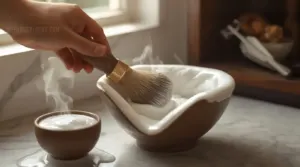
A bowl can look gorgeous on the shelf and still be hopeless in your hand. Material gets the attention, but size and shape quietly decide whether your brush has room to work or spends the whole time fighting the walls.
A bowl’s looks matter little if its size and shape leave your brush cramped, so check the room to swirl before admiring the material
Here’s what to check before you buy:
- Width: aim for about four inches, so your brush swirls freely.
- Depth: steep sides and decent depth stop lather escaping over the rim.
- Bottom: a shallow V or grooves keep bristles engaged, where flat bases let the brush ride up.
- Grip: leave knuckle room, or you’ll bash your hand.
- Brush match: a bowl too wide spreads lather thin.
Interior texture can’t rescue a cramped bowl, because friction needs room to work properly, too.
Material Durability, Cleaning, and Maintenance Requirements
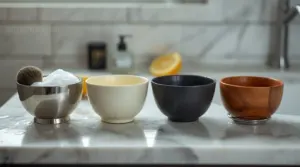
A bowl that looks gorgeous on the shelf can be a nightmare by the sink, while a dull steel one might outlive your razor collection. That’s material durability.
Stainless steel is the easy one. It’s dishwasher safe, shrugs off drops, and its low material porosity keeps bacteria out. Glazed ceramic is similar for cleaning, but one clumsy elbow against the tiles and it’s chipped.
Plastic survives falls but scratches, so replace it once it turns cloudy. Wood needs rinse, wipe, air dry after every use, and never a soak.
A few maintenance tips apply everywhere: skip abrasive cleaners, which scratch surfaces and invite grime, and use vinegar on ceramic or steel for mineral deposits. Heat conductivity plays no part here.
Shaving Bowl Materials by Budget and Value
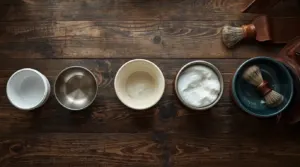
Does spending more actually get you a better lather? Not always, and that’s rather the point.
If you’re watching pennies, plastic under $5 does the job, though expect it to retain odours after a year or two. Basic stainless steel at $8–$12 is the smarter cheap pick, since it’ll outlast you.
In the middle, textured ceramic bowls at $15–$25 build lather faster thanks to interior ridges. Double-wall steel at $18–$28 keeps things warm without any fuss.
Premium bowls, from $30 to $60+, bring triple-wall steel, artisan glazes and hardwood. Lovely, yes, but you’re mostly paying for looks and bragging rights.
Travelling? Silicone at $5–$15 won’t shatter in your wash bag. Cold bathroom? Spend $20–$40 on insulation.
Frequently Asked Questions (FAQs)
Can I use a regular coffee mug as a shaving bowl?
Picture a steaming mug of tea, then swap the tea for a creamy lather. Yes, it works. Its depth and handle suit beginners nicely, though the narrow opening cramps your brush and the smooth interior won’t help lather.
Can I make lather directly on my face instead?
Picture the brush swirling across damp stubble, foam blooming right where it’s needed.
Yes, you can. Face lathering works well, saves soap and cuts cleanup, though bowls give beginners control over water and lather consistency.
Does water temperature affect how well soap lathers?
Yes, it does. Warm water, roughly 95 to 110°F, softens the fats in shaving soap and helps it emulsify. Go too hot and the lather collapses, while too cold leaves it dense and stubborn.
What type of shaving soap works best for beginners?
You might think soap choice is a minor detail. It isn’t. Start with a forgiving tallow soap like Bare Naked, which lathers densely with little effort. Skip strong scents, and sensitive skin does better unscented.
Conclusion
Still wondering which bowl deserves a spot on your shelf? Here’s the short answer to what material is best for a shaving bowl: ceramic or stoneware for most people, marble if you want luxury, and stainless steel if you’re clumsy or travel often.
Look for a textured interior and a size your brush can actually move in. Get those two right and the lather behaves. Your face, and your wet tile floor, will thank you.