This site is supported by our readers. We may earn a commission, at no cost to you, if you purchase through links. This content is for general informational and educational purposes only and is not a substitute for professional medical, dermatological, or nutritional advice.

Gray streaks in your beard can age you by a decade overnight. Most guys first notice them creeping in around their early thirties, and the question hits fast: should guys dye their beards or own the silver? The answer isn’t one-size-fits-all.
Beard dye offers a quick fix for reclaiming a youthful look, evening out patchy color, and matching your facial hair to your head. But it comes with trade-offs—potential skin reactions, chemical exposure, and the commitment to regular touch-ups.
Whether you’re considering your first dye job or weighing the pros and cons, understanding the benefits, risks, and proper techniques helps you make the right call for your grooming routine and personal style.
Table Of Contents
- Key Takeaways
- Should Guys Dye Their Beards?
- Key Benefits of Dyeing Your Beard
- Potential Risks and Drawbacks
- Alternatives to Beard Dyeing
- Choosing The Right Beard Dye
- Step-by-Step Guide to Dyeing Your Beard
- Maintaining a Healthy, Dyed Beard
- Frequently Asked Questions (FAQs)
- Is It Worth Dying Your Beard?
- Should I Dye My Beard All at Once or Progressively?
- Can I Dye My Beard by Myself at Home?
- Can Dye Damage Your Beard?
- Can I Go Swimming After I Dye My Hair?
- Will Dying My Beard Make It Look Thicker?
- Will dying my beard make it look unnatural?
- Is it safe to dye my beard?
- What are the best products to use for dying my beard?
- How often should I dye my beard?
- Conclusion
Key Takeaways
- Beard dye can make you appear up to 8 years younger and boost confidence, but you’ll commit to touch-ups every 4–6 weeks while risking skin irritation, chemical exposure, and potential hair damage from ingredients like PPD that strip moisture and weaken hair bonds by up to 85%.
- The decision to dye depends on whether gray bothers you enough to handle regular maintenance—if not, embracing natural gray now signals wisdom and authenticity rather than decline, with 74% of men prioritizing intentional grooming over color correction.
- Choosing the right product matters: plant-based dyes reduce allergic reactions and environmental impact despite costing 10–25% more, while matching your skin undertones and staying within one to two shades of your natural hair color prevents the artificial “shoe polish” look that 40% of users experience.
- Proper application technique and post-dye care preserve results—wait 48–72 hours before swimming, wash only 2–3 times weekly with sulfate-free formulas to cut color loss by 40%, and apply UV-protectant oils daily to extend vibrancy and combat dryness from chemical processing.
Should Guys Dye Their Beards?
Beard dye isn’t a one-size-fits-all decision. Your personal reasons and lifestyle play a bigger role than you might think.
Let’s break down the most common motivations, who benefits most, and how modern grooming trends shape this choice.
Common Reasons for Beard Dyeing
Why do men reach for beard dye? Most want to hide greys and restore a youthful appearance. Covering grey hairs ranks as the top motivation—over half of guys with gray facial hair feel self-conscious about looking older.
Others dye to match their head hair color or improve the natural color for a polished, uniform look. Beard color trends show dyeing has become a mainstream social confidence booster.
Dyeing can also boost men’s confidence, especially if they’re concerned about gray hairs.
Who Should Consider Beard Dye
Not everyone needs to grab the dye bottle. Consider it if you’re dealing with gray facial hair anxiety and want to hide greys for an interview-ready beard. Here’s who benefits most:
- Style-conscious men seeking a youthful look
- Professionals preparing for career opportunities
- Guys with patchy beards wanting uniform color
- Confidence-seeking men bothered by premature graying
- Anyone matching beard to head hair
If your grey beard makes you feel older than you are, dyeing could restore your edge. Some men choose dye to cover up grays for a more youthful look.
Social Perceptions and Grooming Trends
Beyond personal preference, your grooming choices send signals. Bearded men are consistently perceived as older and higher status. Well-maintained facial hair—dyed or not—builds trust in professional settings, with 54% linking moderate beards to positive first impressions. Social media has turbocharged grooming norms: beard dye sales jumped 22% in 2025 thanks to influencer campaigns reshaping masculine identity and self-esteem.
Your grooming choices signal status—well-maintained beards build professional trust, while social media has driven beard dye sales up 22% by reshaping masculine identity
| Perception Factor | Bearded Impact | Professional Context |
|---|---|---|
| Trustworthiness | Higher trust ratings | Leadership roles favor facial hair |
| Masculinity | 68% link to dominance | Competitive industries adopt beards |
| Age/Maturity | Seen as older, experienced | Gray coverage influences hiring impressions |
| Authenticity | Natural tones preferred | 41% distrust excessive dyeing |
Key Benefits of Dyeing Your Beard
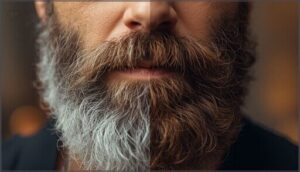
Dyeing your beard isn’t just about vanity. It’s a practical grooming choice that can shift how you see yourself and how others perceive you.
Here’s what you stand to gain when you decide to add color to your facial hair.
Hiding Gray Hairs
Gray hairs can show up early and fast, leaving your beard looking patchy or older than you feel. If you’re motivated by the urge to keep your style sharp, dyeing offers effective partial coverage.
You won’t reverse biology, but you can hide gray hairs and blend them in, making scattered silver less visible and your beard more uniform.
Achieving a Youthful Appearance
Covering grey hairs doesn’t just hide silver—it transforms how people see you. Studies show men with dyed beards appear up to 8 years younger, a powerful visual enhancement for those seeking an antiaging edge. Achieving a youthful look draws on grooming trends and sociocultural perceptions around vitality and energy.
- Shed years in moments without surgery or downtime
- Command rooms with renewed presence and confidence
- Align your reflection with your inner drive
- Employ age reversal through smart, strategic grooming
Enhancing Uniform Beard Color
A patchy beard loses its power at first glance. Dye application corrects uneven tones and patchiness that genetics or graying create.
Over 77% of users report noticeably more uniform beards after switching to improved product selection, particularly cream-based formulas preferred for excellent color blending. Fade resistance keeps your look sharp between sessions.
Mastering dyeing techniques and color application transforms scattered hues into one commanding presence.
Matching Beard and Hair Color
When your beard doesn’t match your natural hair color, dye creates the color coordination that pulls your look together. Many men have beards one to two shades darker than scalp hair, and professional guidelines suggest staying within that range for aesthetic preferences that look natural.
Color matching goes deeper than picking any brown or black:
- Choose beard dye one shade lighter than hair color for better visual balance
- Match skin undertones (warm, cool, or neutral) to avoid a painted-on appearance
- Keep natural variation by leaving some strands visible rather than flat monochrome
- Test under neutral lighting since artificial bulbs distort matching accuracy
Barbers recommend aligning touch-ups every four to six weeks so regrowth doesn’t break your coordinated style.
Boosting Self-Confidence
When you look in the mirror and feel good about what you see, that feeling carries into every room you walk into. Dyeing your beard isn’t just cosmetic—it’s a confidence catalyst. Three-quarters of men feel more self-assured with facial hair, and maintaining your preferred color amplifies that self-esteem boost through grooming satisfaction and personal vitality.
| Confidence Factor | Impact on You |
|---|---|
| Appearance Perception | Professional appearance that commands respect in interviews and workplace interactions |
| Self-Esteem Boost | Renewed sense of self-worth through visible grooming results |
| Social Empowerment | Increased acceptance among peers and enhanced attractiveness |
| Psychological Benefits | Reduced anxiety in social settings and improved mood through self-care |
Achieving a youthful look through dye helps challenge age-related stigma. Social perceptions shift when you present an energetic image, and that translates directly into how you carry yourself professionally and personally.
Potential Risks and Drawbacks

Dyeing your beard isn’t all upside. Before you grab that box and start mixing, you need to know what can go wrong.
Here are the main risks you should consider before coloring your facial hair.
Skin Irritation and Allergic Reactions
Your skin may rebel against the very product meant to boost your look. Reactions range from mild to severe based on your body’s chemistry and the dye’s ingredients.
- PPD sensitivity affects roughly 4–6% of men tested for dermatitis, with symptoms from itching to swelling on your face and neck.
- Patch testing 24–48 hours before full application helps catch allergic reactions early.
- Atopic risk increases if you have eczema or allergies—making reaction severity harder to predict.
Chemical Exposure Concerns
Chemicals like PPD don’t just sit on your beard—they absorb into your system. Studies show home dye users excrete over 200 times more aromatic diamines than professionals, raising systemic absorption concerns.
Hairdressers face “probably carcinogenic” occupational exposure classifications, while organ toxicity and potential lymphoma risk climb 19–26% with frequent use. Carcinogenic risk and exposure trends matter when weighing chemical ingredients in dyes against your long-term health.
Hair Damage and Dryness
Beyond chemical exposure, dye ingredients directly assault your beard’s structure. Oxidative formulas spike pH to 9–10, lifting cuticles and slashing disulfide bonds by up to 85%, which triggers hair breakage and chronic hair dryness.
Frequent dyeing—sometimes every five days—strips the moisture barrier and roughens hair texture.
Mitigation strategies like daily beard oils and deep conditioning can restore some hair health after treatment-related hair damage.
Unnatural or Patchy Results
Even expert-level technique can’t rescue a bad formula. Over 40% of users report color mismatch issues or unnatural appearance after dyeing—your porosity issues and coarse texture create uneven color application across the beard.
Oxidative formulas lock in overly uniform tones that eliminate natural multi-tonal shades.
Inadequate mixing or rushed application amplifies patchy beards, leaving you with tone correction headaches and viral-worthy fails.
Ongoing Maintenance Needs
Beyond patchy results, you’re signing up for serious regular maintenance. Permanent dyes demand reapplication every 4–6 weeks as regrowth visibility becomes impossible to ignore. Semi-permanent formulas fade faster—expect touch-ups every 2–4 weeks.
Washing impact accelerates fading, so daily shampooing cuts dye longevity short. Professional upkeep runs $45–$70 per session. Maintaining beard color becomes another recurring grooming obligation you can’t skip.
Alternatives to Beard Dyeing

Dyeing your beard isn’t the only path forward if you’re dealing with grays or uneven color. Several alternatives can help you maintain a sharp look without the chemicals or commitment that come with dye. Here’s what you can consider instead.
For a fully natural route, making your own beeswax-free beard balm gives you complete control over ingredients while keeping your beard conditioned and styled.
Embracing Natural Gray
Gray beard symbolism has shifted—what once signaled decline now radiates wisdom and confidence. You don’t need to chase youth when natural gray hairs command respect and modern gray styles keep you stylish. Age perception shifts favor authenticity over artifice.
- Healthier beard growth thrives without chemical interference or dryness
- Confidence and aging merge when you own your silver with pride
- Your grey beard becomes a badge of experience, not something requiring concealment
Beard Trimming and Styling
Strategic beard trimming and styling offer a powerful alternative to dyeing. Regular maintenance—short beards every 1–2 weeks, medium lengths every 2–4 weeks, and full beards every 6–8 weeks—keeps your beard shape aligned with modern grooming standards. Professional barber services deliver sculpted lines and fades, while at-home trimming with quality styling products maintains definition between appointments.
| Trimming Frequency | Beard Style |
|---|---|
| Every 1–2 weeks | Short/faded beards |
| Every 2–4 weeks | Medium-length beards |
| Every 6–8 weeks | Long full beards |
| Weekly to 8 weeks | Depends on growth rate |
The rise in beard grooming is evident, with 74% of men now incorporating it into their routines, and 27% relying on barbers for expert shaping. This trend is reflected in the beard care market‘s 26% growth in 2023, driven by demand for oils, balms, and precision tools that support intentional styling over color correction.
Temporary and Natural Dye Options
If commitment concerns you, temporary dye options let you test colors without long-term consequences—each application lasts just 1–2 washes. Plant-based dyes using henna, indigo, and Ayurvedic treatments deliver natural color with impressive herbal dye efficacy, though temporary dye coverage on grays remains translucent.
The shift toward organic formulas is real: 62% now prefer plant-based trends, driven by natural ingredients safety and reduced chemical exposure.
Using Beard Oils and Conditioners
Without going all-in on dye, you can enhance your beard care routine with oil benefits that hydrate and soften facial hair. Beard oil and beard conditioner both target dryness—oils use jojoba or argan at 70–95% prevalence, while conditioner ingredients like biotin strengthen strands.
pH balance near 4.5–5.5 protects cuticles, and hydration effects reduce itch and flakes, making beard care products a cornerstone of daily grooming.
Choosing The Right Beard Dye
Picking the right beard dye isn’t about grabbing the first box off the shelf. You need to match the product to your goals, your skin, and your lifestyle.
Here’s what to think about before you commit to a color.
Types of Beard Dye (Temporary, Semi-Permanent, Permanent)
Your beard dye options fall into three main camps: temporary, semi-permanent, and permanent. Each type brings different color commitment, application frequency, and chemical exposure levels.
- Temporary dyes wash out in one to two weeks with minimal hair damage—ideal for testing new looks
- Semi-permanent dye coats the hair shaft and fades over two to four weeks without harsh ammonia
- Permanent hair dye uses peroxide to penetrate deep, lasting until regrowth appears in three to six weeks
- Dye longevity increases with stronger chemicals, raising your maintenance schedule and skin sensitivity risks
- Beard coloring choices should match how often you’re willing to repeat the process and handle upkeep
Plant-Based Vs. Synthetic Dyes
Plant-based dyes pull color from henna, indigo, and other organic ingredients to reduce allergic reactions and potential health risks. Synthetic formulas rely on chemical compounds like PPD for stronger coverage. Your choice hinges on ingredient safety, environmental impact, and how long you want color longevity.
| Factor | Plant-Based | Synthetic |
|---|---|---|
| Application Differences | Paste consistency, longer processing time | Cream or gel, faster results |
| Cost Comparison | 10–25% premium pricing | More budget-friendly |
| Environmental Impact | Fully biodegradable | Higher carbon footprint |
Selecting The Right Color and Shade
Your skin undertones and natural hair shade guide the first step in choosing your ideal beard color. Matching hair and beard color creates harmonious unity across your overall look.
A medium brown suits most guys with scattered gray, while darker tones deliver full gray coverage. For sparse or fine facial hair, lighter natural shades minimize patchiness.
Digital tools and color-matching apps preview beard color options before you buy.
Checking Ingredients for Allergens
Once you’ve landed on the right shade, scan the ingredient label for allergens before you buy. PPD alternatives are safer if you have skin sensitivity.
Patch testing before each use prevents allergic reactions and skin irritation, even if you’ve used the product before. Allergen prevalence varies, so check regulatory limits. Never skip the patch test—your skin can develop new sensitivities over time.
Step-by-Step Guide to Dyeing Your Beard
Dyeing your beard doesn’t have to feel like exploring unfamiliar territory. The process is straightforward when you know the right steps and techniques to follow.
A little prep goes a long way, but if dye still ends up where it shouldn’t, this guide on how to remove beard dye from skin walks you through fixing the mishap fast.
Here’s how to transform your beard color safely and effectively from start to finish.
Preparing Your Beard and Skin
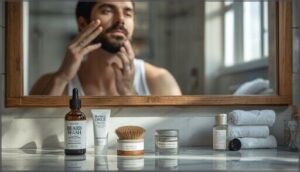
Before you even open that dye bottle, proper preparation makes all the difference. Start by evaluating beard health and checking for cuts or rashes that raise skin sensitivity. A pre-dye cleanse removes oils and debris, while gentle exfoliation a day earlier helps dye penetrate evenly. Apply barrier protection like petroleum jelly along your jawline to prevent staining, and always complete a patch test 48 hours prior to catch potential allergic reactions before full dye application.
- Cleanse your beard with a fragrance-free wash to strip away oils that block pigment absorption.
- Exfoliate gently to smooth the canvas, allowing color to settle uniformly across every strand.
- Shield surrounding skin with a thin barrier cream to dodge staining and minimize irritation risk.
Mixing and Applying Dye Safely

With prep done, you’re ready for dye application. Follow manufacturer instructions exactly—equal parts developer and colorant for most kits.
Always wear gloves as protective measures against chemical exposure and skin stains. Mix in a glass bowl until a consistent color appears.
Section your beard and apply evenly using a brush, working the dye through each layer. This method prevents allergic reaction risks and ensures complete coverage without patchiness.
Timing and Rinsing Techniques

Ideal timing matters more than you think. Leave dye on for 5–10 minutes during your first try to avoid over-darkening. Rinse with lukewarm water until it runs completely clear—hot water accelerates color loss while cold leaves residue.
Use a gentle cleanser or beard wash for about 30 seconds to remove lingering chemicals. Exposure consequences from prolonged contact include irritation and unexpected pigment changes.
Tips to Prevent Staining and Uneven Color
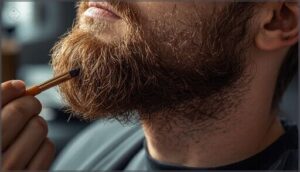
Barrier cream on your cheeks and neck before applying beard dye stops staining before it starts. Skin preparation and color selection directly influence your final result when dyeing your beard.
- Use a small applicator brush instead of fingers for precise control
- Work in small sections to prevent dripping onto bare skin
- Wipe mistakes immediately with a damp cloth for quick error correction
These application tools and habits help achieve uniform color without the mess.
Maintaining a Healthy, Dyed Beard
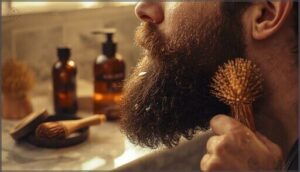
Dyeing your beard is only half the battle. The real work begins after the color sets in. You’ll need to protect that fresh color, keep your beard healthy, and know when it’s time for a touch-up.
Preventing Color Fading
Your dyed beard won’t hold its color without deliberate defense against the elements. Washing frequency matters most—limit shampooing to two or three times weekly with sulfate-free formulas to cut color loss by 40%. Product selection and UV protection also play important roles in preventing color fading.
Wait 24–48 hours before your first wash after hair coloring to lock in pigment. Dark shades fade 20–40% slower than lighter tones, and color-protectant beard oils extend vibrancy by shielding against sun and saltwater during your maintaining dyed beard routine.
| Factor | Impact on Color | Best Practice |
|---|---|---|
| Washing frequency | Reduces longevity up to 50% | Wash 2–3 times weekly |
| UV exposure | Causes 27–63% fading | Apply UV-protectant oils |
| Dye type | Permanent lasts 4–6 weeks | Choose darker shades |
| Product selection | Alcohol breaks down color 15% faster | Use color-safe conditioners |
| Touch-up intervals | Varies by growth rate | Redye every 4–6 weeks |
Beard Care Routine After Dyeing
Once color sets in your beard, a proper beard care routine protects both pigment and follicles from breakdown. Maintaining dyed beard health requires strategic product choices that balance moisture retention with color stability, ensuring your investment doesn’t wash away prematurely.
- Gentle Cleansing: Use sulfate-free beard shampoos 2–3 times weekly to prevent color stripping while keeping facial hair clean.
- Hydration Balance: Apply beard oil benefits daily to combat dryness caused by permanent dyes and maintain softness.
- Sun Protection: Shield your beard with UV-filtering leave-in conditioners during outdoor activities to slow fading by 30%.
- Regular Grooming: Trim monthly with scissors to remove damaged ends and preserve vibrant color integrity.
- Color-Safe Products: Choose specialized formulas that retain up to 87% of dye vibrancy after six weeks.
Deep conditioning treatments once or twice weekly improve your hair care routine by reducing porosity. Rinse with lukewarm water instead of hot to minimize cuticle lift. This beard health strategy keeps your look sharp while extending time between touch-ups.
Addressing Patchiness and Regrowth
Patchy beards often reveal themselves after your first dye session because hair follicles cycle through growth phases independently—10–15% remain dormant at any time. Initial patchiness stems from uneven beard density, especially where cheek coverage runs 20–30% lighter than chin areas.
Regrowth rates average 0.3–0.4 millimeters daily, creating visible contrast within weeks.
Application techniques matter: layering gradual formulas and strategic trimming minimize gaps while protecting against sensitization from repeated chemical exposure.
When to Redye or Touch Up
Regrowth visibility hits fast—new gray hairs show contrast within three weeks as your beard grows half a millimeter daily. Semi-permanent formulas need touch-ups every four to six weeks, while color fading accelerates with sunlight exposure and frequent washing.
Regular maintenance required depends on dye longevity: permanent options stretch two months before dulling, but washing effects cut that window short. Track your roots, not the calendar.
Frequently Asked Questions (FAQs)
Is It Worth Dying Your Beard?
Beard dyeing offers advantages such as hiding gray for a confidence boost and achieving uniform color.
However, disadvantages include skin reactions and the need for ongoing maintenance.
Ultimately, the pros and cons of dyeing your beard depend on your priorities and comfort with regular upkeep.
Should I Dye My Beard All at Once or Progressively?
Commercial dyes cover gray for three to six weeks before requiring full reapplication.
Progressive methods let you build color gradually over multiple sessions, creating a natural shift while reducing chemical exposure and maintenance frequency compared to single applications.
Can I Dye My Beard by Myself at Home?
Yes, you can dye your beard at home using DIY kits and proper application techniques.
Follow a step-by-step guide, conduct patch tests for safety, avoid common mistakes, and maintain post-dye care for best results.
Can Dye Damage Your Beard?
Oxidative dyes can weaken hair shaft bonds by up to 85%, causing dryness and brittleness. Chemical structure damage increases breakage risk by 20–40%.
Skin irritation from PPD remains common, but safer formulations and proper spacing reduce potential hair damage considerably.
Can I Go Swimming After I Dye My Hair?
Wait at least 48 to 72 hours after dyeing your beard before swimming. Chlorine and saltwater strip color protection and accelerate hair damage.
For more on protecting your color investment before and after a swim, swimming safely after dyeing your hair red covers the pre-wetting, leave-in, and swim cap steps that make the biggest difference.
If you’re also curious about protecting hairpieces in the water, check out this guide on how to swim safely while wearing a wig for similar precautions.
If you’re also lightening your hair, patience matters even more, since bleaching black hair to a lighter shade often takes several sessions to do safely.
Pre-soak hair, apply barrier oils, and use a swim cap for pool precautions.
These simple steps, along with a few extra tricks for protecting color-treated hair while swimming, can make all the difference.
Will Dying My Beard Make It Look Thicker?
Dyeing your beard won’t biologically increase hair texture or beard growth, but it can visually improve density by darkening lighter hairs.
This creates color depth and a fuller natural look, achieving a youthful look through improved contrast.
Will dying my beard make it look unnatural?
Absolutely—over-application or picking the wrong shade can create that infamous “shoe polish” effect. Uniform coloration and color mismatch issues ruin your natural look.
Choose dyes matching hair color and use plant-based formulas for better user satisfaction.
Is it safe to dye my beard?
Beard dye carries potential risks of dyeing, including skin irritation and PPD allergies. Chemical exposure concerns exist, along with possible cancer risks.
Patch testing reduces allergic reaction prevention failures, though skin sensitivity varies greatly among users.
What are the best products to use for dying my beard?
Choosing beard dye for men starts with matching your skin type: hypoallergenic options like Grizzly Mountain suit sensitive skin, while True Sons and henna-based natural ingredients offer lasting color shades for home kits.
How often should I dye my beard?
Most men refresh beard dye every 4 to 6 weeks based on growth rate and color fading. Touch-ups target roots, while washing habits and dye type affect maintenance demands between full applications.
Conclusion
Whether you should dye your beard comes down to personal choice and honest self-assessment. The decision balances vanity against maintenance, confidence against chemistry.
If gray bothers you and you’re willing to commit to upkeep, dye achieves results. If not, own the silver with pride.
Either path works when you understand the trade-offs. Your beard reflects who you are—make sure your grooming choices align with the image you want to project every day.