This site is supported by our readers. We may earn a commission, at no cost to you, if you purchase through links.
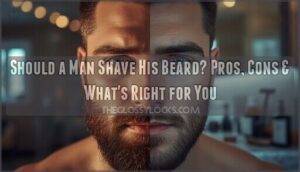
Every morning, you stand in front of the mirror and face the same question: to shave or not to shave? Your beard’s been your signature look for months, maybe years, but lately you’re wondering if it’s time for a change. Or maybe you’ve been clean-shaven forever and you’re curious what a beard could do for you.
Either way, the choice isn’t as simple as it seems. Your facial hair affects how you look, how others perceive you, and even how you feel about yourself. The right answer depends on your lifestyle, your face shape, and what you’re trying to accomplish with your appearance.
Understanding the real pros and cons—not the myths—helps you make a decision you’ll feel confident about.
Table Of Contents
- Key Takeaways
- Why Consider Shaving Your Beard?
- Reasons to Keep Your Beard
- Shaving Myths and Beard Growth Facts
- Workplace, Social, and Health Considerations
- Financial and Time Costs of Beard Maintenance
- How to Shave Your Beard Properly
- Beard Maintenance for Those Keeping Facial Hair
- Impact of Beards on Appearance and Confidence
- Top 5 Beard Care Products for Men
- Frequently Asked Questions (FAQs)
- Is it itchy to have a beard?
- Can a beard trap food and dirt?
- Are there any benefits to having a beard?
- Should I shave my beard if I have sensitive skin?
- How do I care for my beard?
- What are the benefits of shaving your beard?
- Are there any drawbacks to shaving your beard?
- How often should you shave your beard?
- What is the best way to shave your beard?
- What should you do if you experience a razor burn?
- Conclusion
Key Takeaways
- The shave-or-keep decision hinges on your lifestyle, face shape, and personal goals—there’s no universal right answer, just what works for your skin, career, and confidence.
- Shaving offers real benefits like exfoliation and a polished look, but keeping your beard provides natural UV protection, reduces daily irritation, and becomes a powerful part of your identity.
- Common beard myths like “shaving makes it grow thicker” are scientifically false—your genetics and age determine growth patterns, not your razor.
- Whether you go clean or keep the facial hair, commit to proper technique and maintenance—half-assed grooming always looks worse than a deliberate choice executed well.
Why Consider Shaving Your Beard?
Shaving your beard isn’t just about reaching for a razor—it’s about weighing what you gain against what you give up. Maybe your skin’s been acting up, your job’s got a dress code, or you’re just craving a fresh start with your look.
Let’s break down the most common reasons guys decide it’s time to lose the facial hair.
Clean Slate for a New Look
Sometimes, shaving your beard offers that bodacious fresh start you’ve been craving. A clean shave marks new beginnings, letting you reinvent your look from the ground up. It’s your ticket to facial renewal and a polished style change. Understanding the beard growth process is essential for making informed decisions about shaving and maintenance.
Here’s what you’ll gain from shaving your beard:
- A psychological reset that boosts confidence and social approachability
- A younger appearance, potentially shaving off several years
- Freedom to experiment with different clean-shaven styles that fit your vibe
Improving Skin Health and Comfort
Beyond aesthetics, shaving offers real skin health perks. Regular shaving acts as mechanical exfoliation, sweeping away dead skin cells and clearing follicular openings—especially helpful if you’ve got oily skin.
You’ll dodge folliculitis barbae and beard acne that can brew under facial hair when cleansing falls short. This condition is often caused by Staphylococcus aureus colonization.
Plus, adjusting your shaving frequency lets you sidestep irritation while keeping your face comfortable and fresh.
Achieving a Professional Appearance
Clean-shaven faces create career opportunity in the corporate world—75% of surveyed women see them as more professional. You’ll notice workplace grooming standards vary: conservative industries favor the professional look, while tech sectors allow 80% beard acceptance. Client perception matters too, but confidence boost comes from matching industry norms.
Here’s how professional appearance impacts your career:
- Clean-shaven professionals earn 25% faster promotions in conservative fields
- Legal roles gain 22% more authority when clean-shaven
- Well-groomed beards lift performance ratings 12%
- 90% of workplace policies permit neat beards
- Consistent grooming drives 35% greater career satisfaction
Managing Patchy or Uneven Growth
Patchy beard growth isn’t a myth—it’s genetics at play. Most men experience uneven coverage on their cheeks and jawlines, while their mustaches and chins fill in thickly. Treatment options vary, from shaving clean to using topical minoxidil or microneedling therapy, which can enhance density. While beard alopecia requires medical assessment, everyday patchiness offers choices that align with your psychosocial impact tolerance.
| Common Patchy Zones | What Helps |
|---|---|
| Cheeks and jawline | Topical minoxidil shows density gains at 3 months |
| Upper lip gaps | Microneedling therapy stimulates follicles |
| Sudden bald patches | Medical check for beard alopecia |
| Slow-fill areas | Time—anagen lasts 4 months |
| Genetic sparse spots | Shave clean or strategic trimming |
Adapting to Seasonal Changes
When temperatures swing from scorching to freezing, your beard reacts faster than you’d think. Winter insulation keeps your face warm when the mercury drops—models show facial hair lowers frostbite risk at −45 °C—while summer comfort demands lighter coverage to manage sweat and heat.
Seasonal beard maintenance considerations:
- UV protection: Facial hair blocks up to 95% of UV rays on covered skin
- Sweat management: Dense growth traps moisture in hot months, increasing odor
- Winter insulation: Longer beards reduce windburn and hold warmth near skin
- Summer comfort: Shorter styles improve airflow and reduce perceived heaviness
- Seasonal styles: Many men grow fuller beards in fall, then shave for warm-weather ease
Shaving and personal style align naturally with facial hair and climate shifts.
Reasons to Keep Your Beard

Before you reach for the razor, let’s talk about why keeping your beard might be the better move. A lot of guys hang onto their facial hair for reasons that go way beyond just looking cool—there’s real comfort, confidence, and personal expression wrapped up in those whiskers.
Here’s what keeping your beard actually does for you.
Expressing Personal Style and Identity
Your beard isn’t just facial hair—it’s a personal signature that broadcasts who you’re before you even speak. Whether you’re riding the wave of trend adoption or carving out your own beard aesthetics, that facial hair and style combination shapes your self-perception and cultural significance.
Beard styles evolve with you, making your beard as identity a powerful statement of personal style and personal identity.
Reducing Skin Irritation From Shaving
If you ditch the razor, you’re dodging a world of hurt—88% of men deal with some level of skin irritation after shaving. Razor burn, red bumps, and that itchy sting? They’re practically standard, especially if your skin sensitivity runs high.
Shaving preparation and technique matters, but skipping the blade entirely means no post-shave care headaches and zero chance of razor burn ruining your morning.
Enhancing Confidence and Masculinity
Growing facial hair isn’t just about looks—it’s a confidence booster wrapped in masculine identity. Men with beards report higher self-esteem and feel more dominant in social situations, almost like wearing emotional security on your face.
That beard style becomes part of your personal identity, shifting how you see yourself and how others perceive you. It’s psychological armor that actually works.
Insulation and Protection From Elements
Your facial hair is a natural shield against the elements. In extreme cold, beards delay frostbite risk by over 10 hours compared to bare skin. They block 90-95% of UV radiation, offer windburn defense in harsh winds, and even filter bacteria while absorbing impact energy.
Your beard blocks 90-95% of UV rays, delays frostbite over 10 hours, and shields against windburn—it’s functional protection, not just style
Proper beard care and beard maintenance amplify these protective benefits, making facial hair a functional asset beyond style.
Shaving Myths and Beard Growth Facts

You’ve probably heard a lot of wild advice about shaving and beard growth over the years—some of it’s solid, and some of it’s just plain nonsense. Before you make any big decisions about your facial hair, it’s worth separating fact from fiction.
Let’s clear up the most common myths and set the record straight on how beards actually grow.
Does Shaving Make Your Beard Thicker?
You’ve probably heard it a thousand times: shaving makes your beard grow back thicker and darker. But here’s the truth—it doesn’t.
What actually determines how fast and full your beard comes in is mostly written in your DNA, as this breakdown of what really drives facial hair growth speed explains in more detail.
Clinical evidence from studies dating back to 1928 shows shaving doesn’t affect hair follicles beneath your skin. That coarser feel? It’s just the blunt tip created by your razor, not actual beard growth.
The whole thing’s a visual trick your eyes are playing on you.
Genetics and Beard Growth Patterns
Your beard’s blueprint lives in your DNA. Over 500 genetic markers control thickness, while DHT sensitivity determines whether hair follicles grow thick or patchy. Ethnic variations matter too—Mediterranean men usually sport denser beards than East Asian guys.
Heritability traits explain why your growth patterns mirror your dad’s, and why growth rate peaks differently for everyone. Basically, your genetics call the shots on facial hair density.
Age and Facial Hair Development
Your facial hair journey kicks off around puberty onset—usually ages 11 to 14 with peach fuzz on your upper lip. Peak growth hits in your twenties when testosterone maxes out, giving you that full, bodacious beard.
After thirty, density changes creep in as hormonal influence wanes. So that beard myth about age making beards thicker? Actually, your teenager beard years set the growth timeline for life.
Workplace, Social, and Health Considerations

Your beard doesn’t exist in a vacuum—it lives in a world with dress codes, safety rules, and first impressions. Whether you’re clocking in at work, meeting new people, or just trying to keep your skin in check, your facial hair can have a bigger impact than you’d think.
Let’s look at how the real world weighs in on your grooming choices.
Job Requirements and Grooming Policies
Regarding workplace and beard policies, you’ll find that 90% of employers now accept facial hair as long as it’s groomed well. Most companies skip official grooming standards altogether, but industries like food service, healthcare, and manufacturing still enforce strict shaving requirements.
If you’re headed to a job interview, know that 63% of men land roles sporting beards—corporate culture has shifted toward acceptance.
Safety and Respirator Compatibility
Safety gear is where your beard can become a real problem. NIOSH guidelines prohibit facial hair between the respirator seal and your skin—beards drop protection factors by 246-fold compared to clean-shaven workers.
Even stubble from seven days of growth wrecks the face seal on N95 masks. If your job requires fit testing, you’ll need blade contact on your cheeks and chin, no exceptions.
Social Perceptions and Relationship Impact
How does your facial hair shift people’s first impressions? Attractiveness ratings reveal that heavy stubble lands top marks with women, while beards score big for masculinity perceptions and relationship commitment but tank trustworthiness assessments.
- Bearded profiles snag three times more matches on dating apps—relationship dynamics favor scruff
- Clean-shaven faces read three times more trustworthy in snap judgments
- Full beards crank up aggression signals, changing how strangers size you up
Hygiene and Health Research Findings
Microbes might surprise you—bearded healthcare workers showed lower Staphylococcus colonization (41.2%) than their clean-shaven colleagues (52.6%). Yet beards weren’t squeaky clean either: 77% of bearded men shed bacteria at 20 cm, while daily shaving created micro-trauma that spiked clean-shaven risks.
Shaving skin issues like pseudofolliculitis hit 45–83% of recruits, triggering beard acne and painful folliculitis.
| Facial Hair Type | Bacterial Growth | Skin Irritation Risk |
|---|---|---|
| Bearded | 50.8% heavy growth | Lower (no razor trauma) |
| Clean-Shaven | 78.9% heavy growth | Higher (micro-cuts) |
| Stubble/Trimmed | Moderate shedding | Minimal irritation |
Hygiene maintenance matters more than style—chlorohexidine at 4% stopped all tested strains, and washing beards 2–3 times weekly kept buildup in check. Whether you rock facial hair or stay smooth, skin health hinges on your routine, not just your razor.
Financial and Time Costs of Beard Maintenance

Let’s talk about what your beard is actually costing you—and I don’t just mean the money. Whether you’re shaving daily or keeping things trimmed, you’re investing time and cash that add up faster than you might think.
Here’s what you need to know about the real commitment behind each choice.
Time Investment for Grooming
Let’s talk real numbers—the average guy spends around 10.9 minutes per shaving session, racking up 60 hours annually, and that’s a bodacious chunk of your year.
Your beard care routine, by contrast, fits within five minutes daily: a quick wash takes 1.5 to 2 minutes, and grooming with a brush or comb needs just another minute or two. Beard trimming frequency varies—short beards demand weekly attention, medium ones every 2 to 4 weeks, and long beards stretch to 6 to 8 weeks between sessions.
Grooming surveys show 71% of men spend over 30 minutes on morning routines, so your beard maintenance is a serious lifetime investment.
Shaving Vs. Trimming: What’s Easier?
Trimming wins the daily effort race—you’ll dodge 100 to 600 strokes across your face that shaving demands. Your skill level matters less with a trimmer since you’re not scraping metal against skin, which slashes razor burn risk and keeps skin irritation minimal.
Here’s your cost analysis breakdown:
- Time commitment: Trimming takes 15-30 minutes per session versus 30-45 for a straight shave
- Frequency: Weekly beard trimming beats the every-1-to-2-days shaving grind
- Technique ease: Shaving techniques require precision, while trim your beard sessions are more forgiving
Bottom line? Beard trimming demands less sweat equity overall.
How to Shave Your Beard Properly
If you’ve decided it’s time to say goodbye to the beard, doing it right makes all the difference between a smooth result and a red, irritated mess. The good news is that shaving doesn’t have to be complicated, but a few key steps can save your skin from razor burn and bumps.
Let’s walk through the essentials to get you looking sharp and feeling comfortable.
Preparing Your Skin and Hair

Think of your pre-shave routine as a ritual that sets you up for success. Start by washing your face with warm water—it opens pores and softens whiskers for easier cutting. Apply a hot towel for two minutes to reduce cutting force by up to 70%.
Once your skin and stubble are properly prepped, understanding whether to shave with or against the grain makes all the difference for a smooth, irritation-free finish.
Then, exfoliation benefits kick in by lifting hairs and clearing follicles. Finish with pre-shave oil for irritation reduction and smoother blade glide.
Tools and Techniques for a Clean Shave

Choosing your razor matters more than you’d think. Single-blade safety razors cut at the surface, causing less redness than cartridge systems that dig below skin level.
Sharp blades need fewer passes, so swap them often to avoid razor burn. Build a thick lather with quality shaving gel for slickness, then shave with the grain first—going against it invites ingrown hairs and irritation.
Managing Post-Shave Irritation
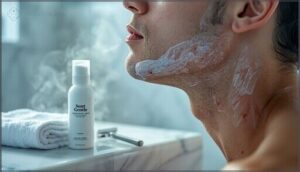
Even with solid shaving techniques, irritation happens—roughly two-thirds of guys expect it. If razor burn or beard rash show up, skip alcohol-based aftershave and reach for fragrance-free moisturizers instead. They calm your skin without stinging.
For stubborn bumps, try shaving every other day and always go with the grain. Persistent redness? Keep an eye out for allergic reactions to product ingredients or skin sensitivity flare-ups.
Shaving After Long-Term Beard Growth
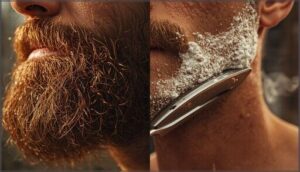
After months of facial hair, your skin has gone soft under all that protection. Shaving after long-term growth demands patience—cutting straight through dense growth causes serious skin barrier disruption and irritation.
Start with stepwise trimming using scissors or clippers, then wet your beard thoroughly for pre-shave softening.
That first shave off can shift psychosocial outcomes too, so maintain regimen consistency as your face adjusts to its new look.
Beard Maintenance for Those Keeping Facial Hair
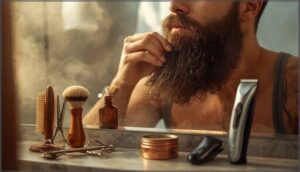
So you’ve decided to keep the beard—good call. Now the real work begins, because a great beard doesn’t just happen by accident.
Let’s walk through the core routines, trimming tricks, and hygiene habits that’ll keep your facial hair looking sharp and feeling comfortable every single day.
Essential Beard Care Routines
Generally, your beard care products and grooming routine make all the difference between a scraggly mess and a sharp look. Here’s your bodacious game plan for keeping facial hair in check:
- Wash two to three times weekly – daily washing strips natural oils and leaves your beard dry
- Apply beard oil after patting dry – this locks in moisture and prevents that unbearable itch
- Comb daily to distribute oils – reduces tangles and keeps everything looking intentional
Balm benefits include hold and styling control for unruly growth.
Trimming and Styling Tips
Now that you’ve got your beard care routine locked in, trim your beard every two to four weeks—facial hair grows roughly 0.27 to 0.5 mm daily, so you’ll notice it. Grab your beard trimmer and work with the grain first, then against for precision.
Avoid DIY styling mistakes by using a round brush with heat to shape, then cold air to lock your beard style in place.
Hygiene Practices for a Healthy Beard
Washing frequency matters more than you’d think—dermatologists recommend 2–3 times weekly for normal skin, 3–4 for oily, and 1–2 for dry to control microbial load without stripping natural oils.
- Rinse after meals to clear food particles that feed bacteria
- Remove product residue thoroughly to prevent itch and scaling
- Use gentle beard shampoo to avoid skin conditions like dandruff
- Pat dry instead of rubbing to minimize irritation
Impact of Beards on Appearance and Confidence

Your beard isn’t just facial hair—it’s working overtime to shape how the world sees you and how you see yourself. Whether you’re rocking a full mane or going clean-shaven, your face sends signals about age, attractiveness, and even trustworthiness.
Let’s break down how your facial hair choices play into the bigger picture of appearance and confidence.
Face Shape and Facial Hair Balance
Your beard isn’t just facial hair—it’s a tool for face balance. Think about it: if you’ve got a rounder face, adding visual length at the chin while keeping cheek lines tight can reshape your whole vibe.
Jawline emphasis comes from well-placed necklines and proper facial proportions. Understanding facial hair and face shape lets you engineer facial appearance before you shave your beard.
Looking Younger or Older With a Beard
Want to look younger or add a few years? Your facial hair impact is real. Studies show beards can make you look 5–10 years older, especially if you’re rocking a thick, full growth. Light stubble keeps things youthful, while heavy beards signal maturity. Patchy growth sits somewhere in the middle—less “aged sage,” more “work in progress.”
- Dense beards add years: Fuller facial hair consistently ages your appearance
- Stubble keeps you young: Light beard growth preserves a youthful appearance
- Age perception varies: Younger guys see the biggest shift with beard age perception
- Length matters: Longer beards boost aging factors more than short styles
- Shaving resets the clock: Going clean can drop perceived age noticeably
Covering Redness or Skin Imperfections
Redness from rosacea or acne scarring got you down? Your beard’s a natural skin conditions shield. Facial hair masks irritation, and PFB coverage becomes simple, with those pesky red patches disappearing under well-groomed growth.
Plus, beards offer UV protection—blocking up to 95% of rays that trigger flare-ups. It’s skin care and style rolled into one, making shaving and skin health a balancing act worth considering.
Effects on Attractiveness and Trust
Here’s the thing about beard attractiveness—it’s all over the map. Heavy stubble wins short-term appeal contests, but full beards signal masculinity and long-term partner potential.
Ultimately, personal taste plays a huge role, and this breakdown of what women really think about beards digs into those preferences in more detail.
Beyond how it’s perceived by others, the psychological effects of growing a beard often matter just as much, reshaping how you carry yourself day to day.
Trust perceptions shift with workplace impressions and cultural variations. Your facial hair sends different signals depending on who’s looking, so grooming choices matter more than you think when considering a woman’s opinion.
Top 5 Beard Care Products for Men
If you’ve decided to keep your beard, the right tools make all the difference between looking sharp and feeling like you’re wrestling a wild animal every morning. Quality products cut down on itch, keep your facial hair soft, and help you maintain a style that actually looks intentional.
Here are five solid picks that’ll help you care for your beard without breaking the bank or wasting time.
1. Seven Potions Woodland Harmony Beard Oil
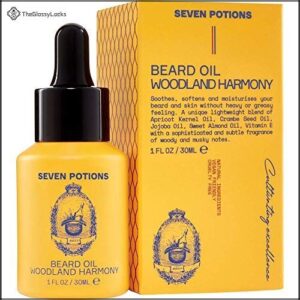
Looking for a beard oil that doesn’t smell like a chemical factory? Seven Potions Woodland Harmony Beard Oil delivers a bodacious woody scent profile blending cedar and sandalwood that lasts about eight hours.
At $21.99 for one ounce, it’s not the cheapest option, but customer reviews show a strong 4.8-star rating from 250 users.
The oil benefits include reducing dandruff and itch while hydrating both your beard and skin underneath.
Product comparison shows it’s thicker than average beard oils, so you’ll need a bit more for full coverage during your beard maintenance and care routine.
Best For: Men who want a natural beard oil with a long-lasting woody scent that softens hair and hydrates skin without synthetic ingredients.
- Delivers a subtle, masculine cedarwood and sandalwood scent that lasts around 8 hours
- Fast-absorbing formula reduces beard itch, dandruff, and split ends while adding natural shine
- Clean ingredient list—vegan, paraben-free, and made without synthetic fragrances or silicones
- Thicker consistency means you’ll use more product per application compared to lighter oils
- Higher price point at $21.99 for 1 oz may not fit every budget
- Woody scent profile won’t appeal to everyone—some customers prefer unscented or lighter fragrances
2. Prospector Co. Burroughs Beard Oil Flask
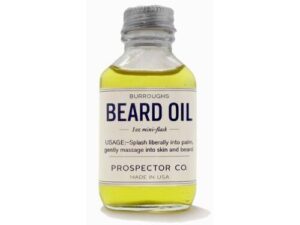
Prospector Co. Burroughs Beard Oil Flask takes a different route with its flask design—a mini one-ounce bottle that looks like it belongs in your grandfather’s shaving kit. The scent profile leans heavily into cedarwood and sandalwood, giving you that woodsy, outdoorsy vibe that also works as a light cologne.
Oil benefits include softening your beard and the skin underneath without leaving greasy residue. Brand positioning targets guys who want small-batch, handcrafted beard care.
User experience reports say a few drops go far, though some find the dispenser tricky at first.
Best For: Guys who want a small-batch beard oil with a strong woodsy scent that doubles as a natural cologne and don’t mind paying a bit more for handcrafted quality.
- Natural cedarwood and sandalwood fragrance gives you that rugged, outdoorsy scent without synthetic chemicals
- Absorbs quickly into beard and skin without leaving greasy residue when you use the right amount
- Small flask design with orifice reducer makes it easy to control how much you’re using so the bottle lasts longer
- Pricey compared to other beard oils, especially considering you only get one ounce
- The dispenser can be awkward to work with until you get the hang of it
- Strong scent might be too much if you prefer something subtle or already wear cologne
3. Honest Amish Heavy Duty Beard Balm
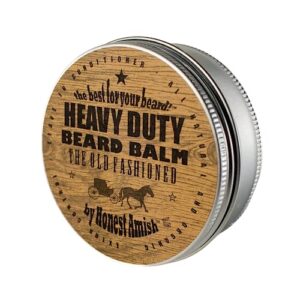
If you want something with more grip than oil alone, Honest Amish Heavy Duty Beard Balm brings organic ingredients like shea butter, jojoba, and beeswax into the mix. This balm benefits your beard by taming flyaways and adding hold without turning stiff.
User reviews consistently praise its old-fashioned scent and conditioning power, making it a top pick in men’s beard care products. Market position? It’s a cult favorite.
Application tips: Warm a dime-sized scoop between your palms, then work through your beard for all-day control and softness.
Best For: Guys with medium to long beards who want natural conditioning plus light styling hold without the stiffness of wax or the slickness of oil alone.
- All-organic formula with 15 wild-harvested botanicals conditions deeply while reducing breakage and beard dandruff
- Provides genuine all-day hold that tames flyaways without feeling greasy or stiff when applied correctly
- Classic old bay rum scent that’s noticeable but not overpowering, plus it’s a top-rated cult favorite in the beard community
- Premium pricing at $20–$25 runs about 25% higher than average organic balms, which some users find steep
- Application amount takes some trial and error—too much leaves it greasy, too little won’t hold
- Not ideal if you prefer unscented products, since the essential oil blend has a distinct fragrance
4. Philips Norelco Vacuum Beard Trimmer Pro
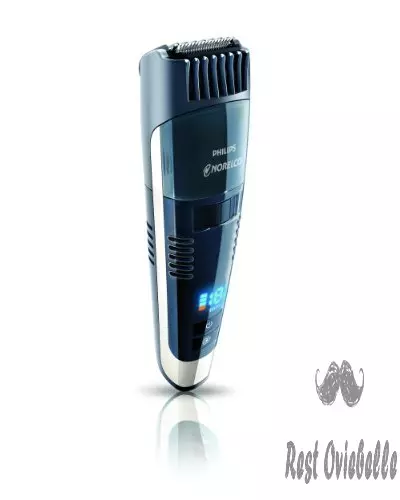
Balms tame what’s already there, but trimming a beard right demands the right gear. The Philips Norelco Vacuum Beard Trimmer Pro stands out in men’s grooming because its integrated vacuum performance actually captures most cut hairs—no more sink disaster.
You’ll get 18 secured length settings from stubble to fuller beard, plus around 80 minutes of battery life on a single charge. Cutting ability stays sharp without oiling, and its market position as a mid-range workhorse means solid value. Beard grooming just got cleaner and faster.
Best For: Men who maintain short beards or stubble regularly and want to cut down on sink cleanup without sacrificing cutting performance.
- Integrated vacuum system captures most cut hairs during trimming, keeping sinks and countertops noticeably cleaner
- 18 locked-in length settings deliver consistent trimming from stubble to fuller beards with minimal adjustment risk
- Around 80 minutes of cordless runtime on a one-hour charge means less waiting and more grooming flexibility
- Vacuum chamber can clog with hair buildup and needs frequent cleaning to maintain suction strength
- Comb design may cause uneven results or discomfort for some users, though Philips offers replacements
- Not designed for full clean shaves, so you’ll need a separate razor if you want completely smooth skin
5. Wahl USA Lithium Ion Beard Trimmer
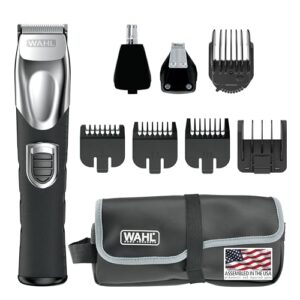
Precision shaving matters, but a bodacious beard demands regular trimming too. The Wahl USA Lithium Ion Beard Trimmer nails battery performance with 3.5 hours of runtime and a quick one-minute charge boost.
Its cutting attachments include ten guide combs and a precision T-blade for detailed beard styling work. Build quality shines through stainless steel construction and a no-slip grip.
Pricing analysis puts it around $75, solid value considering customer reviews praise its durability. Your beard grooming routine just leveled up with twice the torque of standard trimmers.
Best For: Guys who want a reliable beard trimmer with serious battery life and enough attachments to handle everything from quick touchups to detailed styling work.
- Battery lasts 3.5 hours on a full charge, plus you get a quick 1-minute charge option when you’re in a rush
- Comes with 10 guide combs and multiple heads so you can trim beards, mustaches, nose hair, and ears with one device
- Stainless steel build with a no-slip grip means it feels solid in your hand and should last years
- No charging indicator light, so you’re basically guessing when it’s fully charged
- All those attachments can be a pain to keep organized and store properly
- Too narrow for cutting the hair on your head, so you’ll still need a separate clipper for that
Frequently Asked Questions (FAQs)
Is it itchy to have a beard?
Yes, beard itch is common—especially during the first few weeks of growth. Sharp stubble, dry skin, and trapped debris can all trigger irritation, but proper hygiene and moisturizing usually ease discomfort.
Can a beard trap food and dirt?
Absolutely—facial hair and hygiene go hand in hand because beards create cozy micro-environments near your mouth. Food particles, dust, oils, and skin cells get trapped easily, making post-meal rinsing and regular washing essential for proper beard hygiene practices.
Are there any benefits to having a beard?
A beard isn’t just a style—it’s armor for your face. From UV protection and thermal insulation to air filtration and impact protection, facial hair brings real benefits that shape personal identity and social perceptions.
Should I shave my beard if I have sensitive skin?
If your skin flares up easily, keeping a well-maintained beard might actually shield you from irritation.
About 78% of manual razor users face redness or razor burn, so trimming beats daily shaving.
How do I care for my beard?
Your grooming routine starts with washing your beard two to three times weekly using gentle beard-specific products.
Apply oil daily to condition hair and skin, then trim weekly to maintain shape and control growth.
What are the benefits of shaving your beard?
Looking for practical reasons to shave? A shaved face delivers skin exfoliation, pore reduction, better product absorption, lower bacterial levels, and seasonal cooling—five bodacious perks that’ll transform your grooming game.
Are there any drawbacks to shaving your beard?
Yes—regular shaving can trigger skin irritation, infection risks through microcuts, self-image issues from persistent bumps, occupational hazards requiring daily compliance, and a significant time burden that adds up over years.
How often should you shave your beard?
Frequency fluctuates with facial fuzz goals—your shaving frequency depends on stubble length tolerance and skin irritation levels. Daily shaving keeps you smooth but may trigger razor burn, while every-other-day maintenance balances beard growth control with comfort.
What is the best way to shave your beard?
Start with proper beard prep—wash and soften your facial hair with warm water. Apply quality shaving cream, use a sharp blade, follow hair growth direction with light strokes, then finish with post-shave care moisturizer.
What should you do if you experience a razor burn?
When razor bumps strike, don’t panic—reach for a cool compress first to calm inflammation fast.
Hydrocortisone cream, aloe vera, natural oils, or petroleum jelly work wonders for skin irritation treatment and shaving recovery.
Conclusion
Should a man shave his beard? That’s your call, brother—not society’s, not your partner’s, not some outdated grooming rulebook. Your face, your rules.
Whether you rock a clean shave for that sharp professional edge or keep the beard that makes you feel like yourself, own it completely. The mirror doesn’t lie, but it also doesn’t judge. Listen to what feels right, what suits your lifestyle, and what makes you look in that reflection with genuine confidence.
- https://www.sciencedirect.com/science/article/abs/pii/S0195670114000905
- https://pmc.ncbi.nlm.nih.gov/articles/PMC9542990/
- https://science.howstuffworks.com/life/cellular-microscopic/more-bacteria-mens-beards-dogs-fur.htm
- https://pubmed.ncbi.nlm.nih.gov/23652888/
- https://papers.ssrn.com/sol3/papers.cfm?abstract_id=4743844