This site is supported by our readers. We may earn a commission, at no cost to you, if you purchase through links. This content is for general informational and educational purposes only and is not a substitute for professional medical, dermatological, or nutritional advice.
You reach up to smooth down a flyaway strand and your fingers meet an unmistakable slickness. That generous glob of Vaseline you applied last night for moisture has transformed your hair into an oil slick that refuses to budge, no matter how many times you rinse.
Water alone won’t touch it because petroleum jelly’s hydrocarbon molecules create a waterproof barrier that repels moisture by design. The same property that makes Vaseline excellent for protecting skin makes it a nightmare to wash out of hair.
Your instinct might be to scrub harder with regular shampoo, but that approach often spreads the grease around and leaves you frustrated after three showers with no improvement. The key lies in understanding what breaks down petroleum jelly’s molecular structure and using the right sequence of products to lift it from each strand.
Table Of Contents
- Key Takeaways
- Why Vaseline is So Difficult to Remove
- Blotting and Absorbing Excess Vaseline First
- Best Methods to Remove Vaseline From Hair
- Proper Washing and Rinsing Techniques
- Restoring Hair Health After Vaseline Removal
- Frequently Asked Questions (FAQs)
- How to remove Vaseline from hair?
- Is Vaseline bad for your hair?
- Does baking soda remove Vaseline from hair?
- How long do you leave Vaseline on your hair?
- What is the best soap to remove Vaseline from hair?
- How do you clean greasy hair with Vaseline?
- Do You Have to Wash Vaseline Out of Your Hair?
- Does Vaseline Come Out With Water?
- Is It Okay to Put Vaseline on Your Face?
- Does Peanut Butter Get Vaseline Out of Hair?
- Conclusion
Key Takeaways
- Vaseline’s petroleum-based molecules create a waterproof barrier that water and regular shampoo can’t break down, so you need to blot excess product with paper towels and absorb residue with cornstarch or baby powder before washing.
- Clarifying shampoo, dish soap, or warm coconut oil work best to dissolve Vaseline by breaking down its hydrocarbon structure—expect to shampoo two to four times in one session until water runs clear and hair feels lighter.
- After removing Vaseline, deep condition your hair with keratin-rich products to restore moisture stripped away by intensive cleansing, focusing treatment on mid-lengths and ends rather than roots.
- Prevent future buildup by limiting Vaseline use to once weekly in pea-sized amounts on ends only, and rotate in a clarifying wash every week or two to avoid progressive grease accumulation.
Why Vaseline is So Difficult to Remove
Vaseline isn’t just greasy—it’s designed to create a waterproof barrier, which is exactly why regular shampoo can’t touch it.
The petroleum jelly sticks to each hair strand like glue, and water alone won’t break that bond.
Understanding why it’s so stubborn will help you tackle the problem the right way.
The Science Behind Petroleum Jelly
Vaseline, or petroleum jelly, is a semi-solid mixture of hydrocarbons—specifically long-chain alkanes and cycloalkanes formed during the refining process of crude oil. Its unique molecular structure creates powerful water repellency, making it nearly insoluble in water. Here’s what makes petroleum jelly so stubborn:
- Hydrocarbon composition includes 7–13% high molecular weight paraffins
- Melting point ranges between 105–160°F
- Industrial applications rely on its stable, nonreactive properties
- Oil removal requires solvents, not water alone
Petroleum jelly undergoes a multi-stage refining process to remove impurities.
How Vaseline Bonds to Hair Strands
Understanding how petroleum jelly clings to your hair strands helps explain why removing Vaseline from hair becomes such a challenge. Healthy hair naturally produces sebum, an oily coating that blends with petroleum jelly’s hydrophobic structure. This creates a stubborn occlusive film over each strand.
Hair porosity matters too—damaged or porous hair traps more residue in lifted cuticle scales, requiring stronger surfactant needs for effective hair buildup removal.
Conditioners often include ingredients that boost hair’s natural hydrophobicity.
Common Mistakes That Make Removal Harder
Now that you know how petroleum jelly sticks to your strands, avoiding common pitfalls becomes equally important. Hot water spreads greasy hair residue further instead of rinsing it away. Excessive rubbing pushes petroleum jelly deeper into cuticle layers, while little surfactant leaves buildup behind. Incorrect oils without proper cleansing add more grease, and overusing powders creates pasty residue—all making methods for removing Vaseline less effective.
Blotting and Absorbing Excess Vaseline First
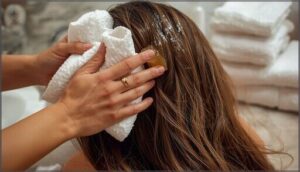
Before you reach for shampoo, you need to remove as much Vaseline as possible from your hair. The key is to absorb the excess petroleum jelly without spreading it around or pushing it deeper into your strands.
Here’s how to tackle that first critical step.
Using Paper Towels to Blot Vaseline
Before reaching for shampoo, you need to tackle the bulk of that sticky mess with simple paper towels. Here’s why blotting versus rubbing makes all the difference:
- Press paper towels gently against Vaseline-covered sections—don’t rub, or you’ll push petroleum jelly deeper into your strands.
- Lift the towel away and repeat with fresh sections until no more product transfers.
- Work methodically from ends to roots, focusing on the heaviest areas first.
- Expect to use several towels; their towel absorption capacity accommodates significant amounts before you move to the next step.
Sequencing the blotting before any washing dramatically cuts down your shampooing time later. Practical limitations exist—paper towels won’t remove every trace, especially near the scalp—but outcomes of blotting show you’ll need fewer harsh cleansing cycles overall. This initial step using household items for Vaseline removal sets you up for success with the methods for removing Vaseline that follow.
Applying Cornstarch or Baking Soda
Once you’ve blotted away the heavy layer, it’s time to deploy a powder application strategy that truly works. Cornstarch and baking soda both absorb the remaining slick film, but they each come with distinct safety concerns worth understanding.
| Product | Cornstarch Benefits | Baking Soda |
|---|---|---|
| pH Level | Neutral—gentle on strands | Alkaline—can strip natural oils |
| Best For | Repeated use, fine hair | One-time heavy buildup |
| Application Time | 10–15 minutes | 5–10 minutes as paste |
Cornstarch stands out for removing petroleum jelly from hair without the alkaline punch that baking soda delivers. If you choose baking soda, mix it with water into a medium paste and limit exposure time—its high pH can rough up your cuticle and cause breakage if you overdo it. Either way, you’re setting the stage for clarifying shampoo to finish the job.
Removal routines using household products for Vaseline removal:
- Coat greasy sections generously with your chosen powder.
- Work it through with fingertips, reaching roots and mid-lengths.
- Let it sit—cornstarch needs about 10–15 minutes to bind with petroleum jelly; baking soda works faster but risks dryness.
- Gently brush or comb out the powder along with absorbed Vaseline.
Using Baby Powder as an Absorbent
Baby powder—talc-based or cornstarch formulas—offers strong oil absorption for removing Vaseline from hair, working much like dry shampoo to soak up petroleum jelly residues. Application technique matters: section your hair, sprinkle powder directly onto greasy roots, then massage gently.
Safety concerns arise with talc; choose talc-free options if you have respiratory sensitivities or prefer household items for Vaseline removal that minimize inhalation risk.
- Lift greasy sections and dust powder lightly onto exposed strands.
- Massage powder into roots with fingertips for 30–60 seconds.
- Allow 5–10 minutes for full absorption before brushing.
Brushing Out The Powder and Residue
After 10–15 minutes—the sweet spot for cornstarch or baby powder to absorb Vaseline—grab a wide-tooth comb or soft-bristle brush and work in 2–3 cm sections from mid-lengths to ends.
Light, continuous strokes lift the powder and residue without compacting grease at your scalp. Brush the underside of each section, too, ensuring you remove Vaseline thoroughly before your shampoo change begins.
Best Methods to Remove Vaseline From Hair
Now that you’ve blotted away the excess and absorbed what you can, it’s time to tackle the Vaseline that’s still clinging to your hair.
The good news is you have several proven methods to choose from, depending on what you already have at home. Each approach works by breaking down the petroleum jelly or lifting it away from your hair strands.
Method 1: Clarifying Shampoo Treatment
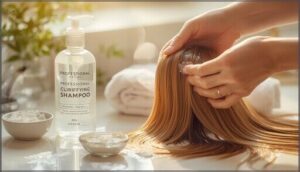
Clarifying shampoo is your best weapon for removing Vaseline from hair, thanks to surfactant action that breaks down petroleum jelly. Apply the shampoo directly to dry, affected sections, massage for one to two minutes, then rinse with lukewarm water. Repeat two or three times if needed.
For best results, use pre-treatment with cornstarch, and follow with post-cleansing conditioner to restore moisture after these intensive hair cleaning techniques.
Method 2: Dish Soap and Regular Shampoo
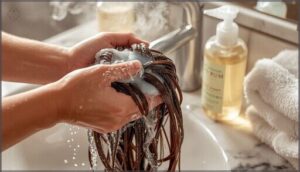
When regular shampoo won’t cut through stubborn Vaseline, dish soap steps in as your heavy-duty cleaner. Wet your hair with lukewarm water, apply gentle formulations directly to greasy sections, and massage thoroughly for two minutes. The shampooing procedure breaks down petroleum jelly effectively, but dish soap risks dryness.
Follow with conditioning aftercare using moisturizing products on your ends to restore balance after removing oil from hair.
Method 3: Warm Coconut or Olive Oil

It sounds backwards, but warm coconut oil or olive oil actually dissolves Vaseline by working like dissolves like. Heat your chosen oil type to about 100°F, massage it into affected sections for 10–15 minutes of application time, then shampoo twice.
This approach protects scalp health during residue removal while your hair oil removal techniques handle the greasy buildup without harsh stripping.
Method 4: Vinegar Rinse Technique
Apple cider vinegar breaks down Vaseline’s greasy grip on hair fibers when used correctly. Mix 1.5 tablespoons of vinegar per 8 ounces of water—never apply it undiluted—then spray or pour onto affected areas after blotting and powdering.
- Vinegar dilution ratios prevent scalp irritation while dissolving petroleum residue
- Application best practices include gentle working through strands before wiping away
- Post-rinse hair care requires thorough shampooing to eliminate lingering vinegar smell
Follow with clarifying shampoo for complete Vaseline removal.
Method 5: Peanut Butter Application
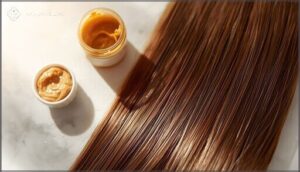
While vinegar cuts through grease chemically, peanut butter oils dissolve Vaseline through a different approach—coating and lifting petroleum residue with natural fats. Work smooth peanut butter (not crunchy) through affected strands for three minutes, then shampoo thoroughly. This household trick works because peanut butter’s oleic acid content mimics Vaseline’s oil base, breaking its bond with hair fibers.
Application recommendations include avoiding the scalp to prevent buildup and using warm water for rinsing. Though messier than dedicated hair treatments, peanut butter’s chemical properties make it surprisingly effective—the same monounsaturated fats that support hair health also soften petroleum jelly bonds. Follow with deep conditioning to restore moisture balance after this intensive removal process.
| Removal Comparison | Why It Matters for Your Hair |
|---|---|
| Vinegar dissolves chemically | Peanut butter dissolves through oil interaction |
| Powders absorb surface grease | Oils penetrate and loosen deep residue |
| Clarifying shampoos strip everything | Natural fats condition while removing Vaseline |
Proper Washing and Rinsing Techniques
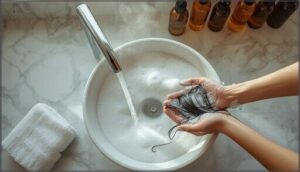
Getting Vaseline out of your hair isn’t a one-and-done deal. You’ll need to wash multiple times, rinse thoroughly between each round, and know when to stop or keep going.
The way you approach each washing step makes all the difference in actually removing the grease instead of just pushing it around.
How to Shampoo Multiple Times Effectively
Why does your first wash barely foam? When heavy oils like Vaseline coat your hair, surfactants struggle to lather until you’ve broken down that buildup. Your hair washing process needs multiple passes to work—but technique matters more than product volume.
- Use a coin-sized amount of shampoo each time, concentrating on your scalp where sebum and Vaseline cling hardest
- Massage gently for about one minute per wash, allowing lather contact time to lift oils effectively
- Focus on sebum reduction at the roots rather than scrubbing your ends, which need less aggressive cleansing
When to Repeat The Cleansing Process
After your first pass, watch for these tell-tale signs that another round is needed. Persistent greasiness means strands still clump together—that’s your cue to lather up again. If your scalp feels waxy when you rub it or if you notice oily water pooling around the drain, you’re not done yet. Poor lather during the first wash? That’s petroleum jelly blocking surfactants. Most people need two to four consecutive shampoos in one session when dealing with petroleum jelly in hair, though your specific situation depends on how much Vaseline you’re removing.
| Sign to Watch | What It Means | Your Next Move |
|---|---|---|
| Hair strands clump and shine | Vaseline still coats the shaft | Apply shampoo again immediately |
| Scalp feels slippery or waxy | Petroleum residue remains on skin | Focus next wash on roots and scalp |
| Oily powders brush out tinted | Cornstarch absorbed more grease | Shampoo one more time before drying |
| Bathwater shows film on top | Heavy product still releasing | Continue washing until water clears |
| Lather won’t build at all | Oil load is overwhelming soap | Use slightly more shampoo this round |
Stop once your hair feels lighter and you can comb through without that greasy drag. Hair product buildup removal isn’t about stripping every molecule—you’re aiming for clean, manageable hair, not squeaky dryness that leads to breakage.
Thorough Rinsing Between Each Wash
Between washes, incomplete rinsing traps dissolved petroleum jelly and surfactants right where you don’t want them—on your scalp and mid-lengths. Water temperature matters here: lukewarm (around 100°F) mobilizes oils without damaging cuticles. Rinse duration should run 45–60 seconds per cycle when dealing with petroleum jelly in hair, and scalp focus prevents product buildup that sabotages your next shampoo attempt.
To boost effectiveness and truly remove Vaseline:
- Direct water flow at roots first, massaging gently with fingertips
- Separate thick sections so running water penetrates every strand
- Continue until lather disappears and water runs completely clear
Restoring Hair Health After Vaseline Removal
Getting Vaseline out of your hair is only half the battle. The intense cleansing process can strip away natural oils and leave your hair feeling dry or damaged.
Now it’s time to nurse your hair back to health with a few essential aftercare steps.
Deep Conditioning Your Hair
Your hair needs more than a quick rinse after deep cleansing—it craves structural repair. Apply a deep conditioner rich in keratin and amino acids from mid-length to ends. These ingredients penetrate the cortex, restoring elasticity and combating damage levels caused by harsh removal methods.
Treatment frequency depends on your hair types: weekly for textured or bleached hair, twice monthly for fine strands. Let the conditioner sit 10–30 minutes for best results.
Applying Moisturizing Conditioner to Ends
After deep conditioning, you’ll want to lock in those hair moisturizing properties with a lightweight, water-based conditioner on your ends. Skip the roots—focus where damage lives.
This step helps remove Vaseline aftereffects by restoring barrier repair without recreating buildup risk management issues. Let it sit two to three minutes, then rinse completely.
Your damaged ends hydration depends on this simple hair care tips move.
Gentle Towel Drying and Air-Drying Tips
Think of wet hair fragility like tissue paper—it stretches easily but tears faster under pressure. After your hair washing procedures, skip vigorous rubbing. Instead, use towel blotting with a microfiber towel to absorb water without friction. Press gently for ten to twenty seconds per section.
Wet hair is as fragile as tissue paper—blot gently with microfiber instead of rubbing to prevent breakage
Then let your hair air-dry seventy to eighty percent before styling. This hair care tips approach protects against air-drying damage while your scalp health recovers from the remove Vaseline ordeal.
Preventing Future Vaseline Buildup
Want to dodge future battles with sticky hair? Limit frequency to once weekly—daily Vaseline creates progressive buildup within seven to ten days.
Switch to lower-buildup alternatives like shea butter or jojoba oil for routine moisture. Improve washing by rotating a clarifier every week or two.
Educate users on pea-sized amounts applied only to ends, never roots, preventing Vaseline buildup before it starts.
Frequently Asked Questions (FAQs)
How to remove Vaseline from hair?
Slippery when applied, stubborn when stuck—Vaseline clings to hair strands because it’s completely water-resistant. Product buildup happens fast, but home remedies like dish soap, clarifying shampoos, and absorbent powders break down grease, protecting scalp health and preventing hair damage.
Is Vaseline bad for your hair?
Vaseline isn’t inherently damaging, but heavy use causes product buildup, weighs hair down, and can trigger scalp folliculitis by clogging follicles.
It disrupts moisture balance, making removal difficult and potentially leading to hair breakage over time.
Does baking soda remove Vaseline from hair?
Your scalp practically screams for relief when Vaseline clogs every strand. Baking soda’s abrasiveness and high pH lift some oil but risk cuticle damage.
Alternative methods like clarifying shampoo prove safer and more effective for removing Vaseline from hair.
How long do you leave Vaseline on your hair?
Most hair care guides suggest leaving Vaseline on for two to eight hours, or overnight.
Extended wear risks beyond twelve hours make removal timing more challenging, requiring multiple shampoo cycles compared to shorter safe use ranges.
What is the best soap to remove Vaseline from hair?
Like a lock that needs the right key, petroleum jelly requires specific soap ingredients to dissolve effectively. Glycerin soap works best because its natural oils break down Vaseline while maintaining moisture, unlike harsh dish soap.
How do you clean greasy hair with Vaseline?
Start with absorbent powders like cornstarch to lift Vaseline buildup, then apply clarifying shampoo directly to dry sections.
This removes greasy hair effectively while protecting scalp health and managing hair porosity through proper oil interactions.
Do You Have to Wash Vaseline Out of Your Hair?
Yes, you need to actively wash Vaseline out. Its petroleum-based formula doesn’t rinse away naturally and will create persistent greasy buildup, weighing down strands and potentially affecting scalp health if left untreated.
Does Vaseline Come Out With Water?
Unfortunately, water alone won’t remove Vaseline because petroleum jelly is completely insoluble in water.
Its hydrophobic properties create a water-repelling barrier, so you’ll need surfactants like shampoo or dish soap to break it down.
Is It Okay to Put Vaseline on Your Face?
Petroleum jelly is generally safe for facial use and helps with skin hydration and wound care. However, it may trigger acne concerns in oily or breakout-prone skin by trapping sebum beneath its occlusive layer.
Does Peanut Butter Get Vaseline Out of Hair?
While peanut butter’s oily composition might loosen Vaseline slightly, it adds another greasy layer that’s harder to wash out.
The allergy risks and washing difficulty make clarifying shampoo or dish soap far safer, more effective alternatives.
Conclusion
Sarah stared at her reflection, panic rising as she realized her daughter’s first day of kindergarten photos were in two hours. The Vaseline disaster seemed hopeless until she remembered the cornstarch trick. Within forty minutes of blotting, absorbing, and shampooing, her hair looked normal again.
You now have the exact roadmap to get Vaseline out of hair fast. Choose your method, work systematically through each step, and you’ll reclaim your clean, manageable hair without the panic.