This site is supported by our readers. We may earn a commission, at no cost to you, if you purchase through links. This content is for general informational and educational purposes only and is not a substitute for professional medical, dermatological, or nutritional advice.
Your grandmother swore by her 100-stroke nightly ritual, convinced it was the secret to her thick, glossy hair. Your best friend claims brushing stunts growth and causes breakage. The internet insists both are wrong—or right, depending on which forum you stumble into.
So does brushing hair stimulate growth, or is it just another beauty myth passed down through generations? The truth lies somewhere between folklore and follicle science.
While your brush can’t magically sprout new strands, the way you use it directly impacts your scalp’s health, circulation, and your hair’s ability to reach its full genetic potential—which means technique matters far more than you think.
Table Of Contents
Key Takeaways
- Brushing doesn’t create new hair follicles or override your genetic growth cycle, but gentle technique boosts scalp circulation, distributes protective natural oils, and prevents breakage that sabotages length retention.
- The “100 strokes a day” rule is a myth that causes damage—brush once or twice daily with soft bristles, starting at the ends and working upward, never on soaking wet hair unless you’re using a wide-tooth comb.
- Your brush choice matters as much as technique: boar bristle works for thick hair, flexible detangling brushes protect wet strands, and wide-tooth combs prevent breakage on curls without ripping follicles.
- Over-brushing creates follicle stress and mechanical friction that weakens strands, so focus on quality over quantity—gentle pressure with clean brushes maximizes benefits while avoiding scalp irritation and hair damage.
How Brushing Affects Hair Growth
You’ve probably heard that brushing your hair can make it grow faster, but the reality is more nuanced than a simple yes or no. Brushing does affect your scalp and hair health in measurable ways, though it won’t override your genetic blueprint.
If you’re looking to protect your strands while adding color, exploring non-permanent hair coloring options can help you maintain healthier hair during your growth journey.
Let’s examine what actually happens when you brush, how it stacks up against the factors that truly drive growth, and which popular claims don’t hold up under scrutiny.
The Link Between Brushing and Hair Follicle Stimulation
The promise of follicle stimulation through brushing rests on increased scalp blood flow. When you brush gently, more oxygen and nutrients reach your hair follicles, creating a healthier environment around each follicle. Here’s what gentle brushing does for hair growth stimulation:
- Boosts local circulation around follicles
- Distributes natural oils for follicle health
- Triggers mild growth factor release
- Maintains clean scalp conditions
- Promotes healthier hair growth patterns
Harsh brushing frequency, however, disrupts this delicate process—light pressure protects your scalp from irritation. For more information about hair follicle health and growth, see these detailed.
Brushing Vs. Genetic and Nutritional Factors
While scalp stimulation from brushing hair offers real benefits, your genetic influence and nutrient deficiencies shape hair growth patterns far more powerfully. Hereditary factors determine your follicle health cycle length, and iron, zinc, or biotin gaps slow growth regardless of brushing frequency.
You can’t brush your way past genetics—but pairing gentle scalp health routines with adequate protein, vitamin D, and omega-3s maximizes your hair follicles’ natural potential.
Brushing alone can’t override genetics, but combining gentle scalp care with proper nutrition maximizes your follicles’ natural potential
Common Myths About Brushing and Hair Growth
Despite what you may have heard, the “100 strokes a day” rule won’t accelerate hair growth—it can actually cause breakage. Brushing hair doesn’t create new follicles or override your hair growth cycle, and it won’t replace medical treatments for hair loss prevention.
Understanding these hair myths helps you focus on what truly aids growth stimulation: nutrition, gentle brushing techniques, and realistic expectations about brush effectiveness and scalp stimulation.
In addition to brushing habits, prioritizing a is essential for supporting healthy hair growth.
In addition to brushing habits, prioritizing a proper blow-drying routine with heat protectant and the right tools is essential for supporting healthy hair growth.
Benefits of Brushing for Hair Health
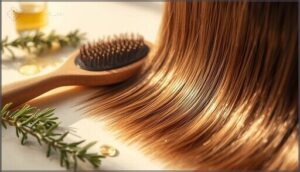
While brushing won’t magically speed up your hair’s growth cycle, it does offer real benefits that keep your hair healthier overall. Think of it as routine maintenance for your scalp and strands, addressing issues that can slow you down or cause unnecessary damage.
Regular scalp circulation techniques can maximize these benefits by ensuring nutrients reach your hair follicles more effectively.
Here’s what regular, proper brushing actually does for your hair.
Distribution of Natural Scalp Oils
Your scalp produces sebum, a natural lipid blend of fatty acids, cholesterol, and wax esters that travels down the hair shaft when you brush. This oil distribution creates a protective layer that locks in moisture, maintains lipid balance, and promotes overall scalp health.
Hair porosity affects how quickly your strands absorb these natural oils, with brushing techniques helping spread sebum evenly for improved hair care.
Scalp Exfoliation and Circulation Improvement
When you apply gentle pressure during hair brushing techniques, you’re performing a form of scalp massage that boosts blood flow to follicles. This scalp stimulation enhances oxygen and nutrient delivery while working as a natural exfoliation tool—removing dead cells and buildup that can hinder scalp health and hair growth.
Regular scalp circulation techniques support scalp health maintenance, creating ideal conditions for thriving follicles.
Reducing Tangles and Preventing Breakage
Your hair’s biggest enemy? Tangles that snap strands under tension. Gentle detangling with a wide-tooth detangling brush—starting at the ends and working upward—cuts hair breakage by up to 60 percent while preserving your cuticle.
This tangle prevention strategy, combined with proper brush care and deliberate hair brushing techniques, protects against hair damage and breakage that no scalp massage can reverse.
Proper Hair Brushing Techniques
You already know brushing can benefit your hair, but how you brush matters just as much as whether you brush at all. The wrong technique can undo all those benefits, turning a healthy habit into a source of breakage and frustration.
Let’s walk through the essentials of proper brushing so you can protect your strands while maximizing scalp stimulation.
How to Brush for Minimal Damage
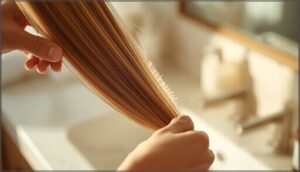
Want to keep your strands strong while brushing? The secret lies in technique, not force. Use gentle strokes from ends to roots, letting soft bristles glide through each section without tugging.
Here’s your damage-free daily routine:
- Choose the right detangling brush for your hair texture—wide-spaced bristles prevent hair breakage on curly types
- Start at the ends and work upward in small sections to minimize hair damage and breakage
- Hold your brush at 45 degrees to cover roots and mid-shaft without pulling
- Practice brush maintenance—clean weekly to keep hair care tools effective
Brushing Wet Vs. Dry Hair
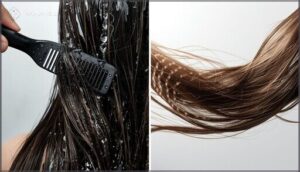
When your strands are soaked, they stretch like elastic—and snap just as easily. Wet detangling requires a wide-tooth comb or flexible wet brush to protect fragile shafts, while dry styling lets softer bristles glide through for enhanced oil distribution from roots to ends.
Your hair state dictates brush materials: gentler tools for damp locks, firmer options for dry brushing hair in your hair care routine.
Frequency and Timing for Optimal Results

How often should brushing hair fit into your daily routines? Brushing schedules that deliver real scalp stimulation follow a simple rule: one to two sessions daily during consistent windows in your hair care routine.
Morning strokes distribute oils while aligning with your hair growth cycle, and evening passes reduce nighttime friction—these prime timing windows support hair growth patterns without mechanical overload.
Preventing Damage While Brushing
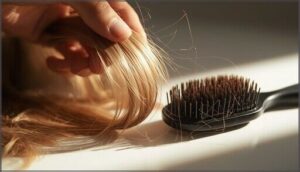
Brushing your hair the wrong way can undo all the benefits you’ve been working toward. Over-brushing, using the wrong tools, or neglecting your brush’s cleanliness can cause breakage, scalp irritation, and even slow down healthy growth.
Here’s what you need to watch out for to keep your hair strong and thriving.
Risks of Over-brushing
You might think more brushing equals healthier hair, but overdoing it creates serious problems. Excessive strokes generate follicle stress and mechanical friction that weakens strands at the root. Watch for these warning signs:
- Hair breakage near the scalp or mid-shaft from repeated pulling
- Scalp irritation showing redness or tenderness
- Increased hair loss during brushing sessions
- Visible hair damage like split ends or frizz
Aggressive brushing delivers the opposite of healthy scalp stimulation—it traumatizes your follicles instead.
Choosing The Right Brush for Your Hair Type
Your hair texture determines which brush materials actually protect your strands. Boar bristle brushes glide natural oils through medium to thick hair without snagging, while wide-tooth combs detangle curls without ripping.
If you’ve got fine hair, nylon bristles with gentle flex prevent breakage. Scalp sensitivity? Choose soft, flexible bristles—they won’t traumatize your follicles during brushing.
Cleaning and Maintaining Your Hairbrush
Even the perfect brush loses its power when clogged with oils and dead skin cells. Pull trapped hair from your bristles weekly, then soak your brush in warm water with gentle shampoo for 5-10 minutes. Scrub between bristles with a toothbrush to dislodge buildup. Rinse thoroughly and air dry bristles-down—proper brush sanitizing protects your scalp from reintroducing debris you just worked to remove.
Top 3 Brushes for Healthy Hair
The right brush can make all the difference between healthy hair and unnecessary breakage. While technique matters, your tool choice directly affects how well you distribute oils, detangle strands, and protect your scalp.
Here are three brushes that stand out for promoting hair health without causing damage.
1. Wet Brush Detangling Hair Brush
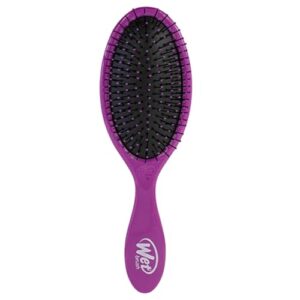
When knots and tangles hijack your daily routine, the Wet Brush Original Detangler delivers immediate relief with its IntelliFlex bristles. These flexible nylon bristles bend around each strand, loosening knots without the sharp tugging that damages follicles and causes breakage.
You can use it on wet or dry hair—the ball-tipped bristles massage your scalp while detangling, promoting circulation.
At $5.80, it works effectively across all hair types, from fine straight strands to thick curls, reducing breakage by 55% when you brush from ends to roots.
| Best For | Anyone dealing with daily tangles—especially those with sensitive scalps, hair extensions, or thick, curly hair that needs gentle detangling without breakage. |
|---|---|
| Hair Type | All hair types |
| Use Case | Wet or dry hair |
| Material | Plastic and nylon |
| Primary Function | Detangling |
| Gentle Approach | Flexible bristles minimize pain |
| Breakage Reduction | Reduces breakage by 55% |
| Additional Features |
|
- IntelliFlex bristles bend and flex to work through knots without painful pulling or causing split ends
- Works on both wet and dry hair, making it versatile for your routine whether you’re fresh out of the shower or styling later
- At $5.80, it’s an affordable solution that reduces breakage by 55% across all hair types
- The soft bristles might feel too gentle if you have extremely thick hair or prefer a firmer brush
- May struggle with severely matted or knotted hair that needs more aggressive detangling
- Durability can be hit-or-miss depending on how often you use it and how well you maintain it
2. Tangle Teezer Detangling Hair Brush
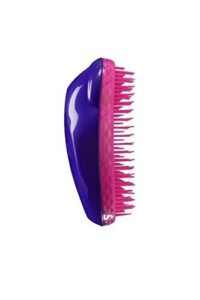
For curly or fragile strands that resist typical detangling, Tangle Teezer’s Original in Purple offers a handle-less design with unique flexible bristles that bend rather than pull. The compact 5 × 3 × 2.2-inch brush fits comfortably in your palm, allowing you to glide through knots without tearing at follicles or scraping your scalp.
You’ll spend less time fighting tangles—especially on children’s hair—though very thick or long textures may need the “Thick and Curly” version for adequate tension.
| Best For | People with curly, fragile, or tangled hair who want a gentle brush that works on wet or dry hair without pulling or causing breakage. |
|---|---|
| Hair Type | All hair types |
| Use Case | Wet or dry hair |
| Material | Plastic |
| Primary Function | Detangling |
| Gentle Approach | Gentle on hair |
| Breakage Reduction | Reduces breakage and tangles |
| Additional Features |
|
- Flexible bristles glide through knots without tearing at hair or scraping your scalp
- Works great on kids’ hair and cuts down brushing time (and tears)
- Compact, handle-less design fits easily in your hand and doubles as a scalp massager
- Bristles may bend or break after a few weeks of regular use
- Not ideal for very thick or long hair—you might need the “Thick and Curly” version instead
- May need replacing every 6 months due to wear and tear
3. Aveda Wooden Paddle Hair Brush
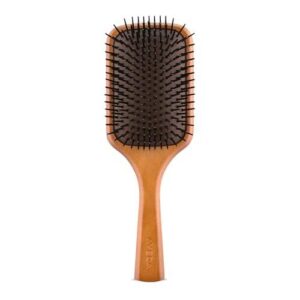
When blowouts and long sessions tire your arm, Aveda’s sustainable wooden paddle delivers extended bristles that glide through medium to long hair without the weight. The 25 × 6 cm design spreads pressure evenly across your scalp, while ventilation holes let heat escape during styling and moisture drain after cleaning—preventing the bacterial buildup that inflames follicles.
You’ll smooth strands faster and distribute sebum more efficiently, though the paddle width may feel oversized if your hair sits above shoulder length.
| Best For | People with medium to long hair who want a gentle, sustainable brush that detangles smoothly and distributes natural oils without straining your arm during blowouts. |
|---|---|
| Hair Type | All hair types |
| Use Case | Detangling and styling |
| Material | Wood |
| Primary Function | Detangling and smoothing |
| Gentle Approach | Gentle on scalp |
| Breakage Reduction | Detangles without pulling |
| Additional Features |
|
- Extended bristles glide through hair without pulling or stressing your scalp
- Ventilation holes prevent bacterial growth and let heat escape during styling
- Wide paddle design spreads pressure evenly and smooths hair faster
- May feel too large or heavy if your hair is shorter than shoulder length
- Needs regular cleaning and maintenance to stay hygienic
- Some quality control issues reported, like missing bristles
Frequently Asked Questions (FAQs)
How often should I brush my hair to stimulate growth?
Brush gently twice a day—once in the morning and once before bed. Each session should last 2–3 minutes, starting at the ends and working upward to avoid breakage.
Can brushing reverse thinning or hair loss?
No. Brushing won’t reverse genetic thinning or androgenetic alopecia, and it can’t restore lost follicles. However, gentle brushing reduces breakage that mimics thinning, so your hair may appear fuller.
Does brushing work differently on curly hair?
Yes—your curls grab bristles differently, so you’ll need gentler pressure and wider-tooth tools. Brush when damp with conditioner for slip, working from ends up to preserve clumps and minimize frizz.
Should I brush before or after showering?
Either timing works, but brushing before your shower helps detangle strands while they’re dry, reducing breakage.
Afterward, use a wide-tooth comb on damp hair—never a brush—to prevent stretching and damage.
Can scalp massage replace regular hair brushing?
No, scalp massage can’t replace brushing—they serve different purposes. Massage boosts blood flow and relaxation, while brushing distributes oils, detangles, and reduces breakage. Combine both for ideal scalp and hair health.
Does brushing speed affect hair growth results?
Many people rush through brushing, hoping fast strokes will speed growth, but tempo doesn’t influence your follicle cycle.
Gentle brushing reduces breakage, while aggressive speed just damages strands without accelerating growth.
Conclusion
Like Rapunzel’s tower—only real science, not fairy tales—your brush won’t magically grow hair, but it can protect what you’ve got. Does brushing hair stimulate growth? Not directly. However, the right technique distributes oils, boosts circulation, and prevents breakage that sabotages length retention.
Skip the 100-stroke obsession. Instead, brush with intention: gently, strategically, and with tools that respect your strands. Your follicles have their own timeline; your job is simply not getting in the way.