This site is supported by our readers. We may earn a commission, at no cost to you, if you purchase through links. This content is for general informational and educational purposes only and is not a substitute for professional medical, dermatological, or nutritional advice.
You’ve probably scratched your head wondering if that persistent itch means growth. It’s a common assumption—many people connect scalp tingling or itchiness with active hair growth, and honestly, it’s not entirely unfounded. Sometimes increased blood flow to your follicles can create mild sensations as new strands push through.
But here’s the catch: itchiness is far more often a red flag pointing to dryness, irritation, or underlying scalp conditions that have nothing to do with growth. Understanding what’s really happening beneath the surface helps you tell the difference between a healthy scalp doing its job and one that needs attention before things get worse.
Table Of Contents
- Key Takeaways
- Does Itchy Scalp Mean Hair Growth?
- Common Causes of Scalp Itchiness
- How The Hair Growth Cycle Works
- Signs That Indicate Hair Growth
- When Scalp Itchiness Relates to Hair Growth
- Itchy Scalp as a Symptom of Scalp Conditions
- Managing Itchy Scalp Without Hindering Growth
- When to Seek Medical Advice for Scalp Itch
- Frequently Asked Questions (FAQs)
- Does your scalp itch when your hair is growing?
- How can you tell if your hair is growing?
- What does it mean when your scalp itches?
- What causes new hair growth on the head?
- Can dandruff worsen with hair growth?
- Are scalp massages beneficial for hair health?
- Do hair growth supplements stop scalp itch?
- Is scalp exfoliation safe during hair growth?
- Can itchy scalp be an allergic reaction?
- Can stress cause both itchiness and hair loss?
- Conclusion
Key Takeaways
- Scalp itchiness rarely signals hair growth—it’s usually a red flag for dryness, irritation, dandruff, or underlying conditions like psoriasis and dermatitis that need treatment before they worsen.
- True hair growth shows up as baby hairs along your hairline, increased density over months, and reduced shedding—not through persistent tingling or itching sensations.
- When itchiness does relate to hair growth, it’s typically from increased blood flow during active follicle phases or new hair pushing through healing tissue, but these sensations are mild and temporary.
- Managing scalp itch without hindering hair growth means using pH-balanced, sulfate-free shampoos, moisturizing with lightweight oils, avoiding scratching, and seeing a dermatologist if symptoms persist beyond six weeks or come with hair loss.
Does Itchy Scalp Mean Hair Growth?
Why does your scalp suddenly start itching? Many people assume it’s a signal that hair is finally growing back, but the truth isn’t that straightforward. An itchy scalp doesn’t directly cause hair growth, though it can hint at changes happening beneath the surface.
If that itch comes with flaking, redness, or tender patches, you might be dealing with scalp eczema that needs targeted relief strategies.
The itch you feel might come from increased blood flow to your hair follicles during the anagen phase, when new strands begin to form. That tingling sensation isn’t guaranteed proof of growth, but it can accompany healthy scalp conditions that support normal hair growth cycles.
On the flip side, persistent scalp itchiness often signals inflammation or irritation that can actually disrupt growth patterns if left untreated. Understanding the link between scalp health and hair growth means recognizing when itch signals recovery and when it demands itch relief through proper scalp care.
Persistent scalp itching often signals inflammation that disrupts hair growth, not recovery—knowing the difference is essential for proper scalp care
For more information, review the possible causes of persistent scalp itchiness and irritation.
Common Causes of Scalp Itchiness
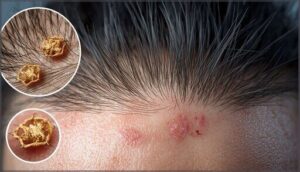
An itchy scalp doesn’t always signal hair growth—it’s often the result of something else happening on your skin.
From dry flakes to irritated follicles, there are several common culprits that can make your scalp feel uncomfortable.
Let’s break down the main causes so you can figure out what’s actually going on.
Dryness and Dandruff
Two of the most common culprits behind itchy scalp are surprisingly different.
Dryness patterns create fine, powdery flakes and tightness, especially in low humidity. Dandruff causes larger, greasy flakes due to yeast overgrowth, disrupting oil balance.
While neither directly signals hair growth, both trigger scalp itchiness that can worsen with scratching.
Understanding flake characteristics helps you choose the right treatment to restore scalp moisture. For more details, see how to distinguish dandruff and dry scalp differences.
Scalp Conditions (Psoriasis, Dermatitis)
Chronic skin conditions bring deeper challenges than simple dandruff. Scalp psoriasis creates thick, silvery plaques that extend beyond your hairline, while seborrheic dermatitis causes yellowish, oily scales in sebum-rich zones. Both trigger persistent scalp inflammation and itchy scalp episodes.
- Psoriasis stems from immune dysregulation affecting hair follicles
- Dermatitis involves Malassezia yeast worsening skin irritation
- Stress and weather shifts intensify scalp eczema flare-ups
Proper dermatological care targets these scalp conditions differently than typical dandruff.
Allergic Reactions and Product Sensitivity
Beyond immune-related disorders, your hair care routine itself might provoke scalp irritation. Fragrances and preservatives in shampoos can trigger contact dermatitis, causing redness and intense itchy scalp. Product sensitivity often builds gradually—what worked last year may suddenly spark skin irritation.
Allergen testing helps pinpoint culprits, so you can switch to gentle formulas that won’t ignite allergic reactions.
| Common Allergen | Reaction Type | Prevention Tip |
|---|---|---|
| Fragrances | Contact Dermatitis | Choose fragrance-free options |
| Preservatives (parabens) | Redness, Itching | Read ingredient labels carefully |
| Hair Dyes | Scalp Swelling | Patch test 48 hours before use |
Parasitic and Microbial Infections
Head lice infestation and scalp mites don’t cause hair growth—they cause relentless itchy scalp. Fungal infections like scalp ringworm create scaly patches and broken hairs, while microbe balance disruptions worsen dandruff and scalp irritation.
If you have sensitive skin that reacts to scalp treatments, consider using pre-shave butter for dry skin as a protective barrier before applying medicated shampoos.
You’ll need infection treatment and parasite control to restore comfort. Proper diagnosis ensures you’re treating the right culprit, not masking symptoms that demand medical attention.
How The Hair Growth Cycle Works
Before we can figure out whether scalp itchiness is tied to hair growth, it helps to understand how hair actually grows in the first place. Your hair doesn’t just sprout continuously—it moves through distinct phases that determine when it grows, rests, and eventually sheds.
Let’s break down these phases and what sensations you might feel along the way.
Anagen, Catagen, and Telogen Phases
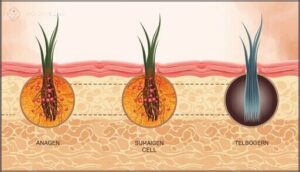
Your hair doesn’t just grow continuously—it cycles through distinct stages that determine how long your strands get and when they fall out. Understanding these hair growth phases helps you make sense of what’s happening beneath your scalp.
- Anagen Phase – Active growth lasting 2 to 6 years, with follicles producing new cells that form the hair shaft
- Catagen Phase – Brief 2 to 3 week transformation when growth stops and follicles shrink
- Telogen Phase – Resting period of about 3 months before hair sheds naturally
Scalp Sensations During Growth Phases
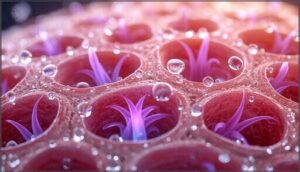
As your follicles shift between phases, you might notice tingling or mild itchiness—especially when blood flow increases around active hair follicles during anagen.
These growth signals often feel like gentle prickling where new hair emerges. Nerve sensitivity near follicles can intensify scalp sensations, creating itch patterns that fade as growth stabilizes.
Keeping scalp hydration balanced helps minimize discomfort during these natural cycles.
Signs That Indicate Hair Growth

If you’re trying to figure out whether your hair is actually growing, there are a few telltale signs to watch for.
These changes happen gradually, so you’ll need to pay attention over several weeks or months. Let’s look at the most reliable indicators that your hair growth is on track.
Appearance of Baby Hairs
One of the earliest signs you’ll notice is a soft fringe of baby hairs along your hairline. These fine, wispy strands often appear lighter in color and vary in texture from your main hair.
Watch for this gentle border around your temples and forehead—it’s a clear signal that your follicles are actively pushing out new growth and your scalp is recovering.
Increased Hair Density
Your scalp doesn’t lie in terms of density boost. As follicle health improves through better scalp circulation and keratin production, you’ll notice hair growth creating a fuller look over three to six months.
Watch for these signs of increased hair density:
- Partings that appear narrower as new hair fills in sparse areas
- Ponytails that feel thicker when you gather your hair
- Scalp visibility decreasing in areas that once seemed thin
- Individual strands catching light differently due to volume changes
Reduced Shedding Patterns
Noticing fewer strands on your pillowcase signals healthy follicle care and improved hair retention.
When your scalp health stabilizes through gentle massage and proper moisture balance, hair follicles cycle more slowly, reducing daily shedding rates.
This shift from excessive hair loss prevention to steady hair growth often accompanies reduced itchy scalp symptoms, confirming your hair growth routine is working as intended.
When Scalp Itchiness Relates to Hair Growth
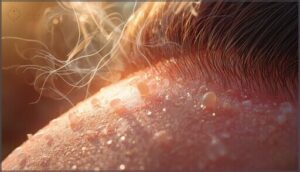
In some cases, scalp itchiness can actually signal that your follicles are active and growing new hair. This happens when increased blood flow stimulates the scalp, when new strands push through the skin, or when your scalp is recovering from previous damage.
Let’s look at the specific ways itchiness might connect to healthy hair growth.
Blood Flow and Follicle Stimulation
When your body ramps up blood flow regulation around hair follicles, it kick-starts a whole cascade of microcirculation dynamics.
Scalp perfusion increases as new vessels form—a process called vascular growth—delivering oxygen and nutrients your follicles need to thrive.
This surge in blood flow can trigger subtle sensations, and yes, sometimes itchiness, as follicle stimulation intensifies and scalp health improves.
New Hair Emerging and Tingling
As tiny hair shafts push through your skin, you might feel that telltale tingling sensation—it’s your follicles working overtime. This sensation comes from new hair regrowth pressing against tissue and nerve endings responding to the activity.
You’ll usually notice:
- Fine baby hairs appearing along your hairline or crown
- A subtle buzzing or warmth in patches where growth is strongest
- Temporary tingling that fades as hair matures
These scalp sensations signal your follicles are shifting into active growth phases.
Itchiness From Healing or Recovery
When you’re bouncing back from hair loss or scalp trauma, nerve regeneration triggers unexpected itch signals as tissue repair unfolds. Healing phases release histamine and reactivate nerve endings, creating that persistent tingle. This recovery process means your follicles are waking up—itch here is a side effect of active restoration, not damage.
| Healing Phase | What’s Happening | Itch Level |
|---|---|---|
| Inflammatory (Days 1–14) | Histamine floods tissue | Moderate to high |
| Proliferative (Weeks 2–4) | New cells form, nerves reconnect | Mild to moderate |
| Remodeling (Weeks 4–12) | Tissue refines, nerves settle | Intermittent |
| Early Regrowth | Hair shafts emerge beneath skin | Mild tingling |
| Full Recovery | Follicles stabilize | Minimal |
Moisturizers can ease dryness-driven itch, but persistent, severe itchiness with redness or pus warrants a dermatologist visit.
Itchy Scalp as a Symptom of Scalp Conditions
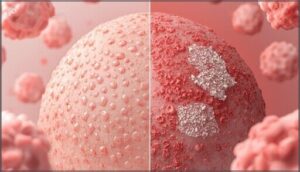
But more often than not, an itchy scalp isn’t a sign of growth—it’s your skin telling you something’s wrong. Scalp conditions and disorders are the real culprits behind most persistent itchiness.
Dandruff and seborrheic dermatitis create itchy flakes and redness that won’t quit. Scalp psoriasis brings thick, scaly patches that feel relentless. Contact dermatitis means you’re reacting to something in your shampoo or styling products—your scalp’s way of waving a red flag.
Infection signs like scalp sores, oozing, or spreading redness need attention fast. Lice and fungal infections also trigger intense scalp irritation that has nothing to do with hair growth.
Understanding these itchy scalp causes and remedies starts with recognizing that scalp itchiness usually signals inflammation, not regeneration. Your scalp isn’t celebrating new hair—it’s asking for help.
Managing Itchy Scalp Without Hindering Growth
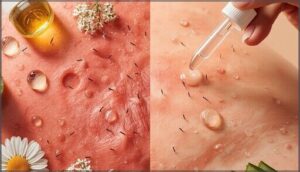
You don’t have to choose between soothing your scalp irritation and keeping your hair healthy. The right approach calms irritation while supporting hair growth, not sabotaging it.
Here’s how to manage that itch without setting yourself back.
Gentle, PH-Balanced Shampoos
The right cleanser can calm an itchy scalp without derailing hair growth. Look for shampoos with a pH balance near 5.0 to 6.5—they protect your scalp’s natural barrier while gentle cleansers like decyl glucoside wash away dandruff and buildup. Sulfate free formulas prevent dryness, and moisturizing properties from aloe or glycerin boost scalp comfort, supporting both relief and healthy hair care.
- Mild surfactants cleanse without stripping moisture from your scalp
- pH balanced products preserve the lipid layer around follicles
- Sulfate free options reduce irritation and color fade
- Fragrance free or hypoallergenic formulas minimize contact dermatitis risk
- Lightweight botanical extracts soothe without weighing hair down
Moisturizing and Scalp Massage
Hydrating your scalp and giving it a good massage can dial down the itch while supporting hair growth. Choose lightweight oils like jojoba or argan—they absorb fast without clogging follicles. Massage in small circles with your fingertips twice daily for 3 to 5 minutes to boost blood flow around hair follicles and distribute natural sebum evenly.
| Technique | Benefit |
|---|---|
| Circular fingertip motions | Stimulates capillary circulation |
| Light effleurage strokes | Soothes scalp and promotes relaxation |
| Warm compress before massage | Enhances oil absorption |
| Non-comedogenic moisturizers | Prevents follicle blockage |
Apply a small amount to damp scalp for better penetration, and always patch test new products before full use.
Avoiding Scratching and Irritants
Scratching can tear delicate scalp tissue and weaken hair shafts, so keep nails trimmed short and use cool compresses when the urge hits. Swap out any products with fragrance, alcohol, or harsh sulfates—these common irritants worsen scalp itchiness and inflammation.
- Patch test new hair care on a small area before full use
- Rinse with lukewarm water to preserve your skin’s protective barriers
- Apply fragrance-free moisturizer within three minutes after washing to seal hydration
Gentle cleansing and irritant avoidance are your best defenses against scratch prevention failures on sensitive skin.
When to Seek Medical Advice for Scalp Itch

Most scalp itchiness clears up with simple home care, but sometimes it’s a sign that something more serious is going on.
You shouldn’t ignore symptoms that persist, worsen, or come with other concerning changes. Here’s when it’s time to stop guessing and get professional help.
Persistent or Severe Itching
If your scalp itchiness won’t quit after six weeks despite trying relief strategies, it’s time to check in with a dermatologist.
Intense itch that keeps you up at night, spreads to other areas, or comes with red patches signals something deeper—like scalp inflammation, nerve sensitivity, or underlying scalp conditions and disorders that need proper itchy scalp treatment beyond basic skin hydration.
Signs of Hair Loss or Scalp Damage
When itchy patches appear alongside bald spots, visible scalp lesions, or unusual breakage patterns near the crown, your scalp is signaling a deeper issue.
Hair thinning with redness or crusting points to scalp inflammation that can damage follicles permanently. These signs separate simple dandruff from serious scalp conditions and disorders requiring targeted treatment before hair loss becomes irreversible.
Consulting a Dermatologist
If over-the-counter treatments don’t ease your itchy scalp after two weeks, a dermatologist visit can pinpoint the real problem. During your skin exam, they’ll review your medical history and check for conditions you might’ve missed at home.
Here’s what dermatology offers:
- Accurate diagnosis through clinical evaluation and testing
- Prescription treatment options targeting underlying scalp health issues
- Specialist referral if hair growth or immune concerns need deeper care
Frequently Asked Questions (FAQs)
Does your scalp itch when your hair is growing?
Many people wonder if tingling means new strands are on their way.
The truth is, hair growth usually happens silently—most of the time, scalp itchiness points to dryness or irritation instead.
How can you tell if your hair is growing?
You’ll notice baby hairs sprouting along your hairline, fuller density over months, and less shedding than before.
Measure the same spot monthly—about half an inch of growth signals healthy follicle stimulation.
What does it mean when your scalp itches?
Tingling, tickling tension sensation across your head usually signals scalp irritation from dryness, dandruff, or skin conditions like seborrheic dermatitis—not necessarily hair regrowth, though active follicles can occasionally create mild sensations during healing.
What causes new hair growth on the head?
Hair follicle activity depends on hormonal balance, nutrient intake, and adequate blood flow.
Scalp stimulation promotes growth cycles, while protein and iron fuel new hair during the anagen phase of each hair cycle.
Can dandruff worsen with hair growth?
Dandruff doesn’t worsen with hair growth directly, but inflammation from seborrheic dermatitis can disrupt follicle health.
Scratching due to scalp itchiness may increase breakage, making new growth harder to notice and worsening flake reduction techniques.
Are scalp massages beneficial for hair health?
Yes, scalp massages boost blood flow enhancement and hair follicle stimulation, helping deliver nutrients to your roots.
Regular massage technique tips include gentle pressure for scalp tension relief, supporting overall hair health and wellness without aggressive rubbing.
Do hair growth supplements stop scalp itch?
Supplements won’t directly cure itch relief caused by psoriasis or dermatitis. They support overall scalp health and growth cycle nutrients, but targeted topical therapies and proper cleansing methods remain essential for lasting itch relief.
They are meant to work in conjunction with, not replace, other treatments.
Is scalp exfoliation safe during hair growth?
Scalp exfoliation is safe during hair growth when you use gentle exfoliation methods and stick to a safe frequency of one to two sessions weekly, which promotes scalp health without causing over-exfoliation or hair loss.
Can itchy scalp be an allergic reaction?
Absolutely. Ingredients in shampoos, dyes, or styling products can trigger contact dermatitis, causing scalp sensitivity and inflammation.
Fragrances, preservatives, and sulfates are common product allergens that provoke skin reactions and intense itch relief needs.
Can stress cause both itchiness and hair loss?
Stress hormones can trigger both scalp sensitivity and hair follicle disruption.
Itch triggers worsen under stress, while hair loss may follow weeks later.
Mindful relief strategies improve scalp health and stabilize hair growth over time.
Conclusion
Your scalp speaks in subtle ways, and discomfort isn’t always a celebration of growth. While an itchy scalp sometimes means hair growth connects to increased follicle activity, it more often signals dryness, irritation, or conditions needing treatment.
Pay attention to what accompanies the itch—new baby hairs suggest progress, but persistent scratching with flaking or redness demands intervention. A healthy scalp doesn’t have to announce itself through constant tingling. Trust what you see, not just what you feel.