This site is supported by our readers. We may earn a commission, at no cost to you, if you purchase through links. This content is for general informational and educational purposes only and is not a substitute for professional medical, dermatological, or nutritional advice.

You’ve probably walked past shea butter in the hair care aisle dozens of times, dismissing it as just another trendy ingredient. But this golden-hued extract from West African karite trees has been softening, protecting, and transforming hair for centuries—long before modern conditioners existed.
The secret lies in its unique fatty acid profile: oleic and stearic acids that penetrate the hair shaft rather than just coating the surface, delivering moisture where your strands need it most.
Whether you’re battling frizz, nursing heat-damaged ends, or trying to keep your curls hydrated without weighing them down, shea butter offers a clinically-backed solution that works with your hair’s natural structure. Understanding how to choose and apply it correctly can mean the difference between greasy buildup and the healthiest hair you’ve seen in years.
Table Of Contents
- Key Takeaways
- What is Shea Butter for Hair?
- Moisturizing and Softening Hair Benefits
- Shea Butter for Scalp and Hair Health
- Protection Against Damage and Frizz
- Shea Butter for Different Hair Types
- How to Use Shea Butter on Hair
- DIY Shea Butter Hair Care Recipes
- Top Shea Butter Hair Products to Try
- Frequently Asked Questions (FAQs)
- How long should I leave shea butter on my hair?
- Is shea butter good for curly hair?
- Is shea butter good for dry hair?
- How to use shea butter for natural hair?
- Does shea butter help with hair growth?
- Can you put shea butter directly on hair?
- What are the disadvantages of shea butter on hair?
- Who should not use shea butter?
- Does shea butter heal damaged hair?
- How long does shea butter last on hair?
- Conclusion
Key Takeaways
- Shea butter deeply moisturizes hair and scalp, thanks to fatty acids and vitamins A and E that penetrate strands instead of just coating them.
- It helps reduce frizz, adds shine, and protects against breakage, making it especially effective for curly, textured, or damaged hair types.
- Raw shea butter offers the most nutrients and benefits, while refined versions may lose some of their natural antioxidants during processing.
- Using too much shea butter can weigh down fine or low-porosity hair and may cause buildup, so careful, tailored application is key for best results.
What is Shea Butter for Hair?
You’ve probably seen shea butter in countless hair products, but understanding what it actually is can help you use it more effectively. This natural ingredient comes from African shea trees and undergoes a specific extraction process that preserves its beneficial properties.
Many people discover its transformative effects through natural hair products formulated with shea butter that maximize its moisturizing properties.
Before you incorporate it into your hair care routine, it’s worth knowing where it comes from, what makes it so nourishing, and how different types compare.
Shea Butter Origin and Extraction
Shea butter comes from the nuts of the Vitellaria paradoxa tree, native to West Africa’s Sahel and savannah regions. You’ll find most commercial shea butter sourced from Nigeria and Ghana, where traditional methods use water boiling to extract the fat, while modern commercial processing relies on expellers or solvent extraction.
Raw, unrefined shea butter retains more bioactive compounds than refined versions. Packed with beneficial fatty acids and vitamins, shea butter is widely recognized for its moisturizing effects on hair.
Key Nutrients and Properties
What makes shea butter so effective? Its fatty acid profile—primarily stearic and oleic acids—forms a protective film over hair cuticles while penetrating deep for sustained conditioning.
You’re also getting vitamins A and E, both powerful for hair nourishment and antioxidant properties. These nutrients work together to boost moisture retention, protect follicles from oxidative stress, and maintain your hair’s nutrient balance for healthier, more resilient strands.
Raw Vs. Refined Shea Butter
When you’re shopping for shea butter, you’ll notice two main types: raw and refined.
Raw shea butter extraction uses minimal heat, preserving higher levels of vitamins A and E along with those antioxidant properties we just discussed.
Refined shea butter goes through a deodorizing process that removes its natural nutty scent and creates a uniform white appearance, though some nutrient retention decreases during refining.
For more details about the differences in skin and hair benefits, explore expert comparisons of raw and refined shea butter.
Moisturizing and Softening Hair Benefits
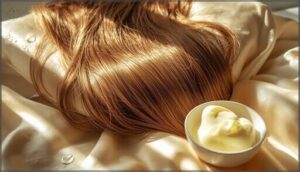
Shea butter’s reputation as a hair care powerhouse starts with its ability to deeply moisturize strands from the inside out. The fatty acids and vitamins in shea butter don’t just sit on your hair’s surface—they penetrate the cuticle to restore softness, flexibility, and natural shine.
Here’s how shea butter transforms dry, lifeless hair into manageable, healthy-looking locks.
Deep Hydration for Dry Hair
If you’re battling persistent dryness, shea butter’s thick emollient layer can seal in moisture and reduce water loss from your hair shaft by up to 60 percent.
Shea butter’s emollient layer seals in moisture and cuts hair water loss by up to 60 percent
When applied to damp strands, its oleic and stearic fatty acids penetrate the cuticle, restoring pliability and delivering hair hydration that lasts 24 to 48 hours—making it one of the most effective dry hair remedies available.
Softening Coarse and Textured Hair
Textured hair care transforms when you work shea butter into your routine. Its 40 to 45 percent oleic acid penetrates coarse hair’s cortex, restoring flexibility that makes detangling smoother and breakage less frequent.
That’s why natural hair products featuring shea butter soften wiry strands without synthetic silicones—the fatty acids loosen tight coils, improve hair texture, and deliver the hair softening your curls deserve.
Enhancing Hair Shine and Smoothness
Frizz control starts at the cuticle level, where shea butter’s stearic and oleic acids smooth raised scales that scatter light and dull your hair. When you warm a pea-sized amount between your palms and glide it over damp strands, you create a natural barrier that seals moisture, flattens the cuticle, and delivers the glossy locks you want—without silicone buildup.
Here’s how shea butter boosts hair shine and smoothness:
- Reflects light naturally by filling gaps in damaged cuticles for instant hair shine boost
- Reduces mechanical frizz through emollient protection that keeps strands aligned and sleek
- Nurtures cuticle care with vitamin A and E, strengthening the outer layer over time
- Maintains radiance for up to 24 hours with minimal washing or reapplication needed
Shea Butter for Scalp and Hair Health
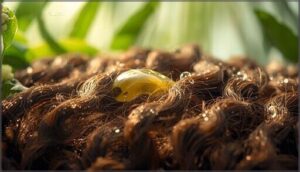
Your scalp is the foundation for everything that grows from it, and shea butter doesn’t just coat your strands—it actively nourishes the environment where hair starts.
The anti-inflammatory compounds in shea butter can calm irritation, reduce flakiness, and create conditions that encourage healthier growth.
Here’s how shea butter works at the root level to improve both scalp comfort and long-term hair health.
Anti-Inflammatory and Soothing Effects
Your scalp’s natural defenses can weaken from styling products, environmental stress, or simple dryness. That’s where shea butter’s anti-inflammatory properties come in—it contains triterpene alcohols and fatty acids that calm scalp irritation relief within minutes.
The vitamin E and cinnamic derivatives deliver anti-redness treatments while forming a protective barrier. You’ll notice real hair soothing and inflammation reduction, restoring scalp health without heavy residue.
Reducing Scalp Irritation and Flakiness
Persistent flaking and itchiness signal that your scalp needs serious hydration—shea butter delivers exactly that. Its rich fatty acids restore moisture balance, softening dry patches within one to two weeks of consistent use.
- Reduces visible flake formation through deep scalp hydration
- Eases itchy scalp discomfort with antioxidants that calm minor inflammation
- Improves dryness relief without clogging follicles
This gentle scalp treatment fosters long-term scalp comfort and healthier scalp care routines.
Supporting Healthier Hair Growth
You can’t force faster growth, but you can create the conditions that let each follicle thrive. Shea butter nourishes hair follicle health with essential fatty acids, improving nutrient uptake enhancement at the root.
Regular scalp massage benefits circulation during application, supporting growth cycle optimization. This steady root strengthening technique reduces breakage, preserving length—dermatological benefits that complement your hair growth support routine without promising miracles.
Protection Against Damage and Frizz
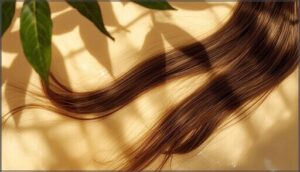
Your hair faces a constant barrage of threats, from harsh UV rays and pollution to the mechanical stress of heat styling and everyday friction. Shea butter acts as a protective barrier, working to shield strands from damage while taming frizz and preventing the kind of breakage that leaves your hair looking thin and ragged.
Here’s how it defends your hair on multiple fronts.
Shielding Hair From Environmental Stressors
Your hair faces daily assault from UV rays, pollutants, and temperature swings that degrade proteins and strip moisture. Shea butter’s protective barrier offers environmental protection by:
- UV Protection – reducing melanin breakdown and color fading
- Pollution Defense – sealing cuticles against oxidative stress
- Thermal Guard – minimizing damage from heat-to-cold shifts
- Wind Shielding – preventing mechanical friction and hair breakage prevention
This natural armor maintains hair shine enhancement across climates.
Reducing Frizz and Sealing The Cuticle
Beyond blocking external aggressors, shea butter controls frizz by sealing your hair cuticle like a smoothing shield. Its waxy components align along cuticle edges, creating a uniform surface that resists humidity and static. Applied warm to damp lengths, this natural hair sealant locks moisture inside while keeping excess water out—your key to sleek, controlled strands that hold their shape from morning to night.
| Application Method | Frizz Reduction Result | Best For |
|---|---|---|
| Warm between palms before applying | Activates emollients for better cuticle smoothing | All textures needing frizz control |
| Apply to damp hair post-wash | Aids cuticle closure during drying | High-porosity, frizz-prone hair |
| Light layer after styling | Locks in moisture and smooths surface | Humid climates, daily maintenance |
| Focus mid-lengths to ends | Prevents weighing down roots | Fine to medium hair |
| Allow 10-15 min to set | Maximizes thermal protection and seal | Pre-heat styling prep |
Preventing Breakage and Split Ends
When split ends travel up your shaft, they increase hair breakage and weaken structure—but shea butter’s fatty acids coat each strand to maintain moisture balance and flexibility.
By cushioning your hair cuticle and reducing friction during detangling, you get split end prevention that stops damage before it spreads. This natural shield aids hair strengthening, so your lengths stay intact longer.
Shea Butter for Different Hair Types
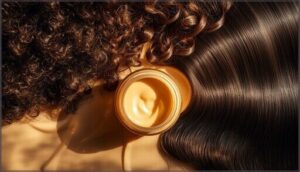
Your hair’s unique structure determines how well shea butter will work for you. Porosity, texture, and density all play a role in whether this ingredient becomes your holy grail or weighs you down.
Here’s how to match shea butter to your specific hair type for the best results.
Benefits for Curly and Coily Hair
Curly hair and coily hair naturally lose moisture faster than straight strands, making shea butter an ideal ally for curly hair care and coily texture tips.
This rich emollient deeply moisturizes hair, encourages natural hair growth, and excels at moisture retention between wash days.
When applied to tight curls, shea butter’s frizz control methods seal the cuticle, reduce breakage, and deliver the softness your curls deserve without weighing them down.
Considerations for Fine or Low-Porosity Hair
If you have fine hair or low-porosity hair, shea butter can weigh down strands and create buildup. Your hair porosity affects absorption—flat cuticles resist heavy butters.
For fine hair care and lightweight styling, use small amounts on ends only, mix with lighter oils, or skip shea butter entirely.
A gentle scalp massage with water-based serums maintains hair manageability without sacrificing volume or bounce.
Using Shea Butter on Damaged or Color-Treated Hair
Damage creates open gaps in your hair cuticle where shea butter’s fatty acids lock in moisture and smooth roughened surfaces. Your damaged hair needs this strategic repair:
- Pre-wash barrier – Apply before shampooing to reduce water absorption shock on color-treated strands
- Post-color sealant – Use small amounts on ends to fill cuticle gaps without dulling vibrancy
- Heat styling shield – Spread thin layers before blow-drying to minimize mechanical breakage
Shea butter blends with lighter oils support hair restoration techniques while protecting your investment in salon color.
How to Use Shea Butter on Hair
Getting shea butter into your hair routine doesn’t require a complicated process, but technique matters if you want real results. The key is understanding which method works best for your specific needs, whether that’s daily moisture or intensive repair.
Here’s how to apply shea butter for maximum benefit without weighing your hair down.
As a Leave-in Conditioner or Styling Aid
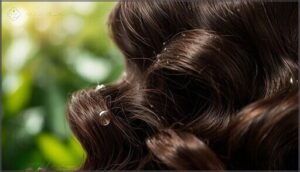
Shea butter works beautifully as a leave-in conditioner, forming a lightweight barrier that locks in daily moisture without weighing your hair down. You’ll notice improved frizz control and smoother hair texture when you warm a pea-sized amount between your hands and apply it to damp strands.
As a styling treatment, it defines curls with flexible hold while taming flyaways, making it an excellent leave-in treatment for most hair types.
As a Deep Moisturizing Hair Mask
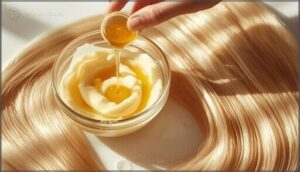
For intense conditioning, blend shea butter with lightweight oils like argan to create a deep hydrating mask that delivers hair nourishment without heaviness.
Apply the mixture from mid-lengths to ends, focusing on dry and damaged sections.
Leave the deep conditioning mask on for 10 to 20 minutes to allow moisture lock benefits, then rinse thoroughly with cool water to seal the cuticle.
Application Tips for Best Results

Warm a pea-sized amount of shea butter between your palms before applying—this simple step transforms product layering and ensures even distribution through strands.
For leave-in treatments, focus on damp hair’s mid-lengths and ends, avoiding roots if you’re prone to buildup.
Master scalp massage methods by using gentle circular motions, and always blend shea with lighter oils when creating DIY hair recipes for tailored hair moisturizing.
DIY Shea Butter Hair Care Recipes
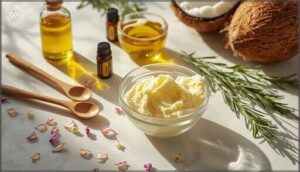
Making your own shea butter treatments at home gives you complete control over what goes on your hair, and it’s easier than you might think.
You can customize each recipe to match your hair’s specific needs, whether that’s moisture, scalp relief, or frizz control.
Here are three simple formulas you can whip up in your kitchen right now.
Whipped Shea Butter for Daily Moisture
You can transform raw shea butter into a light, fluffy emulsion that glides smoothly through your hair. The whipping process incorporates air and lightweight oils like jojoba or almond oil, creating a velvety texture that hydrates without the heaviness.
Apply a pea-sized amount to damp hair as a leave-in treatment, focusing on dry ends. Store your whipped blend in a cool spot to maintain stability.
Deep Hydration Mask With Oils and Honey
When your strands feel brittle and parched, combining shea butter with carrier oils and honey creates a restorative hair mask that moisturizes deep into the cortex.
Honey acts as a humectant, locking moisture into dry hair, while argan or coconut oil adds slip and seals the cuticle.
Apply this blend as a leave-in treatment or rinse after 20 minutes for noticeable softness.
Scalp Soothing Blend With Essential Oils
If scalp dryness or itch keeps flaring up, try blending shea butter with a few drops of tea tree, lavender, or peppermint essential oil. These natural scalp remedies utilize anti-inflammatory properties and aromatherapy benefits, calming irritation while gentle scalp massage techniques boost circulation for hair growth stimulation.
Always dilute essential oil blends in a carrier oil, patch-test first, then massage directly onto your scalp to support overall scalp health.
Top Shea Butter Hair Products to Try
If you’re not ready to make your own treatments from scratch, there are plenty of shea butter products formulated to deliver serious moisture and protection.
These options range from pure, unrefined butter you can customize to ready-to-use creams and conditioners designed for specific hair concerns.
Here’s a look at some standout products worth considering for your hair care routine.
1. Better Shea Butter Raw African Shea Butter
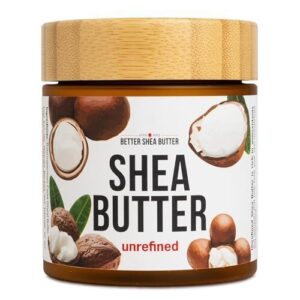
If you’re after pure, unrefined shea butter that delivers maximum moisturizing power, Better Shea Butter Raw African Shea Butter checks all the boxes. Sourced from West Africa, this 8 oz jar preserves natural vitamins A and E along with essential fatty acids that deeply hydrate your scalp and strands.
It melts on contact, making application straightforward, and works beautifully in DIY hair masks or as a standalone treatment. The natural smoky scent confirms you’re getting the real deal—no synthetic additives, just nutrient-rich butter your hair can actually use.
| Best For | Anyone with dry skin or thick, curly hair who wants a natural, multipurpose moisturizer that works on both body and hair without synthetic additives. |
|---|---|
| Main Ingredient | Pure Shea Butter |
| Hair Application | Moisturizer |
| Frizz Control | Softens/Defrizzes |
| Cruelty-Free | Not listed |
| Suitable for All Hair Types | Not all types |
| Scent | Natural Smoky |
| Additional Features |
|
- Pure and unrefined formula packed with vitamins A and E for deep hydration
- Melts easily on contact and works great for DIY skincare projects
- Non-comedogenic and safe for all skin types, including sensitive skin
- Natural smoky scent can be strong for some people
- Color and texture may vary (ivory to gray-green, sometimes gritty)
- May be too heavy for fine hair types
Cantu Shea Butter Leave-in Repair Cream
For a budget-friendly leave-in treatment that doesn’t skimp on repair, Cantu Shea Butter Leave-in Repair Cream delivers impressive hydration at a fraction of premium prices.
The formula blends shea butter with panthenol and natural oils to mend breakage while you style, and its cream texture spreads easily without weighing down curls or coils.
Daily use keeps hair soft, manageable, and noticeably smoother.
2. Blue Magic Shea Butter Coconut Hair Conditioner
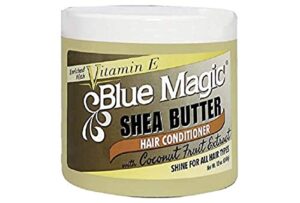
If you prefer a daily conditioner over a leave-in cream, Blue Magic Shea Butter Coconut Hair Conditioner offers rich moisture in a lightweight balm form. This 12-ounce jar combines shea butter with coconut fruit extract and vitamin E to nourish strands without the greasy feel petroleum-based products sometimes bring.
You’ll massage it gently into damp hair and scalp after shampooing, skip the rinse, and enjoy smoother texture and subtle tropical scent throughout the day—especially useful for textured or relaxed hair.
| Best For | People with textured or relaxed hair looking for a lightweight daily conditioner that adds moisture and shine without feeling heavy or greasy. |
|---|---|
| Main Ingredient | Shea Butter & Oils |
| Hair Application | Leave-In Conditioner |
| Frizz Control | Reduces Frizz |
| Cruelty-Free | Yes |
| Suitable for All Hair Types | Not all types |
| Scent | Light Scent |
| Additional Features |
|
- Shea butter and coconut extract deliver deep hydration while keeping hair soft and manageable
- Works well as a leave-in treatment that doesn’t require rinsing, saving time in your routine
- Light tropical scent and non-greasy formula make it pleasant for everyday use
- Contains petroleum, which some people prefer to avoid in their hair care products
- Some customers have reported receiving jars that arrived cracked or damaged
- May not work for everyone with sensitive scalps due to the petroleum content
3. Hawthorne Men’s Frizz Fighter Shampoo
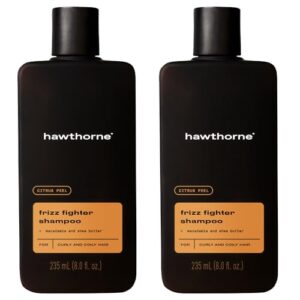
Men with curly hair will appreciate Hawthorne’s Frizz Fighter Shampoo, an 8-ounce sulfate-free formula that blends shea butter with coconut oil, macadamia oil, and amino acids to hydrate and tame frizz. You won’t find harsh detergents here—just gentle cleansing that won’t strip your curls dry.
The non-foaming texture works well for daily use, leaving hair soft with a refined woody-citrus scent. Just note that some users report occasional packaging leaks, and you’ll want to use small amounts if your hair is fine to avoid weigh-down.
| Best For | Men with curly or frizzy hair who want a sulfate-free, gentle cleanser that hydrates without stripping natural oils. |
|---|---|
| Main Ingredient | Shea Butter & Coconut |
| Hair Application | Hydration Balm |
| Frizz Control | Keeps Hair Moist |
| Cruelty-Free | Not listed |
| Suitable for All Hair Types | Yes |
| Scent | Tropical Coconut |
| Additional Features |
|
- Sulfate-free formula with nourishing ingredients like shea butter, coconut oil, and macadamia oil keeps curls hydrated and soft
- Non-foaming texture is ideal for curly hair and won’t dry out your scalp with harsh detergents
- Cologne-quality woody citrus scent leaves hair smelling fresh without being overpowering
- Some users report leaks in the packaging, which can be messy and wasteful
- Formula changes after rebranding may have affected performance for long-time users
- A few customers experienced dryness or dandruff, suggesting it may not work for every hair type
Frequently Asked Questions (FAQs)
How long should I leave shea butter on my hair?
Leave-in applications can stay indefinitely—apply sparingly after washing. Wash-out treatments work best with 15 to 30 minutes before rinsing, allowing fatty acids to penetrate without buildup or weighing down your strands.
Is shea butter good for curly hair?
Yes, shea butter works beautifully for curly hair. Its rich fatty acids seal moisture into your curl pattern, reducing frizz and adding definition, while the anti-inflammatory properties soothe your scalp without weighing down your curls.
Is shea butter good for dry hair?
Shea butter is excellent for dry hair because its fatty acids penetrate the outer layer, delivering long-lasting moisture that restores flexibility and reduces brittleness without leaving heavy residue when applied correctly.
How to use shea butter for natural hair?
To boost benefits on natural hair, warm a small amount between your palms, then apply to damp hair focusing on the ends.
This seals moisture, reduces frizz, and enhances curl definition.
Does shea butter help with hair growth?
Think of a client with an irritated scalp and brittle strands—after using shea butter a few times, they notice less breakage, improved scalp comfort, and better length retention.
That’s how steady use helps encourage hair growth from healthier roots.
Can you put shea butter directly on hair?
You can absolutely apply shea butter directly to your hair. Warm a small amount between your palms first. This creates a protective barrier, locking in moisture and adding shine—just use sparingly to avoid product buildup.
What are the disadvantages of shea butter on hair?
Heavy application weighs down fine or low-porosity hair, causing limpness, buildup, or scalp irritation. It may also block moisture or clog pores, leaving strands overly greasy or, paradoxically, drier after washing, especially without proper cleansing.
Who should not use shea butter?
If you have a nut allergy, sensitive scalp, or acne-prone skin, steer clear of shea butter.
It can trigger irritation, clogged pores, or allergic reactions—even if unrefined and pure—especially on delicate, reactive skin.
Does shea butter heal damaged hair?
Just as a patch can mend a sail battered by a storm, shea butter can’t fully “heal” damaged hair, but it helps restore moisture, softens rough cuticles, reduces breakage, and shields strands as they grow healthier.
How long does shea butter last on hair?
Shea butter keeps hair feeling soft and moisturized anywhere from 6 to 24 hours, depending on your hair’s type, porosity, and the climate.
Curly or textured hair often stays hydrated all day, while fine hair may need reapplication sooner.
Conclusion
What would happen if you gave your hair the same nourishing care you’d want for your skin? When you ask, “is shea butter good for hair?,” the answer lies in its centuries-old ability to hydrate, shield, and restore.
Whether you’re managing frizz, dryness, or a delicate scalp, shea butter offers adaptive support rooted in nature and science. Trust that better hair days aren’t wishful thinking—they’re simply a matter of making the right, informed choice.