This site is supported by our readers. We may earn a commission, at no cost to you, if you purchase through links. This content is for general informational and educational purposes only and is not a substitute for professional medical, dermatological, or nutritional advice.
You pressed your hair bone straight, stepped back from the mirror, and gasped. Those curls that sat at your chin now brush your shoulders. It looks like you grew three inches overnight.
You didn’t. Hair grows from follicles beneath your scalp, and a flat iron never touches them. So will straightening natural hair make it grow faster? No, but the length you see is real. Shrinkage hides up to 75% of it, and heat simply reveals what was always there.
That difference shapes how you protect your ends, how often you style, and how you actually keep the length you’ve earned.
Table Of Contents
- Key Takeaways
- Why Doesn’t Straightening Natural Hair Boost Growth?
- Why Does Straightened Natural Hair Look Longer?
- How Does Straightening Affect Length Retention?
- How Often Should You Straighten Natural Hair?
- How Can You Minimize Heat Straightening Damage?
- How Can Natural Hair Grow Without Straightening?
- Frequently Asked Questions (FAQs)
- Does your hair grow faster when you straighten it?
- How to speed up natural hair growth?
- How often should you straighten natural hair?
- Can hair grow 2 inches in a month?
- Is there any way to prevent breakage when straightening natural hair?
- How often should I trim my natural hair when straightening it?
- Can straightening affect hair color or texture over time?
- What are signs of hidden heat damage?
- How long does straightened natural hair typically last?
- Is straightened hair more prone to environmental damage?
- Conclusion
Key Takeaways
- Straightening can’t make your hair grow faster, because growth happens in follicles under your scalp that a flat iron never touches.
- Your hair looks longer when it’s straight because heat removes shrinkage, which can hide up to 75% of your length on tighter curl patterns.
- Straightening only helps you keep length if you limit heat to about once a week or less, use a protectant, and stay under 392°F, since repeated damage makes strands snap.
- Real, lasting length comes from protective styles, steady moisture, regular trims, and gentle habits rather than from heat.
Why Doesn’t Straightening Natural Hair Boost Growth?
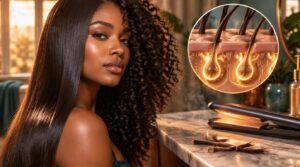
Hair growth starts in your follicles, tucked beneath the scalp, and a flat iron never touches them. The strand you see above your skin is a nonliving fiber made of keratin. Heat can reshape it, but it can’t make it biologically grow.
Because damage happens to the strand itself, not the follicle, hair can look fully recovered once trimmed, and this guide to hair growth after breakage explains what real regrowth looks like.
Your hair growth rate comes down to genetics, age, hormones, nutrition, and health. Straightening doesn’t override any of that, and it doesn’t restart or stretch the growth phase.
Here’s the catch. Repeated heat damage weakens the shaft, and weak strands snap. More hair breakage means less retained length, so your hair can look like it’s growing slower. That’s why smart thermal damage prevention matters.
Why Does Straightened Natural Hair Look Longer?
Your hair didn’t grow overnight. What changed is how much of it you can see.
Natural coils compress as they dry, and that shrinkage can hide 50% to 75% of your real length if you have type 4 hair. Heat styling removes that compression. Once the curls relax, the strands hang freely and show the length that was there all along.
Wet hair does something similar, since water weight stretches your curls until they dry. As the water evaporates, strands lose that weight and contract back to their natural pattern.
Tighter patterns show the biggest jump. A 4C section that looks four inches long may measure closer to twelve once it’s flat.
That’s an optical gain, not growth. Shrinkage returns after washing, and your actual length hasn’t changed.
How Does Straightening Affect Length Retention?
Seeing more length is one thing. Keeping it is another, and straightening matters here.
Giving your hair a few days off between sessions and cleaning your tool regularly will protect those extra inches, and a good hair straightening brush makes that upkeep much easier.
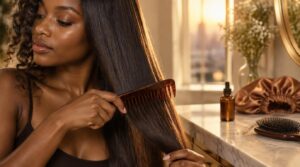
Curly strands tangle and knot against each other, and every snag risks a snapped end. Straight hair slides past itself, so detangling is gentler, and hair breakage reduction follows. Done with care, straightening can support length retention by cutting that daily friction.
Picture what that looks like:
- A comb gliding from root to tip without catching
- Ends that stay smooth instead of snarled
- Fewer shed strands collecting in your brush
- Hair tucked away in a low-manipulation, protective styling routine
- Strands that stay supple thanks to moisture retention
Skip the protection and heat damage cancels the gain. Dry, frayed ends break off as fast as they grow.
How Often Should You Straighten Natural Hair?

Less often than you’d think. The safest rule is once a week or less, which gives your strands time to recover before the next round of heat styling.
If your hair needs extra support between styling days, gentle hair growth serums for teenagers can help calm frizz and protect against breakage without relying on harsh ingredients.
Your hair type changes the answer:
- Fine or thin hair: Wait 10 to 14 days between sessions, and keep your iron below 350°F (177°C).
- Thick or coarse hair: Once a week works, or every 5 days with solid protection.
- High porosity hair: Go less often, since it loses moisture fast.
- Any hair type: Schedule heat-free weeks regularly.
Between sessions, braids or twists keep your straightened look going without reapplying heat. Wrap your hair in satin at night, too.
I’d rather you straighten less and keep your curls healthy than chase smoothness every week.
How Can You Minimize Heat Straightening Damage?

Heat can still be part of your routine if you handle it with care. Two steps make the biggest difference, and I’ll walk you through each one below. Get them right, and you’ll protect your length and moisture every time you straighten.
Preparing Natural Hair for Heat
Smooth results start long before the iron heats up. Here’s your prep plan:
| Step | Do This | Why |
|---|---|---|
| Cleanse | Use sulfate-free shampoo | Removes buildup |
| Condition | Try deep conditioning | Boosts moisture retention |
| Stretch | Band or thread | Limits heat |
Know your hair porosity, since it guides moisture needs. Finish with a heat protectant on detangled, stretched strands, because hair growth needs less breakage.
Choosing Heat Settings and Protectants
You don’t need to guess your settings. Match your heat styling to your texture, and you’ll limit heat damage.
Apply heat protectant to clean, dry hair first for thermal protection, then start low:
- Fine hair: 250-300°F.
- Medium hair: 300-350°F.
- Coarse hair: 350-400°F.
- Protectant rated 450°F or higher.
Stay under 392°F. Heat isn’t a hair growth rate factor. Damage costs length.
How Can Natural Hair Grow Without Straightening?

Think of your hair as a garden: the roots grow on their own schedule, and your job is to keep the plants from being trampled.
Healthy hair growth starts at the scalp, so massage it regularly and eat enough iron, zinc, and protein. Then focus on length retention, because growth only counts if it stays on your head.
Here’s what that looks like day to day:
- Wear protective styling like braids or twists, and tie on a satin scarf at night.
- Deep condition and seal with oil for steady moisture retention.
- Trim every 8-12 weeks and stretch hair with banding, which helps prevent breakage.
You don’t need a flat iron. You need patience, consistency, and gentle habits every single week.
Healthy hair doesn’t need a flat iron, only patience, consistency, and gentle habits practiced week after week
Frequently Asked Questions (FAQs)
Does your hair grow faster when you straighten it?
Say you flat-iron your coils and gain three inches overnight. That’s hair shrinkage releasing, not hair growth speeding up.
Straightening can’t touch your follicles, and heat damage only hurts length retention. Protective styling helps more.
How to speed up natural hair growth?
Can you really speed up natural hair growth? Not much, since genetics set your pace. You can, however, support hair growth with daily scalp massage, steady vitamins for hair growth, and protective styling for length retention.
How often should you straighten natural hair?
Can you straighten weekly safely? Barely. Heat styling once a week is your ceiling, and heat damage builds up fast. For hair length retention, straighten every 8–12 weeks, using thermal protection for hair breakage prevention.
Can hair grow 2 inches in a month?
No, and you shouldn’t expect it to. Healthy hair growth tops out around 1 inch a month, and most people see about half that. Your genetics, age, and hair growth phases set the pace, so vitamins can’t force more.
Is there any way to prevent breakage when straightening natural hair?
Think of each strand as silk thread; heat damage frays it. Yes, breakage prevention works. Apply heat protectants, keep temperatures low, and test hair elasticity first.
Smooth each section once or twice for cuticle protection.
How often should I trim my natural hair when straightening it?
Think of your ends as a frayed rope: ignore them and the fraying climbs. Schedule regular trims every 6 to 8 weeks, since heat damage travels upward and undermines length retention.
Can straightening affect hair color or texture over time?
A client once told me her curls "just quit" after years of weekly flat ironing. Yes, straightening can change your hair texture and color. That’s thermal damage to the shaft, not your hair growth.
What are signs of hidden heat damage?
One client swore her curls were fine, until they stopped bouncing back after washing.
That’s heat damage. Watch for lost spring, split ends, and dryness despite conditioning, signaling weak cuticle integrity, plus hair protein loss.
How long does straightened natural hair typically last?
Straightened hair is a sandcastle, and humidity is the tide. With good thermal protection and hair moisture retention, you’ll usually get one to two weeks before your curls return.
Is straightened hair more prone to environmental damage?
Once you pass 300°F, heat damage starts converting α-keratin to β-keratin. Yes, your straightened strands face more UV and pollution harm, because a cracked cuticle layer lets pollutants slip in and drains hair hydration levels.
Conclusion
But your hair looks longer after a press, so doesn’t that count? Not quite. Heat reveals length your follicles already made.
So will straightening natural hair make it grow faster? No, and that’s good news. Growth stays in your hands. Protect your ends, space out your heat days, and trim only what’s damaged. Do that, and the inches you see on straight days will still be there when your curls return. That’s real, lasting length.