This site is supported by our readers. We may earn a commission, at no cost to you, if you purchase through links. This content is for general informational and educational purposes only and is not a substitute for professional medical, dermatological, or nutritional advice.

That summer-beach smell isn’t just nostalgia, it’s chemistry doing real work on your strands. Citric acid drops your hair’s pH down to around 2.0-2.5, breaking apart melanin bonds while sunlight fuels the reaction.
Salons charge upward of $150 for balayage that mimics this exact sun-kissed effect. You can get close with a $2 lemon and an afternoon outside, no foils required.
Here’s how to lighten your hair with lemon juice the right way, mixing it properly, applying it smart, and protecting your strands (and skin) so you land natural highlights instead of straw-like damage.
Table Of Contents
- Key Takeaways
- Can Lemon Juice Lighten Hair Safely?
- How to Make a Lemon Juice Hair Lightening Spray
- How to Lighten Your Hair With Lemon Juice Step by Step
- Lemon Juice Hair Lightening Risks and Precautions
- Aftercare for Lemon-Lightened Hair
- Frequently Asked Questions (FAQs)
- How long will it take for lemon juice to lighten hair?
- What is the quickest way to lighten hair?
- What can I mix with lemon juice to lighten my hair?
- Do you put lemon juice on wet or dry hair?
- Can you put lemon in your hair to lighten it?
- Can lemon juice ruin your hair?
- Can lemon juice grow your hair?
- Will the effects ever go away?
- How long does it take for lemon juice to lighten hair?
- How can I lighten my hair quickly?
- Conclusion
Key Takeaways
- Citric acid lowers hair’s pH to about 2.0–2.5, breaking down melanin bonds while sunlight or heat activates and speeds up the lightening reaction.
- Lemon juice works best on blonde or already-porous hair, mixed at roughly a 1:10 juice-to-water ratio (or blended with conditioner or chamomile tea for sensitive scalps), and applied to damp, sectioned hair before 60–90 minutes of peak midday sun.
- The method carries real risks, including dry, brittle strands, scalp irritation, and phytophotodermatitis ("margarita burn") if juice touches skin in sunlight, so sunscreen, gloves, and a patch test are essential precautions.
- Results are gradual and only partially permanent since lightened sections won’t reverse but new growth comes in the natural shade, so proper aftercare (rinsing, deep conditioning, bond repair masks, and spacing sessions two to four weeks apart) is critical to avoid lasting damage.
Can Lemon Juice Lighten Hair Safely?
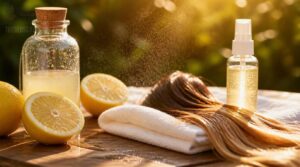
Lemon juice can lighten your hair, but "natural" doesn’t mean risk-free. Before you grab a bottle and head outside, you need to understand what’s actually happening to your strands. Here’s what you’re working with, from the science behind it to what results you can realistically expect.
If you want faster, more dramatic results than lemon juice can offer, this guide to lightening hair with a developer and baking soda walks through a stronger alternative worth considering.
How Citric Acid Works
Here’s the science: citric acid is a weak acid that lowers your hair’s pH to around 2.0–2.5. That acidity triggers melanin bond breakdown, loosening pigment inside the shaft. Citrate ions also chelate metals, shifting pigment solubility so color lifts out gradually. This substance is a colorless odorless solid that dissolves easily in water.
It’s real chemistry, not magic—just don’t expect instant results from one spritz.
Sunlight and Heat Activation
That acid-lowered pH needs a push, and that push comes from radiant energy transfer—sunlight warming hair while UV rays drive the reaction. Solar angle and time of day change UV intensity, so midday sun works faster than late afternoon.
- Damp strands glistening under direct light
- Foil sections trapping warmth like tiny greenhouses
- Ends drying stiff as the acid concentrates
Watch heat exposure limits closely: overdoing it risks moisture loss and brittle, straw-like ends.
Best Hair Colors for Results
Not all heads react the same. Blonde base suitability is real—lemon juice loves lighter strands, coaxing out natural highlights and that sun-kissed hair color everyone chases.
Dark hair challenges are steeper; brunette or black strands often turn brassy orange instead of lifting. Porosity impact matters too, since previously bleached hair grabs pigment change faster, perfect for balayage or ombre look experiments.
Expected Shade Lift
Blonde shade progression moves fast—expect noticeable lift after just one or two sunny sessions. Brunette warmth levels shift slower, often landing on subtle golden or coppery tones rather than true lightness.
- Fine, porous hair lightens quicker
- Virgin hair needs more sessions
- Uneven application causes patchy highlights
- Cumulative lightening effects build with each treatment
Porosity impact results vary widely, so patience matters more than product.
Permanent Color Change
Don’t call it "permanent" like a box dye. Melanin bond breakdown happens gradually, and pigment oxidation limits mean color shifts, not full removal.
New growth comes in your natural shade, creating obvious regrowth color contrast over time. That’s the real giveaway—natural vs chemical lightening age differently. Sun exposure keeps altering light reflection shifts long after your last DIY lemon lightening session.
How to Make a Lemon Juice Hair Lightening Spray

Ready to mix your own lightening spray? The right ratio makes all the difference between healthy lift and damaged strands. Grab your ingredients, and let’s break down each mixing option below.
For a gentler DIY option, try steeping two chamomile tea bags with fresh lemon juice—a natural lightening trick detailed in these natural hair repair methods that won’t leave your strands brittle.
Fresh Lemon Juice Ratio
Ratio is everything. Before mixing anything, measure your juice—fresh-squeezed only, since it’s concentrated compared to bottled stuff.
Get your baseline part first, then scale up: a small lemon yields roughly 3 tablespoons, medium closer to 4.
- Measure juice volume precisely
- Match your juice-to-water parts
- Keep every batch consistent
Consistency here prevents uneven lightening across your strands—no one wants a patchy DIY lemon lightening job.
Water Dilution Guide
Water is your solvent here, so getting the math right matters more than you’d think. For a 1:10 dilution, that’s 1 part lemon juice to 10 parts water—11 total parts. Scaling batches? Multiply consistently.
Use filtered or low-mineral water; hard water leaves residue that throws off results batch to batch. Strain your juice first, too—pulp clogs spray nozzles fast.
Conditioner for Dry Hair
Straight lemon juice on dry, damaged strands is asking for straw. Mix three parts lemon juice to one part leave-in conditioner instead—the cationic surfactants cling to hair, boosting slip and softness while oils and humectants fight moisture loss. Look for conditioners with:
- Glycerin or panthenol for hydration
- Shea or coconut oil for smoothing
- Hydrolyzed protein for strength
This buys real damage protection during lightening.
Chamomile Tea Option
Sensitive scalp? Swap lemon for chamomile tea—gentler, still golden.
Steep a strong batch (5-7 minutes), cool, then mix ¼ cup tea with ¾ cup lemon juice.
| Factor | Effect |
|---|---|
| Steeping time | Deeper color payoff |
| Hair porosity | More lift on porous strands |
| Spray coverage | Even, sunkissed results |
| Sessions | Gradual, natural highlights |
Expect subtle, DIY hair care magic—not instant transformation.
Safe Storage Tips
That leftover mixture won’t last forever, so treat it like the acidic hair product it’s. Store it in a glass or food-safe plastic bottle with a tight cap—never an open jar.
Keep it cool, dark, and away from kids or pets. Label it "lemon hair spray" with the date. When in doubt about odor or clarity, toss it and mix a fresh batch.
How to Lighten Your Hair With Lemon Juice Step by Step
You’ve got your spray mixed and ready to go, so now it’s time for the real work. Lightening your hair with lemon juice takes the right tools, careful application, and a little patience with the sun or a blow dryer. Here’s exactly how to do it, one step at a time.
Once your color settles, keep an eye on unwanted warmth, since lightened strands can sometimes shift brassy, and this guide on how to neutralize red tones in hair at home will help you keep things looking fresh.
If you’re also exploring other natural hair treatments, understanding how to prepare a fenugreek seed hair soak can help you get the timing and absorption right for future routines.
Tools You’ll Need

Grab a nonmetal bowl and measuring cup for mixing lemon juice, plus a spray bottle for even application.
Nitrile gloves and a hairdresser cape protect your hands and clothes. Pack sunglasses, a wide-brimmed hat, and SPF 45 sunscreen for sun exposure.
Keep a wide-tooth comb, sectioning clips, and a test strand ready before starting your DIY method—troubleshooting’s easier when you check first!
Apply to Damp Hair
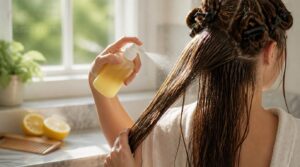
Timing matters as much as your tools. Once your test strand checks out, mist the lemon juice mixture onto damp hair—towel-dried, not dripping.
- Section hair into four parts
- Spray root to tip
- Comb through for even strand saturation
- Keep spray away from the scalp
- Re-mist ends if they dry first
Keeping the hair properly moist helps the natural hair lightener coat strands, not run off before sun exposure begins.
Highlights or Ombre Placement

Now decide: strands stay separate, or melt together? For an ombre look, hand-paint mid-lengths to ends, skipping roots entirely. For highlights, weave thin sections with a comb, letting lighter strands sit between darker ones.
| Style | Technique | Placement |
|---|---|---|
| Ombre | Hand-painting | Mid-lengths to ends |
| Highlights | Strand weaving | Scattered sections |
| Both | Sectioning layout | Root to tip |
This dimensional placement keeps your natural hair lightener from creating one flat, sandpapery block.
Sunlight Activation Time

Once sectioned, head outside during peak daylight—best UV exposure hits hardest between 10 a.m. and 2 p.m. Sunlight intensity depends on cloud cover and season, so overcast days slow everything down.
Sit for 60–90 minutes, checking strands every 20 minutes for monitoring color shifts. Reapply lemon juice if hair dries out before you see gradual lightening begin.
Indoor Heat Alternative

No sun? No problem. Point a blow dryer on medium heat at your sectioned hair for 15–20 minutes, keeping it moving to avoid scorching strands. A hooded dryer works even better, offering even, all-around heat for 20–30 minutes. For gentler penetration, try a warm, damp towel wrap—the steam helps the citric acid work deeper without frying your ends.
Lemon Juice Hair Lightening Risks and Precautions

Before you grab that lemon, let’s talk safety. This DIY method comes with real risks if you skip precautions, from skin reactions to hair damage. Here’s what you need to know before your next sunny afternoon session.
Dryness and Frizz Risk
Frizz is a chemistry problem, not bad luck. Lemon juice drops hair’s pH low, drying the cuticle so it opens and swells when humidity hits, pulling moisture from the air unevenly. Add sun and heat activation, and you’re doubling the damage.
Reduce friction: skip rough towel-drying, and always follow with a deep conditioner to restore hydration and moisture retention.
Scalp Sensitivity Concerns
Ever notice your scalp stinging before you even see redness? That’s your barrier talking. Citric acid drops scalp pH fast, disrupting skin balance and triggering irritation.
Watch for:
- Burning or tingling during application
- Redness or tenderness (trichodynia) after rinsing
- Peeling signs of barrier disruption
Stop immediately if symptoms persist. Avoiding topical triggers on broken or eczema-prone skin prevents dermatitis before it starts.
Citrus Skin Reactions
Straight lemon juice on skin, then straight into the sun, sets up phytophotodermatitis — a chemical burn causing redness, blistering, and swelling. Folks call it "margarita burn" for a reason.
Lemon juice on skin under the sun can trigger phytophotodermatitis, the chemical burn known as margarita burn
Citrus peel oils bring their own troublemakers, like limonene, sparking allergic contact dermatitis. Once inflammation fades, post-inflammatory hyperpigmentation can linger for months. Keep juice off bare skin, always.
Sunscreen During Sun Exposure
Baking your hair under UV rays means your skin’s exposed too — so sunscreen isn’t optional. Grab a broad spectrum SPF45+, apply it 15-20 minutes before you head out, and cover every inch: face, neck, ears, hands.
Reapply every two hours, or sooner if you’re sweating. Water resistance matters if you’re near a pool, but even then, don’t skip reapplication.
Who Should Avoid It
Skip this DIY method if your scalp’s already inflamed, itchy, or dealing with eczema or dermatitis — lemon juice will only prolong the irritation. Same goes for anyone with a citrus allergy; watch for burning, swelling, or redness.
If your hair’s already brittle, over-porous, or breaking easily, the acid speeds up damage. And if you need guaranteed, even results, lemon juice’s unpredictability makes it a gamble.
Aftercare for Lemon-Lightened Hair
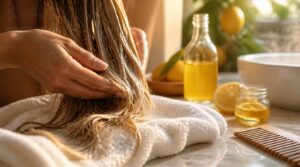
Your hair just went through a chemical process, and that lowered pH left it thirsty. What you do in the next hour matters just as much as the lightening session itself. Here’s your aftercare checklist, step by step.
Rinse Thoroughly After Treatment
Once your session’s done, don’t dawdle, rinse right away. Use lukewarm water, never hot, and work from scalp to ends until you feel zero residue.
Squeeze strands gently as you go for effective rinse techniques that lift lingering acid. This step prevents product buildup and protects hair cuticle health after any acidic hair treatment.
Deep Condition Immediately
Your hair’s cuticle just took a hit from citric acid, so grab a deep conditioner now, not later. Apply root to tip and let it sit 20–30 minutes; that dwell time lets humectants bind water into each strand while emollients form a protective film.
This restores elasticity and smooths the cuticle, undoing dryness before it turns into breakage or frizz.
Use Bond Repair Masks
Once your deep conditioner rinses out, follow up with a bond repair mask like Olaplex No. 3. These target broken internal bonds that citric acid disrupted, not just surface strands. Massage from mid-lengths to ends, leave on 10–20 minutes, then rinse.
Look for hydrolyzed proteins and vitamin C on the label, they help seal split ends and rebuild strength from within, restoring lost moisture.
Space Out Sessions
Wait two to four weeks between sessions, no exceptions. Your scalp needs recovery time, and cumulative damage builds fast when natural bleaching agents like citric acid keep stripping the cuticle.
Check hair texture before starting again, if strands feel rough or straw-like, hold off. That’s your cuticle asking for a break before more sun exposure and lemon juice weaken it further.
Manage Dry Ends
Freedom fades fast at the ends if you skip upkeep. Ends carry the most hair damage, so treat them daily.
- Book a trim every 8–10 weeks
- Sleep on a silk pillowcase
- Blot with a microfiber towel
- Apply hydrating serum on damp ends
Low manipulation styling and a deep conditioner weekly restore hair moisture retention and keep strands soft, flexible, and ready for your next lightening adventure.
Frequently Asked Questions (FAQs)
How long will it take for lemon juice to lighten hair?
Don’t expect overnight magic. Results build gradually—two to three sun-exposure sessions for subtle shifts, up to six for darker strands. Initial hair shade, texture, and lemon concentration all affect timing, so patience matters more than speed here.
What is the quickest way to lighten hair?
Salon lightening or high-lift dye works fastest.
For a DIY method, boost your lemon concentration, spray on damp hair, then get 1–2 hours of direct sun exposure—citric acid plus heat activation delivers noticeable lift, though porous hair shows results quicker than others.
What can I mix with lemon juice to lighten my hair?
Two’s company, three’s a crowd—except here, more ingredients help. Add coconut oil or conditioner for hydration, honey for brightness, or swap in chamomile tea. Each boosts results while fighting moisture loss and protecting strand integrity.
Do you put lemon juice on wet or dry hair?
Go damp, not soaked. Towel-dry hair first, then spritz your diluted mixture for even coating. Dry hair risks patchy, harsh citric acid contact and cuticle roughness, while moisture helps distribute the solution before sun exposure activates lightening.
Can you put lemon in your hair to lighten it?
Yes—lemon juice really works as one of nature’s natural bleaching agents. Citric acid breaks down melanin bonds, especially with sun exposure activating the reaction on your cuticle. Results depend heavily on your starting shade, porosity, and application frequency.
Can lemon juice ruin your hair?
Ruined is possible. Cuticle roughness, oxidative stress, and melanin bond disruption cause dryness, breakage, and scalp irritation. Repeated pH imbalance weakens texture permanently—proper dilution and aftercare prevent lasting hair damage.
Can lemon juice grow your hair?
Fountain of youth, this isn’t. Lemon juice won’t regrow hair — that’s a follicle regeneration myth. Vitamin C helps maintain scalp pH balance, but citric acid actually weakens strands, undermining growth claims rather than boosting them.
Will the effects ever go away?
Once melanin’s stripped, that part’s permanently lightened — new growth comes in your natural shade. Porosity, cuticle damage, and UV exposure duration affect how fast brightness fades or looks uneven, but true pigmentation loss never reverses on its own.
How long does it take for lemon juice to lighten hair?
Roughly 1 to 2 applications show subtle change on light hair, but full results take 2 to 4 weeks. Session frequency, hair texture, and sun exposure duration all matter—dark hair faces the slowest, patchiest lightening timeline.
How can I lighten my hair quickly?
Peak sunlight speeds up UV activation dramatically. Check hair porosity first — porous strands soak up citric acid faster.
Space sessions two weeks apart; rushing invites straw-like ends instead of the gradual, sun-kissed lift you’re after.
Conclusion
Nature’s little bleach bar isn’t magic; it’s measurable chemistry, and now you know exactly how to lighten your hair with lemon juice without frying your ends. Mix it right, apply it smart, and respect the sun’s timer.
Your strands will thank you with soft, believable color instead of brassy streaks. Patience beats panic here. Test a strand, track your porosity, and let the process unfold gradually. That sun-kissed shift? Earned, not rushed — and entirely yours.