This site is supported by our readers. We may earn a commission, at no cost to you, if you purchase through links. This content is for general informational and educational purposes only and is not a substitute for professional medical, dermatological, or nutritional advice.

You mixed the dye, followed the instructions, and waited the full processing time. But when you rinsed it out, you saw patches of different shades staring back at you in the mirror. Uneven hair color happens more often than you’d think—even to people who’ve dyed their hair dozens of times.
The good news? Most patchy dye jobs aren’t permanent disasters. Whether you’re dealing with slightly streaky color or dramatic splotches, you have options that range from quick camouflage tricks to complete color correction.
The fix you need depends on how uneven your results turned out and what caused the problem in the first place.
Table Of Contents
- Key Takeaways
- Why Hair Dye Comes Out Uneven
- Quick Fixes for Slightly Uneven Color
- How to Fix Moderately Patchy Hair Dye
- Correcting Severely Uneven or Damaged Color
- Professional Color Correction: When to Seek Help
- Fixing Specific Color Problems at Home
- Preventing Uneven Color in Future Applications
- Post-Correction Care and Color Maintenance
- Frequently Asked Questions (FAQs)
- Can sunlight exposure affect dyed hair’s evenness?
- How does hair porosity impact dye absorption?
- Are there natural remedies for correcting dye mistakes?
- Can dietary changes improve hair’s dye receptivity?
- How do stress and health affect hair coloring?
- Can I swim after fixing uneven hair color?
- How long between correction attempts is safe?
- Does hard water affect hair dye results?
- Will uneven color damage my hair permanently?
- Can I color correct during pregnancy safely?
- Conclusion
Key Takeaways
- Uneven hair color typically stems from rushed application, incorrect dye-to-developer ratios, hair porosity differences, or improper processing time—not carelessness.
- Minor patchiness can be fixed at home with color-blending sprays, strategic parting and styling, or semi-permanent toners, while moderate issues require re-dyeing darker or using color removers safely.
- Severe color disasters like overly dark sections, major brassiness, or significant damage need professional correction, which costs $150-$600+ per session and may take multiple appointments.
- Future color disasters are preventable by properly sectioning hair into quadrants, mixing dye to exact ratios until lump-free, and prepping hair with clarifying shampoo and protein fillers for even absorption.
Why Hair Dye Comes Out Uneven
You followed the instructions perfectly, sectioned your hair, and set your timer—so why did your color come out blotchy? Uneven dye happens more often than you’d think, and it’s rarely about carelessness.
The real culprit is often how bleached hair absorbs color differently across sections, especially if porosity varies from root to tip.
Let’s break down the real culprits so you can spot what went wrong and fix it.
Common triggers like hormonal shifts, nutritional gaps, and overstyling can all play a role in what makes your hair thin.
Uneven Application Technique
The most common culprit behind patchy color? You rushed through the application and missed spots. Understanding color theory basics is essential to avoiding such mistakes. When you slap hair dye on without proper hair sectioning, you’re setting yourself up for uneven hair color that screams “DIY disaster.”
Here’s what goes wrong with sloppy application timing and dye distribution:
Getting the timing and application method right makes all the difference between salon-quality results and frustrating color mishaps.
- You start at the roots and work down, but your roots process faster from body heat
- Thick sections prevent the product from saturating every strand evenly
- You don’t maintain product consistency while working, letting some areas get more pigment
- Poor color layering means overlapping previously dyed hair, creating dark spots that need color correction
Improper Mixing of Dye and Developer
Even perfect application won’t save a dye job if you mess up your developer ratios. When you eyeball measurements instead of using a scale, you’ll end up with patchy, uneven hair color that screams amateur.
Too little developer creates thick, unmixable color formulas that sit on top of strands. Too much dilutes pigment, causing weak coverage. Mix until you hit that smooth, yogurt-like consistency—lumpy dye means streaky results and a color correction nightmare ahead.
Understanding the correct developer to dye ratio is essential for achieving the desired hair color.
Hair Porosity and Absorption Issues
Your hair’s porosity—how tightly packed those cuticles are—controls color absorption more than anything else. Multi-porosity hair creates patchy nightmares: damaged ends grab dye intensely while virgin roots resist penetration, leaving visible bands.
Hair porosity determines how your hair absorbs color, often causing patchy results as damaged ends soak up dye while roots resist it
- High porosity sections over-absorb, going darker than intended and fading fast
- Low porosity areas block dye penetration, staying lighter or dull
- Previous bleaching or chemical treatments wreck fiber integrity, amplifying absorption differences
Porosity testing reveals these absorption patterns before you commit to color.
Incorrect Processing Time
Leave dye on too long or rinse too early, and your color shifts from salon-perfect to what happened?—timing controls intensity, and most patchy disasters trace back to ignored clocks.
If you’re wondering how long semi-permanent dye actually lasts once you’ve nailed the timing, most formulas stick around for 4–6 weeks depending on your routine.
Processing issues escalate when developer ratio is off: overprocessing risks turn blonde to orange, while underprocessing leaves uneven hair with stubborn gray patches. Set that timer—color balancing depends on precision, not guesswork.
Quick Fixes for Slightly Uneven Color
Not every uneven dye job needs a full color correction. If your hair’s just slightly off—maybe some sections look a shade lighter or a few patches stand out—you can fix it yourself without another round of dye.
Here are three fast solutions that’ll blend things out and buy you time until your next color.
Color Blending Sprays and Dry Shampoos

When you’ve got minor patchiness or roots showing, root touchup sprays and tinted dry shampoos work like makeup for your hair—they’re your go-to cosmetic camouflage. Shake the can, spray 4–6 inches from your part, and let it dry before touching.
If brassiness is your main issue, a purple shampoo for gray hair can keep those yellow tones in check between color appointments.
- Spray color blending products directly on visible roots to mask contrast
- Use pigmented dry shampoo to soften chunky highlights and reduce banding
- Target overgrown areas with root touchups for water-resistant coverage
- Layer tinted formulas to build opacity on stubborn patches
Strategic Styling to Hide Patches

Right parting patterns can work magic on uneven hair. Try a deep side part or zigzag the line to break up color blocks—straight parts expose everything you’re trying to hide.
Braided styles weave light and dark strands together, turning patches into dimension.
Add textured volume with waves or tousling; it scatters light and blurs boundaries.
Updos and half-up styles let you tuck problem zones inside while showing your best sections.
Semi-Permanent Toners for Minor Corrections

Toners are your secret weapon when you’re dealing with small color inconsistencies that won’t quit. These semi-permanent solutions neutralize unwanted tones without another full dye job.
Grab a toner one shade darker than your lightest sections and apply it where needed. The gentle formula blends patches into your base color while depositing just enough pigment for minor corrections.
You’ll see smoother, more uniform results in about twenty minutes.
How to Fix Moderately Patchy Hair Dye

When quick fixes won’t cut it and your color still looks patchy, you need a more hands-on approach. These methods tackle moderate unevenness by working directly with the color itself.
Here’s how to level things out without making another trip to the salon.
Re-dyeing With Darker Shades
Going darker can cover patchy spots by layering more pigment over light areas. Choose a shade one or two levels darker than your current color and use a demi-permanent formula to minimize damage.
Apply a porosity equalizer on porous ends first so they don’t grab too much dye. This shade matching process evens out uneven hair color without the aggressive oxidative dye risks of repeated permanent applications.
Using Hair Color Removers Safely
Color removers shrink artificial dye molecules so they rinse out without bleach’s bite. Non-bleach formulas cause less damage than persulfates when used correctly.
Always patch test 48 hours before use—sensitization builds over time, even with familiar brands. Follow the timer religiously; extended exposure strips moisture and proteins fast.
Rinse thoroughly, deep condition immediately, then skip heat tools for a few days while your hair recovers.
Spot Treatment for Specific Areas
When only a few stubborn patches refuse to match the rest, you don’t need to re-dye your entire head—just target what’s off. Mix fresh dye, isolate problem sections with foil or clips, then apply only where needed.
Root concealers work for minor spot treatment between color touchups. Follow with toner applications to blend edges seamlessly.
A nourishing hair mask afterward keeps strands healthy through the hair dye correction process.
Correcting Severely Uneven or Damaged Color
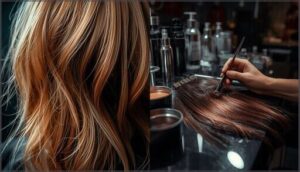
When your color situation has gone seriously wrong—think too-dark patches, brassy orange sections, or major damage—quick fixes won’t cut it. You’re looking at real color correction, which means strategically lightening, rebuilding pigment, or neutralizing unwanted tones.
Here’s how to tackle the three most common severe color disasters.
Lightening Overly Dark Sections
If you’ve gone too dark and your hair looks like you dipped it in midnight instead of mocha, don’t panic—lightening those sections is possible with the right approach. Start with a color remover before reaching for bleach—it’s gentler and manages hair dye correction without frying your strands.
For stubborn dark spots, careful bleach application targets problem areas. Follow with toner selection to balance brassiness and achieve even color balancing across all sections.
Pre-Pigmentation for Faded Areas
Faded spots need filling before you re-dye, or you’ll end up with more uneven hair color. Strand testing reveals how much pigment your hair needs—damaged areas absorb color differently.
Use a color-depositing conditioner or filler that matches your target shade for porosity correction. This pigment enhancement step bridges gaps in color uptake, so your hair toning and balancing actually sticks during color treatment.
Neutralizing Unwanted Brassy or Ashy Tones
Brassy orange or yellow streaks need purple shampoo for hair color correction—leave it on 3–5 minutes to deposit violet pigment. Blue shampoo neutralizes stubborn orange on darker lifts. Ashy tone fix requires silver or gray toner to cancel yellow-blue undertones.
Tone neutralization works through opposite colors on the color wheel, so grab a color-depositing conditioner that matches what you’re fighting. Timing matters—overdo it and you’ll chase new problems.
Professional Color Correction: When to Seek Help

Sometimes DIY fixes won’t cut it, and that’s when a professional colorist becomes your best option. Knowing when to step away from the at-home approach can save your hair from further damage and frustration.
Here’s how to recognize when it’s time to book that salon appointment, what the correction process looks like, and what you’ll need to budget for the fix.
Signs You Need a Professional Colorist
You’ve tried fixing color mistakes at home, but the patches keep coming back. That’s your cue. Professional consultation becomes essential when home color correction attempts fail, breakage patterns worsen after processing, or you’re dealing with multiple competing tones—brassy meets ashy in the same section.
Hair analysis tools and color damage assessment reveal issues beyond DIY capabilities, making salon experience expectations worth the correction cost factors.
What to Expect During Salon Correction
Your color correction appointment begins with a consultation process—the colorist assesses your hair’s current state, snaps photos, and maps out a plan.
Expect these salon experience steps:
- Strand testing to preview results
- Staged applications with rest periods between lifts
- Toners or glazes to neutralize unwanted shades
- Bond treatments to protect integrity
Hair color correction rarely finishes in one pass; patience pays off.
Cost and Time Considerations
Budget planning for hair color correction demands honesty: most salon fixes run $150 to $600 per session, and complex corrections stretch across multiple appointments.
Here’s your cost analysis breakdown:
| Service Element | Typical Range |
|---|---|
| Single-session correction | $150–$600 |
| Toner or glaze add-on | $30–$100 |
| Multi-stage process | $1,000+ |
| Hourly rate | $50–$200/hour |
Scheduling tips: book 2–4 hours minimum, plan for potential follow-ups.
Fixing Specific Color Problems at Home
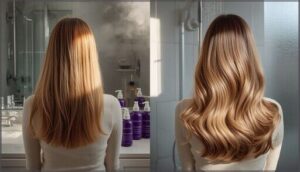
Some color problems show up more than others—brassy orange, stubborn bleach spots, or tones that just won’t quit. You can tackle these issues at home if you know which products actually work.
Here’s how to fix the most common color disasters without leaving your bathroom.
Removing Unwanted Tones With Purple Shampoo
Yellowy or warm streaks can cloud your color correction progress, but purple shampoo offers an easy fix. The violet pigments latch onto your hair and neutralize brass by canceling out yellow tones—think of it like color theory in action.
- Wash once or twice weekly to control warmth without overdoing it
- Leave it on for 2–5 minutes, not longer
- Focus on the brassiest sections for targeted tone correction
Correcting Bleach Damage and Spots
Bleach can turn rogue fast—leaving you with patchy light spots or fried ends that refuse to hold any color at all. First, assess the damage. If hair feels like straw, deep-condition before any color rebalancing to fix porosity issues.
For lighter spots, apply a filler or demi-permanent dye one shade darker than your target. Toner application comes after you’ve evened out those bleach-fried sections—don’t skip the porosity treatment step.
Using The Color Wheel for Toner Selection
The color wheel isn’t some art-school gimmick—it’s your best tool for pigment neutralization. Purple cancels yellow; blue knocks out orange; green neutralizes red. Match your toner to what sits opposite your unwanted tone. That’s color theory in action.
If you’re dealing with that stubborn orange-brassiness that shows up mid-shaft around level 7–8, this guide on fixing brassy hair color with the right toner walks you through exactly which pigments to target.
For blended brass like yellow-orange, grab a blue-violet formula. Misjudge the hue and you’ll land in muddy, dull territory instead of balanced shade adjustment.
Preventing Uneven Color in Future Applications

You’ve fixed your patchy color, but the real win is making sure it doesn’t happen again. The secret to even results isn’t luck—it’s following a few key steps before you even open that dye bottle.
Here’s what to do differently next time.
Proper Sectioning and Application Order
Think of your head like a painter’s canvas—you wouldn’t slap color everywhere at once and hope it turns out right. Hair mapping and proper sectioning techniques prevent uneven hair color before you even open that bottle.
Here’s your application order for seamless color blending:
- Divide hair into four quadrants—ear to ear, center part front to back
- Create 1-inch sections within each quadrant for thorough dye distribution
- Start at the nape where hair’s coldest and processes slowest
- Work toward your hairline, applying roots last since scalp heat speeds processing
Achieving Consistent Dye Mixture
Before you even pick up a brush, your bowl tells the story. Mix your color and developer at the exact ratio on the box—usually 1:1 or 1:2—because eyeballing it creates patchy disasters.
Stir until you see zero streaks or lumps; unmixed pockets oxidize differently and leave bands across your hair.
Check viscosity too—if it drips like water or clumps like frosting, you’ll get uneven coverage guaranteed.
Preparing Hair for Even Absorption
Once your dye is smooth and ready, your hair needs prep work—because strands that absorb color unevenly will wreck even a perfect mix. Hair porosity dictates everything about even absorption, so you need to level the playing field before color touches your head.
Start with proper hair cleansing and pre-treatment:
- Strip buildup with clarifying shampoo 24 hours before coloring
- Skip deep conditioner that blocks color penetration
- Apply protein filler to porous ends for balanced absorption
- Dampen hair slightly for semi-permanent formulas only
- Test porosity by floating clean hair in water
Post-Correction Care and Color Maintenance
Your hair’s been through a lot, so now it needs some serious TLC to recover and hold onto that corrected color. The right aftercare routine makes all the difference between color that fades fast and color that stays vibrant for weeks.
Here’s what you need to focus on to keep your hair healthy and your new shade looking fresh.
Deep Conditioning Treatments for Damaged Hair
Your hair needs recovery after color correction, and deep conditioner is your best weapon for Damage Restoration. Look for treatments that balance Moisture Repair with Protein Rebuilding—damaged strands crave both hydration and structural reinforcement.
Apply a concentrated formula weekly, working it through from mid-lengths to ends where color processing hits hardest. Heat Therapy boosts penetration: wrap your hair in a warm towel or use a heat cap for 20 to 30 minutes.
Choose Color Protection formulas that seal the cuticle and lock in your corrected shade. This hair care routine prevents breakage and keeps your newly fixed color looking vibrant.
Heat Protection and Styling Best Practices
After you’ve rebuilt your hair’s strength, protect your work from styling damage. Color Safe Products with Thermal Protection shield corrected color from irons and dryers—apply them before every heat session to prevent fading and breakage.
Follow these Heat Styling Tips to keep your color locked in:
- Lower your tool temperature to 300°F or below for color-treated strands
- Limit Styling Frequency to two or three times weekly
- Air-dry when possible, or use cool settings on your dryer
Proper Hair Iron Care means quick, single passes instead of repeated clamping. This hair maintenance approach preserves both your uneven hair fix and overall hair health.
Frequently Asked Questions (FAQs)
Can sunlight exposure affect dyed hair’s evenness?
Yes, UV rays trigger photodegradation that breaks down hair dye molecules unevenly. Exposed sections—like your crown and outer layers—fade faster than protected areas, creating patchy, mottled color correction challenges over weeks.
How does hair porosity impact dye absorption?
Porosity testing reveals how your hair cuticle affects dye penetration and color retention. High-porosity ends grab color fast but fade quickly, while low-porosity hair resists absorption, causing uneven hair color that demands targeted hair color correction techniques.
Are there natural remedies for correcting dye mistakes?
Several kitchen-shelf solutions can gently fade mistakes. Vitamin C remedies mixed with clarifying shampoo lighten recent dye, while oil treatments gradually lift dark pigment.
Herbal masks add warmth, but professional color correction delivers predictable results.
Can dietary changes improve hair’s dye receptivity?
Over time, better nutrient intake—especially protein, iron, and antioxidants—strengthens hair structure and evens porosity.
Healthier strands grab hair dye more predictably, reducing patchy results and improving overall hair color consistency naturally.
How do stress and health affect hair coloring?
Your body’s stress levels and overall health directly impact how hair accepts color. Chronic stress, nutrient deficiencies, hormonal imbalance, and oxidative damage alter hair porosity and damage melanin, creating uneven dye absorption and patchy results.
Can I swim after fixing uneven hair color?
Wait at least 72 hours before swimming—fresh hair dye needs time to set. Chlorine strips color fast and can turn corrected blonde sections green.
If you’re planning ahead, exploring top-rated lavender hair dye options now gives you time to choose a formula gentle enough to protect your investment once you’re ready to swim again.
Red tones fade fastest of all, losing up to 20% of their vibrancy after a single dip, so check out this guide to swimming after dyeing your hair red before you head to the pool.
Pre-wet hair, wear a swim cap, and rinse immediately after.
How long between correction attempts is safe?
Most healthy hair tolerates color correction intervals of four to six weeks, while damaged strands need eight to ten weeks. Bleached hair demands even longer Safe Reapplication windows to prevent breakage during Damage Risk periods.
Does hard water affect hair dye results?
Hard water absolutely messes with hair dye. Mineral buildup blocks color from soaking in evenly, causes faster fading, and shifts tones brassy.
Use chelating treatments before coloring to strip calcium and iron deposits.
Will uneven color damage my hair permanently?
Uneven color itself won’t permanently damage your hair health—the dye causes hair damage.
Chemical Damage Prevention starts with managing porosity and avoiding overlapping applications that cause Structural Weakening Factors in color-treated hair.
Can I color correct during pregnancy safely?
Most hair dye is considered safe after the first trimester, especially ammonia-free or semi-permanent formulas. Choose highlights over all-over color, work in a well-ventilated space, and always patch-test first.
Conclusion
Picture yourself looking in the mirror with confidence, seeing smooth, even color instead of those frustrating patches. Knowing what to do if your hair dyed unevenly means you’re never stuck with a botched color job.
You’ve got the tools to fix minor streaks at home and the wisdom to recognize when professional help saves you time and damage. Your next dye session won’t end in panic—it’ll end exactly how you planned.