This site is supported by our readers. We may earn a commission, at no cost to you, if you purchase through links. This content is for general informational and educational purposes only and is not a substitute for professional medical, dermatological, or nutritional advice.
Your hair goes from dripping wet to bone dry in minutes, and no amount of conditioner seems to help. That’s flash drying hair, and it’s not a styling problem you can brush off.
What makes it so frustrating is that it mimics damage. Strands feel brittle, stiff, or strangely hollow right after rinsing, even when you’ve done everything right. The culprit is usually hiding in your water, your products, or your hair’s own cuticle structure.
Once you pinpoint the trigger, fixing it becomes straightforward. This breakdown covers every cause and walks you through the exact steps to stop it.
Table Of Contents
- Key Takeaways
- What is Flash Drying Hair? Signs and Key Differences
- What Causes Flash Drying Hair? Hard Water, Buildup, Humectants, and Porosity
- How to Identify Your Flash Drying Hair Trigger
- How to Fix and Prevent Flash Drying Hair Step by Step
- Top 3 Products to Help Combat Flash Drying Hair
- Frequently Asked Questions (FAQs)
- What is flash drying on hair?
- What is low poo?
- What is the healthiest way of drying your hair?
- What does flash dry mean?
- Can flash drying cause permanent hair damage?
- Does air drying prevent flash drying better?
- Are natural products less likely to flash dry?
- Can flash drying happen with only water?
- How long does flash drying recovery take?
- Can chemical treatments increase your flash drying susceptibility?
- Conclusion
Key Takeaways
- Flash drying is when hair goes from wet to bone dry almost instantly—leaving strands brittle, rough, or stiff—and it’s usually triggered by humectants in low humidity, hard water minerals, product buildup, or high porosity, not by your styling technique.
- You can pinpoint your specific trigger by changing one variable per wash (like rinse temperature or a single product) and watching whether flash drying disappears, since it typically hits within minutes of rinsing and often affects only certain sections.
- The fixes target the root cause: clarify weekly to strip buildup, install a shower filter or softener if hard water is the issue, deep condition regularly, rinse with cool water to seal the cuticle, and limit airflow on wet hair.
- Flash drying itself doesn’t permanently damage hair, but untreated mineral buildup will weaken strands over time, and recovery takes patience—expect two to three months of consistent care, or six to twelve months for high porosity hair.
What is Flash Drying Hair? Signs and Key Differences

Flash drying happens when hair dries unnaturally fast, either during product application or right after rinsing. Moisture gets sucked out almost instantly, often from isolated sections rather than the whole head. Strands are left feeling dry, brittle, rough, or stiff, and you’ll notice the difference from normal drying straight away.
High porosity hair is especially prone to flash drying, so pairing the right products with insights from proven hair growth strategies for Black women can help you retain moisture and reduce brittleness over time.
The clearest sign is a sudden texture shift: your hair goes from slippery and coated to dry and resistant mid-application. Curl clumps break apart, strands turn stringy, and you may hear a faint rustling when you touch them.
This isn’t the same as wet frizz. Wet frizz leaves hair damp and unruly. Flash drying leaves the shaft bone dry, instantly. Hair porosity directly affects how prone you’re to it. For example, glycerin in low humidity can trigger flash-drying by pulling moisture out of the hair shaft rather than locking it in.
What Causes Flash Drying Hair? Hard Water, Buildup, Humectants, and Porosity

Flash drying doesn’t happen randomly — specific ingredients and conditions trigger it every time. Knowing what’s behind it puts you in control of how your hair reacts to products and weather.
There are four main culprits worth understanding: humectants and humidity, hard water minerals, product buildup, and hair porosity.
Humectants And Humidity
Why does your hair feel drier right after applying a leave-in?
Humectants pull water molecules toward a moisture gradient, meaning they’ll chase damp air, not dry air. In low humidity levels, they actually draw moisture out of your hair instead of locking it in.
In low humidity, humectants betray your hair—pulling moisture out instead of locking it in
Low porosity hair is less affected, but more open cuticles feel this moisture retention loss fast.
Hard Water Minerals
Humidity isn’t the only environmental trigger. Hard water buildup works differently: dissolved minerals, specifically calcium and magnesium, coat each strand and disrupt the cuticle’s surface. Installing a shower filter for hard water can reduce that mineral coating before it ever reaches your strands.
Signs that water hardness is your trigger:
- Strands feel rough or coated right after washing
- Mineral deposits leave a dull, flat look overall
- Drying speeds up noticeably versus filtered water
- Conditioner loses its slip quickly
Product Buildup
Minerals aren’t the only culprit. Product buildup from film-forming silicones in conditioners and styling products coats your strands just as effectively, creating a film that locks moisture out rather than in. That barrier speeds up hair dryness under the dryer. Switching to a silicone-free hair conditioner prevents that film from forming in the first place, keeping your strands light and breathable.
Understanding what affects hair drying time can help you identify whether silicone buildup—not just your dryer—is the real reason your hair takes so long to dry.
Using a clarifying shampoo once or twice a week clears those layers, especially if hard water is also a factor.
Hair Porosity
Among all flash drying causes, hair porosity matters most. Your cuticle health determines how quickly water enters and leaves each strand.
- Low porosity hair resists moisture absorption
- High porosity hair absorbs and loses water fast
- Chemical damage raises porosity over time
- Open cuticles reduce moisture retention
- Heat styling worsens cuticle health
Knowing your porosity helps you pick the right fix.
How to Identify Your Flash Drying Hair Trigger

Because flash drying rarely has a single obvious cause, pinpointing your trigger takes a bit of structured observation. You’re looking to isolate one variable at a time across several washes.
Start by running a control wash test: keep your regular routine but swap only one element per wash, such as rinse temperature or a specific styling product. If flash drying disappears entirely, that element is your trigger.
Watch for these diagnostic clues:
- Flash drying appears within minutes of rinsing, not gradually
- Only certain sections, like the crown or bangs, dry out fast
- Rapid evaporation worsens on humid days when humectants are involved
- Hard water leaves a coated feeling before drying
- Highly porous hair flash-dries faster in areas with prior damage
How to Fix and Prevent Flash Drying Hair Step by Step
Think of your hair like a sponge sitting near a heat vent. Without the right conditions, it loses moisture faster than it can hold it. To prevent flash drying, you need to fix the root problem first.
- Clarify monthly to clear product buildup and let water absorb evenly
- Install a water softener or shower filter if you suspect hard water
- Apply a hydrating deep conditioner weekly, focusing on mid-lengths and ends
- Rinse with cool water to help seal the cuticle before drying
- Limit fan or airflow exposure while your hair is still wet
Tackle one variable at a time. If hard water is the issue, a good water softener changes everything. If buildup is blocking moisture, clarify first, then condition.
Top 3 Products to Help Combat Flash Drying Hair
Once you know what’s triggering your flash drying, the right products make a real difference. These three options target the most common root causes — mineral buildup, product residue, and dehydrating ingredients. Pick the one that fits your situation and start there.
If hard water is your culprit, a chelating shampoo for mineral buildup strips stubborn deposits that regular shampoos simply can’t reach.
1. Deep Cleansing Color Safe Shampoo
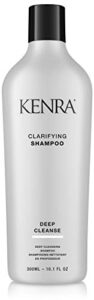
If your hair feels dull and dry even right after washing, buildup is likely the culprit. A deep cleansing color-safe shampoo like Kenra’s cuts through residue using chelating agents that bind and lift the minerals left behind by hard water and styling products. It eliminates up to 99% of dulling deposits, and the added mica helps restore visible shine in the process.
It’s gentle enough for color-treated hair, so you don’t have to choose between clean and vibrant. Use it once or twice a week, not daily. It can be drying with overuse, so always follow up with a moisturizing conditioner or hair mask to restore slip and keep your hair looking balanced.
| Best For | Anyone with color-treated hair who struggles with buildup from hard water, styling products, or swimming, and wants a deep cleanse without sacrificing their color. |
|---|---|
| Buildup removal | Removes up to 99% dulling deposits |
| Color-safe | Yes |
| Weekly use | Once or twice weekly |
| Chlorine/mineral protection | Removes mineral deposits |
| Conditioner required | Yes, follow up needed |
| Hair softening | Restores shine |
| Additional Features |
|
- Eliminates up to 99% of dulling deposits, making it genuinely effective for hard water and mineral buildup
- Safe for color-treated hair, so it cleans deeply without stripping your dye or tone
- Contains mica to boost shine and brighten grey strands while it cleanses
- Can dry out hair with frequent use, so you’ll need a good conditioner or mask every time
- The fragrance is polarizing — some find it strong or chemical-smelling
- Lather can be inconsistent, which may make it feel like the shampoo isn’t working as well as it should
2. BWDM 15 Stage Shower Filter
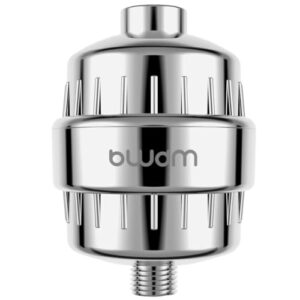
If your water’s leaving your hair brittle and your scalp dry, the minerals and chlorine in it are likely the trigger. The BWDM 15-Stage Shower Filter (model BM-SF-15) removes up to 99% of free chlorine and reduces heavy metals through its layered filtration system, which includes Vitamin C media for a deeper clean.
Installation is tool-free and takes under a minute. It’s compatible with wall-mounted, handheld, rainfall, and combo showerheads, so it fits your existing setup without replacing anything.
Over time, you’ll likely notice less scalp dryness and softer, more manageable hair, especially if you’re in a hard water area.
| Best For | Anyone dealing with hard water who wants to protect their hair and skin without replacing their existing showerhead setup. |
|---|---|
| Buildup removal | Filters minerals and chlorine |
| Color-safe | Yes |
| Weekly use | Ongoing daily use |
| Chlorine/mineral protection | Removes chlorine and metals |
| Conditioner required | No |
| Hair softening | Improves softness over time |
| Additional Features |
|
- 15-stage filtration with Vitamin C media removes chlorine and heavy metals, reducing scalp dryness and improving hair softness over time.
- Works with virtually any showerhead type — wall-mounted, handheld, rainfall, or combo — and installs in under a minute with no tools.
- Maintains your existing water pressure while filtering city, hard, and well water supplies.
- The plastic housing near the showerhead connection is prone to cracking if overtightened during installation.
- May require periodic backwashing to maintain good flow if your water carries significant sediment.
- User reviews are mixed on how well it actually filters, and some report leaking from the side seams.
3. Malibu C Un Do Goo Shampoo
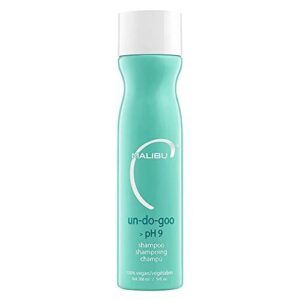
Styling residues and mineral deposits don’t just dull your hair, they keep it locked in a cycle of dehydration. Malibu C Un Do Goo breaks that cycle with a pH-balanced, sulfate-free formula that pulls embedded buildup from each strand without stripping chemically treated hair.
What makes it practical is the ingredient list. Chelating agents dissolve mineral deposits while plant-derived cleansers lift film-forming residue. It’s also infused with magnesium and limonene to support follicle health. No sulfates, no parabens, and it’s 100% vegan.
Use it weekly or right before a chemical service. Follow with a conditioner, since some users report dryness without one, and you’ll restore softness, shine, and manageability.
| Best For | People with color-treated or chemically processed hair who want to clear styling product buildup and mineral deposits without harsh sulfates. |
|---|---|
| Buildup removal | Removes resin buildup |
| Color-safe | Yes |
| Weekly use | Recommended weekly |
| Chlorine/mineral protection | N/A |
| Conditioner required | Yes, follow up needed |
| Hair softening | Restores softness and manageability |
| Additional Features |
|
- PH-balanced and sulfate-free, making it safe for color-treated and chemically processed hair
- Infused with magnesium and limonene to support follicle health alongside deep cleansing
- 100% vegan and free of parabens, with chelating agents that dissolve mineral deposits effectively
- Some users report dryness after use, making a follow-up conditioner essentially mandatory
- Mixed customer feedback on moisturizing effects means results may vary
- Weekly use requirement and the need for a conditioner adds steps to your routine
Frequently Asked Questions (FAQs)
What is flash drying on hair?
If you think it’s just frizz, reconsider. Flash drying is when water molecules leave your strands almost immediately, like moisture sucked out too fast, draining hair hydration and leaving it dry, brittle, rough, or stiff.
What is low poo?
Low poo means using a mild shampoo with gentle surfactants instead of harsh, stripping cleansers. It keeps moisture on your strands, but residue can build up, contributing to flash drying on a low dewpoint day.
What is the healthiest way of drying your hair?
The healthiest method combines controlled heat with steady airflow. Detangle before drying, blot with a microfiber towel, then keep the dryer moving on medium heat. Stop when hair’s mostly dry, and follow with a hydrating deep conditioner.
What does flash dry mean?
Flash drying means your hair sheds moisture almost instantly after getting wet, instead of absorbing it. Your strands feel rough stiff and brittle, almost crunchy, and water beads up and rolls off like it would on feathers.
Can flash drying cause permanent hair damage?
Here’s the good news: flash drying itself won’t permanently harm your hair. It causes temporary water loss and dry brittle rough or stiff strands, but real damage comes from untreated mineral buildup, which eventually weakens hair and invites hair breakage.
Does air drying prevent flash drying better?
You might assume air drying helps, but it doesn’t prevent flash drying. Product buildup and humectants still pull water from your hair, so on a Lowdewpoint day, water loss continues regardless of heat.
Are natural products less likely to flash dry?
Surveys suggest over 60% of curly hair community members report dryness issues, yet "natural" labels don’t protect you. Aloe and high glycerin humectants can pull moisture in low humidity, while synthetic formulas cause product buildup. Ingredient awareness beats marketing.
Can flash drying happen with only water?
Yes, it can. Hard water leaves mineral deposits that block even plain water from soaking in, and high-porosity hair sheds moisture fast, so strands feel dry right after rinsing. Check your water quality impact first.
How long does flash drying recovery take?
Honestly, it takes forever. Most people see real changes in two to three months, but high porosity hair can need six to twelve months. Consistent deep conditioning restores hair hydration, moisture balance, and hair elasticity gradually.
Can chemical treatments increase your flash drying susceptibility?
Chemical treatments absolutely can. Repeated coloring, perming, or straightening causes hair cuticle damage, raising hair porosity. More porous, dehydrated strands absorb and release water faster, so flash drying becomes more likely after each service.
Conclusion
Flash drying hair seems like a dryness problem, yet it usually starts with water. That’s the paradox worth remembering: the wetter your hair gets, the more your rinse matters.
Once you’ve tested your trigger, whether it’s buildup, minerals, or porosity, the fix is a routine, not a rescue. Change one variable at a time and give it two weeks.
Your hair will tell you what’s working. Listen, adjust, and stay consistent.