This site is supported by our readers. We may earn a commission, at no cost to you, if you purchase through links. This content is for general informational and educational purposes only and is not a substitute for professional medical, dermatological, or nutritional advice.
You’re standing in the hair color aisle, staring at two nearly identical boxes—one labeled “demi-permanent,” the other “semi-permanent.” They promise similar results, but one costs $8 while the other rings up at $15. The difference isn’t just marketing fluff. These formulas use fundamentally different chemical systems that affect how color interacts with your hair shaft, how long it sticks around, and whether it can actually cover those grays peeking through.
Demi vs semi permanent hair color comes down to oxidative chemistry versus direct dyes, peroxide developers versus acid-based formulas, and penetration depth measured in micrometers.
Understanding what’s actually inside these bottles—from PPD derivatives to nitro dyes—helps you choose the right option for your hair goals without gambling on guesswork or wasting money on the wrong formula.
Table Of Contents
Key Takeaways
- Semi-permanent dyes use direct pigments that coat your hair’s surface without peroxide and wash out in 4–12 shampoos, while demi-permanent formulas rely on low-volume peroxide (2%–7%) to partially penetrate the cuticle and last 12–28 washes.
- Demi-permanent color can cover up to 70% gray hair through oxidative chemistry that deposits medium-sized molecules into the outer cortex, whereas semi-permanent only translucently tints grays and won’t deliver opaque coverage.
- Your hair’s porosity level directly determines how quickly color absorbs and fades—high-porosity hair grabs dye fast but loses it 40–50% faster, while low-porosity hair resists uptake yet holds color longer once deposited.
- Neither formula lifts your natural color or causes damage like permanent dye, but demi-permanent still carries real oxidative stress risks including cuticle disruption, protein loss, and potential PPD allergic reactions affecting 1–6% of users.
Key Differences: Demi Vs Semi-Permanent Hair Color
If you’ve ever stood in the hair dye aisle wondering what actually separates semi-permanent from demi-permanent color, you’re not alone.
The difference comes down to what’s inside the bottle and how those ingredients interact with your hair.
Let’s break down the key factors that set these two color types apart.
Chemical Composition and Ingredients

At the heart of the demi vs semi-permanent debate, you’ll find entirely different ingredient playbooks. Demi-permanent hair color relies on oxidative dyes that react with a low-volume peroxide developer—around 2% to 7%—while semi-permanent formulas skip peroxide altogether, using direct dyes that coat your hair without chemical reactions. Hair colorant formulations differ greatly in their chemical composition and effects.
| Ingredient Type | Demi-Permanent | Semi-Permanent |
|---|---|---|
| Primary Dyes | Oxidative dye precursors (e.g., PPD derivatives) | Direct dyes (nitro dyes, acid dyes) |
| Peroxide Levels | Low-volume (1.9%–7% hydrogen peroxide) | None (peroxide-free) |
| Alkalizing Agents | Ethanolamine or alkanolamines (pH 8–9) | Organic acids like citric acid (pH 3–5) |
| Film Formers & Conditioning | Fatty alcohols, silicones, emulsifiers | Cationic surfactants, amphoteric resins |
Demi-permanent formulas use ethanolamine instead of harsh ammonia to gently lift your cuticle, allowing oxidative dyes to penetrate partway into the cortex. Semi-permanent products stay acidic—often pH 3 to 5—which helps direct dyes cling to your hair’s surface without opening the cuticle much at all.
Both types include preservatives, stabilizers, and film-forming ingredients to keep color vibrant and protect your strands, but their core chemistry sets them worlds apart.
How Color Deposits on Hair
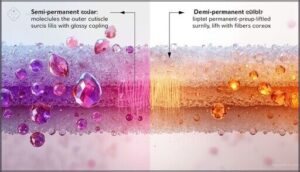
Once those ingredients meet your hair, deposition follows wildly different paths. Semi-permanent color molecules are large—think of them like bulky pigments that sit on your cuticle, clinging via weak van der Waals forces. Demi-permanent systems, however, use smaller precursors plus low-peroxide swelling to nudge medium-sized molecules just inside the cuticle and into the outer cortex. These colors are considered tone-on-tone colors and include hair toners. That partial penetration explains why demi deposits hang on through more washes than semi’s surface coating.
| Deposition Feature | Demi-Permanent | Semi-Permanent |
|---|---|---|
| Penetration Depth | Inner cuticle + outer cortex (10–25 µm) | Cuticle surface ( Semi-permanent dye won’t destroy your hair like bleach, but it’s not harmless—check for metallic salts, assess porosity, and remember that cumulative exposure still carries real risks |
Potential Damage of Demi-Permanent Dye
Beneath the “gentle” marketing, demi-permanent hair dye brings real oxidative stress. Low-volume peroxide and alkalizers cause cuticle damage, protein loss, and hair color damage that compounds with every retouch. Scalp irritation from PPD and related amines isn’t rare. Cumulative risk climbs when you layer demi-permanent treatments over bleached or relaxed strands—hair health suffers even without ammonia.
| Damage Mechanism | What Actually Happens |
|---|---|
| Oxidative Stress | Peroxide fragments keratin, weakening hair shaft strength |
| Cuticle Lifting | Alkalizers swell and disrupt scales, increasing friction |
| Protein Degradation | Repeated oxidation strips structural proteins from cortex |
| Lipid Peroxidation | Natural fatty acids break down, causing dryness |
| Allergen Exposure | PPD and aromatic amines trigger contact dermatitis |
Hair Types and Suitability
Your hair texture, porosity levels, and existing damage dictate which formula won’t backfire. Fine hair absorbs dye fast—semi-permanent deposits color without swelling delicate cuticles, while demi-permanent glazes add shine if you skip heavy lift. Coarse hair demands longer saturation; both types work, but demi-permanent penetrates resistant strands better. Curly hair thrives on semi- and demi-permanent options that preserve moisture and curl pattern. Gray coverage? Demi-permanent blends up to 70% gray; semi-permanent just glosses over it.
| Hair Type & Condition | Best Match |
|---|---|
| Fine or thin strands | Semi-permanent (no cuticle swell) |
| Coarse, thick texture | Demi-permanent (deeper penetration) |
| High porosity/damaged | Semi-permanent (gentler deposit) |
Allergic Reactions and Health Risks
Beyond hair damage, chemical exposure in hair dye carries a real allergy risk. About 1–6% of the general population shows PPD sensitivity—the allergen hiding in many demi-permanent formulas. Systemic risks include facial swelling, hives, and even anaphylaxis. Semi-permanent dyes skip oxidative chemicals but aren’t foolproof; 10% of PPD-allergic users still react. Patch testing 48 hours before application is your best risk mitigation tool for hair color safety.
| Dye Type | Primary Allergen Risk |
|---|---|
| Demi-Permanent | PPD & oxidative intermediates |
| Semi-Permanent | Direct dyes (lower but not zero) |
| Both Types | Require patch test before each use |
Choosing The Right Hair Color Type
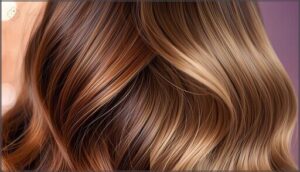
Now that you understand how each color type affects your hair, it’s time to figure out which one fits your needs. The right choice depends on factors like your hair’s current condition, how long you want the color to stick around, and what you’re hoping to achieve.
Let’s walk through the key considerations that’ll help you make the best decision.
Hair Condition and Porosity
Your hair’s porosity level is like its personality—it dictates how color grabs, holds, and fades. High-porosity hair absorbs demi and semi-permanent dyes quickly but can lose color 40–50% faster due to lifted cuticles. Low-porosity hair resists penetration and needs extra processing time.
Before you color, assess your damage history and texture:
- High-porosity or bleached hair: Expect intense color uptake but rapid fade behavior with both formulas
- Low-porosity hair: Requires heat or extended processing; holds color longer once deposited
- Damaged hair: Pre-treat with protein fillers to improve results and even absorption
- Normal-porosity hair: Most predictable outcome for demi-permanent formulas
- Uneven porosity: Use porosity equalizers to prevent patchy, banded color from roots to ends
Desired Commitment Level
Think of hair color commitment like test-driving versus leasing—your style goals and experimentation desire should drive the choice. Semi-permanent hair color lasts 4–12 washes, ideal for event-based changes or trying shades without long-term commitment. Demi-permanent hair color endures 12–28 washes, balancing reversibility factor with lower maintenance frequency.
Match hair color longevity to your lifestyle alignment: frequent changes favor semi, while seasonal adjustments suit demi formulas before natural hair color fading returns.
Gray Coverage Needs
Gray coverage expectations separate semi from demipermanent hair dye clearly. Semipermanent hair color tints gray strands translucently—great for gray blending under 25% but won’t deliver opaque hair color for gray hair.
Demipermanent hair dye offers 70% gray hair coverage through partial penetration, softening contrast and managing regrowth visibility. Beyond that threshold, you’ll need permanent formulas for full color depth and fade prevention.
Natural Vs. Artificial Hair Color
Your pigmentation choice matters beyond surface color—synthetic versus plant-based ingredients create distinct chemical interactions. Around 75% of US women use artificial dyes, while organic natural dyes are capturing 8% annual growth through eco-friendly options addressing synthetic risks.
- Natural shade preservation: Henna and indigo avoid PPD allergens (0.3–1.5% population sensitivity)
- Semipermanent hair color: Direct dyes coat without oxidative chemical penetration
- Demipermanent hair dye: Low-peroxide formulas partially enter cortex unlike plant extracts
- Hair color ingredients: Permanent formulas contain up to 2% PPD versus melanin-mimicking botanicals
- Color trends: North America holds 40% natural dye market share in 2024
Maintenance Tips for Vibrant Color
You’ve picked your perfect shade—now you need to make it last. Whether you went semi or demi-permanent, a few smart habits can keep your color looking fresh for weeks.
Here’s what really has an impact on how long your color stays vibrant.
Shampooing Frequency and Water Temperature
Your wash routine directly affects how long your color lasts. Semi-permanent shades fade within 4–12 shampoos, while demi-permanent types hold through 12–25 washes. Hot water lifts the hair cuticle, releasing pigments faster—cold or lukewarm water closes it, boosting color retention.
Wash color-treated hair 1–2 times weekly for semi-permanent dye and 2–3 times for demi-permanent color. Use sulfate-free products and color-safe shampoos to slow the color fade rate and preserve vibrancy between salon visits.
| Color Type | Shampoo Frequency | Water Temperature |
|---|---|---|
| Semi-Permanent | 1–2 times/week | Cool to lukewarm |
| Demi-Permanent | 2–3 times/week | Cool to lukewarm |
| Vivid/Fashion Shades | Once per week | Cold rinse recommended |
| All Colored Hair | Reduce as tolerated | Avoid hot water |
Limiting Heat Styling and Chlorine Exposure
Heat styling above 300°F accelerates color fade, while chlorine breaks down dye molecules within weeks. Apply heat protection methods before styling, keeping tools below 350°F.
For swim cap benefits, wet your hair first and coat it with conditioner—chlorine removal tips include rinsing immediately after swimming.
These hair damage control steps preserve both semi-permanent and demi-permanent shades against heat styling and color fading threats.
Top 5 Products for Temporary Hair Color
If you’re looking for even less commitment than semi- or demi-permanent color, temporary options let you experiment without any long-term stakes. These products wash out in one to a few shampoos, making them perfect for special occasions or testing shades before you commit.
Here are five temporary hair color products that offer flexibility, fun, and zero damage to your hair.
1. Girls Hair Chalk Salon Color Pens
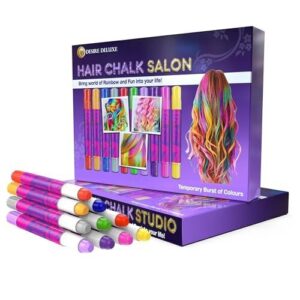
Looking for a commitment-free way to let your child experiment with temporary hair color? Hair chalk safety is exceptional—these mineral-based, non-toxic pens offer impressive color variety across 10 vibrant shades. Each pen in the kit delivers up to 80 applications, proving outstanding pen durability.
The kid-friendly formula washes out in one to three shampoos, making it perfect for birthday parties and school events. While temporary hair color application works best on lighter hair, this temporary trends option gives young stylists creative freedom without the permanent consequences of semipermanent hair dye or demipermanent hair color.
Best For: Parents who want a safe, mess-free way for kids to try fun hair colors for parties, holidays, or special events without any long-term commitment.
- Each pen provides up to 80 applications, so a 10-color set gives you around 800 uses before running out
- Washes out completely in just one to three shampoos using regular shampoo and water
- Non-toxic, mineral-based formula is safe for kids and can even double as face paint for extra creative fun
- Colors may not show up well on dark hair and work best on lighter shades
- Some users report the chalk can feel sticky or difficult to spread smoothly during application
- Mixed feedback on whether the color payoff and ease of use justify the price
2. Style Edit Auburn Root Touch Up
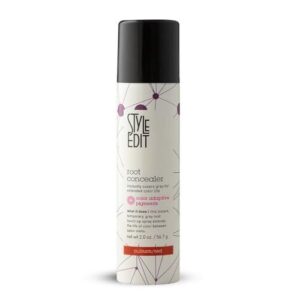
Between salon appointments, this auburn root touch-up spray delivers instant color accuracy for red and strawberry blonde tones. The aerosol spray application covers grays in seconds without the commitment of permanent or demi-permanent hair color.
You’ll find it stays put through sweat and daily activity, then washes out completely with your next shampoo—product longevity lasts until then.
While some users notice slight hair texture changes and occasional nozzle clogging, it’s a practical solution for root touchups that extends your hair color maintenance routine affordably.
Best For: People with auburn or red-toned hair who want a quick, temporary fix for grey roots between salon visits without committing to permanent color.
- Covers grey roots in seconds and stays put through sweat and daily activities until you shampoo it out
- Works well for a range of warm red shades including strawberry blonde thanks to its brown undertones
- Cruelty-free, made in the USA, and washes out completely with regular shampoo
- The spray nozzle can clog up if you don’t use it regularly
- Some users notice their hair texture feels different after application
- Color accuracy can be off for some people, and opinions on whether it’s worth the price are mixed
3. Temporary Hair Color Spray Party Pack
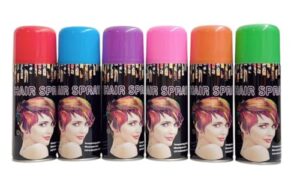
For party hair ideas that don’t require commitment, this multipack delivers six vibrant temporary hair color shades in aerosol cans. The formula washes out with one shampoo, aligning with temporary dye safety standards since it contains no ammonia.
You’ll get water-resistant coverage that works on dark hair without bleaching—a major plus for spontaneous color spray trends at festivals or themed events. While spray application tips matter (some cans show inconsistent coverage), it’s affordable hair color inspiration for costume parties and special occasions.
Best For: Anyone looking for fun, temporary hair color for parties, Halloween, cosplay, or special events without commitment or permanent dye damage.
- Six vibrant shades in one pack give you plenty of color options for different themes and looks
- Washes out with a single shampoo, so you’re not stuck with the color after the event ends
- Works on dark hair without bleaching, making it accessible for most hair colors
- Spray quality is hit or miss—some cans don’t spray well or may leak
- Color can flake off quickly and may need multiple layers to show up bright
- Results vary, with some shades looking less vibrant than expected
4. Temporary Hair Color Wax for Kids
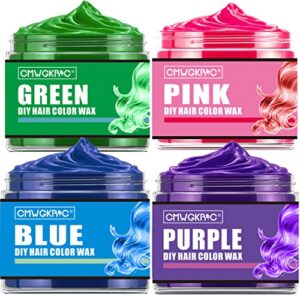
If you’re exploring temporary hair color for children, wax-based formulas offer a middle ground between the mess of sprays and the commitment of semipermanent hair dye. These kid-friendly products use beeswax and plant extracts instead of ammonia or peroxide, coating the hair shaft without penetration—critical for Color Wax Safety in young users.
Wax Application Tips include working through 80% dry hair with fingers for even coverage. Though some waxes feel stiff or require more product on darker hair, they align with Child Hair Care standards and Temporary Hair Trends for cosplay or themed events.
Best For: Parents looking for a safe, washable way to let kids experiment with bright colors for parties, cosplay, or special events without chemical commitment.
- Washes out completely in one shampoo session, making it truly temporary and mess-free for parents who want no lingering color.
- Uses natural wax ingredients like beeswax and plant extracts instead of harsh chemicals like ammonia or peroxide, reducing scalp irritation risks.
- Doubles as both a styling product and color, providing hold while adding vibrant temporary color for creative expression.
- Can feel sticky, heavy, or stiff once it dries, and may require significant product to show up well on darker hair.
- Application can be messy and uneven, especially for beginners or when working with thicker, darker hair textures.
- Color vibrancy varies widely depending on base hair color, with lighter shades showing pigment much better than darker tones.
5. Olaplex Blonde Enhancing Toning Shampoo Conditioner
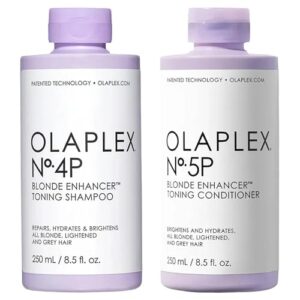
When you’re caught between Toning Benefits from semipermanent hair dye and the need for serious Color Correction, Olaplex No.4P bridges the gap with patented bond-building chemistry.
This sulfate-free purple shampoo neutralizes brass on blonde, lightened, and grey hair color without ammonia—making it gentler than demipermanent hair color yet more structural than typical semipermanent hair dye.
For Blonde Maintenance, lather once weekly for 1–3 minutes; the rich pigment delivers Hair Brightening while product ingredients repair disulfide bonds. It’s targeted Hair color maintenance that actually strengthens as it tones.
Best For: Anyone with blonde, lightened, or grey hair who wants to knock out brassy yellow tones while actually strengthening their hair instead of just depositing color.
- Neutralizes brass in one wash while repairing bonds from bleach damage—so you’re toning and fixing breakage at the same time
- Sulfate-free formula lathers well and hydrates instead of stripping, unlike harsher purple shampoos that leave hair feeling like straw
- Works as a weekly treatment rather than daily use, so one bottle lasts and you control how much toning you need
- Can stain your hands, nails, and shower if you’re not careful during application
- May leave some hair types feeling dry despite the hydrating claims, especially if you leave it on too long
- Not ideal for silvery grey hair—the purple can be too intense and create unwanted violet tones
Frequently Asked Questions (FAQs)
Can I mix semi and demi hair dyes?
Technically speaking, mixing the two isn’t advisable. Their incompatible chemical systems—one developer-free, one oxidative—create unpredictable color outcomes and uneven deposits. A strand test is essential if you’re tempted to experiment.
Does hair porosity affect color deposit differently?
Yes, hair porosity greatly affects color deposit. High-porosity hair absorbs dye quickly but fades faster, while low-porosity hair resists initial uptake yet holds color longer once deposited—impacting both demi-permanent and semi-permanent results.
Are semi-permanent dyes safe during pregnancy?
Most experts consider semi-permanent hair dye generally safe during pregnancy because chemical absorption through the scalp remains minimal. However, delaying use until after the first trimester and ensuring proper ventilation reduces potential fetal exposure risks from ammonia-free formulations.
Will chlorine strip demi-permanent color faster?
Pool water accelerates color vibrancy loss in demi-permanent hair color. Chlorine damage doubles fading rates compared to regular washing, stripping dye molecules from porous strands.
Your hair porosity determines how quickly oxidants breach the cuticle and leach pigment.
Can I use toner after semi-permanent dye?
You can apply toner after semi-permanent dye, but it works best once the color has faded considerably.
Professional toners introduce oxidation that shifts both artificial and underlying pigments, so strand-test first for predictable color correction results.
Conclusion
The irony? Choosing between demi vs semi permanent hair color becomes simple once you stop overthinking it.
Semi sits on the surface, fades fast, and keeps things commitment-free. Demi uses low-volume peroxide to slip past the cuticle, lasting longer and actually covering grays.
Neither damages like permanent dye, but neither lifts your natural color either. Match the formula to your hair goals—not the other way around—and you’ll skip the guessing game entirely.