This site is supported by our readers. We may earn a commission, at no cost to you, if you purchase through links. This content is for general informational and educational purposes only and is not a substitute for professional medical, dermatological, or nutritional advice.
That stinging sensation during your bleach session wasn’t just discomfort—it was a chemical burn in progress. When hair bleach sits on your scalp, it doesn’t discriminate between the keratin in your hair and the proteins in your skin. The alkaline mixture breaks down both, leaving behind angry red patches that crust into scabs within 24 to 48 hours.
These aren’t superficial wounds you can ignore. Bleach-induced scabs signal genuine skin damage that needs immediate attention to prevent infection and scarring.
The good news? Your scalp has impressive healing capacity when you give it the right support, starting with simple steps you can take today.
Table Of Contents
Key Takeaways
- Bleach scabs form when harsh chemicals like sodium hypochlorite (pH above 11) break down scalp proteins, causing chemical burns that typically crust over within 24-48 hours and require immediate rinsing and cool compresses to prevent infection.
- Home remedies that actually work include sulfate-free shampoos to preserve your scalp’s moisture barrier, aloe vera gel for fast cooling relief, and petroleum jelly to seal in hydration around (not on) healing scabs.
- You can prevent future bleach burns by doing a 48-hour patch test, applying protective barrier cream before bleaching, sectioning hair methodically to avoid overlapping applications, and never exceeding recommended processing times.
- Most scalp scabs heal in 1-2 weeks with proper care, but you need medical attention if you develop fever, pus, spreading redness, or blistering that worsens after the first few days.
Why Scabs Form on Scalp After Bleaching
Bleach can turn your dream hair into a scalp nightmare if you’re not careful. The harsh chemicals in bleach mixtures—like persulfates and hydrogen peroxide—don’t just lighten your hair; they can burn and damage the sensitive skin on your scalp.
That’s why experts recommend waiting at least 4–6 weeks between bleach sessions to give your scalp time to recover and rebuild its protective barrier.
Understanding why scabs form helps you protect yourself and respond quickly if irritation strikes.
Chemical Burns and Irritation From Bleach
When bleach hits your scalp, it’s like an unwelcome chemical reaction in fast-forward. Bleach toxicity stems from harsh ingredients—sodium hypochlorite and high pH levels above 11—that disrupt skin proteins and lipids.
Fortunately, you can restore your scalp’s pH balance after bleaching with targeted post-treatment care and gentle, acidic products.
Bleach triggers a fast-forward chemical reaction on your scalp, as harsh ingredients disrupt skin proteins with toxicity above pH 11
This chemical burn causes scalp irritation, redness, and blistering within minutes to hours. Scalp sensitivity varies, but burn severity depends on concentration and exposure time.
If you’re concerned about lasting effects, understanding whether hair dye damages hair follicles can help you assess long-term scalp health risks.
Understanding bleach damage helps you manage chemical irritation effectively.
Overlapping Applications and Improper Techniques
One pass might seem fine, but overlapping applications stack chemical irritation like layering sunburn. Each repeated pass increases active bleaching agents at that spot, extending exposure time and worsening scalp damage. High developer strength near sensitive areas amplifies the risk.
Uneven sectioning creates hotspots where bleach scabs form—improper application turns a simple mistake into a painful chemical burn requiring bleach scab treatment.
Pre-Existing Scalp Conditions and Allergic Reactions
Your skin’s starting point matters more than you think. If you already deal with dermatitis, eczema, or psoriasis, bleach can trigger intense scalp sensitivity and worsen existing inflammation. Metal or fragrance allergies increase your risk of hypersensitivity testing-worthy reactions—itching, swelling, even blistering.
Before applying bleach anywhere near inflamed or irritated skin, check exactly how long your developer should process to avoid overexposure that could worsen sensitivity.
- Pre-existing eczema or dermatitis lowers your scalp’s defense against chemical burn
- Psoriasis patches can mimic or worsen bleach-induced scalp scabs
- Allergic reaction history to cosmetics ups your odds of severe skin irritation
- Delayed responses may appear hours later, complicating dermatitis care
Signs and Symptoms of Bleach-Induced Scabs
How do you know if bleach crossed the line? Within 24 to 48 hours, you’ll spot erythema—redness that signals chemical burns—along with crusting or scabs. Burning sensations and pruritus (that maddening itch) tag along with scalp irritation.
Severe bleach reactions bring ulceration, blistering, or peeling skin as your scalp sheds damaged cells to restore integrity.
Immediate Steps to Treat Scalp Scabs
If you’ve noticed scabs forming after bleaching your hair, quick action makes a real difference in how fast your scalp heals. The first hour after exposure is critical—you’ll want to remove any remaining chemicals and protect your skin from further damage.
Here’s exactly what to do right now to start your recovery on the right track.
Rinsing Out Bleach and Residue Properly
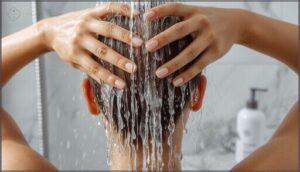
Your first line of defense after bleach burns is fast, thorough rinsing—think of it as extinguishing a small chemical fire before it spreads. Proper scalp rinse techniques make all the difference in scalp burn recovery and preventing scalp scabs.
If you accidentally got Vaseline in your hair while treating your scalp, remove it properly before moving forward with recovery care.
- Run lukewarm water over your entire scalp for at least five minutes to guarantee complete bleach removal tips work
- Tilt your head so water flows downward, preventing residue from re-soaking irritated areas
- Follow with a sulfate-free shampoo as part of gentle cleansing methods for residue neutralization
- Consider filtered water if yours is mineral-heavy—water quality matters for effective scalp care after bleaching
Avoiding Further Irritation and Scratching
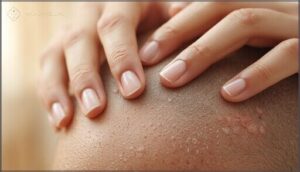
Your hands can be your scalp’s worst enemy right now. Don’t scratch or rub scabs—you’ll reopen wounds and invite infection, derailing scalp burn recovery. Trim your nails short to prevent accidental damage during sleep.
When itch strikes, press gently with your finger pad instead of scratching. These gentle scalp care habits support scalp barrier repair and effective irritation prevention during scalp scabs healing.
Using Cool Compresses for Relief
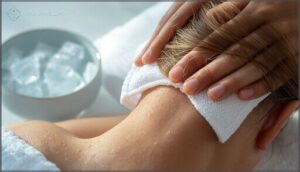
A cool compress can dial down scalp irritation fast—just soak a clean cloth in cool water and press it gently against the scabs for 10 to 15 minutes.
This cool therapy delivers scalp relief by constricting blood vessels, which helps with itch reduction and inflammation control.
Repeat every couple of hours during the first two days for effective burn soothing and bleach damage recovery.
When to Seek Medical Attention
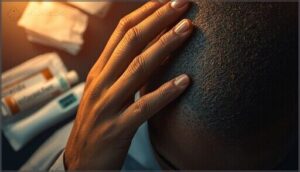
Most scabs heal at home, but some situations demand urgent care. If pain intensifies, fever appears, or you spot pus and red streaks radiating from the scalp—these are red flags for scalp infections requiring medical emergency attention.
Watch for these critical signs of burn severity:
- Widespread blistering or open wounds that won’t improve after 1–2 weeks
- Allergic reactions like facial swelling, hives, or breathing trouble
- Significant worsening despite proper chemical burn prevention and scalp infection and treatment efforts
Don’t wait if symptoms escalate.
Best Home Remedies for Bleach Scalp Scabs

Once you’ve rinsed out the bleach and cooled down the burn, your scalp needs gentle care to heal properly.
The good news is that you don’t need expensive treatments—several simple home remedies can speed up recovery and ease discomfort.
Here’s what actually works when your scalp is healing from bleach damage.
Gentle Cleansing With Sulfate-Free Shampoo
When your scalp’s battling bleach damage, harsh shampoos can exacerbate the issue. Sulfate-free options are gentler, stripping away less moisture and allowing your skin’s natural barrier to rebuild. Look for mild surfactants like cocamidopropyl betaine instead of sodium lauryl sulfate—they won’t lather like traditional formulas, but that’s actually better for scalp scabs.
| Shampoo Type | Impact on Healing Scalp |
|---|---|
| Sulfate-containing | Strips natural oils, delays recovery |
| Sulfate-free | Preserves moisture barrier, reduces irritation |
| Fragrance-free options | Minimizes chemical exposure during healing |
| Hypoallergenic formulas | Gentle cleansing without additional sensitizers |
| pH-balanced varieties | Maintains scalp pH balance and barrier repair |
Fragrance-free options provide the best gentle scalp care—you’re already dealing with chemical burns, so why add more irritants? These sulfate-free benefits become obvious within days: less flaking, reduced stinging, and faster healing of those tender spots.
Applying Moisturizers and Emollients
Think of your damaged scalp like a cracked desert floor—it desperately needs hydration to repair those fissures and restore its protective barrier. Gentle products with emollient benefits seal in moisture levels while supporting skin barrier recovery after bleaching.
- Aloe vera gel: Cools inflammation and delivers hair hydration without clogging healing tissue
- Vitamin E oil: Powerful antioxidant that accelerates scalp health restoration
- Petroleum jelly: Creates protective seal preventing scalp irritation while maintaining essential moisture
Reducing Hair Care Product Usage
While those moisturizers work wonders, your scalp also needs breathing room. Product minimization is surprisingly powerful—cutting back on styling formulas reduces scalp irritation by limiting chemical interactions with your sensitive skin.
Simplified routines let your scalp reset naturally, restoring moisture balance without competing ingredients.
Choose gentle formulas when you do style, giving your scalp health priority during hair damage repair.
OTC Pain Relief and Corticosteroid Creams
When itching and inflammation won’t quit, over-the-counter hydrocortisone creams (0.5% to 1%) offer topical relief from scalp scabs. Apply a thin layer 1–3 times daily for up to seven days, avoiding broken skin.
These corticosteroid options calm irritation temporarily, but if symptoms persist beyond a week or worsen after three to five days, stop use and consult your doctor for proper evaluation.
Top 3 Products for Healing Scalp Scabs
You don’t need expensive prescriptions to help your scalp heal after bleach damage. A few targeted, affordable products can make a real difference in your recovery.
Here are three dermatologist-recommended options that soothe irritation, support healing, and protect your damaged scalp.
1. Aloderma Organic Aloe Vera Gel
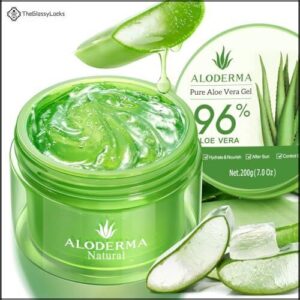
When your scalp feels like it’s been through battle, you need relief that works fast. Aloderma Organic Aloe Vera Gel delivers 96% pure organic aloe vera benefits, processing the plant within 12 hours of harvest to lock in maximum soothing power.
This fragrance-free formula calms scalp irritation, cools chemical burns, and provides gentle healing without adding more stress to damaged skin.
Apply it directly to scabs for hair hydration and scalp soothing—the hypoallergenic organic ingredients support your scalp’s natural recovery while preventing further scalp irritation.
| Best For | People dealing with scalp irritation, chemical burns from bleaching or coloring, or anyone who wants a pure, fragrance-free solution to soothe and hydrate a sensitive or damaged scalp. |
|---|---|
| Brand | Aloderma |
| Age Range | Adult |
| Hypoallergenic | Yes |
| Skin Hydration | Intense moisture |
| Volume | 200mL |
| Special Properties | Organic/unscented |
| Additional Features |
|
- Made from 96% organic aloe vera processed within 12 hours of harvest for maximum healing power
- Hypoallergenic and unscented formula won’t irritate already sensitive or damaged scalps
- Works fast to calm burning, reduce redness, and hydrate dry, irritated skin on your scalp and hair
- Inner lid can be tricky to close properly after you’ve opened it
- No scent at all, which some people might miss if they prefer products with fragrance
- Doesn’t include clear info about how long it lasts or the best way to store it
2. Cliganic Pure Vitamin E Oil
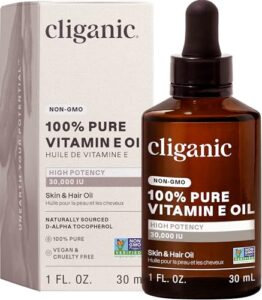
When you need deeper repair, Cliganic Pure Vitamin E Oil steps in with 30,000 IU of D-Alpha Tocopherol to support your scalp’s healing journey. This vegan, non-GMO oil delivers antioxidant properties that protect stressed skin cells while providing intense scalp moisturizing where you need it most.
Apply a pea-sized amount to clean, dry hair—gently dabbing affected areas without aggressive rubbing. The vitamin E benefits help reduce mild dryness and flaking, though you’ll want to combine gentle healing with your sulfate-free shampoo routine for best scalp health results.
| Best For | People dealing with chemically irritated scalps who want a natural, antioxidant-rich oil to support healing and reduce dryness. |
|---|---|
| Brand | Cliganic |
| Age Range | Adult |
| Hypoallergenic | Yes |
| Skin Hydration | Deep nourishment |
| Volume | 30mL |
| Special Properties | Vegan/cruelty-free |
| Additional Features |
|
- Delivers 30,000 IU of pure D-Alpha Tocopherol for powerful antioxidant protection and moisture
- Vegan, non-GMO, and third-party tested so you know exactly what you’re putting on your scalp
- Versatile enough to mix with other products if you want to tone down the texture or smell
- Strong fishy odor that many users find off-putting and hard to mask
- Thick, sticky texture makes application tricky and can feel heavy on hair
- Small 30ml bottle won’t last long if you’re treating larger scalp areas regularly
3. Vaseline Healing Skin Jelly
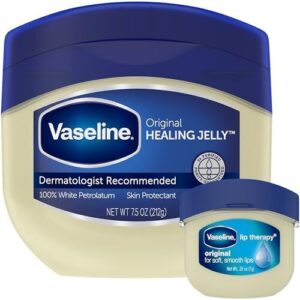
Vaseline Healing Skin Jelly boosts your skin’s natural defense system by creating a protective moisture barrier over damaged areas. The 100% white petrolatum delivers healing properties by sealing in hydration and supporting skin regeneration—essential for scalp protection during wound healing.
Apply a thin layer around scabs (not directly on open wounds) to prevent drying and friction. This dermatologist-recommended approach to scalp care helps maintain scalp health after hair bleaching, though you’ll want to wash hands thoroughly after application to avoid transferring Vaseline benefits elsewhere.
| Best For | People dealing with scalp irritation from bleaching or chemical treatments who need an affordable, protective barrier to lock in moisture and prevent scabs from drying out. |
|---|---|
| Brand | Vaseline |
| Age Range | Adult |
| Hypoallergenic | Yes |
| Skin Hydration | Healing barrier |
| Volume | 100mL |
| Special Properties | Non-comedogenic |
| Additional Features |
|
- Creates a waterproof seal that stops moisture loss on damaged scalp skin, helping speed up healing after harsh treatments
- Hypoallergenic and fragrance-free formula works well for sensitive skin without causing extra irritation
- Cheap and versatile—you can use it on chapped lips, dry patches, and other problem areas beyond just your scalp
- Thick, greasy texture can be messy to apply and might transfer to pillowcases or hair if you use too much
- Shouldn’t go directly on open wounds or broken skin, only around healing scabs, which limits where you can apply it
- Some people receive jars with loose lids or packaging issues that affect product freshness
Preventing Scalp Scabs During Future Bleaching
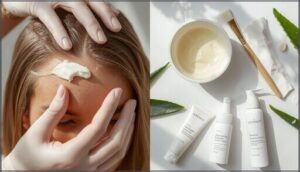
Once your scalp has healed, you’ll want to protect it from future damage. The good news is that a few simple changes to your bleaching routine can prevent scabs and chemical burns altogether.
Let’s walk through the essential steps you need to take before, during, and after bleaching to keep your scalp safe.
Preparing and Protecting The Scalp Before Bleaching
Your scalp deserves the same care you’d give any sensitive skin before a chemical treatment. Start with gentle exfoliation to remove buildup, then apply a protective barrier cream around your hairline and any vulnerable spots.
A patch test 48 hours beforehand catches potential reactions early.
Pre-bleach care—like nourishing oils and checking for active wounds—transforms hair bleaching safety from gamble to controlled process.
Proper Bleach Application Techniques
A measured approach to bleach application prevents unnecessary damage. Before you begin bleaching hair at home, run a hair strand test to gauge processing time—this simple step protects against over-processing.
- Section hair methodically, applying bleach from mid-length outward while maintaining scalp protection
- Never exceed the product’s recommended processing time to guarantee bleach safety
- Use lukewarm water for gentle rinsing until completely clear
- Follow with pH-balanced conditioning to restore your scalp’s natural barrier
Post-Bleach Soothing and Hydration Practices
Think of post-bleach care as your scalp’s recovery room. Gentle cleansing with sulfate-free shampoo every 1–2 days protects healing tissue, while fragrance-free moisturizers support barrier repair and scalp hydration.
Apply petroleum-based ointments at night to reduce water loss and prevent scalp scabs. Soothing treatments like basic aloe vera gel calm irritation—skip the heat styling and layered hair care products until your scalp health returns.
Frequently Asked Questions (FAQs)
How long does scalp scab healing take?
Most people see initial improvement within 3 to 7 days with proper scalp care. Complete healing usually takes 1 to 2 weeks for minor irritation, though deeper burns may need up to 4 weeks.
Can I dye hair with active scabs?
Don’t apply dye over active scabs—your compromised scalp barrier can’t handle more chemicals.
Wait until healing completes to avoid worsening irritation, infection risks, and scalp damage from bleach aftercare missteps.
Will scabs cause permanent hair loss?
Most scalp scabs from bleach won’t cause permanent hair loss—your follicles usually recover within weeks.
Permanent alopecia only happens with severe, untreated burns that destroy follicle health, which is rare.
Are natural bleach alternatives safer for scalp?
Gentle formulas might sound safer, but natural bleach alternatives can still trigger scalp irritation and chemical reactions.
They’re not guaranteed to prevent scabs or hair damage—patch testing remains essential before full application.
Should I exfoliate scabs or leave alone?
Leave scabs alone—exfoliation risks tearing new tissue and inviting infection. Your scalp needs time to rebuild its protective barrier.
Gentle cleansing without scrubbing aids natural healing timelines and minimizes scarring from bleach damage.
Conclusion
The best treatment for scabs on scalp from bleach is preventing them entirely—yet here you’re, healing from damage already done. That’s the paradox of beauty: sometimes you learn protection through pain.
Your scalp will recover if you resist picking, keep it moisturized, and give wounds time to close naturally.
Protect first, color second. Your scalp remembers what you put it through, so make the next experience worth remembering differently.