This site is supported by our readers. We may earn a commission, at no cost to you, if you purchase through links. This content is for general informational and educational purposes only and is not a substitute for professional medical, dermatological, or nutritional advice.
That tight, dense clump hiding at the nape of your neck didn’t appear overnight—it built up quietly, strand by strand, while you slept, moved, and went about your day. Most people blame their hair type when they discover underlayer matting, but the real culprits are usually hiding in plain sight: your pillowcase, your hoodie collar, the conditioner you thought was helping.
Understanding why your hair mats underneath means looking at friction, moisture, and product behavior together—not as separate problems.
Once you see the pattern, fixing it becomes straightforward.
Table Of Contents
- Key Takeaways
- Why Hair Mats Underneath
- Hair Types More Prone
- How to Prevent Underlayer Matting
- Top 5 Detangling Tools
- Frequently Asked Questions (FAQs)
- How do I stop my hair from getting matted underneath?
- Why is my hair getting so tangled underneath?
- What deficiency causes knotty hair?
- Why is my hair matted?
- Why is my hair falling out?
- Why is my hair tangling and matting?
- Can a hairstyle cause matting?
- What if my hair is matted all together?
- How to prevent matted hair?
- How do I stop my hair from knotting underneath?
- Conclusion
Key Takeaways
- Underlayer matting isn’t random — friction from fabrics, dry raised cuticles, product buildup, and trapped shed hairs are the four main reasons that tight knot keeps forming at your nape.
- Your hair type sets the pace, since curly, high-porosity, chemically damaged, or thick long hair creates more contact points where strands can hook and lock together faster.
- Detangling in small sections from ends to roots — with a slip-providing conditioner and a wide-tooth comb — is the most effective way to clear existing mats without snapping strands.
- Swapping your cotton pillowcase for silk or satin, keeping styles loose, trimming every 6–8 weeks, and using lightweight leave-ins instead of heavy creams are the daily habits that actually stop mats from coming back.
Why Hair Mats Underneath

Hair matting underneath isn’t random — something specific is always triggering it. Once you know the real culprits, fixing the problem becomes a lot more straightforward.
Once you’ve nailed down the cause, pairing it with the best hair treatment for matting and tangles makes a real difference in keeping things under control.
Here are the five most common reasons your underlayer keeps knotting up.
Friction From Pillowcases, Collars, and Hoodies
Every time you move, fabric rubs against your underlayer. Here’s where it happens most:
- Cotton pillowcases create constant friction — a silk pillowcase or satin pillowcase cuts that drag considerably.
- Collar edge friction traps shed hairs at your nape.
- Hoodie cuff slip snags strands along your hairline.
- Static hair snagging worsens with rough, low friction fabrics.
Nighttime hair protection, clothing friction, and hair tangling prevention all matter equally. Independent laboratory results confirm silk pillowcase friction reduction of hair friction by 34%.
Dryness and Raised Cuticles
Beyond fabric friction, dry hair is just as responsible. When cuticle hydration drops, your hair’s outer layer lifts like tiny fish scales — rough edges snag neighboring strands instantly.
| Cause | What It Does |
|---|---|
| Raised cuticles | Increases strand-to-strand friction |
| High porosity | Speeds up moisture loss |
| Heat damage | Worsens dry hair texture |
| Skipped deep conditioning | Leaves cuticles rough |
| Low hair moisture retention | Triggers faster matting |
A moisture locking oil, hydrating serum, or anti-frizz moisturizer restores slip. Moisturizing strategies for hair health — including scalp moisture maintenance — keep cuticles flat and detangling tools and techniques far less painful to use.
Product Buildup at The Nape
Moisture fixes dryness, but product buildup creates a whole different problem at the nape of the neck. Residue from scalp oil blend, sweat, and product layering mistakes turns that underlayer into a sticky trap.
Three common culprits:
- Silicone build-up coats strands, making them grab each other.
- Dry shampoo powder compacts into clumps near the nape.
- Hard water deposits make a detangling spray and wide-tooth comb work harder.
Shed Hairs Trapped in The Underlayer
Buildup isn’t the only thing hiding in your underlayer. Every day, you shed 50–100 hairs — and most don’t fall freely.
Tight styles that pull on the roots can make this worse, which is why tight hairstyles that cause hair breakage are worth rethinking if you want healthier, fuller hair.
Curly strands create Micro-Loop Retention points that snag those loose hairs, while Scalp Compression Traps keep them pressed flat. This Root Zone Accumulation builds Hidden Shed Layers fast.
These Shedding Capture Mechanics explain why even fresh-washed hair mats underneath.
Tight Hairstyles and Repeated Rubbing
Wearing the same tight ponytail daily creates Scalp Pressure Zones where Hair Fiber Fatigue builds fast. Elastic Band Tension and Braid Tightness Impact rough up cuticles, while Neckline Friction from collars compounds the damage.
- Rotate styles to shift friction points
- Swap elastic bands for soft scrunchies
- Apply a silk pillowcase for nighttime protection
These small swaps make detangling techniques noticeably easier.
Understanding how salt water affects hair texture and grip helps explain why moisture balance matters so much before you even reach for a comb.
Hair Types More Prone
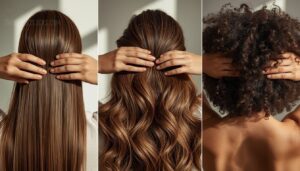
Not every hair type mats at the same rate — some are just built to tangle faster than others.
Your texture, porosity, and even your environment all play a role in how quickly that underlayer locks up.
Here are the hair types most likely to mat underneath, and why.
Curly and Coily Hair Matting Faster
Curly and coily hair matting faster isn’t bad luck — it’s geometry. Each strand’s natural bends create Coil Interlocking Patterns, where one curl wraps around another like a hook catching a loop. That’s why curly hair matting and coily hair matting happen faster than with straight hair.
Curly hair mats faster by design — each natural bend hooks neighboring strands like geometry working against you
| What Causes It | Why It Happens |
|---|---|
| Tight curl shape | Strands interlock and snag easily |
| Compressed curls | Clumping speeds up knotting |
High-porosity and Chemically Damaged Hair
When your cuticles are lifted from color, relaxers, or heat damage, strands snag on each other constantly—like velcro catching velcro. That roughness makes underlayer matting almost inevitable without the right routine:
- Protein Replenishment — a hydrolyzed protein treatment rebuilds weakened strands
- Cuticle Sealing — low-pH cleansing and moisture locking smooth rough surfaces
- Heat Damage Prevention — deep conditioning with a detangling spray reduces friction
Thick, Dense, or Long Hair Issues
More hair means more contact points — and more chances for strands to lock together underneath.
| Hair Factor | Why It Mats | Fix It |
|---|---|---|
| Dense thickness | Strands compress at the nape | Wide-tooth comb daily |
| Long length | Weight pulls hair into bundles | Hair Weight Balancing sections |
| Dry texture | Low moisture retention strategies increase grab | Silk pillowcase nightly |
A consistent Scalp Massage Routine, Gentle Brushing Methods, and Nighttime Friction Guard habits keep underlayer knots from scaling fast.
Extensions and Weaves Tangling Underneath
Extensions feel like a fresh start — until the underside turns into a tangled mess.
- Installation Tension matters: Uneven braiding underneath creates friction zones where your natural hair rubs against the tracks, speeding up matting fast.
- Synthetic Drag is real: Rough synthetic fibers catch and grip surrounding strands, unlike quality human hair extensions.
- Attachment Method affects movement: Poor placement restricts how freely hair shifts, trapping shed strands underneath.
Night Sweats, Humidity, and Frizz Effects
Your scalp creates its own microclimate humidity overnight — warm, damp, and perfect for knots. Sweat salt residue raises the cuticle roughness boost, making strands grip each other tighter.
Moisture swelling then causes hair to interlock under bedding. Static build-up follows once it dries.
Use an antifrizz spray before bed, practice nighttime protection with silk and satin, and prioritize frizz control and sweat management consistently.
How to Prevent Underlayer Matting
Preventing underlayer matting comes down to a handful of consistent habits you can build into your routine. None of them are complicated, but each one targets a specific reason why that hidden layer keeps knotting up.
Here’s what actually works.
Daily Section-by-section Detangling
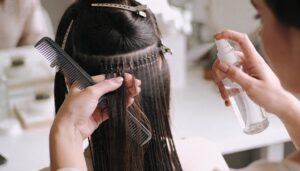
Think of your underlayer like a filing system — when everything’s sorted, nothing gets jammed.
Start with a Morning Moisture Spray, then use the Clip Isolation Technique to divide hair into small sections. Gentle Finger Unravel loosens knots before your wide-tooth comb ever touches the strand. Sectioned Comb Passes keep shed hairs from migrating across layers and locking into mats.
Detangling From Ends to Roots
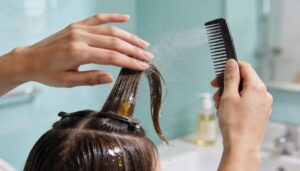
Once sections are clipped and isolated, your detangling order matters just as much as your tools.
Always start at the ends — never the roots.
Working upward protects against snapping strands mid-shaft.
- Apply a Pre-wash Detangling Spray to soften knots before touching them
- Use the Finger Detangling Technique to gently separate clumps first
- Follow with a wide-tooth comb, moving upward gradually
- Apply a Root Shield Serum before reaching the scalp
- Practice this Detangling Order Strategy consistently to prevent hair matting
Using Conditioner for Better Slip
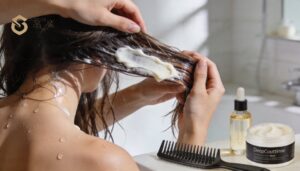
Once your ends are free of knots, conditioner becomes your best ally for the underlayer.
- Cuticle Smoothing starts with a moisturizing conditioner — flat cuticles mean less snagging
- Application Timing matters: let a detangling spray or deep conditioning mask sit 10–15 minutes
- Light Formula and Ingredient Choice prevent buildup
- Residue Control keeps a lightweight leave-in conditioner or hair serum working without weighing strands down
Thorough Rinsing During Wash Day

Conditioner only works if it’s fully rinsed out. Leftover product is one of the sneakiest causes of underlayer matting.
Use a cold water rinse and give your rinse cycle duration enough time to actually clear your sulfate-free shampoo.
If product buildup is an issue, hit the extra rinse setting. Proper washing technique and water usage make a real difference.
Lightweight Leave-ins Without Buildup
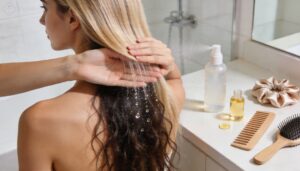
Heavy creams feel like progress, but they’re often the reason your underlayer mats again by day three. Stick to water-based mists or low residue formulas — they deliver slip without stickiness.
A good lightweight leave-in conditioner uses humectant-oil balance (think glycerin plus light argan oil) to soften strands without coating them. Focus on a scalp-friendly application — mids and ends only.
Silk Pillowcases and Satin Bonnets

Your cotton pillowcase is quietly working against you every night. Switching to a silk or satin pillowcase — or wearing a silk bonnet — dramatically cuts friction at the nape and edges.
Silk wins on fabric breathability, moisture retention, and temperature regulation, keeping strands hydrated and smooth.
Proper fit & coverage ensures full edge protection, making nighttime hair protection one of the simplest steps toward preventing hair matting.
Loose Braids and Low-tension Styles
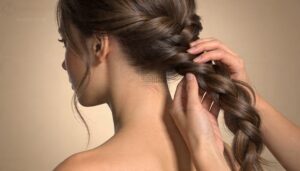
tight styles are a hidden culprit — they trap shed hairs and create constant scalp tension relief problems at the nape. Proper installation and tension management starts with braid section size and root placement comfort.
Looser braids allow end freedom movement, reducing friction underneath. Keep your wear time cycle short, rebraiding every 6–8 weeks to prevent weave matting at the back.
Regular Trims and Heat Protection
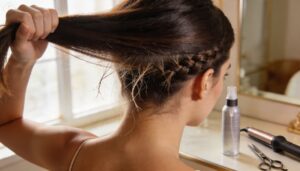
Damaged ends are basically friction magnets — they snag, tangle, and drag the underlayer into knots faster than healthy hair ever would.
- Trim Frequency: Trim every 6–8 weeks for curly or color-treated hair to stay ahead of split ends.
- Split End Management: Remove frayed tips before damage travels up the shaft.
- Heat Guard Sprays: Apply heat protectant before every heat styling session.
- Temperature Control: Keep tools on low heat to limit heat damage prevention issues.
Top 5 Detangling Tools
Good detangling starts with having the right tool in your hand. These five options each bring something different to the table, from fine-toothed precision to wider spacing for thicker mats. Here’s what made the cut:
1. Metal Dog Grooming Detangler Comb
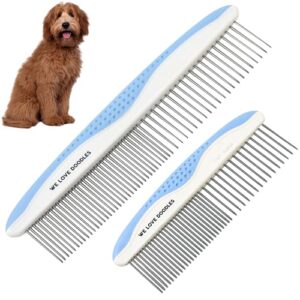
Don’t let the name fool you — this double-sided metal comb works beautifully on dense, matted underlayers. The two tooth-spacing sizes let you tackle thick knots first, then smooth with the finer side. It’s sturdy enough to hold its shape under pressure without bending mid-stroke.
The rounded, precisely finished teeth glide through tangles without snagging skin or snapping strands. At just 3.53 oz for the full 2-pack, it’s easy to handle during long detangling sessions.
| Best For | Dog and cat owners with medium to long-haired breeds prone to matting, like Goldendoodles, Shih Tzus, or long-haired cats. |
|---|---|
| Material | Stainless steel |
| Coat Types | Medium to long coats |
| Pet Compatibility | Dogs and cats |
| Rounded Teeth | Yes |
| Mat Removal | Yes |
| Weight | 3.53 oz |
| Additional Features |
|
- Two tooth-spacing sizes mean you can break up tough mats first, then smooth everything out with the finer side
- Sturdy metal build holds its shape under pressure — no bending or flexing mid-stroke
- Rounded teeth glide through fur without snagging skin, so even sensitive pets tend to tolerate it well
- Loose hair clumps fly off during use, so you’ll want a trash can nearby
- Some reviewers feel it doesn’t outperform much cheaper metal combs
- Not much real-world feedback on how it handles very young puppies
2. Pets First Stainless Steel Mat Remover
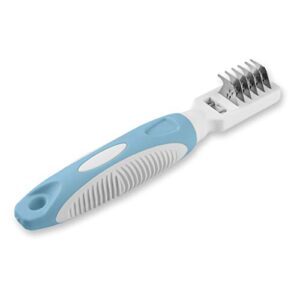
The Pets First Stainless Steel Mat Remover is built for precision in tight spots. Its rounded stainless steel teeth grip mats without digging into the scalp, making it safer for sensitive underlayers near the nape and ears.
The soft-grip handle with a thumb rest gives you real control, so you’re steering the comb rather than fighting it.
At just 3.53 oz, it won’t tire your hand mid-session.
One honest note — very deep mats may need a few extra passes.
| Best For | Pet owners who regularly deal with mats and tangles in hard-to-reach spots like ears, armpits, and behind the collar. |
|---|---|
| Material | Stainless steel |
| Coat Types | All coat types |
| Pet Compatibility | Dogs and cats |
| Rounded Teeth | Yes |
| Mat Removal | Yes |
| Weight | 3.53 oz |
| Additional Features |
|
- Rounded teeth are gentler on sensitive skin while still grabbing mats effectively
- The soft-grip handle with thumb rest keeps your hand comfortable through longer grooming sessions
- Lightweight at under 4 oz, so it’s easy to maneuver with precision
- Teeth can feel sharp if you press too hard, which could irritate delicate skin
- The design is built for right-handed users, so lefties may find it a bit awkward
- Stubborn, deeply embedded mats might need multiple passes or an extra tool to fully clear
3. CWXZSTM Pet Steel Dematting Comb
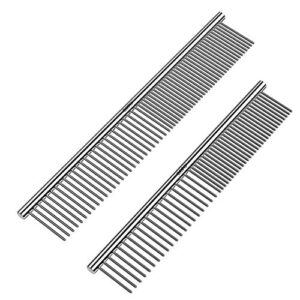
For tighter mats and denser underlayers, the CWXZSTM Steel Dematting Comb gives you two tools in one. The closely spaced teeth tackle stubborn knots, while the wider side covers finishing and thinning — so you’re not switching combs mid-session.
At just $6.97, it punches well above its price.
The rounded tips protect sensitive scalp areas, and the non-slip handle keeps your grip steady even with damp hands.
Just note that the finer teeth can occasionally snap under heavy pressure.
| Best For | Pet owners with dogs, cats, or horses that have thick, matted coats — especially breeds like Shih Tzus, Poodles, or Bearded Collies who need regular detangling without a trip to the groomer. |
|---|---|
| Material | Stainless steel |
| Coat Types | Long and short coats |
| Pet Compatibility | Dogs, cats, horses |
| Rounded Teeth | Yes |
| Mat Removal | Yes |
| Weight | 1.76 oz |
| Additional Features |
|
- Two comb sizes in one package, so you can handle both short and long coats without grabbing a second tool
- Rounded, polished teeth are gentle on sensitive skin and most pets tolerate it well
- At $6.97, it’s hard to beat the value for a stainless steel, professional-grade comb
- The finer teeth on the smaller comb have been known to snap under heavy pressure or extended use
- Steel combs feel stiff, so severe matting may still need a softer or more specialized tool
- Not a full replacement for professional grooming when coats are seriously tangled
4. Boao Dog Eye Stain Remover Comb
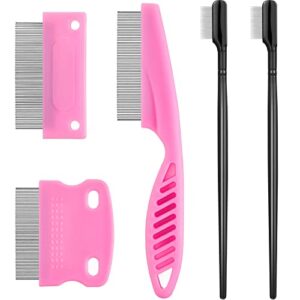
Now, if you’re dealing with fine, delicate strands near sensitive areas — think nape edges or the hairline — the Boao Dog Eye Stain Remover Comb is surprisingly useful. Its stainless-steel teeth have rounded tips that glide without scratching, and the slim, compact head reaches tight spots most combs miss.
The five-piece set gives you options for different textures and sections.
At roughly 59 grams, it’s lightweight enough for precise, controlled strokes where aggressive tools would cause breakage.
| Best For | Pet owners with small dogs or cats who want an easy, affordable way to keep tear stains and eye crust under control at home. |
|---|---|
| Material | Stainless steel |
| Coat Types | Short and long coats |
| Pet Compatibility | Dogs and cats |
| Rounded Teeth | Yes |
| Mat Removal | Yes |
| Weight | 2.08 oz |
| Additional Features |
|
- Five different comb shapes mean you can tackle different areas and fur types without switching tools
- Rounded stainless-steel teeth are gentle enough to work around sensitive spots without scratching skin
- Lightweight and compact, so it’s easy to handle precisely and store when you’re done
- The spiky black comb can nick skin if you rush, so you have to stay careful the whole time
- Not a great fit for larger breeds — the combs are just too short and not sturdy enough for bigger dogs
- Heavy tear producers will need a few minutes per eye, which adds up fast if your pet isn’t cooperative
5. Freshly Bailey Dematting Comb Cats Dogs
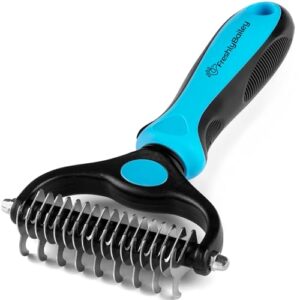
If precision tools like the Boao comb handle delicate edges, the Freshly Bailey Dematting Comb tackles the heavy lifting.
Its dual-sided design lets you flip between breaking up stubborn mats and lifting loose undercoat — no tool-swapping needed.
The ergonomic, non-slip handle with a built-in thumb rest gives you real control, especially during longer sessions.
At 6.88 × 3.9 inches, it covers more surface area per stroke, so you’re working smarter, not harder, through thick or layered sections.
| Best For | Owners of medium- to long-haired pets like Goldens, Huskies, or Persians who want one tool that handles both matting and shedding without a trip to the groomer. |
|---|---|
| Material | Stainless steel |
| Coat Types | Medium to long coats |
| Pet Compatibility | Dogs and cats |
| Rounded Teeth | Yes |
| Mat Removal | Yes |
| Weight | 4.23 oz |
| Additional Features |
|
- Double-sided design tackles mats on one side and loose undercoat on the other, so you’re not juggling multiple tools
- Rounded stainless-steel teeth are gentle enough for sensitive cats and dogs without skimping on effectiveness
- Solid all-metal build holds up over time and cleans up easily — a good deal at $14.95
- Hair flies loose as you comb, so expect some cleanup on your clothes, furniture, and floor afterward
- Stubborn or tightly packed mats may take several passes or sessions, and pushing too hard can irritate your pet
- No hair-catching feature means grooming during heavy shedding season can get a little messy fast
Frequently Asked Questions (FAQs)
How do I stop my hair from getting matted underneath?
Stopping underlayer matting comes down to three habits: detangle in sections daily, keep hair moisturized with a lightweight leave-in, and sleep on silk or satin to cut friction overnight.
Why is my hair getting so tangled underneath?
Your hair is quietly staging a rebellion underneath.
Friction, dryness, trapped shed strands, and product buildup all team up in the underlayer, where daily movement keeps pulling strands into tighter, harder-to-escape knots.
What deficiency causes knotty hair?
Deficiencies in iron, zinc, biotin, and vitamin D can weaken hair structure, making strands brittle and prone to tangling.
Since nutrient gaps often show up first as tangling and breakage at the neck, pairing a balanced diet with targeted detangling techniques for the nape area gives strands the best chance to recover.
Low protein intake also reduces keratin strength, leaving hair fragile and more likely to knot.
Why is my hair matted?
Your hair mats when friction, dryness, or trapped shed strands cause individual hairs to interlock and tighten.
Product buildup and infrequent detangling make it worse, turning small tangles into dense, stubborn knots over time.
Why is my hair falling out?
Most of the time, what looks like hair falling out is actually breakage.
Matted underlayers trap shed strands, then release them all at once during detangling, making the loss seem worse than it really is.
Why is my hair tangling and matting?
Your hair tangles and mats when friction, dryness, and trapped shed strands work against each other.
Raised cuticles snag neighboring hairs, and product buildup at the nape makes every knot grip tighter.
Can a hairstyle cause matting?
Yes, absolutely.
Tight ponytails, braids, and pulled-back styles trap shed hairs and keep strands pressed together, which speeds up knot formation — especially underneath, where friction and limited airflow make matting worse.
What if my hair is matted all together?
If your hair is matted all together, stop pulling.
Work in small sections, apply a generous amount of conditioner, and gently separate strands from the ends upward to avoid snapping them.
How to prevent matted hair?
Preventing matted hair takes a thousand tiny habits working together. Detangle daily in sections, use a slip-providing conditioner, sleep on silk, and keep styles loose — consistency is everything.
How do I stop my hair from knotting underneath?
Detangle in sections daily, always working from ends to roots.
Use a conditioner with good slip, protect your hair overnight with a satin bonnet, and avoid heavy products that cause buildup at the nape.
Conclusion
The tangled mess that’s underlayer matting seems to appear out of nowhere, yet it’s a predictable outcome of everyday habits. Understanding why my hair is matting underneath allows you to take control.
By addressing friction, moisture, and product behavior, you can prevent mats from forming. With the right tools and techniques, you’ll be detangling like a pro in no time.
Take charge of your locks and say goodbye to pesky underlayer matting for good, every day.