This site is supported by our readers. We may earn a commission, at no cost to you, if you purchase through links. This content is for general informational and educational purposes only and is not a substitute for professional medical, dermatological, or nutritional advice.
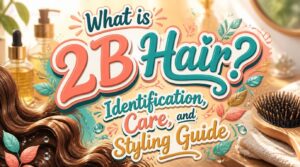
Your roots lie flat against your scalp, but by the time you reach your ears, everything bends into loose, easy waves. That contrast trips up a lot of people at the mirror. They see limp volume up top and assume their hair "isn’t wavy enough" to count.
Here’s the truth: that flat-to-wavy shift is the whole point. It’s the defining trait of 2B hair, one of the most common (and most misunderstood) wave patterns out there. Get the classification wrong, and you’ll spend months using products built for tighter curls or straighter strands, wondering why nothing sets right.
Once you know what’s actually happening at the strand level, styling stops feeling like guesswork.
Table Of Contents
- Key Takeaways
- What is 2B Hair? Characteristics and Identification
- 2A Vs. 2B Vs. 2C Hair
- How to Care for 2B Hair
- How to Style 2B Hair
- Top 4 Products for 2B Hair
- Frequently Asked Questions (FAQs)
- How do I know if my hair is 2B?
- Why is 2B hair so hard to maintain?
- Does 2B hair get frizzy?
- What does 2B and 2c hair look like?
- What products are best for 2B hair?
- What are the pros and cons of having 2B hair?
- What are the best styles for 2B hair?
- What does 2B hair look like?
- Do I have 2B or 2C hair?
- What does 2B hair look like for a female?
- Conclusion
Key Takeaways
- 2B hair’s defining trait is flat roots that give way to loose S-shaped waves starting mid-shaft, so that root volume gap is normal, not a styling failure.
- Medium strand thickness (about 0.04-0.08mm) sits between fine 2A and coarse 2C, giving you flexible waves that hold shape without collapsing.
- Frizz is the built-in trade-off of 2B’s defined waves, since lifted cuticles let humidity swell the cortex, so fighting it means layering lightweight leave-ins, anti-frizz serum, and humidity-resistant styling products.
- Getting your wave pattern right—and following it with proper porosity checks, gentle detangling, and techniques like scrunching and plopping—turns styling from guesswork into a routine that actually works with your hair instead of against it.
Because roots and ends behave so differently, this 2B hair care routine tackles both zones separately instead of forcing a one-size-fits-all approach.
What is 2B Hair? Characteristics and Identification
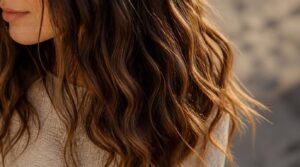
2B hair sits right in the middle of the wavy spectrum, and once you know what to look for, it’s easy to spot. Roots stay flat while the real action happens further down the strand, giving you that beachy, lived-in look. Here’s what actually separates 2B from its wavy cousins.
If your waves seem to start higher up with less definition near the scalp, you might actually be dealing with the subtler curl pattern of 2A hair instead.
Defined S-Shaped Waves
True S-shaped waves curve smoothly from crest to crest, tightening slightly at the mid-length before loosening toward the ends. That waist is the giveaway. Wave segments run about 1-2 inches each, and strand thickness (medium, not fine) keeps the curve from collapsing.
Using clearly defined hair terms can also make it easier to tell 2B apart from flatter 2A waves or more pronounced 2C bends.
Elasticity matters too: healthy strands rebound after stretching, which is exactly what holds that S intact wash after wash.
Flat Roots and Wavy Lengths
Flat roots aren’t a flaw, they’re just how 2B grows: scalp-hugging at the crown, waves kicking in mid-shaft.
That gap creates root lift challenges but great mid-shaft volume.
- Root area stays smooth, low-lift
- Wave activation window starts mid-length
- Length definition builds toward ends, tapering slightly
Porosity affects how evenly moisture travels, so a lightweight conditioner keeps waves defined without weighing roots flat.
Medium Strand Thickness
Medium strand thickness puts you right between fine and coarse, roughly 0.04 to 0.08mm in diameter. That balance gives you strand flexibility without flimsiness, so waves hold shape instead of collapsing.
Moisture absorption rate stays moderate too. Skip heavy creams; a lightweight conditioner helps curl definition retention without flattening your hair texture balance or overloading mid-shaft waves.
Frizz and Shrinkage
Frizz is the trade-off for that mid-shaft wave definition: lifted cuticles let humidity swell the cortex. Expect about an inch of shrinkage when dry.
Fight back with:
- Anti-frizz serum (hydrophobic barrier)
- Microfiber towel drying
- Silk pillowcase, less friction
- Leave-in conditioner, cuticle smoothing
- Clarifying wash, removes build-up
Signs You Have 2B Hair
Not sure which category you fall into? Run the wet-to-dry test: wash, skip product, and air-dry.
| Signal | 2B Trait |
|---|---|
| Roots | Flat, minimal lift |
| Mid-lengths | S-shaped waves start here |
| Ends/dry hair | Frizz-prone, ~1" shrinkage |
Scrunching releases waves easily, that’s your tell.
2A Vs. 2B Vs. 2C Hair
Wavy hair isn’t one-size-fits-all, and the 2A-2B-2C spectrum proves it. Each type behaves differently at the root, along the strand, and when frizz shows up uninvited. Here’s how to spot exactly where your waves land.
If your waves lean high porosity, picking the right products gets trickier, since even humectants like glycerin can backfire—this guide on preventing frizz in high porosity hair breaks down what actually works.
Wave Pattern Differences
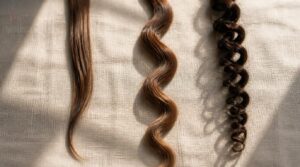
Wave shape tells the whole story here. 2A barely bends past the mid-shaft, 2B forms true S-shaped waves with consistent spacing, and 2C corkscrews from the root.
| Type | Wave Onset | Amplitude |
|---|---|---|
| 2A | Lower length | Slight |
| 2B | Mid-shaft | Moderate |
| 2C | Near root | Pronounced |
Root wave depth stays shallow in 2B, so that flat-crown, wavy-ends look is normal, not a styling failure.
Texture and Strand Thickness
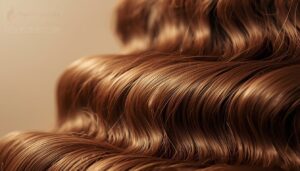
Strand diameter is the real dividing line: 2A runs finer, 2B sits around 0.04-0.08mm, and 2C gets coarser still.
| Type | Strand Thickness |
|---|---|
| 2A | Fine |
| 2B | Medium |
| 2C | Coarse |
That medium thickness gives 2B better frizz resistance than 2A once moisture’s balanced, and enough elasticity for clumping without weight.
Root Volume Comparison
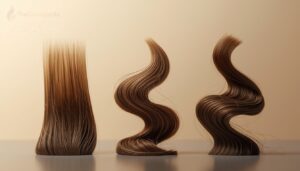
Root lift is where these three types split hardest. 2A roots stay flattest, 2B sits between (root density runs 20-40% denser than midshaft, so lift needs help), and 2C roots resist flattening most.
| Type | Root Lift |
|---|---|
| 2A | Minimal |
| 2B | Moderate |
| 2C | Strong |
Humidity flattens 2B roots up to 15%. Lightweight leave-ins, root clipping, and clarifying scalp cleanses recover that volume fast.
Frizz and Styling Needs

Frizz hits 2B hardest: medium strands plus a defined wave means more cuticle surface for humidity to invade, swelling hair up to 60% in muggy climates.
| Type | Frizz Risk |
|---|---|
| 2A | Low |
| 2B | Moderate-High |
| 2C | High |
Fight it with lightweight leave-ins, humidity-resistant gel for a light cast, and scalp refreshes between washes to protect definition overnight.
Mixed Wavy Hair Patterns
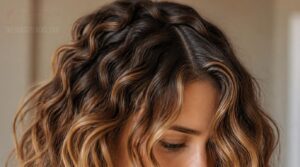
Your head might not read as one clean type: mixed wavy hair patterns are common, with looser 2a-like waves up front and tighter 2b S-shaped waves at the crown.
| Zone | Typical Pattern |
|---|---|
| Crown | Tighter 2B |
| Sides | Looser 2A |
| Ends | Varies by porosity |
Follicle shape drives this texture zone variation, so treat each section on its own terms for real frizz control.
How to Care for 2B Hair
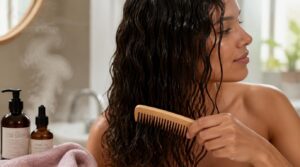
2B hair rewards the right routine and punishes the wrong one, fast. Get the basics wrong—cleansing, moisture, detangling—and frizz wins every time. Here’s what actually keeps those waves defined, day after day.
Cleansing and Conditioning Routine
Wash smart, not often: sulfate-free shampoo twice weekly, co-washing on off days, keeps waves hydrated without stripping. Deep condition weekly with a protein mask for definition, follow with a lightweight conditioner from mid-length down. Squish-to-condish, avoid roots.
Clarifying shampoo monthly clears buildup. This routine builds the foundation for reading your hair’s porosity next.
Porosity and Moisture Balance
Once buildup’s cleared, check porosity (how well hair absorbs and holds moisture): high porosity 2B soaks up product fast but dries out just as quick, while low porosity resists it entirely.
Layer light to heavy: leave-in, then oil, then cream seals the cuticle and locks in hydration.
- Sinks in water: high porosity
- Floats: low porosity
- Greasy roots, dry ends: high porosity
- Slow to dry: low porosity
Gentle Wet Detangling
With porosity sorted, tackle the tangles before they turn into breakage.
Detangle wet hair with conditioner still in, using a wide tooth comb section by section, starting at the ends. Rinse with cool water to seal cuticles, then dry with a microfiber towel. Gentle handling here protects every wave you just hydrated.
Frizz and Humidity Control
Detangling protects the wave, but humidity is what wrecks it. Anti-humectant agents like beeswax and silicones block moisture vapor from swelling the cuticle (that’s frizz). Reach for humidity-resistant styling creams or an anti-frizz serum, smoothed on damp lengths, for up to 12 hours of protection. Skip glycerin-heavy leave-ins on muggy days.
Cuticle sealing keeps waves defined, not puffy.
Overnight Wave Protection
Nightly, your waves fight friction, not just gravity.
- Silk hair wrap over the crown
- Satin pillowcase to cut drag
- Low humidity bedroom setting
- Pre-sleep conditioning for cuticle sealing
Loose pineapple, don’t clamp. Come morning, scrunch out the crunch instead of brushing.
How to Style 2B Hair
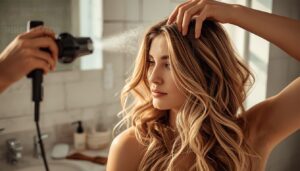
Once your cleansing and detangling routine is dialed in, the real magic happens in how you apply product and dry.
2B waves respond fast to technique—small changes in hand movement or airflow can mean the difference between limp strands and bouncy definition.
Here are four techniques worth adding to your routine.
Praying Hands and Scrunching
Your hands are the styling tool that matters most. Press palms together, fingers extended, and glide product downward for even coverage, no buildup, no missed sections.
Then cup damp hair and scrunch upward toward the scalp. This compresses waves, boosts definition, and controls frizz without disturbing that delicate S-shape you’re working to preserve.
Plopping for Defined Waves
Once you’ve scrunched, grab a microfiber towel (or an old t-shirt) and cradle your ends inside it, gathering hair upward toward your scalp for 10 to 20 minutes. This constrains length while lifting roots, amplifying that S-shape you just built.
Result: smoother tops, less frizz, and way less finger-combing once you unwrap.
Air-Drying and Diffusing
Heat or no heat, the rules change: air drying takes longer but skips cuticle stress, while diffusing on low-medium heat cuts drying time and locks waves faster.
Cup sections upward as you diffuse, keep it moving, and let hair cool before touching, that’s what sets the pattern instead of collapsing it into frizz.
Boosting Flat Root Volume
Flat roots on 2B hair? Usually a weight problem, not a texture one.
Flat roots on 2B hair are usually a weight problem, not a texture one
- Apply root lift spray to damp roots before drying
- Use fingertip scalp massage to boost circulation
- Work volumizing mousse through roots, not lengths
- Diffuse upside-down for lasting lift
Skip heavy creams. Weekly clarifying washes prevent buildup that flattens fine, wavy roots fast.
Top 4 Products for 2B Hair
The right products can make or break your wave pattern, especially with hair this prone to frizz and weigh-down. You don’t need a ten-step routine, just a few formulas that actually work with 2B’s medium texture. Here are four worth adding to your shower shelf.
1. SheaMoisture Coconut Hibiscus Curl Shampoo
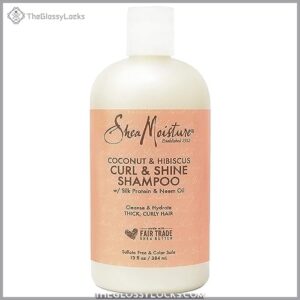
Coconut oil and hibiscus aren’t just a nice scent, they’re doing real work on 2B waves. The sulfate-free formula cleanses without stripping natural oils, while shea butter improves elasticity and cuts breakage at the ends.
Fair warning: some clients find it slow to rinse, and a few report greasy roots after use. If your waves lean fine, use less product near the scalp to keep that root lift intact.
| Best For | People with fine to medium 2B wavy hair looking for a sulfate-free shampoo that boosts curl definition and controls frizz without weighing hair down. |
|---|---|
| Sulfate-Free | Yes |
| Hair Type | Fine to medium 2B wavy |
| Frizz Control | Yes |
| Color-Treated Safe | Yes |
| Key Ingredient | Coconut oil, hibiscus |
| Product Format | Shampoo |
| Additional Features |
|
- Sulfate-free, paraben-free formula cleanses gently without stripping natural oils
- Shea butter and neem oil improve elasticity and help reduce breakage
- Gentle enough for daily use and safe on color-treated hair
- Can take a while to rinse out completely
- Some users notice greasy or oily roots after use, especially with finer hair
- Mixed reviews on long-term hair health effects, so results may vary
2. Moroccanoil Moisture Shine Conditioner
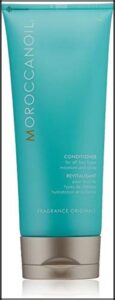
Where SheaMoisture treats your ends, Moroccanoil controls daily hydration. This lightweight daily conditioner leans on argan oil to seal moisture into the shaft without any heaviness, plus glycerin (a humectant that pulls water into the strand) for lasting softness.
Apply mid-lengths to ends, focusing where waves form. It rinses clean, leaves natural bounce, and works well on color-treated hair. One catch: the fragrance is strong, so skip it if you’re scent-sensitive.
| Best For | People with color-treated, wavy, or normal-to-dry hair who want a lightweight daily conditioner rather than a heavy treatment. |
|---|---|
| Sulfate-Free | Not specified |
| Hair Type | Wavy, color-treated |
| Frizz Control | Yes |
| Color-Treated Safe | Yes |
| Key Ingredient | Argan oil, glycerin |
| Product Format | Conditioner |
| Additional Features |
|
- Uses argan oil to seal in moisture without weighing hair down
- Contains glycerin to help lock in lasting softness and bounce
- Safe for color-treated hair and rinses out cleanly
- Fragrance is quite strong, which may bother scent-sensitive users
- Not intended as a deep-conditioning treatment for very damaged hair
- Best results require focused application on mid-lengths to ends rather than all-over use
3. DevaCurl Green Oasis Moisture Mask
When your waves need more than a quick rinse-out conditioner, reach for this jar. Green Oasis is a deep treatment mask, not a daily step, built to hydrate curls that have gone dry or brittle.
Soak your hair first, then apply generously and leave it 15-20 minutes (cap on for extra penetration, or overnight if your waves are especially thirsty). It’s sulfate-free, so it won’t strip the wave pattern it’s trying to restore. Expect softer, more elastic strands and less frizz once humidity hits.
| Best For | People with curly or wavy hair (including 3C/4a and fine, breakage-prone types) who need an occasional deep-conditioning treatment for dry, brittle, or frizzy strands. |
|---|---|
| Sulfate-Free | Yes |
| Hair Type | Curly/wavy 3C/4a, fine |
| Frizz Control | Yes |
| Color-Treated Safe | Not specified |
| Key Ingredient | Deep moisture blend |
| Product Format | Mask treatment |
| Additional Features |
|
- Thick, creamy formula means a little goes a long way
- Delivers noticeably softer, more defined curls with reduced frizz
- Works as a versatile treatment, even offering silky results on straight hair
- Requires a 15-20 minute wait, making it less convenient for quick routines
- Some users report a straw-like feel instead of the promised moisture
- Higher price point that some don’t feel matches the results
4. Bumble and Bumble Curl Defining Creme
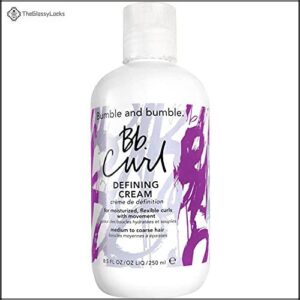
Once your mask has restored moisture, seal it in with something that shapes, not just softens.
Bumble and Bumble Curl Defining Creme uses UV inhibitors and botanical oils for sleek, non-crunchy definition. Emulsify a dollop in damp hair, mid-shaft to ends, then diffuse.
Reviewers love the shine, though some find the scent or price a dealbreaker.
| Best For | curly-haired people who want frizz control and defined, non-crunchy curls without weighing hair down. |
|---|---|
| Sulfate-Free | Not specified |
| Hair Type | Curly, damp/diffuser |
| Frizz Control | Yes |
| Color-Treated Safe | Not specified |
| Key Ingredient | UV inhibitors |
| Product Format | Styling product |
| Additional Features |
|
- Shields hair from sun damage with built-in UV inhibitors
- Leaves curls soft, shiny, and well-defined without a stiff or waxy feel
- Works great on damp hair, whether you’re air-drying or diffusing
- Some users feel it’s not worth the price
- Scent isn’t a hit with everyone
- A few people notice their hair feels oilier or flatter the next day
Frequently Asked Questions (FAQs)
How do I know if my hair is 2B?
Skip the products and air-dry clean hair. If you see a distinct S-bend forming around the ears or mid-shaft, with flat roots and about an inch of shrinkage, that’s your answer.
Why is 2B hair so hard to maintain?
Funny enough, the same wave that gives you easy volume is what makes upkeep tricky: flat roots meet defined ends, so moisture, product weight, and frizz all shift unevenly across one head of hair.
Does 2B hair get frizzy?
Yes, especially at the crown. Lifted cuticles absorb humidity unevenly, breaking wave alignment where definition is weakest, mid-lengths and ends. It’s manageable, not avoidable, so plan your routine around moisture control rather than expecting zero frizz.
What does 2B and 2c hair look like?
Picture two waves duking it out: 2B lies flatter at the root with looser S-bends lower down, while 2C springs up fuller at the crown with tighter, ringlet-like coils and noticeably more texture throughout.
What products are best for 2B hair?
Look for sulfate-free, moisture-rich formulas: lightweight shampoo, silicone-free conditioner, curl creams, and leave-ins with glycerin. Weekly masks restore hydration; volumizing mousse lifts flat roots without weighing down your natural wave pattern.
What are the pros and cons of having 2B hair?
Nearly half of us land in wavy territory, and 2B is the sweet spot: natural volume, easy beachy texture, low heat-styling needs. The trade-off? Humidity-triggered frizz and root dryness that demand the right products to keep waves defined, not flat.
What are the best styles for 2B hair?
Want waves that actually hold up all day? Round layers landing between jaw and shoulder boost your S-shaped pattern while adding lift. Soft, graduated bobs create fullness at the crown without dragging down your natural texture.
What does 2B hair look like?
Your waves stay flat at the root, then kick in around mid-shaft as loose, S-shaped bends that loosen further down. Medium-thickness strands, visible shine, and mild frizz in humidity round out the look, no tight curls, just relaxed movement.
Do I have 2B or 2C hair?
Check your roots first: 2B stays flat at the scalp with waves kicking in mid-shaft, while 2C curls right from the crown, tighter and more defined the whole way down.
What does 2B hair look like for a female?
Picture a lazy ribbon: flat at the roots, then curling into loose S-bends by mid-shaft. Your 2B waves thicken toward the ends, carry visible volume, and frizz easily in humidity, giving that tousled, just-left-the-beach texture.
Conclusion
Roughly seven in ten wavy-haired people misjudge their pattern, reaching for products built for curls they don’t have. That’s the real answer to what’s 2b hair: a strand that starts flat and builds into gentle S-bends by the mid-lengths.
Once you feed that root-to-end shift the right moisture and technique, waves stop fighting you. Your hair was never uncooperative. It was just waiting for the right instructions.