This site is supported by our readers. We may earn a commission, at no cost to you, if you purchase through links.
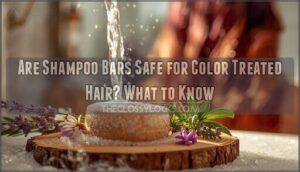
Your freshly colored hair looks stunning when you leave the salon, but keeping that vibrancy alive means rethinking your entire wash routine. Traditional liquid shampoos can strip color molecules from your hair shaft with every lather, shortening the lifespan of your investment by weeks.
Shampoo bars have gained traction as an eco-friendly alternative, yet many color-treated clients hesitate, unsure whether these compact cleansers will protect or sabotage their dye. The answer hinges on formulation rather than format. pH levels, surfactant types, and specific ingredients determine whether a shampoo bar becomes your color’s best ally or its worst enemy.
Understanding what separates color-safe bars from those that accelerate fading helps you make informed choices that extend your salon results.
Table Of Contents
- Key Takeaways
- Are Shampoo Bars Safe for Color Treated Hair
- Why Hair Color Fades After Washing
- Key Ingredients to Look for in Shampoo Bars
- Ingredients to Avoid in Shampoo Bars
- Choosing The Right Shampoo Bar for Colored Hair
- How to Use Shampoo Bars on Color Treated Hair
- Benefits of Shampoo Bars for Colored Hair
- Tips for Maintaining Color With Shampoo Bars
- Top Shampoo Bars for Color Treated Hair
- Common Myths About Shampoo Bars and Color Safety
- Frequently Asked Questions (FAQs)
- Conclusion
Key Takeaways
- Shampoo bars can be safe for color-treated hair if they’re formulated with pH levels between 4.5 and 5.5 and use gentle, sulfate-free surfactants like sodium cocoyl isethionate instead of harsh cleansers that strip pigment from your hair shaft.
- The format (bar versus liquid) doesn’t determine color safety—what matters is the surfactant type, pH balance, and how you use the product, including water temperature, lathering technique, and washing frequency.
- Washing color-treated hair more than two to three times per week can accelerate color fading by up to 50%, while hot water opens the cuticle and lets dye molecules escape faster than lukewarm or cool water.
- Avoid soap-based bars with pH above 9, sulfates, and heavy oils that cause buildup, and look instead for bars containing nourishing ingredients like panthenol, hydrolyzed proteins, and UV protectants that extend color longevity by up to 30%.
Are Shampoo Bars Safe for Color Treated Hair
Shampoo bars can be safe for color-treated hair, but the answer depends on what’s inside the bar and how you use it. The right formulation won’t strip your color any faster than a liquid shampoo, while the wrong one can leave you with faded, dull hair.
Let’s look at what you need to think about before making the switch.
Key Considerations for Colored Hair
After coloring, your hair’s cuticle lifts and becomes more porous—sometimes by 30%—which means color molecules can wash out more easily. That’s why pH balance matters: shampoo bars formulated around 4.5–5.5 help keep cuticles sealed and minimize color fading.
Gentle cleansers protect moisture retention and reduce cuticle damage, so you’ll hold onto vibrancy longer between salon visits. Using soap-free shampoo bars is also recommended to maintain the hair’s natural pH.
Potential Risks and Safety Factors
Several factors can compromise your color when using shampoo bars. Sulfates strip away pigment, causing fading up to 30% faster than sulfate-free options. High pH levels—sometimes spiking to 8.5 during lathering—open cuticles and release color molecules. Rubbing the bar directly on your hair creates friction that lifts cuticles, increasing damage. Daily washing accelerates fading by 50% compared to twice-weekly routines.
Many users prefer shampoo bars with natural plant-derived oils for their moisturizing properties.
How Shampoo Bars Interact With Hair Dye
When you wash, water and surfactants penetrate deep into your hair cortex, physically dissolving dye molecules from inside the shaft. Surfactant color fading happens because cleansers mobilize pigments, pulling them out with each rinse.
pH cuticle lifting compounds the problem—alkaline formulas swell the outer layer, creating exit routes for color. Mechanical friction from rubbing bars directly on strands accelerates this loss.
Water exposure alone strips pigment, even without shampoo.
Why Hair Color Fades After Washing
You’ve invested time and money into your color, so it’s frustrating when it fades faster than expected. The truth is, washing your hair sets off a chain reaction that can pull those dye molecules right out of the hair shaft.
Washing your hair triggers a chain reaction that pulls dye molecules straight out of the shaft, undoing your color investment faster than you’d expect
Three main culprits drive this color loss: the cleansing agents in your shampoo, the water you’re using, and how often you’re washing.
Role of Surfactants in Color Loss
Think of surfactants as the cleanup crew in your shampoo bar—some are gentler than others. Sulfates and harsh anionic surfactants pull color molecules right out of your hair shaft, causing noticeable fading.
Amphoteric and nonionic performance surfactants offer gentler cleansing without the color-stripping damage.
When shopping for colored hair protection, you’ll want gentle surfactants for hair that prioritize color fading prevention over aggressive cleaning power.
Impact of Water Temperature and PH
Hot water lifts your hair cuticle like opening a door, allowing color molecules to escape—studies show this can accelerate color fading by up to 50%. High pH levels above 9 cause similar cuticle damage, and mineral deposits from hard water make things worse.
For color-treated hair, lukewarm water and pH-balanced shampoo bars around 4.5-5.5 seal the cuticle, protecting your investment in hair color.
Frequency of Washing and Color Retention
Every time you lather up, you’re literally washing away tiny bits of hair color—professional colorists recommend just 2–3 washes per week to slow that fading. Daily shampooing can increase color loss by roughly 50% compared to spacing out your routine.
Here’s what wash frequency means for color-treated hair:
- More washes strip more dye molecules along with dirt and oil
- Cuticle condition deteriorates with repeated surfactant exposure and drying
- Strategic spacing between cleansing methods preserves hair color longevity
Key Ingredients to Look for in Shampoo Bars
Not all shampoo bars are created equal, and the ingredients matter more than you might think when you’re protecting colored hair. You’ll want to focus on formulas that clean gently without stripping away the color molecules you worked hard to deposit in your hair shaft.
Here are the key ingredients that help preserve your color while keeping your hair healthy.
Gentle, Sulfate-free Surfactants
Your shampoo bar’s surfactant lineup makes or breaks color longevity—sulfate-free benefits are real. Look for Sodium Cocoyl Isethionate (SCI), a coconut-derived cleanser that’s gentle yet effective, used safely up to 50% concentration in rinse-off products. Coco Glucoside and Decyl Glucoside deliver glucoside mildness while maintaining foam and moisture retention. These alternative surfactants reduce color fading by nearly 48% compared to traditional sulfates.
| Surfactant | Key Benefit |
|---|---|
| Sodium Cocoyl Isethionate | Gentle cleansing without stripping |
| Coco Glucoside | Maintains hair moisture |
| Decyl Glucoside | Biodegradable, sensitive-skin safe |
Nourishing Oils and Butters
Plant oils and butters do more than coat your hair—they actually work inside the shaft. Argan, coconut, and avocado oils penetrate chemically treated fibers, while shea and cupuaçu butters seal the cuticle and reduce protein loss by up to 80% when applied before coloring. Together, they replenish depleted lipids, lock in moisture, and keep dye molecules from washing out prematurely.
Look for bars combining:
- Argan oil for penetration and shine
- Shea butter for cuticle sealing
- Coconut oil to minimize breakage
- Cupuaçu butter for elasticity and strength
Panthenol, Hydrolyzed Proteins, and UV Protectants
Think of these three as your color’s personal bodyguards. Panthenol penetrates your hair shaft, sealing the cuticle and extending color by 1–2 weeks. Hydrolyzed proteins—especially quinoa—cut washout by 14% after fifteen washes, while UV protectants like benzophenone-3 absorb 40% of damaging rays. Together, they form a protective barrier that can extend dye life by up to 30%.
| Ingredient | Primary Benefit | Measured Effect |
|---|---|---|
| Panthenol | Strengthens and seals | +25% tensile strength |
| Hydrolyzed Quinoa Protein | Reduces color washout | 14% retention boost |
| Benzophenone-3 (UV) | Blocks sun damage | 40% UV absorption |
| Silanetriol + Panthenol | Minimizes protein loss | Third-lowest loss rate |
| Combined Formula | Extends color longevity | Up to 30% longer |
Ingredients to Avoid in Shampoo Bars
Not all ingredients play nicely with colored hair, and some can actually speed up fading or cause other problems. Knowing what to steer clear of helps you protect your investment in your color and keeps your hair looking vibrant longer.
Here are the main culprits you’ll want to avoid when shopping for a shampoo bar.
Sulfates and Harsh Anionic Surfactants
Strong sulfates like SLS and SLES are notorious offenders for colored hair. These harsh surfactants lift your hair’s cuticle, causing protein loss and stripping away those precious dye molecules you paid good money for.
Look for sulfate-free shampoo bars with gentler anionic strength to prevent cuticle disruption. Residue effects from poorly rinsed sulfates continue damaging your color long after washing, so choose sulfate alternatives designed for hair color protection.
High-pH or Alkaline Additives
Beyond sulfates, your hair color’s biggest enemy might be hiding in the pH balance. Alkaline shampoos with high pH levels—often found in traditional soap-based bars—lift your cuticle and accelerate color fading dramatically.
Human hair thrives around pH 4.5 to 5.5, but many natural bars sit closer to pH 9 or 10. That alkaline environment strips artificial pigments faster, leaving you with dull, faded color and increased cuticle damage between salon visits.
Heavy Oils Causing Buildup on Colored Hair
While alkaline pH opens the cuticle, heavy oils create their own problem—persistent film buildup. Dense oils like mineral oil and castor oil accumulate on your hair shaft, reducing the light reflection that makes color appear vibrant.
This oil film interferes with future dye penetration and attracts pollution that dulls your color. Worse, removing heavy oil buildup requires stronger surfactants that strip artificial pigments faster, creating a vicious cycle of hair product buildup and accelerated hair color fading.
Choosing The Right Shampoo Bar for Colored Hair
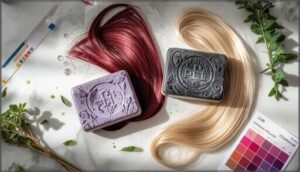
Not all shampoo bars are created equal, and the right one for your colored hair depends on more than just what’s on the label. You need to understand what pH-balanced really means and how to spot genuinely color-safe products among the marketing claims.
Let’s break down the two most important factors that’ll help you choose a shampoo bar that actually protects your color investment.
Importance of PH-balanced Formulas
Your hair color’s survival depends on pH balance for hair—the chemical environment surrounding each strand. Hair and scalp naturally sit around pH 4.5–5.5, so pH-balanced hair formulas in that range keep cuticle integrity intact.
Alkaline soaps above pH 8, however, lift cuticle scales and accelerate fading. Look for shampoo bars for color-treated hair with balanced cleansers near that natural zone, not high-pH formulas that strip pigment faster.
Identifying Color-safe Product Labels
Once you’ve confirmed pH balance, scrutinize the label’s claims. In the US and EU, cosmetic regulations require full ingredient lists, but “color-safe” or “color protection” terms aren’t standardized—brands can use them without official testing.
Here’s what to look for:
- Sulfate-free claims alongside INCI names like sodium cocoyl isethionate
- Explicit “for color-treated hair” paired with balanced pH near 4.5–5.5
- Front-pack callouts mentioning UV filters or antioxidants
- Ingredient scrutiny of the first five ingredients for gentle cleansers, not harsh anionic sulfates
How to Use Shampoo Bars on Color Treated Hair
Using a shampoo bar on color-treated hair isn’t complicated, but technique matters more than you might think. The way you lather, rinse, and finish your wash can make the difference between vibrant color that lasts and fading that happens faster than it should.
Let’s walk through the essential steps to protect your investment in that gorgeous shade.
Proper Lathering and Application Techniques
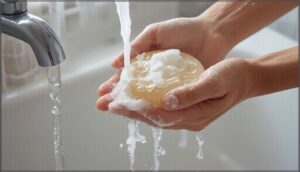
When you use shampoo bars on color-treated hair, you need a smart hair washing technique. Start by working the bar between wet hands to create lather before applying it—this hair cleansing method minimizes friction on fragile dye molecules.
Apply lather distribution directly to your scalp first, not your lengths, and keep controlled contact brief. Scalp-first application protects your mid-lengths from overexposure to surfactants.
Pre-lathering benefits include gentler cuticle handling and better rinse sequencing.
Water Temperature Best Practices
Hot water might feel comforting, but it’s your hair color’s worst enemy—it opens the cuticle, letting dye molecules escape and accelerating fading by up to 30%.
Stick with cool or lukewarm water during your entire wash routine to seal the cuticle and lock in pigment.
This simple shift reduces thermal damage, controls hair porosity, and keeps your color-treated hair vibrant longer.
Rinsing and Aftercare Steps
After lathering, extend your rinse duration to fully remove residue—incomplete rinsing leaves a film that dulls color-treated hair and accelerates color fade.
Follow immediately with conditioner application to lock in hair moisture and smooth the cuticle. Consider a pH-balancing apple cider vinegar rinse to seal color molecules, then apply heat protection before styling.
These hair care steps form the backbone of effective hair color protection.
Benefits of Shampoo Bars for Colored Hair
Shampoo bars designed for color-treated hair offer several advantages beyond simply keeping your shade intact. When formulated with the right ingredients, they can actually support both your color and your hair’s overall health.
Here’s what makes them worth considering if you’ve recently dyed your hair.
Gentle Cleansing Action
Sulfate-free formulas in quality shampoo bars for colored hair deliver a gentle cleanse that respects your hair lipids instead of stripping them away. When you choose bars built with gentle surfactants for hair—like sodium cocoyl isethionate—and proper pH balance around 4.5–5.5, you’re working with product design that protects color-treated hair’s moisture impact.
This means less dryness and breakage while you maintain your shade through everyday hair color maintenance.
Enhanced Color Longevity
When you switch to pH-balanced shampoo bars designed for color protection, you’re extending your shade’s salon-fresh vibrancy by weeks. Surfactant gentleness preserves up to 92% of your initial color after ten washes, while protective ingredients like rice protein and panthenol lock pigment molecules inside the hair shaft.
With less frequent washing—two to three times weekly—your hair color maintenance becomes simpler, and comparative longevity studies show these bars outperform many liquids for color-treated hair care.
Eco-friendly and Sustainable Advantages
Beyond protecting your color, shampoo bars deliver measurable environmental wins that align personal care with planetary health. Each concentrated bar replaces two to three plastic bottles, directly cutting the 552 million bottles Americans discard annually.
Your switch aids sustainable beauty through:
- Plastic waste reduction – eliminates multilayer packaging and ocean-bound debris
- Water use reduction – waterless formulas skip the 60–80% filler in liquids
- Carbon emission reduction – lightweight bars lower transport fuel and greenhouse gases
- Zero-waste shift – minimal cardboard sleeves replace pump bottles
Natural ingredients and eco-friendly packaging make shampoo bars a practical, low-impact choice for color-treated hair.
Tips for Maintaining Color With Shampoo Bars
Switching to a shampoo bar is only half the battle when it comes to preserving your color. How you use it, how often you wash, and what you pair it with all make a real difference in how long your shade stays vibrant.
Here are three practical strategies that will help you get the most out of your color-treated hair while using shampoo bars.
Reducing Wash Frequency
Washing your hair less often is one of the most powerful ways to stretch your color’s vibrancy. Each shampoo session strips a fraction of deposited pigment, so cutting back to two or three times weekly can double the days before fading becomes noticeable.
A gradual shift helps your scalp adapt, balancing microbiome health with protective measures that keep color-treated hair looking fresh longer.
Using Cool or Lukewarm Water
Temperature makes a bigger difference than most people realize—hot water swells the cuticle and lets dye molecules escape. Lukewarm or cool rinses around 36–38°C keep your hair shaft sealed, slowing pigment washout and reducing fiber damage.
For color-treated hair, practical guidelines suggest:
- Avoid steam-producing heat during rinsing
- Use cool water for final rinse only
- Balance scalp efficacy with cuticle protection
- Limit heat exposure after washing
This simple shift helps maintain dye retention between color services.
Pairing With Color-safe Conditioners
After adjusting water temperature, pairing your shampoo bar with a pH-balanced conditioner completes the protection your color-treated hair needs.
Color-safe conditioners restore moisture, smooth lifted cuticles, and reduce friction that chips away pigment during combing.
Sulfate-free shampoos paired with cationic polymers in conditioner bars deliver up to 50% better color retention. Ingredient strategies like Polyquaternium-55 create a protective film that locks dye molecules inside and keeps vibrancy lasting longer between salon visits.
Top Shampoo Bars for Color Treated Hair
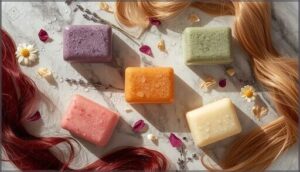
Once you know what to look for in a color-safe shampoo bar, the next step is finding products that actually deliver. Not every bar on the market is formulated with color-treated hair in mind, so it helps to start with options that have proven gentle, sulfate-free formulas.
Here are five shampoo bars that work well for preserving your color while keeping your hair clean and healthy.
1. Coconut Argan Oil Shampoo Bar
If you’re looking for a bar that pairs rich nourishment with color safety, the Coconut Argan Oil Shampoo Bar delivers both in one compact package. This sulfate-free formula—combining coconut oil, argan oil, and shea butter—hydrates color-treated hair while keeping artificial pigments intact.
Marketed as pH balanced at 7.2, it’s a gentler alternative to high-pH soap bars, though ideal pH for colored hair sits closer to 5.5.
User experience varies: some find it moisturizing and long-lasting, while others note buildup or insufficient lather. For color safety and hair nourishment, it’s a solid contender.
Best For: Anyone with color-treated or naturally dry hair who wants a sulfate-free, eco-friendly bar that moisturizes without harsh stripping.
- Sulfate-free formula with argan and coconut oil helps keep color from fading while adding moisture and shine
- Long-lasting bar equals about 24 oz of liquid shampoo, making it economical and plastic-free
- Gentle enough for daily use on permed, colored, or curly hair without irritating sensitive scalps
- PH of 7.2 is higher than the ideal 4.5–5.5 range for minimizing frizz and color loss in dyed hair
- Some users report buildup, greasiness, or not enough lather depending on their hair type
- Can be pricier than drugstore options, especially outside the U.S.
2. Faith In Nature Coconut Shampoo Bar
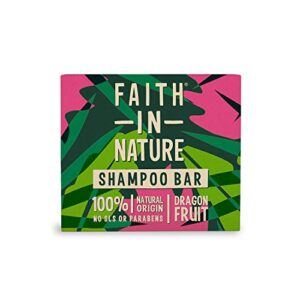
Faith in Nature Coconut Shampoo Bar trades harsh sulfates for sodium cocoyl isethionate and cocamidopropyl betaine—milder surfactants that respect scalp pH and won’t strip dye molecules the way SLS would.
With coconut oil and shea butter as primary emollients, it’s formulated for normal to dry hair and arrives in 100% recycled cardboard, meeting packaging sustainability goals.
The ingredient biodegradability hits 99%, and the brand’s Vegan Society approval confirms its market positioning in ethical haircare.
While not explicitly labeled color-safe, its surfactant mildness makes it a promising choice for color-treated hair when used with cool water and strand testing.
Best For: People with normal to dry hair who want a travel-friendly, zero-waste shampoo bar that’s gentle on color-treated hair and made with natural, vegan ingredients.
- Uses mild, sulfate-free surfactants (sodium cocoyl isethionate and cocamidopropyl betaine) that are less likely to strip hair color compared to traditional SLS shampoos
- Contains hydrating coconut oil and shea butter to nourish dry hair, plus comes in 100% recycled and recyclable cardboard packaging for eco-conscious buyers
- Vegan Society approved, cruelty-free, and made with 99% biodegradable ingredients, ticking all the boxes for ethical haircare
- Not explicitly labeled as color-safe, so you’ll want to do a strand test first if you have dyed hair to see how your specific color holds up
- Some users report the bar disintegrates faster than expected and can be tricky to lather, especially if you’re new to shampoo bars
- At 3 oz, it’s smaller than some competing bars for the price, and might not work well for very curly or frizzy hair without extra conditioning products
3. Faith in Nature Dragon Fruit Bar
Dragon fruit extract brings antioxidant power to this 85 g bar, while sodium cocoyl isethionate and disodium lauryl sulfosuccinate deliver Surfactant Mildness that won’t ravage Color-Treated Hair the way SLS does.
Faith in Nature formulates without parabens or synthetic dyes, earning Ethical Aspects praise and an Ethical Consumer Best Buy nod.
Consumer Feedback notes effective lathering, even in hard water. Though labeled for all hair types rather than color-safe specifically, its gentle anionic system aids Color Protection when you pair it with cool rinses and strand testing.
Best For: People with color-treated hair who want a plastic-free, sulfate-free shampoo bar that cleanses gently without stripping dye, especially if you value ethical sourcing and biodegradable ingredients.
- Uses mild surfactants (sodium cocoyl isethionate and disodium lauryl sulfosuccinate) instead of harsh SLS, which helps protect hair color from fading quickly.
- Completely plastic-free with 100% recycled cardboard packaging, plus it’s vegan, cruelty-free, and rated an Ethical Consumer Best Buy.
- Lathers well even in hard water and contains dragon fruit extract for antioxidant benefits, keeping hair clean without feeling stripped.
- Not specifically marketed for color-treated hair, so you’ll need to test it on a strand first and use cool water to get the best color protection.
- Some users report the bar is smaller than expected for the price and can wear down faster than other shampoo bars.
- May take a bit longer to build up lather compared to liquid shampoo, and the scent isn’t everyone’s favorite.
4. Ethique Dry Hair Discovery Pack
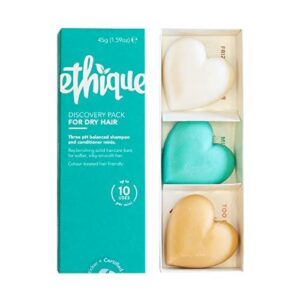
If your color-treated hair leans dry, Ethique’s Discovery Pack offers three mini Sustainable Haircare bars that work as a Dry Hair Solution without stripping dye.
Each soap-free, pH-balanced bar—Heali Kiwi shampoo, Deep Rice conditioner, and a solid fragrance—delivers cocoa butter and coconut oil moisture while protecting color-treated hair. Ethique Ingredients skip sulfates and waxes, so you preserve vibrancy wash after wash.
The Travel-Friendly Bars replace nine plastic bottles, and Discovery Pack Benefits include an 8× boost in hydration after just one cleanse, making this trio a win for your strands and the planet.
Best For: People with dry, color-treated hair who want a plastic-free, travel-friendly haircare option that won’t strip their dye while boosting moisture.
- Safe for color-treated hair with a pH-balanced, sulfate-free formula that protects vibrancy
- One pack replaces nine plastic bottles and each bar lasts up to 80 washes, making it eco-friendly and cost-effective long-term
- Boosts hydration by 8x after one wash with nourishing ingredients like cocoa butter and coconut oil
- Mixed reviews on lather quality and moisturizing effectiveness—some users find the bars drying
- Bars may not last as long as expected for some users, especially with daily washing
- Higher price point compared to conventional shampoo, and the scent may be too subtle for some
5. Ethique Frizz Wrangler Solid Shampoo Bar
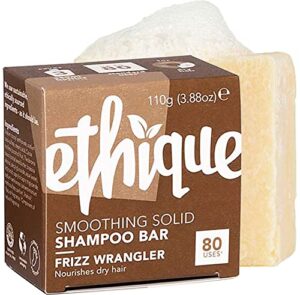
When bleach or hot tools have left your color-treated hair frizzy and fragile, Ethique’s Frizz Wrangler tames flyaways while respecting your dye. This 110-gram bar delivers 80 washes with Frizz Wrangler Ingredients like sodium cocoyl isethionate and decyl glucoside—mild surfactants paired with fatty alcohols that smooth the cuticle and lock in shine.
Ethique’s Color-Safe Claims hold up thanks to pH Balance via lactic acid, which keeps the bar acidic enough to minimize color molecule escape. The catch? Sodium coco-sulfate adds stronger cleansing, so limit washes to two or three weekly to preserve SulphateFree benefits and extend your hue.
Best For: People with color-treated, frizzy, or bleach-damaged hair who want a solid shampoo bar that’s gentler than traditional soap but still cleanses effectively without stripping too much color.
- PH-balanced and soap-free formula with mild surfactants and fatty alcohols that smooth the cuticle and help protect dye compared to alkaline bars.
- One 110-gram bar lasts around 80 washes, replacing roughly three bottles of liquid shampoo with minimal packaging waste.
- Specifically formulated for chemically processed hair, with conditioning ingredients that reduce frizz and add shine to dry, damaged strands.
- Contains sodium coco-sulfate, a stronger sulfate surfactant that may fade color faster than completely sulfate-free shampoos if used daily.
- Best results require limiting washes to 2–3 times per week, which may not suit those who prefer or need daily hair cleansing.
- People with very thick or long hair may need to work the bar through hair in sections for even distribution and thorough cleaning.
Common Myths About Shampoo Bars and Color Safety
You’ve probably heard conflicting opinions about shampoo bars and whether they’re truly safe for your color-treated hair. Some claims stem from outdated information, while others confuse different product types or ingredients.
Let’s clear up the most common misconceptions so you can make informed choices that protect your investment in beautiful, vibrant hair color.
Bar Vs. Liquid Shampoo for Color Retention
You might’ve heard that liquid shampoos protect color better than bars, but format isn’t the deciding factor. Research shows that sulfate-free shampoo bars with pH-balanced hair formulas work just as well as liquids for color-treated hair.
What really matters for hair color protection is surfactant effectiveness, pH impact, and water exposure—not whether your product comes solid or liquid. Usage patterns beat format every time.
Misconceptions About Natural Ingredients
Many believe natural ingredients guarantee safe hair care, but botanical oils and plant extracts can trigger allergen and irritation issues—even in color-treated hair. That “natural equals safe” myth ignores regulatory standards that apply equally to all formulas.
Greenwashing benefits mislead shoppers seeking color-safe claims, so check surfactant type and pH instead of trusting “natural” labels alone when protecting your colored hair with shampoo bars.
Truth About Product Buildup and Residue
Beyond natural-label confusion, high-pH soap bars deposit visible mineral films on your hair shaft when hard water reacts with the formula—microscopy revealed these residue particles clinging to cuticles after just one wash. Incomplete rinsing leaves concentrated surfactants coating your hair, while hair damage from coloring increases buildup on porous fibers.
Extend your rinse time and choose pH-balanced syndet bars to prevent waxy accumulation during regular hair washing.
Frequently Asked Questions (FAQs)
Can shampoo bars strip hair color completely?
Shampoo bars rarely strip hair color completely—but they can. Alkaline formulas and harsh surfactants accelerate water solubility impact on hair pigment.
Most pH-balanced, color-safe shampoo bars protect color-treated hair effectively when used properly.
How long do shampoo bars last compared to liquid?
One shampoo bar usually delivers 50 to 80 washes—equivalent to two or three liquid bottles—making the cost per wash lower while reducing plastic waste, especially when stored properly on a draining dish.
Do shampoo bars work for all hair types?
Hair type suitability depends on formulation differences. Fine hair concerns include buildup, while curly hair needs extra hydration.
Check ingredients for your scalp sensitivity—sulfate-free bars with balanced pH work best for color-treated hair care.
Can I use shampoo bars on freshly dyed hair?
Your fresh hair coloring deserves real protection—wait 48 to 72 hours before using any shampoo bars.
During this Initial Waiting Period, harsh Surfactant Exposure Risk and pH Level Impact can strip dye molecules before they fully set.
Are shampoo bars suitable for salon-treated color?
pH-balanced, sulfate-free shampoo bars work well with salon color—their solid format doesn’t compromise protection.
However, avoid soap-based bars with pH above 9, which lift the cuticle and accelerate dye loss in color-treated hair.
Conclusion
Your color doesn’t have to fade into the background when you switch to bars. The truth is, shampoo bars are safe for color-treated hair when you choose pH-balanced, sulfate-free formulas with nourishing ingredients.
Read labels carefully, avoid harsh surfactants, and pair your bar with proper technique—cool water, gentle lathering, and less frequent washing. Your hair color will thank you with weeks of extra vibrancy, proving that sustainability and salon-worthy results aren’t mutually exclusive.
- https://www.youtube.com/watch?v=K-eP0k1wEmU
- https://tangieco.com/blog/can-shampoos-strip-color-from-my-hair/
- https://www.esalon.com/hair-color-mastery/colorist-tips/sulfate-free-shampoos-for-color-treated-hair
- https://eprint.innovativepublication.org/id/eprint/1737/1/IJISRT25JUN1508.pdf
- https://ethique.com/blogs/ethique-products/shampoo-bar-for-colour-treated-hair