This site is supported by our readers. We may earn a commission, at no cost to you, if you purchase through links. This content is for general informational and educational purposes only and is not a substitute for professional medical, dermatological, or nutritional advice.

Your hair falls out in clumps during a stressful period, and someone suggests you try ashwagandha—an ancient herb celebrated for calming frazzled nerves. You take it religiously for weeks, but instead of thick, lustrous strands, you notice even more shedding. This paradox confuses thousands who turn to ashwagandha for hair health, uncertain whether the herb rescues follicles or sabotages them.
The confusion stems from ashwagandha’s dual nature: it can lower cortisol and reduce stress-related hair loss, yet its influence on hormones like thyroid and testosterone may trigger shedding in susceptible individuals.
Understanding how this adaptogen interacts with your unique physiology determines whether it becomes your ally or your antagonist in the fight against thinning hair.
Table Of Contents
Key Takeaways
- Ashwagandha’s dual nature means it can reduce stress-related hair loss by lowering cortisol levels, yet it may trigger shedding in susceptible individuals through its effects on thyroid function and testosterone pathways, particularly in those with androgenetic alopecia or existing hormonal imbalances.
- Clinical evidence for ashwagandha’s hair benefits remains limited to one 75-day topical study showing modest improvements in hair density and thickness, with no rigorous trials testing oral formulations as monotherapy for pattern baldness or stratifying results by specific alopecia types.
- Safe ashwagandha use requires medical consultation before starting supplementation, especially if you’re pregnant, breastfeeding, taking thyroid medications, immunosuppressants, or blood pressure drugs, as the herb can interact with these treatments and alter their effectiveness.
- Individual response to ashwagandha varies significantly based on genetic predisposition and underlying health conditions, making personalized monitoring essential rather than relying on generalized recommendations or anecdotal success stories.
What is Ashwagandha and How is It Used?
Ashwagandha is a small evergreen shrub that’s been a cornerstone of Ayurvedic and Chinese medicine for centuries, traditionally used to help your body manage stress and maintain balance. This adaptogenic herb contains powerful antioxidants and anti-inflammatory compounds called withanolides, which have sparked interest in its potential benefits for hair health.
Many people now pair ashwagandha supplements with targeted hair growth products to support stronger, healthier strands from the inside out.
Before you consider adding ashwagandha to your hair care routine, you’ll want to understand where it comes from, what forms are available, and how different application methods work.
Many ashwagandha products also include vitamin E oil for hair nourishment, which works synergistically to strengthen strands and improve scalp health.
Ashwagandha’s Origins and Traditional Uses
Ashwagandha (Withania somnifera), often called Indian Ginseng, has deep Ayurvedic roots stretching back centuries in Indian origins. Traditional preparations included root powders and decoctions consumed as tonics, classifying this adaptogen as a Rasayana—ancient remedies designed to promote vitality and resilience.
Ayurvedic medicine valued its herbal classification for balancing stress responses, which is why you’ll find it recommended for supporting overall wellness during challenging times.
Forms of Ashwagandha for Hair Health
You’ll find this adaptogen sold in several forms, each with distinct concentrations of withanolides—the bioactive compounds responsible for antioxidant properties. KSM-66 and Sensoril are standardized ashwagandha extracts commonly studied for stress-related hair loss, while root powder remains popular in traditional formulations.
Oil infusions and topical tinctures deliver active constituents directly to your scalp, and liquid supplements offer convenient oral dosing.
If you’re wondering how long it takes for hair to grow after starting a new treatment, most people see initial changes within a few months of consistent use.
Common Methods of Application (Topical, Oral, Etc.)
Once you’ve chosen your form, the next step is deciding whether to apply ashwagandha topically as a hair mask, blend it into your shampoo, or take it orally as a capsule or tea—each method delivering withanolides through different pathways to address stress-related shedding.
Topical treatments like scalp oils penetrate hair follicles directly, while oral supplements modulate systemic cortisol levels, offering complementary approaches as natural remedies for hair loss when you’re weighing ashwagandha benefits and side effects.
Causes of Hair Loss and The Role of Stress

Hair loss doesn’t happen in a vacuum—it’s usually the result of specific biological triggers, hormonal shifts, or chronic stressors that disrupt your scalp’s normal function. Understanding the underlying causes can help you identify whether ashwagandha might address your particular issue or potentially complicate it.
Let’s examine the primary types of hair loss, how stress interferes with growth cycles, and the hormonal connections you need to know.
Main Types of Hair Loss (Telogen Effluvium, Androgenetic Alopecia)
Your hair won’t fall out the same way in every situation—understanding the difference matters. Two patterns dominate the landscape of hair loss, each with distinct triggers and trajectories:
- Telogen Effluvium – diffuse hair shedding patterns triggered by systemic stressors like illness, surgery, or crash diets, usually resolving within six months once you address the underlying cause
- Androgenetic Alopecia – progressive follicle miniaturization driven by genetic predisposition and dihydrotestosterone (DHT), creating characteristic thinning at your temples or crown
- Scalp health issues – inflammation or poor circulation can disrupt hair growth cycles, compounding stress response effects
- Alopecia treatment options – vary widely depending on whether you’re managing temporary shedding or chronic pattern baldness
While ashwagandha shows promise for stress-related triggers, it won’t reverse genetic hair loss on its own. Understanding hair loss causes is vital for effective treatment and management.
How Stress Impacts Hair Growth Cycles
Your body’s stress response doesn’t just affect your mood—it rewires your hair follicle at the cellular level. Elevated cortisol levels shorten the anagen cycle and push follicles prematurely into the telogen phase, triggering noticeable shedding two to three months later.
Fortunately, targeted hair growth treatments can help restore the follicle cycle and reverse stress-induced thinning over time.
Chronic stress rewires hair follicles at the cellular level, shortening growth cycles and triggering shedding months later
Stress hormones degrade key matrix proteins by roughly 40 percent, disrupting the hair growth cycle and amplifying stress and hair loss connections. This process is closely related to telogen effluvium causes that can lead to excessive hair shedding.
Connection Between Hormones and Hair Loss
Thyroid dysfunction, polycystic ovary syndrome, and fluctuating androgen levels create a cascade of follicular disruption that extends far beyond what cortisol alone can trigger.
Thyroid balance regulates hair follicle health through metabolic pathways, while hormonal imbalance and hair loss converge when DHT binds to receptors in androgenetic alopecia.
Hormone regulation becomes critical—restoring thyroid function and cortisol levels can reverse hormone-driven shedding patterns before permanent miniaturization occurs.
Ashwagandha’s Benefits for Hair Health
Ashwagandha’s reputation as a hair health supplement stems from its multifaceted biological effects, particularly its influence on stress pathways and cellular protection mechanisms. While direct evidence for hair regrowth remains limited, the herb’s adaptogenic properties address several physiological factors that can compromise follicular function and hair quality.
Understanding these mechanisms can help you determine whether ashwagandha might support your specific hair health goals.
Reducing Stress and Cortisol Levels

When chronic stress floods your system, elevated cortisol levels can push hair follicles into premature shedding—but ashwagandha’s adaptogenic effects may help you reclaim control. Clinical trials show this herb can deliver meaningful stress relief:
- Cortisol management improved by up to 32% in stressed adults
- Stress response modulation through hormone balance restoration
- Anti-inflammatory properties supporting scalp health
- Mindful relaxation enhanced alongside biochemical shifts
These cortisol-lowering benefits create conditions where your hair growth cycle can stabilize.
Improving Scalp Circulation and Nourishment
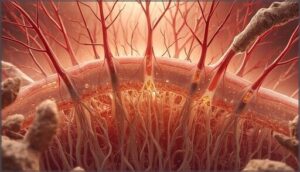
Your follicles depend on strong blood flow to thrive, and ashwagandha may improve scalp microcirculation by boosting nitric oxide production in vascular tissues. Improved nutrient delivery through this mechanism supplies your hair follicle with oxygen, amino acids, and iron essential for growth.
While scalp massage complements these effects, ashwagandha’s anti-inflammatory properties and rich composition support scalp health by optimizing the microenvironment where hair nourishment occurs.
Antioxidant and Anti-Inflammatory Effects
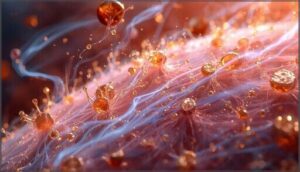
Ashwagandha’s withanolides activate antioxidant pathways in your scalp tissues, triggering free radical scavenging that shields follicle cells from oxidative stress. These anti-inflammatory properties work by reducing inflammatory markers like tumor necrosis factor alpha and interleukin-6, creating cellular protection against the chronic damage that weakens hair roots.
Studies show these antioxidants restore glutathione levels while improving enzyme activity that defends against environmental assaults on your follicles.
Potential to Reverse Premature Graying

Your hair follicles lose color when oxidative stress damages melanocytes—the pigment factories that keep your hair dark. Ashwagandha’s antioxidant arsenal might theoretically preserve melanin production by neutralizing follicle damage, yet no controlled human trials confirm it can reverse established graying. The evidence suggests it may slow premature color loss rather than restore pigmentation:
- Withanolides scavenge hydrogen peroxide that bleaches existing melanin
- Anti-inflammatory properties protect melanocyte stem cells from oxidative degeneration
- Tyrosine content could theoretically support melanogenesis pathways
Current research shows ashwagandha works better for color preservation than gray hair reversal.
Can Ashwagandha Prevent or Treat Hair Loss?

While ashwagandha shows promise for supporting overall hair health through stress reduction and improved scalp conditions, its direct effects on preventing or treating hair loss remain less clear. The evidence base consists primarily of indirect mechanisms rather than rigorous clinical trials specifically measuring hair regrowth outcomes.
To examine what ashwagandha can and can’t do for hair loss, you’ll need to examine both its measurable effects and the significant gaps in current research.
Effects on Hair Growth and Thickness
Clinical trials show promise for ashwagandha’s impact on follicle health and growth patterns. A 75-day topical study found hair density increased by 7.3 hairs per cm² versus 2.81 with placebo, while thickness improvement reached 1.80 micrometers compared to 0.90. The anagen-to-telogen ratio shifted favorably, meaning more follicles entered active growth phases.
Oral formulas combining ashwagandha with other nutrients have shown benefits for scalp nourishment and overall hair health, though isolating ashwagandha’s specific contribution remains challenging. These antiinflammatory properties may support retention and reduce shedding in stress-related hair loss.
| Measurement | Ashwagandha Group | Placebo Group |
|---|---|---|
| Hair density increase | 7.3 hairs/cm² | 2.81 hairs/cm² |
| Thickness gain | 1.80 micrometers | 0.90 micrometers |
| Growth rate improvement | 21.76 units | 4.25 units |
| Anagen phase increase | +3.04% | +0.79% |
| Shedding reduction | Significant (p |