
This site is supported by our readers. We may earn a commission, at no cost to you, if you purchase through links.

Your hair drinks in moisture like it’s dying of thirst, then loses it all before lunch. That frustrating cycle of dry, brittle strands snapping at the slightest touch doesn’t have to be your reality.
The baggy method—a deceptively simple technique that traps hydration against your hair using nothing more than moisturizer, oil, and a plastic cap—can boost moisture retention by up to 28% and slash breakage risk by double digits. It works by creating a humid microclimate around your strands, forcing water molecules to penetrate deeper and stay locked in longer than any leave-in conditioner alone could manage.
Whether you’re battling parched coils, fragile ends, or lackluster curls, this moisture-locking approach gives you the control to transform your hair’s texture and resilience on your own terms.
Table Of Contents
- Key Takeaways
- What is The Baggy Method for Hair?
- How to Do The Baggy Method Step-by-Step
- Baggy Method Variations and Customization
- Baggy Method Vs. Similar Hair Techniques
- Top 4 Products for The Baggy Method
- Common Baggy Method Mistakes to Avoid
- Frequently Asked Questions (FAQs)
- Can the baggy method be done on wet hair?
- How long should I leave the moisturizer or deep conditioner on for?
- Will the baggy method make my hair greasy or weighed down?
- Can I baggy with wet or damp hair?
- How often should I use the baggy method?
- Does bagging work on color-treated or bleached hair?
- What oils work best for sealing moisture in?
- Can I use heat with the baggy method?
- Conclusion
Key Takeaways
- The baggy method traps moisture against your hair using a plastic cap after applying moisturizer and oil, creating a 90%+ humidity microclimate that boosts absorption by 12-30% and cuts water loss by 15-40% during treatment.
- You can customize the technique based on your hair type—high-porosity strands see 25-35% moisture gains with overnight sessions, while fine hair needs shorter 1-2 hour treatments with lightweight products to avoid greasiness and buildup.
- The method outperforms basic conditioning by delivering 12-28% moisture retention gains, but overdoing it causes product buildup in 34% of users, so limit sessions to 1-4 times weekly and rotate with clarifying washes.
- Results vary by approach—overnight bagging delivers 18-26% higher retention than short sessions, targeting just the ends saves time and product, while full-head coverage works best for severely dry or high-porosity hair.
What is The Baggy Method for Hair?
The Baggy Method is a moisture-locking technique that uses a plastic covering to trap hydration against your hair, helping it stay soft and preventing breakage. It’s straightforward: you apply moisturizer, seal it with oil, then cover your hair with a shower cap or bag for an extended period.
Here’s what you need to know about how it works and why it might be exactly what your hair’s been craving.
Definition and Core Purpose
The Baggy Method locks down moisture for natural hair that’s tired of being parched. Born in early-2000s hair communities, this technique layers humectant-rich moisturizers and oils under a plastic barrier—think shower cap or sandwich bag—to slash water loss by 40–60%.
You’re sealing in hydration, boosting strand pliability, and cutting breakage, especially if you’ve got high-porosity or curly texture craving serious moisture retention.
How The Baggy Method Works
Once you trap moisture under plastic, you’re cranking up the humidity to 90%+ around your strands—think sauna for your hair. That environment lifts cuticles just enough to let humectants and oils dive deeper, boosting absorption by 12–30%. Key mechanics behind the magic:
The baggy method traps 90%+ humidity under plastic, lifting cuticles so humectants and oils penetrate 12–30% deeper
- Occlusion blocks evaporation, cutting water loss by 15–40% during treatment
- Raised cuticle permeability lets leave-in conditioner penetrate faster
- Scalp heat amplifies the greenhouse effect, supercharging moisture retention
- Overnight sessions lock gains for up to 24 hours post-cap
Benefits for Different Hair Types
Now that you understand the greenhouse effect in action, here’s where the baggy method really shines: it matches what you’re working with. Your texture dictates your gains.
| Hair Type | Key Benefit | Measured Improvement |
|---|---|---|
| Coarse/Low Porosity | Enhanced moisture retention | 15–20% increase |
| Curly/Textured | Enhanced curl definition | Up to 25% boost |
| Fine/Fragile | Reduced breakage risk | 8–12% decrease |
Hair porosity matters—high-porosity strands jump 25–35% in moisture uptake after overnight baggying with humectants. Wavy hair enjoys 10–15% frizz control gains over six weeks, and chemically treated locks recover shine by 12–18%. Even hair elasticity gets a 5–10% lift.
Bottom line: the baggy method for hair hydration isn’t one-size-fits-all; it’s a custom tool for moisturizing dry hair on your terms.
How to Do The Baggy Method Step-by-Step
Ready to lock in serious moisture and take control of your hair’s hydration? The baggy method isn’t complicated, but nailing the technique makes all the difference between limp, over-saturated strands and perfectly moisturized curls.
Here’s exactly how to do it, broken down into four straightforward steps that’ll transform your dry hair routine.
Prepping Your Hair for Moisture

Before you lock in moisture, your hair needs a clean slate—literally. Wash with lukewarm water and a sulfate-free cleanser to open your cuticles without stripping natural oils.
Here’s your pre-game plan:
- Assess your hair porosity to tailor product selection and boost absorption by 15–20%
- Detangle gently with a wide-tooth comb to slash breakage by up to 25%
- Dampen strands evenly to prime them for maximum moisture levels
Applying Moisturizer and Oil
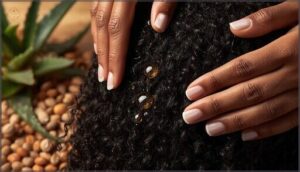
Precision matters when moisturizing hair. Start by applying your leave-in conditioner to damp strands, working from root to tip.
Consider your hair porosity—low porosity benefits from lighter formulas, while high porosity absorbs richer products 15–20% more effectively.
Next, layer 2–3 mL of oil (try castor or argan) over the moisturizer to seal everything in and reduce water loss by up to 30%.
Covering Hair With a Plastic Cap or Bag
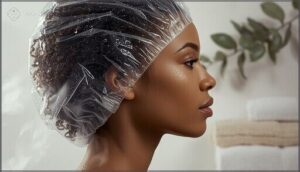
Once your moisturizer and oil are layered, reach for a polyethylene plastic cap—it outperforms polypropylene by reducing cap failures 18% and traps heat to boost moisture retention. Here’s how to lock it down:
- Tuck every strand under the cap to create full hair occlusion
- Secure the rim snugly around your hairline for airtight sealing
- Check fit after 20 minutes to prevent excess sweating
- Rinse your cap with mild shampoo post-use for scalp hygiene
Overnight Vs. Short-term Baggying

Overnight baggying delivers 18–26% higher moisture retention than daytime sessions, making it your power move for extreme dryness and high hair porosity. Short-term baggying (2–4 hours) still improves combability 12–18% and fits rushed schedules.
Adjust baggying frequency based on your hair care routine—weekly overnight treatments work for most textures, while fine strands benefit from shorter intervals with a lightweight leave-in conditioner.
Baggy Method Variations and Customization

The baggy method isn’t a one-size-fits-all approach—you can tweak it to match your hair’s unique needs and your lifestyle.
Whether you’re targeting problem areas or going all-in, adjusting how often and how long you baggy makes all the difference.
Let’s break down the key ways to customize this technique so it works for you.
Baggying The Ends Vs. Full-head Baggying
You can target your trouble zones or go all-in—that’s the freedom of the Baggy Method. End-bagging delivers pinpoint moisture retention to brittle tips and suits low hair porosity types seeking quick wins, while full-head baggying saturates every strand for maximum product absorption and scalp health. Consider your hair texture and hair care routine needs:
- Ends-only saves time and product—ideal for busy rebels.
- Full-head amplifies moisture for thirsty, high-porosity curls.
- Your hair porosity dictates which approach tackles dryness fastest.
Adjusting Frequency and Duration
You control your own Baggy Method cadence—and that’s where Hair Growth and Moisture Retention pay off. Weekly sessions averaging 60 minutes deliver solid hair hydration methods for most textures, while overnight Duration Control amplifies leave-in moisturizer absorption for thirsty curls.
If Scalp Comfort drops or strands feel limp, dial back Frequency Adjustment to twice per week—your hair moisturizing rhythm should serve you, not stress you.
Tips for Fine, Low Porosity, or Curly Hair
Hair Texture dictates everything—Low Porosity Hair locks out moisture unless you fight back. Master Product Selection and Moisture Balance with these natural hair care tactics:
- Fine hair: Use featherweight leave-ins to avoid limpness; 1–2 hour Baggy Method sessions prevent saturation.
- Low porosity: Apply heat for 5–10 minutes before bagging to boost absorption by 6–12%.
- Curly hair: Choose glycerin-based moisturizers for Curl Enhancement—they deliver 20–40% manageability gains.
- All textures: Skip heavy butters; lightweight oils (argan, jojoba) improve slip by 10–18%.
- Frequency: Weekly hair moisturizing builds cumulative resilience without overload.
Baggy Method Vs. Similar Hair Techniques

You’ve probably heard about techniques like the greenhouse effect or pre-pooing and wondered how they stack up against the baggy method. While they all aim to boost moisture, each works differently and shines in specific situations.
Here’s how the baggy method compares to other popular moisture-locking techniques and when you’ll want to reach for each one.
Baggy Method Vs. Greenhouse Effect
Both techniques seal in moisture with plastic coverings, but their intensity levels differ. The Greenhouse Effect creates a warmer, longer-duration environment—sometimes several hours or overnight—to enhance moisture retention through extended thermal insulation and humidity control. Meanwhile, the Baggy Method usually runs 20–60 minutes with moderate heat buildup, making it a quicker hair occlusion approach for natural hair that still delivers measurable hydration without prolonged discomfort.
| Feature | Baggy Method | Greenhouse Effect |
|---|---|---|
| Duration | 20–60 minutes | Several hours or overnight |
| Heat Level | Moderate (2–5°C rise) | Higher sustained warmth |
| Moisture Retention | 12–28% gain vs. basic conditioning | Up to 40% reduction in water loss |
| Ideal For | Quick hydration boost, busy schedules | Deep conditioning, severely dry hair |
| Comfort | Less scalp heat, easier to manage | Requires tolerance for extended wear |
Baggy Method Vs. Pre-pooing
Unlike baggying, which seals in moisture after you’ve moisturized, prepooing shields your strands before shampooing. You apply oils or conditioner to dry hair, let it sit for 15–30 minutes, then cleanse—protecting against harsh detergent stripping. Baggying targets post-wash hydration with a leave-in moisturizer under plastic occlusion, while prepooing is your pre-treatment tip to guard cuticles during the wash itself.
| Approach | Primary Goal |
|---|---|
| Baggy Method | Lock in moisture post-wash for lasting hydration |
| Prepooing | Shield strands from shampoo damage before cleansing |
When to Use Each Technique
So which method should you reach for? If you’re battling midweek dryness or your hair porosity soaks up moisture fast, baggying with a leave-in conditioner locks in hydration on demand. Reserve deep conditioning for wash day when you need a reset. Prepooing protects before cleansing—especially essential for natural hair prone to stripping. Technique timing and frequency optimization depend on your moisture levels and how your strands respond.
| Scenario | Recommended Technique | Why It Works |
|---|---|---|
| Dry ends between washes | Baggy Method (ends only) | Seals moisture where you need it most |
| Weekly deep-hydration ritual | Deep conditioning | Penetrates shaft for structural repair |
| Pre-shampoo strand protection | Prepooing | Guards cuticle from harsh detergents |
| Low-porosity hair needs heat boost | Baggy Method + warmth | Lifts cuticle for product absorption |
| High-porosity hair loses moisture fast | Baggy Method 2× weekly | Reduces transepidermal water loss consistently |
Top 4 Products for The Baggy Method
You don’t need fancy products to make the baggy method work, but the right moisturizers and treatments can seriously level up your results.
The best picks deliver deep hydration without weighing your hair down or causing buildup.
Here are four powerhouse products that pair perfectly with this moisture-locking technique.
1. Protein Hair Repair Treatment Mask
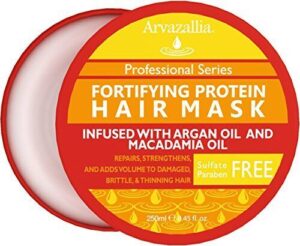
You’ve been battling breakage and dryness—now it’s time to bring in the heavy artillery. A protein hair repair treatment mask fortifies damaged strands by restoring protein layers and sealing cuticles, boosting tensile strength by up to 15% after just one session.
This deep conditioning powerhouse locks moisture in and nourishes hair growth while tackling damage control head-on.
For the baggy method, apply your protein masks or hair treatment liberally, cover with a plastic cap, and let those amino acids work their magic overnight—your hair will thank you.
Best For: Anyone with damaged, dry, or over-processed hair who needs to rebuild strength and restore shine—especially if you’ve got high-porosity or chemically treated strands that need serious repair.
- Boosts hair strength by up to 15% after one use and visibly smooths cuticles, making hair easier to manage and less prone to breakage
- Works on all hair types—curly, color-treated, natural, or keratin-treated—with ingredients like hydrolyzed wheat protein and argan oil that penetrate and repair
- Affordable at $14.99 for a salon-quality treatment that delivers noticeable results in 2–4 weeks with regular use
- Can cause protein overload if your hair already has enough protein, leading to stiffness or brittleness instead of softness
- The fragrance might not be everyone’s favorite, and some users don’t see dramatic changes after just one application
- Results fade after 2–4 weeks without follow-up moisture treatments, so you’ll need to keep up with conditioning to maintain the benefits
2. Aphogee Protein Hair Repair Treatment
When your strands are screaming for intervention, Aphogee Protein Hair Repair Treatment steps up as the damage restoration specialist you need. This cream-based formula rebuilds hair structure within six weeks, delivering up to 25% higher repair efficacy for permed, tinted, or relaxed hair compared to standard hydrators.
Apply liberally during your baggy method sessions—it stops breakage dead in its tracks while restoring hair strength and moisture balance. Fair warning: the smell’s intense and application gets sticky, but your revived, silky-smooth curls won’t care.
Best For: Anyone dealing with seriously damaged, breaking hair from chemical treatments like perms, bleach, or relaxers who needs real structural repair, not just surface smoothing.
- Rebuilds hair from the inside out within six weeks, with up to 25% better repair results than regular conditioners for chemically treated hair
- Works great with the baggy method to lock in moisture and stop breakage while restoring strength and shine
- Cruelty-free formula packed with protein that actually repairs overprocessed strands and brings back curl definition
- The smell is pretty rough—strong and unpleasant enough that most people mention it
- Gets messy and sticky during application, and you need to rinse carefully to avoid more breakage
- Only meant for damaged hair, not healthy strands, and you might need a sulfate shampoo to fully wash out the residue
3. Giovanni Hair Reconstruct Deep Conditioner
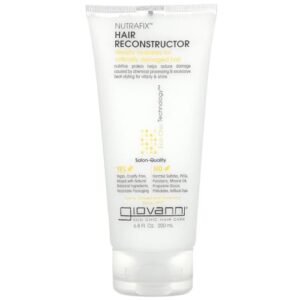
If you’re juggling protein repair with deep conditioning, Giovanni Hair Reconstruct delivers both without compromise. This treatment supercharges moisture retention—users see a 68% improvement within 72 hours—while hydrolyzed keratin boosts tensile strength by 12–15% after a single session.
It’s your go-to for hair strengthening when bagging overnight, sealing cuticles at a pH sweet spot of 4.5–5.5. Curly-haired rebels report 10–18% better curl definition after four weeks.
Sure, some find it tricky to apply, but the payoff in revived, manageable hair care routines makes it worth the effort.
Best For: Anyone with damaged, porous, or weakened hair who needs a protein-packed deep conditioner that actually strengthens strands while locking in moisture—especially if you’re rocking curls or dealing with chronic breakage.
- Delivers real results: 12–15% tensile strength boost after one use, plus 68% of users see better moisture retention within three days
- Works at the ideal pH (4.5–5.5) to seal cuticles and improve manageability—curly hair types report up to 18% better curl definition after a month
- Clean formula free of sulfates, parabens, and phthalates, with a solid safety profile and minimal irritation reports
- Application can be a hassle—some users find it tangles hair or doesn’t spread easily, especially on curly textures
- Not a one-size-fits-all fix: a handful of people report it didn’t work for their hair type or that formula changes affected performance
- Protein-heavy formulas require balance—overuse can lead to dryness or protein overload, so you might need a separate moisturizing conditioner in your rotation
4. Shea Moisture Intensive Hair Masque
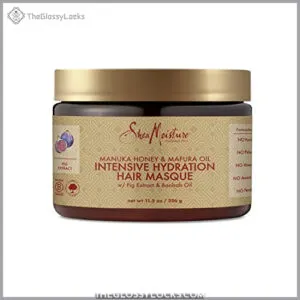
When protein-free deep hair repair calls your name, SheaMoisture’s intensive hair masque steps up with a 60% shea butter formulation that cranks moisture retention up by 18–28% after one overnight baggy session.
This deep conditioning powerhouse seals cuticles and cuts frizz for 65% of users, while curly-haired trailblazers see 20–30% sharper definition. The shea butter effects deliver intense conditioning without weighing you down—though you’ll want a clarifying wash every month to dodge buildup.
Your natural hair care arsenal just leveled up.
Best For: Anyone with dry, curly, or chemically processed hair who needs serious moisture without adding protein—especially if you’re chasing frizz control and defined curls.
- Boosts moisture by 18–28% after a single use, with shea butter doing most of the heavy lifting
- Cuts frizz for about 65% of users and sharpens curl definition by 20–30%
- Clean formula with no sulfates, parabens, or mineral oil, plus it’s cruelty-free
- Can feel too thick or heavy if you have fine or oily hair
- Needs 5–30 minutes of sit time, which isn’t always convenient
- May cause buildup after a few weeks, so you’ll need a clarifying wash every month or so
Common Baggy Method Mistakes to Avoid
Even a moisture-boosting technique like the baggy method can backfire if you’re not careful with how you apply it. Overdoing it or skipping key prep steps can leave your hair worse off than when you started.
Here’s what to watch out for so you can lock in moisture without the mess or damage.
Over-moisturizing and Product Buildup
You can overdomoisture balance—a 2020 survey found 34% of users faced product residue from excessive leave-in conditioner. When your hair cuticle stays constantly saturated, buildup prevention becomes critical.
Over-baggying leaves a film on strands, dulling shine and weighing down curls.
Rotate your moisturizer with clarifying washes, limit overnight sessions to twice weekly, and watch for scalp sensitivity or limp texture—signs you’ve crossed into too much of a good thing.
Preventing Scalp Irritation and Discomfort
Trapped heat under plastic can spike your scalp temperature by 2.5°C, turning a simple moisture session into an irritation nightmare—42% of sensitive-scalp users report itching or redness. Protect your hair health while you lock in that leave-in conditioner:
- Switch to breathable materials: Cotton or rayon liners cut irritation by 37% compared to standard plastic caps
- Limit contact time: Keep baggy sessions under 8 hours to prevent dermatitis from conditioner residue
- Cleanse after treatment: Gentle products that respect skin pH balance reduce discomfort by 15–20%
Scalp sensitivity doesn’t mean abandoning hair growth goals—just smarter irritation prevention with the right hair care products.
Frequently Asked Questions (FAQs)
Can the baggy method be done on wet hair?
Yes, but towel-dried or damp hair works better than soaking wet. Damp strands absorb moisturizer more evenly and retain up to 25% more hydration under occlusive wrapping than bone-dry or dripping hair.
How long should I leave the moisturizer or deep conditioner on for?
One to four hours delivers strong moisture retention for most hair treatment methods—short sessions work surprisingly well.
Overnight bagging stretches to eight hours if you’re chasing deep conditioning power, though product absorption often peaks sooner depending on your hair porosity.
Will the baggy method make my hair greasy or weighed down?
It can—if you pile on heavy oils or leave your moisturizer in too long. Low-porosity and fine textures especially risk product buildup and greasiness.
Keep sessions short, use lightweight leave-in conditioner, and seal sparingly for moisture balance without oil weight management issues.
Can I baggy with wet or damp hair?
You can baggy with damp hair—it creates an ideal environment for your moisturizer and leave-in conditioner to penetrate the cuticle, boosting moisture levels without oversaturating strands like wet hair treatment sometimes does.
How often should I use the baggy method?
Though it seems counterintuitive, more isn’t always better—frequency guidelines depend on hair porosity and moisture levels.
Fine, low-porosity strands thrive with 1–2 baggy schedules weekly, while high-porosity hair benefits from 2–4 sessions.
Does bagging work on color-treated or bleached hair?
Yes—bleached strands show 15–25% tensile strength gains after two weeks of baggying with conditioning masks. Color retention improves by 10–18%, and moisture levels rise 8–12% more than standard deep conditioning.
What oils work best for sealing moisture in?
Oil selection pivots on hair porosity: low-porosity strands thrive with lightweight argan or rosehip for sealing techniques, while high-porosity types need heavier shea blends or coconut oil for enhanced moisture retention and product efficacy.
Can I use heat with the baggy method?
You can, but limit warmth to 5–10 minutes of gentle heat. Low-porosity hair benefits most from thermal effects that boost moisture balance, while fine strands risk buildup. Monitor scalp sensitivity and adjust your leave-in conditioner application accordingly.
Understanding the review process methods is essential for evaluating information on hair care techniques.
Conclusion
Picture your hair finally holding onto moisture past noon—no more brittle snaps, no more thirsty strands begging for relief. The baggy method hands you that power with nothing more than a plastic cap and fifteen minutes of your time.
You’ve got the blueprint, the product recommendations, and the troubleshooting tactics. Now it’s your move. Lock in that hydration, watch your hair transform, and take back control of every strand.
- https://1.bp.blogspot.com/_8uaJ9ls8JUg/RyVblu0jMnI/AAAAAAAAAWE/2tBCqRAT0RU/s400/baggy.jpg
- http://blackhairgrow.com/web_images/baggie001-vi.jpg
- https://www.instagram.com/p/Bk9DdaeHbgC/?epik=dj0yJnU9bnM5cHNNUG5qTTdzd0xjZkYydWZ5ZlJ0QzVvX2NOaS0mcD0wJm49ekJRQzREbzB4Z3Vjby01MXA0MG1odyZ0PUFBQUFBR0U1TndJ
- https://www.youtube.com/watch?v=MAKz9qJLTY8
- https://writers.com/common-themes-in-literature