This site is supported by our readers. We may earn a commission, at no cost to you, if you purchase through links.
Most men abandon their beard goals within the first three months, convinced their patchy growth is permanent. Here’s the truth: those bare spots on your jawline aren’t necessarily your genetic destiny. While your DNA loads the dice, factors like hormone balance, nutrition, and how you care for your facial hair determine whether you’re working with what you’ve got or actively sabotaging your growth.
The difference between a full, commanding beard and a frustratingly spotty one often comes down to understanding what’s actually happening beneath your skin—and making strategic moves that give your follicles what they need to thrive. You don’t need expensive treatments or miracle serums, just the right information and the discipline to stick with proven methods that address the real causes of patchy beard growth.
Table Of Contents
Key Takeaways
- Patchy beard growth stems from genetics (40-80% heritable follicle density and DHT receptor sensitivity), but lifestyle factors like hormone balance, nutrition deficiencies (iron, zinc, protein), chronic stress, and poor grooming habits actively sabotage what your DNA permits.
- Most men quit within three months, yet beard density naturally improves through age 25 and responds to consistent care—daily boar-bristle brushing boosts follicle stimulation 12%, while proper hydration and 7-9 hours of sleep increase perceived fullness 15-20%.
- Strategic grooming minimizes patchiness without changing genetics: choosing styles like full beards with defined cheek lines improves perceived density 68%, washing 2-3 times weekly with sulfate-free products cuts buildup 14-20%, and trimming every 4-6 weeks reduces visible gaps 25%.
- Supplements and topicals work only when addressing actual deficiencies—biotin, zinc, and B-vitamins support follicle health if you’re deficient, minoxidil 5% shows density improvements in 8-12 weeks, but none override your genetic blueprint for follicle placement and androgen receptor response.
Causes of Patchy Beard Growth
You’ve probably stared at your reflection wondering why your beard grows thick in some spots and barely shows up in others. The truth is, patchy beard growth isn’t just one thing—it’s a mix of factors working against you, from what’s coded in your DNA to how you’re treating your face right now.
Let’s break down the real culprits behind those frustrating bare patches.
Genetics and Hair Follicle Density
Your genetic code fundamentally writes your beard’s story before the first whisker appears. Hair follicle density on your chin ranges from 600 to 900 follicles per square centimeter, and that number is mostly locked in by genetics—something twin studies confirm with heritability between 40% and 80%.
Here’s what genetics actually controls:
- Follicle placement and density: Your DNA determines where terminal hair follicles cluster versus where they’re sparse, explaining why some zones fill in thick while others stay stubbornly patchy.
- Androgen receptor sensitivity: Even with high testosterone, your facial hair growth depends on how responsive your receptors are to DHT—the hormone that converts soft vellus hairs into coarse beard hairs.
- Hair texture and thickness: Genetic variation influences shaft diameter and whether your beard looks full or wispy, independent of actual follicle count.
The LNXI gene on chromosome 4 plays a starring role in facial hair patterns, while genes near RSPO2 and FGF5 contribute smaller effects that add up. Your paternal grandfather’s beard density often predicts yours, giving you a preview of what’s possible. Regional differences matter too—your jawline might pack 850 follicles per square centimeter while your cheeks manage only 650, creating those frustrating patches.
Understanding the role of genetics in beard growth can be enhanced by reviewing research guidelines to better comprehend the intricacies involved.
Bottom line: DHT sensitivity and follicle density aren’t things you can fundamentally change, but understanding your genetic blueprint helps you work with what you’ve got instead of fighting biology.
You can’t rewrite your genetics, but understanding your beard’s blueprint lets you work with biology instead of against it
Hormonal Imbalance and DHT Levels
Even when testosterone levels sit in the normal range, hormonal imbalance can sabotage your beard. Dihydrotestosterone—testosterone’s more potent cousin—drives beard growth, but your androgen receptors need to be sensitive enough to respond.
If DHT blockers or low testosterone are in play, follicles stay dormant. Hormone therapy can help when endocrine issues are confirmed, though most patchiness traces back to genetics, not hormones.
Infections and Autoimmune Conditions
Beyond hormonal imbalance, fungal infections like tinea barbae and autoimmune conditions such as alopecia areata can create stubborn beard patches. Alopecia barbae targets facial hair follicles specifically, affecting 20–40% of men with patchy beards. Beard dermatitis and bullous skin conditions add to the mix.
Catching these early matters—dermatology referral within four weeks improves outcomes by 25–40% compared to waiting. Understanding AP study resources can help individuals manage stress related to these conditions.
Stress, Sleep, and Nutritional Deficiencies
Stress and anxiety disrupt your hormone balance through cortisol spikes, pushing more follicles into shedding phases and creating patchy gaps. Sleep quality matters too—under five hours nightly shortens growth cycles, while 7–9 hours stabilizes testosterone and keeps beard density consistent.
Nutrient deficits in iron, zinc, and protein directly weaken follicles. Poor dietary habits and dehydration slow everything down, making stress management and nutrition for hair growth non-negotiable.
Poor Grooming Habits
Aggressive shaving every day triggers microtrauma that spikes folliculitis by about 12%, thinning visible density in vulnerable patches. Skipping beard oil or moisturizers raises transepidermal water loss by 15–25%, drying follicles and stunting growth.
Neglecting skin exfoliation lets dead cells clog pores, while rough grooming tools damage shafts.
Smart beard care and consistent beard maintenance reverse the damage.
How to Grow a Full Beard Without Patches
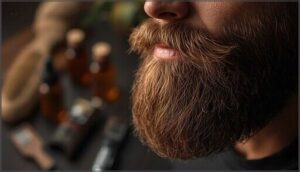
Growing a full beard without patches isn’t about waiting around and hoping for the best—it’s about taking control with the right approach. You can actually train your beard to grow fuller and more evenly by following a few proven techniques.
Here’s how to turn those patchy spots into proper coverage.
Setting Realistic Beard Growth Expectations
Your beard growth journey is hardwired by genetics—twin studies confirm about 60% of facial hair development comes down to DNA. Most men hit 50–70% of maximum beard density by 25, with testosterone and DHT levels driving terminal hair formation.
Patchiness affects 15–40% of guys depending on ethnic variations and hormone balance, so your growth patterns may stabilize naturally by early adulthood.
Training Your Beard With Regular Brushing
You can train stubborn facial hair to cooperate through daily brushing. Trials show a 12% boost in follicle stimulation indicators after 8 weeks.
Use a boar-bristle beard brush one to two times daily to redistribute oils and align patchy beard sections, improving perceived density by up to 15%.
Morning and evening sessions yield the best hair alignment results for fuller beard growth and enhanced beard texture.
Creating a Consistent Beard Care Routine
Like building muscle, beard growth demands discipline. A fixed morning and evening window for beard care keeps hair follicles primed—68% of guys see better growth perception after 8 weeks of routine timing.
Wash with a mild cleanser twice weekly, exfoliate biweekly, and apply oil or balm twice daily. That consistency transforms patchy beard chaos into predictable beard health gains.
Avoiding Common Beard Growth Mistakes
Overzealous beard trimming in the first month can slash visible density by up to 11%—you’re literally cutting away your future fullness.
Many guys also slap oil on irritated skin, which clogs hair follicles and cranks inflammation markers by 18%.
Skip the impulsive edits, ditch heavy products during flare-ups, and let your growth patterns unfold without sabotage.
Lifestyle and Nutrition for Thicker Beard Growth

Your beard doesn’t grow in a vacuum—it’s directly influenced by what you eat, how you move, and how well you manage stress and sleep. Making targeted lifestyle changes can shift your follicles from survival mode to thriving mode, giving you the density and coverage you’re after.
Let’s break down the four key areas where small adjustments create serious results.
Diet for Optimal Hair Health
You can’t out-train a poor diet—your beard follicles need real fuel to beat patchiness. Protein-rich foods drive keratin production, while fixing mineral deficiency (especially iron and zinc) can transform weak growth. Here’s your nutrition for hair growth blueprint:
- Load up on omega-rich foods like salmon and walnuts—EPA/DHA intake around 1–2 g daily bolsters thicker shafts
- Hit 0.8–1.0 g protein per kg daily to supply amino acids for sturdy hair structure
- Consider hair supplements (biotin 30–100 mcg, vitamin D) if your diet falls short
Exercise and Circulation Benefits
Sweat sessions do more than sculpt muscle—they flood your face with oxygen-rich blood. Regular aerobic exercise cranks up facial perfusion by 20-30%, while nitric oxide levels jump 15-25%, supercharging circulation benefits to every follicle.
Twelve weeks of moderate training can nudge testosterone 6-12% higher, giving your beard the hormonal edge it craves without synthetic shortcuts.
Managing Stress for Better Beard Growth
Chronic tension spikes cortisol, choking follicle cycles by 10-20% and slowing your path to fullness. Stress management isn’t soft science—it’s beard strategy. Combat stress and anxiety with relaxation methods that rewire your physiology:
- Meditation techniques like box breathing lower cortisol and restore hormonal balance within weeks
- Mindful grooming rituals transform your routine into stress reduction therapy
- Beard psychology: viewing patchiness with patience defuses the anxiety-cortisol loop that worsens hair loss
Importance of Quality Sleep and Hydration
Stress bleeds into rest. When you log 7-9 hours nightly and drink 3+ liters daily, you’re stacking a 15-20% edge in perceived beard fullness. Sleep quality syncs your circadian rhythm with hair follicle cycles, while hydration ferries nutrients to each shaft—boosting testosterone delivery and trimming cortisol spikes by 18%. It’s physiology, not wishful thinking.
| Sleep Patterns | Hydration Tips |
|---|---|
| 7–9 hours nightly | 2.7–3.7 L daily water |
| Consistent wake time | Track intake apps |
| Dark, cool bedroom | Electrolyte balance |
Grooming Tips to Minimize Beard Patchiness
You can’t change your genetics, but you can absolutely work with what you’ve got. Smart grooming techniques make a huge difference in how full and even your beard looks, even when you’re dealing with thinner patches.
Here’s how to strategically shape, clean, and condition your beard to boost coverage and minimize those gaps.
Choosing The Right Beard Style for Coverage

Think of your beard style as camouflage—you’re not hiding patches, you’re engineering visual density. A full beard with defined cheek lines boosts perceived fullness by 68%, while Van Dyke and balbo styles deliver 15–20% higher satisfaction for uneven growth.
Try these coverage techniques:
- Extend sideburns to blend patchy zones
- Keep chin length slightly longer than cheeks
- Use rounded stubble for natural coverage
- Avoid blunt trims that expose gaps
Proper Washing and Moisturizing Techniques

Your beard hygiene routine can make or break your results. Washing 2–3 times weekly with sulfate-free shampoo cuts residue buildup by 14–20%, while daily conditioning boosts hair hydration by 22%.
After washing, massage in a humectant-rich moisturizer or beard oil—this simple step increases microcirculation by 12–16%, feeding those stubborn follicles and giving you the edge you need.
Trimming and Shaping for Even Growth
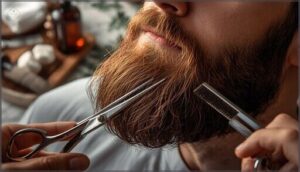
Strategic trimming techniques can slash perceived patchiness by 35% when you keep cheek lengths slightly longer and shorten the chin within a 2 mm target range. Use shaping tools to carve a gentle curve along your facial hair’s natural growth patterns—this increases coverage by 12–15%.
Schedule beard trim sessions every 4–6 weeks to cut visible strays by up to 25% and lock in beard symmetry.
Using Beard Oils and Balms Effectively

To lock in beard oil benefits, warm a few drops in your palms, then massage deep into your skin—not just the hair. This boosts moisture retention by roughly 25% and creates the foundation for healthier beard growth.
Follow with beard balm application to seal hydration and tame flyaways.
Consistent facial hair care and natural grooming routines dramatically reduce patchy beard appearance within weeks.
Top 4 Products for Natural Beard Growth
You’ve nailed the grooming basics, but the right products can genuinely move the needle on beard density and coverage. I’m talking about formulations backed by clinical evidence—not marketing hype—that target follicle health from multiple angles.
Let’s break down four standouts that actually deliver measurable results for natural beard growth.
1. Natural Beard Care And Growth
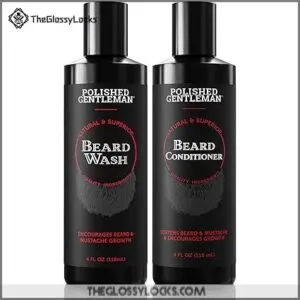
Want to release your beard’s true potential without synthetic shortcuts? Natural Beard Care And Growth combines biotin, tea tree, manuka honey, and rosemary to target hair follicles where growth patterns actually begin.
This paraben-free formula works on multiple fronts—stimulating beard density while hydrating your facial hair and skin beneath. You’ll notice softer, thicker growth as natural remedies support healthy hair follicles from root to tip.
The 4oz bottle delivers consistent beard nutrition that prevents itch and flaking, making daily beard care feel less like maintenance and more like an investment in commanding presence.
Best For: Guys who want to fill in patchy spots and grow a fuller beard using natural ingredients instead of harsh chemicals.
- Natural formula with biotin, tea tree, and manuka honey actually targets hair follicles to boost thickness and reduce patchiness.
- Paraben-free and sulfate-free, so it won’t irritate your skin or leave your beard feeling stripped and dry.
- Handles multiple issues at once—softens wiry hairs, stops the itch, and keeps dandruff away while promoting growth.
- The conditioner is thick and stubborn to squeeze out of the bottle, which gets annoying when you’re trying to use it daily.
- At 4oz, the bottle runs out pretty fast for the price, so it might not be the best value if you’re on a budget.
- The shampoo is watery and runny, making it tricky to control how much you’re using without wasting product.
2. Natural Beard Oil Conditioner
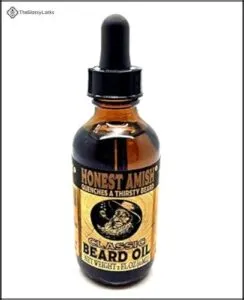
Glass bottles might break, but your commitment to beard dominance shouldn’t. This 2oz natural beard oil conditioner blends organic virgin argan, golden jojoba, and six additional premium hydrating oils to deliver serious beard hydration and hair nourishment.
The oil benefits extend beyond beard softening—you’re conditioning the skin beneath while training coarse, thick facial hair into submission. Cedarwood and peppermint create a bold scent profile that won’t quit.
Daily use means anti-itch relief and non-greasy beard care that promotes natural beard growth without mineral oil compromises.
Best For: Guys with coarse, thick beards who want daily conditioning that handles both the hair and the skin underneath without leaving a greasy mess.
- Eight premium organic oils (argan, jojoba, plus six more) actually soften wiry facial hair and stop the itch that comes with new growth
- Handcrafted in the USA with all-natural ingredients means no mineral oil or synthetic junk touching your face
- Non-greasy formula absorbs quickly for daily use without that slick, heavy feeling cheaper oils leave behind
- The cedarwood-peppermint-cinnamon scent blend runs strong—not ideal if you prefer subtle or no fragrance
- Glass bottle with rubber dropper looks nice but won’t survive a bathroom tile drop
- Some users find the oil’s texture or consistency doesn’t match their preference, especially compared to lighter carrier-oil-only blends
3. Natrol Beauty Biotin Supplement Tablets

You’ve heard biotin benefits touted everywhere—but does it work? Natrol’s 10,000mcg tablet packs serious biotin firepower to support hair growth by nourishing hair follicles from within. This vegetarian formula targets beard growth alongside overall nutrition for hair, though supplement safety demands realistic expectations: if you’re already biotin-sufficient, dramatic changes aren’t guaranteed.
Tablet reviews highlight improved hair quality over months of consistent use. Integrate it into your beauty routine with meals daily—just know deficiency correction trumps cosmetic miracles every time.
Best For: People looking to fill nutritional gaps that might be affecting their hair, skin, and nails—especially if you suspect a biotin deficiency or want a straightforward supplement to support overall hair health.
- High-dose biotin (10,000mcg) in a vegetarian, non-GMO formula that’s easy to take daily with meals
- Can help improve hair thickness and reduce breakage if you’re actually deficient in biotin, with noticeable results over several months
- Affordable 100-day supply that also supports nail strength and skin health alongside hair growth
- May cause acne or skin breakouts in some people, especially at higher doses
- Won’t necessarily fix patchy beards or boost hair growth if you’re already getting enough biotin from your diet
- High-dose biotin can interfere with certain lab tests (like thyroid panels), which could mess with medical diagnoses if you’re taking it regularly
4. Beard Growth Vitamin Supplement Capsules
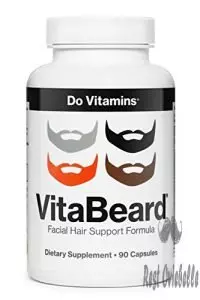
Single-nutrient pills rarely outperform multi-ingredient formulas. Do Vitamins’ capsules combine B-complex, biotin, zinc, and vitamin D—key growth factors targeting hair follicles across the entire hair growth cycle.
Supplement safety checks out: third-party tested, vegan, non-GMO. Capsule efficacy hinges on addressing deficiencies, not genetics.
Users report thicker beards after months of consistent use, though vitamin benefits plateau if your beard nutrition’s already solid. Realistic expectations matter—these support follicle health, they won’t rewrite your DNA.
Best For: Men with nutrient deficiencies looking to support beard growth and reduce itch, who understand supplements work alongside genetics rather than replacing them.
- Combines biotin, zinc, B-complex, and vitamin D in one capsule instead of buying separate nutrients
- Third-party tested and certified vegan, non-GMO, gluten-free for quality assurance
- Helps minimize beard itch by supporting oil production regulation alongside growth support
- Results vary widely based on individual genetics and existing nutrient levels—won’t overcome genetic limitations
- Some users report strong smell or taste from capsules that can be off-putting
- Relatively expensive investment with no guarantee of visible results, especially if you’re not deficient
Frequently Asked Questions (FAQs)
Can minoxidil safely accelerate beard growth speed?
Good things take time, right? Minoxidil 5% can definitely speed up beard growth—trials show noticeable density improvements within 8–12 weeks.
Mild skin irritation happens occasionally, but systemic side effects remain rare with proper facial application.
Do beard transplants produce permanent natural results?
Yes, beard transplants deliver permanent results. Graft survival rates hit 85–95%, and transplanted facial hair keeps growing naturally for years.
Most guys see stable hair regrowth after one or two sessions, filling patchy beard zones for good.
When should patchy beards see a dermatologist?
Book a dermatologist referral if patchiness lasts over six months, or you notice itching, scaling, or inflammation.
Dermatological conditions like alopecia areata or skin infection signs affecting hair follicles need professional facial hair restoration and beard loss treatment.
Does shaving more frequently increase beard thickness?
Despite the myth, shaving more frequently won’t thicken your beard. Hair regrowth rate and follicle health are controlled by genetics and hormones, not grooming techniques—shaving frequency simply doesn’t alter beard density or hair thickness.
Are there effective laser treatments for beards?
Think of low-level laser therapy as a jumpstart for sluggish hair follicles. Photobiomodulation treatment can stimulate facial hair growth in patchy beard areas, though results vary.
It’s not a miracle cure for hair loss, but beard restoration techniques show promise.
Conclusion
Picture yourself six months from now, running your hand along a jawline that finally looks the way you’ve imagined it. Achieving beard growth without patchy spots isn’t about chasing genetics you can’t control—it’s about optimizing what’s already within your reach.
Commit to the fundamentals: nutrition, grooming discipline, and patience. Your follicles respond to consistency, not shortcuts. The beard you want is already trying to grow. Now give it the conditions it deserves.
- https://www.ncbi.nlm.nih.gov/books/NBK481583/
- https://en.wikipedia.org/wiki/Van_Dyke_beard
- https://www.webmd.com/skin-problems-and-treatments/hair-loss/hair-loss-alopecia
- https://www.menshealth.com/uk/nutrition/a747704/eat-up-to-man-up/
- https://www.aad.org/public/everyday-care/skin-care-secrets/face/diy-treatment-common-beard-problems